Wallpaper · 12 min read · 27 April 2026
Choosing wallpaper for each room: vinyl, non-woven, fabric or peel-and-stick
Vinyl, non-woven, paper, fabric or peel-and-stick? How each type behaves, what the roll symbols mean, the best wallpaper for each room, and wallpaper or paint.

By Ali Haider Basra, Founder, Al Tareeq Decor · Contact our workshop
Key takeaways
- Choose the type of wallpaper from what the wall has to withstand, then the design.
- Non-woven pastes the wall and lets vapour through; vinyl wipes clean and usually peels off dry; fabric belongs where hands and food are not.
- Read the roll label for washability, light-fastness, pasting, removal and pattern match before you buy.
- Paint is cheaper and easier to touch up; wallpaper adds pattern, texture and a tougher surface.
- Peel-and-stick needs a smooth, dry wall: not for textured walls, bathrooms or freshly painted rooms.
On this page
- Key takeaways
- Four questions to ask about the wall before you look at designs
- Types of wallpaper for walls, in plain terms
- Wallpaper types compared
- Read the symbols on the roll label
- Which wallpaper is best for the bedroom?
- Living rooms, majlis walls and dining areas
- Children's rooms, hallways, kitchens and bathrooms
- Wallpaper or paint: cost, pros and cons
- Peel-and-stick wallpaper in the UAE: renters and textured walls
- Texture, pattern and scale
- When a wall panel suits better than paper
- Choose with samples in your own light
- Common questions
Four questions to ask about the wall before you look at designs
Catalogues are full of beautiful patterns, and it is tempting to pick one and hope it suits the room. The better order is the reverse: decide what the wall has to put up with, choose the type of wallpaper that copes with it, and only then choose the design. The type is the part you cannot change later without stripping the wall.
Four questions do most of the work. Do hands, bags, chairs or children brush against this wall? Does shower steam or cooking spray reach it? Does hard sun sit on it for hours? Is it a wall you expect to clean every week? Answer no four times, as most bedhead walls do, and almost any paper will do. Two or more yeses leave only one or two suitable types, and you know which before the first sample book is opened.
Types of wallpaper for walls, in plain terms
What you see on a wallpaper is its face; what decides how it behaves is the backing behind that face. Most papers sold in the UAE belong to five families, drawn in section below.
Paper wallpaper is a laminate of paper sheets, usually two. Each length is pasted on its reverse and left to soak before hanging, and the German retailer MEINEWAND points out that paper, unlike non-woven, can warp or shrink as the paste wets it. Of the five families it marks and tears most easily, so it suits walls that are looked at, not leaned on.
Non-woven wallpaper sits on a fleece backing that holds its size when wet. Adhesive is rolled onto the wall itself, each length goes up dry from the roll, and MEINEWAND calls the material permeable to water vapour and stable in light. Vinyl lays a PVC layer over a paper or fleece base, which makes most vinyls washable; at redecoration time the PVC face can often be pulled away dry, and the base left behind takes the next paper.
Fabric wallcoverings bond a woven textile to a backing, so the wall gains depth and warmth but becomes harder to clean. Peel-and-stick is a self-adhesive vinyl film: the backing liner comes off and the film goes straight onto the wall with no paste at all. Each family has a place, and the table after the drawing sets them side by side.
Wallpaper types compared
Paper
- How it goes up
- Paste the paper, soak, hang
- Cleaning
- Gentle sponge at most
- Taking it down
- Usually soaked and scraped
- Best for
- Low-traffic walls, formal rooms
Non-woven
- How it goes up
- Paste the wall, hang dry
- Cleaning
- Wipe; check the label
- Taking it down
- Often strips off dry
- Best for
- Living rooms, bedrooms, walls with some moisture
Vinyl
- How it goes up
- Paste to suit the backing
- Cleaning
- Washable, often scrubbable
- Taking it down
- Face peels off, backing stays
- Best for
- Hallways, children's rooms, dining areas
Fabric / textile
- How it goes up
- Specialist paste and handling
- Cleaning
- Dust; spot-clean with care
- Taking it down
- Depends on the backing
- Best for
- Bedhead walls, a formal majlis wall
Peel-and-stick
- How it goes up
- Self-adhesive, no paste
- Cleaning
- Wipe gently
- Taking it down
- Peels off; test the paint first
- Best for
- Rented flats, smooth dry walls
General behaviour of each family. The label on the roll you choose is what counts.
- 1. Paper: pasted on the back and soaked; the most delicate surface
- 2. Non-woven: paste the wall, hang dry; lets water vapour through
- 3. Vinyl: PVC face, washable; the top layer usually peels off dry
- 4. Fabric: woven face for texture; keep it where hands and food are not
- 5. Peel-and-stick: self-adhesive film for smooth walls in dry rooms
Read the symbols on the roll label
Every roll carries a row of small pictograms, and reading them settles most practical doubts at the shop counter rather than on the wall. MEINEWAND's guide to the symbols groups them into a handful of families, and the ones below are worth checking every time.
Treat the symbols as the maker's promise for that exact design. Two papers that look alike in a sample book can carry very different symbols, and only the label tells you which one will survive a child's crayon or an afternoon of sun.
- Cleaning: wavy lines show how much washing the surface takes, from wiping with a damp cloth, to mild soap, to resisting abrasion; a brush beside the waves means scrubbable.
- Light: a sun symbol shows how well the colour holds in daylight. Look for the higher rating on any wall the sun reaches.
- Pasting: a brush on the wall means paste the wall; a brush on the paper means paste the paper.
- Removal: dry-strippable, peelable (the face comes off and the backing stays), or wet removal.
- Pattern match: no repeat, straight match, or drop match with its repeat and offset, written like 64/32.
- Batch number: printed on every roll; all rolls for one room should share it.
Which wallpaper is best for the bedroom?
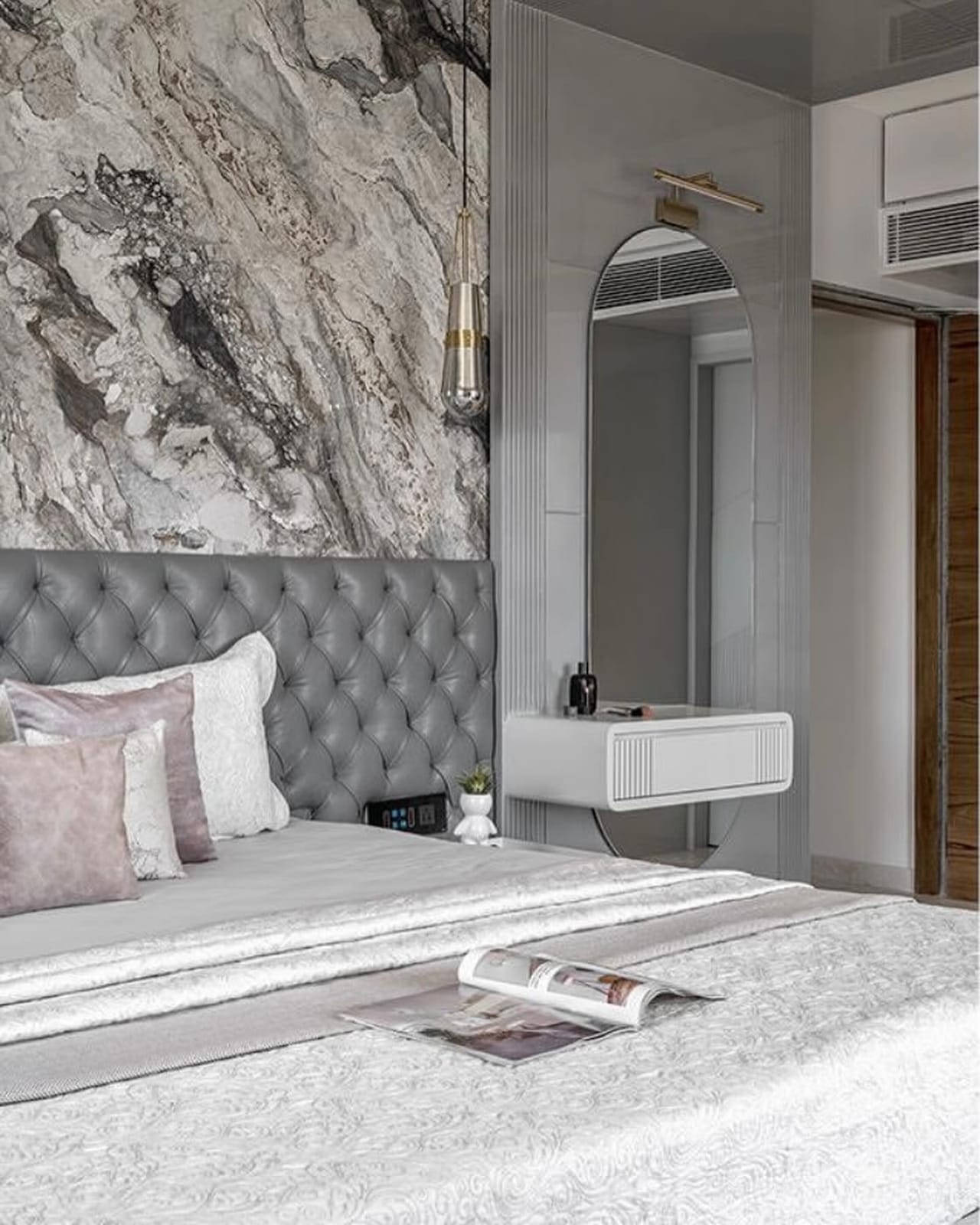
Bedrooms are the easiest room to paper, because most of their walls are seldom touched. The bedhead is where most people start, and almost any construction works on it: a fabric or textured paper adds softness, a non-woven print adds pattern, and a damask brings a formal look to a master bedroom. A headboard and two bedside tables cover the lower third of that wall, so the design matters most above about a metre.
Two cautions. The wall where the wardrobe doors open and the one beside the bedroom door take knocks, so they suit a washable vinyl better than fabric. And a bedroom with a west window gets hours of low afternoon sun; choose a paper with a good light rating there, or plan sheers that cut the direct beam, because a mirror or frame will otherwise leave a darker rectangle when it is moved.
Paper the bedroom before the curtains go up, and the curtain fabric can then be chosen against the finished wall rather than a sample. Our blackout or sheer guide helps with the window once the walls are decided.
Living rooms, majlis walls and dining areas
In a living room, the walls behind sofas get leaned on and the walls by doors get brushed past, so non-woven or a textured vinyl is the safe choice for the main walls. Keep fabric or a delicate paper for one feature wall that people look at rather than touch, such as the wall behind a television or a display unit.
A majlis combines long walls, a tall ceiling and a steady stream of visitors. Its formality suits both textured vinyl and fabric. On a wall eight or ten metres long, a large motif repeated many times can feel busy; a medium-scale pattern or a strong texture usually looks calmer, and plain textured papers suit majlis seating with rich upholstery and curtains.
Around a dining table, chairs scrape and food finds the wall. Use a washable or scrubbable vinyl on the wall the chairs back onto, and save softer papers for walls further from the table.
Children's rooms, hallways, kitchens and bathrooms
Children's rooms and hallways need the toughest surface you can find: a heavyweight vinyl labelled scrubbable, at least up to shoulder height. Crayon, stickers, scooters and school bags all end up on these walls, and a scrubbable label is the difference between a wipe and a repair; our guide to kids room wallpaper in the UAE details non-toxic pastes and washable compact vinyl. In a kitchen, keep paper away from the hob and the sink and use a washable vinyl on the remaining walls; tiles or glass belong where the splashes land.
Bathrooms are where most wallpaper disappointments happen. Searches for "wallpaper for bathroom" are common, and the honest answer is that paper belongs in a bathroom only on walls the water never reaches, and only where an extractor fan runs whenever the shower does. Even then, a vinyl with a breathable backing and a paste that resists mould are worth specifying. Peel-and-stick is a poor choice here: one Paris maker of it says it does not suit rooms where temperature and humidity swing, such as bathrooms. The wider story of damp, AC and condensation is told in how wallpaper copes with AC and humidity.
Wallpaper or paint: cost, pros and cons
Paint is the cheaper finish to apply and the easier one to touch up: a scuff is painted over in minutes, and a change of colour needs no stripping. It suits rented flats, rooms that change often and walls that are going to be knocked. Wallpaper costs more on day one, but it does things paint cannot. It brings pattern and texture, a vinyl surface can be washed far more often than most paints, and a textured paper hides small surface marks that paint would show.
Time matters as well. A room of wallpaper, with the walls already prepared, takes our team about a day to hang, and the room is usable the same evening, without the smell and drying time of several coats of paint. Taking wallpaper down later is a job in itself, though, while repainting over paint is not.
In a bedroom, many people choose both: paper behind the bed and paint on the other three walls. That puts the money where it is seen and keeps the walls that take knocks easy to repair; our 10-year comparison of wallpaper vs paint in the UAE weighs settlement cracks and maintenance across both finishes. What the paper side of that plan costs, wall by wall, is worked through in our wallpaper price guide.
Peel-and-stick wallpaper in the UAE: renters and textured walls
Peel-and-stick appeals to tenants, because it promises a new wall without paste and a clean exit when the lease ends. It does work, on the right wall. Makers are consistent that the surface has to be smooth and even: Bien Fait, which makes peel-and-stick in Paris, warns that orange-peel, knockdown and rough textures make it harder for the film to stick, and asks for freshly painted walls to be left four to six weeks before it goes on.
That rules out many UAE walls, which are often finished with a light texture. On those, a conventional non-woven paper hung with paste grips far better. Before using peel-and-stick in a rental, try a small piece in a hidden corner for a few weeks and peel it off again: if paint comes away with it, the landlord will notice at the end of the lease. Keep it out of bathrooms, away from AC outlets that blow straight onto the wall, and off ceilings.
What we supply and hang are pasted wallcoverings from our catalogues. If you rent and want a lasting result, ask your landlord first; many accept a professionally hung paper, especially a vinyl whose top layer peels off dry.
Texture, pattern and scale
A swatch the size of a postcard tells you colour and feel, never how a design reads across three metres. Hold a whole repeat, or a length unrolled from the roll, against the actual wall, and look at it in the light of the hour when the room is busiest. Upright stripes and tall motifs lift a low ceiling; broad horizontal bands stretch a wall that is already long.
Do not overlook papers with texture and no pattern. Where curtains, a rug and cushions already carry prints, a calm textured wall tends to pull the room together better than one more bold design. How a pattern is placed on a feature wall, and what happens at its corners and sockets, has a guide of its own: wallpaper feature wall planning.
When a wall panel suits better than paper
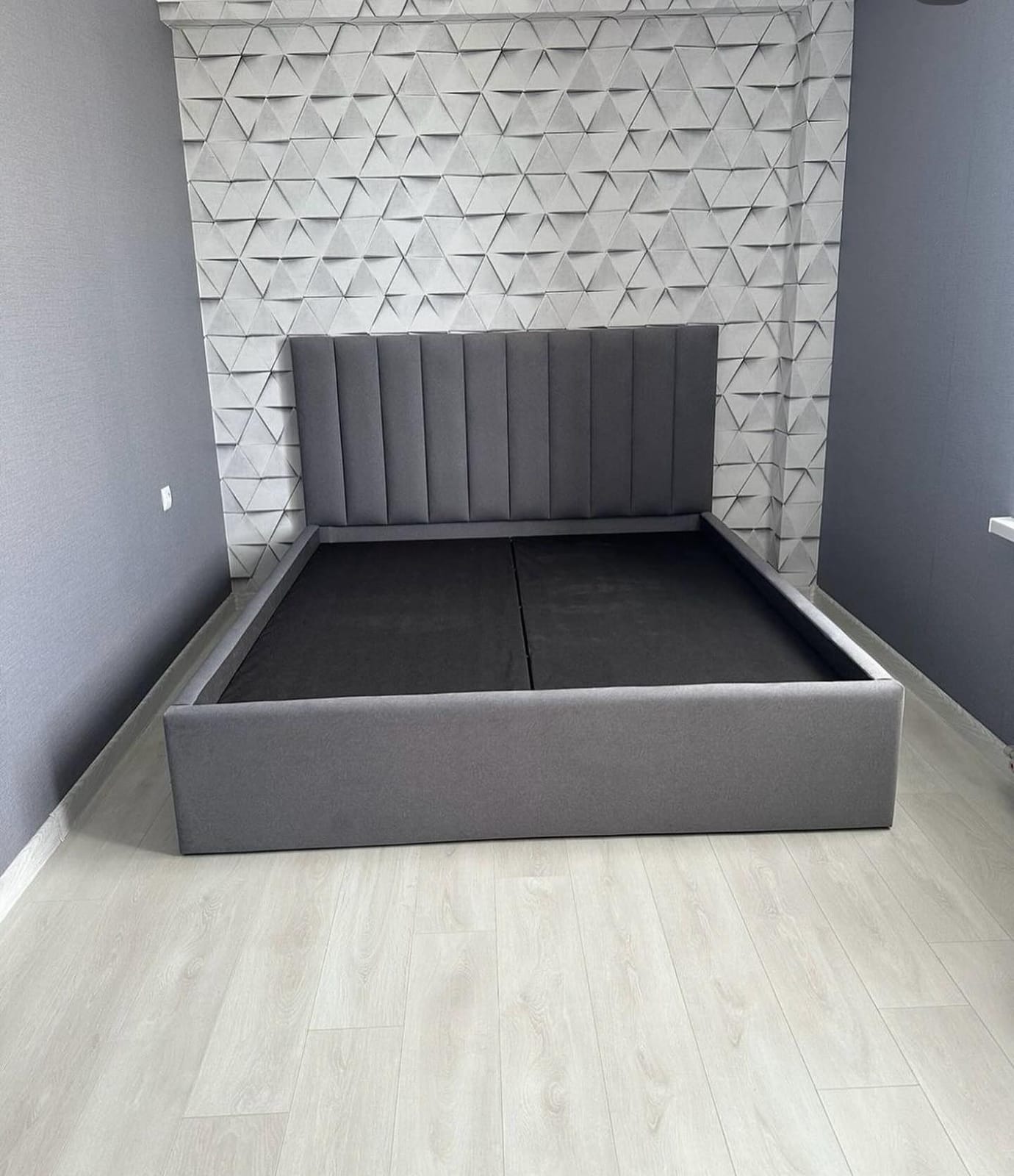
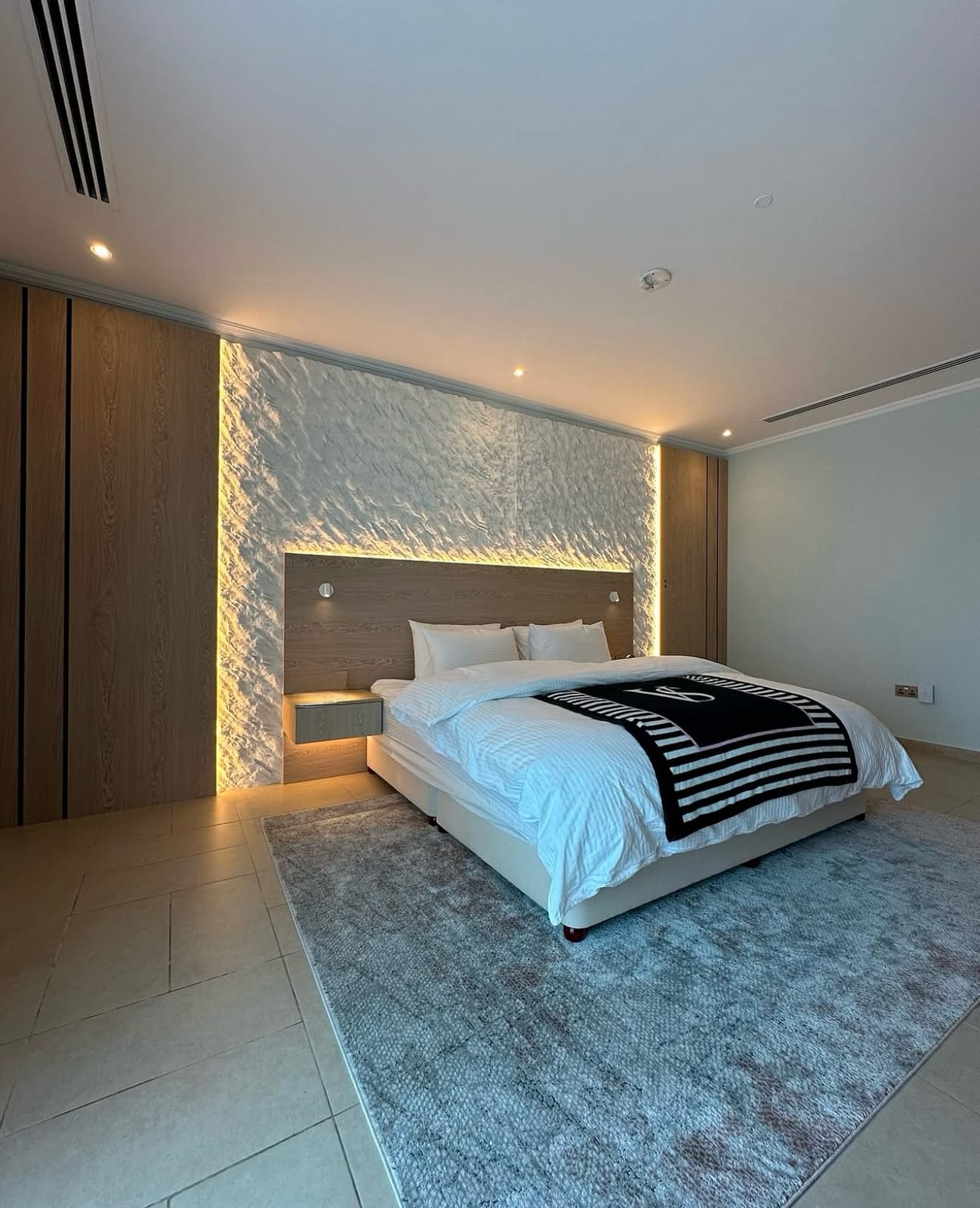
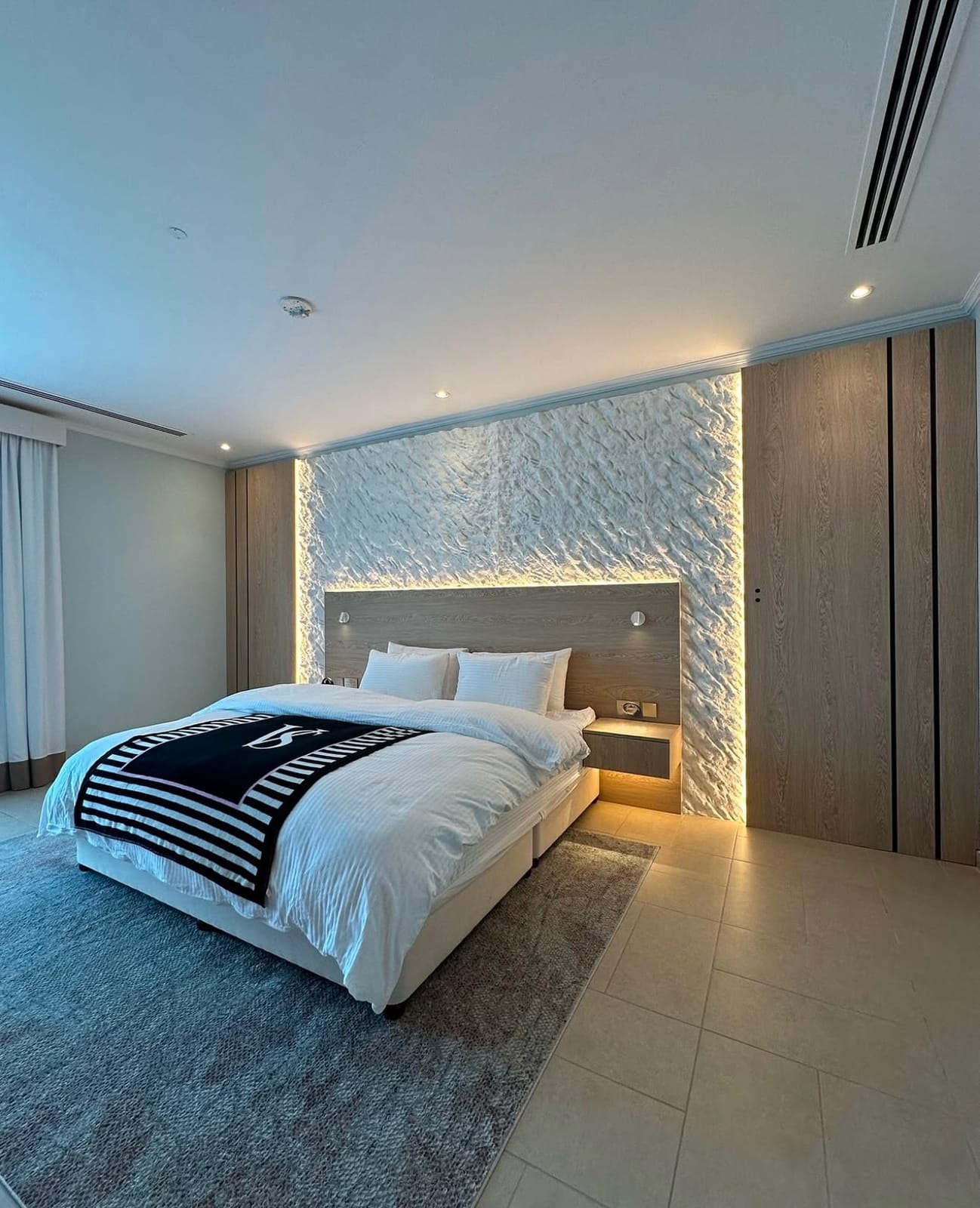
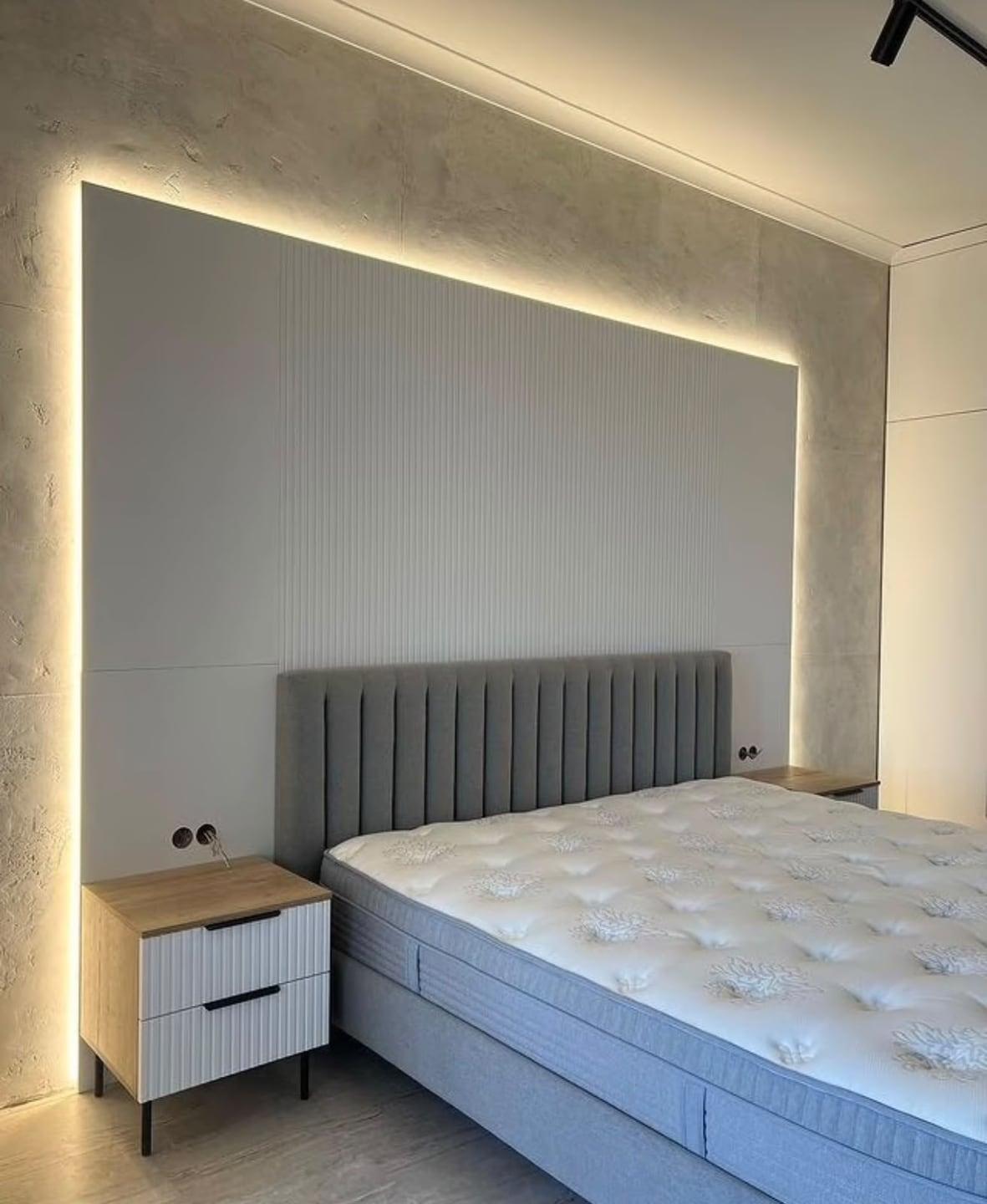
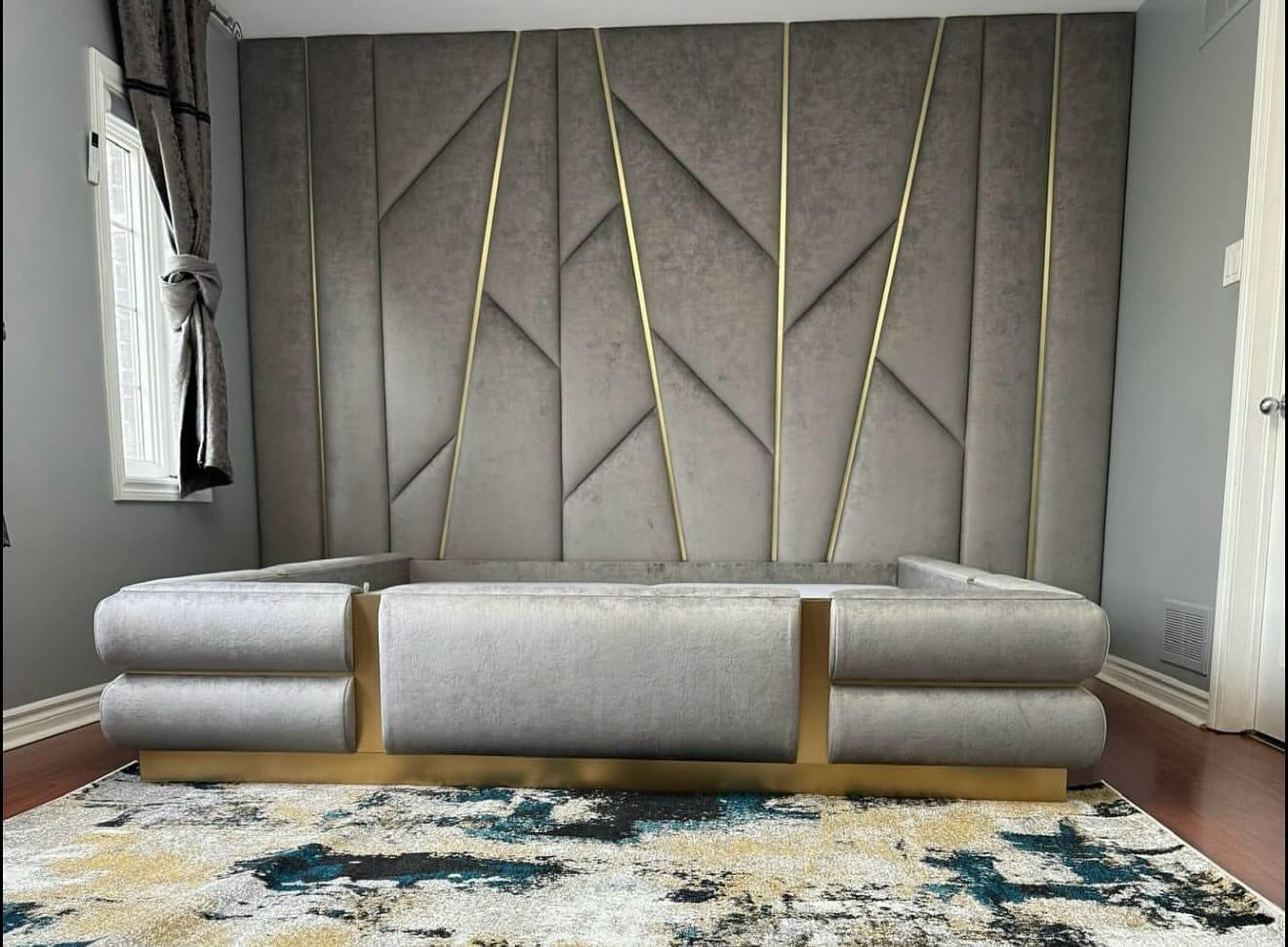
Some walls ask for more depth than any paper can give, most often the bedhead or the wall around a TV. Our upholstered wall panels and 3D wall finishes add relief, shadow, softness and even light: the photo at the top of this page shows a rippled 3D wall lit from its edge.
Compare the two honestly. Panels are made to order for the wall and take longer to produce, but they carry the room on their own. Paper covers a large area quickly and is easier to change in a few years. For a single statement wall in a bedroom or majlis, it is worth seeing both, with a price for each, before deciding.
Choose with samples in your own light
The surest way to choose is to see the papers on your walls. We carry catalogues from Italian, Belgian, German and Korean manufacturers, and they come with us on the free home visit. We look at each wall, its light and what it has to withstand, and narrow the books to the types that suit before you start turning pages for colour.
Keep a cushion, a curtain sample or a photo of the sofa fabric to hand when the books come out. Wallpaper is seen beside the furniture far more than on its own, and a colour that looked neutral in the catalogue can turn warm or cold next to the upholstery. Shortlist two or three, then hold each one up on the wall in question.
Our own team then prepares the walls, filling and puttying them, and hangs the paper with laser-level alignment; once the rolls have arrived, a room normally takes about a day. The service is described on our wallpaper page, with local details for wallpaper in Sharjah.
Common questions
Which wallpaper is best for walls in the UAE?
For most rooms, a non-woven or a vinyl on a breathable backing: both cope with AC and are easy to hang well. Keep fabric and paper for walls that are not touched. Choosing wallpaper for each room.
Is non-woven or vinyl wallpaper better?
Non-woven breathes and comes off the wall more easily; vinyl stands up to much more washing. Many good papers combine the two, a vinyl face on a non-woven backing. Wallpaper types compared.
Does peel and stick wallpaper work on textured walls?
Usually not well. Makers ask for a smooth, even wall, and a light texture leaves the film with too little to grip. Peel-and-stick for renters.
Can wallpaper go in a bathroom?
Only on walls the water never reaches, in a room whose extractor fan is used. Wet zones need tiles. Wallpaper, AC and humidity.
How much does wallpaper cost compared with paint?
With us, from AED 45 per m² of wall, paper and hanging included. Paint costs less to apply, but cannot add pattern or texture. Wallpaper price, room by room.
Where should a wallpaper pattern start on a feature wall?
Usually from the centre of the wall or of the bed, so the motif sits evenly and both corners end with similar strips. Planning a wallpaper feature wall.

Sources & specifications
Manufacturer information applies to the named products and systems. Sources reviewed on 28 October 2026.
- MEINEWAND: the types of wallpaper (paper, non-woven, vinyl) and how each is pastedsupport.meinewand.com(opens in a new tab)
- MEINEWAND help centre: what the wallpaper symbols mean (washing, light, pasting, removal, match)support.meinewand.com(opens in a new tab)
- Bien Fait Paris: how to install peel-and-stick wallpaper (smooth walls, paint curing, bathrooms)bien-fait-paris.com(opens in a new tab)
Want this planned for your home?
Consultation and measurement are free. Tell us the rooms, location and what you need; we arrange a sample visit and define the measured quotation.