Wallpaper · 11 min read · 7 May 2026
Wallpaper feature walls: which wall, which pattern and where to start
How to plan a wallpaper feature wall: which wall to choose, ideas for each room, pattern scale, where to start the first drop, matching, corners, sockets and light.

By Ali Haider Basra, Founder, Al Tareeq Decor · Contact our workshop
Key takeaways
- Choose the wall your eye lands on: behind the bed, the sofa or the TV, or the end wall of a majlis.
- Match the pattern's scale to the distance you see it from, and check what furniture will hide.
- Start from the centre line, never a corner; decide whether a join or a motif sits on it.
- Pick the set-out that avoids thin strips in the corners and puts a full motif below the ceiling.
- Move sockets and run wall-light cables before the wall is prepared.
On this page
- Key takeaways
- Which wall should be the feature wall?
- Feature wall wallpaper ideas, room by room
- Pattern scale: match it to the wall and the distance
- Plan around what stands in front of it
- Paper, panels or paint: three ways to make the wall
- Where to start wallpapering a feature wall
- Matching the pattern and placing it at the ceiling
- Corners, alcoves, windows and doors
- Sockets, switches and wall lights
- Light, seams and colour
- Quantity, cost and how we plan a feature wall
- Common questions
Which wall should be the feature wall?
A feature wall, or accent wall, is one wall dressed differently from the rest so the room has a focus. The right wall is almost never the biggest blank one. It is the wall your eye lands on: the one facing you as you walk in, the wall behind the bed in a bedroom, the wall behind the sofa or the television in a living room, or the far end of a majlis that guests face as they sit down.
Stand in the doorway, then sit where you usually sit, and notice which wall fills your view both times. That is the candidate. Then rule out walls that fight the idea: a wall that is mostly window, one broken by two doors, or one hidden behind tall wardrobes. A pattern needs an uninterrupted stretch to read as a pattern, and a wall that is constantly cut up looks busy rather than special.
Feature wall wallpaper ideas, room by room
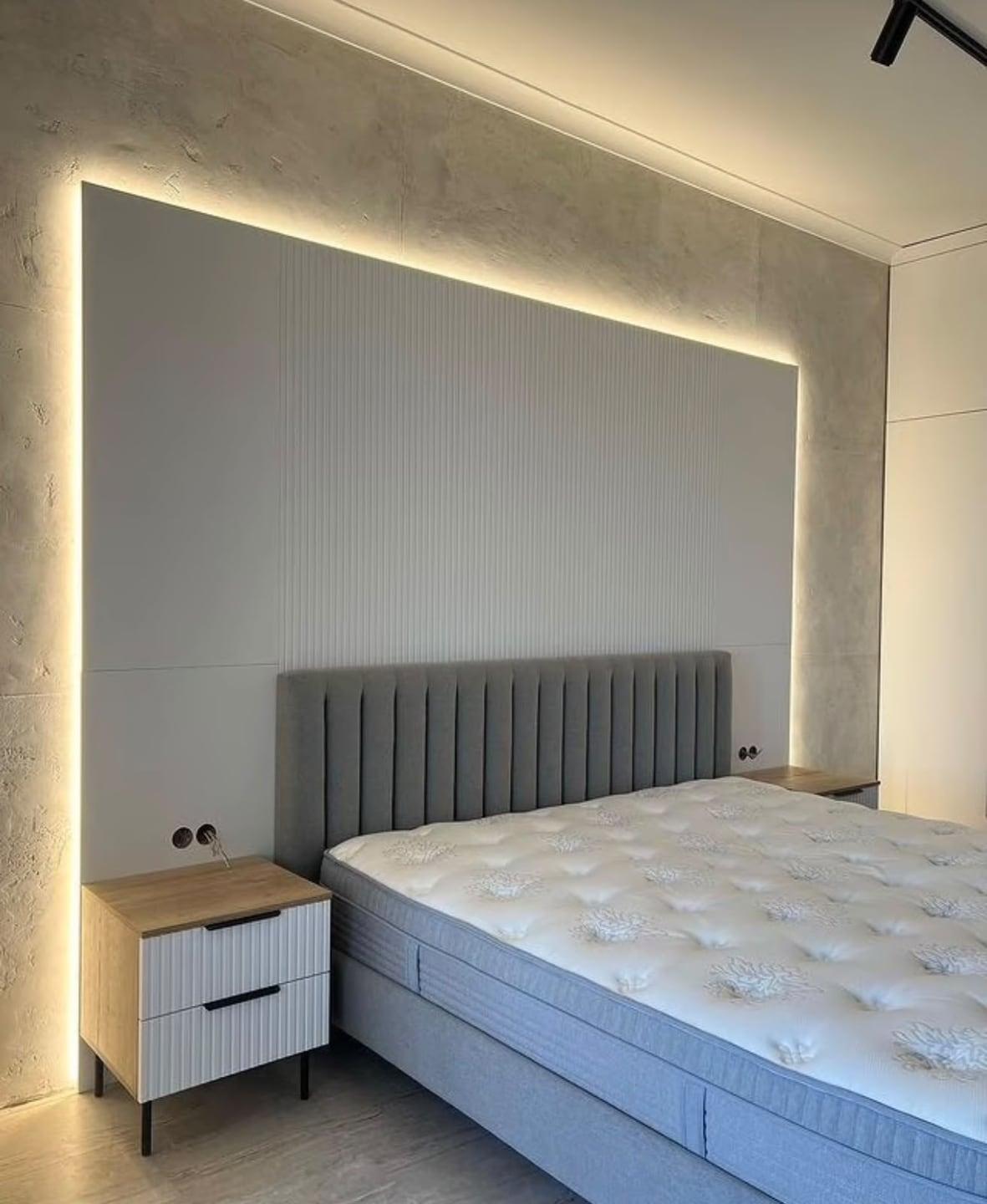
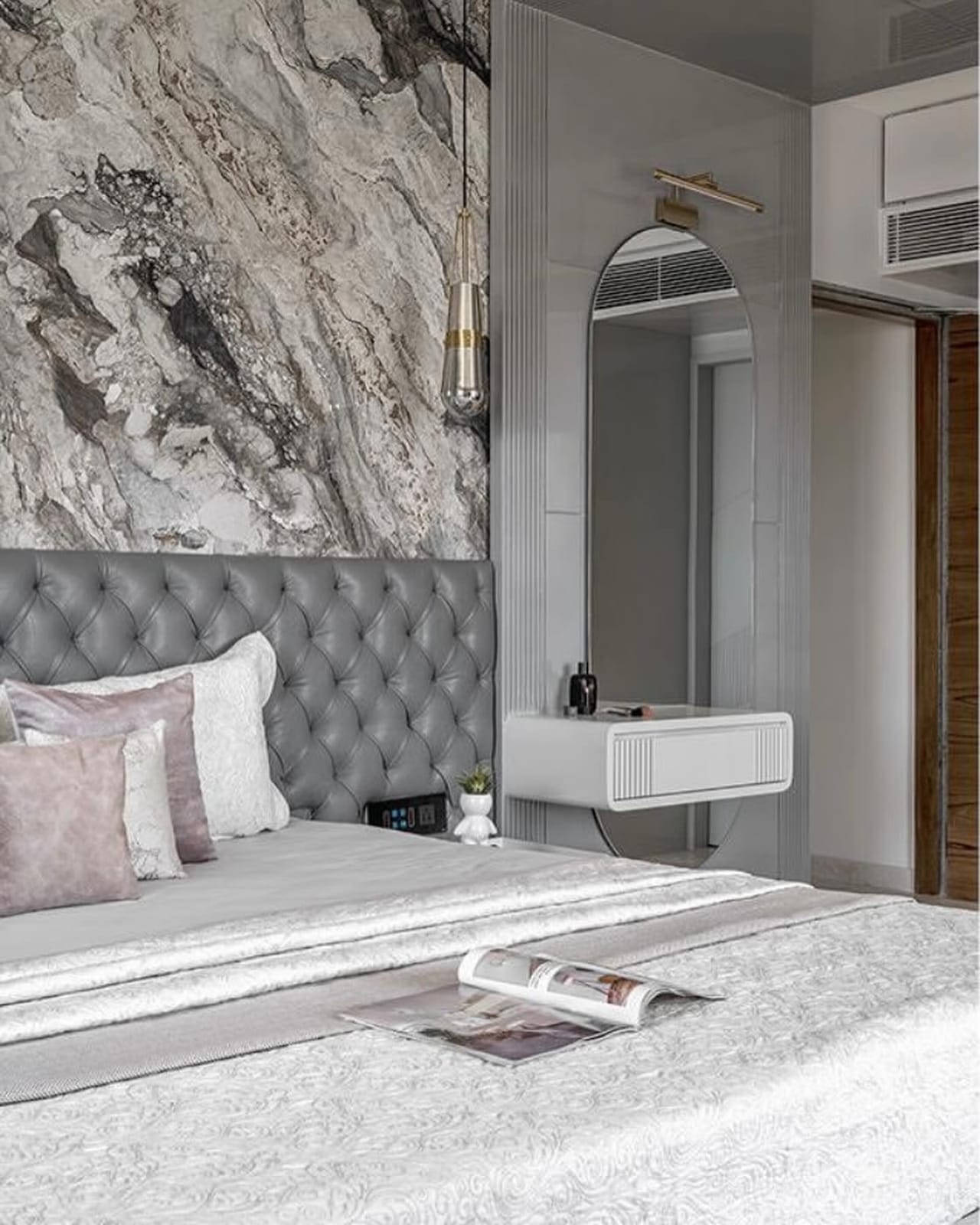
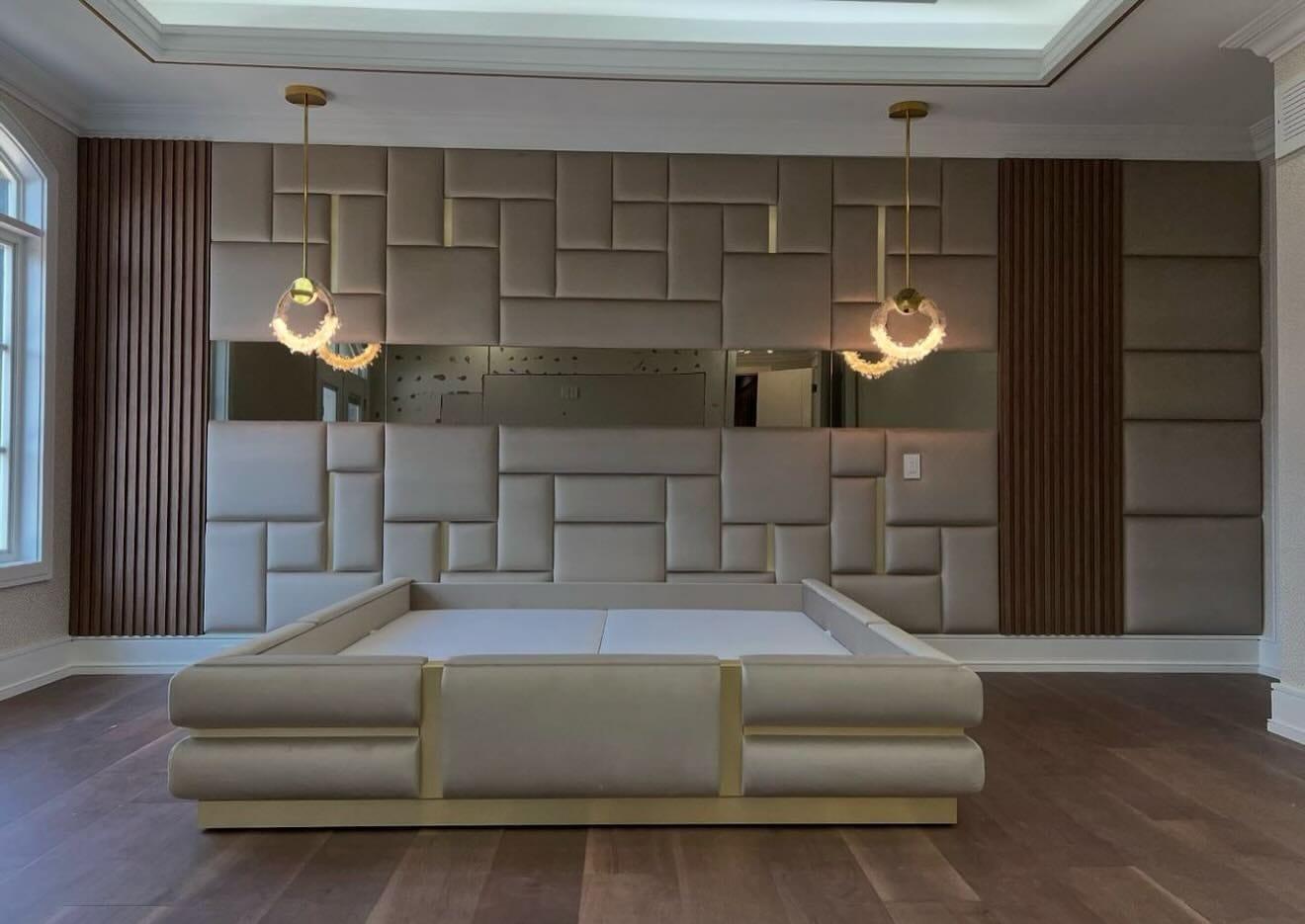
In a bedroom, the bedhead wall is the natural choice, and the most forgiving, because the headboard and bedside tables hide its lower third and nobody brushes against it. Bold patterns, large botanicals, textured fabrics and damasks all work here, and the bed gives the pattern a centre.
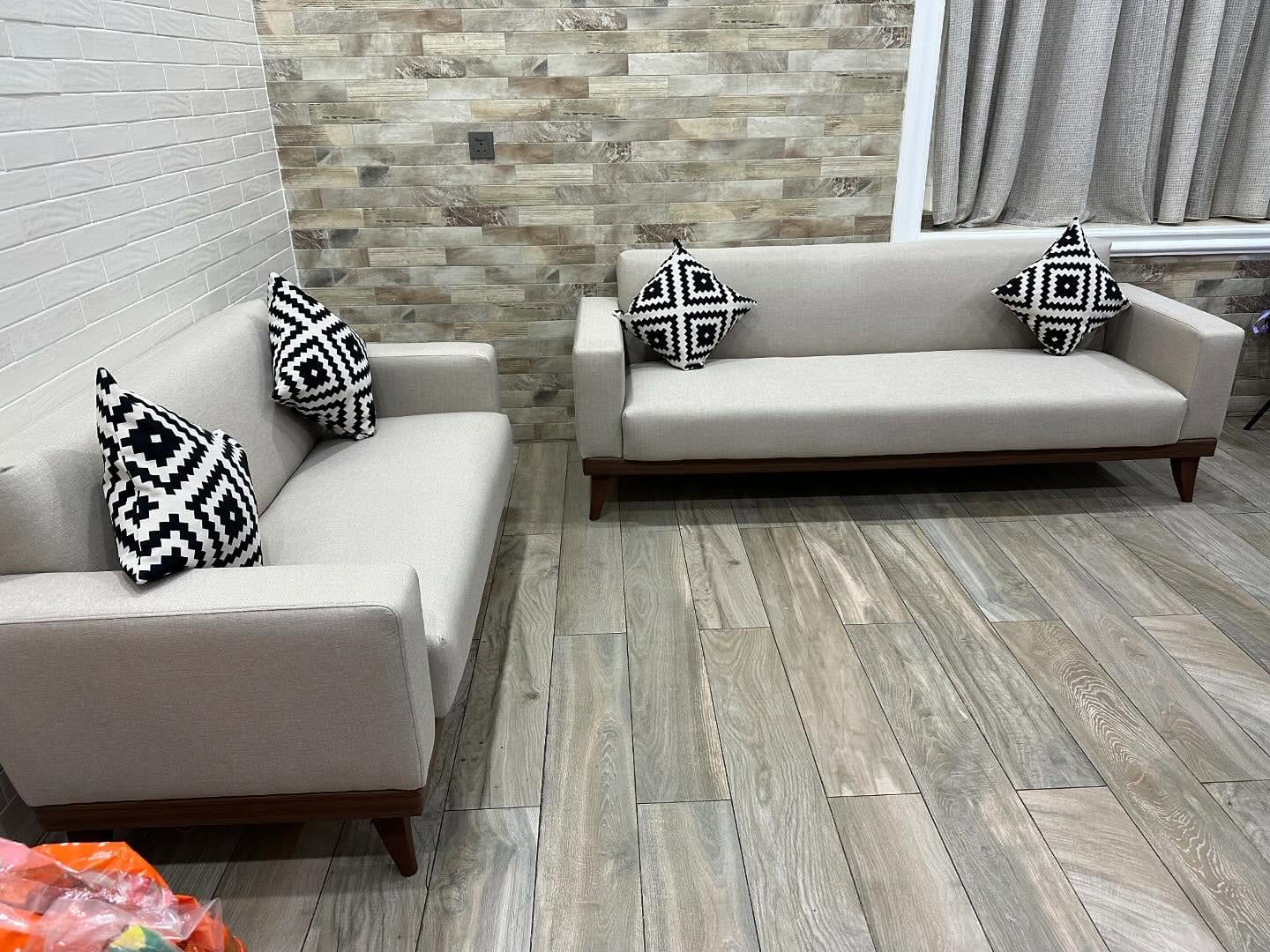
In a living room, paper the wall behind the sofa or the television, not both. Behind a television, a calm texture or a small-scale design usually beats a strong pattern, which competes with the picture; a media wall with built-in joinery is a different project, covered in planning a media wall. In a majlis, the end wall facing the main seating carries a formal paper well, and because majlis walls are long, a medium scale tends to look calmer than a very large motif repeated many times. For slatted, stone-look and floating layouts, see media wall design ideas.
Smaller spaces benefit too. The far wall of a hallway pulls the eye along it, a dining wall behind a sideboard frames the table, and in a child's room one patterned wall is easier to change at the next birthday than four.
Pattern scale: match it to the wall and the distance
Scale is about distance as much as taste. A small, busy print reads as a texture from across a large room and only shows its detail up close; a large motif needs space to step back from, or it becomes a few disconnected shapes. A wall you see from four or five metres away, like the end of a majlis, can carry a far bigger design than a narrow hallway you pass at arm's length.
There is no rule that a compact room must have a tiny print. A bold design on the single wall behind a bed can make a compact bedroom feel deliberate rather than cramped, as long as the other walls stay quiet. What matters is that you see enough of the pattern to understand it. Before deciding, hold up a full repeat, not a swatch, at the distance you will usually see it from.
Plan around what stands in front of it
A feature wall is rarely seen bare. A headboard covers its middle, bedside lamps and tables sit at each side, a television hides a large rectangle, and a sofa back cuts across the lower half. Draw those shapes on a photo of the wall before choosing, so you see which part of the pattern will actually be visible.
That changes choices. A design whose best motif sits low on the roll may disappear behind a sofa. A geometric pattern with strong verticals will be chopped by a wide headboard into two separate panels. And a mirror or a large artwork on top of a busy paper usually loses; either the art or the paper should be the star.
Paper, panels or paint: three ways to make the wall
Wallpaper is not the only way to make one wall stand out, and it helps to weigh the three honestly. Paint in a single deep colour is the cheapest and quickest; it suits a tight budget, a rented home or a room you expect to change within a year or two. Wallpaper adds what paint cannot: pattern, texture and, with a vinyl, a surface that wipes clean. It goes up in about a day once the wall is ready, and a good paper can stay for many years.
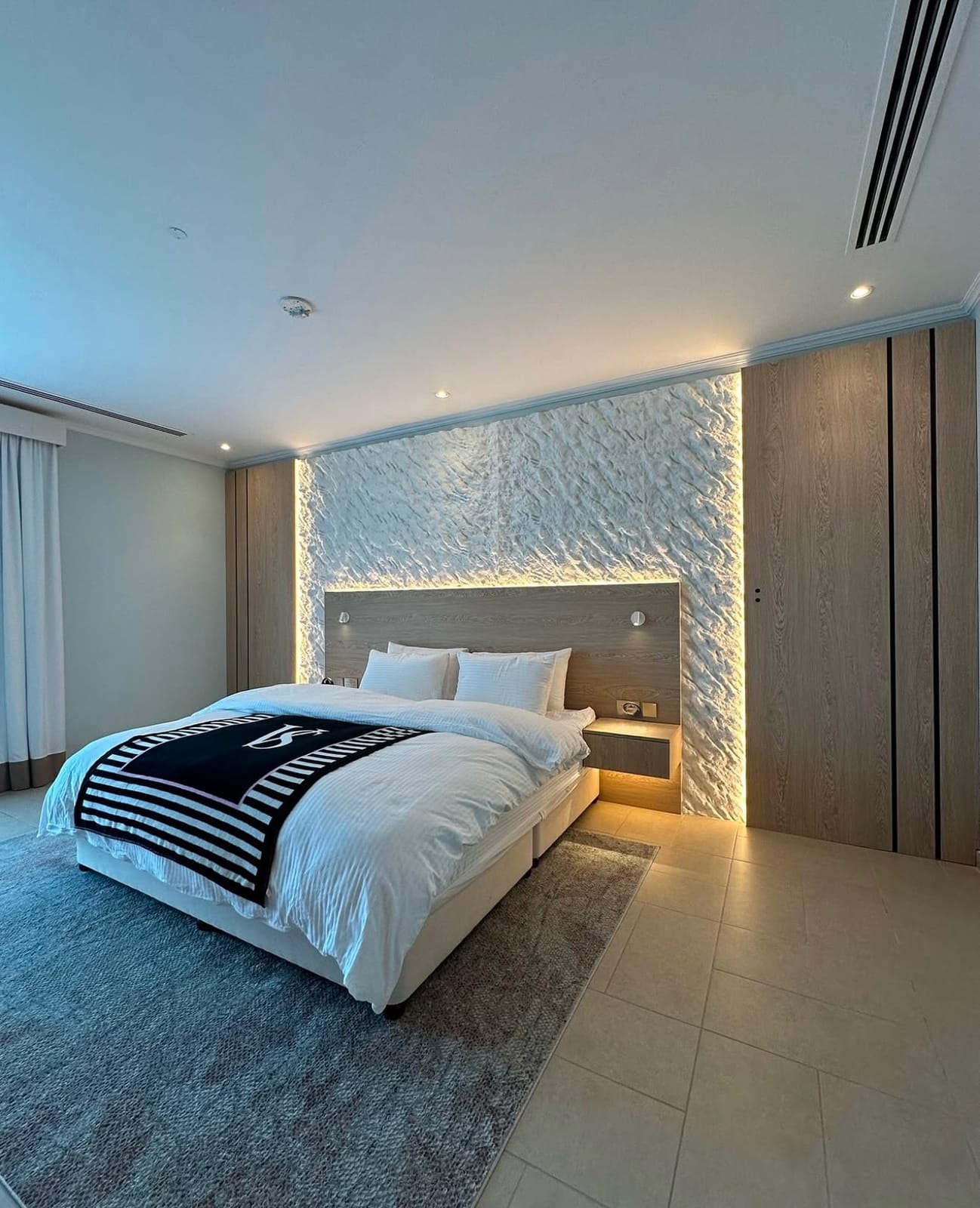
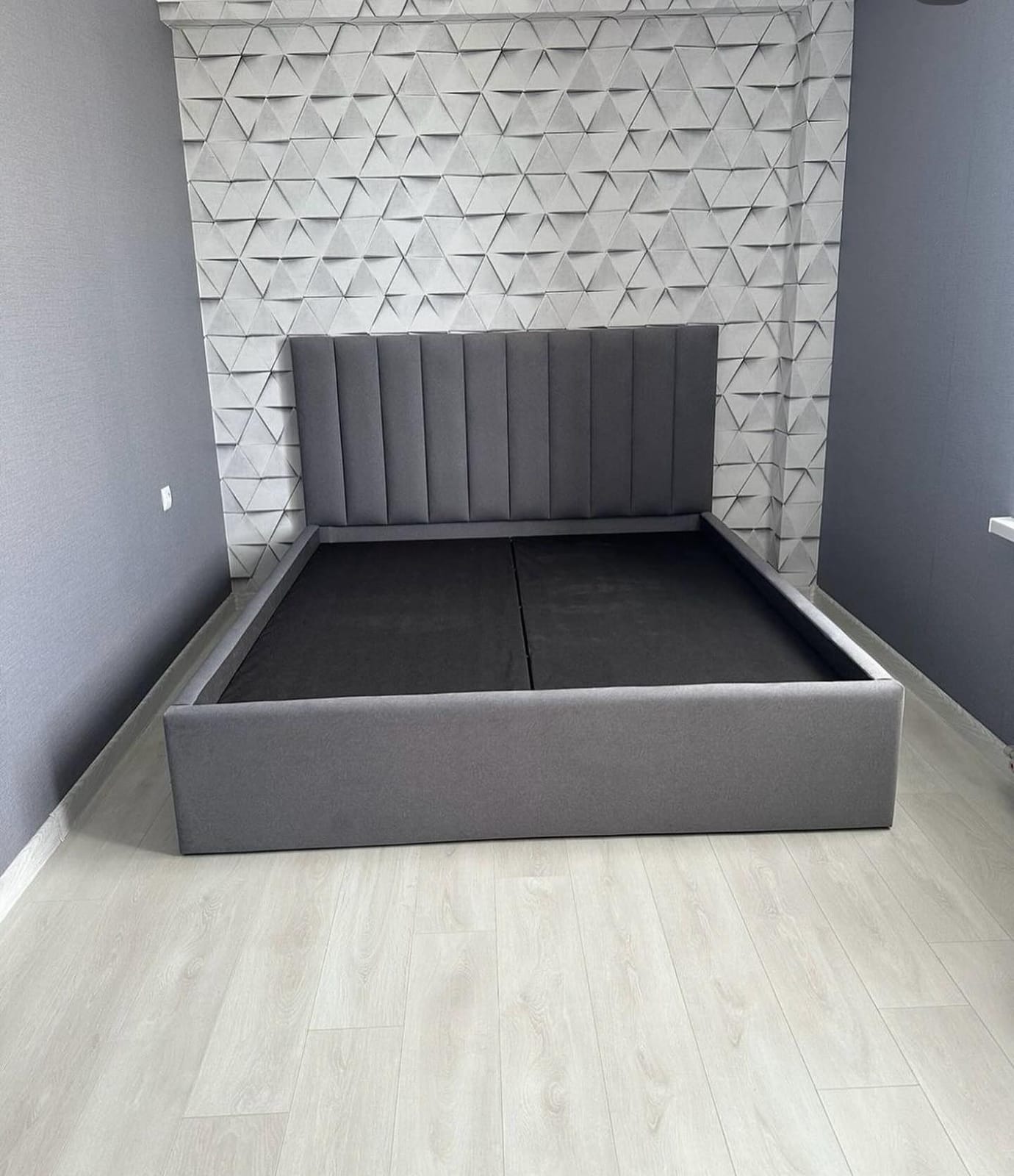
Panels go further. Upholstered panels soften a bedhead wall and dull sound a little, and 3D panels throw shadows that change through the day, especially with light hidden at their edges, as in the photo at the top of this page. We make both to order for the wall, and they take longer than paper. A useful test: if you want pattern, choose paper; if you want depth or softness, consider panels; if you want colour only, paint it.
Where to start wallpapering a feature wall
Not in a corner. Corners are rarely truly vertical, and starting there throws every following drop off line. The usual method on a feature wall is to find its centre, or the centre of the bed or sofa if that is not the same, and work outwards. Practical DIY, a long-running British decorating guide, advises centring a large pattern on the room's main feature. A plumb line or a laser level then marks a true vertical at the starting point.
There are two ways to use that centre line, and the drawing shows both on a 3.6 m wall. Hang the first drop with its edge on the line, and a join runs down the middle of the bed. Hang the first drop centred on the line, and the pattern's motif sits squarely over the bed. The second also changes what happens in the corners: on this wall it leaves strips of 47.5 cm at each end instead of awkward 21 cm slivers. Fine Homebuilding warns against narrow strips in corners, which are hard to cut, paste and keep straight.
Measure your own wall before choosing. Divide half the wall's width by the roll width and look at the remainder for each method; pick the one that gives the more generous end strips and the better position for the motif.
- 1. The centre line, measured and set out with a plumb line or laser
- 2. A join on the line puts a seam behind the middle of the bed
- 3. That leaves 21 cm slivers in both corners
- 4. A drop centred on the line puts the motif over the bed
- 5. And leaves 47.5 cm strips, easier to cut and hang
Matching the pattern and placing it at the ceiling
Every patterned paper has a match type printed on its label. In a straight match, the motifs sit level across each join, so every drop starts at the same point of the design. In a drop match (or half-drop), alternate drops are shifted down by part of the repeat, which spreads the motifs diagonally across the wall. Drop matches look more natural on large walls, but they use more paper; how much more is worked out in our guide to counting wallpaper rolls.
Decide where the motif sits at the top before the first cut. A strong motif sliced in half at the ceiling line looks careless, so the usual choice is to start the pattern so that a complete motif sits just below the ceiling. UAE ceilings with a cove or a cornice are rarely perfectly level, so set the pattern by the line people will see most: a straight cornice, the top of a headboard or the top of a door frame.
Corners, alcoves, windows and doors
A feature wall with a window or a door needs extra thought, because the paper is cut into short pieces above and below the opening. Fine Homebuilding suggests that where a wall has two windows, the edges of two strips should meet on a plumbed line centred between them, so the pattern frames the windows symmetrically. With one opening, it is often better to centre the pattern on the opening than on the wall.
Alcoves and returns, such as the sides of a recess beside a chimney or a television niche, are papered with the pattern continuing around the edge, which takes careful cutting at the outside corner. Where a feature wall meets a painted wall at an internal corner, the paper is turned a few millimetres onto the painted wall or trimmed exactly into the corner; the choice depends on how straight the corner is, and we decide it on site.
Sockets, switches and wall lights
Faceplates are papered around, not over: the paper is cut to the opening and the plate refitted on top. On a strong pattern, each socket is a small break in the design, so a wall dotted with sockets loses some of its effect. Before papering, decide whether any socket, switch or data point should move, and whether new ones are needed for bedside or wall lights. Our own team handles small electrical work in-house, so moving a socket is done before preparation rather than after the paper is up.
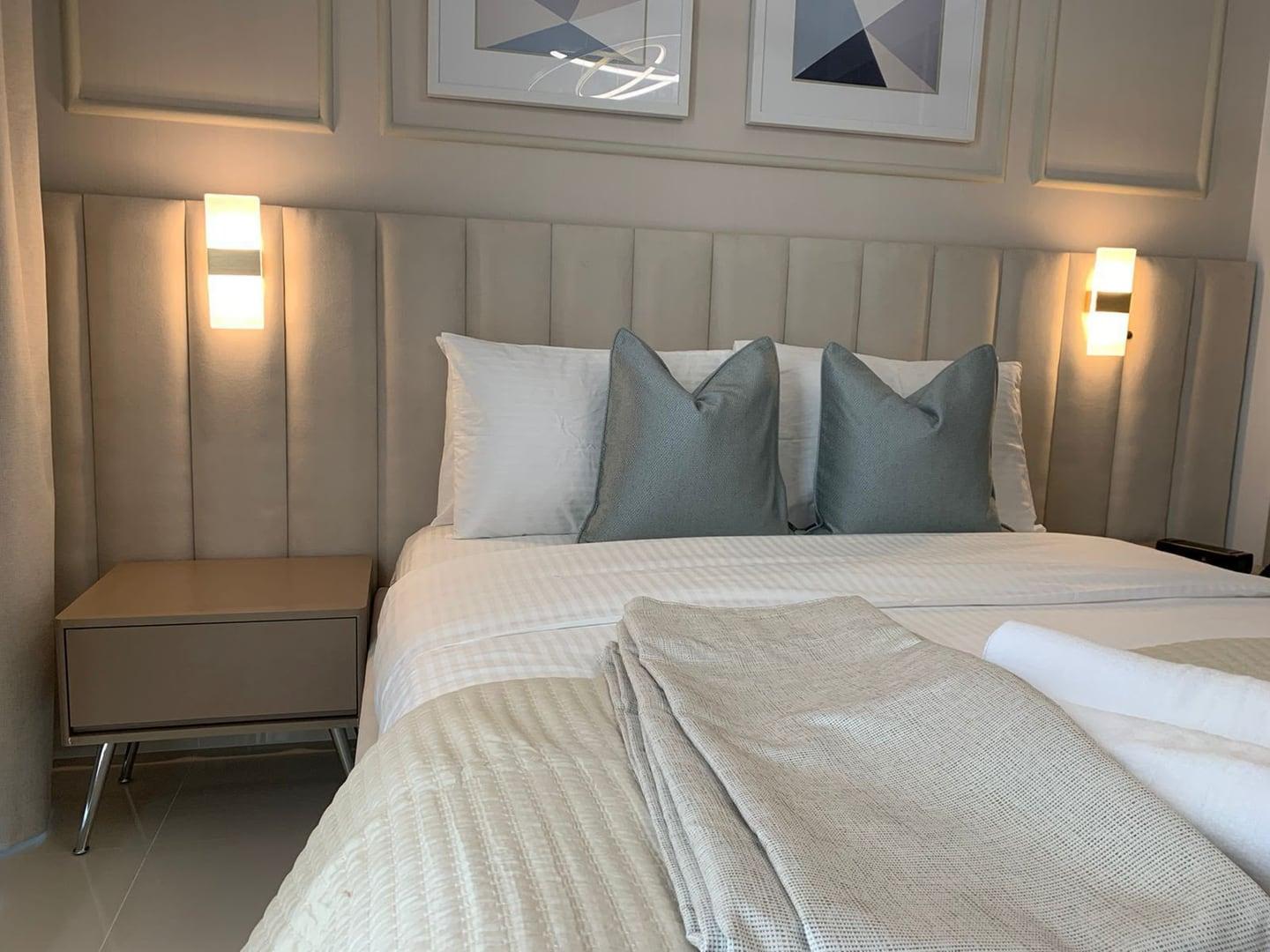
Wall lights on a feature wall deserve the same planning. Sconces either side of a bed look best centred on a motif or symmetrical about the centre line, and their cables need to be in the wall before it is prepared, never chased in afterwards.
Light, seams and colour
Light falling across a wall at a low angle, from a window beside it or from wall-washer lights in the ceiling, shows every join and every bump. Butt seams on a well-prepared wall are close to invisible in normal light, but the more glancing the light, the more any surface flaw shows. If a feature wall sits beside a large window, check it in the hour when the sun rakes across it, and make sure the wall is properly prepared; preparing walls for wallpaper explains what that involves.
Colour ties the wall to the room. Take one colour from the paper into the curtains, a cushion or the upholstery, and keep the other walls a quiet shade drawn from its background. Under your own lighting, a sample often looks warmer or cooler than in the shop, so hold it up beside the curtain fabric before deciding.
Quantity, cost and how we plan a feature wall
One wall needs fewer rolls than a room, but a patterned feature wall uses more paper per square metre than a plain one, because of the repeat and because centring the pattern can add a drop. Count it drop by drop, as our quantity guide shows. On price, papers we supply and hang start at AED 45 per m² of wall, and the wallpaper price guide works through a bedhead wall and other examples.
Because we take on whole rooms and larger jobs, not one wall by itself, a feature wall is planned together with everything else in the room: the curtains, the headboard or the lighting that sits in front of it. At the free visit we bring catalogues, laser-measure the wall, and agree the starting line and the motif's position with you before anything is cut; the wall is prepared and papered by our own team, normally in about a day. See our wallpaper service for the details.
Common questions
Which wall should be the accent wall?
The one you face as you enter or sit down: usually behind the bed, the sofa or the TV. Avoid walls broken by windows and doors. Choosing a feature wall.
Where do you start wallpapering a feature wall?
From a plumbed centre line, never a corner, working outwards so the pattern sits evenly on the wall or the bed. Where to start a feature wall.
Should a wallpaper pattern be centred on the bed?
Usually yes: a motif or the middle of a drop on the bed's centre line looks deliberate, and often gives wider strips in the corners. Centring the pattern.
How many rolls do I need for a feature wall?
Count drops: how many roll widths fit across the wall, then drops per roll at your height after the repeat. Add one for centring and one spare. Counting wallpaper rolls.
How much does a wallpaper feature wall cost?
With us, from AED 45 per m² of wall including the paper and hanging, so a 12 m² bedhead wall starts at about AED 549. Wallpaper price, room by room.
Which wallpaper type suits a feature wall?
Almost any, since it is rarely touched: fabric, textured or a bold non-woven print. Avoid delicate papers where hands or furniture rub. Choosing wallpaper for each room.

Sources & specifications
Manufacturer information applies to the named products and systems. Sources reviewed on 28 October 2026.
- Practical DIY: hanging wallpaper (centring large patterns, plumb line, the last joint)practicaldiy.com(opens in a new tab)
- Fine Homebuilding: how to lay out wallpaper (centred strip, narrow corner strips, windows)finehomebuilding.com(opens in a new tab)
- MEINEWAND help centre: straight match and drop match symbolssupport.meinewand.com(opens in a new tab)
Want this planned for your home?
Consultation and measurement are free. Tell us the rooms, location and what you need; we arrange a sample visit and define the measured quotation.