Ceilings · 11 min read · 1 May 2026
Gypsum false ceiling vs POP, PVC, grid and other ceilings
Should your false ceiling be gypsum? How it compares with POP, PVC, grid and tiles, a plain slab, acoustic ceilings and cement board, room by room in UAE homes.

By Ali Haider Basra, Founder, Al Tareeq Decor · Contact our workshop
Key takeaways
- Gypsum board is the natural choice for living rooms, majlis and bedrooms: seamless, shapeable and able to hide services.
- POP is gypsum plaster shaped by hand on site; keep it for curves and mouldings, use board for flat areas.
- PVC resists water but shows its joints; grid ceilings give access everywhere but look commercial.
- Steamy kitchens and bathrooms take moisture-resistant board, and cement board goes where water actually lands.
- Ceilings fail mainly through water and heavy fittings hung from board alone; both are avoidable.
On this page
- Key takeaways
- Is gypsum good for a false ceiling?
- Six ceilings in one drawing
- Gypsum ceiling vs a plain plastered slab
- POP vs gypsum: which is better for a false ceiling?
- PVC ceiling vs gypsum
- Gypsum vs grid ceilings with lay-in tiles
- Open, baffle and acoustic ceilings
- Kitchens, bathrooms and wet zones: moisture-resistant and cement board
- Fire: what a rated ceiling really means
- How long does a false ceiling last, and can it fall?
- All the options at a glance
- Ceiling options for UAE homes compared
- Which ceiling suits which room
- Common questions
Is gypsum good for a false ceiling?
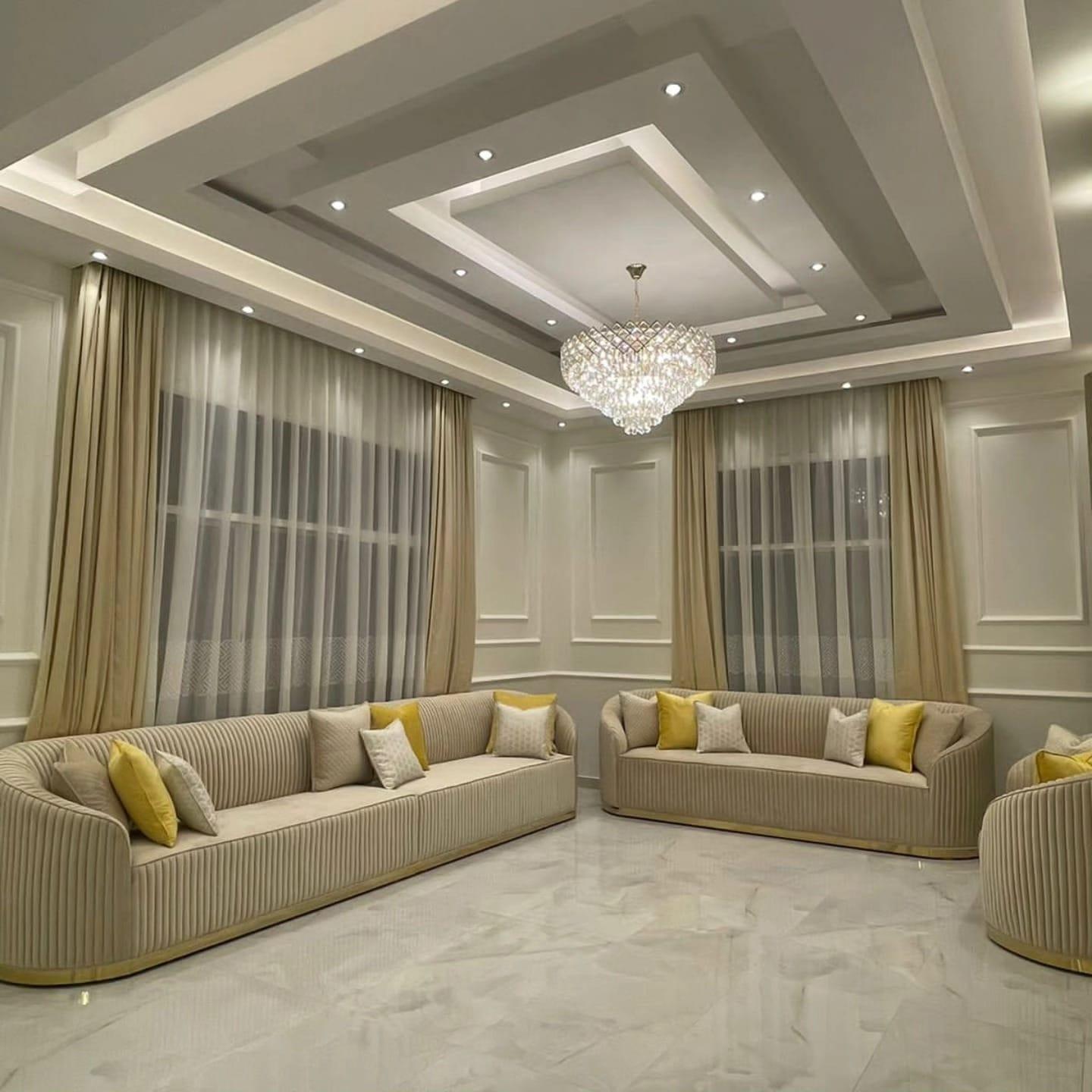
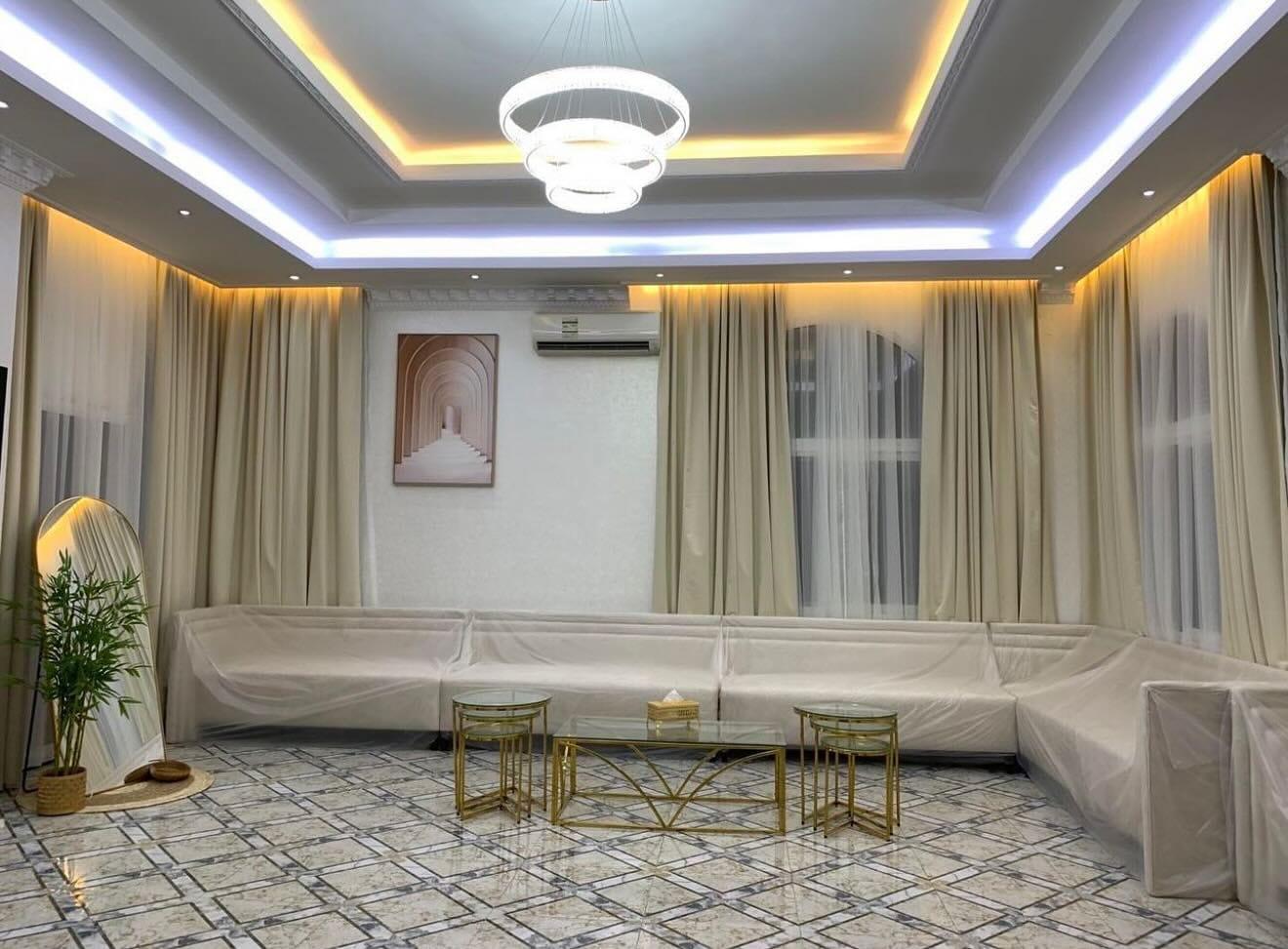
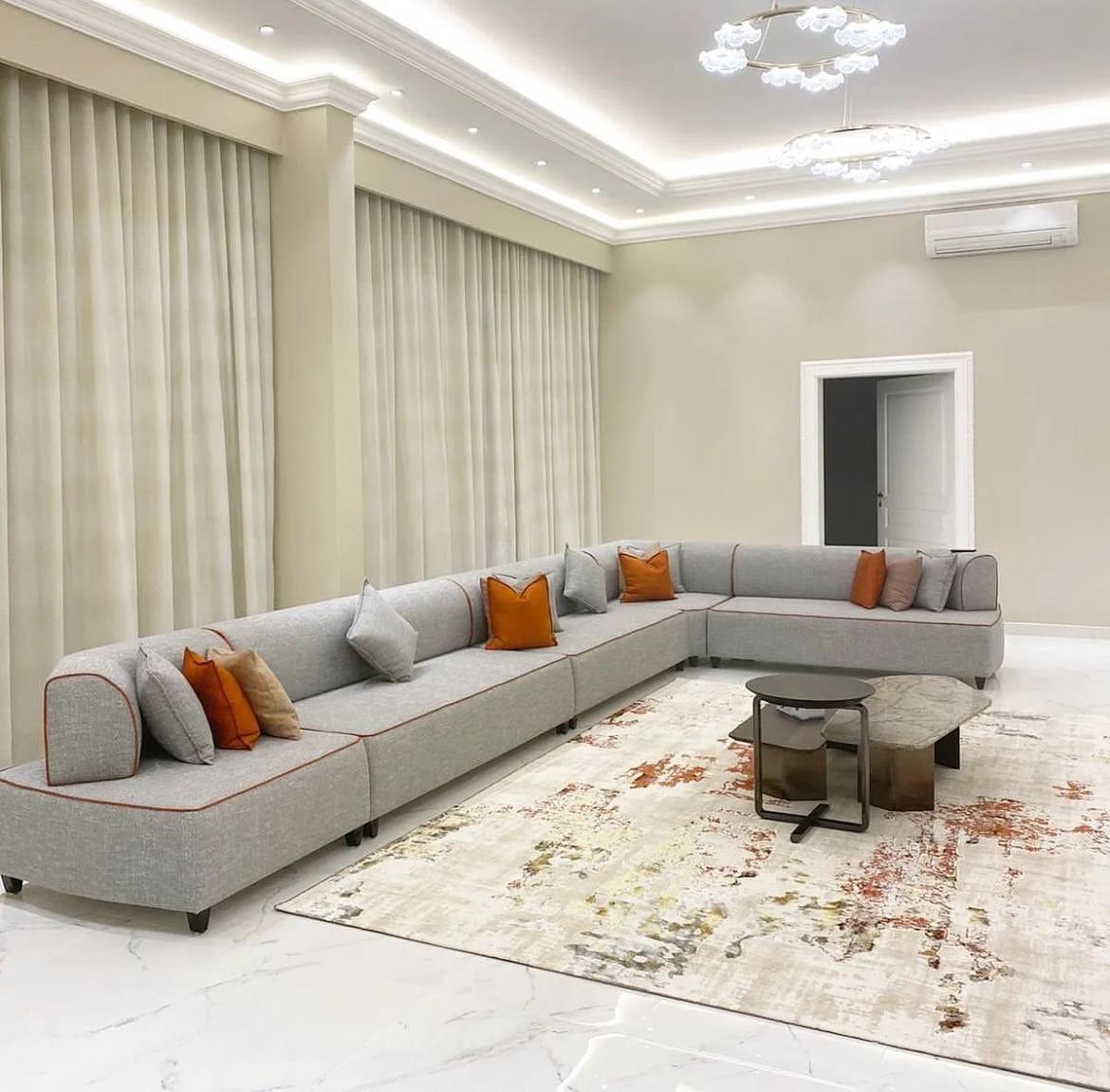
In the majority of UAE rooms, yes. It consists of a lightweight steel frame suspended from the concrete, with gypsum boards fixed underneath and their seams taped and skimmed until the surface reads as one piece, then painted. The void behind holds ducts, cabling and the bodies of light fittings, and the face can be stepped, curved or cut for coves, pockets and slots. That mix of a seamless finish and freedom of shape is why it has become the default ceiling in villas and apartments alike.
It is not the answer everywhere. A plain painted slab keeps every centimetre of height, a tile ceiling gives access anywhere, PVC shrugs off water, and a cement board belongs in the wettest corners of a bathroom. This guide sets the options side by side so you can choose room by room rather than by habit.
Six ceilings in one drawing
The drawing puts six common ceilings under the same slab so their build-ups can be compared at a glance. Notice how much of the difference is about what sits between the concrete and the surface you see: nothing at all for a painted slab, a steel frame and a void for gypsum, a grid you can lift tiles from, or battens carrying plastic strips.
The sections that follow take each option in turn, starting with the comparisons people search for most.
- 1. Painted slab: keeps the full height, but ducts and light points stay on the surface
- 2. Gypsum board on a steel frame: a seamless face with a void for services
- 3. POP: plaster laid on site and shaped by hand, good for curves and mouldings
- 4. Grid and lay-in tiles: any tile lifts out for access
- 5. PVC panels: plastic strips that do not absorb water, with visible joints
- 6. Cement board: for the wettest zones, often tiled
Gypsum ceiling vs a plain plastered slab
The most basic option is to skip the false ceiling entirely and finish the concrete slab itself with plaster or a skim coat and paint. It costs the least, keeps the room at full height and has nothing to maintain. Its weakness is that it hides nothing. AC ducts have to be boxed in, lights can only go where conduits were cast into the concrete, and an LED strip or a curtain track has no place to hide.
Choose the plain slab for rooms with good height, wall-mounted AC and simple lighting, such as many bedrooms, store rooms and service areas. Choose gypsum where the room needs services hidden, lights moved, or a cove, a pocket or a step added. A middle route is a gypsum bulkhead only where a duct runs, leaving the rest of the slab as it is.
On cost, the plain slab nearly always wins, because the work is only finishing: filling, skimming and paint over a surface that already exists. A gypsum ceiling adds a frame, boards and a second finishing job on top. That difference is worth paying when the ceiling does something; it is wasted when it only lowers a room that had nothing to hide.
POP vs gypsum: which is better for a false ceiling?
POP and gypsum board are closer relatives than the names suggest. Britannica describes plaster of paris as a quick-setting gypsum plaster, a fine white powder made by heating gypsum, which hardens once it is wetted and left to dry. Gypsum board is made from the same mineral, but it arrives as factory-made sheets of even thickness. The real difference is how each becomes a ceiling.
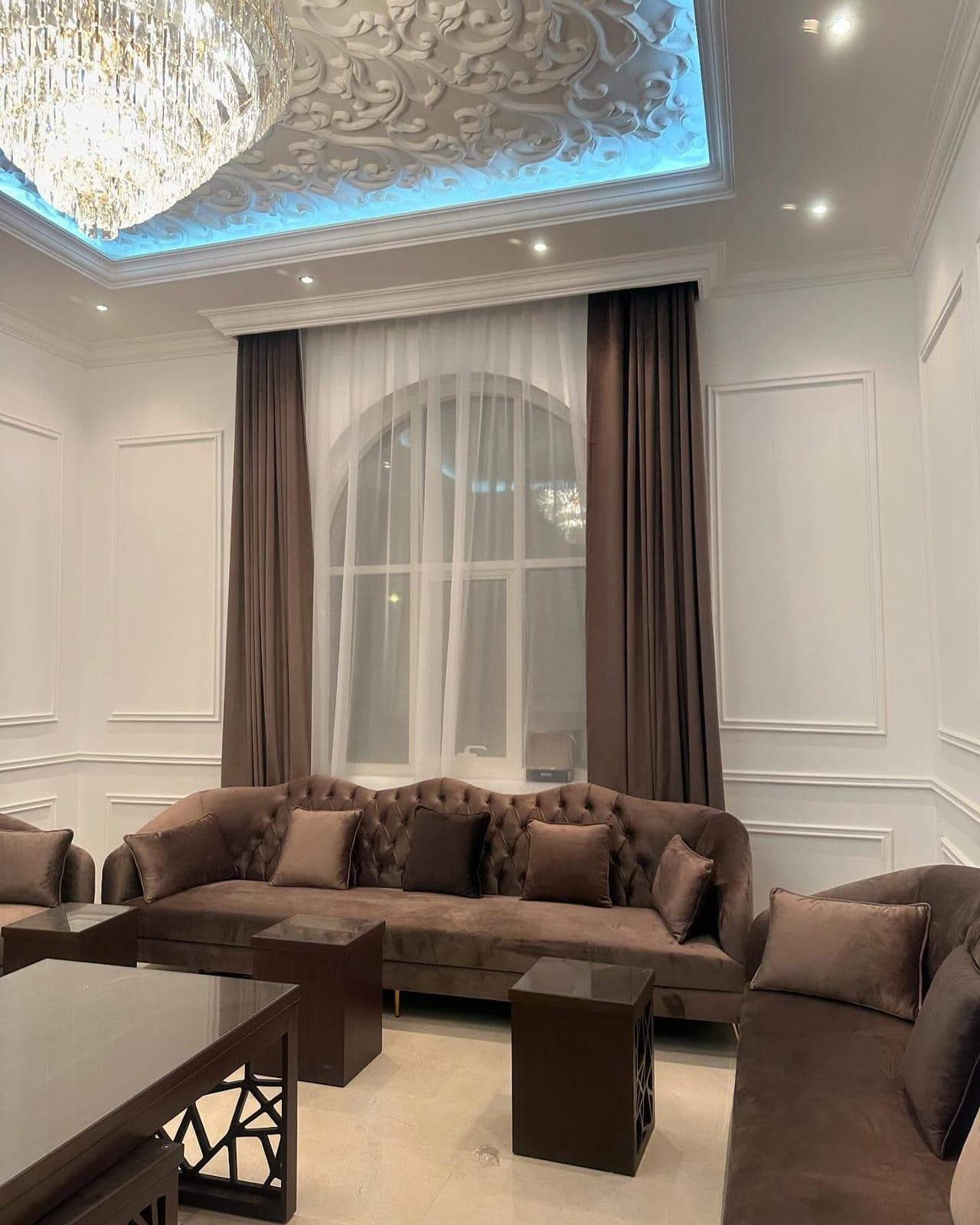
A POP ceiling is wet work. Plaster is mixed on site, laid onto mesh or a frame and shaped by hand, then left to dry before it can be sanded and painted. That makes it good at what boards find hard: curves, domes and run mouldings. Britannica notes that plaster of paris is commonly used to precast ornamental plasterwork for ceilings and cornices. The cost is time, mess and a result that depends heavily on the plasterer's hand.
A gypsum board ceiling is dry work. Boards are screwed to the frame, only the joints are filled, and a flat room can go from bare slab to painted ceiling in around two days of board work plus painting. Thickness is consistent, the surface is predictable, and a damaged patch is simply cut out and boarded again. Our advice: use board for the flat fields and simple steps, which is most of any ceiling, and save hand-shaped plaster or precast mouldings for the ornament that genuinely needs it. On cost, we publish a rate for gypsum board only, so compare any POP quote on the same drawing rather than on a headline number.
PVC ceiling vs gypsum
PVC ceilings are long plastic strips that clip together and fix to battens. They do not soak up water, they wipe clean, and they go up quickly, which is why they appear in utility rooms, laundry areas, bathrooms and some balconies. They are also light, so they need little structure behind them.
Their limits show in living spaces. The joints between strips stay visible, the range of shapes is narrow, and a damaged strip is replaced rather than repaired invisibly. PVC is a plastic, so check the maker's guidance on heat near light fittings and on fire performance before specifying it. For a majlis, a living room or a bedroom, gypsum gives a calmer, seamless surface; PVC earns its place where water and wiping matter more than appearance.
Gypsum vs grid ceilings with lay-in tiles
A grid ceiling hangs a metal grid below the slab and drops tiles into it. Knauf's UAE catalogue offers grids in three forms, exposed, semi-concealed and fully concealed, plus corridor ceilings that can be taken down section by section where people pass all day. Their strength is reach: lift any tile and the cables or ducts above are right there, which explains why offices, clinics and shops use them so widely.
Inside a house the look is usually too office-like, and the grid lines break the clean surface most people want in a living room. They make sense above a plant area, a store, a laundry or a home office full of cabling. Where a gypsum ceiling needs the same access in a few places, a planned access panel gives it without the grid; see ceiling access panels. The video below, from a tile maker, shows the tile-and-grid approach for rooms where it suits.
Open, baffle and acoustic ceilings
Some large spaces have a different problem: echo. Open designs and suspended baffles show part of the structure above and bring in extra surfaces that soak up sound. Seamless acoustic finishes are another route: Knauf's ELEGANZA, for example, is sprayed on as a very fine white coat, reflects 84% of light and is rated Class A for sound absorption.
Such ceilings belong mainly to hotels, offices and restaurants, but a very large villa hall with hard marble floors can benefit. For most homes, soft furnishings, curtains and rugs do much of the same work, and an ordinary gypsum ceiling already helps: Knauf states that its KC 001 suspended system improves the acoustic performance of the slab above by up to 20 dB.
Kitchens, bathrooms and wet zones: moisture-resistant and cement board
Is a gypsum ceiling good for a kitchen or a bathroom? It is, with the right board. Knauf makes its moisture-resistant board for exactly these humid indoor rooms, and steam and damp air do not trouble it. It is not waterproof, though: a leaking pipe or a dripping AC tray above will still damage it, so find and fix any leak before the ceiling closes, and keep the room ventilated.
For the wettest zones, a ceiling right over a shower, a pool hall or a covered outdoor area, cement board is the safer base. Knauf's AQUAPANEL cement boards are built from inorganic materials, so getting wet does them no harm. People sometimes ask about "gypsum board vs Hardiflex"; Hardiflex is a brand of fibre-cement board, and fibre-cement and cement boards belong to this wet-zone family rather than competing with gypsum in a dry living room.
Fire: what a rated ceiling really means
Fire-resistant gypsum boards exist, and they are often confused with fire-rated ceilings. Knauf's UAE guidance separates the two: reaction to fire is how a material itself behaves in flame, while fire resistance comes only from a whole system of board, framing, fixings and joints that has passed a fire test together. Its fire-rated systems are tested to ASTM and EN BS methods and certified by UAE Civil Defence.
In a home, most ceilings do not need a fire rating at all. Where one is required, it has to be specified and built as the named system, and that belongs in the written specification; gypsum ceiling costs and specification shows how to word it.
How long does a false ceiling last, and can it fall?
A well-built gypsum ceiling in a dry room lasts as long as the room's decoration cycle and longer; it is usually repainted with the walls rather than replaced. What shortens its life is water, from a leak, a blocked AC drain or a bathroom above, and later alterations made without care, such as cutting new holes for lights in the wrong place.
Ceilings come down when they are asked to do something they were not built for: soaked board losing its strength, or a heavy chandelier hung from the board instead of being fixed back to the slab. Both are avoidable. Fix leaks first, plan heavy fittings into the frame, and give every serviceable item above the ceiling an access panel so nobody has to break the board to reach it.
Is a false ceiling worth it, then? Where it hides services, brings light into the right places and lets a room be shaped, usually yes. Where a room has none of those needs, a well-finished slab is the honest choice.
All the options at a glance
The table compresses the comparison into one place. Read the last column first: almost every option is the best choice somewhere, and the mistake is using one ceiling everywhere.
Ceiling options for UAE homes compared
Painted slab
- Finish
- Plain
- Hides services
- No
- Access
- Everything on show
- Wet rooms
- With suitable paint
- Best for
- Rooms with height and simple services
Gypsum board
- Finish
- Seamless, paintable
- Hides services
- Yes
- Access
- Through planned panels
- Wet rooms
- Moisture-resistant board
- Best for
- Living rooms, majlis, bedrooms, halls
POP
- Finish
- Seamless, hand-shaped
- Hides services
- Yes
- Access
- Through planned openings
- Wet rooms
- Not a wet-area material
- Best for
- Curves, domes and mouldings
Grid and tiles
- Finish
- Visible grid
- Hides services
- Yes
- Access
- Any tile lifts out
- Wet rooms
- With suitable tiles
- Best for
- Stores, plant areas, offices
PVC panels
- Finish
- Strips with joints
- Hides services
- Partly
- Access
- Strips unclip
- Wet rooms
- Yes
- Best for
- Utility rooms, laundries
Cement board
- Finish
- Paintable or tiled
- Hides services
- Yes
- Access
- Through planned panels
- Wet rooms
- Yes
- Best for
- Over showers, pools, covered outdoors
A summary of the general behaviour of each option. Board grades and systems are chosen room by room on the specification.
Which ceiling suits which room
Living rooms, majlis, bedrooms and halls: a gypsum board ceiling, with coves, pockets and slots where the design needs them. Kitchens and bathrooms: moisture-resistant gypsum board, with cement board over the wettest zones. Laundries and utility rooms: PVC or a tiled grid if access and wiping matter more than looks. Rooms with height and no ducts: consider leaving the slab and spending the money on light and curtains instead.
Mixing types in one home is normal and does not complicate the job. A villa might take gypsum with a cove in the majlis, moisture-resistant board in the kitchen, cement board above the showers and PVC in the laundry. On a quotation each room is simply its own line with its own material, so you can see what every choice costs and change one room without touching the others.
We build gypsum board ceilings with Knauf and Mada boards on galvanised steel frames, and our own team paints them. A flat level starts at AED 70 per m², or AED 35 per m² labour only; false ceiling cost per m² works through room examples. To talk through your rooms, start with gypsum and false ceilings or, near our workshop, gypsum ceilings in Sharjah.
Common questions
Which is better, POP or gypsum ceiling?
Gypsum board for flat areas and simple steps: faster, cleaner and consistent. POP for curves and mouldings that need shaping by hand. False ceiling designs for living rooms and majlis.
Is PVC or gypsum better for a bathroom ceiling?
Both can work: moisture-resistant gypsum gives a seamless painted finish, PVC shrugs off water but shows its joints. Right over a shower, cement board is safer. Gypsum ceiling costs and specification.
Is a gypsum ceiling expensive?
A flat level starts at AED 70 per m² supplied and fitted with us; design features add their own lines. False ceiling cost per m².
Is gypsum ceiling good for a kitchen?
Yes, in moisture-resistant board with good extraction, and with any leak above fixed first. Lighting and AC in gypsum ceilings.
Can a false ceiling fall?
A properly fixed one should not. Failures usually follow water damage or a heavy fitting hung from the board instead of the slab. Ceiling access panels.
Do I need a false ceiling at all?
Only if the room needs services hidden, lights moved or a shape added; otherwise a painted slab keeps full height. Planning a fit-out.

Sources & specifications
Manufacturer information applies to the named products and systems. Sources reviewed on 28 October 2026.
- Britannica: plaster of paris, a quick-setting gypsum plaster used for ceiling and cornice ornamentbritannica.com(opens in a new tab)
- Knauf UAE: suspended, open, seamless acoustic and corridor ceilingsknauf.com(opens in a new tab)
- Knauf UAE: moisture-resistant board and AQUAPANEL cement boardsknauf.com(opens in a new tab)
- Knauf UAE: fire resistance belongs to tested systems certified by UAE Civil Defenceknauf.com(opens in a new tab)
- Knauf UAE: KC 001 suspended ceiling system (up to +20 dB acoustic improvement)knauf.com(opens in a new tab)
Want this planned for your home?
Consultation and measurement are free. Tell us the rooms, location and what you need; we arrange a sample visit and define the measured quotation.