Upholstery · 14 min read · Updated 28 October 2026
Reupholster or replace a sofa? Five checks before you decide
Is your sofa worth recovering? Five checks in order, from the frame to the fit: the lift test, why sagging is often the support, and when replacing is honest.

By Ali Haider Basra, Founder, Al Tareeq Decor · Contact our workshop
Key takeaways
- Decide from the inside out: frame first, then support, foam, fabric, and last whether the shape still suits the room.
- Lift one end of the sofa and push an arm: a good frame does not twist, creak or wobble; a weak one makes the rest pointless.
- Swap the seat cushions. If the dip moves with the cushion it is the foam; if it stays put, it is the springs or webbing.
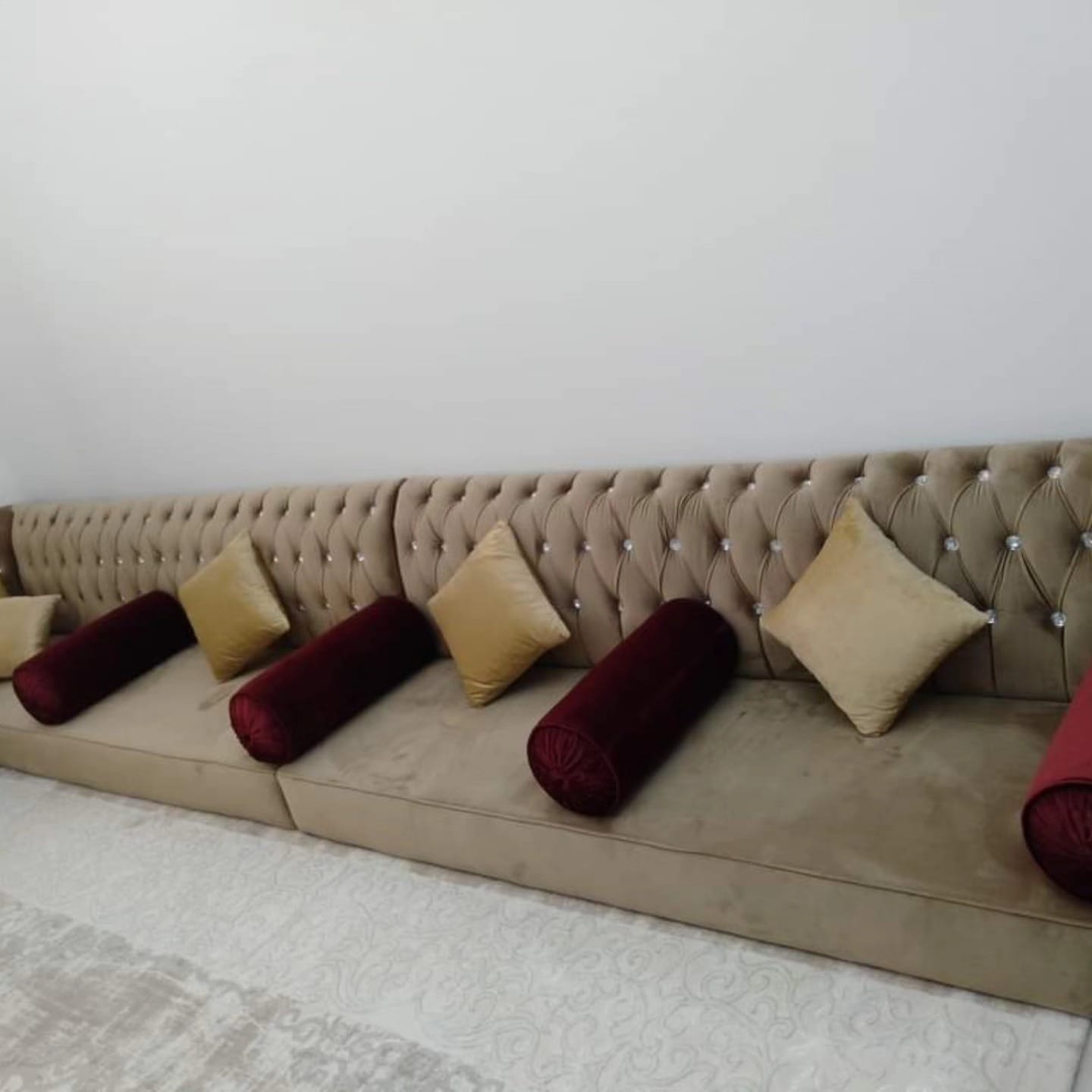
- Reupholster a sound frame whose shape you value, as with fitted majlis seating; replace one that has failed or whose shape is wrong.
- Ask for a written quotation listing frame work, support work, foam grade for seats and backs, fabric and collection, then compare it with a like-for-like new sofa.
On this page
- Key takeaways
- Reupholster or replace a sofa: judge the frame before the fabric
- What reupholstering renews, and what it keeps
- Five checks, in the order that saves you money
- What each check finds and what it leads to
- The frame check you can do at home
- Sagging is usually the support, not the cushion
- The three supports under a sofa seat
- Fabric, leather or faux leather: what a new cover changes
- When a good frame is worth the work
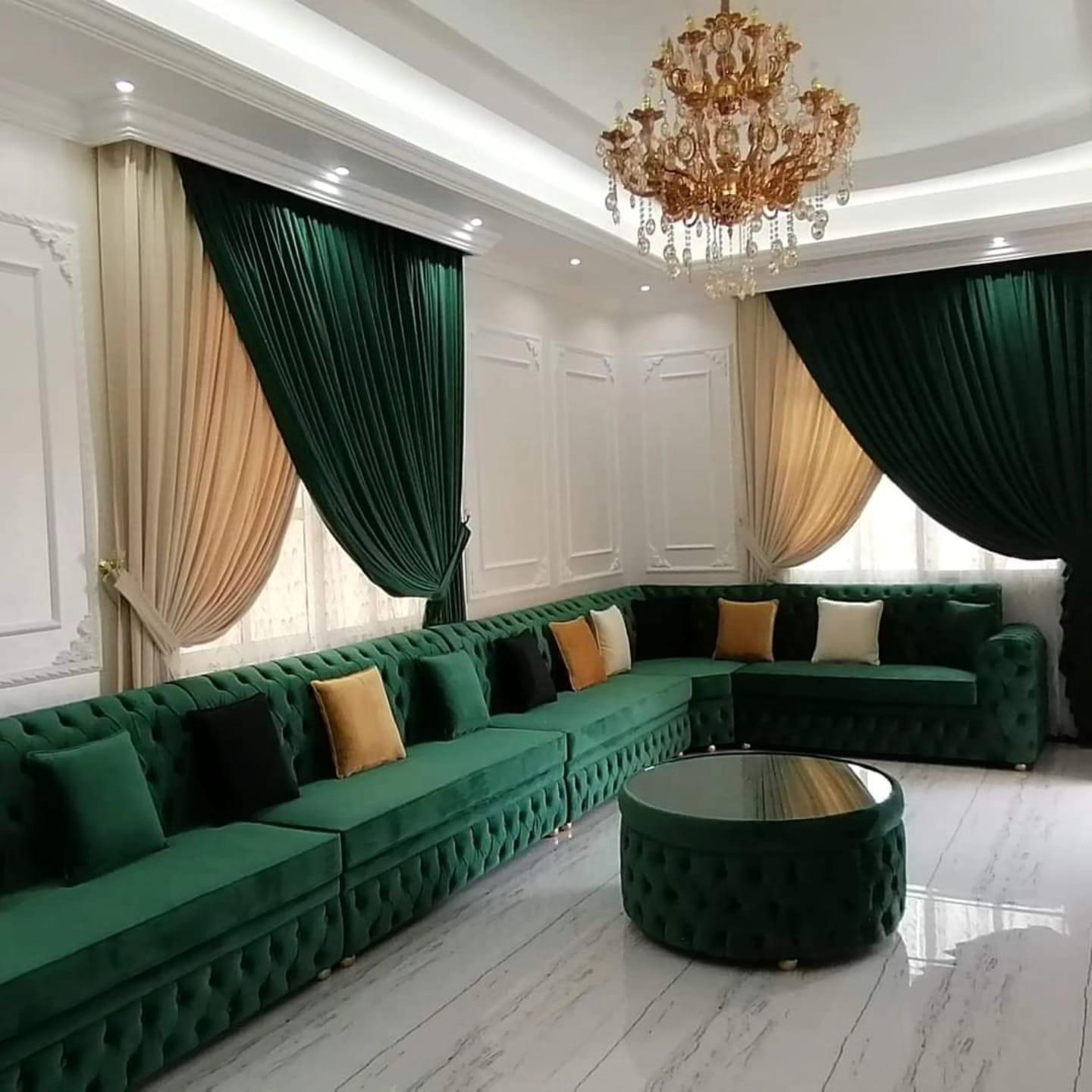
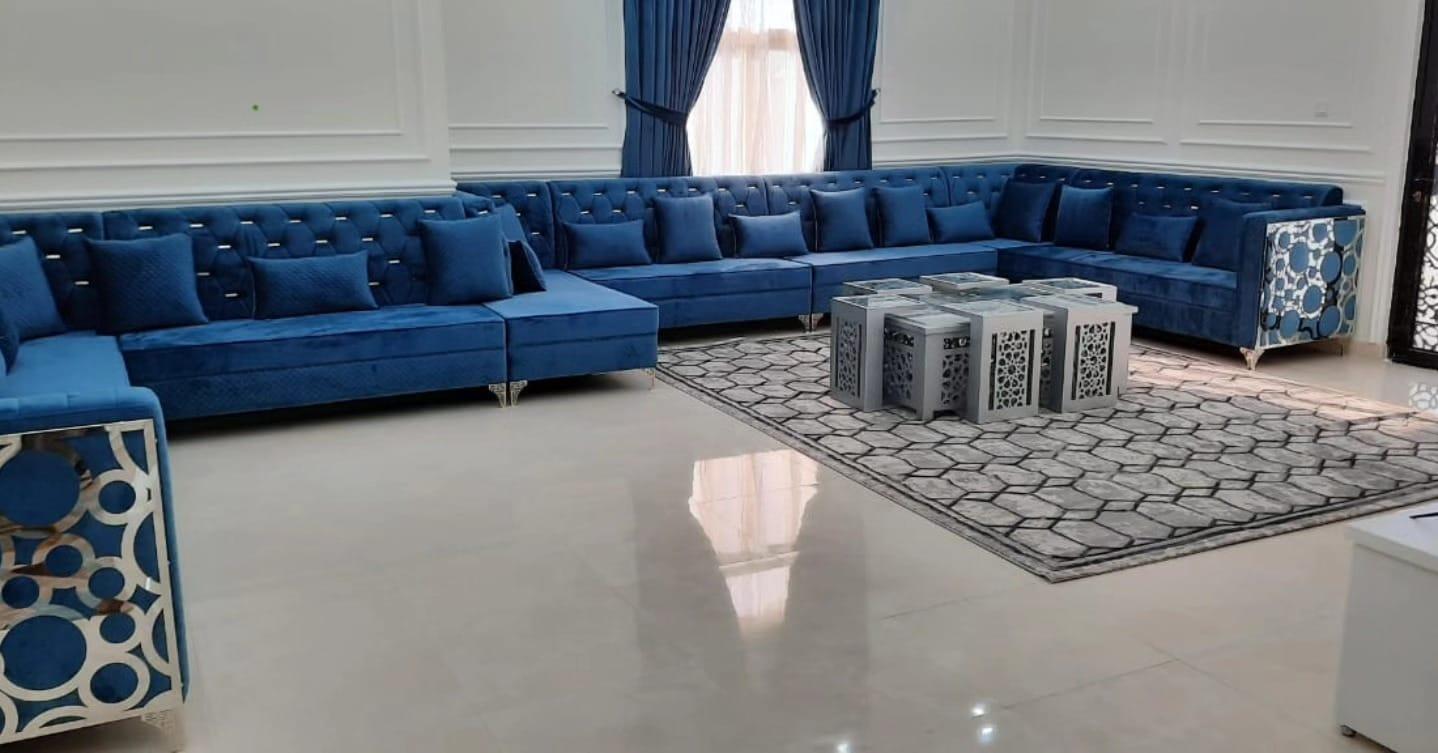
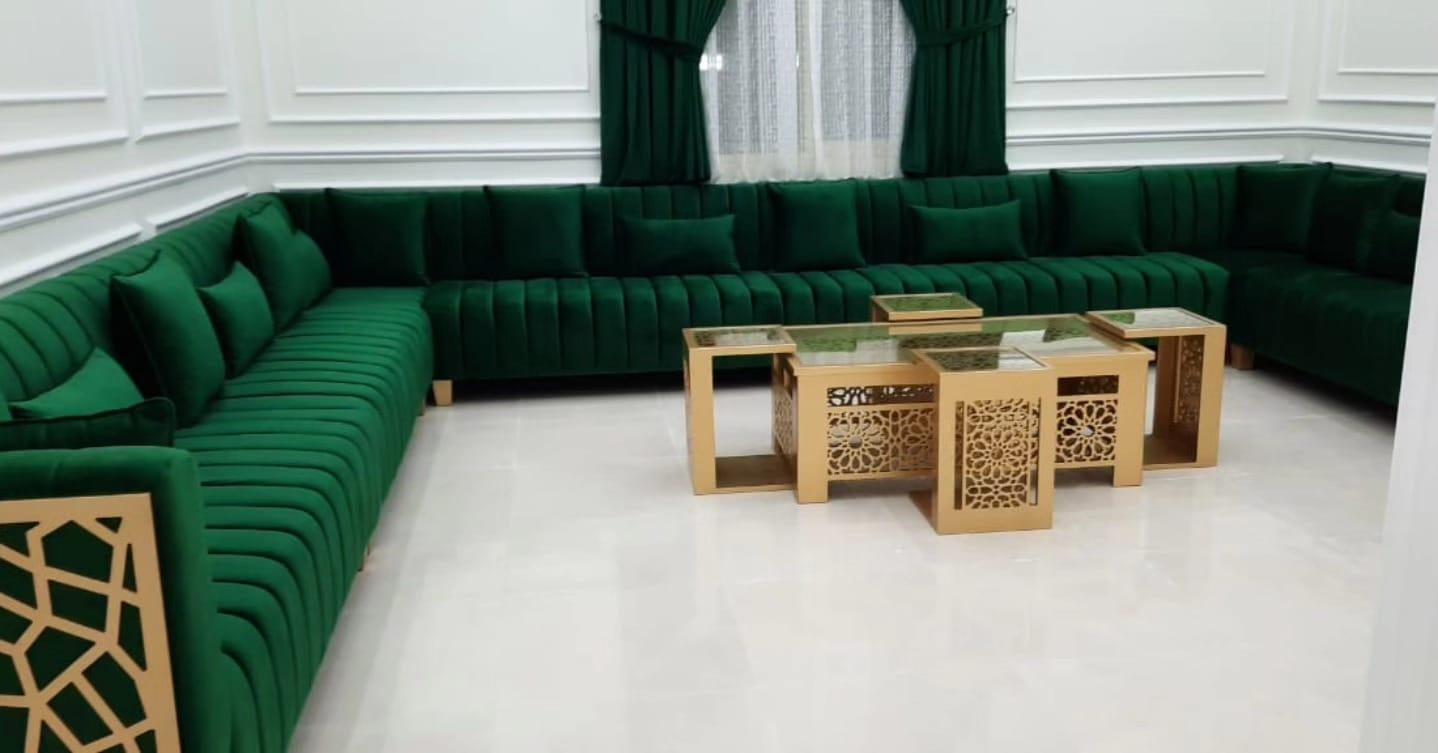
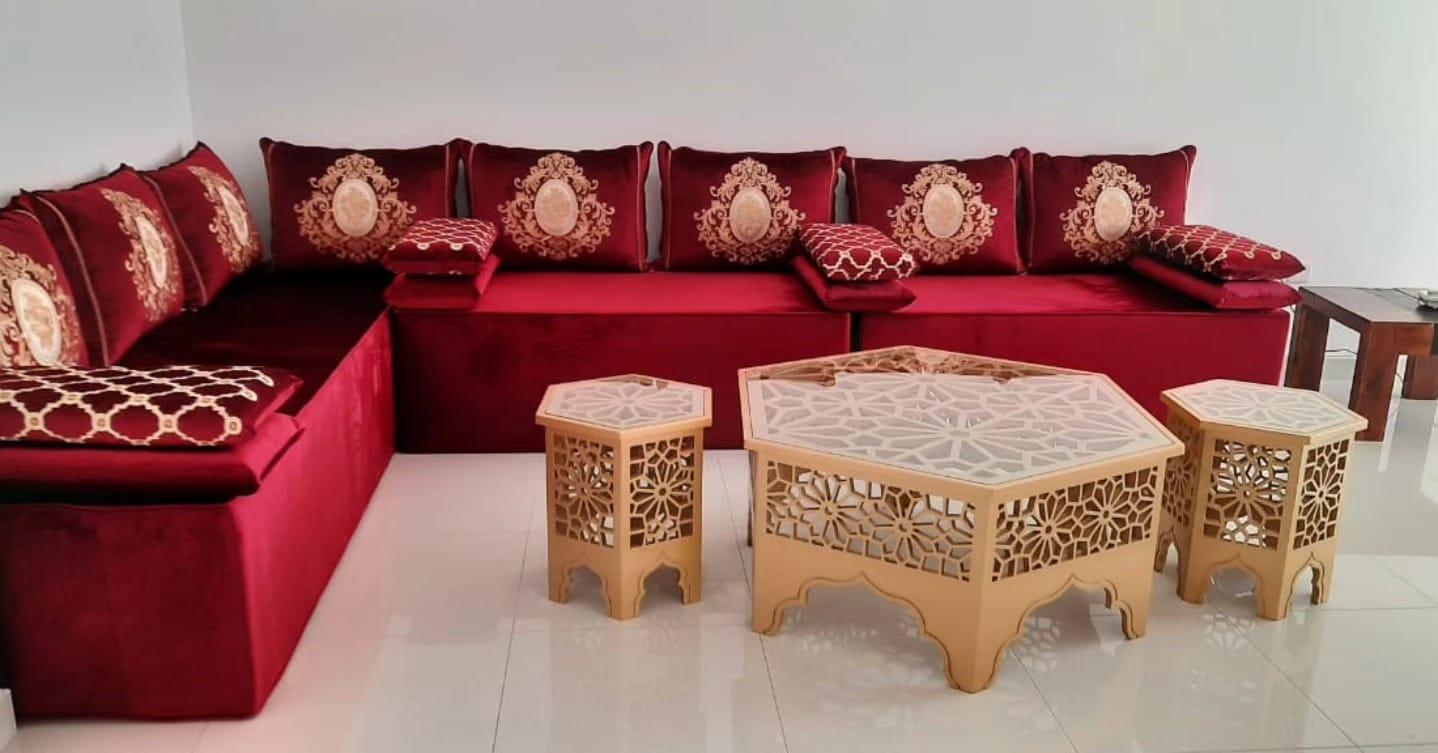
- Majlis and corner seating: the case for repair is stronger
- When replacing is the honest answer
- Comparing a reupholstery quote with a new sofa
- Reupholstering your sofa against buying a new one
- What happens at an inspection
- Common questions
Reupholster or replace a sofa: judge the frame before the fabric
Most sofas leave the living room because the cover looks tired or the seat has sunk, and neither of those is the sofa's real problem. A cover is a layer you can change. What decides whether the whole piece is worth keeping is underneath it: the wooden frame, the springs or webbing that hold you up, and the foam that you actually sit on.
That is why this guide works from the inside out. It gives you five checks that take about twenty minutes at home, tells you what a failed check means in practice, and ends with the questions to put to an upholsterer. It stays with the decision itself. What each part of a reupholstery job costs is covered in our sofa upholstery cost guide, the foam grades in sofa foam density explained, and the choice of cover in sofa fabrics for children and pets.
What reupholstering renews, and what it keeps
Reupholstery is rebuilding a sofa on its existing skeleton. The old cover and padding come off down to the bare frame; the wood is checked and repaired, tired support is renewed, fresh foam is fitted and a freshly sewn cover is fitted over it. At Al Tareeq Decor that work happens in our Sharjah workshop: we collect the sofa from your home, restore it there with new foam, springs or webbing as needed, and bring it back. In a typical job the sofa is away for about eight days after we confirm the order.
So the frame stays, and everything else can change. That is the whole logic of the decision. A sofa with a sound frame has an expensive part that is still good, while one with a failing frame has nothing left worth saving except the idea of the shape. Because the frame cannot be seen once the sofa is upholstered, the checks below are all ways of making it tell you what condition it is in.
One practical point before you start: a sofa is rarely all-or-nothing. A cover and foam can be renewed while the frame is only reinforced, or the support can be repaired while the cover is kept. An inspection should result in a list of what to renew and what to leave, not a single yes or no for the whole piece.
Five checks, in the order that saves you money
Run the checks in this order, because the early ones are the ones that can end the discussion. A failed frame makes the other four irrelevant, while a worn cover is the least serious finding there is.
The first four ask whether the sofa is sound underneath and how much of it needs renewing. The fifth is about you: whether a perfectly restored sofa would still suit the room. Recovering a deep, low sofa in a lovely fabric does not turn it into the shallow, upright one you now want.
What each check finds and what it leads to
Frame
- How to test it
- Lift one end, push each arm, sit in the middle and listen
- A pass means
- The structure is worth keeping
- A fail leads to
- Re-jointing and reinforcement, or replacement if the wood itself is weak
Support
- How to test it
- Swap the seat cushions and see whether the dip moves
- A pass means
- Springs or webbing still carry you
- A fail leads to
- New webbing or springs under the seat
Foam
- How to test it
- Press the seat, then the front edge; compare seat with seat
- A pass means
- The padding still has its height
- A fail leads to
- New foam in the seats, and often the backs
Fabric
- How to test it
- Look at the arms, seat fronts and cushion edges in daylight
- A pass means
- A cover can wait
- A fail leads to
- A new cover; the main job in most reupholstery
Fit
- How to test it
- Stand in the doorway and ask whether you would buy this shape today
- A pass means
- A restored sofa will be used
- A fail leads to
- Replacement, because only the cover changes
Sources: Consumers' Checkbook and Bellona for the frame tests, Hunker for the support types. Our workshop's list of renewals is on the sofa upholstery service page.
- 1. Frame: lift one end and push an arm; a good frame does not twist, creak or wobble
- 2. Support: swap the seat cushions; if the dip stays put, the springs or webbing are tired
- 3. Foam: a dished seat, a thin front edge or one seat softer than the rest
- 4. Fabric: worn, stained or faded; the easiest fault to fix, and the least serious
- 5. Fit: size, depth and style still right for the room; recovering cannot change them
- 6. Verdict: reupholster when the frame and the fit pass, replace when either fails
The frame check you can do at home
Start with your hands. Grip one arm and push it from side to side; it should feel like part of the sofa. Consumers' Checkbook, a US consumer organisation that rates local service providers, calls this the wobble test: a well-built arm does not move or creak. Then lift one end of the sofa. The Checkbook test is that the frame should not sag or make noise, and Bellona, a furniture brand, adds a variant: lift one front corner a little, and if the opposite corner rises with it the frame is rigid, while a frame that twists first is a weaker one.
Sit on the ends and in the middle. On a sofa of three seats or more, the middle seat is where a tired frame shows first, because it carries the same weight with the least help from the arms. Listen as you shift your weight. A creak that follows you from seat to seat is usually the frame; one that comes from a single seat is usually the support beneath it.
If you are willing to look underneath, turn the sofa over or tip it back and take off the thin black dust cover on the base. Checkbook's guide says the key rails, such as the front rail beneath the seat cushions, should be solid hardwood rather than plywood or fibreboard, the structural timber should be at least 1¼ inches (about 3 cm) thick, and the corners should have reinforcing blocks. Bellona's guide adds that a good frame combines several fixings, such as glue, dowels and screws, rather than relying on staples alone.
Frame faults divide into two kinds, and the difference decides everything. A loose joint, a split rail or a cracked leg is a repair job, and our team re-joints and reinforces hardwood frames as part of the restoration. A frame built from weak board, or one that no longer sits true, is a different matter, because you would be paying for new foam and fabric on a base that will go on failing. If the inspection says the frame is not worth the work, a straight answer to that effect is worth more than a quotation.
Sagging is usually the support, not the cushion
A sagging seat is the most common reason people consider reupholstery, and the foam is not always to blame. Foam does wear out, but a seat can also sink because the webbing under it has stretched or the springs have lost their tension. A new cushion on top of that only hides the dip for a few months.
A simple test separates the two. Take the loose seat cushions off and swap two of them, say the one you always sit on with one at the end. If the dip moves with the cushion, the foam has gone. If it stays in the same place on the base, the support underneath has gone. Press down on the bare base with a hand, too: it should push back evenly, with no soft patch.
It helps to know what you are looking at. Hunker's guide to sofa construction describes three common supports, set out below. Sinuous springs, the S-shaped wire in most mid-priced sofas, are held in line by cross rods, and a sofa that squeaks as you sit has usually reached the end of them. Eight-way hand-tied springs are the high-end method, tied with twine in eight directions. Webbing is the most affordable, and the same guide notes that good, well-secured webbing can match the support of springs.
The three supports under a sofa seat
Webbing
- What it is
- Woven straps fixed to the frame, no springs
- Where it is found
- The most affordable construction; no bounce
- What tired looks like
- A dip where straps have stretched or their fixings have loosened
Sinuous springs
- What it is
- S-shaped wire in rows, joined by cross rods
- Where it is found
- Mid-priced sofas
- What tired looks like
- Squeaks when you sit or shift; a dip along the line of one wire
Eight-way hand-tied
- What it is
- Coil springs tied with twine in eight directions
- Where it is found
- High-end seating
- What tired looks like
- A soft zone where a spring or its ties have given way
Source: Hunker, “Spring vs. webbing in sofa construction”, and Consumers' Checkbook. Our workshop replaces webbing and springs; ask at the inspection which your sofa has.
Fabric, leather or faux leather: what a new cover changes
Cover wear is the problem that reupholstery fixes best, and the one that least often justifies replacing a sofa. The cover is the layer most exposed to sun, hands, children and pets, and the choice you make now can be better matched to the household than the one that came with the sofa. Our fabric library runs past 2,000 choices, among them stain-resistant, water-repellent and pet-friendly ones, plus velvet, Italian leather and faux leather; the choosing itself is the subject of sofa fabrics for children and pets.
Leather and faux leather need a separate word. A scuffed or faded leather sofa can be recovered in leather or fabric if the frame passes. Faux leather is different: Bellona's pet guide notes that it may peel or crack over the long term, and a peeling surface is normally replaced, not repaired. That makes a peeling faux leather sofa with a good frame one of the clearest reupholstery cases there is.
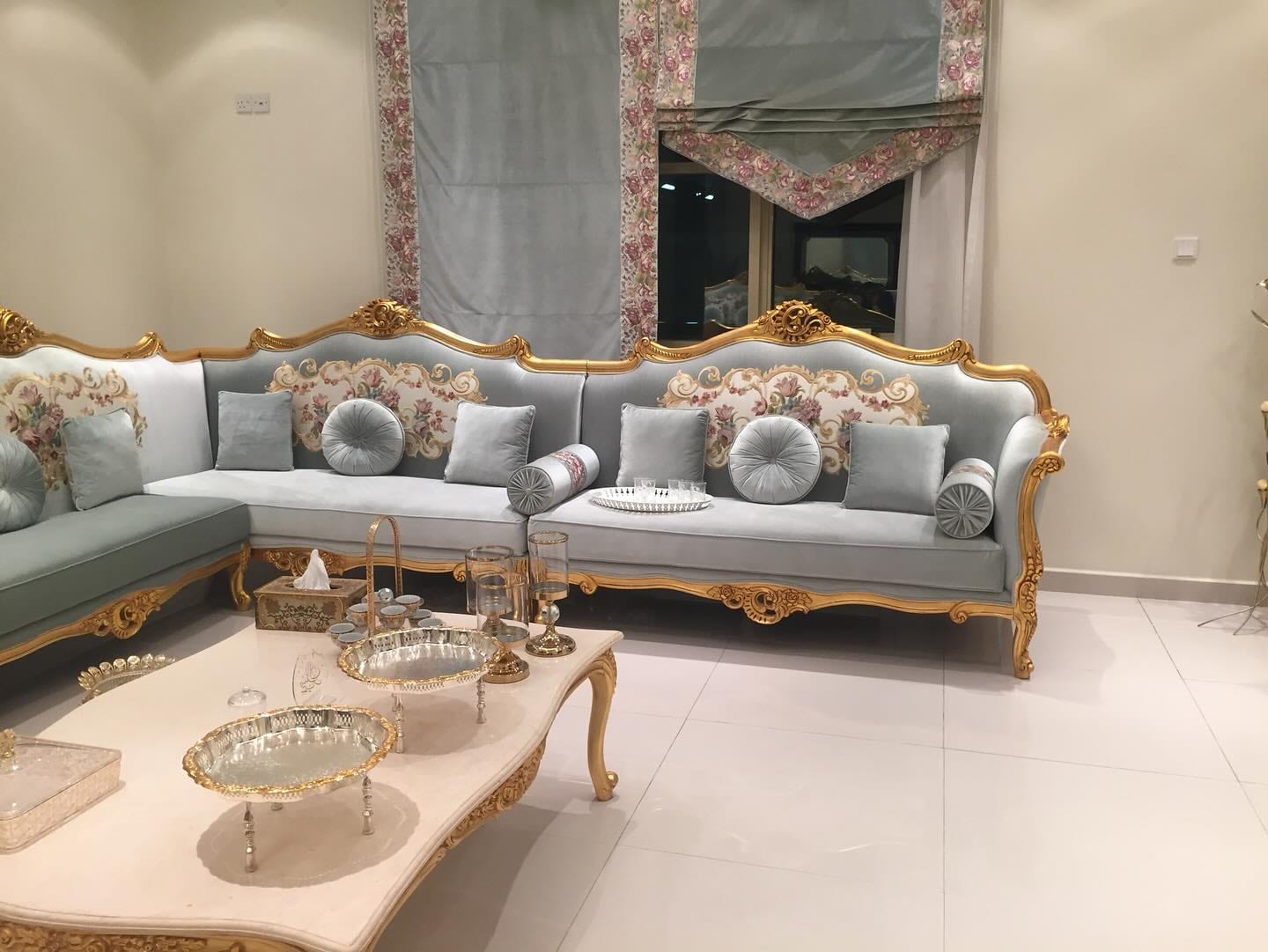
Fabric also changes how the sofa looks in the room, and that is a legitimate reason to recover a sound piece. A new wall colour, a new curtain or a refreshed majlis can leave good seating looking out of place, and a new cover brings it back into the scheme at the lowest cost to the frame.
When a good frame is worth the work
Consumers' Checkbook states the rule most plainly: do not recover a piece that will not outlast its new fabric. For a well-made frame the sums usually favour reupholstery. For a lightly built, mass-produced one they often do not, because the fabric and labour can cost more than a comparable new sofa. The same guide notes that for high-quality or antique pieces the upholstery charge is small beside the cost of replacing them.
The short video below makes the same point from a workshop. It reviews two recovered chairs and the reasoning behind paying for the work, and is candid about how little reupholstery is an economy: the owner argues that it makes sense for a piece you value, not as a way of saving money. The second video, further down, shows a professional upholsterer going through the quality indicators of a couch before you commit to it.
Taken together, the evidence gives a workable rule. Reupholster once the frame passes, the shape still suits you and the piece matters to you: a sofa made to the room, a family heirloom, a favourite seat. Replace if the frame is weak, the shape is wrong, or the cost of renewal approaches that of an equal new sofa and you would rather have the new one.
Majlis and corner seating: the case for repair is stronger
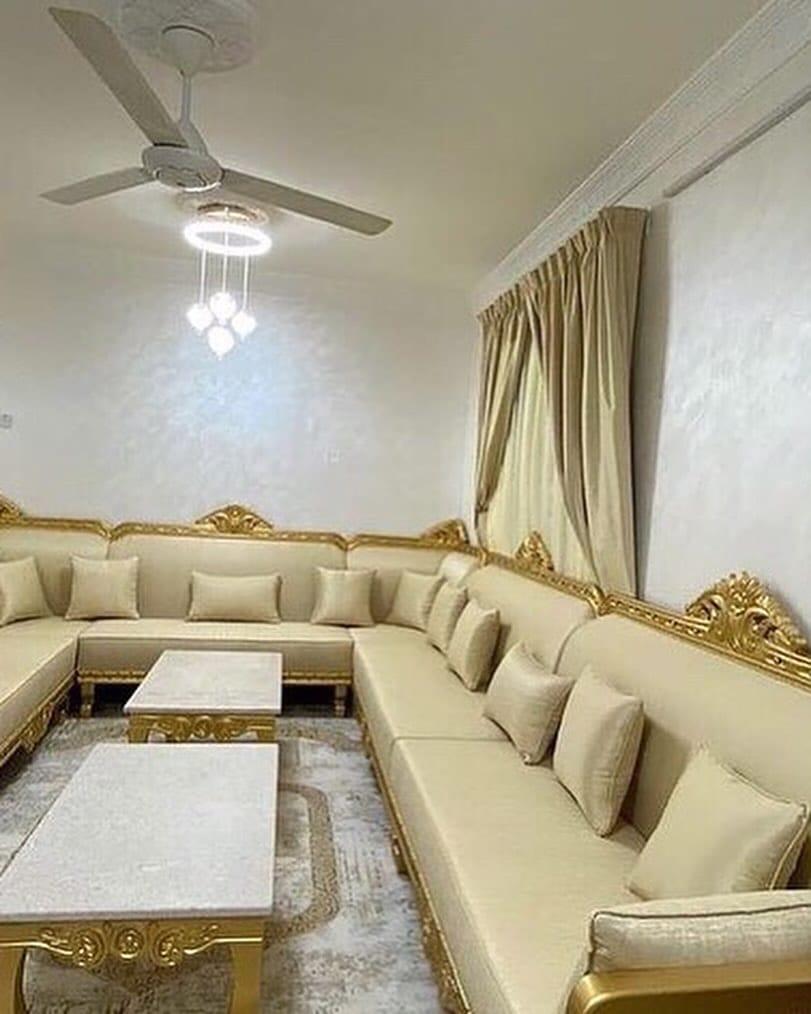
Majlis seating sits at the favourable end of this decision for a practical reason. It is long, built to follow the walls, and often made in one run with the room's proportions in mind, so a straight replacement means ordering a new set made to measure and waiting for it. A frame that has stood for years against a wall, with its corner and its length already right, is a part worth keeping, and the seats, backs and covers are the only parts that wear.
Cushions deserve a second look in a majlis. Floor-level seating and deep L-shaped arrangements take daily visitors, and the seats and backs bear different loads, so they do not have to be renewed in the same way. The foam grade for each is chosen separately; we explain how in sofa foam density explained. What you want is a quotation that lists seats and backs on separate lines.
The same applies to the curtains. When a majlis is refreshed, the cover and the window dressing are usually decided together, and our majlis curtains guide covers the second half of the job. For what we do to seating itself, see our majlis upholstery page.
When replacing is the honest answer
Some sofas should go, and saying so is part of a useful inspection. Replace when a lift test shows a frame that twists, when the key rails are weak board that has split along the joints, when the middle seat gives way under ordinary weight, or when a repair would mean rebuilding so much that you are paying for a new sofa with an old one's legs. A cracked frame can sometimes be reinforced, but reinforcing a structure that was never strong is a short-term answer.
Replace, too, when the shape is simply wrong. A sofa that is too deep for anyone to sit upright in, too low for older relatives to rise from, or too large for a room you have since rearranged will stay that way after reupholstery, and a faultless new cover will not make you like it more. The fifth check exists for exactly this.
Finally, replace when the piece has no value beyond its function. Checkbook notes that for low- and medium-quality furniture, the fabric and labour often come to more than a new equivalent. A simple way of testing yourself: if you would not pay for the sofa as it stands, restored, then recovering it is not the answer.
Comparing a reupholstery quote with a new sofa
Once the checks have said yes, the decision comes down to a comparison of like with like. A new sofa gives you a new frame, new foam and a new cover in a style that is in the shop today. A reupholstered one gives you your existing frame, the foam and cover of your choice, and the exact size you have already worked out. The two are not the same product, and the comparison is not just price against price.
Ask the upholsterer for a written quotation that names the frame work, the support work, the foam grade for seats and for backs, the fabric and the quantity, and the collection and return. We write ours that way once the inspection is done, since no two pieces are alike inside. Then put the total beside the price of a new sofa of comparable construction, not of the cheapest one in the window.
Ask what the new foam is covered by. On our foam there is an anti-sagging guarantee of about five years, separate from the 24-month written workmanship warranty; the quotation carries the exact terms. A new sofa from a shop carries the terms of its own manufacturer. Put the two side by side before you choose.
Reupholstering your sofa against buying a new one
Frame
- Reupholster
- Your existing one, checked and reinforced where needed
- Replace
- New, but of unknown quality unless you check it
Size and shape
- Reupholster
- Exactly what you have already settled on
- Replace
- Whatever the current range offers, or a made-to-measure wait
Cover
- Reupholster
- Any fabric or leather in the workshop's range
- Replace
- The shop's range, often fewer choices
Foam
- Reupholster
- A grade chosen for each seat, in writing
- Replace
- The maker's choice, often not stated
Time without it
- Reupholster
- About eight days, with collection and return by us
- Replace
- Delivery time, plus a wait if it is made to order
Best when
- Reupholster
- The frame is sound and the shape still suits you
- Replace
- The frame has failed or the shape is wrong
Our timing is the owner's figure for a typical job, from order confirmation. Foam grades and the cost of each part are in our guides to foam density and to upholstery costs.
What happens at an inspection
The first step is our free inspection. We examine the wood, the springs or webbing, the foam and the cover, then tell you which of them is worth renewing, which can stay, and whether the piece is worth the work at all. You get a written quotation after that, because a price given from a photograph cannot tell a sound frame from a tired one.
A small repair near the workshop can be carried out in your home, with a delivery charge, but a lone chair is normally too small a job for us to take. Everything larger is collected, rebuilt in Sharjah and returned. Everything we renew is listed under sofa upholstery and repair, with the local version for sofa upholstery in Sharjah.
Before you contact anyone, take a few minutes with the sofa yourself. These are the points to bring to the inspection:
- The result of the lift and arm tests, and whether any seat creaks.
- Whether the dip stayed in place or moved when you swapped the cushions.
- Which seats and backs have lost height, and how old the sofa is.
- The fabric you would like to move to, and who uses the sofa daily.
- Whether the size and depth still suit the room, as an honest yes or no.
- A photograph of the whole piece and of the underside, with the dust cover off.
Common questions
Is it worth reupholstering a sofa?
Yes for a sound frame in a shape you value; no for a weak frame or a low-cost piece. Check the frame first. Reupholster or replace: the five checks.
Is it cheaper to reupholster a sofa or buy new?
Not always. For a well-built frame it often is; for a lightly built sofa the cover and labour can cost more than a new one. Compare a written quotation with a like-for-like new sofa. What the parts of a quotation cost.
How do you tell if a sofa frame is good?
Lift one end and push an arm: it should not twist, creak or wobble. Underneath, the key rails should be solid hardwood with reinforced corners. How to test the frame at home.
How do you fix a sagging sofa?
Swap the seat cushions first. If the dip moves with the cushion, replace the foam; if it stays in the same place, the webbing or springs need renewing. Foam grades explained.
Is it worth reupholstering a leather or faux leather sofa?
Leather with a sound frame can be recovered. Faux leather that has begun to peel cannot be restored, so a new cover is the fix. Choosing a cover for the household.
How long does reupholstering a sofa take?
Allow about eight days from confirming the order, with collection from your home and return to it. What we renew in a sofa.

Sources & specifications
Manufacturer information applies to the named products and systems. Sources reviewed on 28 October 2026.
- Consumers' Checkbook: is it worth it to reupholster furniture? (frame, rails, springs, cost against new)checkbook.org(opens in a new tab)
- Bellona: guide to sofa frame construction quality (kiln-dried hardwood, joinery, lift test)bellonausa.com(opens in a new tab)
- Hunker: spring vs. webbing in sofa construction (sinuous, eight-way hand-tied, webbing)hunker.com(opens in a new tab)
- Bellona: how to choose sofa fabric for pets (faux leather, velvet, microfibre)bellonausa.com(opens in a new tab)
Want this planned for your home?
Consultation and measurement are free. Tell us the rooms, location and what you need; we arrange a sample visit and define the measured quotation.