Wallpaper · 19 min read · 20 June 2026
Wallpaper problems and how to fix them: bubbles, peeling seams, gaps, shadows and mould
Most wallpaper faults can be read from where they sit and when they appeared. Bubbles in the first 48 hours usually flatten, a seam lifting on a dry wall is a re-paste, and bubbles, stains or black spots weeks later point to moisture and need a fitter.

By Ali Haider Basra, Founder, Al Tareeq Decor · Contact our workshop
Key takeaways
- Read a fault by where it sits and when it appeared: bubbles in the first 48 hours usually flatten; bubbles, stains or black spots weeks later mean moisture.
- A lifting seam on a dry wall is a home re-paste with seam adhesive; the same seam lifting twice means the wall or the original hanging is at fault.
- A raised ridge or a gap at a seam comes from paper that expands 1 to 2 per cent when pasted: 5 to 10 mm on a 53 cm drop. Ridges and visible gaps are re-hung, not pressed.
- Do not tear off paper with suspected mould: the EPA warns it can release spores, and puts do-it-yourself cleaning at about 10 square feet, roughly 1 m².
- Our 24-month written workmanship warranty covers faulty hanging; leaks, blocked AC drains and misuse are excluded only to the extent they caused the fault.
On this page
- Key takeaways
- What a wallpaper fault is telling you
- Five faults, three questions: the quick way to sort a wall
- Twelve wallpaper faults: when they appear, why, and who fixes them
- Bubbles: when to wait and when to cut
- Peeling and lifting seams: why the edge lets go
- Raised seams and gaps: the 1 to 2 per cent problem
- Dark lines and shadows at seams
- Pattern, creases, paste marks and stains
- Black spots and a musty smell: mould behind wallpaper
- How long to wait before you decide it is a fault
- What is normal and what is not after hanging
- Fix it yourself or call a fitter?
- What our warranty covers, and what it does not
- What we do about it, and how to avoid the next one
- Common questions
What a wallpaper fault is telling you
Most wallpaper faults can be read from two clues: where on the wall they sit and how long after hanging they appeared. Small bubbles in the first day or two are usually paste or air and flatten as the paper dries. A seam that lifts on a dry wall is a quick re-paste. Bubbles, stains, black spots or a musty smell that arrive weeks or months later mean water is reaching the back of the paper, and that is a job for a fitter, not a tube of adhesive.
This guide goes through the twelve faults people search for most, in the order you are likely to meet them, and says for each one what caused it, whether you can fix it yourself and when to stop. For the climate behind the worst of them, condensation, outside walls and AC air, our main page is wallpaper and humidity in UAE homes, and for what should have been done to the wall before the paper went up, wall preparation before wallpaper. Here the question is practical: you are looking at the wall now, so what is it, and who should deal with it?
Five faults, three questions: the quick way to sort a wall
Nearly every fault ends in one of three verdicts: wait, fix it at home, or call a fitter. The drawing below puts five common faults on one wall, gives each its cause, and then shows the three questions that sort them: did it appear in the first 48 hours, is the wall cold, damp or musty, and is the fault smaller than a palm on a dry wall. The table underneath widens that to twelve faults, each with its timing and its likely cause.
Treat the table as a map, not a verdict. Two faults can look alike and have different causes: a bubble on day one and a bubble in month three are different problems, and the date you first noticed it is the most useful fact you can give anyone who comes to look.
Twelve wallpaper faults: when they appear, why, and who fixes them
Small bubbles
- When it appears
- Hanging day to 48 hours
- Likely cause
- Paste or air still moving under wet paper
- Fix at home or fitter
- Wait 48 hours, then re-check
Bubbles that stay
- When it appears
- After 2 days
- Likely cause
- Thin or missed paste, dust, a thirsty wall
- Fix at home or fitter
- Slit, paste and press: home for one or two, fitter for many
Bubbles that spread
- When it appears
- Weeks to months
- Likely cause
- Moisture, or a bond that is failing
- Fix at home or fitter
- Fitter, after the water is found
Seam lifting or curling
- When it appears
- Days to months
- Likely cause
- Edge dried first, too little paste, dusty or unsealed wall
- Fix at home or fitter
- Re-paste with seam adhesive on a dry wall
Raised ridge along a seam
- When it appears
- Day 1 to 3
- Likely cause
- Paper hung before it had relaxed
- Fix at home or fitter
- Fitter: the strip comes down and goes back
Gap between drops
- When it appears
- As the paper dries
- Likely cause
- Paper shrank back; thin paste at the edge; drying too fast
- Fix at home or fitter
- Tint a hairline; fitter for a visible gap
Dark line at a seam
- When it appears
- Any time
- Likely cause
- Dark wall showing, a raised edge, or side light
- Fix at home or fitter
- Fitter
Shiny or white marks on a seam
- When it appears
- Day 1 onwards
- Likely cause
- Paste pressed onto the face of the paper
- Fix at home or fitter
- Light damp sponge along the seam, tested on an offcut
Pattern off across a join
- When it appears
- Hanging day
- Likely cause
- Batch shade, pattern drift or a wall out of plumb
- Fix at home or fitter
- Fitter, or the supplier if the batches differ
Creases or wrinkles
- When it appears
- Hanging day
- Likely cause
- Paper folded or pulled badly while wet
- Fix at home or fitter
- Fitter: creases do not iron out once dry
Yellow or brown stain
- When it appears
- Weeks onwards
- Likely cause
- A leak or a blocked AC drain line
- Fix at home or fitter
- Repair the leak first, then a fitter
Black spots, musty smell
- When it appears
- Weeks onwards
- Likely cause
- Mould growing on or behind the paper
- Fix at home or fitter
- Fitter; moisture comes first
A guide to the likely cause. When the same fault returns in the same place, treat it as a wall problem, not a paper problem.
- 1. Bubble on day one: paste or air still drying, so wait 48 hours before touching it
- 2. Seam lifting at the edge: the edge dried first or the wall was dusty; re-paste it if the wall is dry
- 3. Gap between two drops: the paper dried and shrank back; tint a hairline, re-hang anything wider
- 4. Dark line along a seam: dark wall showing through, or a raised edge; a fitter re-trims or re-hangs
- 5. Black spots or a musty smell: moisture behind the paper, so the water comes first
Bubbles: when to wait and when to cut
Bubbles fall into three families, and the clock tells them apart. Right after hanging, small blisters are usually air or paste still on the move. The paper is wet and expanding, and as it dries and tightens most of them lie down by themselves. Resene, the New Zealand paint and wallcovering maker, says bubbles from a patch missed when the wall was sized can show an hour or two after the job is done and usually settle if they are left alone. Our own rule is simple: do nothing for 48 hours. Pressing a half-dry bubble flat tends to crease the paper rather than cure it.
The second family is bubbles that are still there after two days. Resene's problem-solver lists the likely culprits: a very porous wall that sucked the water out of the paste and left an air pocket, dust or dirt under the paper, lumps or whipped-in air in the paste, an area missed with the size, an old covering underneath that was not fully stuck, or paper hung before it had soaked and relaxed. A wall whose paint is poor or soft adds a seventh, because the paint itself can soften under the wet paste.
A handful of stubborn bubbles on a dry wall can be dealt with at home. Slit the bubble along a line of the pattern with a sharp blade, work a little seam or paste adhesive behind the flap with a fine brush, press the paper flat from the middle outwards with a clean, soft sponge and wipe off what squeezes out. Do not do this to dozens of bubbles, or to a whole drop: that points to a wall or a hanging problem, and a repair patch on top of it will only move the bubbles along.
The third family deserves the most attention. Bubbles that appear weeks or months after hanging, spread, or return in the same place are almost never a hanging fault. Put your palm flat on the wall beside the bubble: if it feels cold or clammy, or the room smells musty, water is the cause, and it has to be found before anything is stuck down again. The humid-climate guide explains why moisture reaches the back of the paper in UAE homes. A fitter can read the wall, and once it is dry, re-hang the affected drops.
- Seam adhesive, sold for wallpaper repairs, with a fine nozzle or brush
- A sharp blade, changed often, for slitting a bubble along the pattern
- A clean, soft sponge and a damp cloth for pressing and wiping
- An offcut or the spare roll, to test any cleaning on and to patch from the same batch
Peeling and lifting seams: why the edge lets go
A seam is where a drop is held by its edge alone, so it is the first place a weak bond shows. MEINEWAND, the German wallpaper retailer, lists the application mistakes behind seams that open after drying: too little paste, uneven pasting, edges pasted too cautiously, and paste that dries too fast in warm months or an overheated room. It also warns that a wall with a heavy coat of primer absorbs poorly, so the paste dries slowly and the sheet shrinks a little while it does. Resene adds the wall itself: sanding skipped, dust left on, sizing missed, plus paper stretched during hanging and heaters, dehumidifiers or direct sun drying the paper too fast.
A UAE flat has its own versions of all of these. Sun through a west-facing window warms a wall, so edges dry before the paste has grabbed. A split-unit outlet blowing across the top of a drop dries the same edge from the other side. Move the airflow or the curtains before you re-stick anything; our humid-climate guide covers AC outlets and condensation behind paper in detail.
The home repair is easy when the wall is dry and the paper is still supple. Lift the loose edge gently and brush a thin, even coat of seam adhesive under it, press it down with a clean, smooth tool and wipe the seam along its length with a damp sponge. Resene cautions against adding more paste to a curling seam, because the extra moisture slows drying and the seam can open again, and against working a seam roller hard over it, which can push the adhesive out of the join. A light press is enough.
Vinyl papers are the exception. Where one vinyl edge is overlapped on another, as it sometimes is in a corner, ordinary paste does not bond vinyl to vinyl, and Resene recommends a vinyl-to-vinyl adhesive for that joint. If a corner or a lapped seam keeps lifting, or the same seam opens twice, stop: either the wall is damp or the original hanging needs redoing. The video below shows the repair on an open seam and why a seam can curl.
Raised seams and gaps: the 1 to 2 per cent problem
Two opposite faults share one cause. A raised ridge along a seam and a gap between drops both come from the way paper-backed coverings react to paste. Resene says they expand by 1 to 2 per cent while they relax after pasting. On a standard 53 cm roll, the width most European papers use, that is 5 to 10 mm across a single drop; on a 1.06 m wide non-woven drop it is double that. Hang the strip too soon, before it has finished growing, and the extra width pushes up as a ridge, which Resene calls peaking. Hang it at the right time and tight, and a wall that then dries too quickly, too thinly pasted or too absorbent pulls the paper back to its original size, and a gap opens at the seam.
That is why a gap is rarely the paper's fault. It is a sign that the drying went wrong: edges under-pasted, a heater or a dehumidifier running on the wall while it set, a room that was too warm, or a wall that drank the paste. Our guide to wallpaper rolls, repeats and wall preparation explains how the roll format changes the width involved.
Deal with them by size. A hairline gap on a light paper can be tinted with a matching pencil or a dab of paint, tested on an offcut first, so the wall colour behind it stops showing. A gap you can see across the room, or one that widens, is a re-hang: the drop comes down, the wall is made good, and a new drop goes up. A ridge is never pressed flat in place; Resene's advice is to take the strip off, let it relax for the time the roll's instructions give and hang it again.
Dark lines and shadows at seams
A dark line along a seam is one of four things. The commonest is a hairline gap through which a darker wall or an old paint colour shows. The second is a raised edge, a lapped seam or a ridge, that catches light and casts its own tiny shadow. The third is paste or sheen along the join that shines under a lamp. The fourth is not a fault in the paper at all: light skimming the wall exaggerates every unevenness, as a window beside the wall or a row of downlights close to it will do.
A simple test separates them. Stand square to the wall under normal room light: if the line is there, it is a gap or a colour difference. Then hold a phone torch flat against the wall at one side so the beam skims the surface: if the line appears only then, it is a raised edge or a ridge in the wall, and the room's own lighting is showing it. A cast shadow behind relief is the whole point of a 3D feature wall, and how light angle shows relief explains the effect, but on flat paper it is unwelcome.
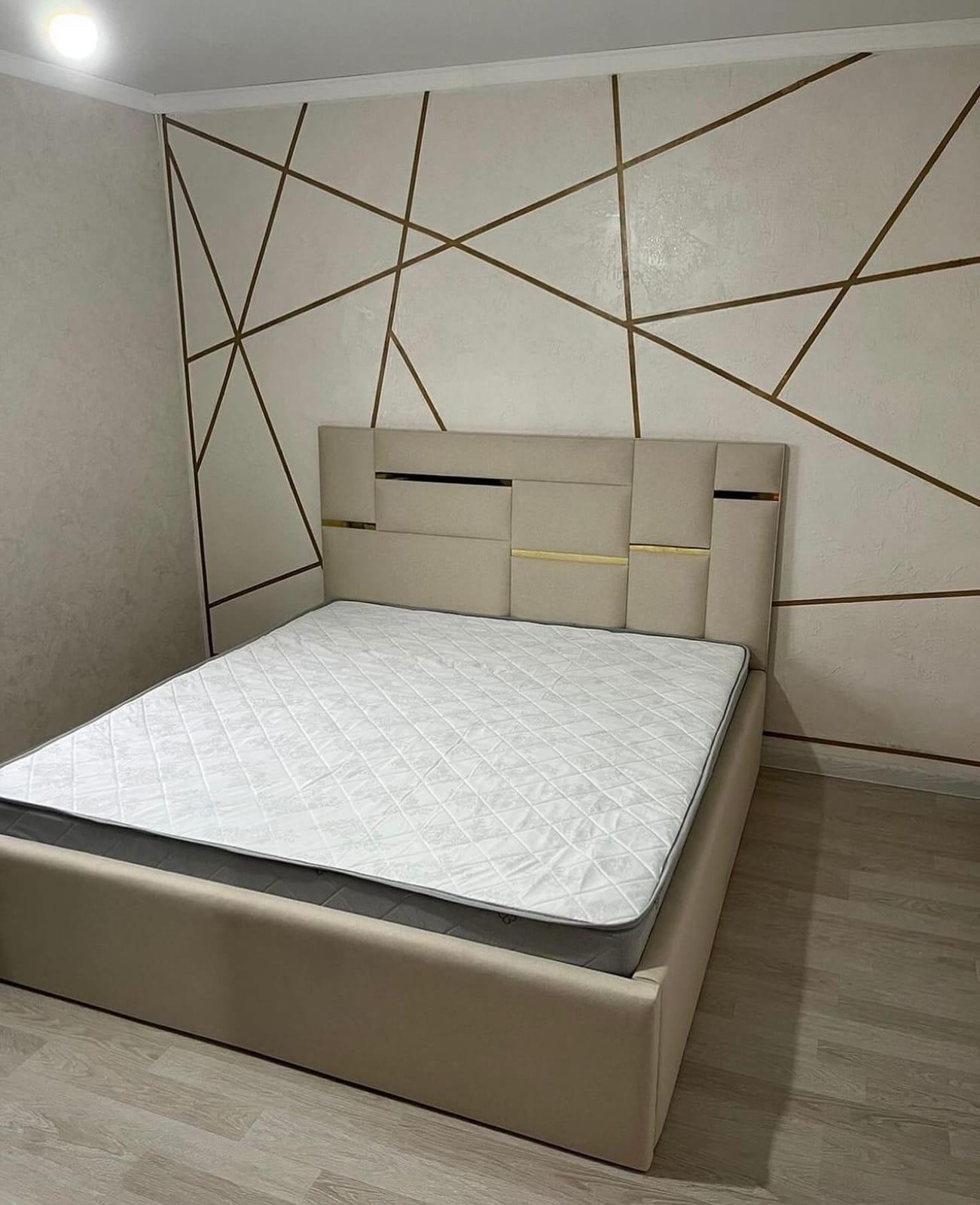
The fix follows the cause. A dark wall behind pale paper is best solved before hanging, by asking at the measuring visit for the wall tone behind a light paper to be checked; afterwards it is a re-hang, because tinting a long seam never looks even. A raised edge or a ridge in the wall is a fitter's job, and it is another reason why wall preparation comes before the paper: a wall like the one below, with its surface texture and straight inlays, shows every ridge when light crosses it.
Pattern, creases, paste marks and stains
A pattern that steps down across a join has three usual causes. The rolls may come from different batches, so the shade or the print position differs slightly, which is why every roll should carry the same batch number and why we advise keeping one spare roll of that batch for repairs. The paper may have drifted as it was hung, each drop a hair off the last; a laser line for the first drop keeps all the others true. Or the wall may be out of plumb, in which case a pattern that follows the wall will lean and one that follows the line will meet the ceiling unevenly. Planning a pattern across a feature wall shows how the repeat is placed in the first place.
Creases and wrinkles are made while the paper is wet: folded too sharply, left too long, or dragged into place. Once dry they do not iron out, and the honest answer is a re-hang of the drop. Shiny or white marks along a seam are paste that was pressed out of the join onto the face of the paper. Resene's guidance is to try a soft, stiff-bristled brush on it once it has dried, then a lightly damp sponge wiped along the seam rather than across it, tested on an offcut first, because too much liquid softens the adhesive behind the paper and lifts the seam.
A yellow or brown stain is water. It might be a leaking pipe, an AC drain line that has blocked and soaked the wall, or a window that lets rain in. Paper stained like this will not clean, and re-papering over a wet wall only repeats the stain. The US EPA wants anything that has got wet dry again inside a day or two, before mould can start, so the order never changes: stop the water, dry the wall, then replace the paper.
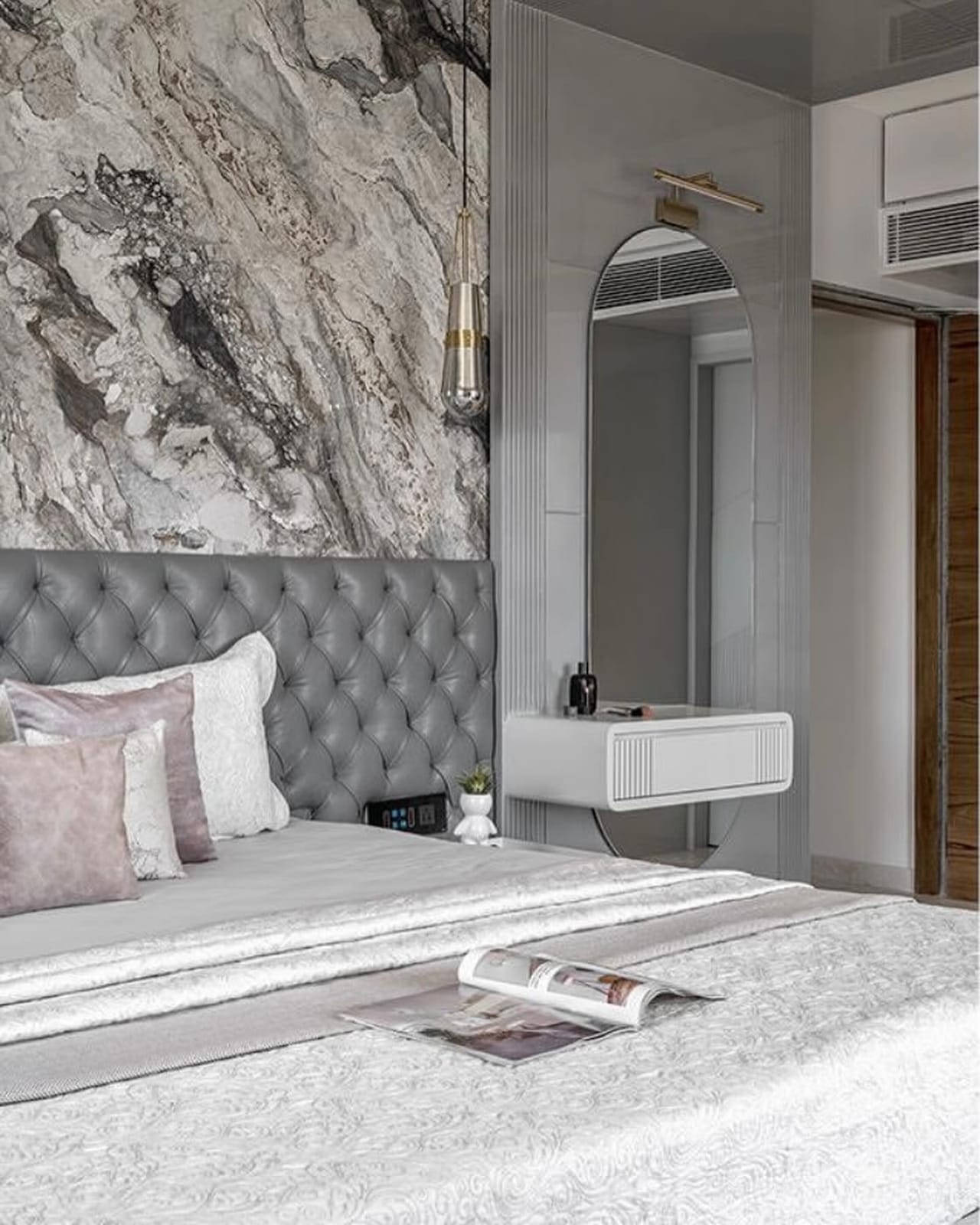
Black spots and a musty smell: mould behind wallpaper
Dark spots, a grey bloom or a smell like a damp cupboard mean moisture has been sitting behind the paper long enough to feed mould. The EPA's brief guide to mould is direct about the order of work: the key to mould control is moisture control, so find the water and fix it, then clean. It adds that you should not paint over mould, because the paint will peel.
Do not tear the paper off to look. The EPA warns that removing wallpaper can release a large number of spores when mould is on its underside, and for suspected hidden mould it advises an experienced professional. It also puts a limit on do-it-yourself cleaning at about 10 square feet, which is roughly one square metre. Anything larger, anything after a lot of water damage, or anything that keeps returning, is for a professional.
Call a fitter early for mould spots, and tell them what you know: which wall it is, whether it faces outside, whether it backs onto a bathroom or sits under an AC unit, and when it began. Our wallpaper in humid homes guide explains why those walls are the usual suspects and which papers cope with them.
How long to wait before you decide it is a fault
A new wallpaper job needs a few days to settle, and many worries in that time are normal. Judging too early leads to unnecessary repairs, and judging too late lets a real fault spread. The table sets out what is normal at each stage, in our own rule of thumb, and what is not. The same torch-along-the-wall check belongs in a fit-out handover checklist, where seams are inspected before you sign off.
If you are unsure, photograph the fault now and again in a few days: a fault that has changed is telling you something, and a dated pair of photographs makes any conversation with a fitter or a supplier shorter.
What is normal and what is not after hanging
First 2 hours
- Normal
- Soft blisters, paper still damp, edges a shade darker
- Not normal
- Edges curling up or lifting off the wall
Day 1 to 2
- Normal
- Blisters settling, faint seam lines while it dries
- Not normal
- A ridge along a seam, or a gap wider than a hairline
Day 3 to 7
- Normal
- Paper dry and flat, pattern settled
- Not normal
- Bubbles that remain, a seam that has lifted
Weeks to months
- Normal
- Nothing at all
- Not normal
- Any new bubble, stain, black spot or musty smell
Years later
- Normal
- A little wear where hands and furniture touch it
- Not normal
- A seam or corner lifting beside an AC outlet or a window
Our rule of thumb for a dry, prepared wall. The product's own instructions set the exact drying time.
Fix it yourself or call a fitter?
Fix it yourself when the fault is small, the wall is dry, and you can say what caused it: a seam that has lifted, a few bubbles that are still there after two days, a smear of paste on a seam. Everything on the home side of the table needs only a few tools and a little patience, and each repair should be tested on an offcut first.
Call a wallpaper fitter when the fault is wider than a palm, returns after a repair, sits on an outside wall or a wall shared with a bathroom, comes with a cold, damp or musty wall, or spreads from one drop to the next. Those are signs that the wall, not the paper, is the problem, and a patch will not hold.
When you send a photo, a fitter can usually say what it looks like before anyone visits. The four that help most are a close-up of the fault, the whole wall, a hand flat on the wall beside it, and the label on a roll or the batch number from the spare. Add the date you first saw it and whether the room has an AC outlet or a window on that wall.
- A close-up of the fault, with a coin or a finger beside it for scale
- The whole wall, so the position and the pattern are clear
- A hand flat on the wall beside the fault, to show how cold or damp it feels
- The roll label or the batch number, and the date you first noticed the fault
What our warranty covers, and what it does not
The hanging we do is covered by a 24-month written workmanship warranty that starts at completed installation or handover and applies to orders agreed from 10 October 2026. It speaks to defects that come from our own work under normal use, wallcovering workmanship that falls short of the approved specification among them. The wallpaper as a product follows its maker's written terms, and your UAE consumer rights sit beside both. The full text is on our warranty and aftercare page.
To make a claim, call or message us on WhatsApp quoting your order reference or the installation address, describe the fault and attach photographs. We work out the cause and then arrange a repair, an adjustment or a replacement. Where the defect is ours, the materials and labour to correct it are not charged. Where it falls outside the cover, we explain the diagnosis and give a quotation before anything is billed.
The warranty does not blame the hanging for water. Damage from a building leak, a blocked AC drain or misuse is excluded only so far as it caused the fault, and an unrelated cause elsewhere never excuses a genuine hanging defect. That is why we ask about the wall, the AC and the date when a fault is reported: one and the same bubble can fall on either side of the line.
What we do about it, and how to avoid the next one
Most faults are decided before the paper goes up, so the visit comes first. Our team measures and checks every wall during the free visit, brings the catalogues so you can hold samples against your own wall, and points out any wall, an outside wall, one beside an AC unit or one shared with a wet room, where paper needs a closer look. The wall is then prepared by our own team, cracks filled and putty applied where it needs it, and a laser line sets the first drop straight, so each drop after it follows. For depth rather than pattern, our 3D textured feature walls come from the same service.
Our wallpaper catalogues and collections are Italian, Belgian, German and Korean, and the paper goes up with odourless European adhesives. Where a wall needs it, we use breathable non-woven paper with anti-mould protection, the sensible choice on the inside face of an outside wall. Paper and hanging together start at AED 45 per m² of wall, and hanging alone starts at AED 20 per m² if you bring the paper. Stripping old paper is quoted on its own line so the cost is visible, and our pricing guide gives a first estimate. Plan on about a day per room after the rolls arrive, with a final inspection of the wall before handover, and keep a spare roll of the same batch for repairs.
If wallpaper somebody else hung has failed, the answer is usually to strip it, make the wall good and hang new paper, and that is how we would quote it. We book work by the room, not for one small patch, so for a single fault a photo on WhatsApp is the quickest way to find out what it is. Read how to choose a paper for each UAE room and what wallpaper costs room by room, or go straight to our wallpaper supply and installation service and see wallpaper fixing in Sharjah or in Dubai.
Common questions
Will bubbles in new wallpaper go away on their own?
Often yes, if they are small and appeared on hanging day: paste and air settle as the paper dries, so give them 48 hours before touching them. Bubbles that remain after two days, or appear weeks later, will not. Preparing walls for wallpaper.
Why is my wallpaper peeling at the seams?
Usually the edge dried before the paste gripped: too little paste, a dusty or unsealed wall, or sun or AC air drying the seam. On a dry wall, seam adhesive and a light press fix it. Wallpaper, AC and humidity.
Why are there gaps between my wallpaper strips?
Paper expands 1 to 2 per cent when pasted and shrinks back as it dries, so thin paste or fast drying opens the seam. A hairline gap can be tinted; a visible one means re-hanging that drop. Rolls, repeats and wall preparation.
Why can I see dark lines or shadows along my wallpaper seams?
Either the dark wall is showing through a hairline gap, or a raised edge is catching light. Shine a phone torch along the wall: if the line appears only then, it is a ridge. How light shows relief on a wall.
Is mould behind wallpaper dangerous, and should I pull the paper off?
Do not strip it yourself: the US EPA warns that removing wallpaper with mould on its underside can release spores, and advises a professional for hidden mould or areas over about 1 m². Fix the moisture first. Mould and wallpaper in UAE homes.
Does the warranty cover wallpaper that bubbles or peels?
Our 24-month written workmanship warranty covers wallcovering workmanship that does not meet the approved specification. A leak or a blocked AC drain that soaks the wall is a building problem, and the paper's own defects follow the maker's terms. Warranty and aftercare.
What does re-hanging failed wallpaper cost in the UAE?
Paper plus hanging starts at AED 45 per m² of wall, and hanging your own paper at AED 20 per m². Stripping the old paper is its own quoted line, and the final figure follows measurement. Wallpaper price room by room.

Sources & specifications
Manufacturer information applies to the named products and systems. Sources reviewed on 29 October 2026.
- Resene: wallpaper problem solver, bubbles (porous walls, dust, adhesive, expansion bubbles)resene.co.nz(opens in a new tab)
- Resene: wallpaper problem solver, opening seams and peaking joins (1 to 2 per cent expansion, drying, paste)resene.co.nz(opens in a new tab)
- Resene: wallpaper problem solver, paste on seams and curling edgesresene.co.nz(opens in a new tab)
- MEINEWAND help centre: how to avoid open seams between wallpaper stripssupport.meinewand.com(opens in a new tab)
- US EPA: a brief guide to mold, moisture and your home (moisture control, 10 square feet, wallpaper removal)epa.gov(opens in a new tab)
Want this planned for your home?
Consultation and measurement are free. Tell us the rooms, location and what you need; we arrange a sample visit and define the measured quotation.