Wallpaper · 16 min read · 8 June 2026
3D wall panels and textured feature walls in the UAE: depth, light and fixing
3D wall panels against wallpaper, slats and paint: how deep the relief should be, how to light it, PVC, MDF or gypsum, fixing, humidity and cost direction in the UAE.

By Ali Haider Basra, Founder, Al Tareeq Decor · Contact our workshop
Key takeaways
- A 3D wall gets its effect from relief and light, so it needs light that skims across it: head-on light flattens it.
- Choose a standard depth of about 10 mm for most homes; shallow relief is calm but needs the lowest light, and deep relief gathers dust.
- PVC is the safe panel for humid rooms, MDF for dry painted walls, gypsum for large living-room walls; the material is named on your quotation.
- Use relief on one wall only, behind the bed or facing the entrance, with a hidden LED that skims the surface.
- We price from the measured wall and the panel chosen, with no per-metre rate; wallpaper, from AED 45 per m², is a different category.
On this page
- Key takeaways
- What a 3D textured feature wall is, and what it is not
- 3D panels, wallpaper, fluted slats or paint: which wall do you want?
- Relief wall, wallpaper, slats or paint at a glance
- How deep should the relief be?
- Light decides how 3D panels look: from the side, never head-on
- Light angle against relief depth
- Lighting a 3D wall: hidden LED, not a spotlight
- Materials: PVC, MDF, gypsum or plant fibre?
- 3D panel materials side by side
- Fixing, joints and wall preparation
- Peel-and-stick 3D tiles: when they make sense
- Humidity, AC and dust in a UAE home
- How much does a 3D feature wall cost?
- What changes the price of a 3D feature wall
- Where a 3D wall belongs: bedroom, living room or majlis
- Booking the visit, approving the drawing, fitting the wall
- Common questions
What a 3D textured feature wall is, and what it is not
A 3D textured feature wall gets its effect from relief rather than colour. The surface is raised and lowered in ripples, triangles, blocks or waves, and the wall changes as light moves across it: pale and calm in the morning, sharply patterned by a lamp in the evening. That is a different thing from a wallpaper with a printed pattern, which is flat however good it looks, and from a slatted wall, which repeats one straight groove.
We fit relief panels under our wallpaper service, and they are the answer when the wall behind the bed, a majlis wall or a living-room wall should be the room's focus without a single piece of furniture on it. This guide covers what to choose: how deep the relief should be, how to light it, what the panels are made from, and what a UAE home asks of the finish. The pattern-repeat side of a feature wall lives in our feature wall planning guide; our own range is on the 3D textured feature walls page.
3D panels, wallpaper, fluted slats or paint: which wall do you want?
Start from what you want the wall to do, not from the material. If you want colour and pattern at the lowest cost and the quickest change, wallpaper or paint is the right answer. If you want a wall that looks different at ten in the morning and ten at night, you want relief, and there are two kinds: repeating straight grooves, which is what fluted and slatted walls give you, and a pattern worked in two directions, which is what a 3D panel gives you.
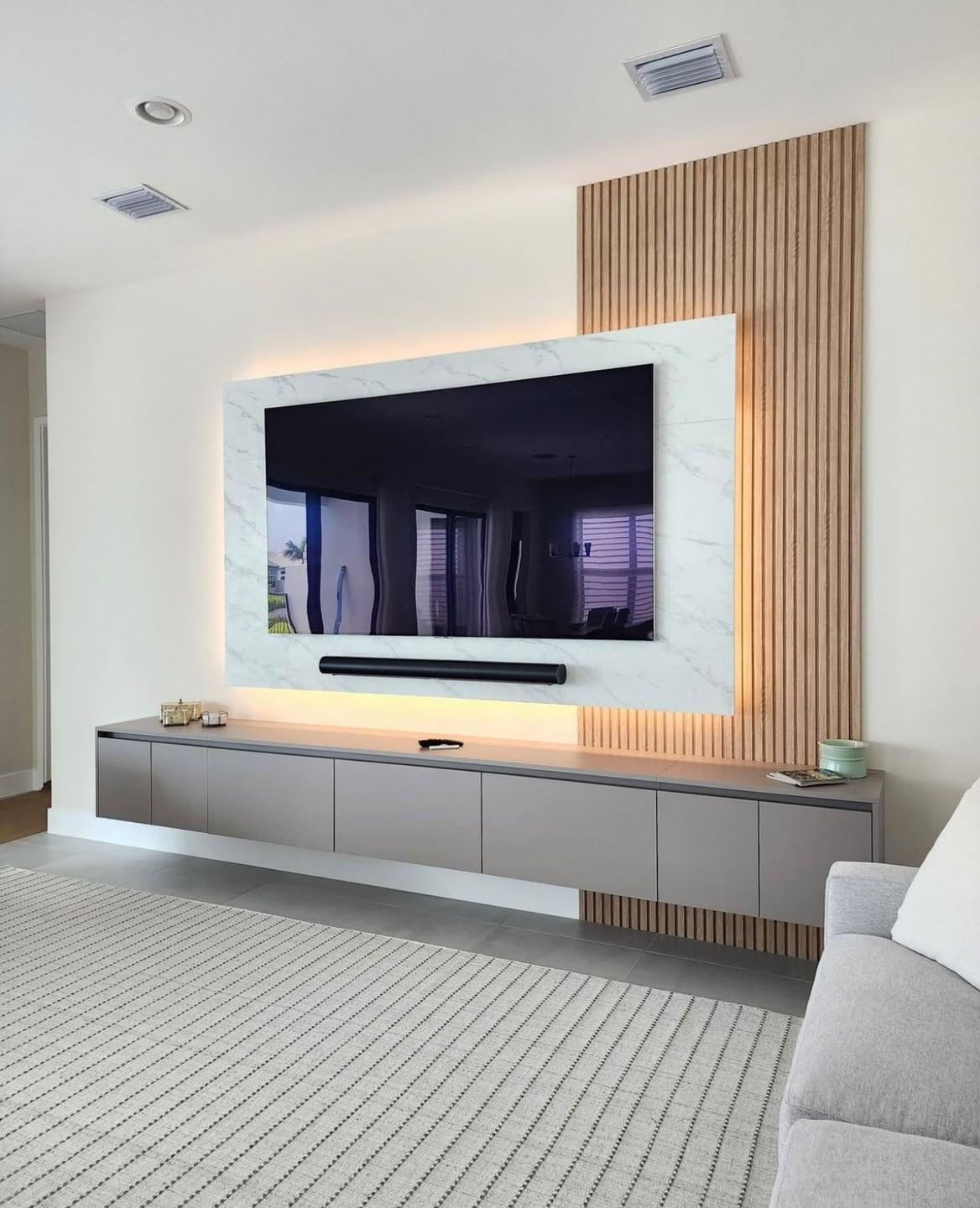
Our advice by room: in a bedroom, put the relief behind the bed and keep the other three walls plain. In a living room, use slats or a quiet relief behind the TV (the media wall design ideas show the options) and keep the strong 3D pattern for a wall that has nothing mounted on it. In a majlis, a single relief wall facing the entrance works well under warm light. And whatever you choose, use it on one wall only: our own page for 3D feature walls advises keeping texture to the wall behind the bed or the one you face, and leaving the rest plain. Two relief walls compete with each other; for a warmer, wood-look alternative, see our wooden feature walls.
Price direction matters here, so keep the units straight. Wallpaper is the only one of these we price per square metre: it starts at AED 45 per m², supplied and fitted. Relief panels, slats and padded walls are made to the measured wall, so the figure comes from the quotation, not from a rate card.
Relief wall, wallpaper, slats or paint at a glance
3D relief panels
- What changes with light
- A lot: shadow patterns move through the day
- Upkeep
- Dust settles in the depressions
- Price direction
- Quoted from the measured wall and panel
Fluted or slatted wall
- What changes with light
- Some: straight shadow lines
- Upkeep
- Dust in the grooves
- Price direction
- Quoted from the measured wall
Textured wallpaper
- What changes with light
- A little: the surface is almost flat
- Upkeep
- Wipe or brush, by type
- Price direction
- From AED 45 per m², supplied and fitted
Paint
- What changes with light
- Almost nothing
- Upkeep
- Repaint
- Price direction
- The cheapest to redo
Wallpaper is the only finish here with a published per-metre price. Relief panels and slats are quoted from the drawing.
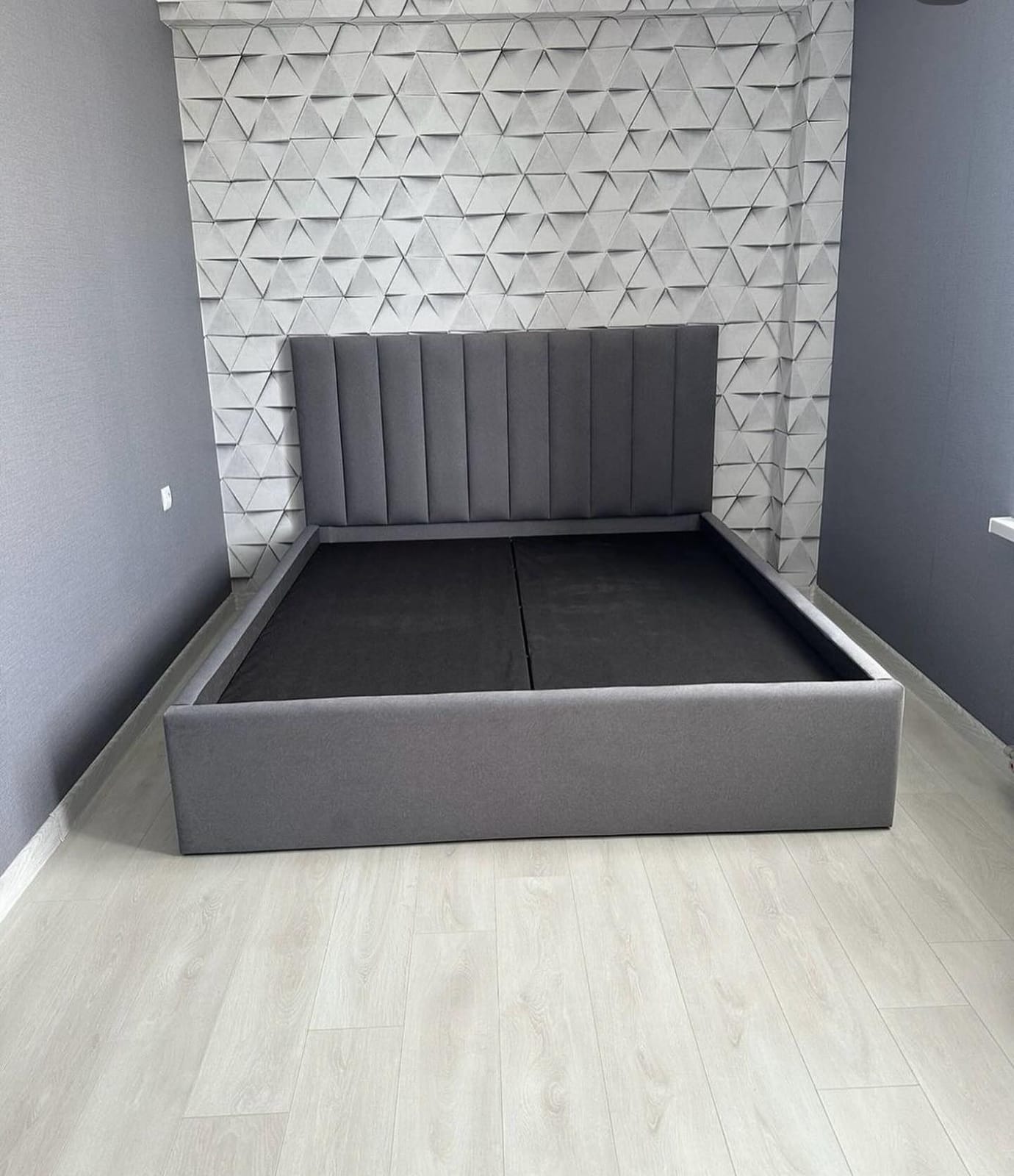
How deep should the relief be?
Relief depth is the number that decides everything else: a few millimetres reads as a quiet texture, a couple of centimetres as sculpture. In the animation below, which draws a ridge pattern to scale, we compare three depths with the same 40 mm between ridges: 4 mm, 10 mm and 20 mm.
For most homes we suggest the middle depth or a little less. A shallow relief is calm and easy to keep dust-free, but it needs light that skims the wall to show at all. A deep relief makes shadows in almost any light and looks dramatic in a large majlis or a double-height room; in a small bedroom it can feel heavy, and each hollow collects dust. The product page for our relief walls says the same thing in practical terms: deep patterns gather dust, so a shallower relief is easier to live with in a busy room.
Viewing distance helps you decide. A fine pattern fades from across a large room unless the relief is deep. Stand where you sit or lie when you look at the wall, and ask for the pattern to be sized for that distance, not for the sample on the table.
Light decides how 3D panels look: from the side, never head-on
Relief only shows when light crosses it at a low angle. Light straight from the front leaves nothing to cast a shadow, and the wall looks flat; light that skims along the wall puts every raised edge into relief. Lighting designers call this grazing. EL Design, a US architectural lighting maker, adds that light crossing the dominant texture throws more visible shadow than light running parallel to it, and that a grazer set too far from the wall flattens the very texture it was meant to show.
The drawing below puts numbers on the idea, for ridges with a simple symmetrical shape. A face on the back of a ridge goes dark once the light is lower than its slope. For a 4 mm relief that happens below about 11°; for 10 mm, below about 27°; for 20 mm, below about 45°. At a low light of 15°, the shallow relief has no shadow at all, the 10 mm relief has shadow on about two-thirds of the surface, and the 20 mm relief on about four-fifths. These are our own sums for one light and no bounce light, so real rooms will show more softness; the order is what matters.
The practical result is simple. If your wall will be lit by a ceiling downlight fitted straight above the panels, choose a deeper relief, or move the light. If you want a shallow, calm relief, light it from the top or edge with a strip that skims the surface.
Light angle against relief depth
4 mm (shallow)
- Shadow starts when the light is lower than
- About 11°
- In shadow with a 15° light
- None
10 mm (standard)
- Shadow starts when the light is lower than
- About 27°
- In shadow with a 15° light
- About 65%
20 mm (deep)
- Shadow starts when the light is lower than
- About 45°
- In shadow with a 15° light
- About 79%
Our own sums for symmetrical ridges 40 mm apart, one light, no bounce light. The slope is atan(depth ÷ 20 mm).
- 1. The light, swinging from straight on to a grazing angle on its dashed arc
- 2. A back face turning dark once the light is lower than its slope
- 3. The 10 mm curve: no shadow above about 27°, then the back faces go dark
- 4. The shallow relief shows nothing at 15°; the deep one has shadow over most of the surface
Lighting a 3D wall: hidden LED, not a spotlight
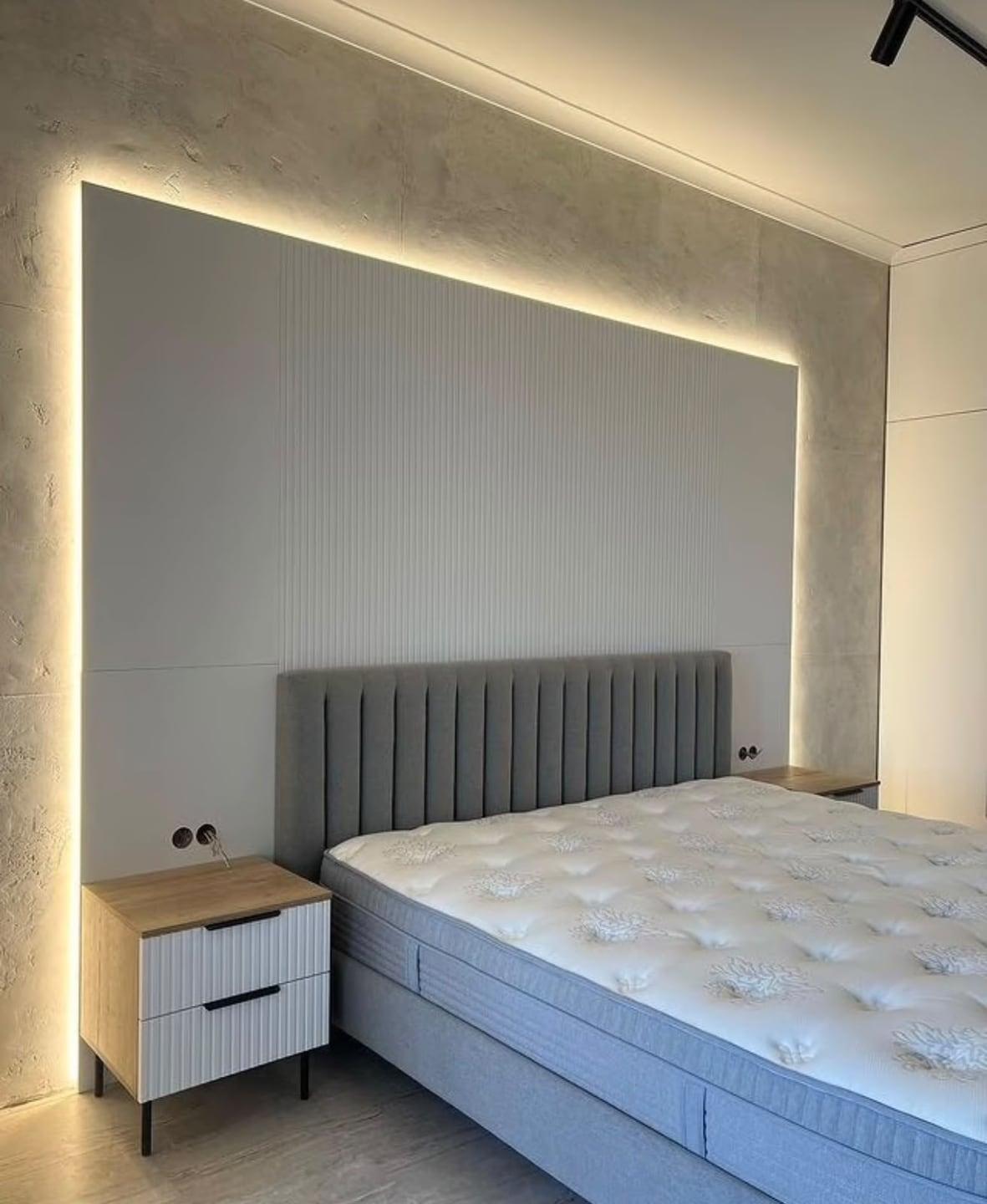
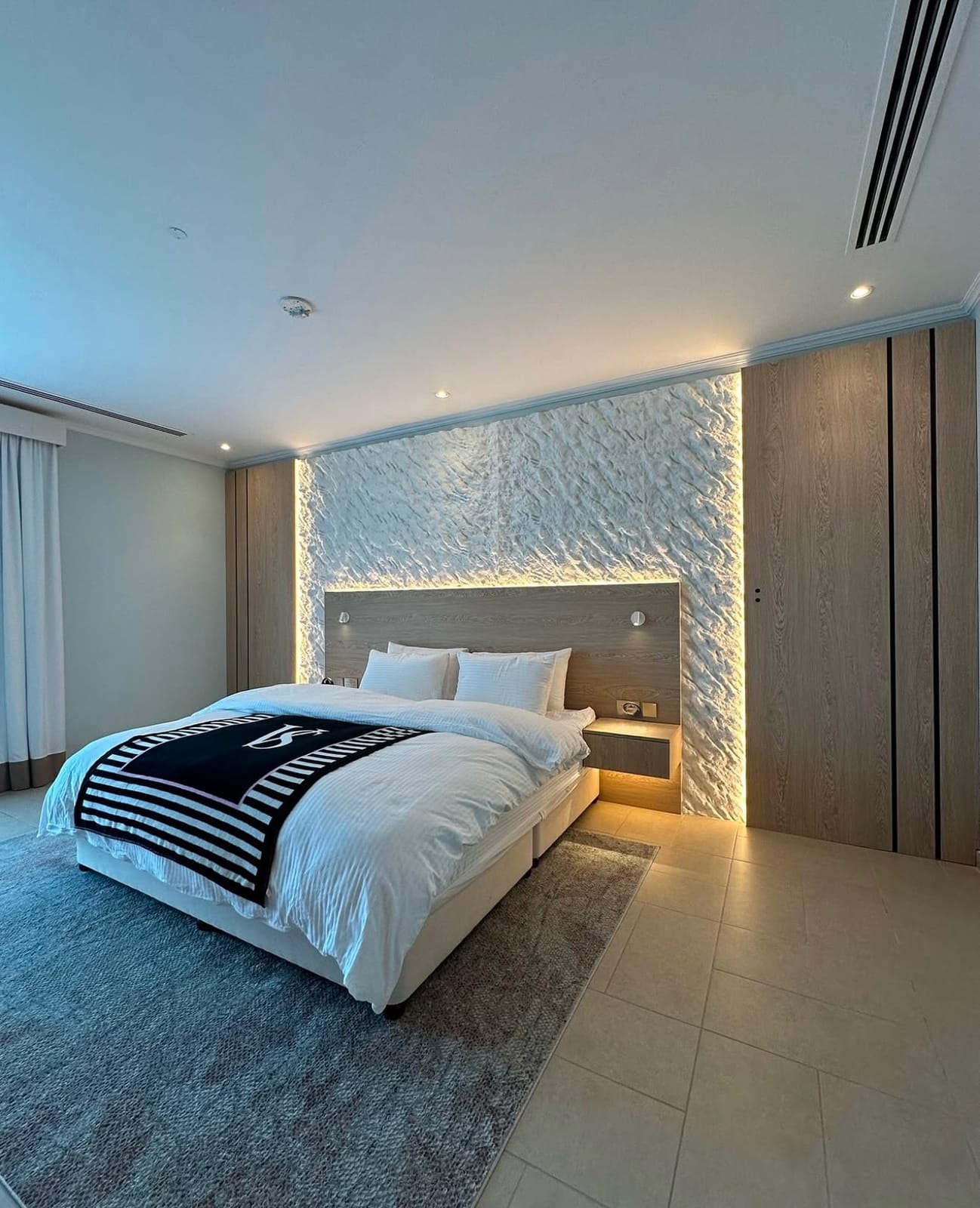
Our relief walls are usually lit by a hidden LED, as in the bedroom below, where a strip behind the edge of the headboard panel and along the side of the wall washes light across the surface from beside it. Because the light enters from the edge, it runs across the relief instead of at it, and every ridge throws a shadow away from the strip.
Put the light where it can skim: along the top edge, down one side, or behind a slim lip so the source is not visible. Avoid downlights aimed straight at the face: the page for our ceiling ornament makes the same observation, that carved relief looks flat when lit head-on and comes alive when light grazes it. Keep the light to a single colour across the room, and give it its own switch so the wall can be dimmed after the main lights go off.
Because grazing light is unforgiving, test it before you commit. EL Design suggests a site mock-up for a prominent feature wall to confirm the distance, beam and colour before every fixture goes in; a sample panel and a torch held at the wall's edge tells you most of it in minutes. Our guides on media wall lighting and gypsum ceiling lighting basics cover the hidden strips and ceiling layers around a feature wall.
Materials: PVC, MDF, gypsum or plant fibre?
Panels sold as 3D come from four families, and the differences are mostly about water and weight. PVC is plastic: lightweight, moisture-resistant, and often interlocking, so it is the most common pick. MDF is board with a milled or moulded face: smooth, easy to paint and cheap to shape, but swollen by water. Gypsum or plaster panels feel more substantial and suit large feature walls; being plaster, they are heavier to carry and need a dry wall. Natural-fibre panels, from bamboo or similar, add an organic look; treat them like MDF and keep them dry.
Our recommendation by room: pick PVC near bathrooms, kitchens or a damp balcony, or wherever AC condensation worries you; MDF for a dry bedroom or a majlis where you want a painted, smooth relief; gypsum for a large living-room wall where weight and a stone-like feel matter. Whichever family you pick, the panel's material is named on the quotation, so ask for it by name and see a sample in the finish you want.
The Walls and Floors guide's price bands rise in the same order, with synthetic panels such as PVC lowest, wood-based boards such as MDF in the middle and mineral panels such as gypsum highest. Its figures are in pounds for another market, so do not carry them over; ask for the figure on your own wall. For the board comparison on a TV wall, see our guide to media wall panel materials.
3D panel materials side by side
PVC
- Water
- Waterproof; the safest in humid rooms
- Weight and fixing
- Light; often interlocking panels
- Best for
- Bathrooms, kitchens, damp corners
MDF
- Water
- Swells if it gets wet; needs a sealed finish
- Weight and fixing
- Light; carpentry skill to cut and drill
- Best for
- Dry bedrooms and majlis walls you want painted
Gypsum or plaster
- Water
- Keep it dry
- Weight and fixing
- Heavier; strong adhesive, sometimes fixings
- Best for
- Large living-room walls
Plant fibre
- Water
- Keep it dry, like MDF
- Weight and fixing
- Light; careful handling
- Best for
- A natural look in dry rooms
PVC and MDF follow the Walls and Floors guide; gypsum and plant fibre are our own summary, with Houseyog placing them on large walls and as a natural look. The material we quote for your wall is named on your quotation.
Fixing, joints and wall preparation
Most 3D panels are bonded to the wall with construction adhesive, with extra fixings for the heavier ones. Houseyog's guide says the wall must be clean, dry and as flat as it can be, and calls that the most important step: lightweight panels let the imperfections show through, so a skim of filler and a light sanding come before any panel goes up. In a UAE home that usually means checking the plastered block wall for cracks, loose areas and old paint that is flaking, which our wall preparation guide walks through for any covering.
Plan the layout before a drop of adhesive: where the pattern starts, how it lands at the corners, and where the joints fall. Panel systems usually interlock or butt together, and a repeating geometric pattern should be set out so that the joints follow the pattern's own edges. Set out from the middle of the wall, or of the bed, and work towards the ends so the cut panels on both sides match in size. Doors, windows and AC grilles are marked on the drawing first, so the cuts are planned, not improvised.
Think about reversal too. Panels glued to the wall are not a rental-friendly choice: when glued panels come off, some paint or plaster usually comes with them, which is why people ask whether 3D wall panels can be removed. If a move is likely soon, a strong paint effect or a removable wall treatment is the better answer. For a lived-in home, plan the day with our occupied-home installation guide.
Peel-and-stick 3D tiles: when they make sense
Searches for 3D wall panels are full of peel-and-stick sheets and self-adhesive tiles, so it is fair to ask where they fit. They are thin, light and cheap to try, and for a rented flat where nothing may be drilled or glued with construction adhesive they are the only relief option on the table.
Their limits are the same ones that make them easy. The relief is shallow, so by our depth table above they need very low light to show at all. A sticky back on a plastered wall that sweats in summer can lift at the corners, and pulling a sheet off later can take paint with it, so test a small area first. Treat them as a short-term accent, not as a feature wall you plan the room around.
Our advice is straightforward. In a rented home, try a single sheet on a hidden patch and live with it for a few weeks before covering a wall. In a home you own, spend the same effort on a proper fixed panel with a depth you have seen in your own light: that is the wall we make, drawn to your measurements and lit from the edge.
Humidity, AC and dust in a UAE home
Relief is a dust catcher. The fine dust that settles from the air in a home with AC running most of the year lodges in every depression, and a deep pattern holds more than a shallow one. A soft brush or a vacuum with a brush head passed from top to bottom keeps it in check every couple of weeks; PVC can also take a damp cloth, which is another point in its favour. Keep wet cleaning away from MDF and plaster.
Humidity is the other risk, and it concerns the air in the room more than the panel. The US EPA's rule of thumb is to stay under 60% indoors, aiming for 30% to 50%, and it warns that mould tends to start out of sight, behind furniture and wall coverings. Cladding a damp wall only buries the fault, so repair any leak or sweating AC line first, and keep gypsum or MDF off an outside wall that is cold and wet on its inner face. Our guide to wallpaper in humid climates explains how to test a wall.
Heat is rarely a problem for a panel indoors, but sunlight can fade a painted face, so a finish on a wall that gets afternoon sun needs a colour that forgives it. Keep a relief wall away from a fire or a real flame, and keep flammable plastics at a safe distance from any heat source on the wall.
How much does a 3D feature wall cost?
There is no published price per square metre for our 3D relief panels. The figure is set from the measured wall and from the panel or finish you choose, and the programme is confirmed on your quotation. That is the honest answer, because the depth, the material and the pattern each move the number more than the wall's size does.
The easy way to judge the direction is to know what makes it go up. A deeper or more intricate pattern needs more material and more cutting. A heavier material, gypsum against PVC, costs more to supply and takes more to fix. Hidden lighting, a surrounding frame and any wall repairs are lines of their own. A plain, shallow relief on a flat wall sits at the lower end of that range, and a deep, lit, patterned wall at the upper end.
For comparison, our wallpaper service starts at AED 45 per m², supplied and fitted, and is a different category of wall; the wallpaper price guide walks through real rooms. Ask for a quotation that lists the wall area, the panel and its material by name, the lighting, the preparation and the fitting as separate lines; the pricing guide helps you compare quotations like for like.
What changes the price of a 3D feature wall
Relief depth
- Pushes it up
- Deep, sculpted pattern
- Keeps it down
- Shallow, repeating relief
Material
- Pushes it up
- Gypsum, natural fibre
- Keeps it down
- PVC
Pattern
- Pushes it up
- Complex, matched at the joints
- Keeps it down
- A simple repeat
Lighting
- Pushes it up
- Hidden LED, its own switch and wiring
- Keeps it down
- None, or light from the room
Wall condition
- Pushes it up
- Cracks, damp, old finishes to repair
- Keeps it down
- A sound, flat wall
There is no published per-m² rate for relief panels; the figure follows the measured wall and the panel chosen.
Where a 3D wall belongs: bedroom, living room or majlis
Behind the bed is the most common place, and the best. The wall is seen from the pillows and from the door, it carries no TV or radiator, and a hidden LED above or beside the headboard lights it without glare. Pair it with a padded wall if you want softness as well as shadow; our guide to the upholstered headboard wall covers the second option, and the two work side by side if one wall is relief and the other padded.
In a living room, keep the strongest relief for a wall facing the sofa that has no screen on it, or use a quiet relief at the TV. A screen throws its own light and a busy pattern behind it competes with the picture. In a majlis, the wall facing the entrance is the one every visitor sees first; a single relief wall with warm light along it gives it presence without clutter. In a small flat, where space and budget are tight, one relief wall and plain walls elsewhere is also the safe choice, and the layout ideas in our small bedroom wardrobe guide show how it can sit beside fitted storage.
Booking the visit, approving the drawing, fitting the wall
The first visit is free. We measure the wall with a laser, note the doors, sockets and AC grilles, and hold panel and finish samples up in the light of your own room. The drawing that follows shows the pattern, how it meets each corner and where the hidden light runs. Production waits for your sign-off, our own installers fit the wall wherever it is in the UAE, and the workmanship is covered by our 24-month written warranty.
To start, tell us the room and attach a photo of the wall via the wallpaper and feature wall service; local work is shown under Sharjah feature walls. When the wall belongs to a bigger project, the fit-out planning guide gives the order of work and the fit-out budget guide the cost lines. Check these points before you sign the drawing:
- The wall has one relief pattern only, on the wall you see first.
- The depth suits the room's size and the angle of its light, and you have seen a sample under that light.
- The material is named, and suits the room's humidity.
- The hidden light skims the surface, has its own switch and does not shine at the viewer.
- The wall is sound, dry and level, with any repairs listed.
- The quotation lists wall area, panel, lighting, preparation and fitting as separate lines.
Common questions
What are 3D wall panels made of?
Mostly PVC, MDF, gypsum or plaster, and plant fibre. PVC is the safe choice in humid rooms, MDF in dry painted rooms and gypsum for large living-room walls. Our 3D feature walls.
Are 3D wall panels better than wallpaper?
They are different: relief panels change with the light and give real depth, while wallpaper is flat but cheaper and faster to change. We price wallpaper from AED 45 per m², supplied and fitted. Choosing wallpaper by room.
How do you light a 3D wall panel?
From the side, with a hidden LED along the top edge or down one side, so the light skims the surface. Downlights aimed straight at the wall flatten it. Lighting ideas for feature walls.
Can 3D wall panels be removed?
Glued panels can be taken off, but some paint or plaster usually comes with them, so they suit a home you own better than a rental. Plan for repair if you ever remove them. Preparing walls for any finish.
How do you clean 3D wall panels?
Brush or vacuum with a soft head from top to bottom every couple of weeks; PVC also takes a damp cloth, while MDF and plaster should stay dry. Deep patterns hold more dust. Wallpaper and humidity in the UAE.
How much do 3D wall panels cost in the UAE?
We quote from the measured wall and the panel or finish chosen; there is no published rate per square metre. Depth, material, pattern and lighting move the figure. Our pricing guide.
3D panels or fluted slats on a TV wall?
Slats are calmer behind a screen; keep strong 3D relief for a wall with nothing mounted on it. Both need side light to show their shadows. Fluted and slatted TV walls.

Sources & specifications
Manufacturer information applies to the named products and systems. Sources reviewed on 28 October 2026.
- Walls and Floors: wall panel materials guide (PVC, MDF, wood and fabric panels: moisture, fixing, price bands)wallsandfloors.co.uk(opens in a new tab)
- Houseyog: 3D wall panels, how to use them (materials, adhesive fixing, wall preparation, grazing light)houseyog.com(opens in a new tab)
- EL Design: wall grazing lighting for textured walls (light across the texture, setback, mock-ups)eldesign.com(opens in a new tab)
- US EPA, moisture guidance for homes: humidity targets and mould that starts out of sightepa.gov(opens in a new tab)
Want this planned for your home?
Consultation and measurement are free. Tell us the rooms, location and what you need; we arrange a sample visit and define the measured quotation.