Dressing Units · 13 min read · 22 June 2026
Dressing table materials: quartz, sintered stone, glass, wood and laminate compared
Compare dressing table materials: sintered stone, engineered quartz, tempered glass, wood veneer, and MR-MDF. Heat resistance, perfume stain protection, and prices from AED 1,800.

By Ali Haider Basra, Founder, Al Tareeq Decor · Contact our workshop
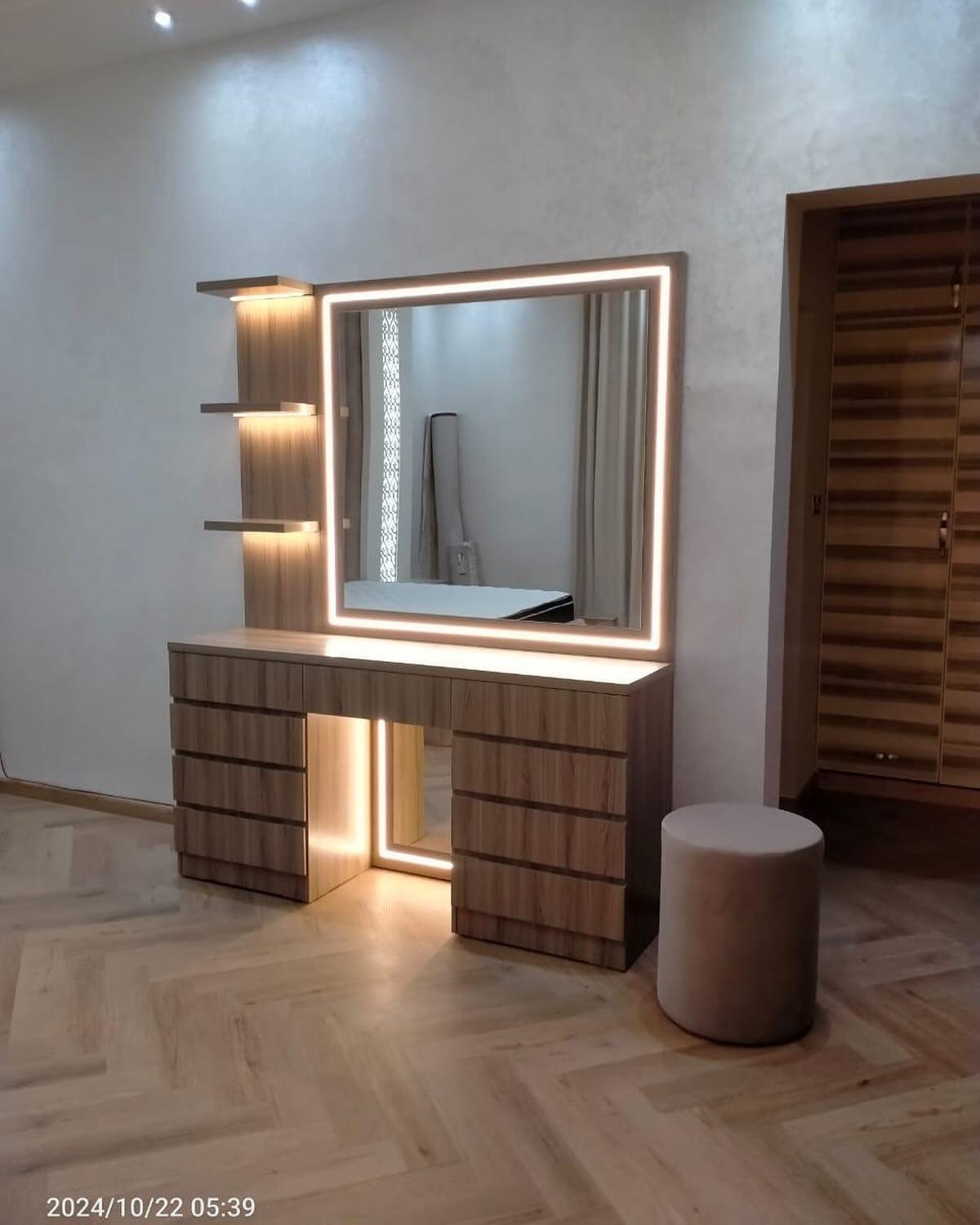
Key takeaways
- Engineered quartz and sintered stone provide zero porosity against perfume alcohol, acetone, and oily cosmetics.
- Sintered stone (porcelain) copes best with hot hair tools; quartz needs a trivet, laminate melts and veneer chars.
- Carcasses should be built from 18 mm moisture-resistant MDF (MR-MDF) to withstand ensuite bathroom humidity swings.
- Fluted and reeded timber drawer fronts add rich vertical shadow lines, sealed with durable polyurethane clear coats.
- Our custom dressing units start from AED 1,800 per unit, manufactured in our Sharjah workshop with a 24-month written warranty.
On this page
- Key takeaways
- Dressing table materials: the short answer
- The daily hazards a vanity surface must survive: perfumes, heat and acetone
- Engineered quartz vs sintered stone (porcelain) countertops
- Vanity countertop material comparison matrix
- Fluted timber, reeded panelling and natural wood veneer finishes
- Carcass cores: moisture-resistant MDF vs plywood vs solid timber
- Dressing table carcass and drawer core comparison
- Tempered glass tops and display shadow-box jewellery drawers
- High-pressure laminates (HPL) vs thermal foil: budget durability
- Interior drawer materials: velvet linings vs acrylic organisers
- Material price tiers: entry specification to luxury builds
- What we recommend and build at Al Tareeq Decor
- Common questions
Dressing table materials: the short answer
A dressing table countertop faces harsher chemical and thermal challenges than almost any other bedroom furniture piece: daily alcohol-based perfume mists, acetone nail polish removers, oily cosmetic foundation drips, and 200°C ceramic hair irons. For the countertop, sintered stone (such as Dekton or Neolith) and engineered quartz give the best protection, with non-porous surfaces that perfume and nail varnish remover cannot soak into, and strong scratch resistance. Sintered stone also copes best with heat: its maker says Dekton is designed to withstand hot utensils from domestic use, while quartz makers still advise a trivet under a hot tool.
For the main cabinet structure and drawers, 18 mm moisture-resistant MDF (MR-MDF) finished in polyurethane lacquer or textured high-pressure laminate (HPL) is the joinery standard across the UAE. It withstands bedroom humidity swings near ensuite bathrooms far better than standard particleboard, while natural wood veneers and fluted timber profiles add warmth to drawer fronts. Inside the drawers, velvet-wrapped timber inserts protect delicate jewellery, luxury watches, and glass perfume flacons from scratching. What the moisture-resistant label on a board does and does not guarantee is set out in moisture-resistant wardrobe boards.
Our made-to-measure dressing units start from AED 1,800 per unit for an entry specification. The diagram below rates six common tops on the three tests a dressing table meets every day, and the second table further down compares the board cores underneath.
- 1. Sintered stone rates highest for heat: Cosentino says Dekton is designed to withstand hot utensils from domestic use, and it has no resin binder to mark
- 2. Engineered quartz tolerates heat for short spells, but its resin binder is why makers still advise a trivet under a hot styling tool
- 3. Tempered glass shrugs off perfume and acetone, but shows fine scratches and fingerprints more than stone
- 4. Laminate melts or bubbles under a hot tool and veneer chars; alcohol in perfume also lifts a lacquered veneer finish
The daily hazards a vanity surface must survive: perfumes, heat and acetone
A dressing table looks like a quiet decorative desk, but chemically and physically it operates like a laboratory bench. Choosing materials purely for appearance leads to heartbreak within six months if the surface cannot handle three specific daily hazards:
1. Alcohol and essential oil solvent attack: Fine fragrances, body mists, and hair tonics contain high concentrations of denatured alcohol and carrier oils. When sprayed or dripped onto porous marble, unprotected timber veneer, or cheap lacquers, alcohol acts as a solvent. It dissolves the surface sheen, softens polyurethane clear coats, and leaves cloudy white water rings that penetrate deep into natural stone capillaries.
2. Thermal scorch from hair stylers: Ceramic hair straighteners, curling wands, and high-wattage hair dryers operate at temperatures between 180°C and 230°C. Placing a hot wand onto real wood veneer chars the wood fibers; placing it onto standard plastic laminate melts the melamine resin; and placing it onto quartz can mark the resin or crack the stone through thermal shock, which is why Silestone's care guidance says to use a trivet. Sintered stone is the surface best suited to hot tools.
3. Acetone and pigment staining: Spilled nail polish, acetone remover, liquid eyeliner, and dark pigmented lipsticks permanently stain porous limestone, natural Carrera marble, and unsealed composite wood. A vanity top must be completely non-porous so liquid spills wipe off effortlessly without etching.
Engineered quartz vs sintered stone (porcelain) countertops
When clients ask us for a stone countertop on their custom vanity, the choice almost always narrows to engineered quartz versus sintered stone porcelain. Both far outperform natural marble in a grooming environment, but their physical compositions differ significantly.
Engineered Quartz (e.g., Silestone, Caesarstone): Mostly crushed natural quartz crystals, held together with a polymer resin and colour pigments. Quartz is strong, so a dropped perfume bottle is unlikely to chip it, and its surface is non-porous, scratch-resistant and not stained by cosmetics. Because it contains a resin binder, it is heat-tolerant rather than heatproof: Silestone's care guidance says it resists moderately high temperatures for brief periods and still recommends a trivet or hot pad. Always rest hot straighteners on a silicone pad when the top is quartz.
Sintered Stone (e.g., Dekton, Neolith): Natural minerals (quartz, feldspar, porcelain clays) pressed under very high pressure and fired at high temperature, with no polymer resin binder. That is why Cosentino says Dekton is designed to withstand hot utensils from domestic use, and why sintered stone also resists acetone, alcohol and UV light. It is very hard to scratch, though not impossible. Its weakness is brittle edges and corners, so we profile front edges with a subtle 2 mm pencil-round bevel to prevent chipping, and we still keep a rest pad on the table for the hottest tools.
Vanity countertop material comparison matrix
Sintered Stone (Porcelain)
- Heat resistance
- Highest (designed for hot utensils)
- Stain & perfume resistance
- Non-porous; stain-proof
- Scratch resistance
- Very high
- Relative cost tier
- Premium tier
Engineered Quartz
- Heat resistance
- Tolerates heat briefly; use a trivet
- Stain & perfume resistance
- Non-porous; not stained by makeup or oils
- Scratch resistance
- High
- Relative cost tier
- Mid to premium tier
Tempered Back-Painted Glass
- Heat resistance
- Moderate (tolerates moderate heat)
- Stain & perfume resistance
- Non-porous; wipes clean instantly
- Scratch resistance
- Moderate (can show fine scratches)
- Relative cost tier
- Mid tier
Natural Marble (Sealed)
- Heat resistance
- Tolerates heat
- Stain & perfume resistance
- Porous; easily etched by perfume and acids
- Scratch resistance
- Low to moderate (scratches easily)
- Relative cost tier
- High tier (requires sealing)
High-Pressure Laminate (HPL)
- Heat resistance
- Low (melts or bubbles under hot tools)
- Stain & perfume resistance
- Good if the seams are sealed
- Scratch resistance
- Moderate (vulnerable to sharp cuts)
- Relative cost tier
- Budget tier
Natural Wood Veneer
- Heat resistance
- Very low (chars and scorches easily)
- Stain & perfume resistance
- Porous (alcohol dissolves lacquer finish)
- Scratch resistance
- Low (dents and scratches under metal)
- Relative cost tier
- Mid to premium tier
Levels summarise the makers' care guidance (Cosentino for quartz and sintered stone) and our own joinery experience in UAE villas and apartments; they are not lab results.
Fluted timber, reeded panelling and natural wood veneer finishes
While stone dominates the flat worktop, the vertical faces of the dressing table—the drawer fronts, side pedestals, and back panelling—provide the texture and warmth that make a bedroom feel inviting.
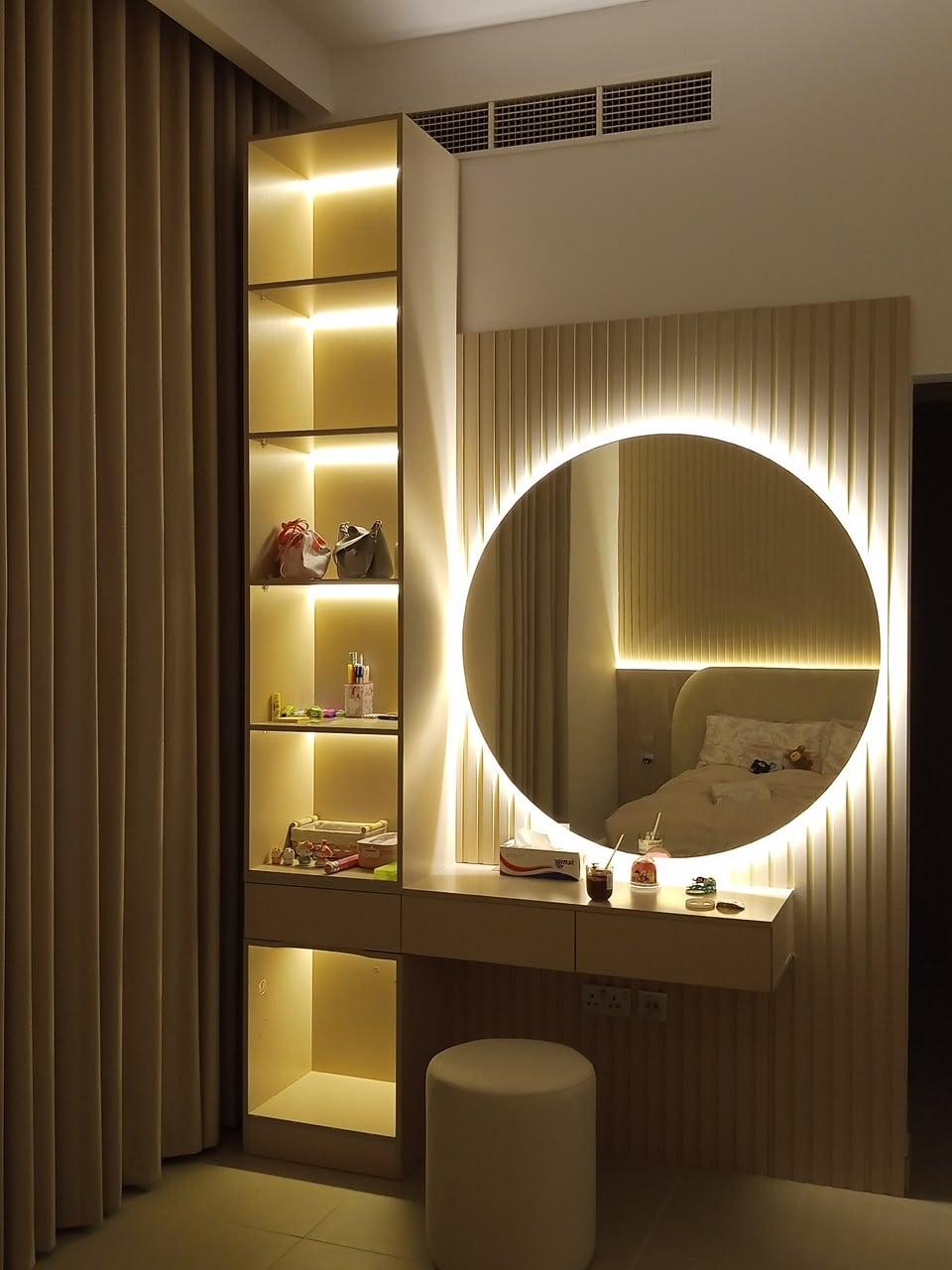
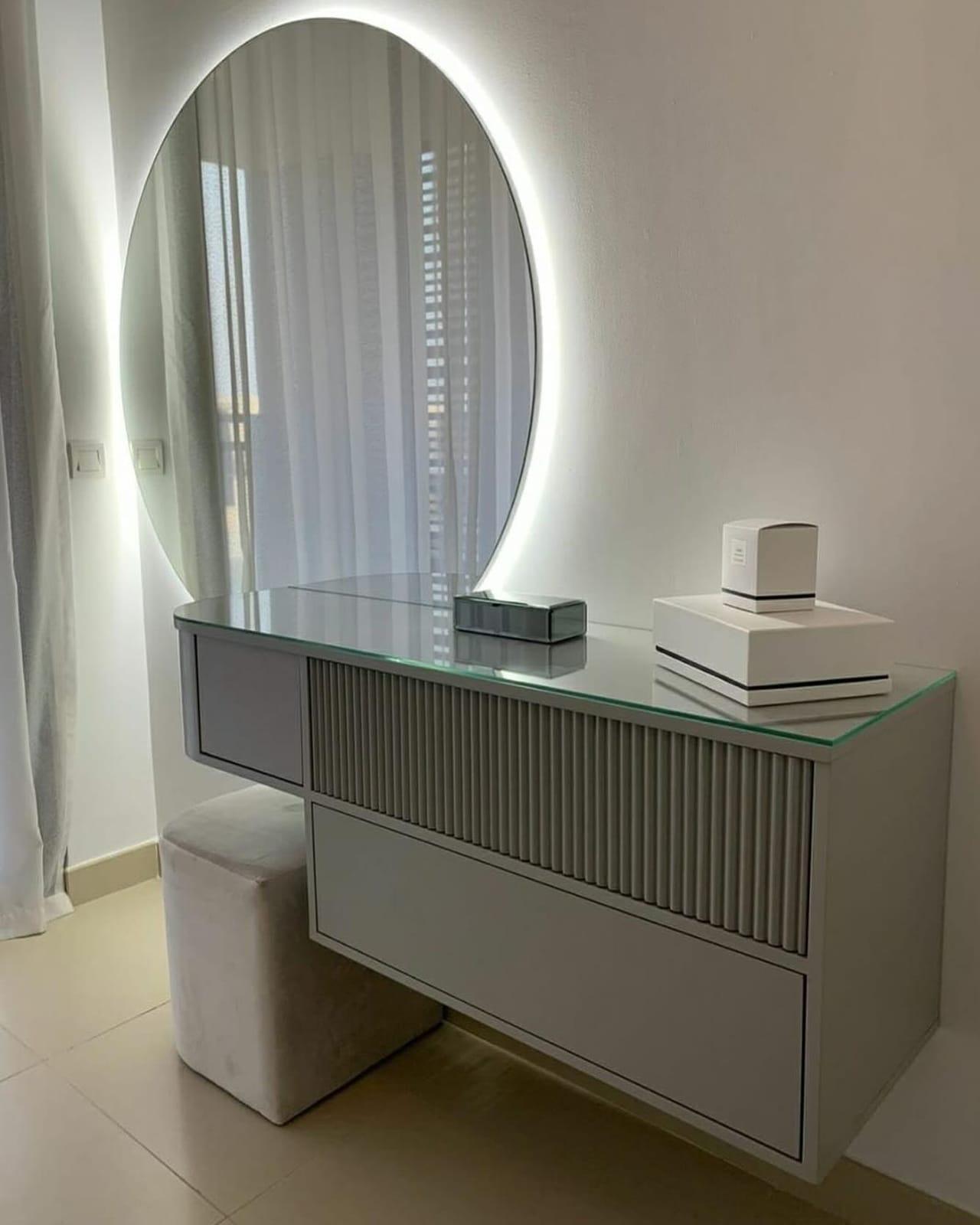
Fluted and reeded profiles: Fluted vertical ribs (slats with convex semi-circular profiles) and reeded ribs (concave grooves) are currently the most requested architectural detail for luxury UAE master bedrooms. The alternating ridges catch light from integrated LED side strips, casting delicate vertical shadows that break up monolithic boxy furniture. We mill these fluted profiles in our workshop using precision CNC routers on moisture-resistant MDF before finishing.
Natural wood veneers: For clients seeking natural timber grain, we press real European oak, American walnut, or smoked ash veneers over engineered cores. This delivers the rich organic character of genuine hardwood without the warping and seasonal splitting that solid planks suffer in air-conditioned UAE bedrooms. All our veneers are sealed with two coats of non-yellowing acrylic-polyurethane matte clear coat to shield the wood grain from finger oils and ambient moisture.
Carcass cores: moisture-resistant MDF vs plywood vs solid timber
What sits beneath the visible paint, veneer, or stone determines whether a dressing table remains structurally sound for a decade or sags within two years.
Moisture-Resistant MDF (MR-MDF): Standard interior MDF uses urea-formaldehyde resins that swell irreversibly when exposed to water. In contrast, MR-MDF uses special moisture-repellent melaminic resins (identifiable by its green core tint). A published datasheet puts it at about 800 kg/m³ and its 24-hour swelling at 5% or less, against up to 12% for standard MDF. It offers a uniform density, flat surfaces for perfect stone lamination, and zero voids. It is the premier choice for bedroom dressing tables and fitted wardrobes across Sharjah and Dubai.
Marine and Hardwood Plywood: Constructed from cross-laminated timber veneers bonded with waterproof adhesive. Plywood provides exceptional tensile screw-holding strength and flexural rigidity over long spans. It is ideal for the structural sub-top and heavy drawer boxes that support wide stone countertops.
Why solid wood is avoided for carcasses: In the UAE, outdoor summer humidity regularly exceeds 85%, while indoor air conditioning dries room air down to 40%. Solid wood planks continually expand and contract across their grain under these moisture swings, leading to jammed drawers, twisted gables, and cracked joinery. High-density engineered boards remain dimensionally stable year-round.
Dressing table carcass and drawer core comparison
Standard MDF
- Density (kg/m³)
- 710 – 780 kg/m³
- Moisture swelling (24h)
- Swells up to 12% in 24 hours
- Screw-holding strength
- Good in face and edge
- Best application in vanity
- Painted fronts in dry rooms only
Moisture-Resistant MDF (MR-MDF)
- Density (kg/m³)
- About 800 kg/m³
- Moisture swelling (24h)
- Swells 5% or less in 24 hours
- Screw-holding strength
- Excellent in face and edge
- Best application in vanity
- Carcass gables, routed fluted drawers, painted panels
Hardwood / Birch Plywood
- Density (kg/m³)
- Varies by species and maker
- Moisture swelling (24h)
- Ask the maker for its datasheet
- Screw-holding strength
- Superior mechanical holding
- Best application in vanity
- Structural sub-tops, heavy drawer boxes, cleat supports
Standard Particleboard (Chipboard)
- Density (kg/m³)
- Varies by maker
- Moisture swelling (24h)
- Swells more than MR-MDF, and does not recover
- Screw-holding strength
- Moderate (can tear out over time)
- Best application in vanity
- Entry-level internal shelving only
Solid Hardwood (Oak / Walnut)
- Density (kg/m³)
- White oak about 755 kg/m³
- Moisture swelling (24h)
- Moves with humidity, mostly across the grain
- Screw-holding strength
- High (requires pilot drilling)
- Best application in vanity
- Decorative edging, solid handles, and leg turnings only
MDF figures for 12–19 mm boards from Swiss Krono; white oak from The Wood Database. Boards are tested to EN 312 (particleboard) and EN 622-5 (fibreboard).
Tempered glass tops and display shadow-box jewellery drawers
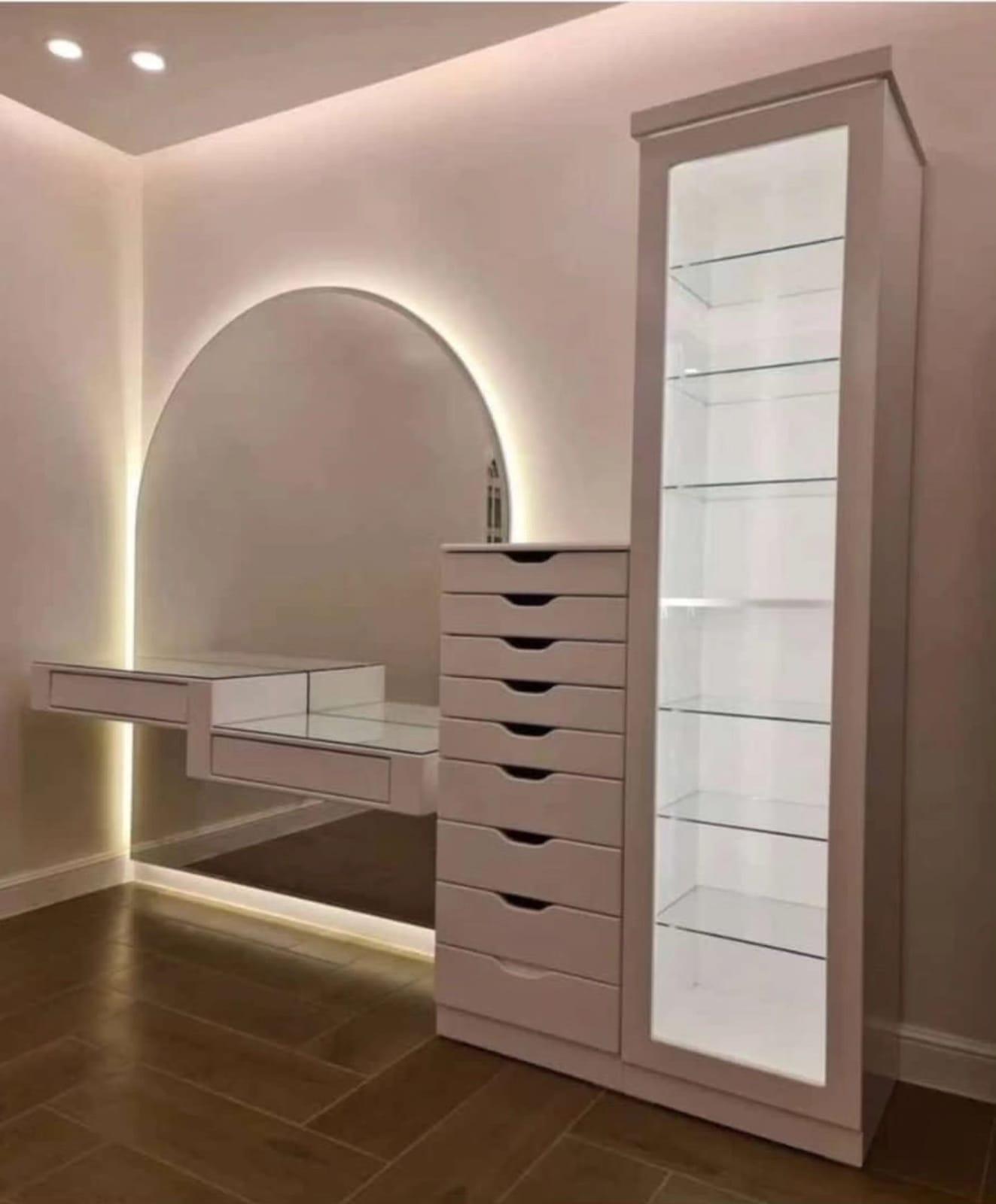
A popular luxury design configuration is the display shadow-box: a dressing table featuring a toughened glass top through which you can view your jewellery, watches, sunglasses, and perfume collection neatly arranged in the top drawer.
Glass specifications: We specify 8 mm or 10 mm low-iron toughened (tempered) safety glass. Low-iron glass (often called Optiwhite or Starphire) eliminates the faint greenish tint seen in standard float glass, rendering natural jewellery metals, gemstones, and velvet fabrics in their true natural hues.
Safety and durability: Tempered glass is four to five times stronger than standard annealed glass. If impacted severely, it shatters into small, blunt, granular dice rather than dangerous sharp jagged shards. Glass is completely non-porous and chemically impervious to perfume alcohol, essential oils, and nail varnish remover.
Maintenance consideration: Glass shows dust specks and skin oils easily, requiring frequent wiping with a microfiber cloth. To soften the look, we often combine a 60 cm glass display central window with solid quartz or timber side wings.
High-pressure laminates (HPL) vs thermal foil: budget durability
For secondary bedrooms, guest suites, or rental apartments where budgets require a cost-effective alternative to stone and real veneer, decorative laminates provide an attractive, hard-wearing finish.
High-Pressure Laminate (HPL, e.g., Formica, Wilsonart): Made from multiple layers of phenolic resin-impregnated kraft paper topped with a printed decorative layer and a melamine protective overlay, fused under 1,000 psi pressure. HPL is extremely tough, highly scratch-resistant, and impervious to liquid spills. Modern synchronized-pore HPL replicates authentic woodgrain textures and marble veining with astonishing realism.
Thermal Foil (Thermofoil): A thin polyvinyl chloride (PVC) film heat-vacuumed over routed MDF. While it allows seamless one-piece drawer fronts without edge bands, it is vulnerable to heat. Air from a powerful hair dryer can soften the glue and cause foil to delaminate or curl at corners. In our joinery, we recommend rigid HPL with 1 mm ABS edge-banding for all vanity countertops and drawer fronts rather than heat-sensitive foil.
Interior drawer materials: velvet linings vs acrylic organisers
The interior fit-out of a dressing table drawer separates a generic desk from a bespoke vanity piece. Daily cosmetic and jewellery storage requires distinct material treatments:
Velvet-wrapped timber inserts: Soft, plush micro-velvet or faux suede wrapped over slim 6 mm wooden partitions protects valuable watch bezels, gold rings, pearl necklaces, and designer sunglasses from scratches. The velvet pile dampens rattling noises when opening drawers and cushions delicate glass perfume bottles. We craft modular velvet inserts tailored exactly to your watch box dimensions and lipstick quantities.
Crystal-clear cast acrylic dividers: For wet or oily cosmetics—such as liquid foundations, lip glosses, concealers, and mascara wands—velvet is impractical because spills would stain the fabric. For cosmetic drawers, we fabricate laser-cut 4 mm transparent acrylic grids. Acrylic is chemically inert, resists foundation oils, and can be easily lifted out and washed in warm soapy water.
Drawer slide hardware: A stone-topped vanity drawer with heavy perfume bottles requires high-load drawer runners. Ask for the selected soft-close runner model and its load rating to be stated in the quotation for the intended drawer and contents.
Material price tiers: entry specification to luxury builds
The choice of materials directly determines the final quotation for a custom dressing unit. Understanding these cost tiers helps you allocate budget where it matters most:
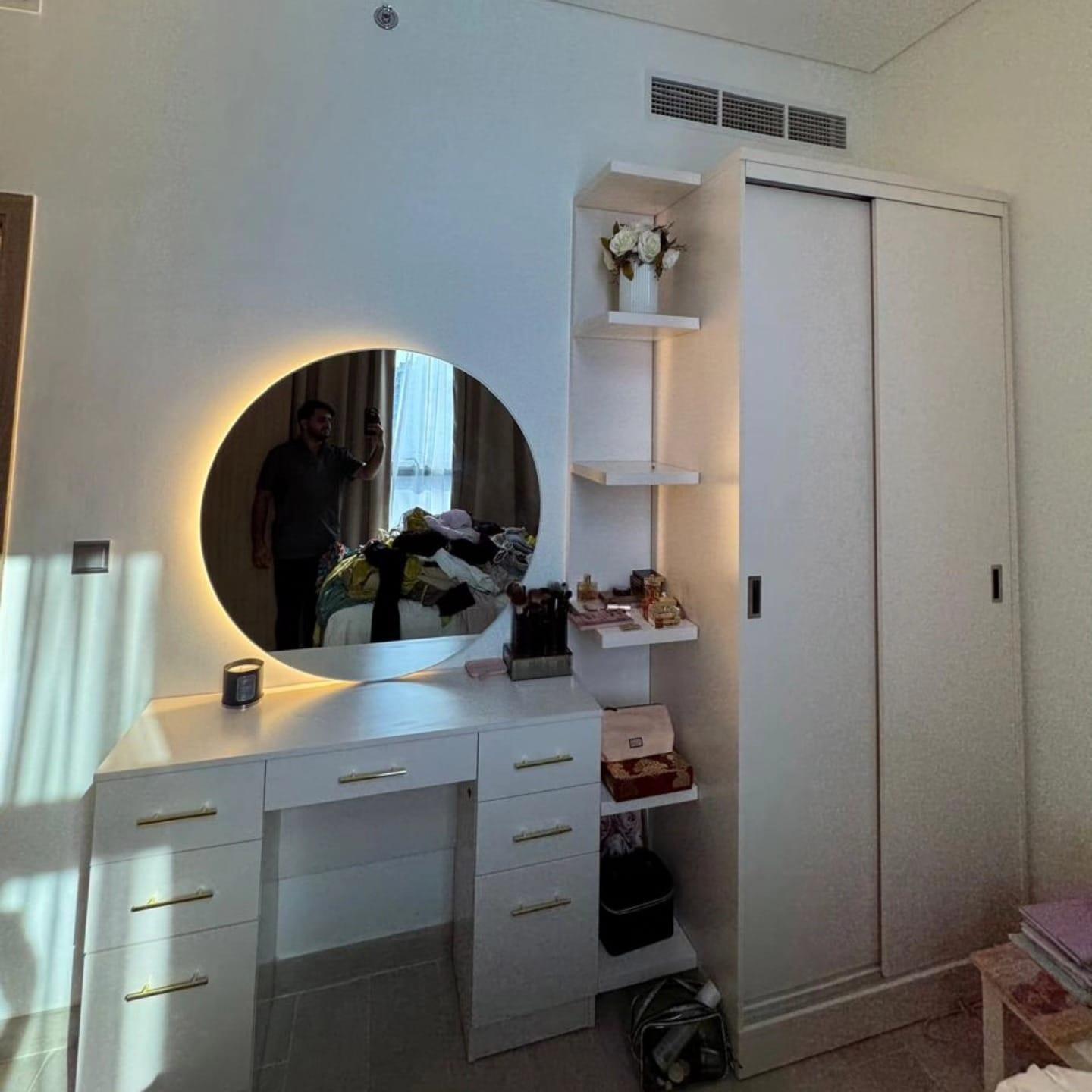
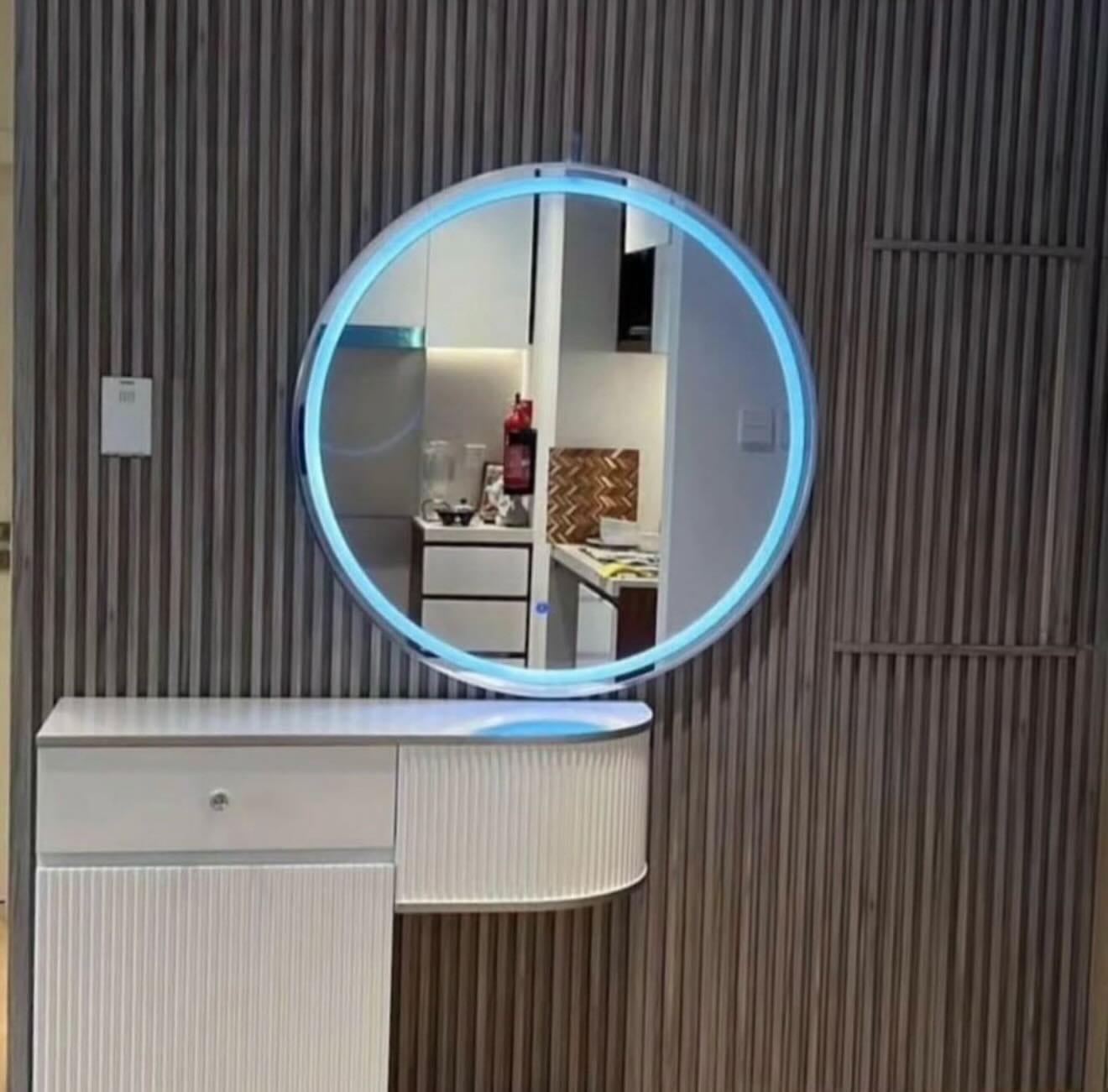
Entry Tier (AED 1,800 – AED 2,800): Standard width (80–100 cm), moisture-resistant MDF carcass with premium HPL or matte lacquer finish, durable laminate or tempered glass top, single or double drawers with standard soft-close slides, and a circular LED mirror. Ideal for guest rooms, compact apartments, and secondary bedrooms.
Mid Tier (AED 2,800 – AED 4,500): Width 100–140 cm, 20 mm engineered quartz countertop, CNC-milled fluted drawer fronts or natural oak veneer, custom drawer divider inserts, side column shelving or integrated mirror task lighting, and concealed runners specified in the quotation.
Luxury Bespoke Tier (AED 4,500 – AED 7,500+): Large multi-pedestal dressing tables or walk-in wardrobe suites, 12 mm ultra-compact sintered stone top (Dekton/Neolith) with beveled pencil edges, display shadow-box tempered glass window, full velvet-lined watch and jewellery drawers, hidden electrical conduits, and smart touch-dimming perimeter LED lighting.
Review our comprehensive dressing unit cost and layout guide and pricing guide for detailed itemised cost breakdowns.
What we recommend and build at Al Tareeq Decor
At Al Tareeq Decor, every dressing unit is bespoke-manufactured in our Sharjah workshop to match your exact room dimensions and storage requirements. We don't sell flat-pack compromises; we build heirloom-grade furniture designed to withstand real daily living in the UAE.
Our golden recommendation for master suites: Pair an engineered quartz or sintered stone top with fluted moisture-resistant MDF drawer fronts, a neutral 3500K front-lit LED mirror, and bespoke velvet-divided drawers. That combination keeps makeup stains out, copes with hot tools (with a rest pad on quartz), and gives warm architectural shadow lines and effortless everyday luxury.
We begin with a free site survey anywhere in the UAE. Our team visits your home with physical material samples—including quartz stones, sintered slabs, wood veneers, lacquer swatches, and velvet linings—so you can touch textures and verify colours under your bedroom's actual lighting. We laser-measure wall lengths, inspect socket drops, and prepare precise CAD workshop drawings for your approval before cutting a single panel.
All our joinery units are backed by our written 24-month workmanship warranty. Separately, the wood-based boards carry a 5-year limited warranty, subject to terms; hinges, tracks, runners, rollers and other moving hardware are not covered, and the final terms are in the written warranty. To begin planning, explore our custom dressing tables collection, dressing units service, or examine vanities with backlit LED mirrors. Clients in Sharjah can review custom wardrobes and dressing units in Sharjah, and Dubai homeowners can explore our Dubai joinery and wardrobe services.
- Schedule a free in-home consultation with physical stone, veneer and velvet samples.
- Specify sintered stone or engineered quartz for a non-porous top that perfume and makeup cannot stain.
- Ensure all carcasses use 18 mm green-core moisture-resistant MDF (MR-MDF).
- Include velvet inserts for jewellery and washable acrylic organizers for cosmetics.
- Verify the selected drawer runner model, soft-close function and load rating in the quotation.
- Every unit custom-manufactured in Sharjah and backed by our 24-month warranty.
Common questions
What is the best material for a dressing table countertop?
Sintered stone (such as Dekton) or engineered quartz is the best material. They are non-porous, so perfume alcohol and oily makeup cannot soak in. Sintered stone also copes best with hot styling tools, while quartz needs a trivet. Dressing table design tips.
Can hot hair straighteners damage a quartz dressing table top?
Yes, it can. Quartz holds its crystals together with a polymer resin, which can mark if a very hot tool sits on it, so its makers advise a trivet. Sintered stone has no resin and is designed to withstand hot utensils, and a silicone mat on quartz solves the issue. Makeup vanity vs dressing table.
Does perfume alcohol ruin wood dressing tables?
Yes. Denatured alcohol in perfumes acts as a solvent that dissolves lacquer finishes on natural wood and etches polished marble. If you choose wood veneer, protect the surface with a clear tempered glass sheet or specify quartz. Dressing table storage layouts.
What material should the dressing table carcass be made of?
18 mm moisture-resistant MDF (MR-MDF) or hardwood plywood is the joinery standard. Standard particleboard swells permanently when exposed to moisture from adjoining ensuite bathrooms, whereas MR-MDF remains stable. Fitted vs built-in wardrobes.
What is the benefit of a glass-top dressing table?
An 8 mm low-iron tempered glass top allows a display shadow-box effect, letting you view organized jewellery and watches in the top drawer while resisting perfume stains and scratches. Dressing mirror task lighting.
How much does a custom dressing table cost based on materials in the UAE?
Our custom dressing units start from AED 1,800 for an entry specification in MR-MDF with laminate or glass. Premium quartz or sintered stone tops and fluted timber fronts typically range from AED 2,800 to AED 4,500. Dressing unit cost and layouts.
Does Al Tareeq Decor provide material samples before manufacturing?
Yes. Our team conducts a free site survey across Dubai, Sharjah, and all Emirates, bringing physical samples of quartz, sintered stone, natural veneers, lacquer colours, and velvet linings directly to your home. Custom dressing tables.

Sources & specifications
Manufacturer information applies to the named products and systems. Sources reviewed on 29 October 2026.
- Cosentino Silestone: Engineered Quartz Chemical and Thermal Resistance Datasheetscosentino.com(opens in a new tab)
- Dekton by Cosentino: Ultra-Compact Sintered Stone Technical Specifications (Heat, Stain and Scratch Resistance)cosentino.com(opens in a new tab)
- BS EN 622-5: Fibreboards Specifications (Requirements for Moisture-Resistant Dry Process Boards / MDF)en-standard.eu(opens in a new tab)
- Swiss Krono: MDF technical data (density, 24 h swelling, MR board EN 622-5)swisskrono.com(opens in a new tab)
- The Wood Database: white oak (density and shrinkage)wood-database.com(opens in a new tab)
- Blum: Movento and Dynapro Heavy-Duty Concealed Undermount Drawer Runners Technical Catalogblum.com(opens in a new tab)
Want this planned for your home?
Consultation and measurement are free. Tell us the rooms, location and what you need; we arrange a sample visit and define the measured quotation.