Curtains · 11 min read · 11 November 2026
Curtain rod, track or rail: which one suits your home?
Rod, track or rail? Compare weight, span, headings, ceiling pockets, bay windows and cost drivers, and see which hardware suits your UAE curtains.

By Ali Haider Basra, Founder, Al Tareeq Decor · Contact our workshop
Key takeaways
- Choose a track for heavy, lined or blackout curtains, wide windows, bay windows, ceiling mounting and any chance of a motor.
- Choose a rod for eyelet curtains you want to show off, short spans and light fabrics.
- A long rod needs a centre support or it bows. Guides differ (Studio Matrx: about 2.5 m; Dunelm: a third bracket above 180 cm), so ask the rod's maker.
- Wave curtains need a wave track; they cannot hang from a rod.
- 'Rail' means track, and 'pole' means rod, in most shops.
- Ask for the maximum curtain weight of the exact system, and for the surface the brackets screw into, in writing.
On this page
- Key takeaways
- What the words mean: rod, track, rail and pole
- Curtain hardware terms and what they usually mean
- How a curtain rod works, and where it struggles
- How a curtain track works, and where it struggles
- Choosing by curtain weight and heading style
- Curtain weight classes and hardware compatibility
- Rod or track: side by side in section and elevation
- Matching the hardware to each room in a UAE home
- Hardware selection by room and window type
- Bay windows, curves and corner glazing
- Double rod versus double track: the practical trade-offs
- Double rod vs double track comparison
- Fixing into UAE walls and ceilings: block, concrete and gypsum
- Fixing methods by UAE substrate
- Renting: hardware you can take with you
- Planning for motorized curtain tracks
- Hardware maintenance: gliders, brackets and finishes
- A hardware checklist for your quotation
- Quotation checklist for curtain hardware
- What it costs and how we decide at the site visit
- Common questions
What the words mean: rod, track, rail and pole
Interior shops and contractors use different words for window hardware, which often confuses homeowners before ordering. A rod or pole is a solid round bar the curtain hangs from by rings or eyelets; the hardware remains fully visible as a decorative feature above the window.
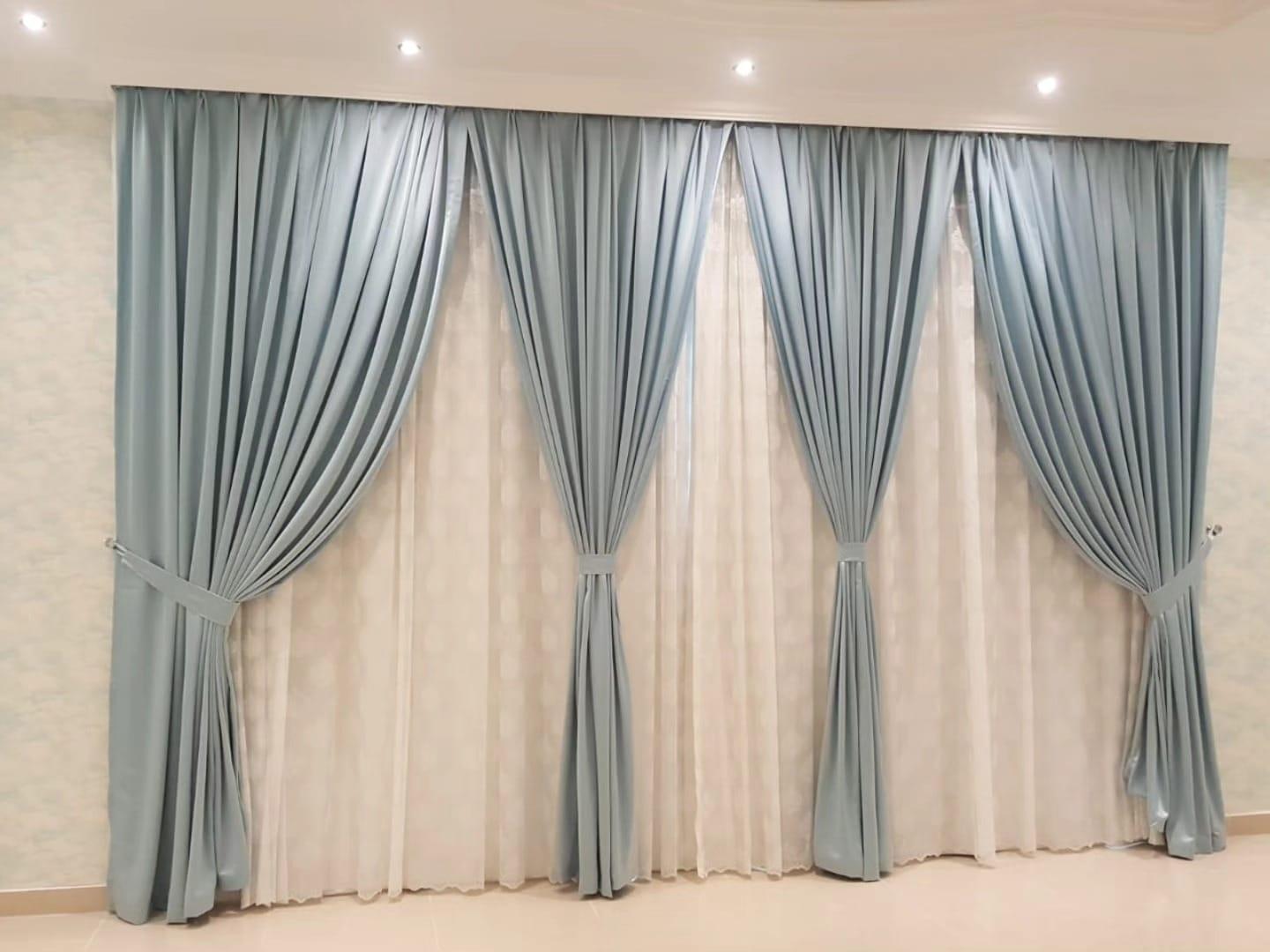
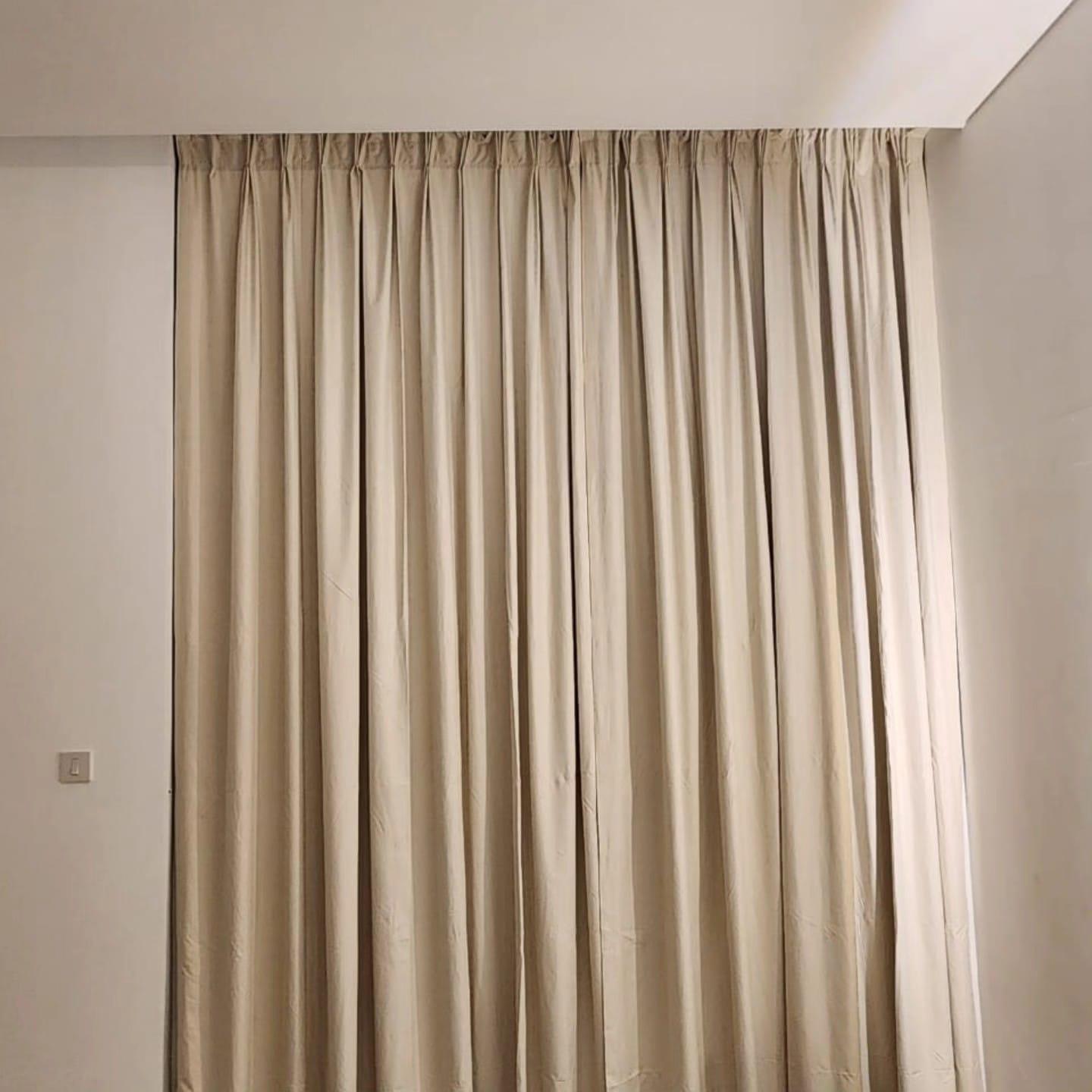
A track or rail is an engineered channel with small internal sliders (gliders or carriers) that glide smoothly inside. The hardware is largely hidden by the curtain heading, allowing fabrics to sit flush against walls or ceilings. A ceiling track or recessed track is mounted directly to the slab or hidden inside a gypsum pocket, while a double rod or double track provides two separate running paths for a sheer layer and a blackout curtain.
Because the word 'rail' is used loosely across the UAE market, always insist on the exact specification on your quotation—for example, 'heavy-duty powder-coated aluminium track, ceiling-fixed, with wave carriers'.
Curtain hardware terms and what they usually mean
Rod, pole
- Usually means
- A round metal or timber bar with rings or eyelets
- Best application
- Eyelet headings and decorative formal rooms
Track, rail, rail system
- Usually means
- An aluminium channel with internal gliders
- Best application
- Heavy lined curtains, ripple-fold and wave headings
Ceiling / recessed track
- Usually means
- Track fixed flush to ceiling or recessed in gypsum
- Best application
- Floor-to-ceiling glass and light-sealed bedrooms
Double rod / double track
- Usually means
- Two parallel hardware paths on one mounting set
- Best application
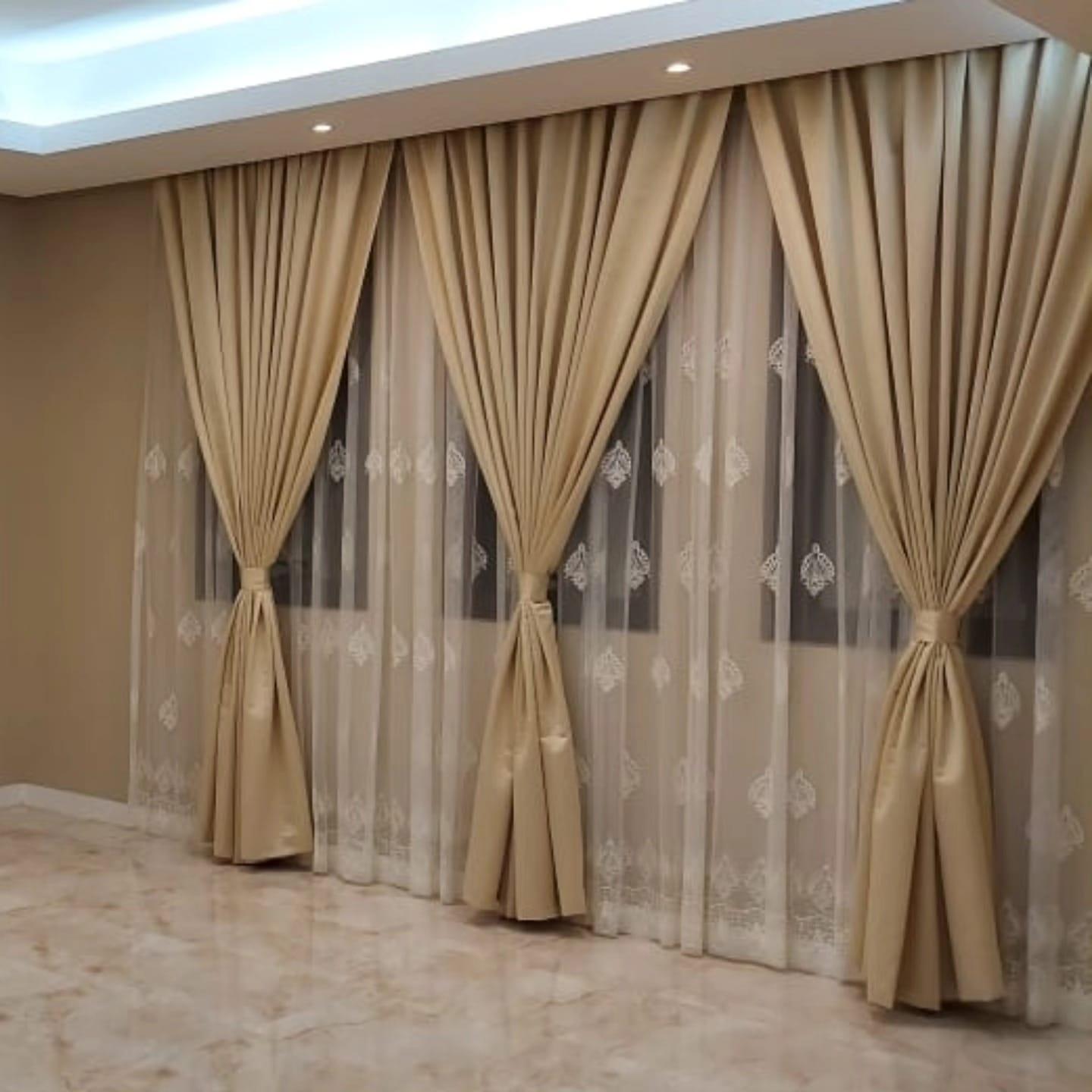
- Daytime sheer privacy paired with nighttime blackout
Confirm whether hardware is aluminium or plastic before accepting a quotation.
How a curtain rod works, and where it struggles
A rod is supported by brackets at either end and carries the curtain below it on rings, or directly through fabric eyelets. Because the rod sits below the ceiling and stands off the wall on brackets, the hardware itself forms an active part of the room's decor.
Where a rod works well: eyelet curtains require a rod because the bar passes directly through the metal eyelets stamped into the fabric. Dunelm's technical buying guide confirms that eyelet and tab-top curtains cannot operate on an ordinary track. If you want decorative finials, aged brass, matte black or polished chrome hardware on display, a rod delivers that traditional aesthetic for light to medium curtains on standard windows.
Where a rod struggles: span and weight present serious physical limits. Architectural guidance from Studio Matrx notes that an unsupported rod over 2.5 metres bows under fabric weight and requires a centre support bracket; retailer guidelines from Dunelm advise adding a third bracket on spans wider than 180 cm. The exact sagging threshold depends on the rod's tube diameter, wall thickness and curtain weight.
Crucially, a centre support bracket stops rings from passing across the middle, preventing centre-opening curtains from closing cleanly past the centre line. In addition, corner brackets for bay windows create friction points, and the bracket stand-off creates an unavoidable daylight gap between the wall, ceiling and curtain heading.
How a curtain track works, and where it struggles
A track is an extruded aluminium or moulded profile where carriers glide along internal channels. The curtain attaches to the carriers via heading hooks, keeping the operating mechanics concealed and positioning the fabric right up to the mounting line.
Where a track excels: weight capacity is substantially higher than decorative rods. Manufacturers engineer commercial tracks for heavy loads; for example, the Silent Gliss SG 3870 product brochure (12/2023) certifies a maximum system weight of 14 kg across a 6-metre span for cord-operated configurations. Wave and ripple-fold headings require dedicated wave gliders connected by an internal spacer cord, which only function inside a track profile.
For bay windows and curves, engineered aluminium tracks can be factory-bent or site-curved. The SG 3870 specification permits a tight bending radius down to 26 cm for standard profiles and 50 cm for recessed profiles. Furthermore, tracks can be direct-fixed to the slab or concealed inside gypsum pockets (see curtain pockets in gypsum ceilings), giving curtains the appearance of floating seamlessly out of the ceiling.
Where a track struggles: lightweight plastic tracks degrade and sag in warm UAE sun, requiring close bracket spacing. Recessed plaster-in tracks require coordination with ceiling contractors before gypsum framing closes.
Choosing by curtain weight and heading style
The choice of hardware should always be dictated by two technical factors: the calculated weight of your curtains and the heading style. Fabric weight escalates quickly once double fullness, heavy interlinings or blackout coatings are specified on wide UAE villa windows.
Dunelm publishes a benchmark weight guide for a pair of curtains on a 150 cm track: light voiles weigh up to 2 kg, lined linens reach around 3.5 kg, lined velvets and blackout curtains weigh between 3.5 and 6 kg, and interlined acoustic drapes reach 6 to 9 kg. On a 4-metre villa window, fabric weight easily exceeds 15 kg, requiring heavy-duty aluminium track profiles.
- Eyelet headings: require a rod; diameter must match eyelet rings with 10–15 mm clearance
- Pinch pleats and French pleats: compatible with rings on rods or gliders on tracks; track recommended for heavy linings
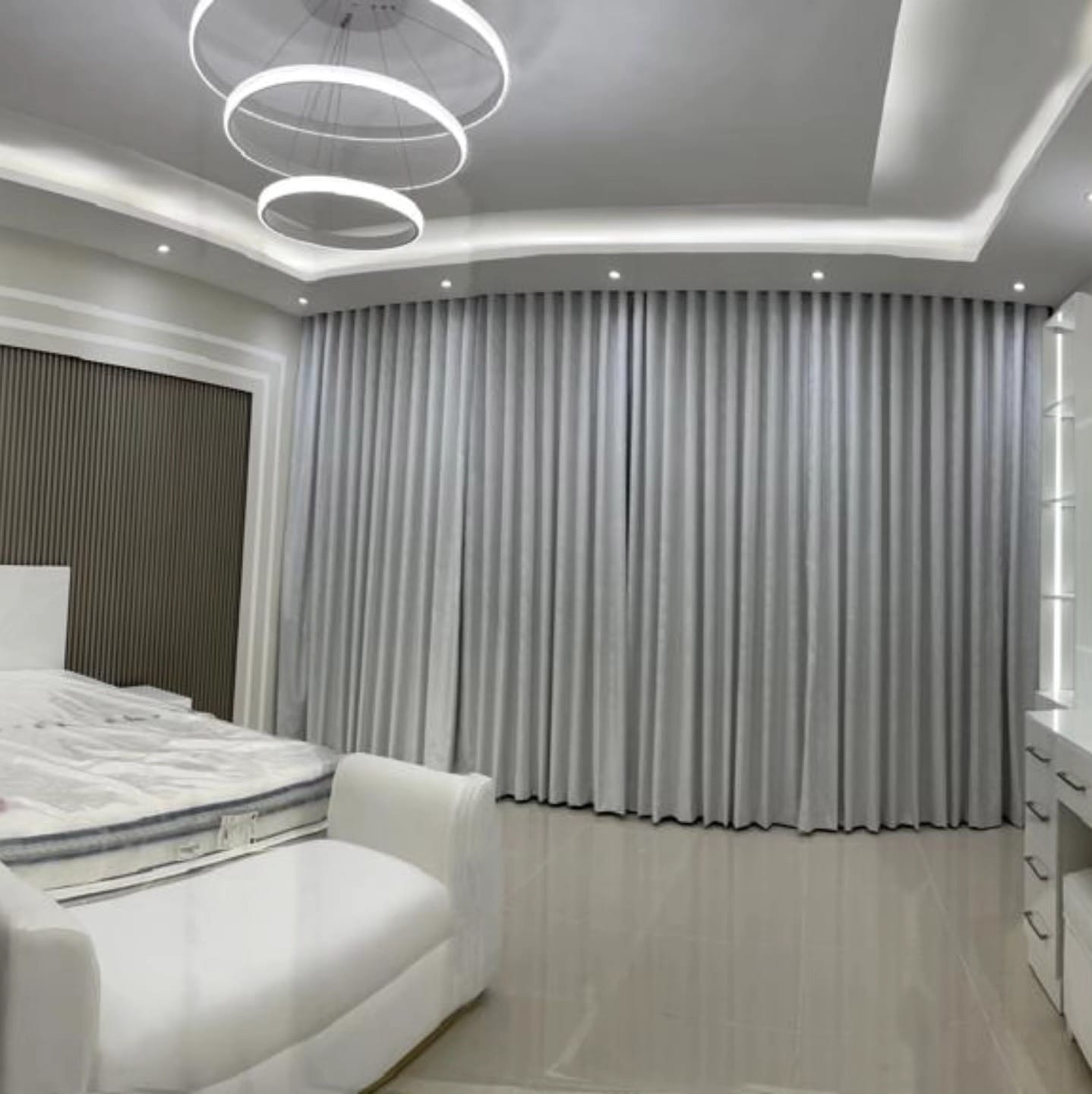
- Wave / ripple-fold headings: require a specialised wave track with linked gliders; incompatible with standard rods
- Pencil pleat headings: work on both rods (via ring eyelets) and tracks (via hook pockets)
Curtain weight classes and hardware compatibility
Extra light / light
- Weight per 150 cm width
- 0–2 kg
- UAE fabric examples
- Sheer voile, unlined linen, chiffon
- Recommended hardware
- Slim track or decorative pole
Medium
- Weight per 150 cm width
- about 3.5 kg
- UAE fabric examples
- Lined linen blends, cotton, light jacquard
- Recommended hardware
- Heavy-duty rod or standard aluminium track
Heavy
- Weight per 150 cm width
- 3.5–6 kg
- UAE fabric examples
- Lined velvet, blackout, thermal fabrics
- Recommended hardware
- Engineered aluminium track, ceiling-mounted
Extra heavy
- Weight per 150 cm width
- 6–9+ kg
- UAE fabric examples
- Interlined theatre drapes, layered blackout
- Recommended hardware
- Commercial heavy-duty or motorised aluminium track
Always confirm maximum load ratings on the manufacturer's engineering sheet.
Rod or track: side by side in section and elevation
The most critical functional difference between a rod on a bracket and a ceiling-fixed track is the daylight boundary above the window. Hunter Douglas identifies light leaking around perimeter edges as the primary reason blackout installations fail to darken bedrooms effectively.
A bracket-mounted rod holds the curtain below the rod and stands several centimetres off the wall, allowing sunlight to spill over the top heading and reflect off the ceiling into the room. A ceiling-mounted track brings the top edge of the fabric right up to the ceiling line, eliminating the top light gap.
- 1. Light shows over the top of a curtain hung below a rod
- 2. The bracket holds the rod away from the wall, leaving a gap behind the fabric
- 3. Rings carry the curtain below the rod, so it starts lower than the ceiling
- 4. A long rod needs a centre bracket, preventing continuous curtain travel
- 5. A ceiling track starts the curtain at the ceiling line, with no strip above it
Matching the hardware to each room in a UAE home
Hardware selection should reflect the architectural layout, ceiling height and daily privacy demands of each specific room in your home.
Hardware selection by room and window type
Master bedroom blackout & sheer
- Recommended Hardware
- Ceiling-mounted double track
- Technical Reason
- Carries weight of dual layers, seals top light gap, glides silently
Living room wave curtains
- Recommended Hardware
- Dedicated wave track
- Technical Reason
- Spaced carrier cords maintain uniform s-fold ripple symmetry
Majlis with formal eyelet drapes
- Recommended Hardware
- Heavy decorative metal rod
- Technical Reason
- Centre support bracket accommodates formal symmetry; visible finials
Full-height villa glass walls
- Recommended Hardware
- Recessed ceiling track pocket
- Technical Reason
- Unbroken architectural lines from slab to floor with zero bracket clutter
Balcony and sliding terrace doors
- Recommended Hardware
- Track with stack-back allowance
- Technical Reason
- Ensures fabric stacks completely clear of door opening; see balcony guide
Bay windows, curves and corner glazing
Bay windows and corner glass frequently cause problems with curtain rods. Every change in direction requires an elbow connector or joint piece. Rings catch and snag against joint seams, and support brackets placed at each corner stop curtains from drawing continuously across the bay.
A bendable aluminium track solves bay windows cleanly. Technicians measure the bay angles with laser tools and curve the aluminium profile in continuous lengths. As documented in the Silent Gliss SG 3870 engineering sheet, continuous tracks achieve tight radii (down to 26 cm) while gliders traverse the curves effortlessly. For 90-degree corner windows, our team details whether fabrics bypass each other or meet cleanly at the corner. Layered bay window options are detailed in our double track curtains guide.
Double rod versus double track: the practical trade-offs
Layering a daytime sheer with a blackout curtain is standard practice in UAE homes to manage intense desert sun without losing natural light. Both double rods and double tracks accommodate two fabric layers, but their everyday operation differs markedly.
A double rod features two poles held by deep double-projection brackets. Because both poles require centre brackets on spans over 1.8 metres, curtains on both the front and rear rods cannot cross the centre support. A double track, conversely, permits carriers on both layers to glide freely across the full window width, regardless of intermediate bracket positions.
Double rod vs double track comparison
Bracket interference
- Double Rod System
- Double brackets stop rings at centre and intermediate points
- Double Track System
- Continuous carrier travel past all ceiling and wall mount points
Load capacity
- Double Rod System
- Constrained by bracket leverage and wall anchor pull-out load
- Double Track System
- High structural capacity distributed across multiple ceiling fixings
Heading flexibility
- Double Rod System
- Eyelet on front pole, gathered headings on rear pole
- Double Track System
- Wave headings, pinch pleats, and box pleats on both layers
Light management
- Double Rod System
- Daylight spills over both poles and between projection gaps
- Double Track System
- Flush ceiling fitting eliminates top light leakage completely
Choose double tracks for bedrooms requiring reliable blackout and wave drapery.
Fixing into UAE walls and ceilings: block, concrete and gypsum
In the UAE, residential walls and ceilings vary between solid concrete, hollow blockwork, dry-lined gypsum partitions and suspended false ceilings. Selecting the correct mechanical anchor ensures heavy curtains never pull free.
Solid concrete lintels and masonry blocks require heavy-duty nylon expansion plugs matched exactly to the drill diameter. Hollow blockwork and gypsum partitions cannot support heavy curtains with standard plugs; they require spring toggles, hollow-wall metal anchors, or solid timber backing battens installed behind the board.
When mounting to a gypsum false ceiling, tracks must screw into steel channel framing or timber grounds installed before the ceiling closes—gypsum board alone will pull loose under the daily dynamic load of drawn curtains (see curtain pockets in gypsum ceilings).
Fixing methods by UAE substrate
Solid concrete slab / lintel
- Required Fixing Hardware
- Heavy-duty nylon plugs and gauge 10 screws
- Technical Safety Rule
- Drill to exact plug diameter; clean dust before anchor insertion
Hollow block masonry
- Required Fixing Hardware
- Universal expansion plugs or chemical anchors
- Technical Safety Rule
- Ensure plug expands inside internal web cavities
Gypsum drywall partition
- Required Fixing Hardware
- Hollow metal cavity anchors or timber grounds
- Technical Safety Rule
- Distribute bracket spacing; never rely on raw gypsum board
Suspended gypsum false ceiling
- Required Fixing Hardware
- Direct fix to steel MF channels or timber backing
- Technical Safety Rule
- Grounds must be surveyed or installed prior to ceiling boarding
Aluminium window frames
- Required Fixing Hardware
- Specialist self-drilling frame fasteners
- Technical Safety Rule
- Coordinate with facade contractor to preserve window thermal seals
Our installation team inspects substrates during the free site measurement visit.
Renting: hardware you can take with you
In a rented apartment in Dubai or Sharjah, drilling restrictions require careful planning (see our landlord permission guide). Standard tenancy agreements typically allow reasonable wall drilling provided holes are patched and painted upon handover.
Wall-mounted rods or lightweight surface-mounted tracks leave modest screw holes that are easily restored. Recessed ceiling tracks and custom gypsum pockets are impractical for rental properties because they require ceiling alterations. If drilling is strictly forbidden by building management, do not attempt to hang heavy lined curtains with adhesive hooks—adhesive cannot carry the dynamic shear load of opening and closing curtains.
Planning for motorized curtain tracks
A motorized curtain track is an integrated mechanical system, not a retrofit motor clamped onto a standard pole. Engineered systems from makers like Somfy feature dedicated internal drive belts, reinforced pulleys, acoustic gliders and heavy-duty aluminium profiles designed to handle spans up to 10 metres.
If you anticipate automating your curtains in the future, select a motor-ready track profile during initial fitting. Converting a standard manual track to motorized operation later requires complete hardware replacement. Power supply requirements, wireless controls and home automation integration are detailed in our motorised curtains guide.
Hardware maintenance: gliders, brackets and finishes
Curtain tracks and rods require minimal but regular maintenance to ensure effortless gliding and prevent premature hardware wear.
Whenever curtains are taken down for professional cleaning, check the carrier count against the heading pleats. A single missing glider forces adjacent carriers to bear double the weight and creates an unsightly dip in the drape. Wipe aluminium track channels with a dry microfibre cloth to remove desert dust; avoid greasy lubricants which attract dust and gum up gliders.
For decorative rods, ensure rings are fitted with nylon inserts to prevent metal-on-metal scratching against polished finishes. Check bracket fixings once a year, tightening any screws that have worked loose from daily pulling. If your existing hardware sags, see our curtain repair and re-hang guide.
- Keep loose cords out of children's reach; opt for wand-operated or motorized tracks complying with EN 13120 safety standards
- Inspect carrier gliders annually; replace any cracked nylon gliders to maintain smooth travel
- Avoid harsh chemical sprays on powder-coated aluminium tracks or metallic decorative rods
- Ensure bracket screws remain firmly anchored into masonry or ceiling framing
A hardware checklist for your quotation
Before approving an interior quotation, ensure the curtain hardware is itemised with full technical specifications rather than listed as generic 'rods' or 'rails'.
Quotation checklist for curtain hardware
Hardware system name
- Technical Detail to Require
- Exact profile model, material and powder-coat finish
- Why It Matters
- 'Aluminium track' alone does not specify profile load capacity
Certified weight limit
- Technical Detail to Require
- System load rating versus calculated curtain weight
- Why It Matters
- Guarantees hardware will not bind or sag under heavy linings
Heading compatibility
- Technical Detail to Require
- Wave glider spacing, pinch pleat hooks or pole diameter
- Why It Matters
- Wave curtains require specialized linked carrier spacing
Span and brackets
- Technical Detail to Require
- Total length, join count and bracket intervals
- Why It Matters
- Spans over 2.5 m require proper intermediate support
Fixing substrate
- Technical Detail to Require
- Solid concrete, hollow block, cavity anchors or wood backing
- Why It Matters
- Ensures correct anchors are used for long-term safety
Mounting position
- Technical Detail to Require
- Ceiling-fixed, wall-mounted, or recessed pocket
- Why It Matters
- Directly affects top light leakage and window clearance
Motor readiness
- Technical Detail to Require
- Manual or motorized profile with motor power location
- Why It Matters
- Retrofitting motors to non-motorized tracks is impossible
Workmanship warranty
- Technical Detail to Require
- Written warranty covering installation and mechanisms
- Why It Matters
- Al Tareeq Decor provides a 24-month workmanship policy
Confirm all items in writing before paying production advances.
What it costs and how we decide at the site visit
Curtains at Al Tareeq Decor start from AED 550 per window for our entry specification (including manual aluminium track, fabric, stitching and installation). Heavy blackout fabrics, double layers, wide architectural spans, bay bending or motorized systems add to the base rate (see our custom curtain prices guide).
During our free site visit across Dubai, Sharjah and the northern emirates, we laser-measure your windows, examine the ceiling and wall structure, assess solar angles and review physical fabric swatches in your room's natural light. Our team stitches and installs every order, with standard curtains completed in 3 to 5 working days.
Common questions
Is a curtain track better than a rod?
For heavy, lined or blackout curtains, wide windows and ceiling fixing, yes. For an eyelet curtain you want to show off, a rod is the usual choice. See which heading suits which hardware.
Is a curtain rail the same as a track?
Usually yes. In most shops 'rail' and 'track' mean the same channel with sliders. Ask for the exact system on the quotation; measuring comes first.
How long can a curtain rod be before it sags?
It depends on the rod diameter and curtain weight. Studio Matrx notes spans over 2.5 m bow, while Dunelm adds a third bracket above 180 cm. If existing hardware sags, read our curtain repair guide.
Can eyelet curtains go on a track?
No. Eyelets require a round pole to pass through the eyelet rings; they cannot hang from an ordinary track. See our curtain heading guide.
Can I add a motor to a rod or an old track?
A motor works with a dedicated motorised track system engineered with drive belts and pulleys; standard tracks cannot be converted easily. See motorised curtains in the UAE.
What hardware lets in the least light?
A ceiling-fixed track, or a recessed track in a gypsum pocket, leaves the smallest gap above the fabric. See curtain pockets in gypsum ceilings.

Sources & specifications
Manufacturer information applies to the named products and systems. Sources reviewed on 13 November 2026.
- Studio Matrx: Curtain rods vs tracks architectural guidestudiomatrx.com(opens in a new tab)
- Silent Gliss: SG 3870 cord-operated curtain track technical sheetsilentgliss.com(opens in a new tab)
- Dunelm: Curtain tracks and poles technical buying guidedunelm.com(opens in a new tab)
- Somfy UK: Smart electric curtain track systems specificationsomfy.co.uk(opens in a new tab)
Want this planned for your home?
Consultation and measurement are free. Tell us the rooms, location and what you need; we arrange a sample visit and define the measured quotation.