Curtains · 12 min read · 15 April 2026
Sheer and blackout curtains together: planning a double track
How to hang sheer and blackout curtains together: which layer goes in front, double or separate tracks, ceiling pockets, overlaps, returns and hems.

By Ali Haider Basra, Founder, Al Tareeq Decor · Contact our workshop
Key takeaways
- Hang the sheer on the back track near the glass and the blackout in front; reverse it for bedrooms where darkness matters most.
- Use two separate tracks in a ceiling pocket for wave curtains; a shared double track suits matching layers on a wall.
- Size the pocket for both layers' folds, a gap between them and any motor heads before the ceiling is built.
- Overlap the blackout panels in the middle and return them to the wall at the ends, or light gets round two layers too.
- Two layers roughly double the fabric; we quote each layer and track separately after a free visit.
On this page
- Key takeaways
- Can you have sheer and blackout curtains together?
- Which layer goes in front?
- A double track, two tracks, or a track and a pole?
- Ways to hang two layers
- Ceiling-mounted or wall-mounted double tracks
- Inside the pocket: spacing the two layers
- Overlaps and returns: closing the edges
- Opening arrangements: centre, one way or split
- Choosing headings for a two-layer window
- Lengths and hems for two layers
- Bay windows, corners and wide glass walls
- Motorising one layer or both
- Price and planning a two-layer window with us
- Common questions
Can you have sheer and blackout curtains together?
Yes, and in UAE homes it is the most common way to dress a bedroom or living room window. The sheer is left drawn all day for soft light and privacy from the street, and the blackout or dim-out curtain is drawn at night or whenever the room needs to be dark. Why most rooms need both layers explains the reasoning.
This article is about the practical part: how the two are hung so that each moves on its own, neither catches on the other, and the darker layer still closes out the light. It comes down to a few decisions made before anything is fixed: which layer goes nearer the glass, what holds the two tracks, how much room they need, how the edges close, and how each layer opens.
Get those right and a two-layer window is easy to live with for years. Get them wrong and no fabric, however good, will fix a sheer that drags against a blackout or a pocket too shallow for both.
Which layer goes in front?
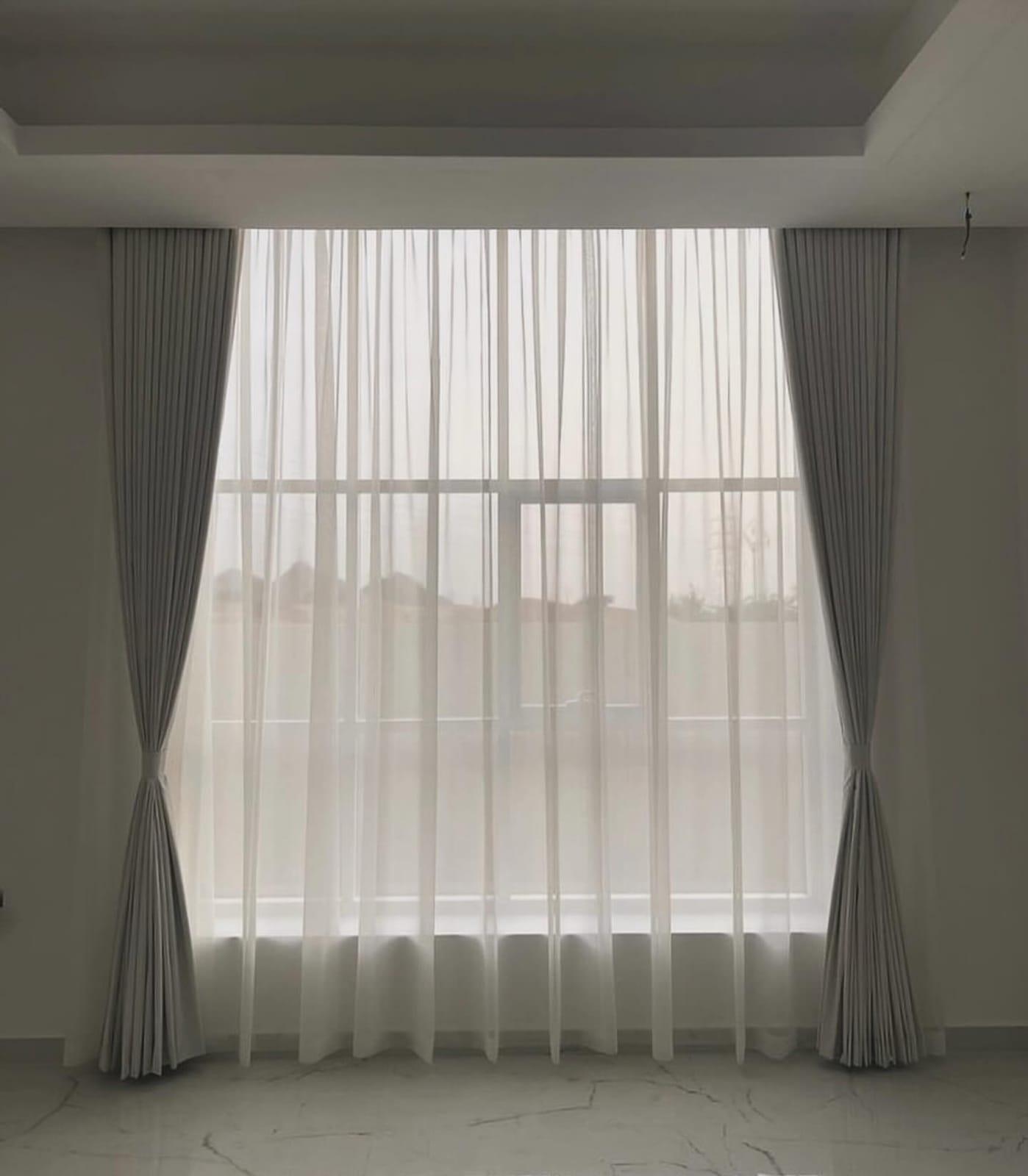
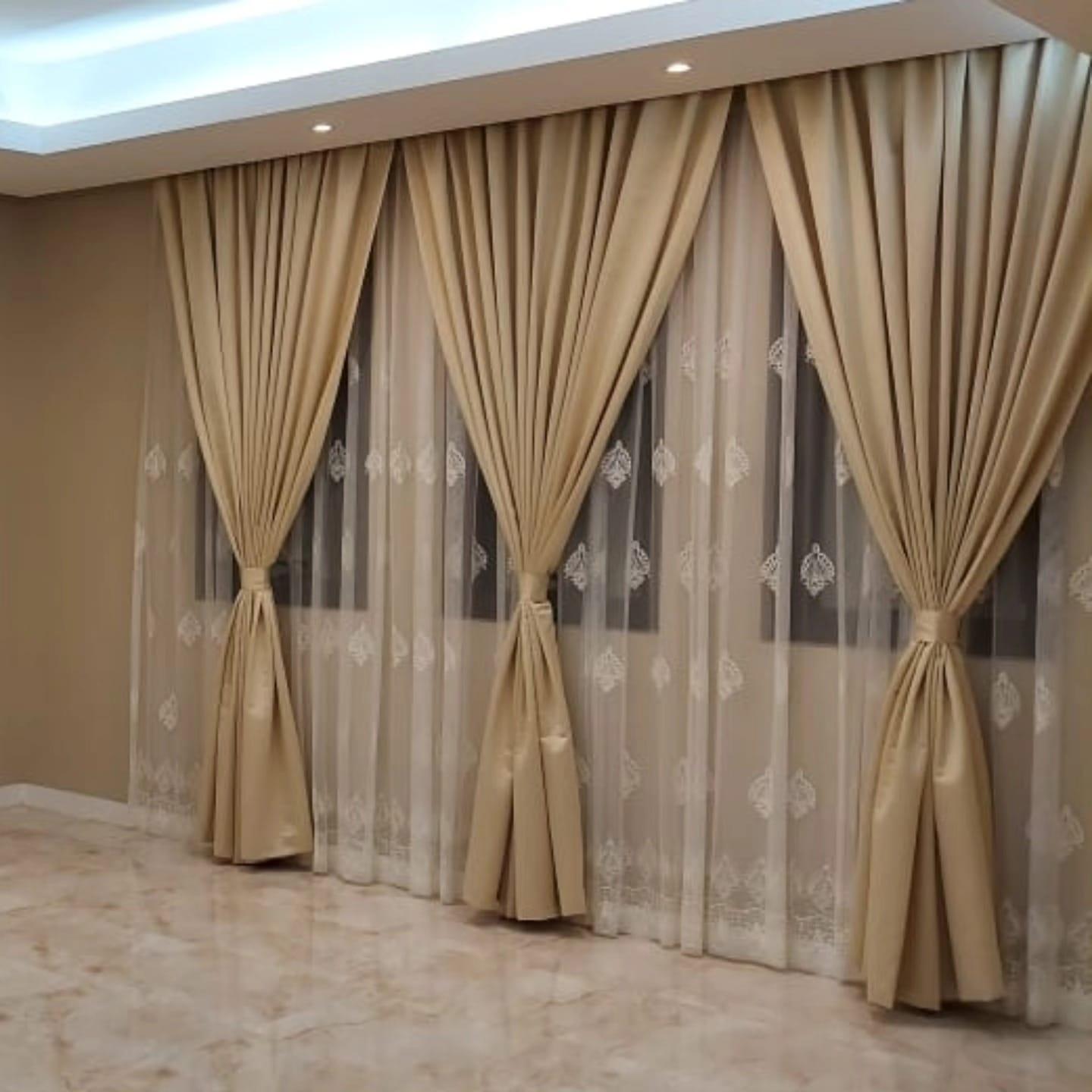
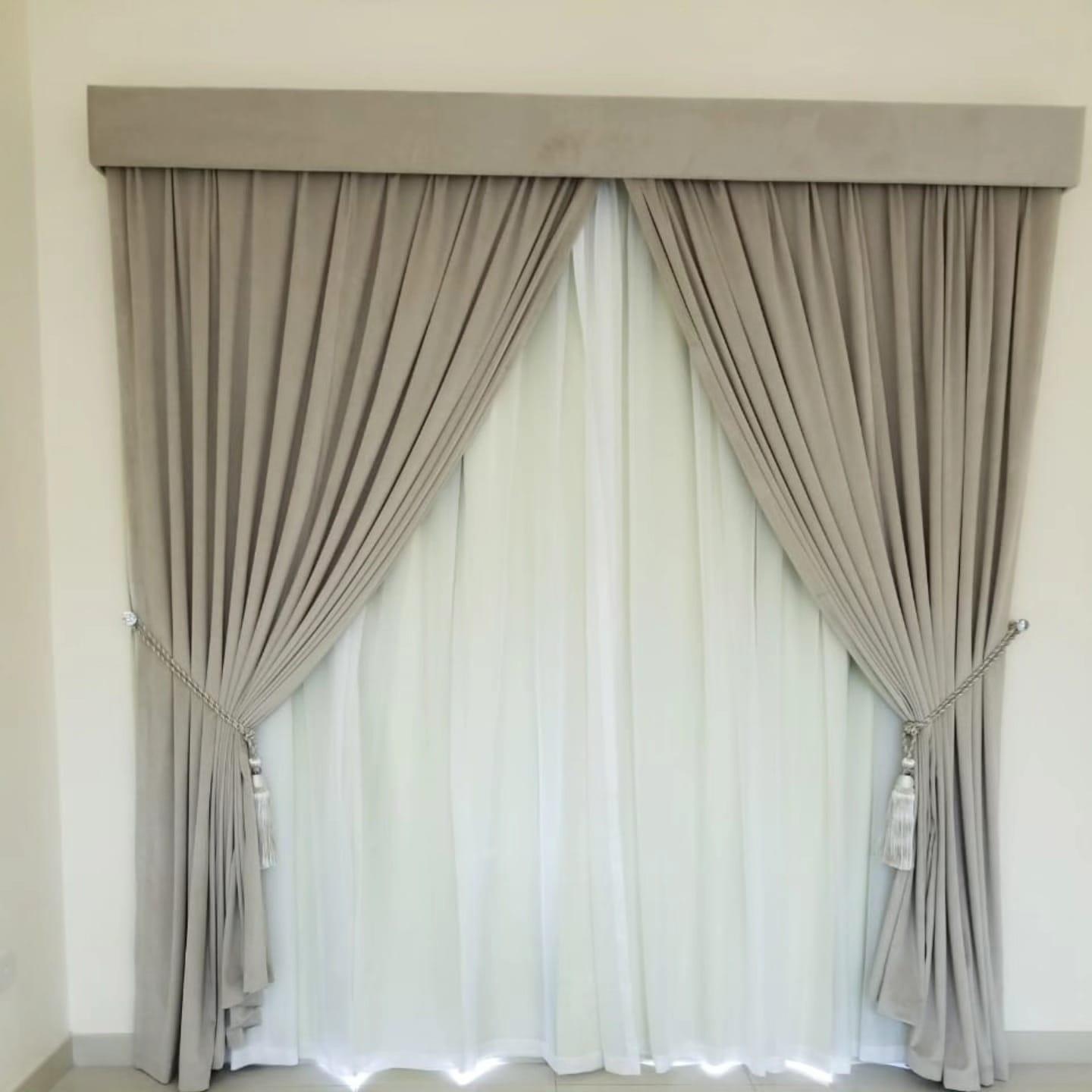
The usual arrangement puts the sheer on the back track, nearest the glass, and the blackout or dim-out curtain on the front track, on the room side. By day you draw the heavy curtain back and the room is framed by fabric with the sheer across the glass; at night you draw the heavy curtain over it. It is the most common layout.
The reverse also works and has its own advantages: a blackout on the back track, right by the glass, with a decorative sheer in front. Because the dark layer sits nearest the window, there is less room for light to get round it, while the sheer is always on show from inside. It suits bedrooms where darkness matters most and a sheer is wanted mainly for its look.
Our recommendation: sheer at the back for living rooms, majlis and any room where the heavy curtain carries the colour; consider blackout at the back for bedrooms where a child sleeps in the day or someone works nights.
A double track, two tracks, or a track and a pole?
Two layers need two running paths. They can come as one double track, where both rails share the same brackets; as two separate tracks fixed side by side; or, on a wall, as a pole for an eyelet curtain in front of a slim track for the sheer.
A double track is neat and quick to fix, and the brackets keep the two rails parallel. Two separate tracks give more freedom: different lengths, different headings, or a motor on one and not the other. A pole and track look more traditional and suit eyelet curtains, but the pole's brackets interrupt the run, so the curtain cannot pass them.
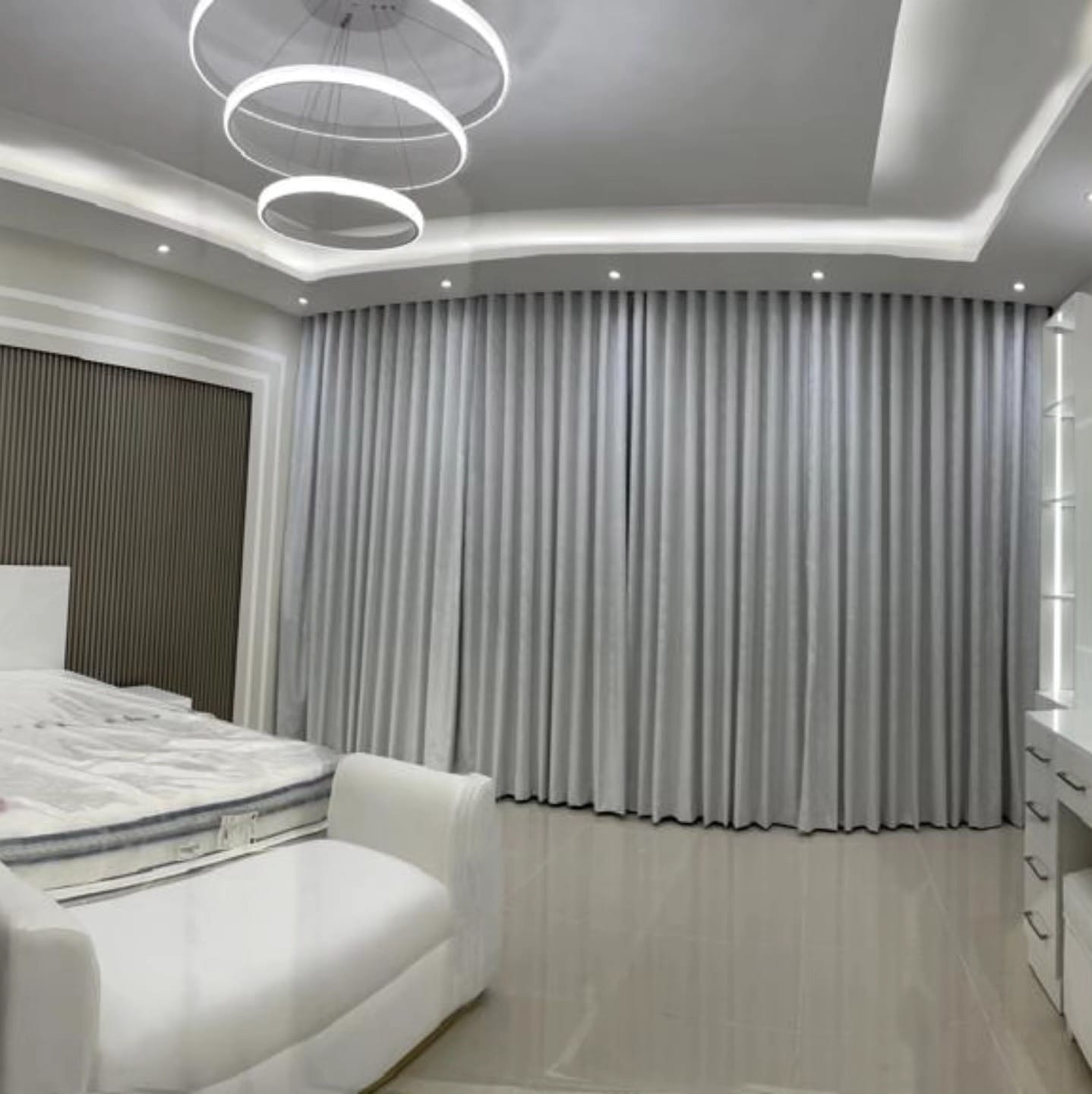
For ceiling pockets and wave curtains, we usually fit two separate tracks, because each can be spaced exactly for its own fabric and either can be motorised later.
Ask what the brackets are fixed into and how far apart they are. Two layers of lined fabric are heavy, and a long double run needs brackets close enough together that the track does not sag between them; the answer lies in the wall or ceiling as much as in the track.
Ways to hang two layers
Double track on shared brackets
- Best for
- Wall or ceiling fixing where both layers match
- Watch out for
- Fixed spacing between the rails
Two separate tracks
- Best for
- Ceiling pockets, wave curtains, one layer motorised
- Watch out for
- Needs more depth and careful alignment
Pole in front, track behind
- Best for
- Eyelet curtains over a sheer, on a wall
- Watch out for
- Pole brackets stop the curtain passing
Blind behind a curtain
- Best for
- Little wall space beside the window
- Watch out for
- A blind leaves thin light lines at its edges
Whichever you choose, each layer needs its own path so it can move without disturbing the other.
Ceiling-mounted or wall-mounted double tracks
A ceiling-mounted double track, ideally inside a gypsum-ceiling recess, gives the cleanest result: both layers fall from ceiling height, nothing shows above them, and light cannot rise over the curtain. It needs a ceiling that can hold the fixings. A gypsum board alone is not a fixing; the track has to be screwed into the framing behind it or into a timber or metal support built in for the purpose.
A wall-mounted double track sits on brackets above the window. It suits rooms without a false ceiling and rented flats, and it is easier to add later. Its weakness is the top: unless the track is high and close to the ceiling, or covered by a pelmet, a line of light shows over both layers.
If a new ceiling is going in, choose the ceiling option and plan the pocket now. If the ceiling is finished and you do not want to open it, a wall track fixed high, with a pelmet, is the practical answer.
Inside the pocket: spacing the two layers
Each layer needs room for its folds, and the folds must not touch the glass, the window handle or each other. Measure how far the handle stands out from the glass and keep the sheer clear of it. Then leave enough gap between the tracks for the sheer's folds to move without brushing the heavy curtain, which is a common reason two-layer curtains catch and wear.
Wave curtains need the most room, because their folds stand out evenly front and back. A design guide from Studio Matrx suggests a pocket of 100–150 mm for a standard single track and 150 mm or more for a wave or a motor; two layers need more than one, and a motor head at the end of each track needs room as well.
Do not let a ceiling contractor guess the size. Tell us both headings and whether either layer will be motorised, and we give the pocket size before the ceiling is built.
- 1. The sheer usually hangs on the back track, nearest the glass and clear of the handle
- 2. The blackout or dim-out curtain hangs on the front track, on the room side
- 3. The pocket must take both layers' folds, a gap between them and any motor head
- 4. The two blackout panels overlap in the middle, so no light slips through
- 5. On a wall track, the blackout returns to the wall at each end
Overlaps and returns: closing the edges
Two layers do not make a dark room on their own. Light gets in where the blackout meets itself in the middle, at its two ends, and over its top. Hunter Douglas makes the point for blinds: the edges are where a darkened room loses most of its light, which is why it recommends drapery over a shade and mounting outside the frame.
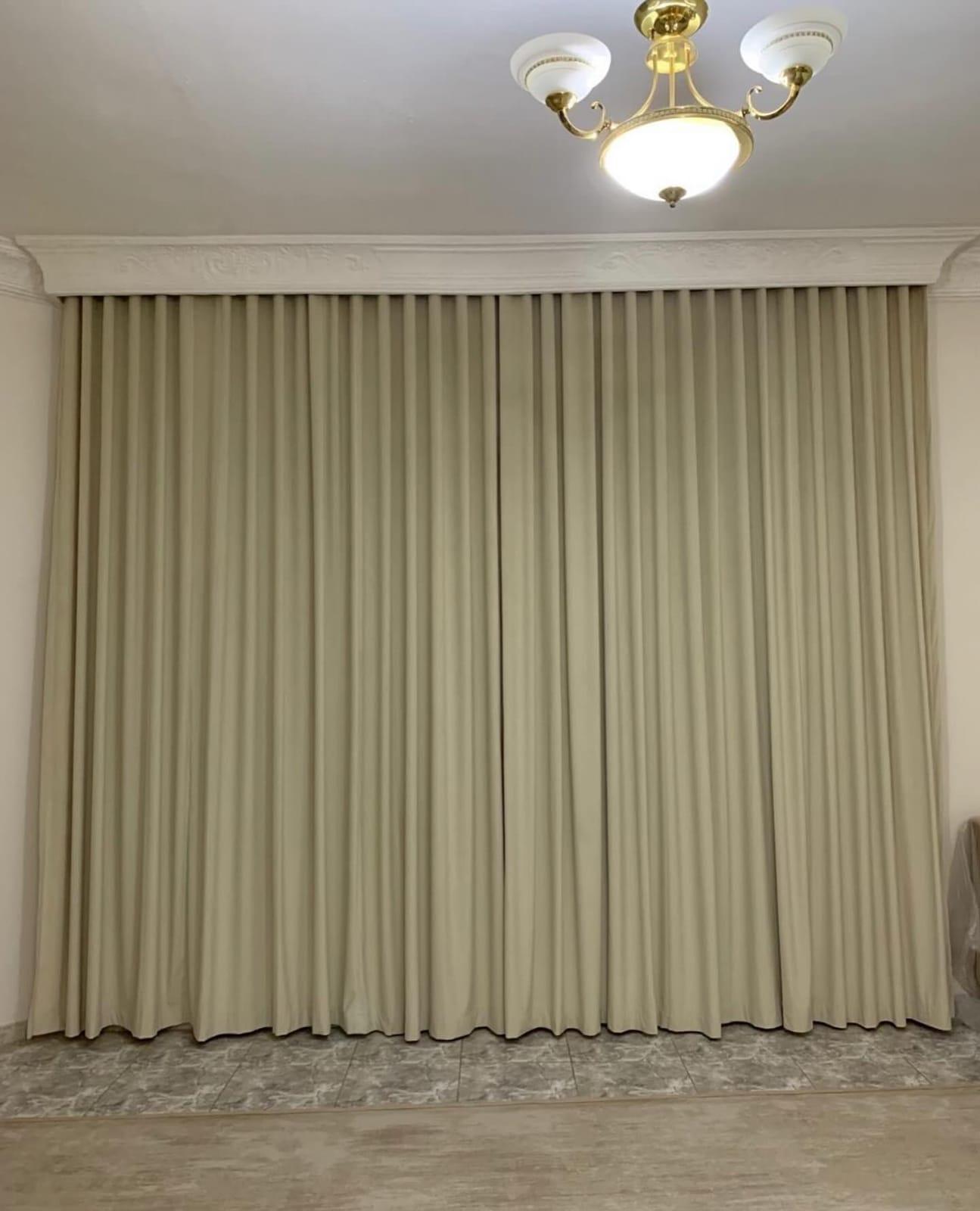
In the middle, the two blackout panels should overlap rather than just meet. Tracks do this with an overlap arm or overlapping master carriers, so one panel passes in front of the other when closed. At the ends of a wall-mounted track, a return turns the curtain's edge back to the wall, closing the side gap. In a ceiling pocket, the pocket itself closes the top and the curtain should run right to the walls at both ends.
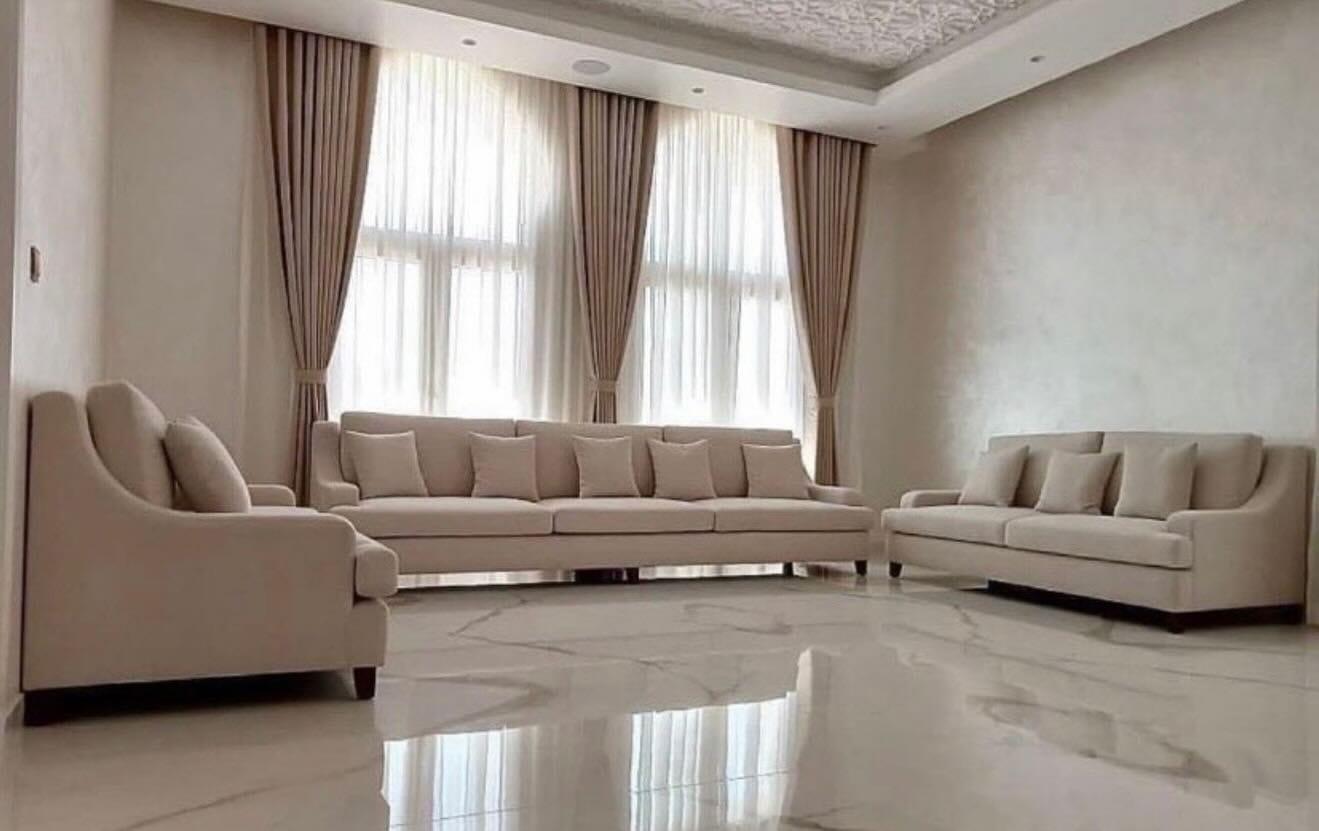
A ceiling pocket helps the sheer too: because it starts inside the ceiling, it hides the top of the window frame by day, so the window looks taller even with the heavy curtain drawn back.
The sheer rarely needs either; it is not trying to stop light. Our article on blackout curtain light gaps goes through each gap and how it is closed.
Opening arrangements: centre, one way or split
Each layer can open differently. A pair that parts in the middle is the usual choice for a window with wall on both sides. A single panel that draws one way suits a balcony door, where the curtain should stack away from the side that opens, or a window tight against a corner.
The two layers do not have to match. A sheer can be one panel drawing to one side while the blackout is a pair parting in the middle, if that suits how the room is used. Decide it window by window and write it on the quotation.
Remember that two layers stack deeper and wider than one. When both are open, the sheer and the heavy curtain sit side by side, so the track needs to run further past the frame than it would for a single curtain if the glass is to be clear.
Choosing headings for a two-layer window
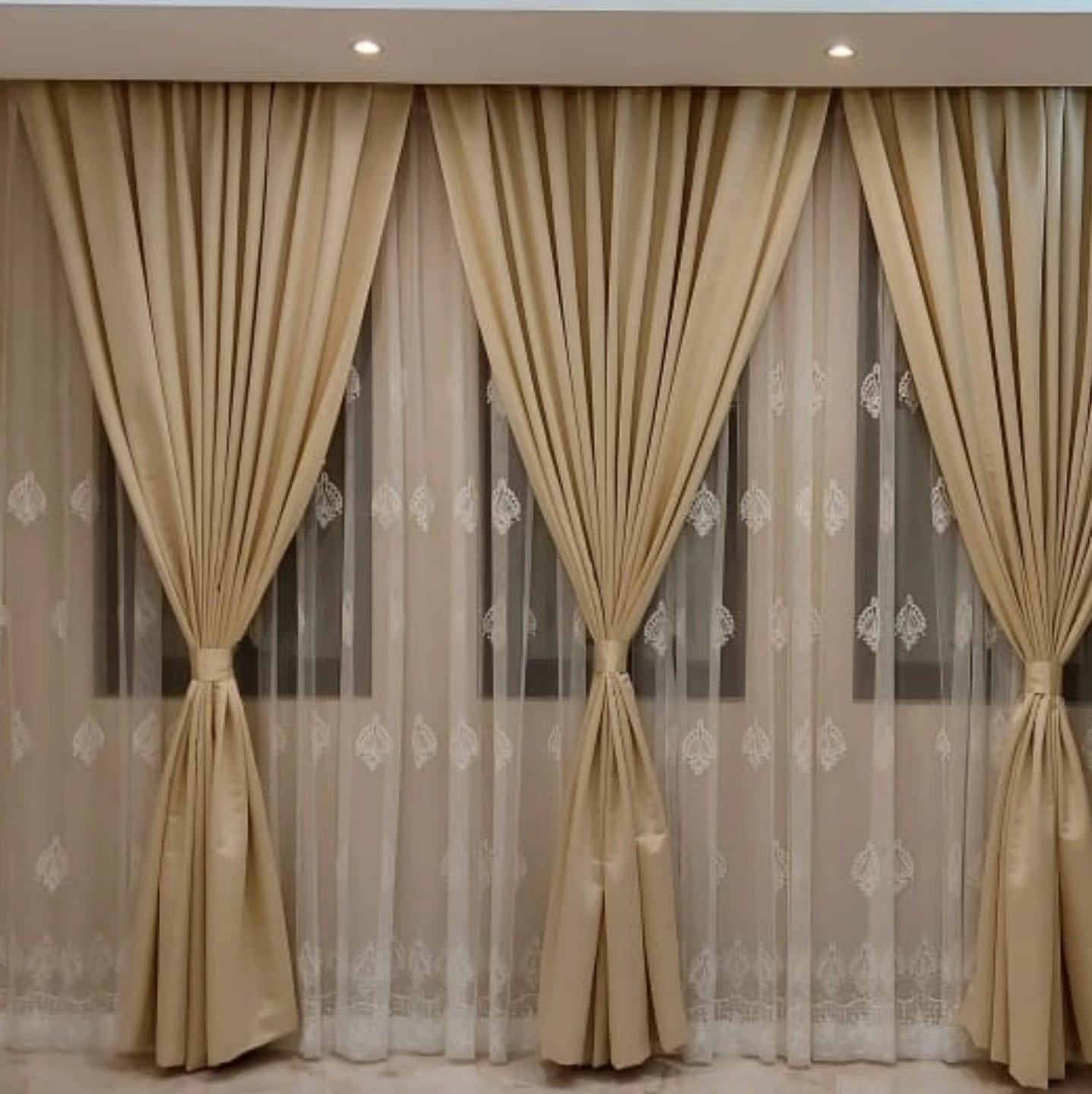
The calmest look is the same heading on both layers, usually wave on wave: the folds line up and the window reads as one soft surface. A pinch-pleat drape over a wave sheer gives a more tailored front with an even background, which suits classic rooms. Eyelet curtains belong on a pole and are best kept to walls rather than ceiling pockets.
Whatever you choose, the heading changes the fabric quantity, the stack and the depth each layer needs, so choose it before the pocket and the tracks are sized. There is a fuller comparison in how the three main headings compare.
Lengths and hems for two layers
Both layers normally finish at the same height, about a centimetre above the floor, so the window looks resolved whichever is drawn. If they differ, the sheer can finish a touch shorter so it never peeps out below the heavy curtain.
A sheer is light, so it can lift or sway in an AC draught; a weighted hem helps it hang straight. On a balcony or sliding door, both hems must stay clear of the door track and the threshold, or they drag and soil. In a room with a sill-height counter or furniture below the window, both layers can be cut to the same shorter length.
Measure both drops from their own tracks. The back and front tracks may sit at slightly different heights in a pocket, and a few millimetres matter at the floor. Our curtain measuring guide covers the drop in detail.
Bay windows, corners and wide glass walls
Two layers get harder as the window gets more complicated. On a bay window, both tracks have to follow the same angles, and the inner one turns on a tighter line than the outer one, so the tracks are bent or jointed to match each other rather than ordered as two straight lengths. Silent Gliss, for one, offers a bending service for exactly this. Ask how each layer will pass the corners before agreeing a design.
On a corner window, where two walls of glass meet, decide where each layer stacks. It is often neater to let both stack at the far ends and meet in the corner, with the blackout overlapping there, than to leave a panel standing in the corner all day.
Wide glass walls, common in villas and penthouses, can run to several metres. A single panel that long is heavy and slow to pull, so the run is usually split into several panels on each track, which also lets you open just part of the wall. On very long runs a motor on the heavy layer is worth considering, and the stack-back of two layers needs real wall space at the ends.
Motorising one layer or both
Either layer, or both, can be motorised. Motorising both lets a schedule open the sheer in the morning and close the blackout at night. Motorising only the heavy front curtain saves cost and still removes the daily pull on the weightier layer.
Every motorised layer has its own powered track and motor, and the pocket needs room for both motor heads and their power. Then a remote with two channels, or a hub, moves each layer on its own or both together. Decide early, even if you motorise later, so the pocket and power are ready. Our guide to motorised curtains covers motors, power and controls.
Price and planning a two-layer window with us
Adding the second layer about doubles the cloth and brings a second track, so a sheer and blackout window costs more than a single curtain. Our curtains start from AED 550 per window at the entry specification, which pays for the cloth, a hand-pulled track and the fitting; a two-layer window is quoted above that, with the sheer, the heavy fabric, any lining and both tracks listed on separate lines. Our curtain price guide shows how the fabric adds up.
Our free visit includes laser measurement and a check of the depth available, or the pocket plan, and we bring fabric samples, from voile to blackout, to hold together at your window. The curtains are stitched in Sharjah and fitted by our installers, usually within 3–5 working days of approval, or 48 hours for a rush order, under our 24-month written workmanship warranty.
See finished examples on blackout and sheer double curtains, or begin at the curtains and blinds service.
Common questions
Do I need both a sheer and a blackout?
In most UAE bedrooms and living rooms, yes: the voile handles daytime glare and privacy, the darker layer handles night and sleep. Why most rooms need both layers.
What does a two-layer window cost?
Nearly twice the fabric of one curtain, plus another track. Ours start from AED 550 per window for one entry-level layer. Curtain prices in the UAE.
Why does light still get in with two layers?
Usually at the middle, the ends or over the top of the blackout, not through it. Overlaps, returns and a pocket close those gaps. Blackout curtain light gaps.
How deep should a ceiling pocket be for two tracks?
Deeper than for one: it must take both layers' folds, a gap between them and any motor heads. We size it from your headings. Curtain pockets in gypsum ceilings.
Can both layers be motorised?
They can, each with its own motor and powered track, worked from one remote with two channels or a hub. Motorised curtains in the UAE.
Can a blind replace the second curtain?
Yes. A blackout roller blind behind a sheer curtain is handy where there is not much wall beside the window. Roller blinds or curtains.

Sources & specifications
Manufacturer information applies to the named products and systems. Sources reviewed on 28 October 2026.
Want this planned for your home?
Consultation and measurement are free. Tell us the rooms, location and what you need; we arrange a sample visit and define the measured quotation.