
1 / 3
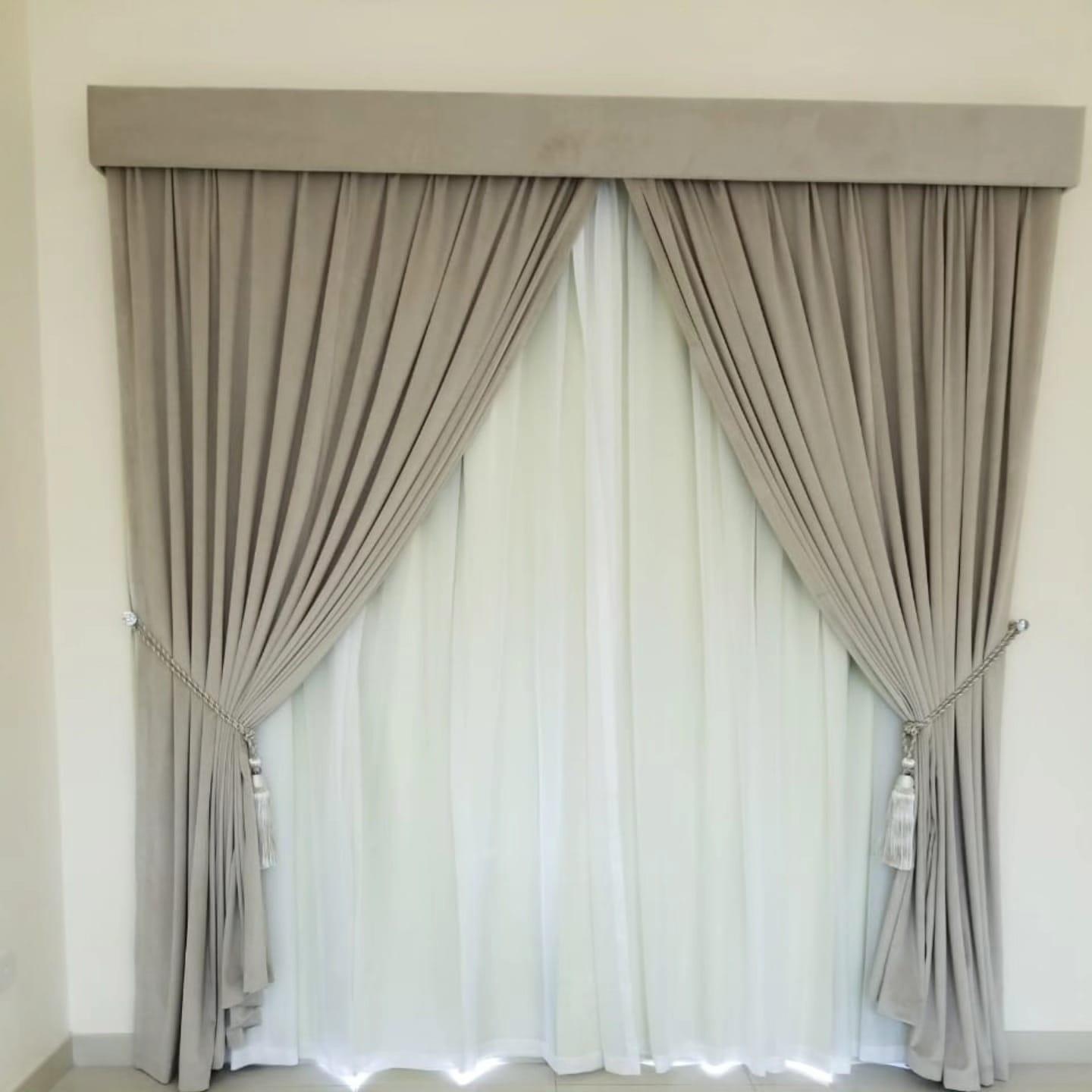
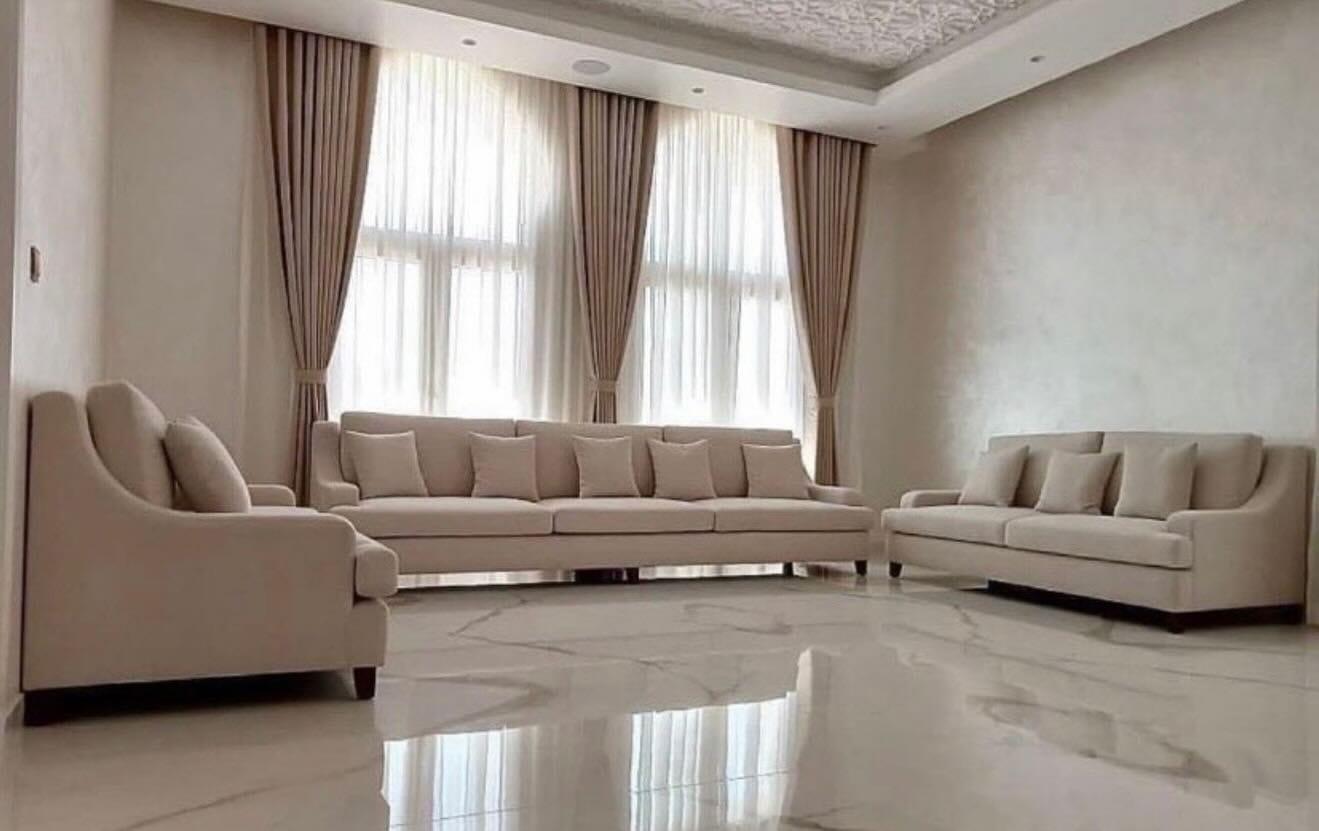
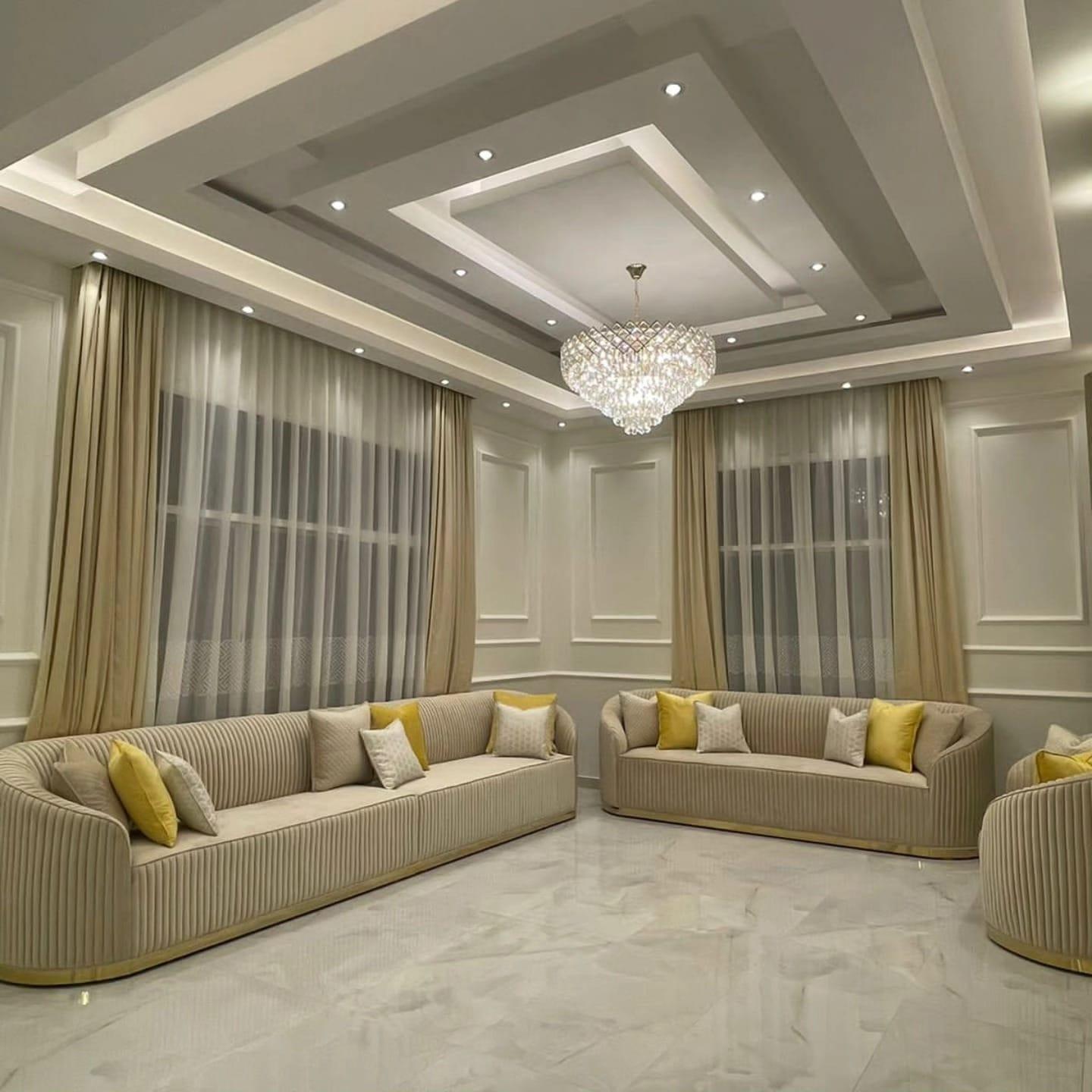
Grey-taupe drapes tied back with tassels over a white sheer, under a fabric-covered pelmet.
Curtains & Blinds
Sheer & Voile Curtains
Living Room · Sheer & Voile · Made to Measure
From AED 550
per window · entry specification
Standard curtain orders are made and installed in 3–5 working days after selection and measurement; 48-hour rush orders are available. Larger home projects can take around 15–25 days depending on scope, materials and site readiness. Your quotation confirms the programme.
Starting prices reflect entry specifications and standard materials. Final quotation is provided after on-site laser measurement, fabric/wood selection and design confirmation. Excludes complex structural alterations or specialised electrical MEP unless itemised.
Estimate your budget
An indicative starting figure from our published entry rate — not a quotation.
Quick start
Typical window size in metres (optional — helps us prepare)
Indicative, from
AED 1,650
3 windows × AED 550 per window, entry specification.
What moves the real number: Very tall or wide windows, premium fabrics, blackout-plus-sheer double layers and motorised tracks all raise the figure.
Starting prices reflect entry specifications and standard materials. Final quotation is provided after on-site laser measurement, fabric/wood selection and design confirmation. Excludes complex structural alterations or specialised electrical MEP unless itemised.
About sheer & voile curtains
Sheer and voile curtains are light, translucent fabrics that soften the daylight coming through the glass and blur the view in from outside, while the room stays bright. In the UAE, where many windows face strong sun for most of the year, a sheer is often the curtain left closed all day, so it deserves as much thought as any other fabric in the room.
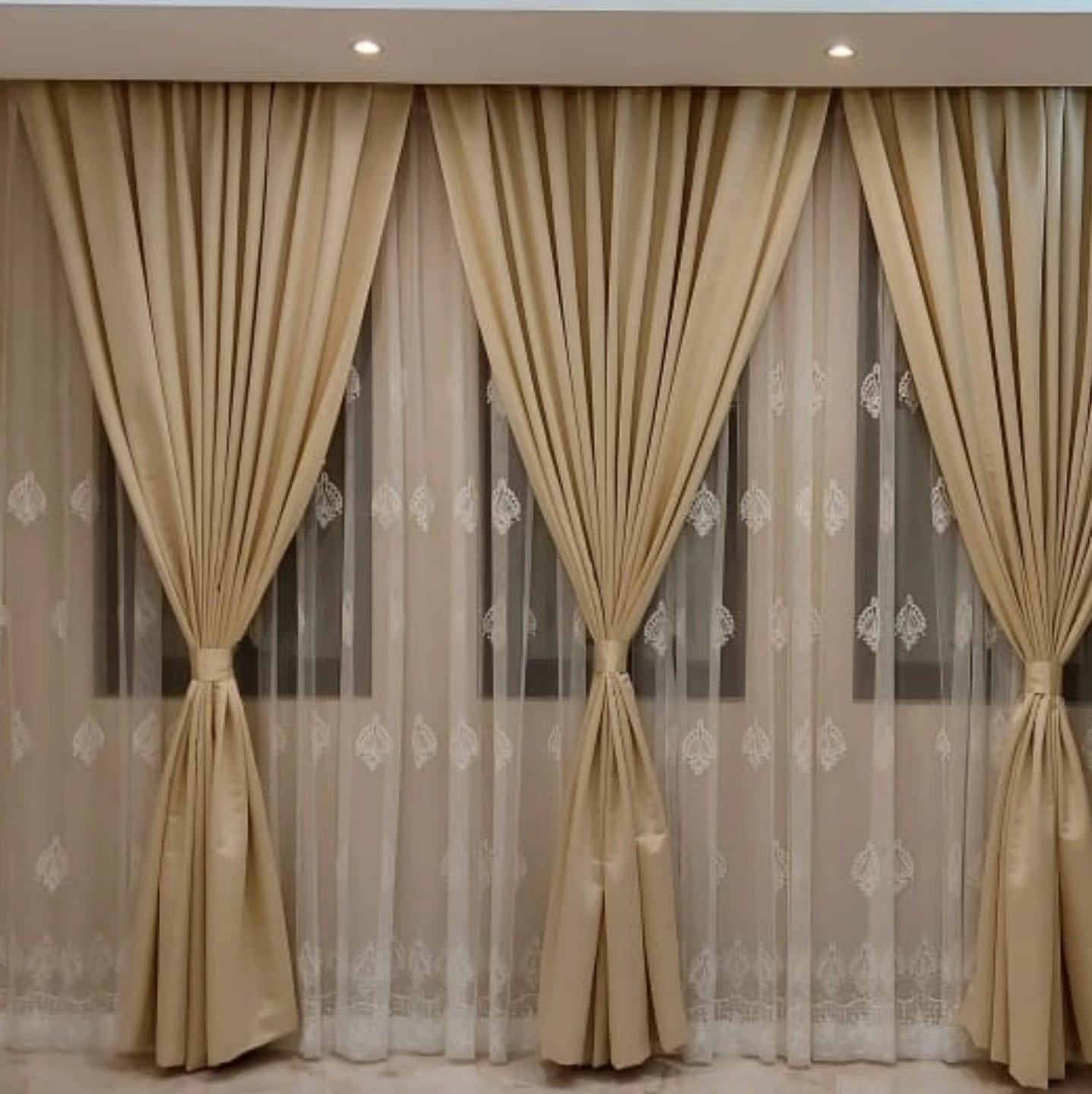
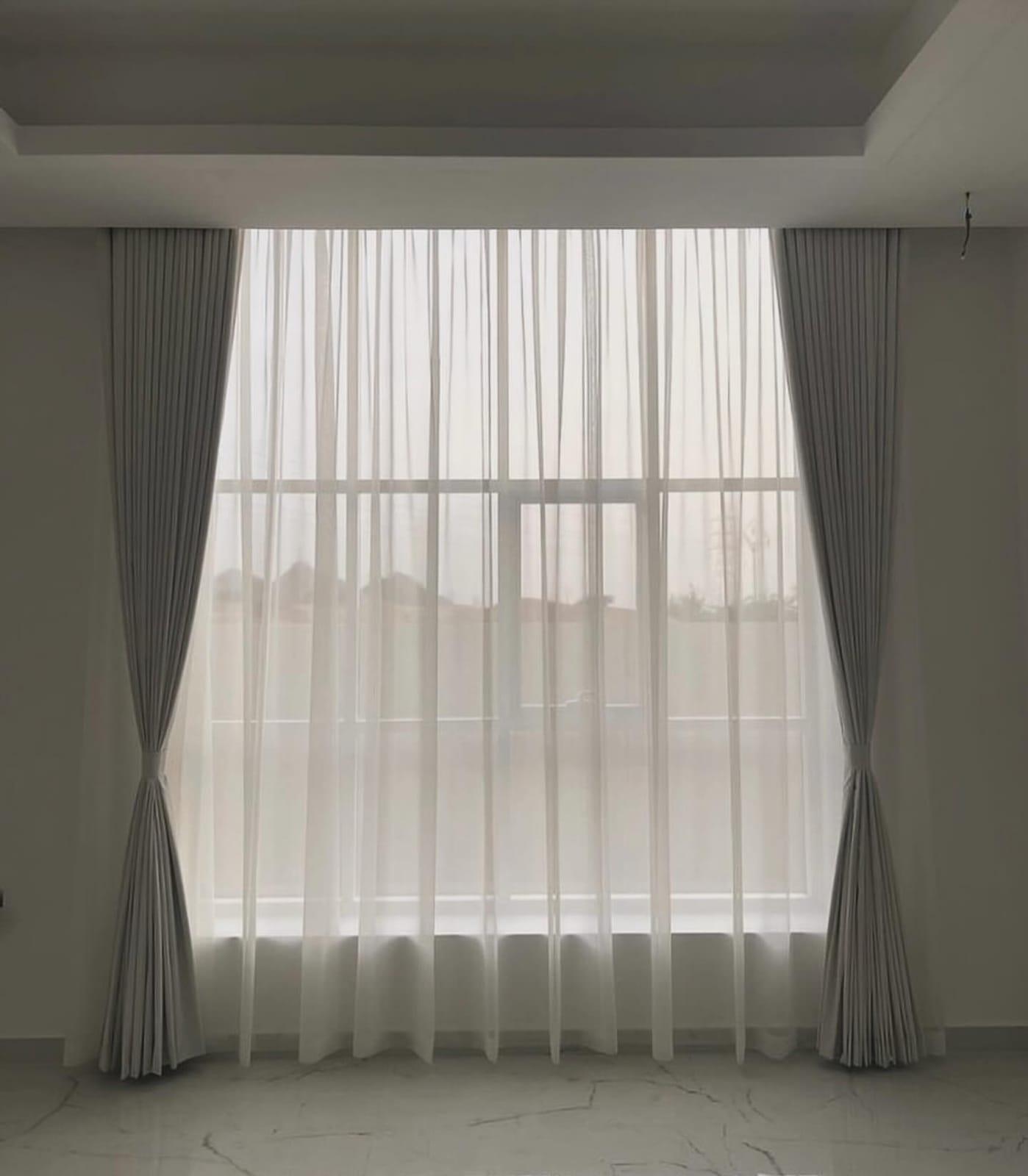
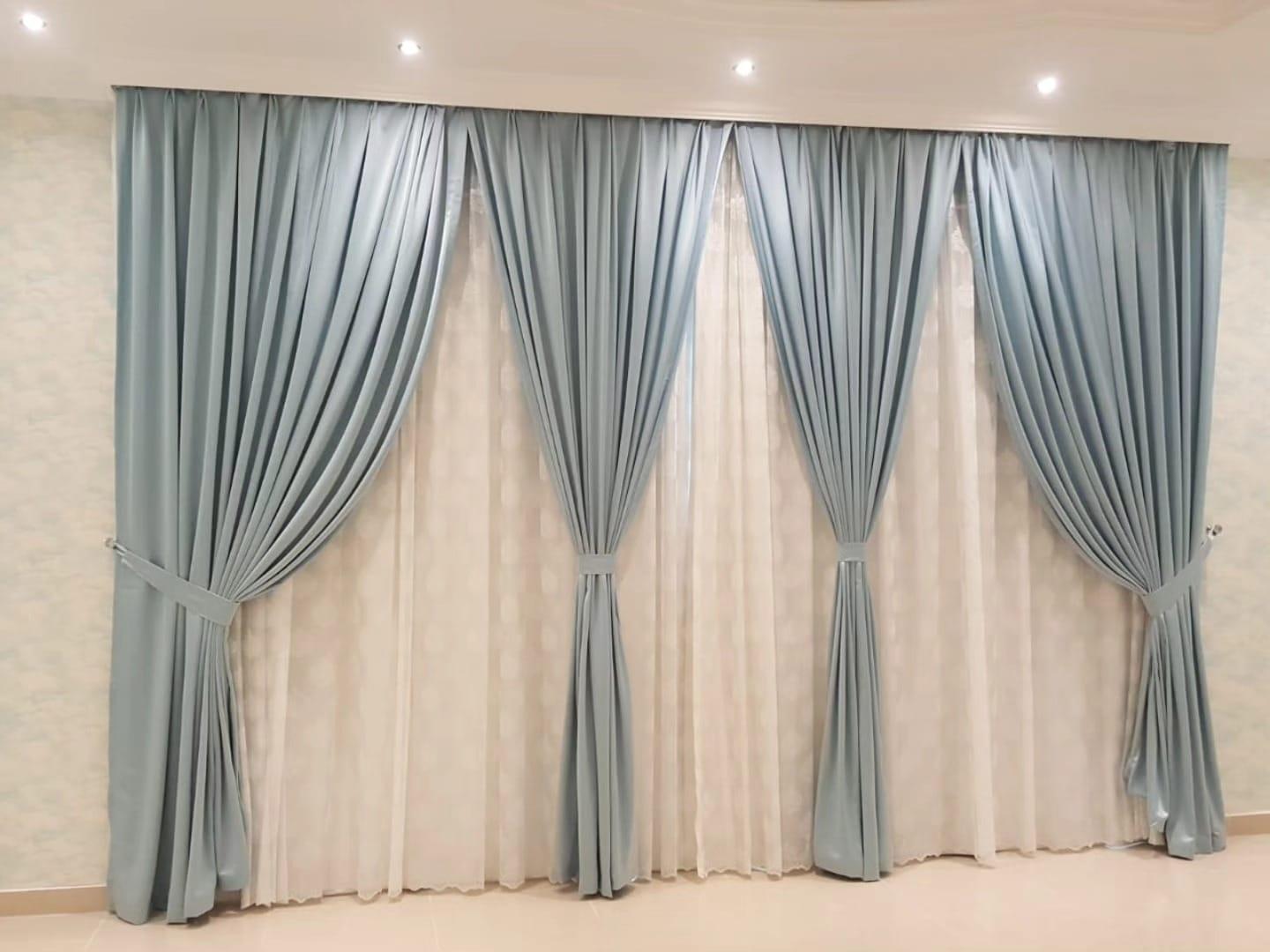
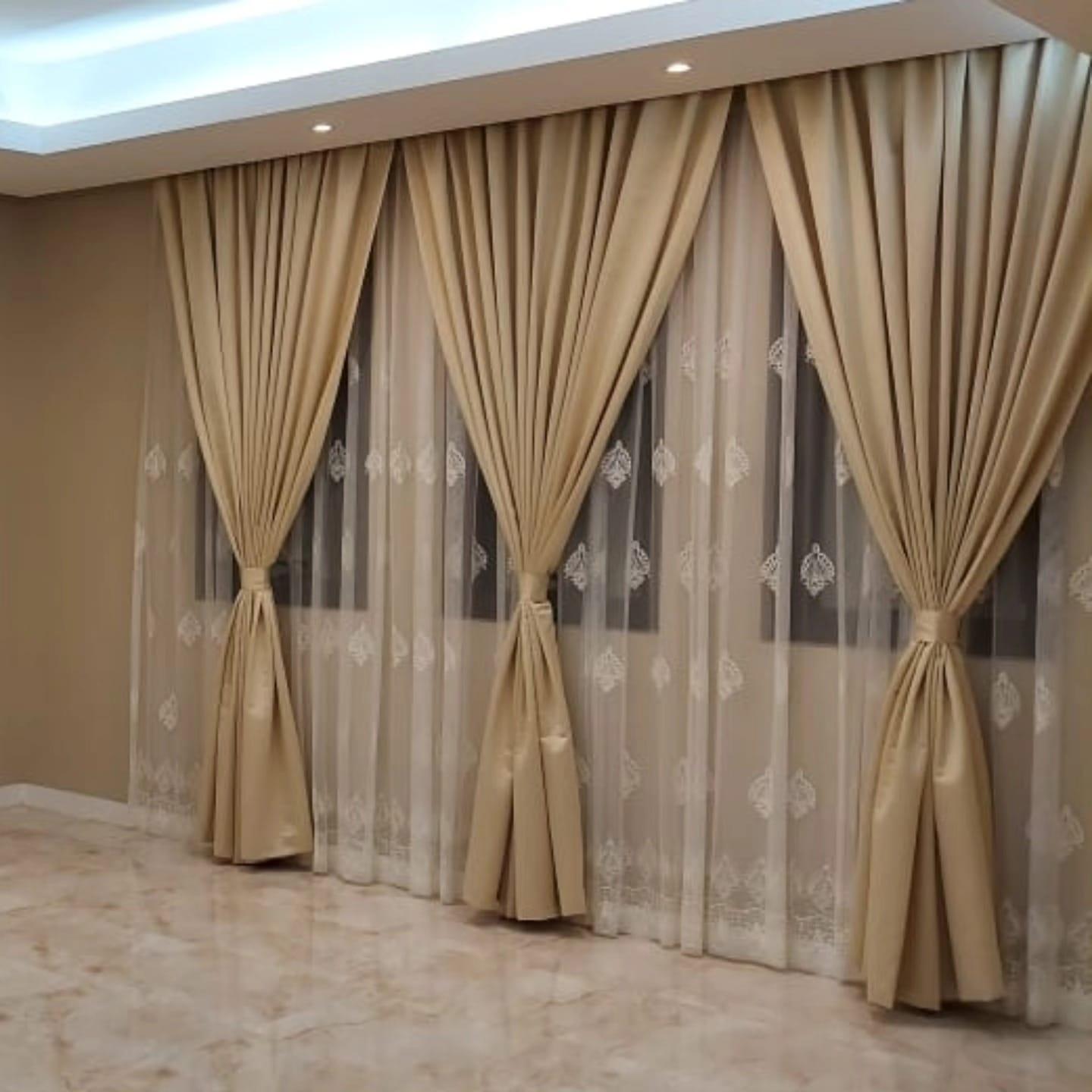
We cut and sew sheers at our Sharjah workshop to the measured drop of every window, plain or embroidered, on their own or as the back layer behind a heavier curtain. The photos show sheers drawn across wide windows, with the heavier curtains held back to the sides.
Settle these first
Worth thinking about before we meet.
Day, not night
A sheer gives privacy in daylight but shows the room once the lights come on inside, so plan a second layer for evenings.
Plain or decorative
Plain voiles keep a room calm; embroidered or patterned sheers add detail that is seen every day the curtain is closed.
Fullness and hem
Sheers look best generously gathered, and a weighted hem helps them hang straight in the air from an AC vent.
In more depth
What sheers and voiles are
Sheer is the general name for any light, see-through curtain fabric. Voile is one kind: a fine, soft weave, usually cotton or polyester, that drapes easily. Other sheers include crisper organza-style cloths, linen-look weaves with a slightly rough texture, and embroidered or printed sheers with a design worked into the fabric.
What they share is that they let light through. They change the quality of daylight rather than blocking it: harsh sun becomes a soft, even glow, the view out turns into a pale blur from inside, and during the day the window looks like a near-white screen from outside.
Privacy by day and after dark
In daytime a sheer works because the outdoors is brighter than the room. Someone looking in sees mostly light reflecting off the fabric, while you can still see out. That balance flips once it gets dark and the lamps come on: the room becomes the brighter side, and a sheer on its own shows silhouettes and movement quite clearly.
That is why sheers in bedrooms, street-facing living rooms and ground-floor rooms nearly always need a heavier curtain or a blind as well, for privacy once night falls. In a room that nobody overlooks, or a majlis used mainly by day, a sheer alone can be enough.
Choosing the fabric
Start with how much light you want to keep. Very fine voiles let through the most light and the most view; denser or textured sheers filter more and give stronger daytime privacy. Hold samples against the window at the hour the room is used most, because a sheer that seems right in the evening can feel too open at midday.
Colour changes the light in the room. White and off-white sheers give the cleanest, brightest light; cream and ivory warm it a little; grey and taupe cool and dim it. A coloured sheer also tints the light falling on walls and furniture, so look at the sample against your walls rather than just in your hand.
Plain, embroidered or patterned
A plain voile is the quiet option and suits almost any room. Embroidered sheers carry motifs stitched into the cloth, from small scattered details to bands along the hem, and they are popular in majlis rooms and formal living rooms where the window is part of the decoration. Patterned and scalloped hems add a finished edge that shows whenever the sheer is drawn.
Keep in mind that the sheer is often the layer closed for most of the day, so its design is seen far more than the curtain in front. If the main curtains are already busy, a plain sheer keeps the window calm; if they are plain, an embroidered sheer can carry the detail.
Linen-look and textured sheers
Between a fine voile and an opaque curtain sits a family of heavier, textured sheers. Linen-look weaves have an irregular slub that gives the fabric a relaxed, natural character; open weaves and gauzes show their structure when light comes through them; and some sheers combine a matt base with a faint sheen that catches the evening light.
These fabrics filter more light and give more daytime privacy than a voile, which makes them a good single layer for rooms that are only slightly overlooked. They also hide creases and the folds of the stack better than very fine cloths. The trade-off is weight: a textured sheer hangs more like a curtain, so the heading and track are chosen with that in mind.
Headings, fullness and the hem
Sheers look thin when they are stretched flat and soft and expensive when they are gathered generously, so they are usually made fuller than a heavy curtain for the same track. Wave headings give a sheer an even, rippling line that suits modern rooms; pinch pleats give a more tailored top. The heading also decides how neatly the sheer stacks when it is pulled back.
Light fabrics move in the air from an AC vent, so the hem matters. A weighted hem tape or a deeper hem helps the sheer hang straight and settle after it is drawn. Most sheers look best stopping just clear of the floor, since a light fabric lying on the floor tends to look untidy rather than formal.
Sheers in strong sun
Any fabric exposed to strong sun for years will eventually fade or weaken, and a sheer, being fine and light, takes the most direct sun of any curtain in the room. Choosing a fabric specified for good light resistance helps it keep its colour and strength for longer, and white or off-white sheers show fading far less than coloured ones.
A sheer also protects what is behind it. By filtering direct sunlight before it reaches the room, it reduces glare on screens and takes the edge off the harshest sun on floors, rugs and upholstery.
Wide, corner and arched windows
Sheers are especially useful on broad glazing, where one continuous panel drawn across the whole width looks calmer than several separate pieces. On a very wide wall the fabric is joined from several widths, and with a fine voile the joins are placed to fall within the folds. Some sheer fabrics come in extra-wide rolls that can be turned so the width runs from floor to ceiling, which avoids vertical joins altogether on a long run.
Corner windows and bays need a track that bends or meets cleanly at the corner so the sheer can travel round it. Arched windows are usually dressed with a straight track above the arch, as in the photograph at the top of this page, so the sheer covers the whole opening and the shape of the arch shows softly through the fabric.
Layering with a heavier curtain
Most sheers are hung as the back layer of a two-layer window, with a heavier curtain on a second track in front. The sheer stays closed through the day; the main curtain closes at night. Each layer runs independently, so the room can move from bright and private, to fully open, to closed and dark.
When the sheer is the back layer, the front track needs enough clearance that the two fabrics do not rub as they move. See double curtains for how the pair is planned, and blackout curtains for bedrooms if the front layer has to darken the room.
Care, price and timing
Many sheers are easier to wash than heavy lined curtains, but how to clean them depends on the specific cloth and any embroidery, so follow its label. Taking sheers down is simpler when the heading and track let the carriers lift off and clip back on.
Sheers are priced like our curtains, from AED 550 per window for the entry specification including track and fitting, and a second, heavier layer or a full-height drop adds to it. A standard order is ready and fitted within 3–5 working days once measurements and fabric are agreed. More options sit under curtains and blinds, and curtains in Sharjah covers homes near the workshop.
The specification
Curtains & Blinds
Sheer, dim-out and blackout fabrics, with lining selected for the required performance
Somfy and suitable Tuya-enabled motorisation — controls, app and hub specified for the selected model
Wave pleat, pinch pleat, American fold and eyelet headings
UAE and international fabric collections, with care and performance specified by article
Laser measurement and dust-free, clean installation
Suits
- Luxury villas
- High-rise apartments
- Penthouses
- Executive offices
- Hotels
24-month written workmanship warranty; supplied products follow their applicable written terms.
At a glance
- Room
- Living Room
- Material
- Sheer & Voile
- Type of work
- Made to Measure
- Property type
- Villa
- Availability
- 3–5 working days · 48h rush
How it is made and installed
A free consultation at your home with physical samples, laser measurement, clear drawings and an itemised quotation. Once you approve, it is made in our Sharjah workshop and installed by our own team. Priced per window after laser measurement. Fabric grade, lining, window height and manual versus motorised track move the final figure.
Standard curtain orders are made and installed in 3–5 working days after selection and measurement; 48-hour rush orders are available. Larger home projects can take around 15–25 days depending on scope, materials and site readiness. Your quotation confirms the programme.
Common questions
Type a word and the answers narrow as you go.
5 of 5 answers
Can people see through sheer curtains at night?
Yes. Once the room is lit and it is dark outside, a sheer shows silhouettes and movement. Add a heavier curtain or a blind for privacy after dark.
What is the difference between sheer and voile?
Sheer is the general term for light, translucent curtain fabric. Voile is one type of sheer, with a fine, soft weave that drapes easily.
Do sheer curtains keep heat out?
They filter direct sunlight and cut glare, but they are light fabrics rather than a thermal layer. For heat, combine them with a lined or blackout curtain that closes during the hottest hours.
Should sheers touch the floor?
Most look best stopping just clear of the floor, so the light fabric hangs straight and does not gather on the tiles. A weighted hem helps it settle after it is moved.
Can sheers be added behind curtains I already have?
Often, if there is room for a second track behind the existing curtain. We look at the depth and the fixing surface when we measure, then recommend the simplest way to add the layer.

More like sheer & voile curtains
Curtains · Living Room
Floor-to-Ceiling Curtains
Curtains · Living Room
Motorised Curtain Tracks
Curtains · Bedroom
Blackout & Sheer Double Curtains
Curtains · Majlis
Majlis Curtains with Tiebacks
Media Walls · Living Room
Floor-to-Ceiling Media Walls for Villas & Large Rooms
Media Walls · Living Room
Floating TV Units & Consoles
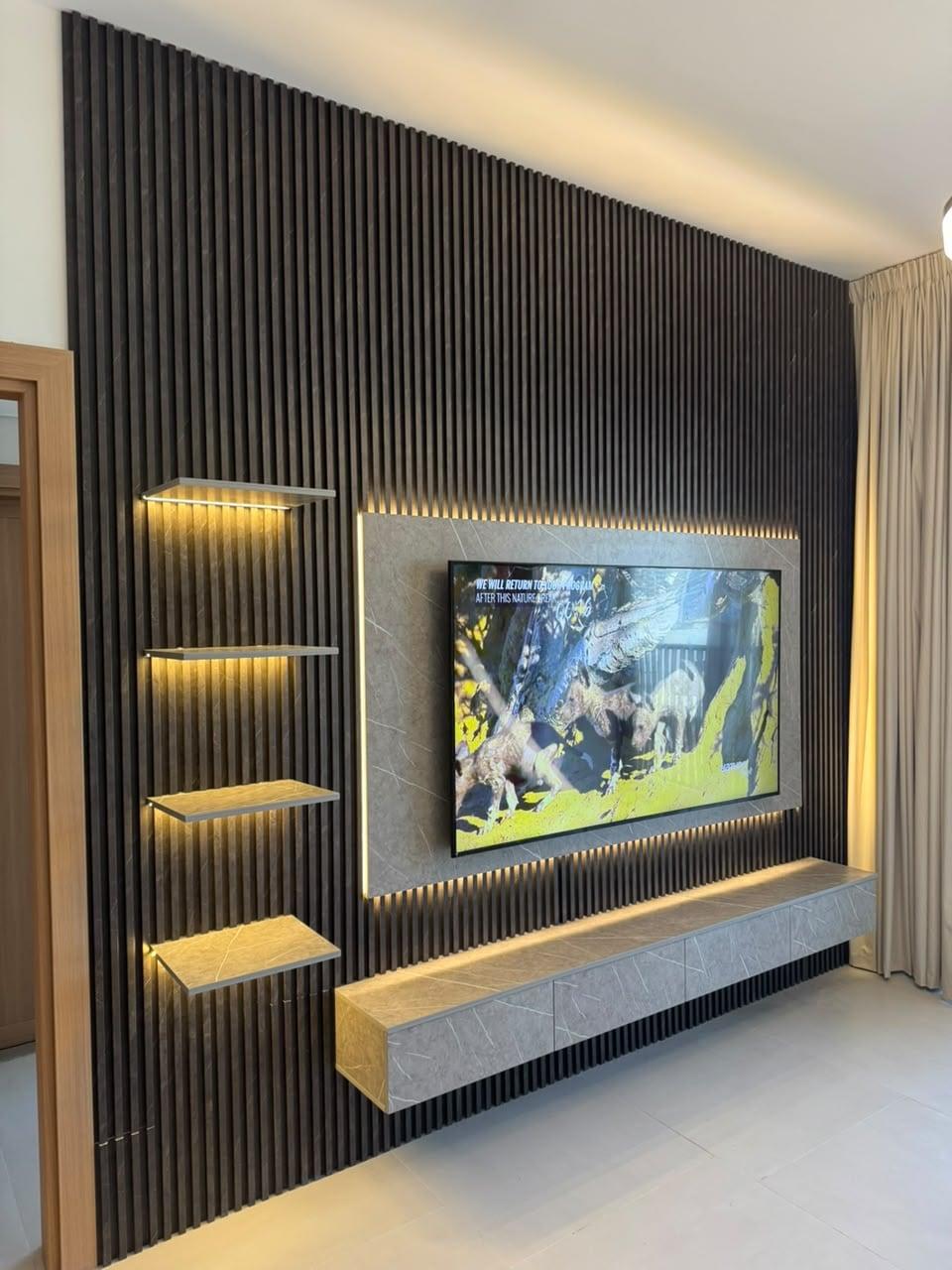
Media Walls · Living Room
Wood Slat Feature Walls
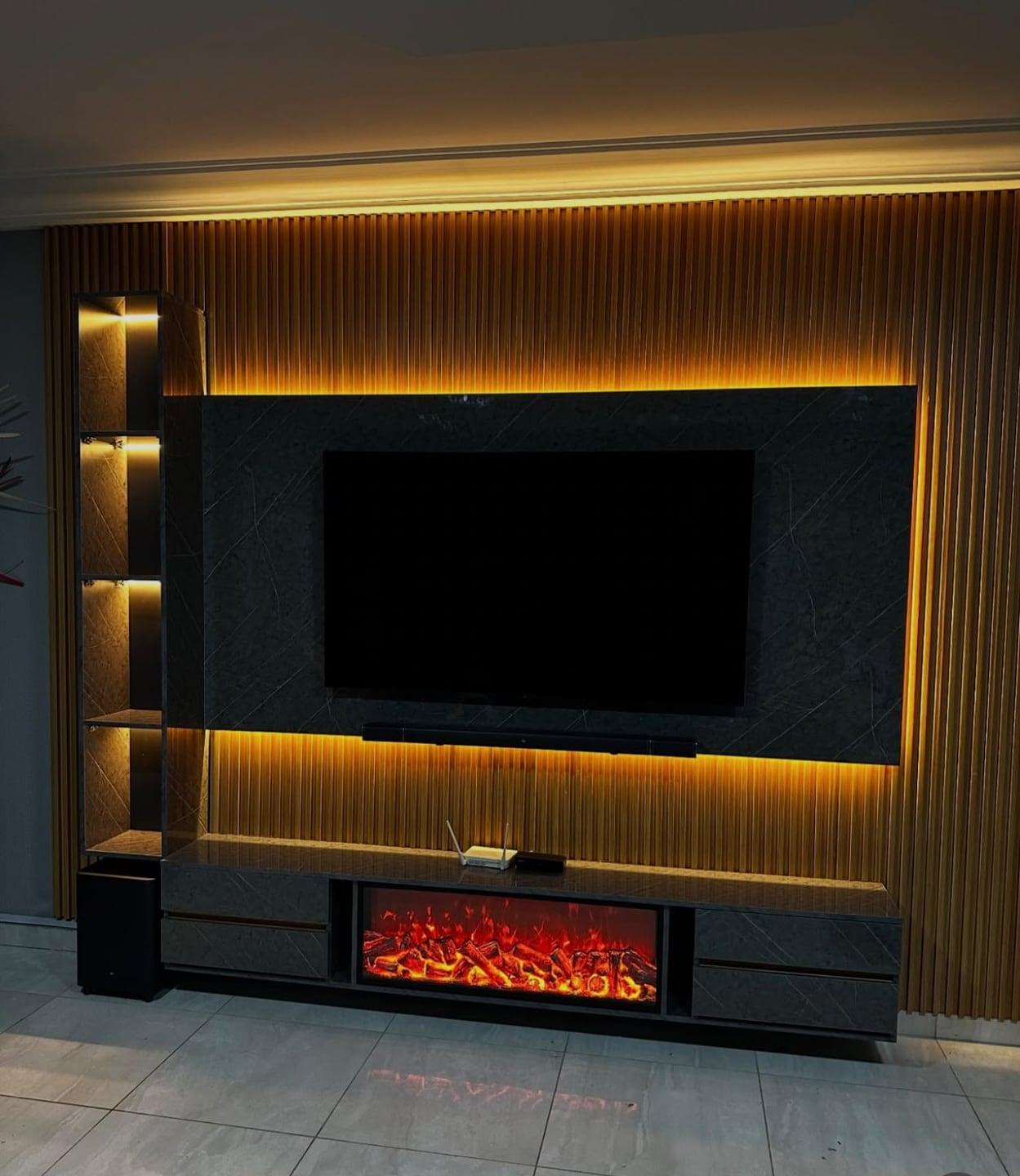
Media Walls · Living Room
Media Walls with Electric Fireplace

Plan the details first
- GuideBlackout or sheer curtains: which does each room need?
- GuideBlackout curtains letting light in? Where it leaks and how to stop it
- GuideCurtain prices in the UAE: what one window really costs
- GuideWave, pinch pleat or eyelet curtains: picking the right heading
- GuideMotorised curtains in the UAE: motors, power, remotes and smart control
- GuideSheer and blackout curtains together: planning a double track
- GuideRoller blinds or curtains: which is better for each room?
- GuideHow to measure for curtains: width, length, track height and stack-back
- GuideThermal curtains in the UAE: what keeps the heat out, and what does not
- GuideHow to clean curtains and blinds: sheers, blackout, Roman and roller blinds
- GuideCurtains and blinds for sliding and balcony doors
- GuideCurtain pockets in gypsum ceilings: sizing, motors and fixing
- GuideMajlis curtains: layers, fabrics, tiebacks and pelmets
- GuideChoosing a curtain maker or curtain shop in Sharjah: a buyer's checklist
- GuideRoman blinds in the UAE: folds, fabric, fitting and safety
- GuideZebra, vertical and wooden blinds: which suits which window?
- GuideChoosing curtain colours: sofa, walls and UAE sunlight
- GuideCurtain repair, re-hanging and fixing in the UAE: fix it or replace it?
- GuideCurtain rod, track or rail: which one suits your home?
- GuideDo soundproof curtains work? What curtains can and cannot do about noise
- GuideOffice curtains and blinds in the UAE: how to choose for glare, privacy and upkeep
- GuideCurtain fabrics for UAE homes: linen, velvet, polyester, cotton and blends
- Planning toolMeasuring Your Windows
- Planning toolCare & Maintenance
- GuidePlanning a whole-home budget
- GuideChoosing materials by specification
- GuideWarranty & aftercare
Free on-site visit
We bring the samples
Choose fabric and finishes in your own light, next to your own walls, then we laser-measure and send a drawing and an itemised quote.