Curtains · 11 min read · 18 April 2026
Thermal curtains in the UAE: what keeps the heat out, and what does not
Do thermal curtains work in UAE heat? What a thermal lining is, how a curtain changes heat at the glass, which windows need it and what a heat claim should show.

By Ali Haider Basra, Founder, Al Tareeq Decor · Contact our workshop
Key takeaways
- Thermal curtains help by stopping sun before it reaches the room; they do not insulate like a wall or replace the AC.
- Most heat performance comes from a coated lining: 1-pass thermal still lets some light in, 3-pass blackout thermal stops it.
- A pale lining facing the glass, a closed top, side overlap and a floor-length hem keep warm air at the glass.
- Put thermal curtains on west and south-facing glass first, and close them before the afternoon sun arrives.
- There is no common energy rating for curtains, so be wary of any saving figure without a test behind it.
On this page
- Key takeaways
- Do thermal curtains work in UAE heat?
- Blackout, thermal and dim-out are three different claims
- What each curtain claim actually means
- How a curtain changes the heat at a window
- What makes a curtain better at keeping heat out
- Which windows need thermal curtains most
- Where to put thermal curtains first
- Are blackout curtains hotter?
- Use curtains with your AC, not instead of it
- What a thermal claim should come with
- UV, fading and your furniture
- Thermal curtains for sliding glass doors and glass walls
- Thermal curtains, blinds or other options?
- Price and how we specify thermal curtains
- Common questions
Do thermal curtains work in UAE heat?
They help, in a specific way. A closed, lined curtain between the sun and the room stops a good share of the sunlight that would otherwise land on your sofa, floor and walls and turn into heat. Rooms with big west-facing glass feel the difference most on summer afternoons. What a curtain cannot do is turn single glazing into an insulated wall, or replace the AC.
The honest difficulty is measurement. There is no common rating for curtains that lets you compare one thermal curtain with another. The Attachments Energy Rating Council, the body that rates window coverings for energy performance, certifies products such as cellular, roller and Roman shades; Hunter Douglas lists those as its rated categories, and draperies are not among them.
So we do not promise a percentage off your electricity bill, and you should be wary of anyone who does without showing the test behind it. What we can tell you is which fabric and lining keeps more sun out, how to fit it so warm air does not leak round it, and when to close it. That is what this guide covers.
Blackout, thermal and dim-out are three different claims
Blackout is about light: whether the fabric lets light through. Thermal is about heat: whether the curtain slows heat moving across it. Dim-out sits between sheer and blackout for light. A curtain can be one, two or all three, and the label rarely tells you which.
Most thermal curtains get their heat performance from a coated lining. James Dunlop Textiles explains the usual construction: one pass of a coated acrylic compound makes a thermal lining, which still lets some light through; three passes of the same coating make a blackout thermal lining that stops light completely and keeps the same thermal benefits. The coating also cuts the ultraviolet light passing through the fabric.
In practice, ask what is behind the face fabric. A decorative cloth with a 3-pass blackout thermal lining gives darkness and some insulation; the same cloth unlined gives neither, whatever it is called on the label.
What each curtain claim actually means
Thermal
- What it is about
- Slowing heat through the curtain
- Usually comes from
- A coated thermal lining, a dense fabric, or both
- Ask for
- The lining type and the article name
Blackout
- What it is about
- Stopping light through the fabric
- Usually comes from
- A coated or woven blackout fabric, or a 3-pass lining
- Ask for
- A sample held against a bright window
Dim-out
- What it is about
- Cutting most light, not all
- Usually comes from
- A dense weave or a lighter coating
- Ask for
- A sample in your own room light
Energy saving
- What it is about
- Lower cooling energy
- Usually comes from
- The whole window, the orientation and how the curtain is used
- Ask for
- The test or study behind any figure
Lining construction as described by James Dunlop Textiles. No common energy rating exists for curtains.
How a curtain changes the heat at a window
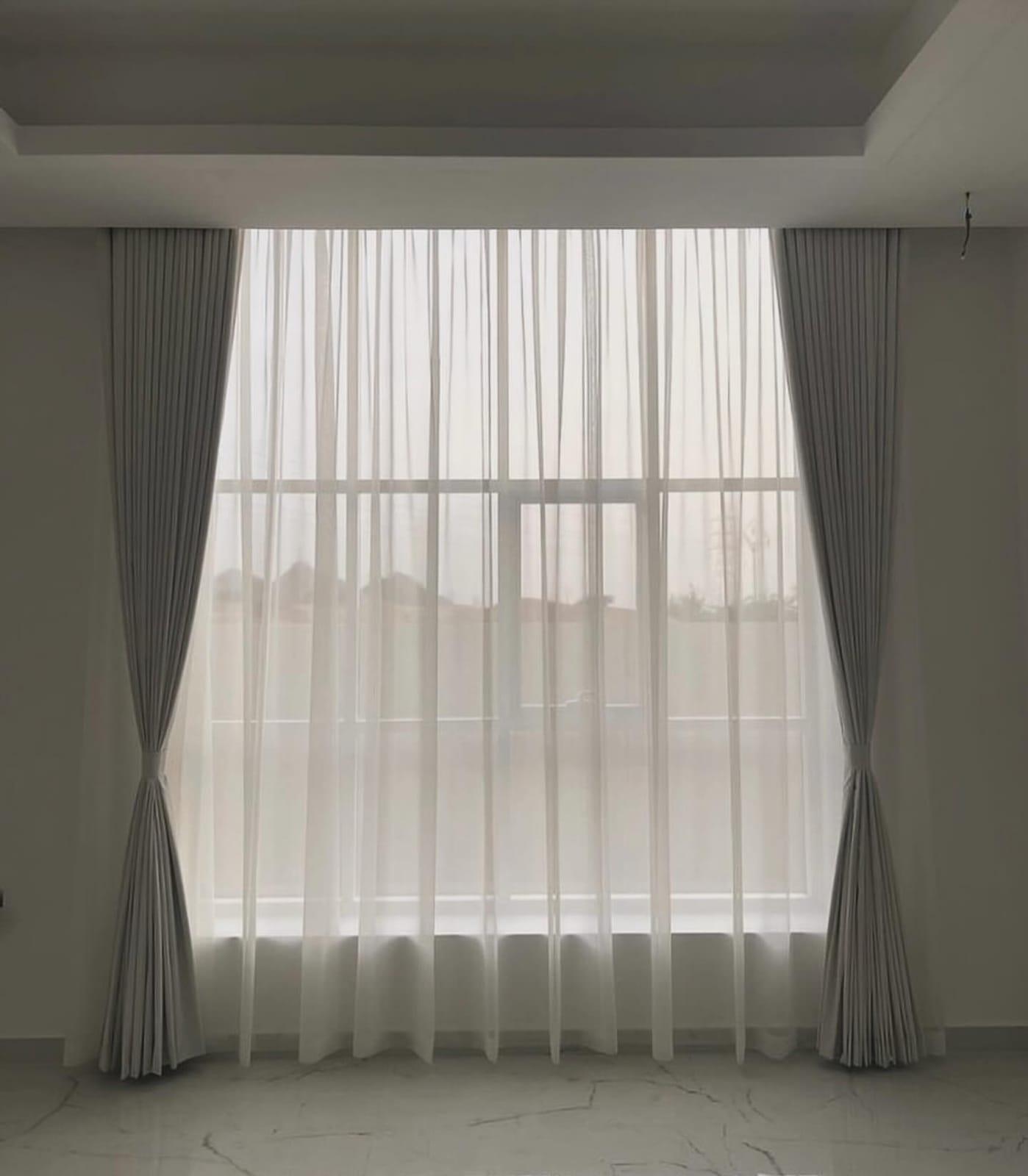
Sunlight passes through glass and is absorbed by whatever it lands on, which then warms the room. Draw a curtain across the glass and the sunlight lands on the curtain instead. A pale lining facing the glass sends part of it back out through the window; a dark one absorbs more of it.
The air between the glass and a closed curtain gets warm, sometimes very warm. That is normal and is where the heat you kept out of the room is sitting. The question is whether that warm air stays there. If the curtain stops short of the ceiling or the floor, or leaves gaps at the sides, warm air rises out over the top and slips round the edges into the room.
That is why fit matters as much as fabric. A curtain that starts in a ceiling pocket, runs past the frame and finishes just above the floor keeps more of that warm layer at the glass.
- 1. Without a curtain, the sun lands on the floor and furniture and warms the room
- 2. A pale lining facing the glass turns part of the sunlight back out
- 3. The air between glass and curtain warms up; that is expected
- 4. Gaps at the top, sides and hem let that warm air into the room
- 5. The room stays more comfortable at the AC setting DEWA recommends, 24°C
What makes a curtain better at keeping heat out
Start with the lining. A coated thermal or blackout thermal lining does more than any face fabric on its own, and it protects the face fabric from sun damage at the same time. Then the colour facing the glass: a light-coloured lining bounces more of the sun back than a dark one.
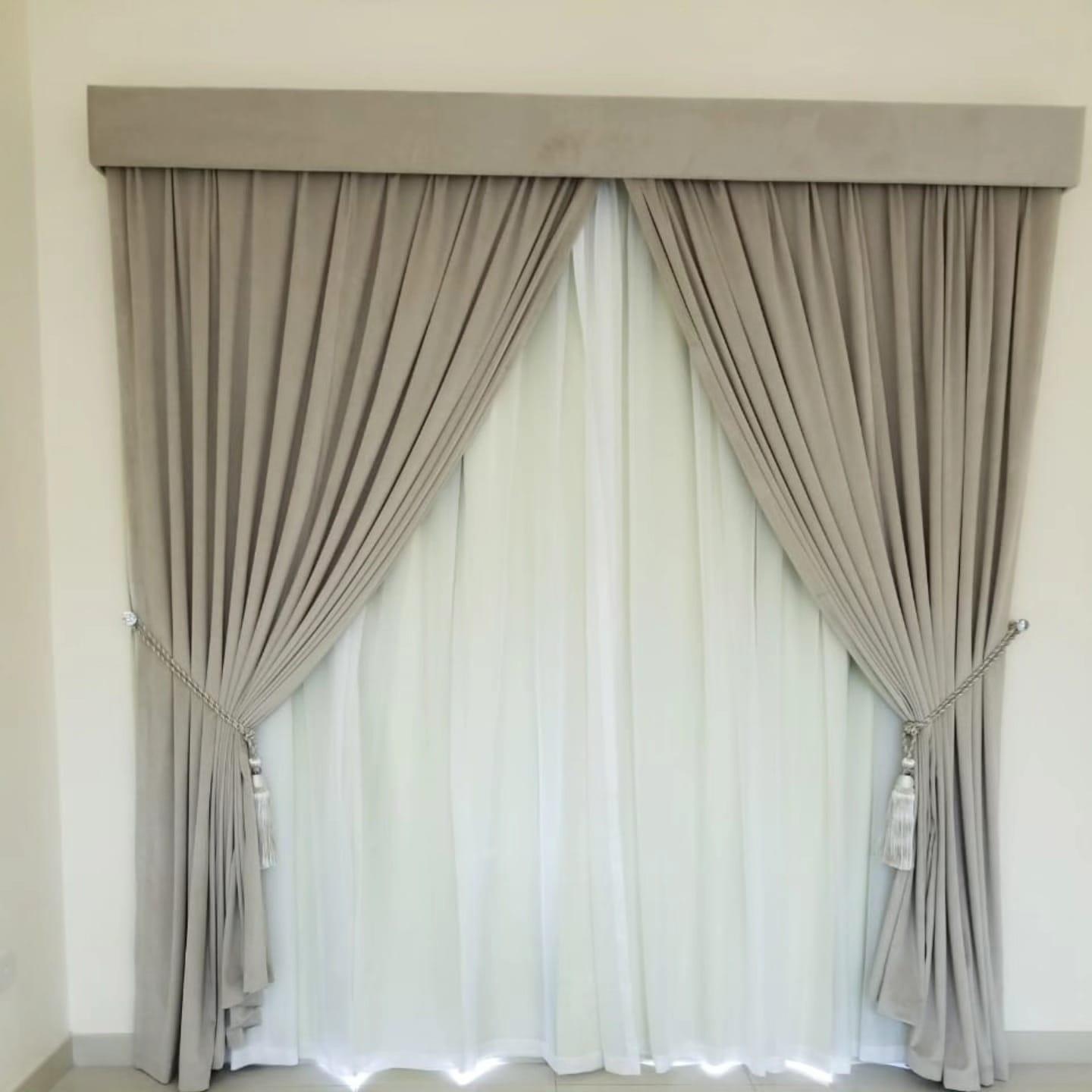
Weight and fullness help too. A dense, heavier fabric gathered at proper fullness holds more still air in its folds than a thin, flat panel. Pairing a voile with a lined curtain traps a further band of air between the two.
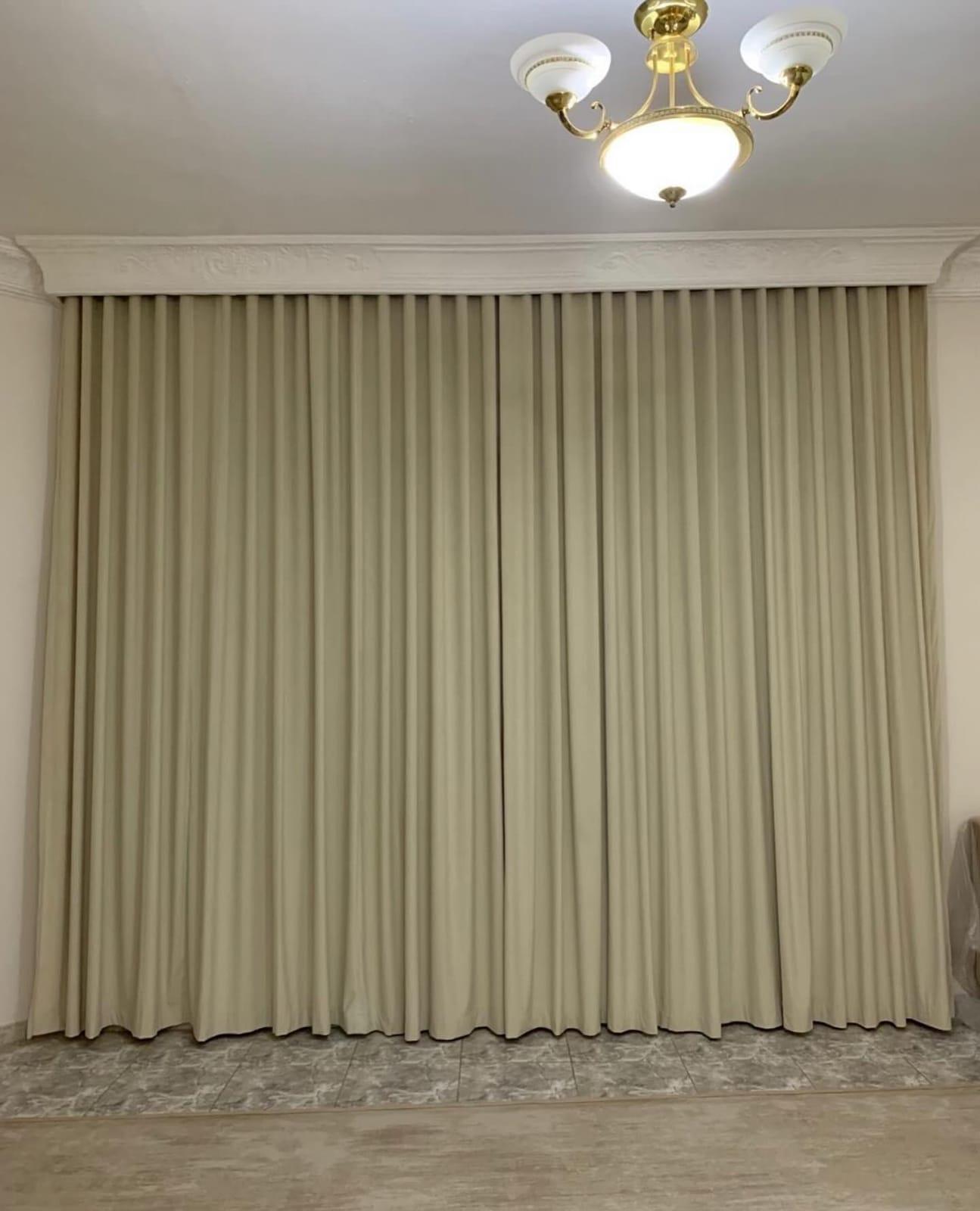
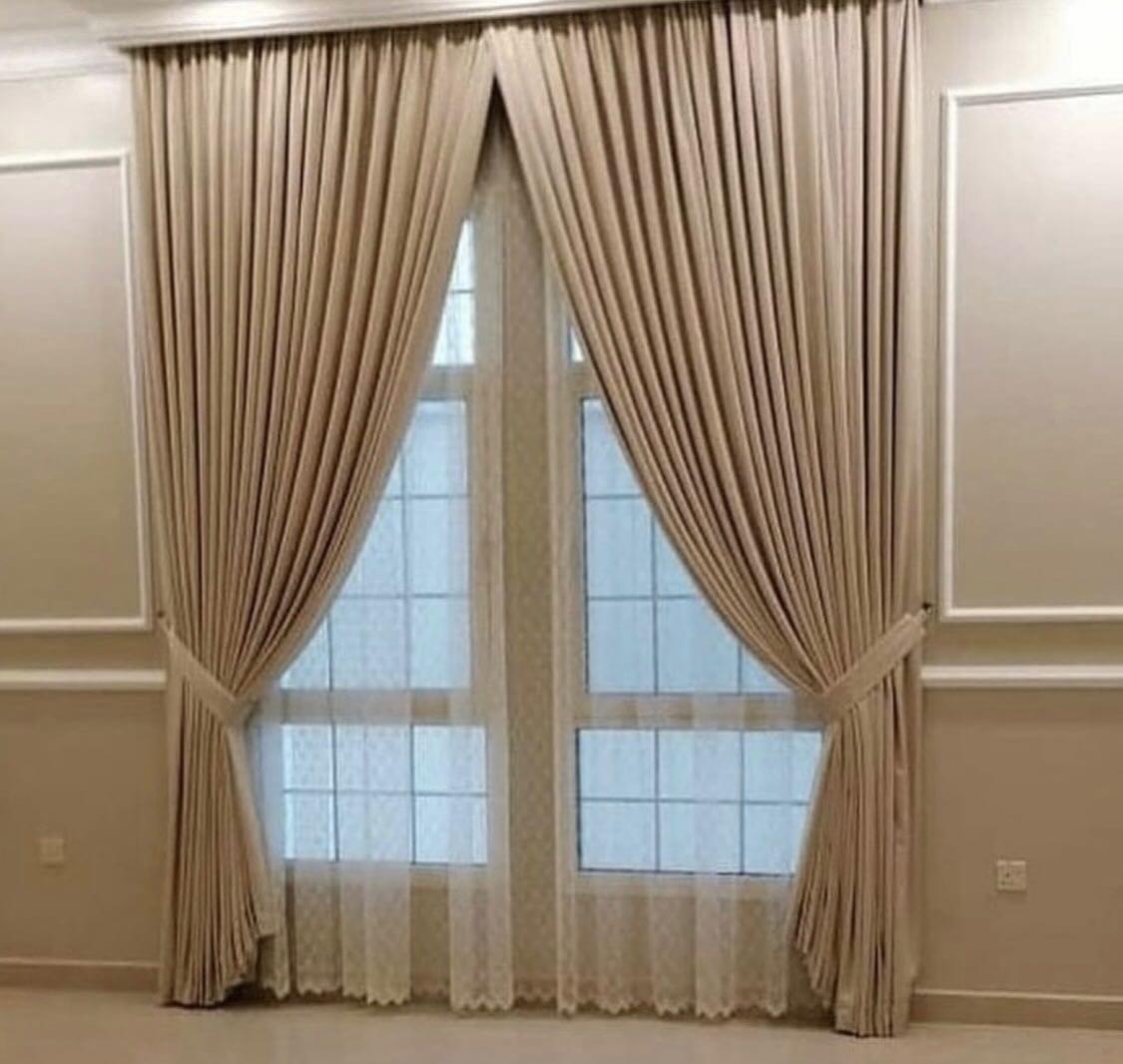
Then fit. Close the top with a ceiling pocket, a pelmet or a track fixed close to the ceiling; extend the track beyond the frame so the curtain overlaps the wall; let it finish just above the floor; and make sure the two panels overlap in the middle. Each of those edges is shown in where blackout curtains leak light, and the same gaps that leak light also leak warm air.
- A coated thermal or 3-pass blackout thermal lining.
- A pale lining colour facing the window.
- A dense fabric at full fullness, not a flat panel.
- Closed top, side overlap and a floor-length hem.
- Closed before the sun reaches the glass, not after.
Which windows need thermal curtains most
Not every window needs the same curtain. In the UAE, east-facing glass gets the low morning sun, south-facing glass gets sun through much of the day, and west-facing glass gets the hot, low afternoon sun that is hardest to block and arrives when rooms are already warm.
Put your best thermal curtains on west and south-facing glass first, especially large windows and glass doors in living rooms and bedrooms. North-facing windows rarely get direct sun and can usually stay lighter. Glass walls in villas and penthouses deserve the most attention, because the area of glass is so large.
Where to put thermal curtains first
West
- When the sun hits
- Afternoon, low and hot
- Our suggestion
- Lined thermal or blackout thermal curtain, closed early afternoon
South
- When the sun hits
- Much of the day
- Our suggestion
- Lined curtain with a sheer, closed through the hottest hours
East
- When the sun hits
- Morning
- Our suggestion
- Lined curtain in bedrooms; a sheer may be enough elsewhere
North
- When the sun hits
- Little direct sun
- Our suggestion
- Lighter curtains or sheers; heat is rarely the issue
A general guide; trees, balconies and neighbouring buildings change how much sun each window gets.
Are blackout curtains hotter?
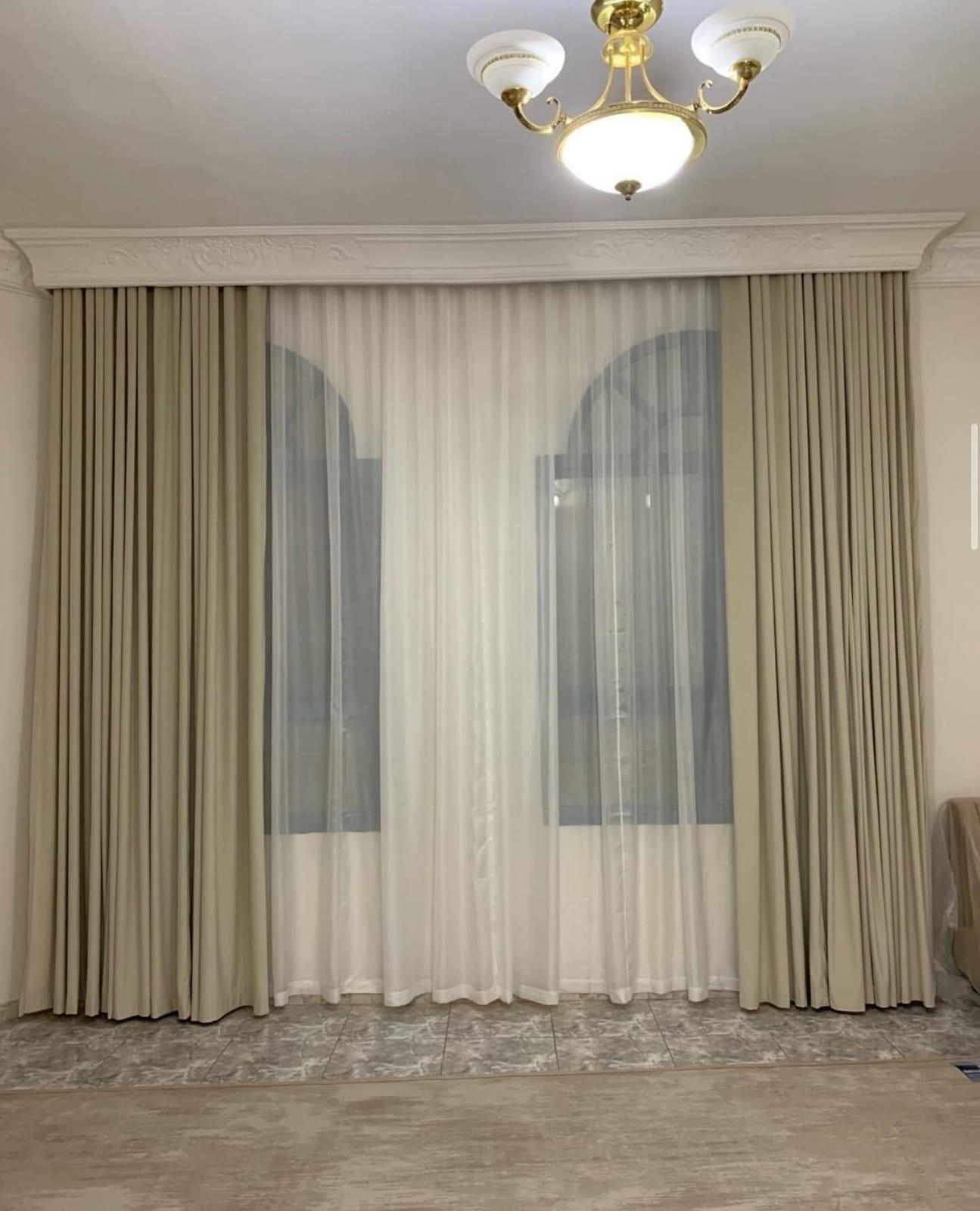
People sometimes find the space behind a closed blackout curtain hot to the touch and assume the curtain is making the room warmer. It is the opposite: that heat is sitting between the glass and the curtain because the curtain stopped it reaching the room.
Two things decide whether it then gets into the room: the colour of the side facing the glass, and how well the edges are closed. A dark, unlined blackout fabric facing the sun absorbs more heat and can radiate some of it into the room; a pale lining reflects more. A curtain with open top and bottom lets the warm air circulate into the room.
Our blackout and sheer guide covers the light side of the same question.
Use curtains with your AC, not instead of it
Curtains work best as part of how you run the house in summer. DEWA's advice, reported by Gulf News in August 2026, is to keep the thermostat at 24°C, and it notes that each degree lower can raise AC consumption by around 5 per cent. The same article suggests using curtains, blinds or drapes during the hottest parts of the day.
Keep the AC working with the curtain, not against it. A curtain hung right in front of a split unit or across a ceiling grille traps cool air behind it and makes the AC run longer, so check where the outlets are when the track is planned. If the AC blows straight onto a sheer, it will billow; a weighted hem or a slightly different track position fixes that.
The timing matters. A curtain closed after the sun has been pouring in for two hours is too late: the floor and furniture have already soaked up the heat. Close west-facing curtains before the afternoon sun reaches them and open them again in the evening.
If nobody is home to do it, a motor on a schedule will; timers and scenes are covered in motorised curtains for UAE homes.
What a thermal claim should come with
Labels like "thermal", "energy saving" and "keeps heat out" are easy to print. Before paying more for them, ask what is behind the claim.
- The fabric's article name and the lining type: 1-pass thermal, 3-pass blackout thermal, or none.
- A data sheet or test report if a percentage is quoted, with what was measured and how.
- Whether the figure is for the fabric alone or for a fitted window treatment.
- Whether the saving is for light, heat or UV: they are different numbers.
- Care instructions, because some coated linings should not be machine washed.
UV, fading and your furniture
Strong UAE sun fades more than curtains. Sofas, rugs, wooden floors and artwork near a sunny window lose colour over time. A coated lining reduces the ultraviolet light passing through the curtain, as James Dunlop notes for its thermal linings, so closing a lined curtain during the brightest hours protects what is in the room as well as the curtain's own face fabric.
A sheer alone softens light but lets much of the sun through, so a room that is unused in the afternoon is better with the lined curtain drawn. If you want daylight and protection together, a sheer with a lined curtain partly drawn is a fair compromise.
Look after the lining too. Many coated linings should not go in a washing machine or a hot dryer, because the coating can crack or peel, and a cracked blackout lining lets pinpricks of light through. Vacuum the curtains gently, keep the care label, and follow our curtain and blind cleaning advice when they need more.
Thermal curtains for sliding glass doors and glass walls
Sliding doors to a balcony or garden are often the largest single piece of glass in a flat, and in many towers they face the sun for hours. They are also opened every day, which makes them harder to dress than a window.
The curtain has to stack fully clear of the opening side, so the door can slide and people can walk through without pushing fabric aside. That usually means a one-way curtain drawing away from the handle, on a track that runs well past the frame on the stacking side. Keep the hem a little above the floor and clear of the door's bottom track, or it drags and wears.
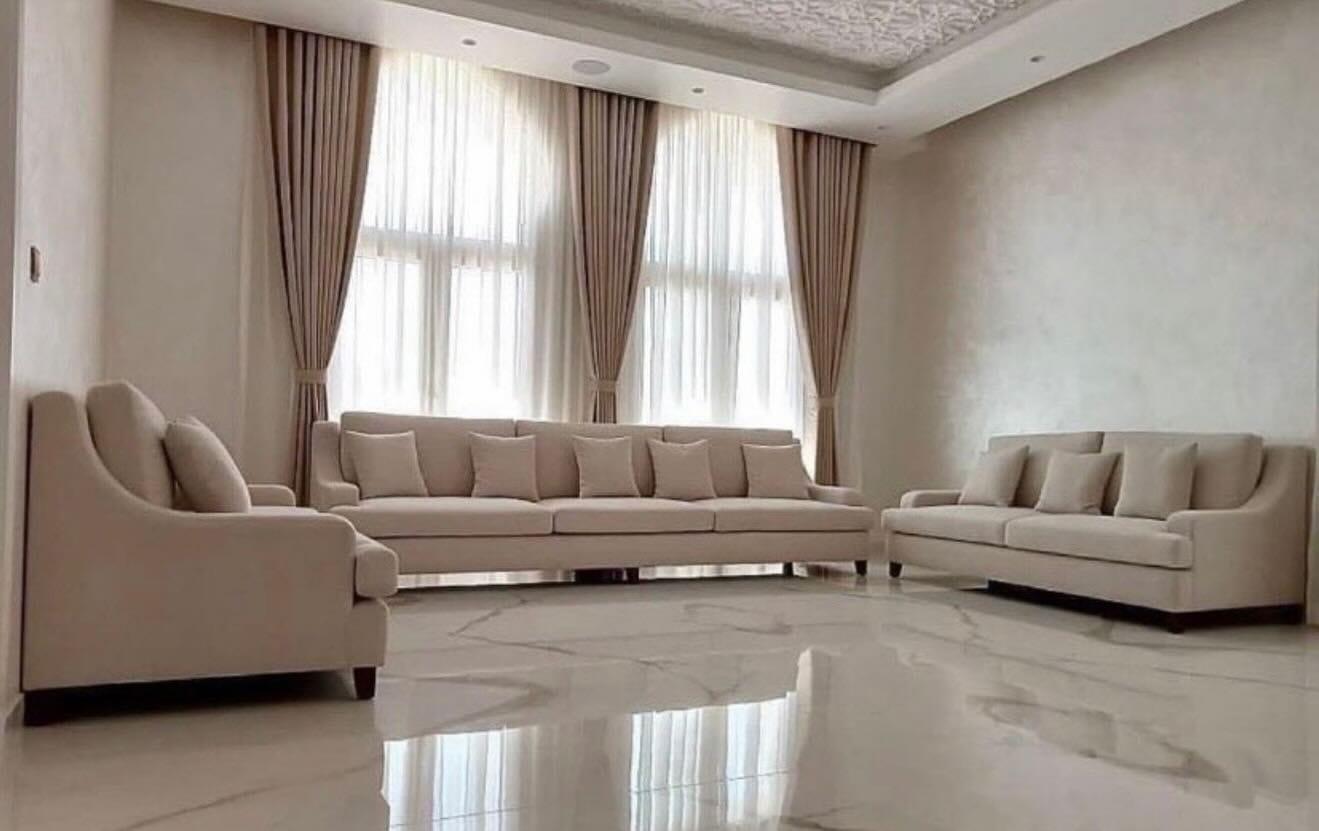
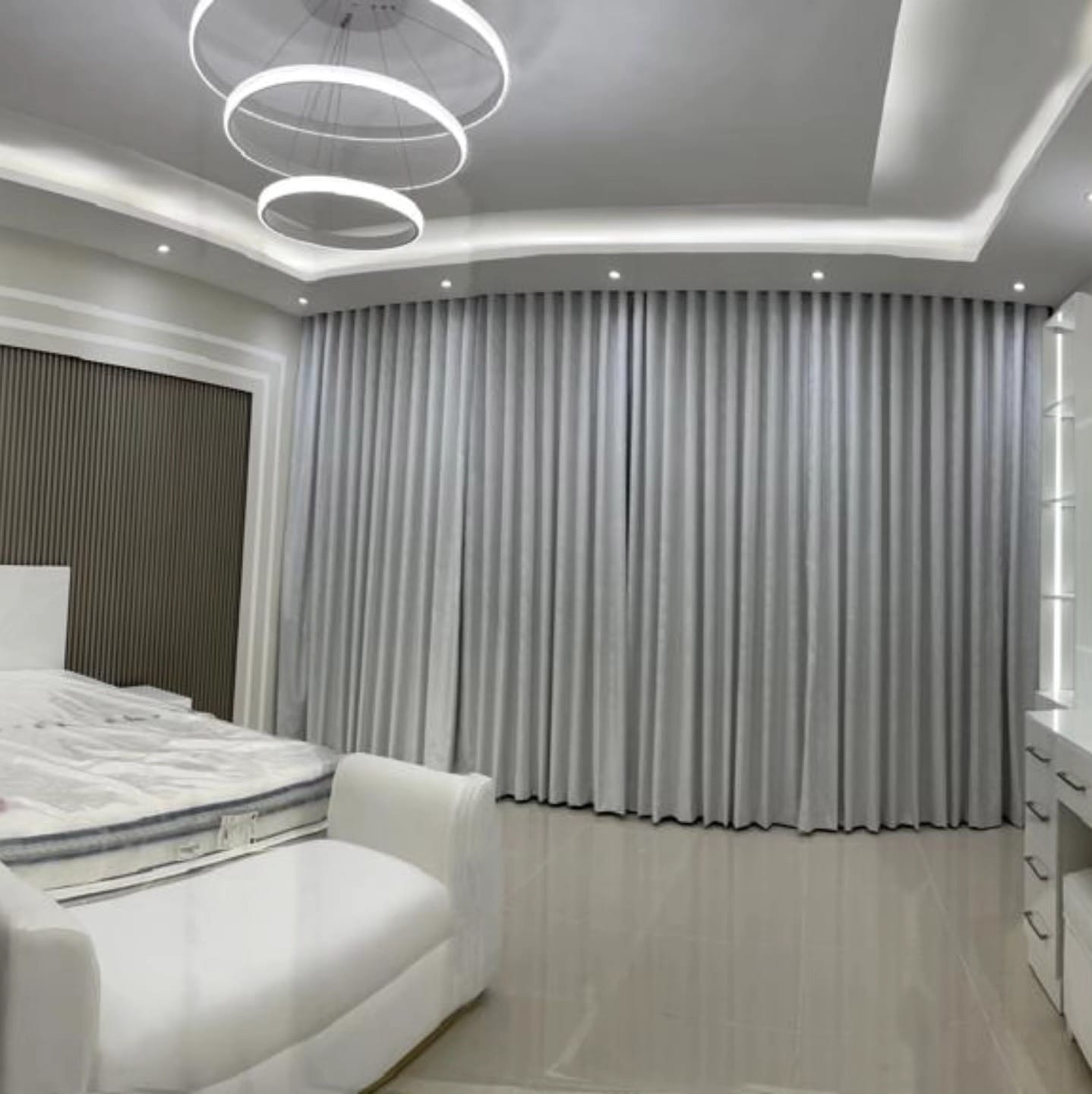
Across a full glass wall, split the curtain into several panels so you can close only the part the sun is reaching, and keep the view elsewhere. A lined thermal curtain behind a sheer is the usual answer in living rooms. The door itself is covered in more detail in dressing a balcony door.
Thermal curtains, blinds or other options?
Curtains are not the only way to deal with sun on glass. A blackout roller blind mounted tight to the window blocks sun well but leaves thin gaps at its sides; cellular shades are among the products AERC rates for energy performance. Solar window film and external shading are other trades altogether and can work well alongside curtains.
In the majority of bedrooms and living rooms here, a lined curtain, or a sheer with a lined curtain, gives the best mix of comfort, darkness and softness. For a window with little wall beside it, a blind may suit better. Our comparison of roller blinds and curtains goes through the choice.
The two also combine well. On a very sunny bedroom window, a blackout roller blind tight to the window with a lined curtain ahead of it adds a second barrier and a second chance to stop the light at the edges. It costs more than either alone, so keep it for the rooms where sleep or heat really are a problem.
Price and how we specify thermal curtains
A thermal or blackout thermal lining gets a line of its own in the quotation, alongside the face fabric, the track and fitting. Our curtains start from AED 550 per window for the entry specification; linings, second layers, larger windows and premium fabrics are quoted on top. How each line is worked out is in the curtain price guide.
During the free visit we check which way each window faces, take laser measurements, and bring lined and unlined samples to compare by hand and against the glass. Each curtain is stitched at our Sharjah workshop; installation normally follows within 3–5 working days, or 48 hours for a rush order, with our 24-month written warranty on workmanship. We will explain what a curtain can do for comfort, but no figure off your bill will be promised.
The curtains and blinds service lists everything we make, and blackout curtains shows lined examples.
Common questions
Do blackout curtains keep heat out too?
Partly. Blackout is a light rating; a pale, lined blackout curtain also keeps out a good share of sun heat if it is fitted closely. Blackout or sheer curtains.
Why does warm air still come round a closed curtain?
Through the gaps at the top, sides and hem, the same places light gets in. A pocket, side overlap and floor-length hem close them. Blackout curtain light gaps.
Can thermal curtains close on a timer?
Yes, with a motor and a schedule, so west-facing curtains close before the afternoon sun even when nobody is home. Motorised curtains in the UAE.
Is a blind better than a curtain for heat?
A blind close to the glass blocks sun well but leaves side gaps; a lined, well-fitted curtain usually seals better. Blinds compared with curtains.
Does a thermal lining cost extra?
Yes, it is a second fabric sewn behind the face cloth, so the quotation shows it separately. Curtain prices in the UAE.
Should I layer a sheer with a thermal curtain?
It works well: the voile cuts glare by day and the lined curtain closes for heat and darkness, each on its own track. Hanging two layers together.

Sources & specifications
Manufacturer information applies to the named products and systems. Sources reviewed on 28 October 2026.
- James Dunlop Textiles: 1-pass thermal and 3-pass blackout thermal liningsfaq.jamesdunloptextiles.com(opens in a new tab)
- Hunter Douglas: the Attachments Energy Rating Council (AERC) and rated productshunterdouglas.com(opens in a new tab)
- Gulf News: how to reduce your DEWA bill this summer (DEWA's 24°C advice)gulfnews.com(opens in a new tab)
Want this planned for your home?
Consultation and measurement are free. Tell us the rooms, location and what you need; we arrange a sample visit and define the measured quotation.