Curtains · 11 min read · 24 April 2026
Roller blinds or curtains: which is better for each room?
Roller blinds or curtains? Space, light at the edges, privacy, glare, published Dubai prices, cleaning, cord safety and which suits each room, or using both.

By Ali Haider Basra, Founder, Al Tareeq Decor · Contact our workshop
Key takeaways
- Blinds suit tight spaces, kitchens, bathrooms, offices and windows above furniture; curtains suit large windows, bedrooms and living rooms.
- A blind needs almost no wall; a lined curtain needs about 20–25% of the window width to stack.
- A blind inside the recess leaves thin light lines at the sides; a curtain on a track past the frame closes the edges.
- In Dubai price lists, roller blinds and pinch-pleat blackout curtains meet at about AED 90 per m² of window; small blinds carry a minimum charge.
- Choose cordless or motorised blinds wherever young children are; many rooms work best with a blind and a curtain together.
On this page
- Key takeaways
- Roller blinds or curtains: the short answer
- What a roller blind is
- Space: where each one goes when it is open
- Light and darkness: blinds, curtains and their edges
- Privacy by day and by night
- Glare, heat and screens
- Cost: roller blinds compared with curtains
- Roller blind or curtain: one Dubai price list, read on 28 October 2026
- Cleaning and humidity
- Cassettes, side channels and bottom bars
- Cords, chains and children
- Room by room: blind, curtain or both
- Using a blind and a curtain together
- How we plan blinds and curtains with you
- Common questions
Roller blinds or curtains: the short answer
Choose a roller blind where space is tight, the window sits above something, or the room needs to stay easy to clean: kitchens, bathrooms, offices, small windows, and windows over a desk, a sink or a bed. Choose curtains where the window is large, the room should feel soft and finished, or real darkness matters: the bulk of bedrooms, living rooms and majlis.
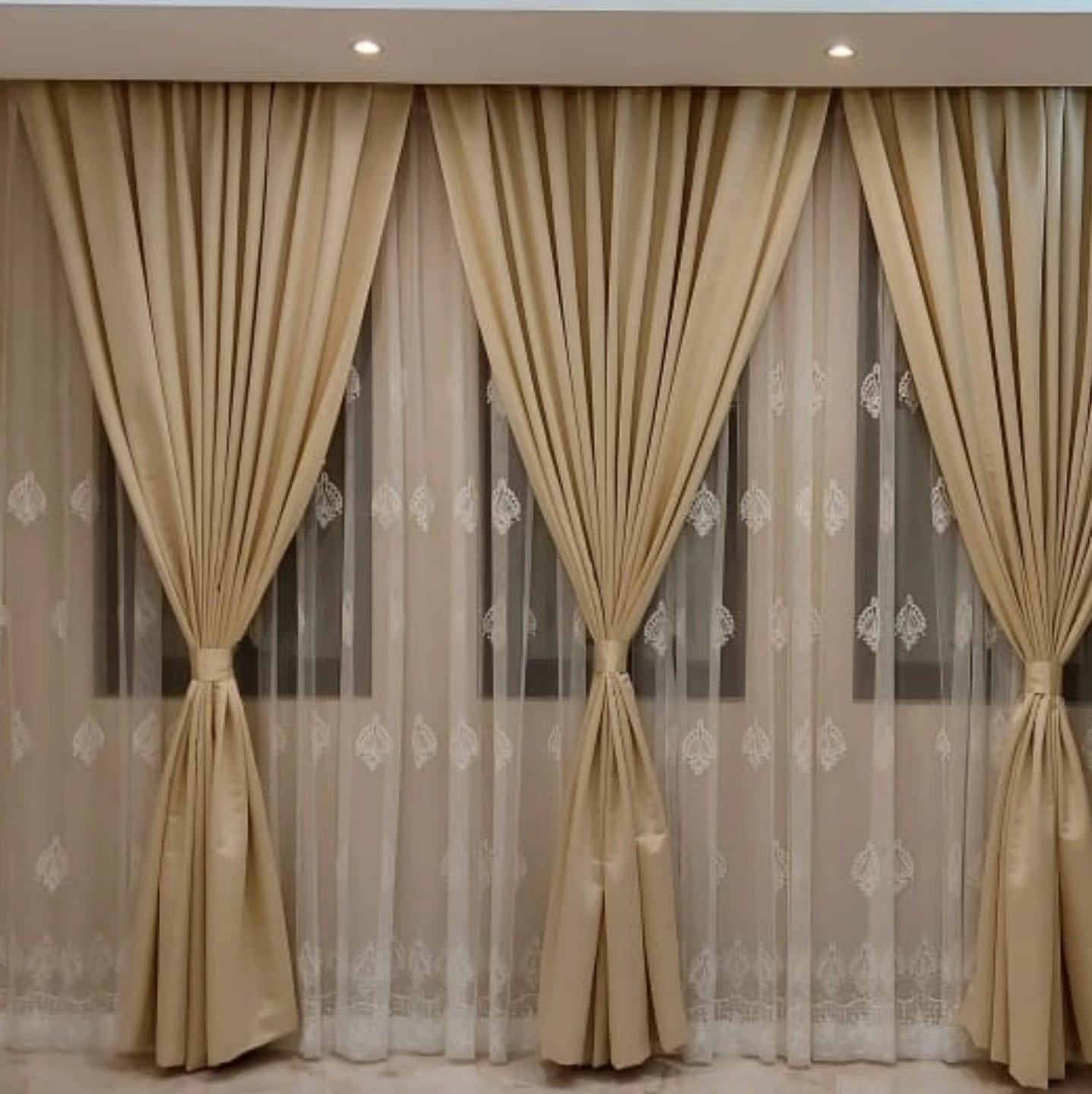
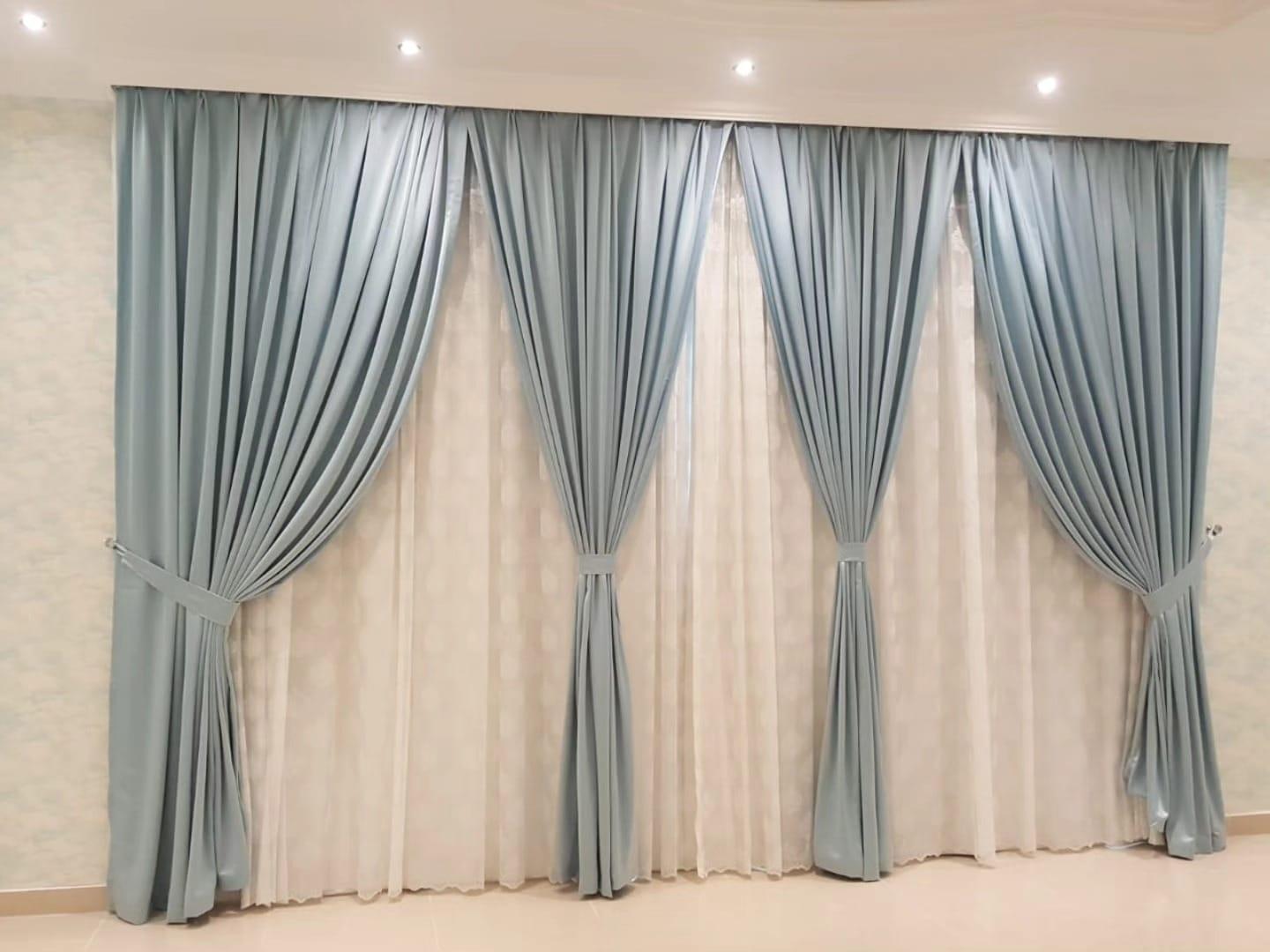
Many UAE rooms end up with both. Pair a blackout roller blind right against the glass with a voile or a decorative curtain in the room, and you get a blind's neat darkness plus the warmth of fabric. It is one of the most useful combinations there is.
The rest of this guide goes through the decisions behind that answer one by one, so you can make it for each window rather than for the whole house at once.
What a roller blind is
A roller blind is a single flat piece of fabric wound around a tube at the top of the window. It is raised and lowered by a side chain, a spring, or a motor, and when it is up it disappears into a slim roll or a cassette, a box that hides the roll and closes the gap above it.
The fabric decides what it does. Sunscreen fabrics have a fine open weave: they cut glare and heat but keep a view out in daylight. Dim-out fabrics darken a room without making it black. Blackout fabrics stop light through the cloth itself. Sonata Design's video below explains the difference between sunscreen and standard roller fabrics, and why two rollers are sometimes fitted on one window.
Because the fabric is flat and has no fullness, a roller blind uses far less material than a curtain. That is one reason it is economical, and also why it looks plainer.
Space: where each one goes when it is open
A roller blind rolls up out of the way and needs almost no wall beside the window. That makes it the natural answer for a window squeezed against a corner, a built-in cupboard or a door, for a window above a kitchen counter or a desk, and for windows in a run with little wall between them.
A curtain needs somewhere to stack when it is open, usually on the wall beside the window. Lined curtains can need 20–25% of the window width for that, according to Houzz's guide, so a 2 m window may need 20–25 cm of wall on each side. Without that wall, the drawn-back curtain sits over part of the window all day.
Depth matters too. A blind inside the recess sits flush with the wall. A curtain stands out into the room by the depth of its folds, which matters next to a bed, a sofa pushed against the window or a door that swings close by.
Light and darkness: blinds, curtains and their edges
How dark a room gets is decided at the edges, not in the middle of the fabric. A blackout roller blind set within the recess is made a few millimetres short of the opening so the roll can turn without rubbing, and that clearance shows as a bright sliver on both sides. Mounted on the wall face instead, wider than the opening, the blind hides most of that sliver. Hunter Douglas advises the same thing, mounting beyond the frame or adding drapery over the shade, and some roller systems run the fabric inside side channels for the same reason.
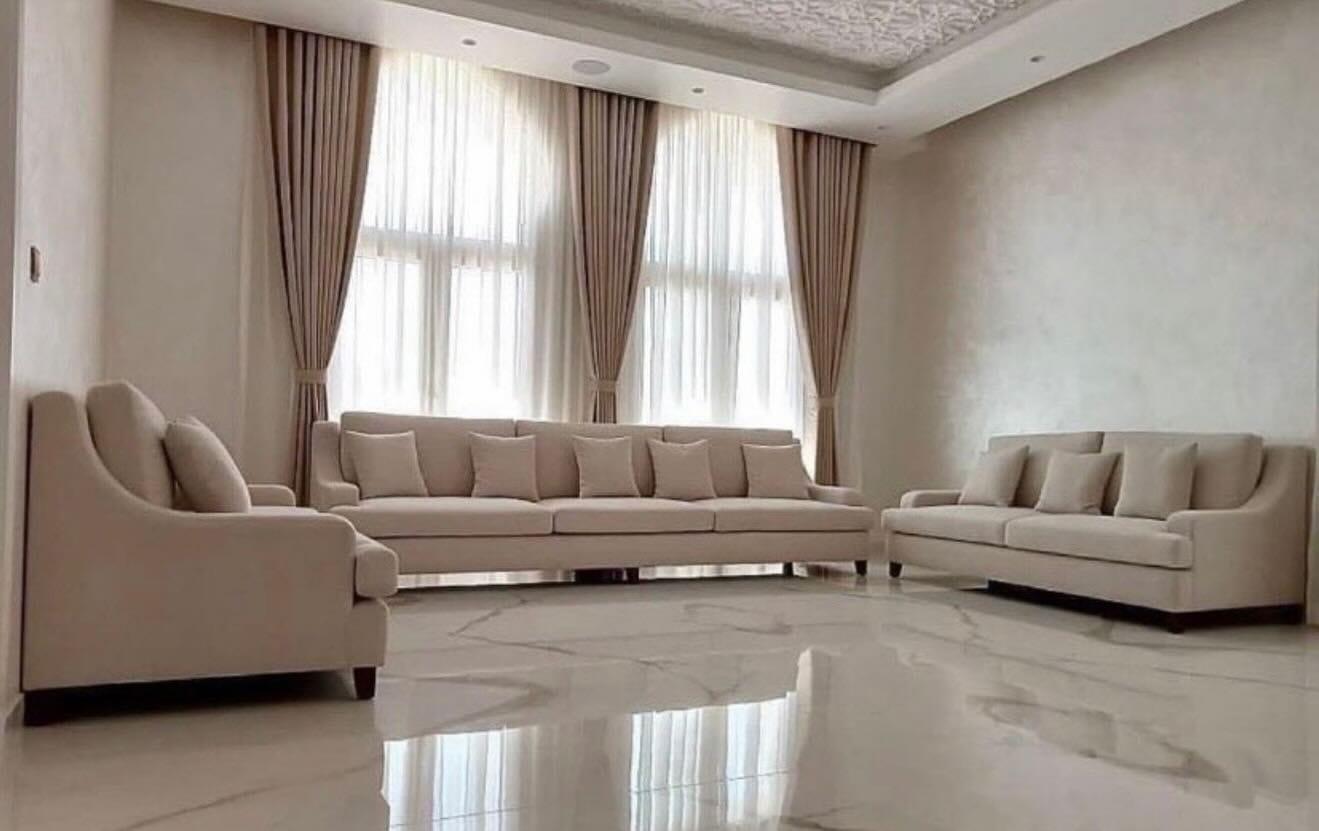
A curtain whose track extends beyond the frame covers some wall on both sides once closed, and if it starts from the ceiling there is no gap at the top either. That is why a well-fitted blackout curtain usually gives a darker room than a blackout roller blind on its own.
The drawing below shows the three arrangements from above.
- 1. A blind inside the recess must be a little narrower, so thin lines of light pass at the sides
- 2. Fitted outside the recess, it overlaps the wall and closes more of the edge
- 3. A curtain on a track past the frame overlaps the wall when closed
- 4. But it needs wall beside the window to stack when open
- 5. A blind rolls up and takes almost no space, close to the glass
Privacy by day and by night
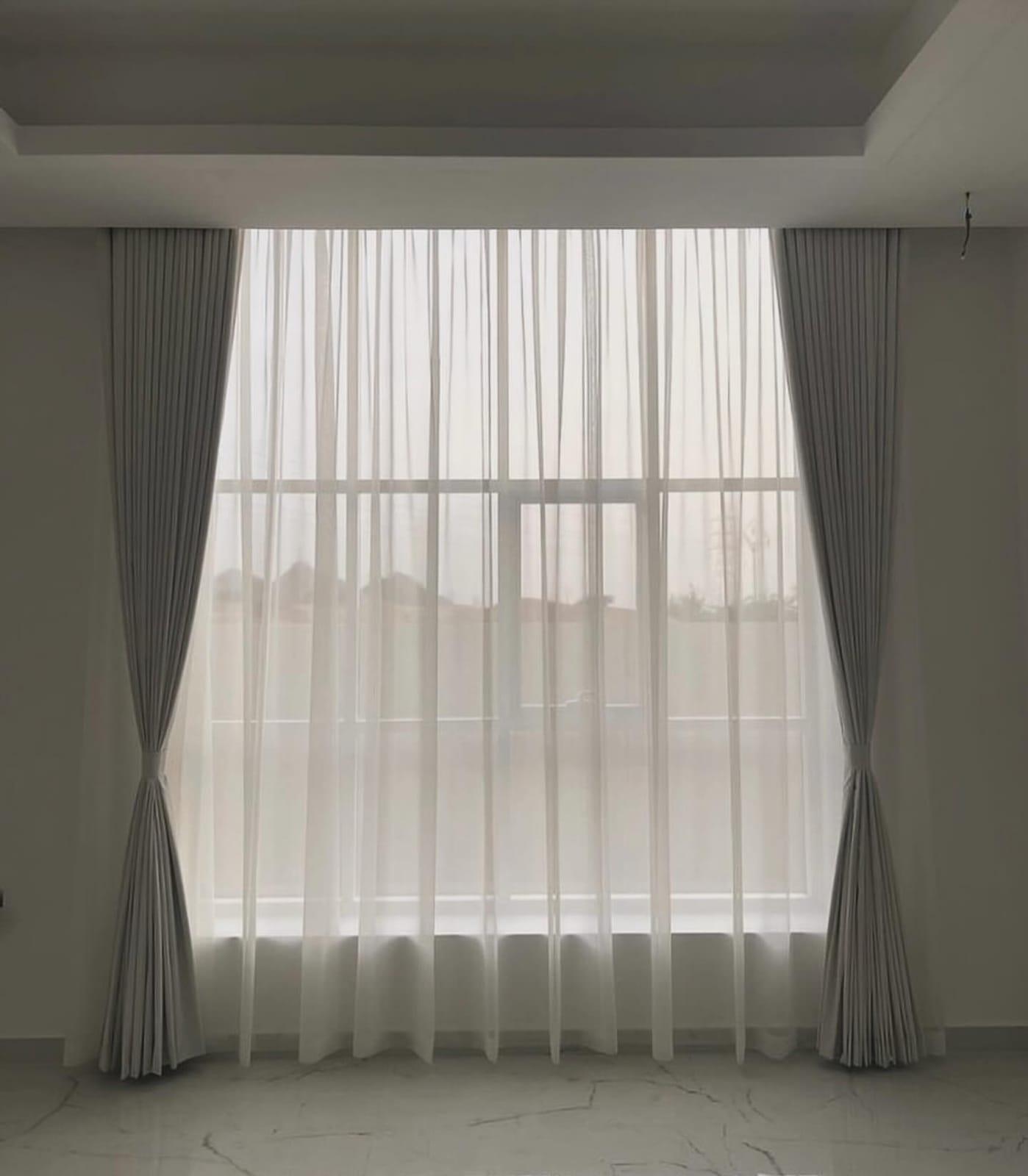
A sunscreen roller blind behaves like a sheer curtain. By day, when it is brighter outside, you see out and passers-by see little. After dark, with the lights on inside, the effect reverses and the room shows through. The reason is explained in blackout or sheer: what each layer does.
So a sunscreen blind alone is fine for an office used by day or a kitchen nobody overlooks, but a bedroom or living room overlooked by a neighbouring tower needs a second layer at night: a blackout or dim-out blind, or a curtain.
This is where combinations earn their place. A sunscreen blind for daytime glare with a dim-out curtain for the evening, or a blackout blind behind a sheer curtain, covers both times of day on one window.
Glare, heat and screens
In offices and home offices, glare on screens is often the real problem, and here a sunscreen roller blind is hard to beat: it softens hard sunshine yet keeps the view and the daylight, and it adjusts to exactly the height you need. The same applies to a living-room TV that catches the afternoon sun, where the lights around the screen matter as much as the blind; our media wall lighting ideas explain the glare check.
For heat, either can help. A blind set right against the glass intercepts the sun early, though warm air can slip past its sides. A lined curtain closes the edges better. Neither replaces the AC; both make it work less hard on sunny glass. What really keeps sun heat out is covered in thermal curtains for UAE homes.
Cost: roller blinds compared with curtains
On a small window the blind normally wins on price, since it is one flat panel with no fullness. For a large one, the gap narrows. Curtains Express in Dubai publishes both: roller blinds at AED 90 per square metre of window, sunscreen or blackout, with a 2 m² minimum (AED 180), and blackout curtains at AED 45 for each square metre of fabric, which at 2× fullness equals AED 90 for each square metre of window. Its own page notes that the two meet at that point.
The minimum charge matters on small windows: a 1.0 × 1.2 m kitchen window is charged as 2 m² in that price list. Cassettes, side channels and motors add to a blind, just as linings, second layers and motors add to a curtain.
Our curtains start from AED 550 per window, and that entry price includes the cloth, a plain manual track and installation; blinds are quoted after we measure, because the fabric, the cassette and the control all change the figure. The curtain side is broken down in the curtain price guide.
Roller blind or curtain: one Dubai price list, read on 28 October 2026
Roller blind, sunscreen or blackout
- Curtains Express price
- AED 90 per m² of window
- What it means
- Priced on the blind's own area
Roller blind minimum
- Curtains Express price
- 2 m² (AED 180)
- What it means
- Small windows cost the same as a 2 m² one
Blackout curtain, pinch pleat
- Curtains Express price
- AED 45 per m² of fabric (2× fullness)
- What it means
- About AED 90 per m² of window
Sheer + blackout curtain, pinch pleat
- Curtains Express price
- AED 80 per m² of fabric
- What it means
- About AED 160 per m² of window
Figures from the Curtains Express price page, quoted for comparison only. Our curtains start from AED 550 per window; blinds are quoted after measurement.
Cleaning and humidity
Blinds are easier to keep clean in kitchens and bathrooms: a flat fabric that can be dusted or wiped, depending on the fabric, rather than folds that collect grease and steam. Many roller fabrics are made for exactly those rooms. Curtains in a kitchen pick up cooking smells and need washing or professional cleaning more often.
In bedrooms and living rooms, the difference is smaller. Curtains need a gentle vacuum now and then and a professional clean every so often; blinds need dusting. Check the care instructions for the specific fabric either way, because some coated blackout fabrics must not be washed. Each fabric type is covered in cleaning curtains, sheers and blinds.
Cassettes, side channels and bottom bars
A roller blind is more than its fabric, and the hardware decides how it looks and how dark it gets. An open roller shows the rolled fabric at the top, which is fine inside a recess or behind a pelmet. A cassette is a slim box that hides the roll and closes the gap above it; it looks tidier on a wall and helps with light at the top.
Side channels are narrow tracks fixed down both sides of the window that the edges of the fabric run in. They close the side gaps that a free-hanging blind leaves, which makes them worth considering for a nursery or a bedroom used by day. They do add cost and need a recess or frame that is straight enough to fix them to.
At the bottom, a weighted bar keeps the fabric flat and stops it swinging in an AC draught. On a wide window, a single blind can become heavy and slow to raise; two or three blinds side by side, on one headrail or separate ones, are easier to use and let you shade only part of the window.
Ask which of these the quotation includes. Two blinds in the same fabric can look and perform very differently depending on whether they have a cassette, channels or neither.
Cords, chains and children
Corded blinds are a real hazard for young children. The US Consumer Product Safety Commission is direct about it: the safest option when young children are present is to go cordless, and cordless window coverings are the only way to eliminate the strangulation hazard. Safety devices on corded products reduce the risk but do not remove it.
For children's rooms and anywhere a toddler can reach, choose a spring-operated or motorised roller blind, or a curtain on a track that is pulled by its edge or a rod. If there is a chain, it needs a tensioner screwed to the wall, high and out of a child's reach. Tell us which rooms are for children and we plan the controls around them. Motors, which suit blinds as well, are explained in motors for curtains and blinds.
Room by room: blind, curtain or both
These are starting points that suit most UAE homes; your windows and routine can change them.
- Bedroom: blackout curtain, or a sheer curtain with a blackout roller blind behind it.
- Living room and majlis: curtains with a sheer; add a sunscreen blind if glare on the TV is a problem.
- Kitchen: roller blind, in a wipeable fabric, clear of the hob and sink.
- Bathroom: roller blind in a moisture-tolerant fabric.
- Children's room: blackout blind or curtain, cordless or motorised.
- Home office and offices: sunscreen roller blinds for glare, grouped by control on a wide façade.
- Balcony door: a curtain that stacks clear of the opening side; see our balcony door guide.
Using a blind and a curtain together
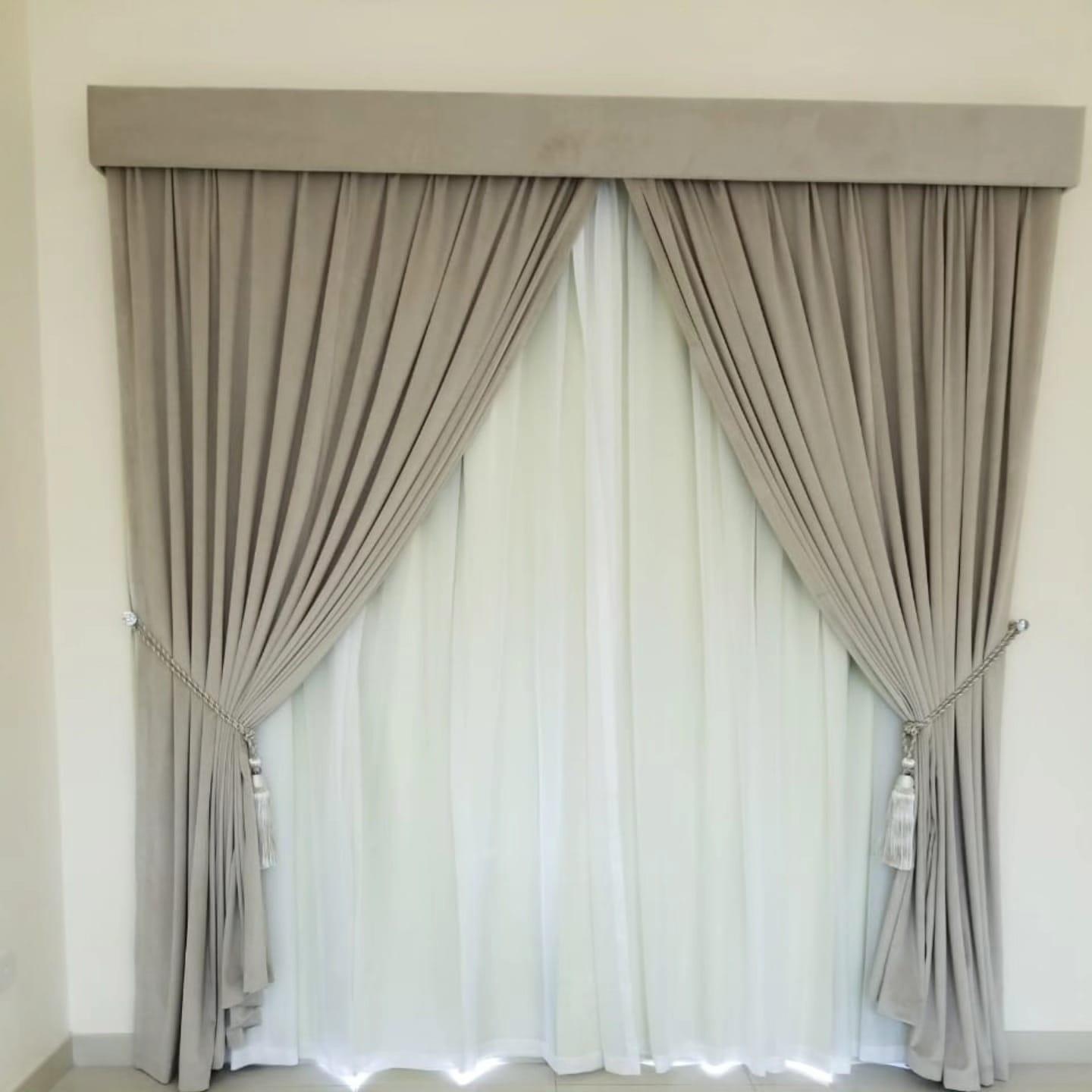
Putting a roller blind behind a curtain gives each a job. The blind, close to the glass, does the hard work: blackout for sleep or sunscreen for glare. The curtain in front softens the room, frames the window and closes the edges the blind leaves open.
It also saves wall space on a two-layer window: a blind behind a curtain needs only one curtain track, so it fits where a double curtain track would not. The blind sits inside the recess or on the frame, and the curtain is fixed to the wall or ceiling ahead of it.
Choose the curtain's fabric for looks rather than performance, since the blind is doing the darkening. The all-curtain version is in hanging a sheer and a blackout together, and Roman blinds the softer blind alternative.
How we plan blinds and curtains with you
Since we make and fit both, there is no reason for us to steer you to one. During the free visit we take laser measurements of each window, check the recess depth for a blind and the wall space for a curtain, note what sits around the window, and bring blind and curtain fabrics to hold up in your light.
Curtains are made at the Sharjah workshop and put up by our fitting team, usually within 3–5 working days, or 48 hours for a rush order; blind timing is confirmed on the quotation. Workmanship carries our 24-month written warranty.
See Roman and roller blinds and our curtains and blinds service to start.
Common questions
Do roller blinds cost less than curtains?
On small windows they generally do; on big ones the difference shrinks, and a blind has a minimum charge. Curtain prices in the UAE.
Roman or roller blind?
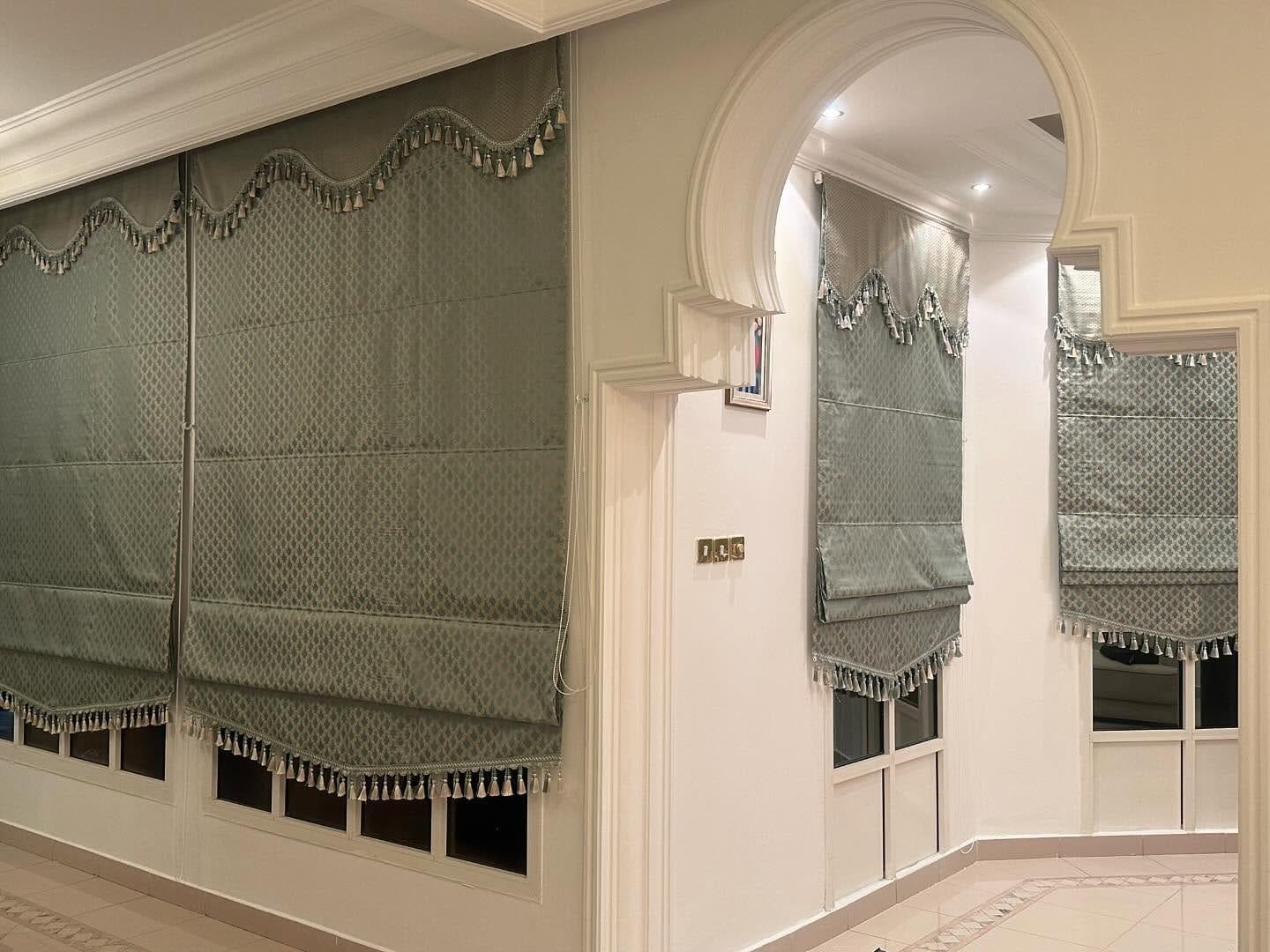
A roller is flatter, plainer and easier to wipe; a Roman blind folds in soft fabric and looks warmer. Roman blinds in the UAE.
Why does my blackout blind show light at the sides?
Inside the recess it must be narrower than the opening; outside mounting or side channels close the gap. Blackout light gaps.
Can roller blinds be motorised?
Yes, and a motor also removes the cord or chain, which is safer where children are. Motorised curtains in the UAE.
How do I clean a roller blind?
Dust it regularly and spot-clean only as the fabric allows; some coated blackout fabrics must not be washed. Curtain and blind care.
How do I get night privacy with a sheer curtain?
Fit a dim-out or blackout roller blind against the window behind it, or hang a darker curtain on a separate track. A sheer and a blackout together.

Sources & specifications
Manufacturer information applies to the named products and systems. Sources reviewed on 28 October 2026.
- Curtains Express: roller blind and curtain prices in Dubaicurtainsexpress.ae(opens in a new tab)
- Hunter Douglas: blackout and room darkening, and light at the edgeshunterdouglas.com(opens in a new tab)
- US Consumer Product Safety Commission: go cordless with window coveringscpsc.gov(opens in a new tab)
- Houzz: how to hang your curtains just right (stack-back)houzz.com(opens in a new tab)
Want this planned for your home?
Consultation and measurement are free. Tell us the rooms, location and what you need; we arrange a sample visit and define the measured quotation.