
1 / 3
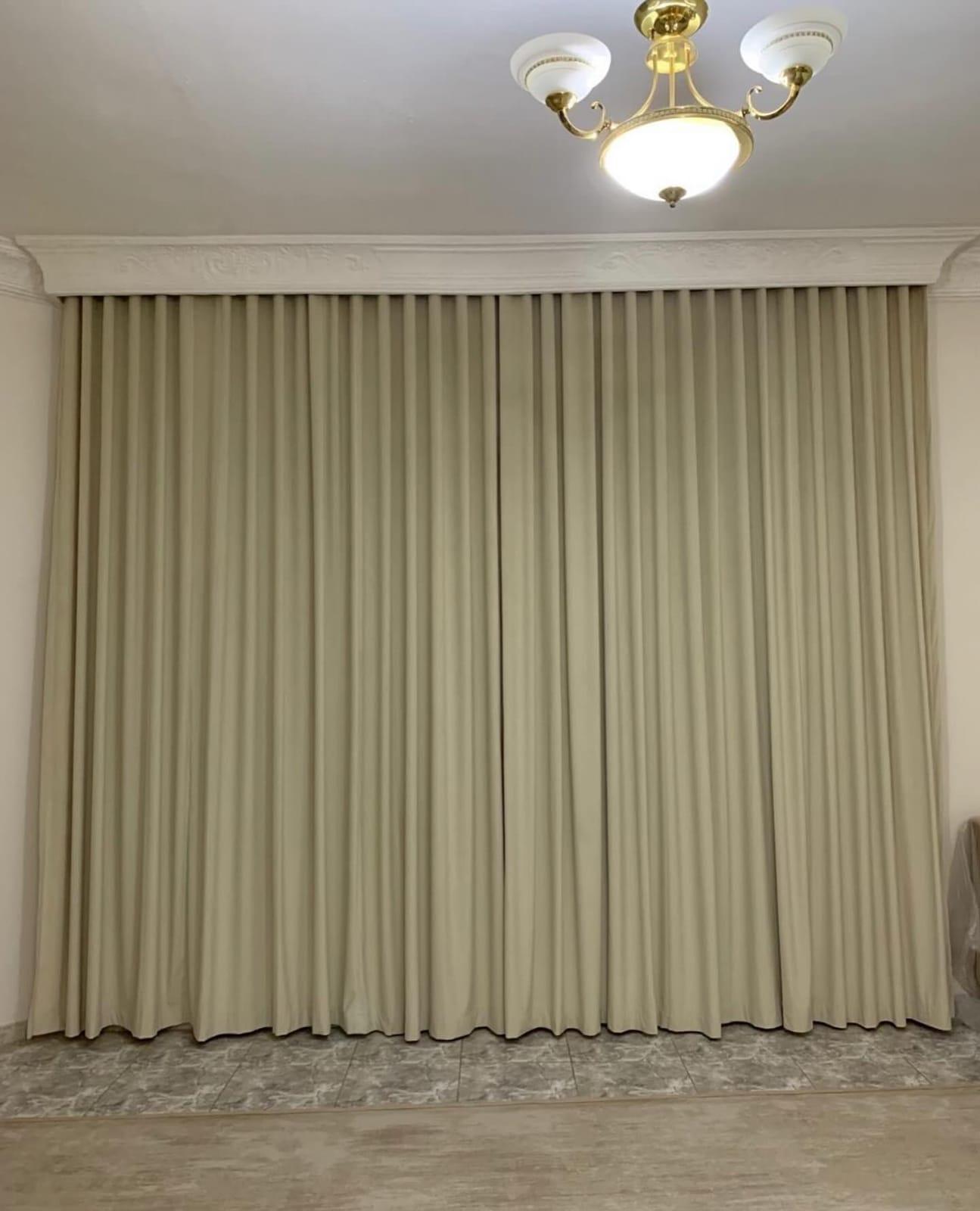
Pale sage curtains drawn across an entire wall, tucked up behind a moulded plaster cornice so no track shows.
Curtains & Blinds
Blackout Curtains for Bedrooms
Bedroom · Blackout Fabric · Made to Measure
From AED 550
per window · entry specification
Standard curtain orders are made and installed in 3–5 working days after selection and measurement; 48-hour rush orders are available. Larger home projects can take around 15–25 days depending on scope, materials and site readiness. Your quotation confirms the programme.
Starting prices reflect entry specifications and standard materials. Final quotation is provided after on-site laser measurement, fabric/wood selection and design confirmation. Excludes complex structural alterations or specialised electrical MEP unless itemised.
Estimate your budget
An indicative starting figure from our published entry rate — not a quotation.
Quick start
Typical window size in metres (optional — helps us prepare)
Indicative, from
AED 1,650
3 windows × AED 550 per window, entry specification.
What moves the real number: Very tall or wide windows, premium fabrics, blackout-plus-sheer double layers and motorised tracks all raise the figure.
Starting prices reflect entry specifications and standard materials. Final quotation is provided after on-site laser measurement, fabric/wood selection and design confirmation. Excludes complex structural alterations or specialised electrical MEP unless itemised.
About blackout curtains for bedrooms
A blackout curtain is made to stop light passing through the fabric, so a bedroom stays dark after sunrise, through a summer afternoon nap, or for someone who sleeps during the day. The fabric is only half the job: how far the curtain reaches past the window, how the panels meet in the middle and what happens at the top decide whether the room really goes dark.
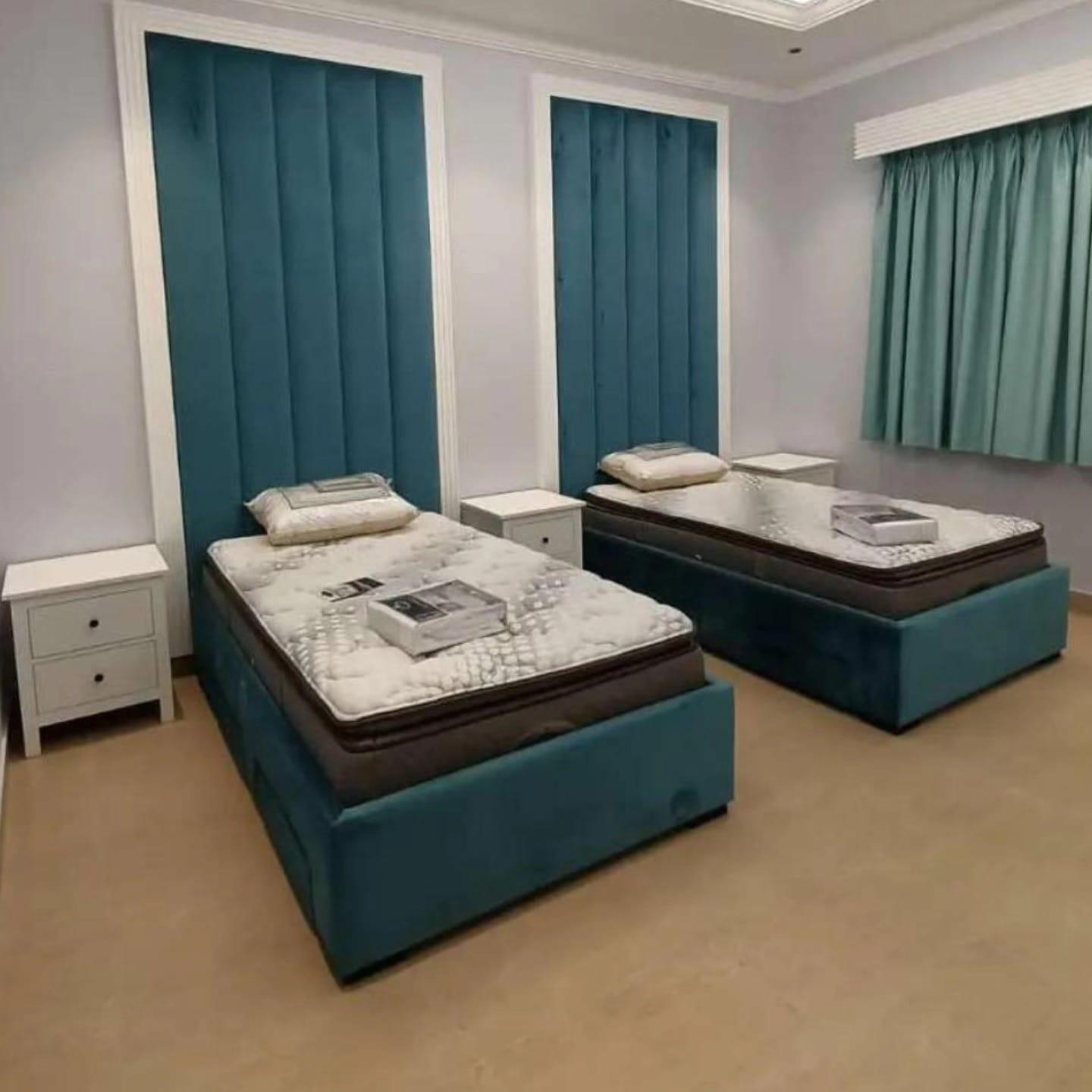
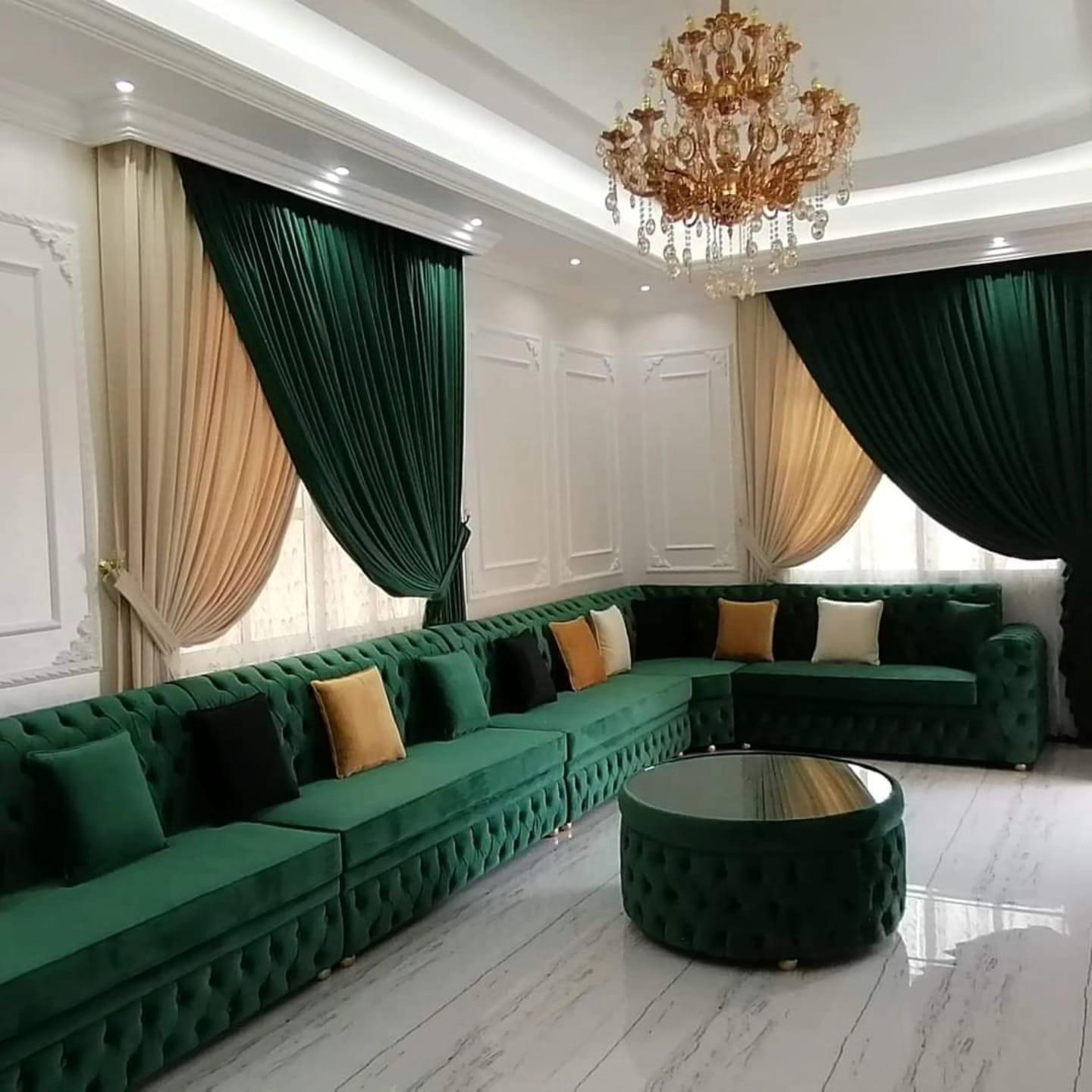
We sew blackout curtains to the measured window at our Sharjah workshop, choosing the lining or blackout cloth for how dark the room needs to be, and hang them so the curtain covers the glass properly. These photos illustrate the wall-to-wall coverage that matters; the fabric itself is chosen with samples held at your own window.
Settle these first
Worth thinking about before we meet.
How dark, really
Agree whether the aim is full darkness for day sleep or simply a dim room, because that changes both the fabric and the fitting.
Coverage past the glass
Let the curtain run well beyond the frame at each side and start above it, so light cannot creep around the edges.
Face colour
A pale face fabric can still be blackout if the lining is right, so judge samples against bright daylight, not by their colour.
In more depth
Blackout, dim-out and lined fabrics
For light, curtain fabrics fall into three broad groups. A sheer lets most of it through. A dim-out fabric cuts a good deal of it and leaves the room in soft half-light. A blackout fabric or lining is built to stop light passing through the material itself. The word blackout is used loosely in many shops, so ask what each sample is and hold it up to a bright window or a phone torch: a genuine blackout layer shows no glow through the cloth.
There are two routes to a blackout curtain. Some face fabrics are woven or backed with a blackout layer built in. Others are ordinary decorative fabrics with a separate blackout lining stitched behind them, which lets you choose almost any colour or texture for the room side. A lined curtain also hangs with more body, and the lining protects the decorative cloth from harsh sunlight on the glass.
Where light still gets in
Even a perfect blackout fabric leaves light in if the curtain does not cover the opening. The usual culprits are the top, where light spills between the track and the ceiling or wall; the sides, where the curtain stops close to the frame; the centre, where two panels meet without overlapping; and the bottom, where the hem stops short of the sill or floor.
For more on each of these paths, see our guide to light gaps around blackout curtains.
- Top: hang from the ceiling, a recess or under a pelmet, so the curtain begins above the light.
- Sides: extend the track past the frame, or add returns that bring the curtain back to the wall.
- Centre: ask for an overlap where the panels meet, or one panel that closes across the full width.
- Bottom: take the curtain to the floor rather than stopping it at the sill.
Who needs a properly dark room
Shift workers and anyone who sleeps by day gain the most from blackout curtains, since they are trying to rest while the sun is at its strongest. Children's rooms come next, where a darker room helps with daytime naps and early summer sunrises. Home cinemas and media rooms benefit for a different reason: daylight falling on a screen washes the picture out.
For a guest room or a bedroom used only at night, a dim-out fabric or a lighter blackout may be plenty, and it keeps the room from feeling heavy when the curtains are open. Being clear about how the room is used avoids paying for a darkness you do not need, or ending up with a bedroom that is not dark enough.
Choosing colour and fabric
Blackout comes from the layer behind, not the colour in front. A pale cream curtain with a good blackout lining can darken a room as well as a charcoal one, and it keeps the bedroom light and airy when open. The difference shows in the details: a very light face fabric may reveal the line of a lining hem or seam with strong sun behind it, so look at samples against a bright window before deciding.
Texture matters as well. Velvet-look and heavier woven fabrics fall in deep folds that make a bedroom feel calm; smoother fabrics look crisper and suit a modern room. Ask for the care instructions of the exact article too, because blackout-backed fabrics and lined curtains often cannot be washed at home the way a simple sheer can.
Fitting a curtain for darkness
The way the curtain is installed counts as much as the cloth itself. A ceiling-mounted track or a recess in the false ceiling shuts the gap at the top, which is where a lot of stray light comes from. Running the track past the frame on both sides means the closed curtain overlaps the wall, and returns at each end bring the fabric round to the wall so light cannot slip past.
Where a deep sill or a piece of furniture stops the curtain short of the floor, some light will show at the bottom. In that case a roller blind with a blackout fabric inside the recess, with the curtain in front, gives two layers of cover. These are decisions we make together at the measuring visit, looking at the actual window rather than a drawing.
Blackout in a media room
In a room used for films or gaming, the goal is less about sleep and more about the screen. Daylight reflecting off a television or falling on a projector screen lifts the black levels and washes out colour, so even a little light around the edges of the curtain can be distracting. Full coverage matters most on the wall facing the screen and on any window that throws light directly onto it.
Darker face fabrics help here, because a pale curtain lit by the screen itself can glow faintly in a dark room. A curtain that closes completely and evenly, on a smooth or motorised track, is easier to use during a film than one that has to be tugged into place by hand.
Pairing blackout with a sheer
A blackout curtain on its own leaves a choice between darkness and full daylight. Adding a sheer behind it on a second track gives a third setting: the sheer closed for privacy during the day while the room stays bright, and the blackout drawn at night. In bedrooms that face a street or a neighbouring building, this is often the most useful arrangement.
Both layers are made to the same drop, hung together and opened independently. Our double curtains page shows that pairing, and sheer and voile curtains covers the daytime layer by itself.
Heat and the afternoon sun
Closed curtains cut the sunlight reaching the room, and many blackout linings also hold back some of the warmth coming off sunlit glass, which can make a west-facing bedroom more comfortable in the afternoon. How much difference they make depends on the lining, the window and how completely the curtain covers the glass, so treat thermal performance as a separate specification rather than assuming every blackout fabric does the same.
If keeping heat out matters to you, say so at the visit. The lining can be chosen with that in mind, and the curtain planned so it closes right across the glass during the hottest hours.
Price, timing and care
Blackout curtains follow our curtain pricing, which starts at AED 550 a window at entry level, track and fitting included. A blackout lining or fabric, a full-height drop, a sheer behind or a motorised track each add to that, and the measured quotation lists every item separately.
A standard set is made up and installed within 3–5 working days of the measurements and your fabric decision, or within 48 hours on a rush order. Follow the care label of the exact fabric: many lined and blackout curtains need specialist cleaning rather than the washing machine. See curtains and blinds or curtains in Sharjah for the wider range.
The specification
Curtains & Blinds
Sheer, dim-out and blackout fabrics, with lining selected for the required performance
Somfy and suitable Tuya-enabled motorisation — controls, app and hub specified for the selected model
Wave pleat, pinch pleat, American fold and eyelet headings
UAE and international fabric collections, with care and performance specified by article
Laser measurement and dust-free, clean installation
Suits
- Luxury villas
- High-rise apartments
- Penthouses
- Executive offices
- Hotels
24-month written workmanship warranty; supplied products follow their applicable written terms.
At a glance
- Room
- Bedroom
- Material
- Blackout Fabric
- Type of work
- Made to Measure
- Property type
- Apartment
- Availability
- 3–5 working days · 48h rush
How it is made and installed
A free consultation at your home with physical samples, laser measurement, clear drawings and an itemised quotation. Once you approve, it is made in our Sharjah workshop and installed by our own team. Priced per window after laser measurement. Fabric grade, lining, window height and manual versus motorised track move the final figure.
Standard curtain orders are made and installed in 3–5 working days after selection and measurement; 48-hour rush orders are available. Larger home projects can take around 15–25 days depending on scope, materials and site readiness. Your quotation confirms the programme.
Common questions
Type a word and the answers narrow as you go.
5 of 5 answers
Do blackout curtains make a room completely dark?
The fabric can stop light passing through it, but whether the room goes fully dark depends on coverage at the top, sides, centre and bottom. Hanging from the ceiling, running past the frame and overlapping in the middle make the biggest difference.
Can a light-coloured curtain be blackout?
Yes. The darkness comes from the blackout layer rather than the colour of the face fabric. A pale fabric with a blackout lining keeps the room bright when open and dark when closed. Check samples against strong light, since some very light fabrics show seams or the lining edge.
Is blackout the same as thermal?
No. Blackout describes light, while thermal describes heat. Some linings help with both, but they are separate specifications, so ask what the chosen lining is designed to do.
Is a blackout lining better than a blackout fabric?
A separate lining lets you choose almost any decorative fabric for the room side and gives the curtain more body. A fabric with blackout built in is a single layer and can be lighter. Both work well; the choice usually comes down to the look you want.
How quickly can blackout curtains be made?
Normally 3–5 working days from measurement and choosing the fabric; when time is tight, a 48-hour rush can be arranged.

More like blackout curtains for bedrooms
Curtains · Bedroom
Blackout & Sheer Double Curtains
Curtains · Living Room
Motorised Curtain Tracks
Curtains · Living Room
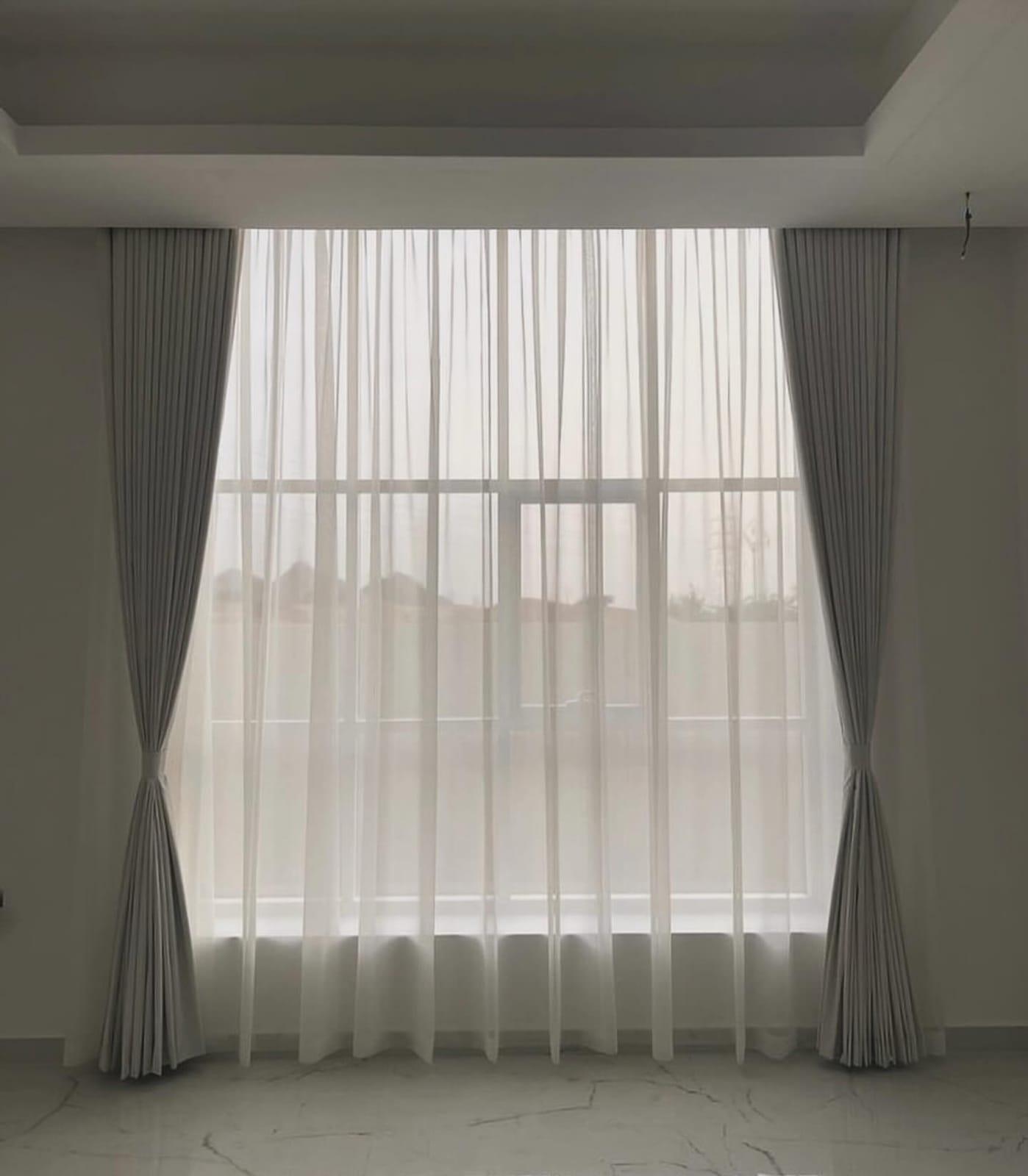
Floor-to-Ceiling Curtains
Curtains · Living Room
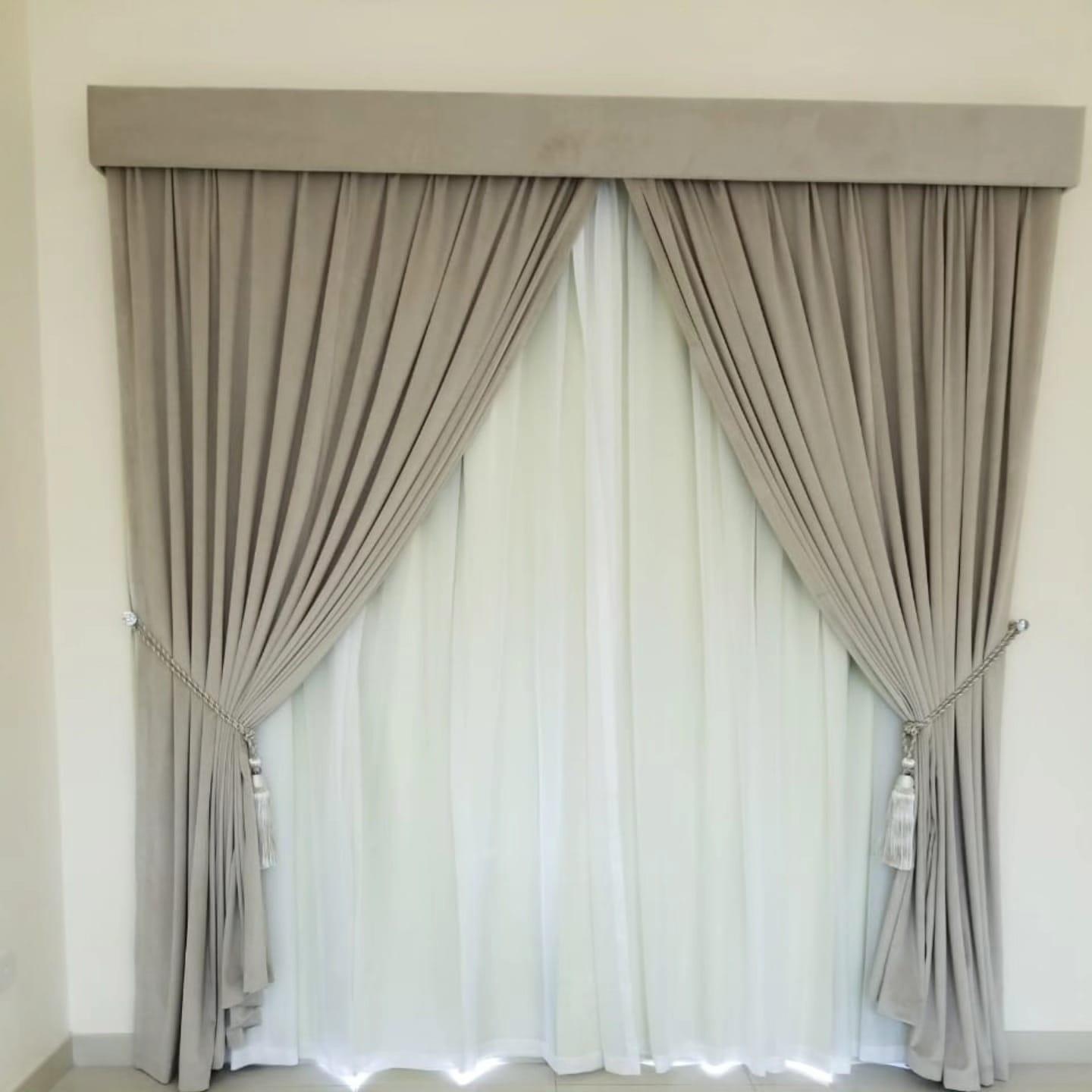
Sheer & Voile Curtains
Wardrobes · Bedroom
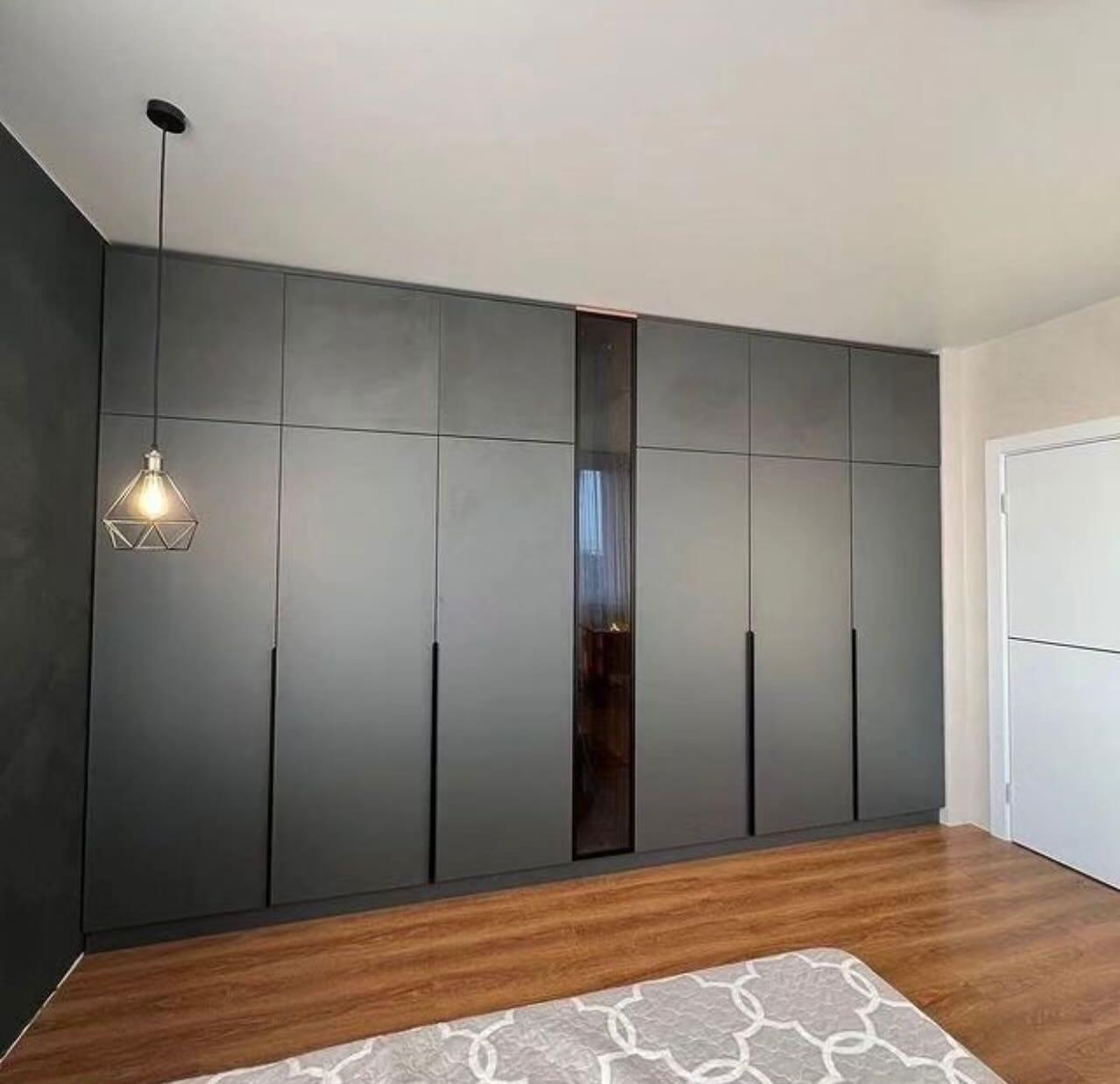
Built-In Wardrobe Doors: Handleless, Shaker & Profile Styles
Wardrobes · Bedroom
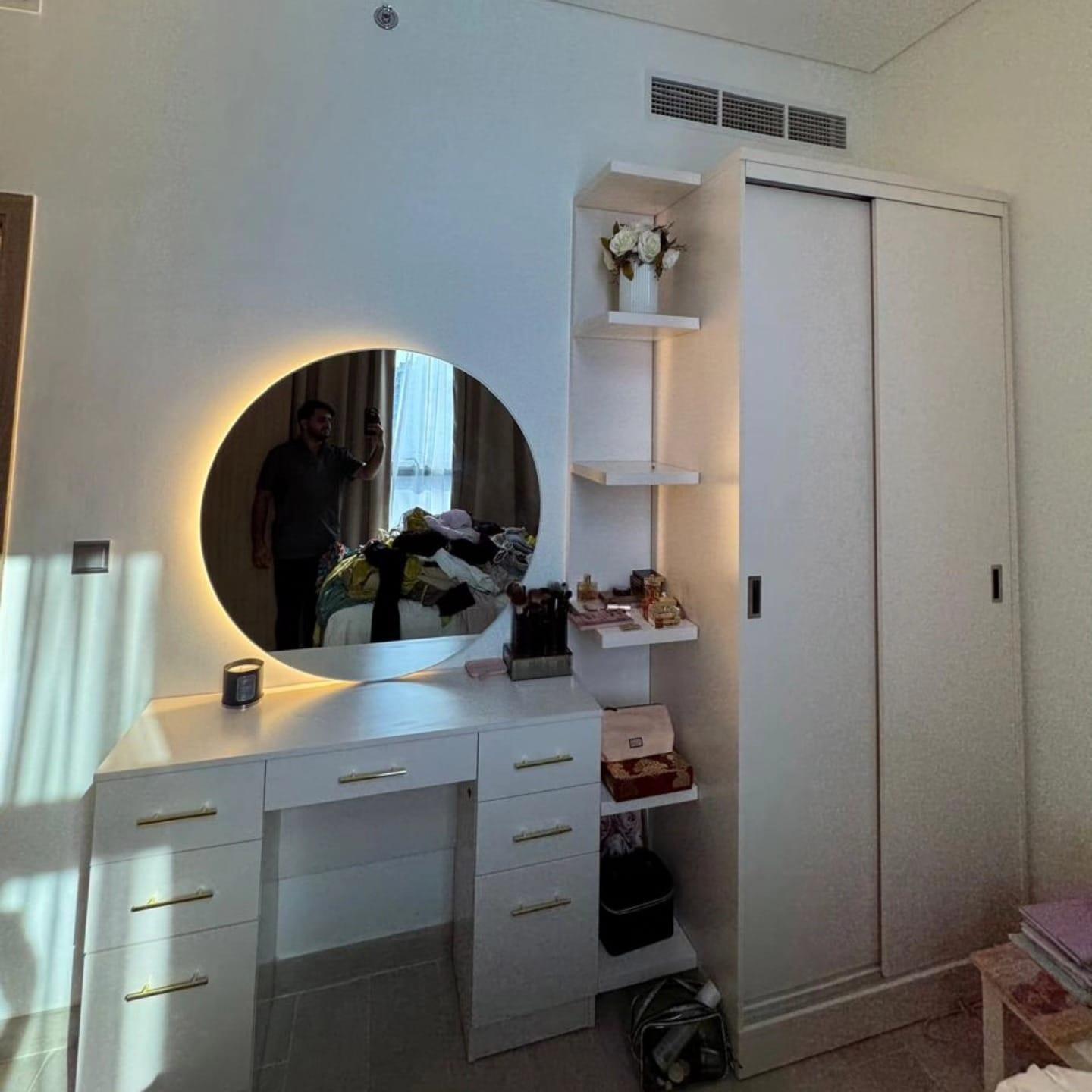
Sliding Wardrobes: Mirror, Tinted Glass & Laminate Doors
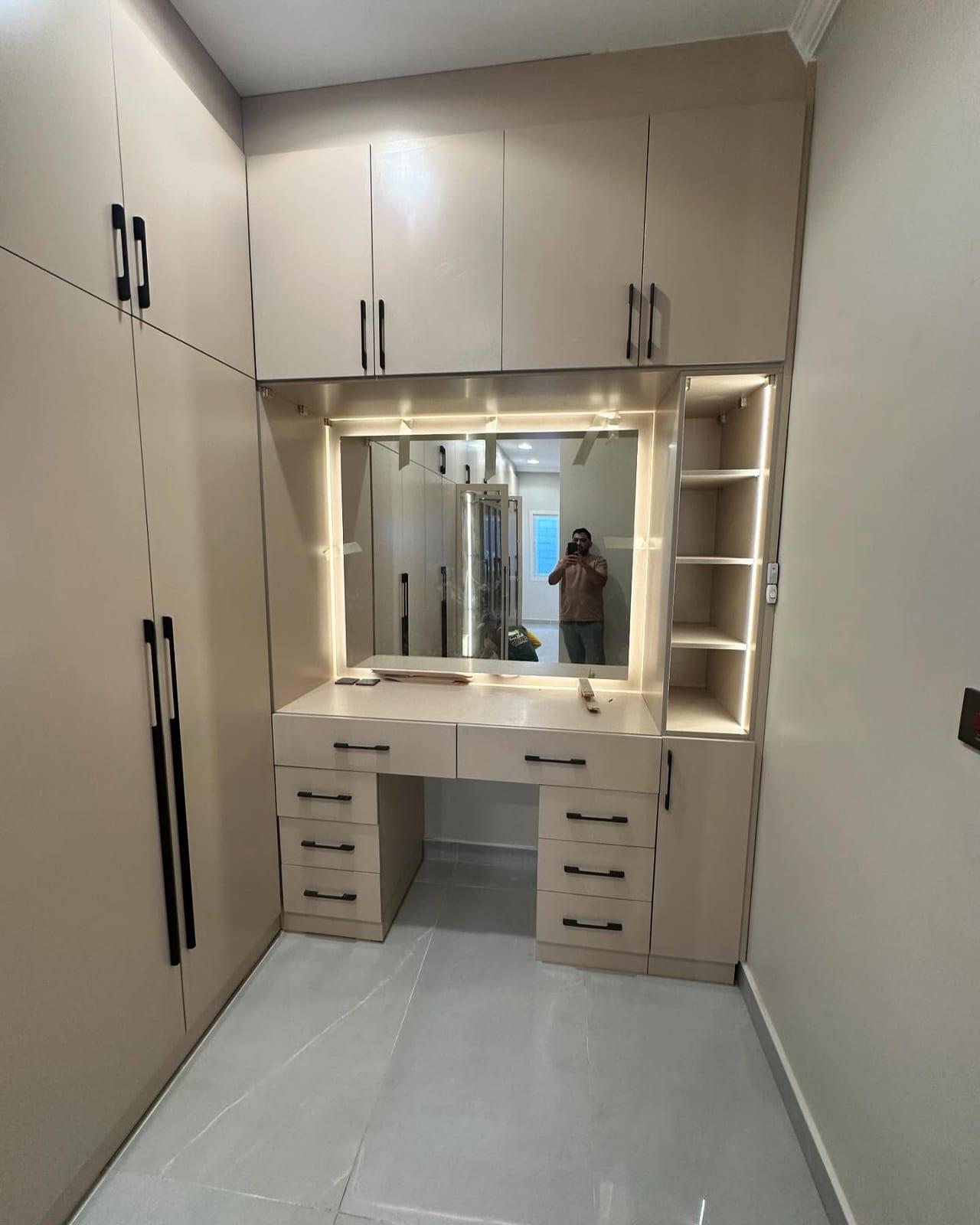
Wardrobes · Bedroom
Integrated Dressing Tables in Wardrobes
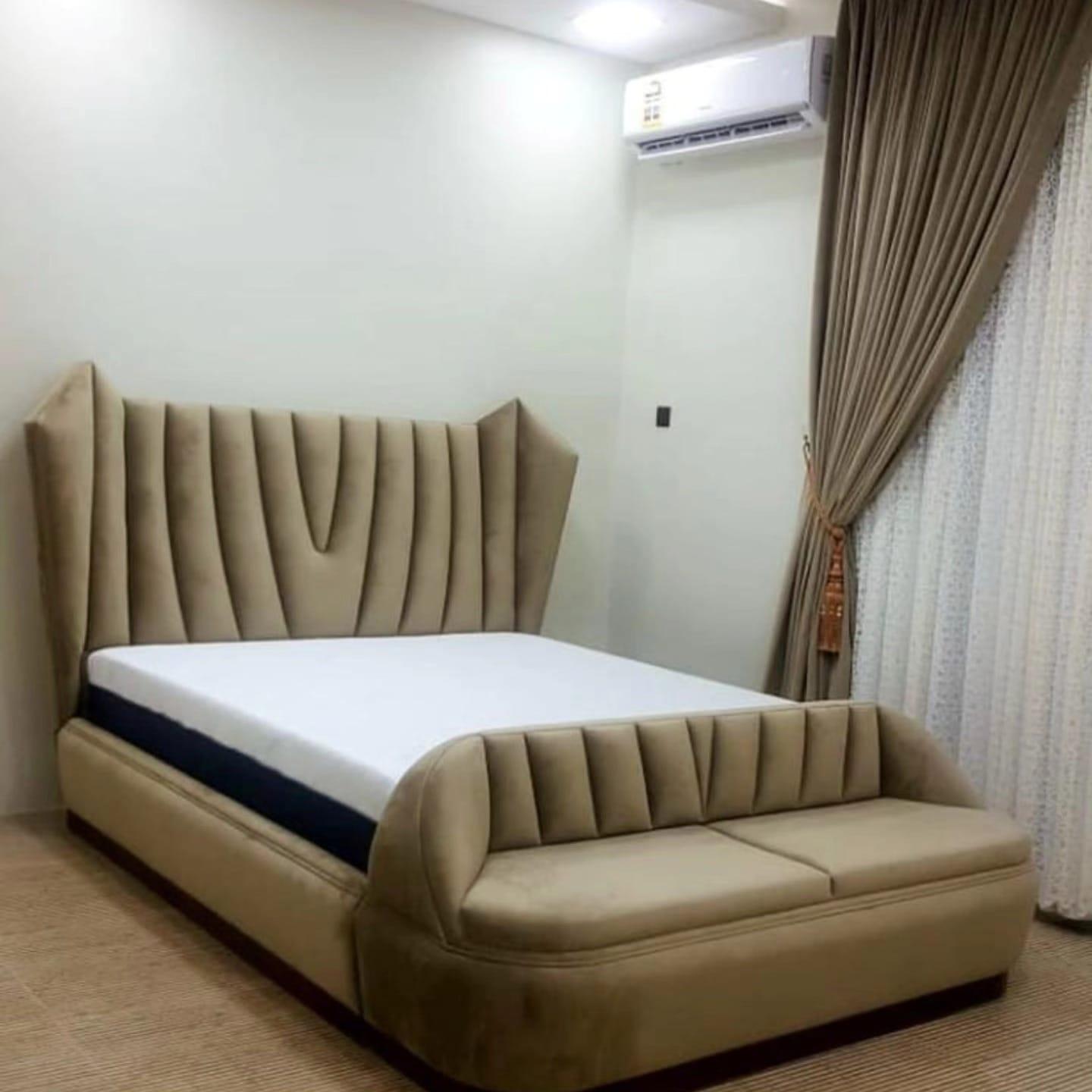
Upholstery · Bedroom
Upholstered Beds & Headboards
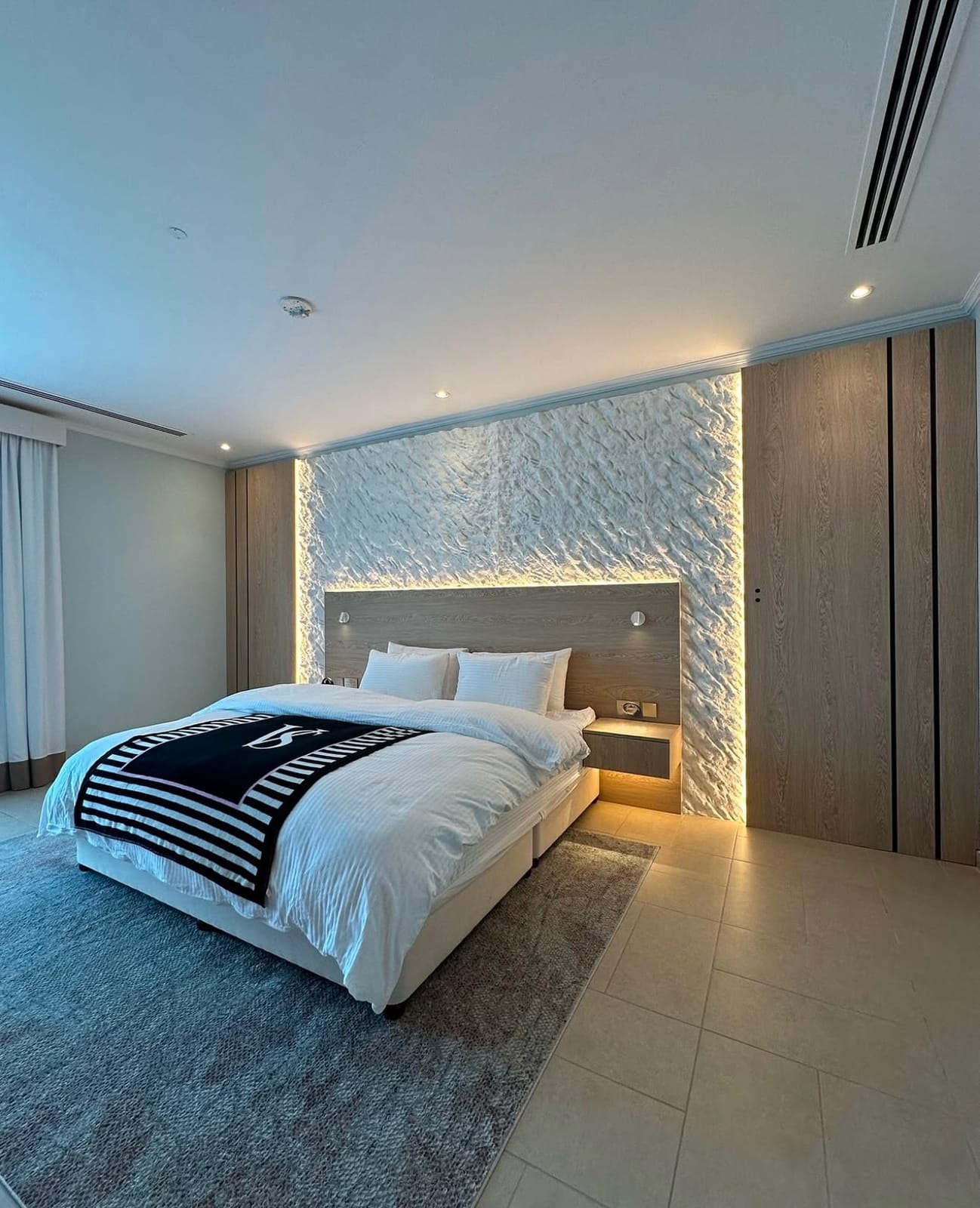
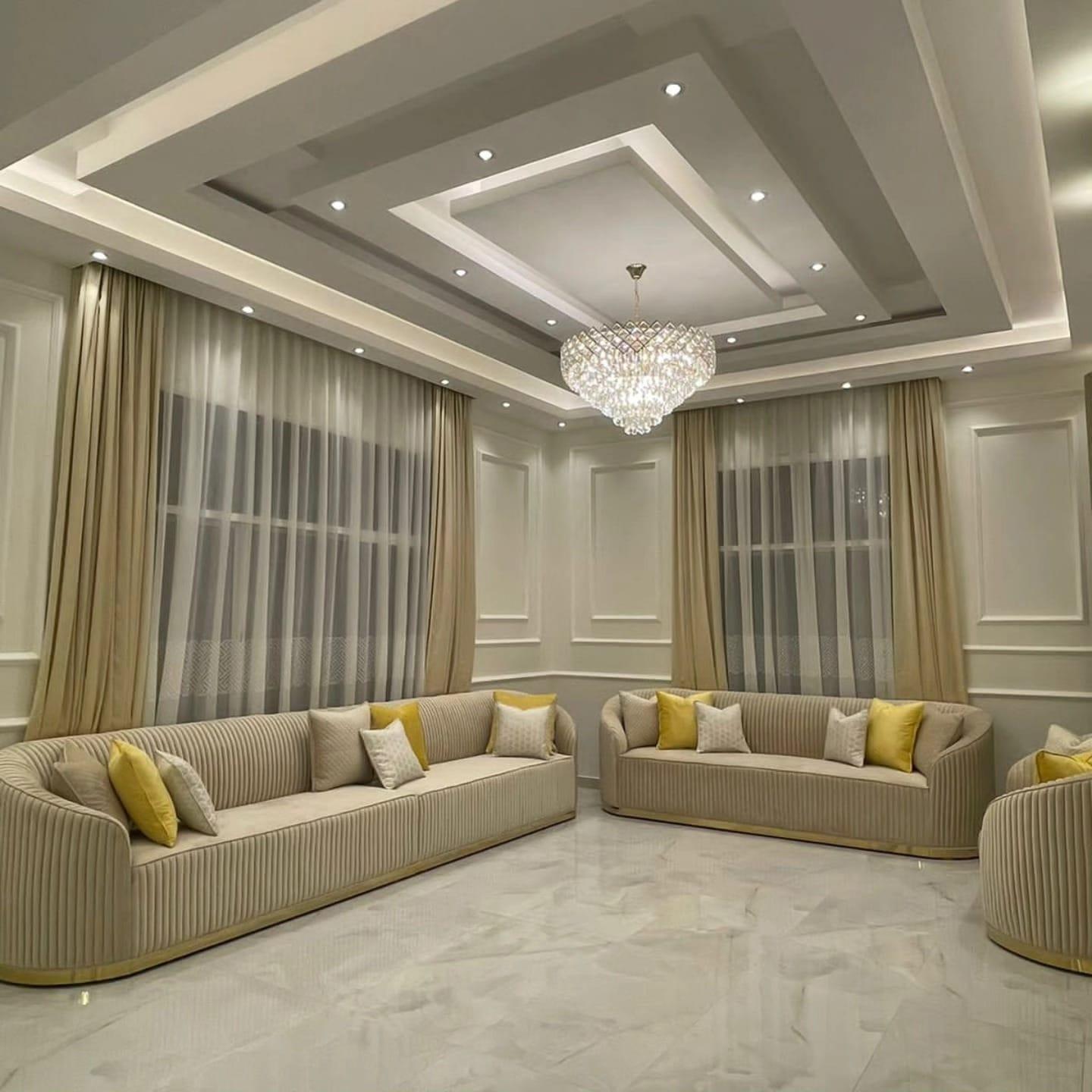
Plan the details first
- GuideBlackout or sheer curtains: which does each room need?
- GuideBlackout curtains letting light in? Where it leaks and how to stop it
- GuideCurtain prices in the UAE: what one window really costs
- GuideWave, pinch pleat or eyelet curtains: picking the right heading
- GuideMotorised curtains in the UAE: motors, power, remotes and smart control
- GuideSheer and blackout curtains together: planning a double track
- GuideRoller blinds or curtains: which is better for each room?
- GuideHow to measure for curtains: width, length, track height and stack-back
- GuideThermal curtains in the UAE: what keeps the heat out, and what does not
- GuideHow to clean curtains and blinds: sheers, blackout, Roman and roller blinds
- GuideCurtains and blinds for sliding and balcony doors
- GuideCurtain pockets in gypsum ceilings: sizing, motors and fixing
- GuideMajlis curtains: layers, fabrics, tiebacks and pelmets
- GuideChoosing a curtain maker or curtain shop in Sharjah: a buyer's checklist
- GuideRoman blinds in the UAE: folds, fabric, fitting and safety
- GuideZebra, vertical and wooden blinds: which suits which window?
- GuideChoosing curtain colours: sofa, walls and UAE sunlight
- GuideCurtain repair, re-hanging and fixing in the UAE: fix it or replace it?
- GuideCurtain rod, track or rail: which one suits your home?
- GuideDo soundproof curtains work? What curtains can and cannot do about noise
- GuideOffice curtains and blinds in the UAE: how to choose for glare, privacy and upkeep
- GuideCurtain fabrics for UAE homes: linen, velvet, polyester, cotton and blends
- Planning toolMeasuring Your Windows
- Planning toolCare & Maintenance
- GuidePlanning a whole-home budget
- GuideChoosing materials by specification
- GuideWarranty & aftercare
Free on-site visit
We bring the samples
Choose fabric and finishes in your own light, next to your own walls, then we laser-measure and send a drawing and an itemised quote.