
1 / 3
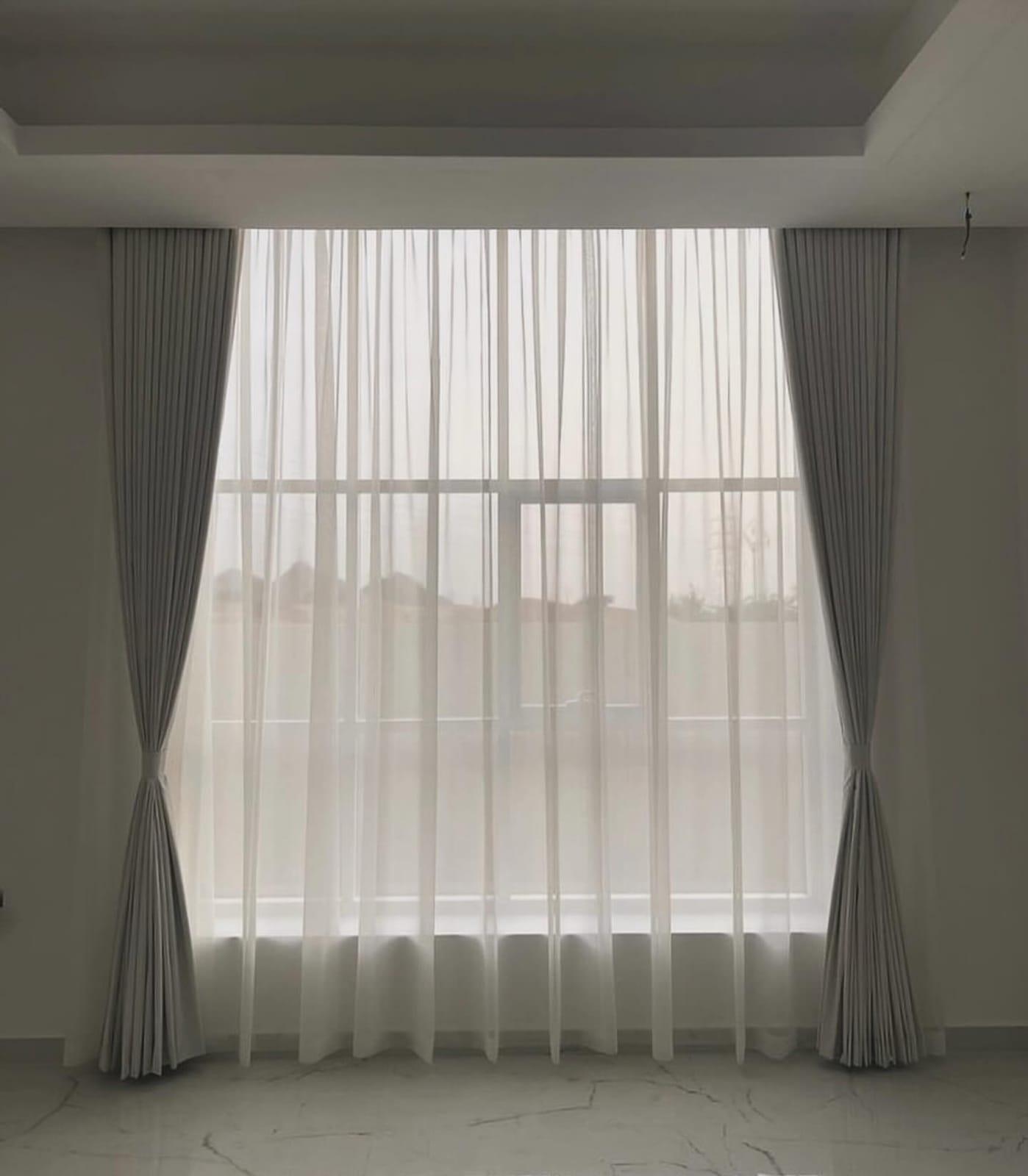
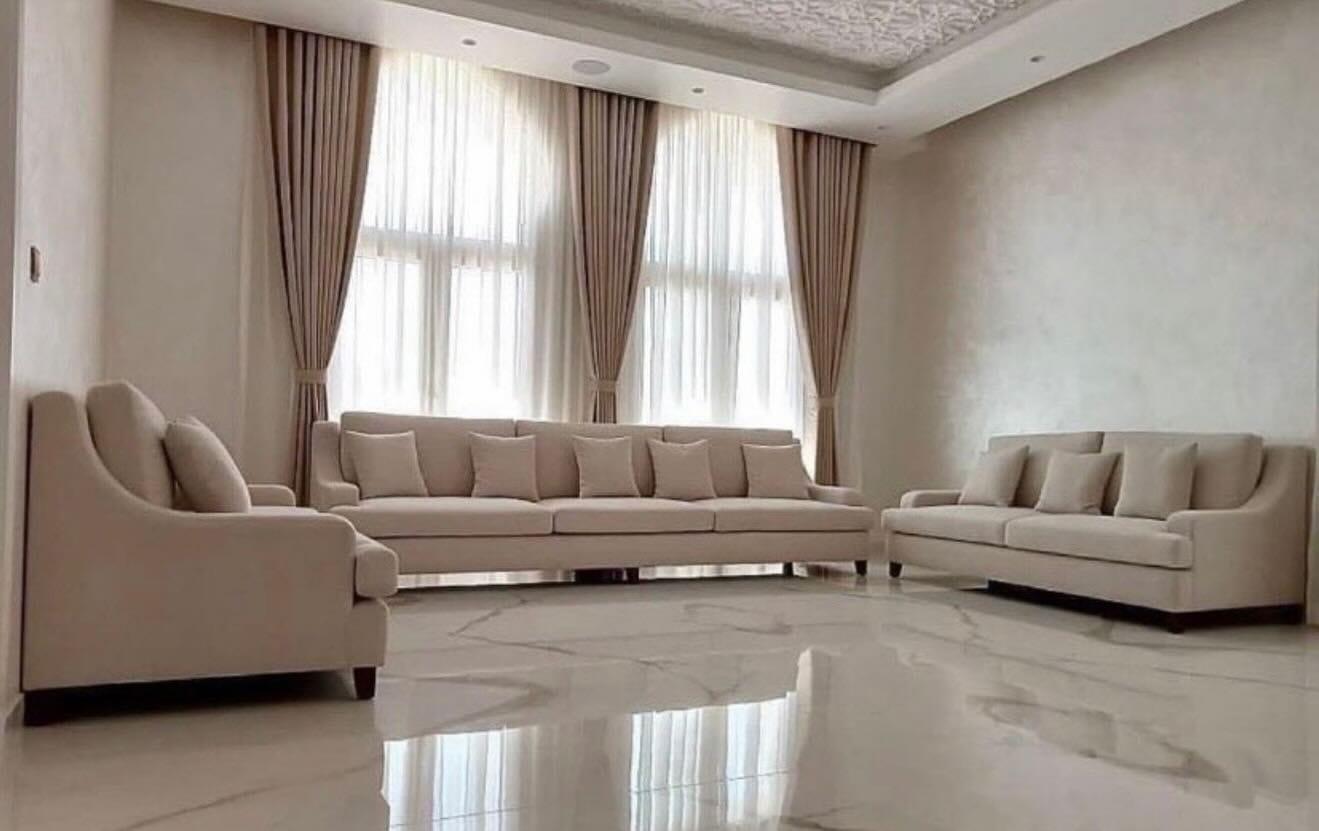
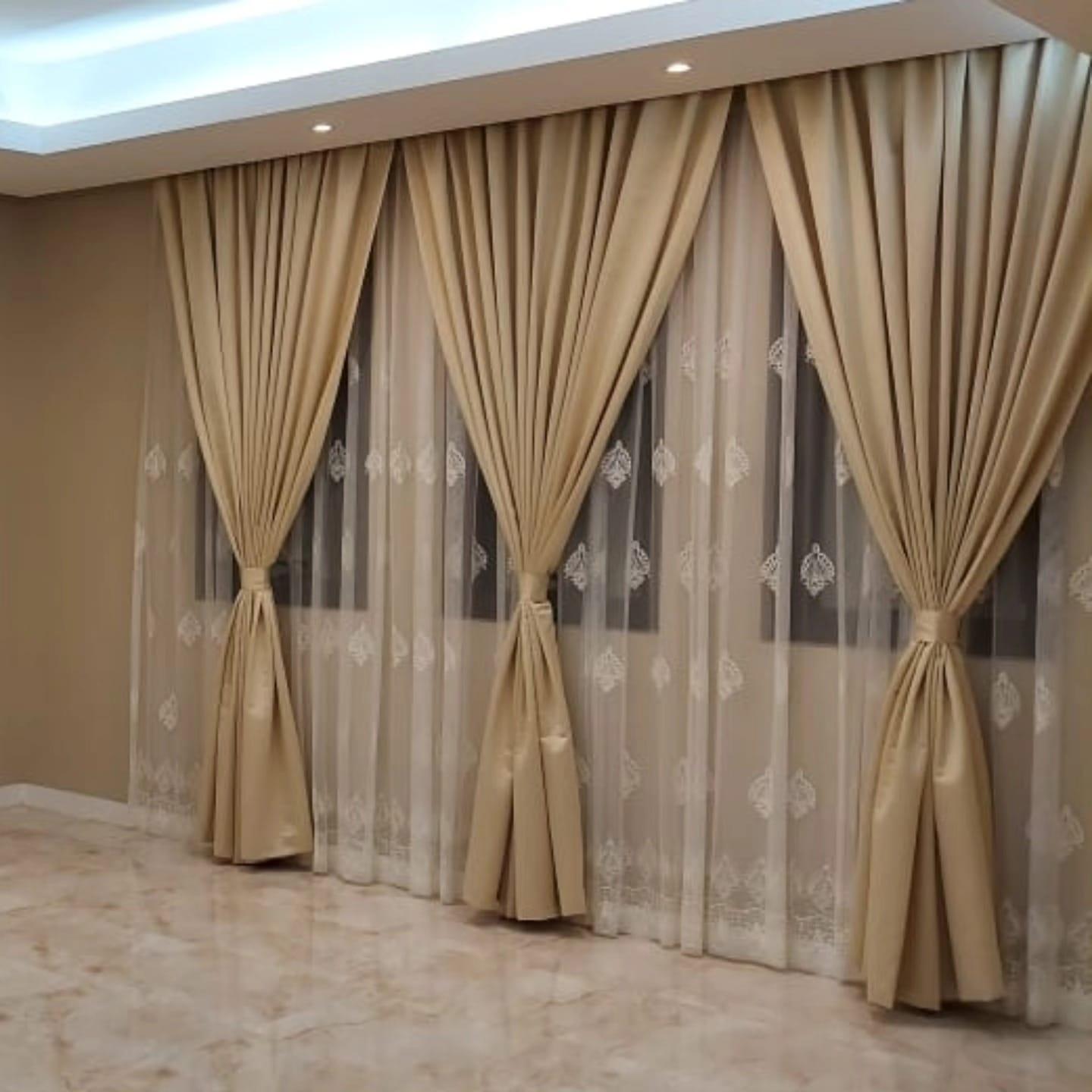
Full-height grey drapes either side of a tall window, with a white sheer drawn across the glass, hung from the ceiling line.
Curtains & Blinds
Floor-to-Ceiling Curtains
Living Room · Fabric · Made to Measure
From AED 550
per window · entry specification
Standard curtain orders are made and installed in 3–5 working days after selection and measurement; 48-hour rush orders are available. Larger home projects can take around 15–25 days depending on scope, materials and site readiness. Your quotation confirms the programme.
Starting prices reflect entry specifications and standard materials. Final quotation is provided after on-site laser measurement, fabric/wood selection and design confirmation. Excludes complex structural alterations or specialised electrical MEP unless itemised.
Estimate your budget
An indicative starting figure from our published entry rate — not a quotation.
Quick start
Typical window size in metres (optional — helps us prepare)
Indicative, from
AED 1,650
3 windows × AED 550 per window, entry specification.
What moves the real number: Very tall or wide windows, premium fabrics, blackout-plus-sheer double layers and motorised tracks all raise the figure.
Starting prices reflect entry specifications and standard materials. Final quotation is provided after on-site laser measurement, fabric/wood selection and design confirmation. Excludes complex structural alterations or specialised electrical MEP unless itemised.
About floor-to-ceiling curtains
Floor-to-ceiling curtains start at the ceiling line rather than just above the window frame and fall all the way to the floor, so the entire wall becomes one tall, soft plane of fabric. In villas with double-height glass and in apartments with low frames alike, hanging the curtain from the top of the room makes the space look taller and keeps the track out of sight.
Getting that look right depends on details nobody notices once the job is finished: the track's exact position, the way fabric widths are joined across a broad wall, how much fullness the heading needs and precisely where the hem meets the floor. Every set is cut to its own measured drop in our Sharjah workshop, so a standard-height bedroom and a double-height living room are each made to fit.
Settle these first
Worth thinking about before we meet.
Track position
Decide whether the track sits on the ceiling, in a recess or under a cornice, because the drop is measured from that line.
Hem at the floor
Choose a hem that clears the floor, one that just kisses it, or a short puddle, and keep that finish consistent.
Joins on wide walls
Ask where the fabric widths will be joined, so the seams fall inside the folds rather than across the face of a panel.
In more depth
Why hang curtains from the ceiling
A curtain hung just above the frame stops partway up the wall and leaves a strip of bare plaster over it, which makes the window look smaller than it is. Taking the curtain to the ceiling removes that strip. The eye follows the folds from floor to ceiling, the opening seems taller and wider, and the track disappears into the ceiling line instead of sitting on the wall as a visible bar.
The effect is strongest in rooms with tall glazing, such as a villa sitting room or a majlis, but it also helps in apartments where the frame sits well below the ceiling. In a bedroom there is a practical gain as well: a curtain that starts at the ceiling closes off the gap above the window, one of the main routes for morning light to reach the room.
Ceiling track, recess or cornice
There are three common ways to start a full-height curtain. A track screwed directly to the ceiling is the simplest and suits most rooms. A recess, or curtain pocket, built into a gypsum false ceiling hides the track completely, so the fabric seems to emerge from the ceiling itself. A plaster cornice or pelmet running along the wall in front of the track does a similar job where there is no false ceiling.
Each has its own needs. A ceiling track has to be fixed into something able to carry a long, heavy curtain, which matters when the ceiling is gypsum board rather than concrete. A recess must be deep enough for the track, or for two tracks when there is a sheer as well, and wide enough for the folds to move freely. If a false ceiling is being planned, draw the curtain recess into it from the start; our gypsum ceiling team builds it around the track.
Measuring a full-height drop
The finished drop runs from the underside of the track, or the top of the recess, down to the floor, and it is checked at several points along the wall. Floors and ceilings are rarely perfectly level, and across a wide wall a difference of a centimetre or two shows as a hem that touches the floor at one end and hovers above it at the other. A laser measure makes it quick to compare the height at each end and in the middle.
Floor finishes count too. If new tiles, parquet or a thick rug are still to come, the drop should be taken to the finished floor level rather than the bare screed. Tell us at the visit what the floor will be, and if the room is still being fitted out, it is often wiser to measure once the floor is down.
How the hem meets the floor
Which finish suits depends on the room and the fabric. Heavy velvets and lined fabrics hold a crisp line at the floor well; light fabrics and sheers usually look better with a small clearance, because they move in the draught from an AC vent. Whatever you pick, keep it consistent from one window to the next.
- Clearing the floor by a small gap: tidy, easy to clean beneath, and a good choice where a robot vacuum runs every day.
- Just touching the floor: the classic tailored look, though it needs a precise, level measurement to sit evenly.
- A short puddle: a few centimetres resting on the floor, softer and more formal, but it collects dust and needs straightening after the curtain moves.
Fabric widths, joins and fullness
A curtain for a long wall is usually wider than one width of fabric, so several widths are sewn together. On a plain fabric the joins can be placed so they sit at the back of a fold and almost vanish. On a patterned fabric the design has to be matched across each join, which uses extra fabric and should be allowed for in the quantity.
Fullness describes how much wider the flat fabric is than the track it hangs from. More fullness gives deeper, richer folds; less gives a flatter, more modern face and uses less fabric. The heading sets a sensible range: wave headings need a particular fullness to form even folds, while pinch pleats can be made fuller or flatter. Your quotation should name the heading and the fabric quantity, so that two quotes for the same wall can be compared fairly.
Weight, stack-back and opening
A full-height curtain in a heavy fabric is a lot of material, and the track and fixings are chosen for that load. The same goes for where the fabric sits when the curtain is open. The folded stack has to go somewhere: beside the glass on a stretch of wall, or across part of the window where there is no room. On a long wall, splitting the curtain into panels that open to different points keeps more glass clear.
Think about daily use as well. A tall curtain that is drawn every morning and evening is easier to live with on a smooth track with good carriers, or on a motorised track, than on a pole with rings. Our page on motorised curtain tracks covers that option.
Two layers on a tall window
Most full-height windows in UAE homes are dressed in two layers: a sheer that filters daylight, with a weightier curtain ahead of it for privacy after dark. Hung from the ceiling, both run the full height, on a double track or two tracks side by side. Because the sheer stays closed for much of the day, pick one that looks good drawn across the glass, not only gathered at the sides.
In a bedroom, the room-side curtain is often a blackout or dim-out cloth. Our pages on sheer and voile curtains and blackout curtains for bedrooms look at each layer in detail, and double curtains shows how the two work together.
Planning the whole wall at once
Full-height curtains are rarely planned one window at a time. A living room may have a glass wall, a balcony door and a smaller side window, and if each is treated separately the result is a row of mismatched heights. Running a single ceiling line across the wall, at the same height and in the same fabric, ties the openings together even where the windows themselves differ in size.
Air-conditioning grilles, light fittings in the ceiling and door frames near the corners all affect where the track can go, so they are noted during the survey. Where a door opens close to the curtain, the track can stop short of it or the curtain can be split so the stack never blocks the doorway.
Price and timing
Our window rate starts at AED 550, covering an entry-level fabric and a manual track with fitting. Full-height curtains use more fabric than an ordinary drop, and broad walls, weightier cloth, an added sheer or a powered track all raise that figure, which the measured quotation sets out line by line.
Once we have measured and you have picked the fabric, a standard set is stitched and hung within 3–5 working days, and a 48-hour rush is possible when time is short. Whole-villa projects with many rooms take longer, and the programme is confirmed in your quotation. Our full curtains and blinds range is here, along with curtains in Sharjah.
The specification
Curtains & Blinds
Sheer, dim-out and blackout fabrics, with lining selected for the required performance
Somfy and suitable Tuya-enabled motorisation — controls, app and hub specified for the selected model
Wave pleat, pinch pleat, American fold and eyelet headings
UAE and international fabric collections, with care and performance specified by article
Laser measurement and dust-free, clean installation
Suits
- Luxury villas
- High-rise apartments
- Penthouses
- Executive offices
- Hotels
24-month written workmanship warranty; supplied products follow their applicable written terms.
At a glance
- Room
- Living Room
- Material
- Fabric
- Type of work
- Made to Measure
- Property type
- Villa
- Availability
- 3–5 working days · 48h rush
How it is made and installed
A free consultation at your home with physical samples, laser measurement, clear drawings and an itemised quotation. Once you approve, it is made in our Sharjah workshop and installed by our own team. Priced per window after laser measurement. Fabric grade, lining, window height and manual versus motorised track move the final figure.
Standard curtain orders are made and installed in 3–5 working days after selection and measurement; 48-hour rush orders are available. Larger home projects can take around 15–25 days depending on scope, materials and site readiness. Your quotation confirms the programme.
Common questions
Type a word and the answers narrow as you go.
5 of 5 answers
Do floor-to-ceiling curtains make a room look bigger?
They mostly make it look taller. Starting the curtain at the ceiling removes the band of wall above the window, so the eye reads one continuous height. Running the track past the sides of the window, where there is space, also lets the open curtains sit beside the glass and makes the window look wider.
Can curtains be hung from a gypsum ceiling?
Yes, as long as the fixing suits the ceiling. A long, heavy curtain needs fixings into solid structure or a support built into the false ceiling. We inspect the ceiling when we come to measure, and where a new false ceiling is planned, the track or recess can be designed into it.
Should full-length curtains touch the floor?
That depends on the look and the room. A small gap is practical and easy to clean around, touching the floor looks tailored, and a short puddle looks formal but gathers dust. Choose one finish and keep it throughout the room.
How long do floor-to-ceiling curtains take to make?
Expect 3–5 working days for a standard set, counted from the moment measurements and fabric are settled; rush orders can be turned round in 48 hours. Larger homes with many windows take longer, and your quotation confirms the programme.
Are tall curtains much more expensive?
They use more fabric than a short drop, and a second layer, a heavier fabric or a motorised track adds to the cost. Pricing begins at AED 550 a window for our entry specification, and the measured quotation shows how each window is priced.

More like floor-to-ceiling curtains
Curtains · Living Room
Sheer & Voile Curtains
Curtains · Living Room
Motorised Curtain Tracks
Curtains · Majlis
Majlis Curtains with Tiebacks
Curtains · Living Room
Curtain Installation & Fixing
Media Walls · Living Room
Floor-to-Ceiling Media Walls for Villas & Large Rooms
Media Walls · Living Room
Floating TV Units & Consoles
Media Walls · Living Room
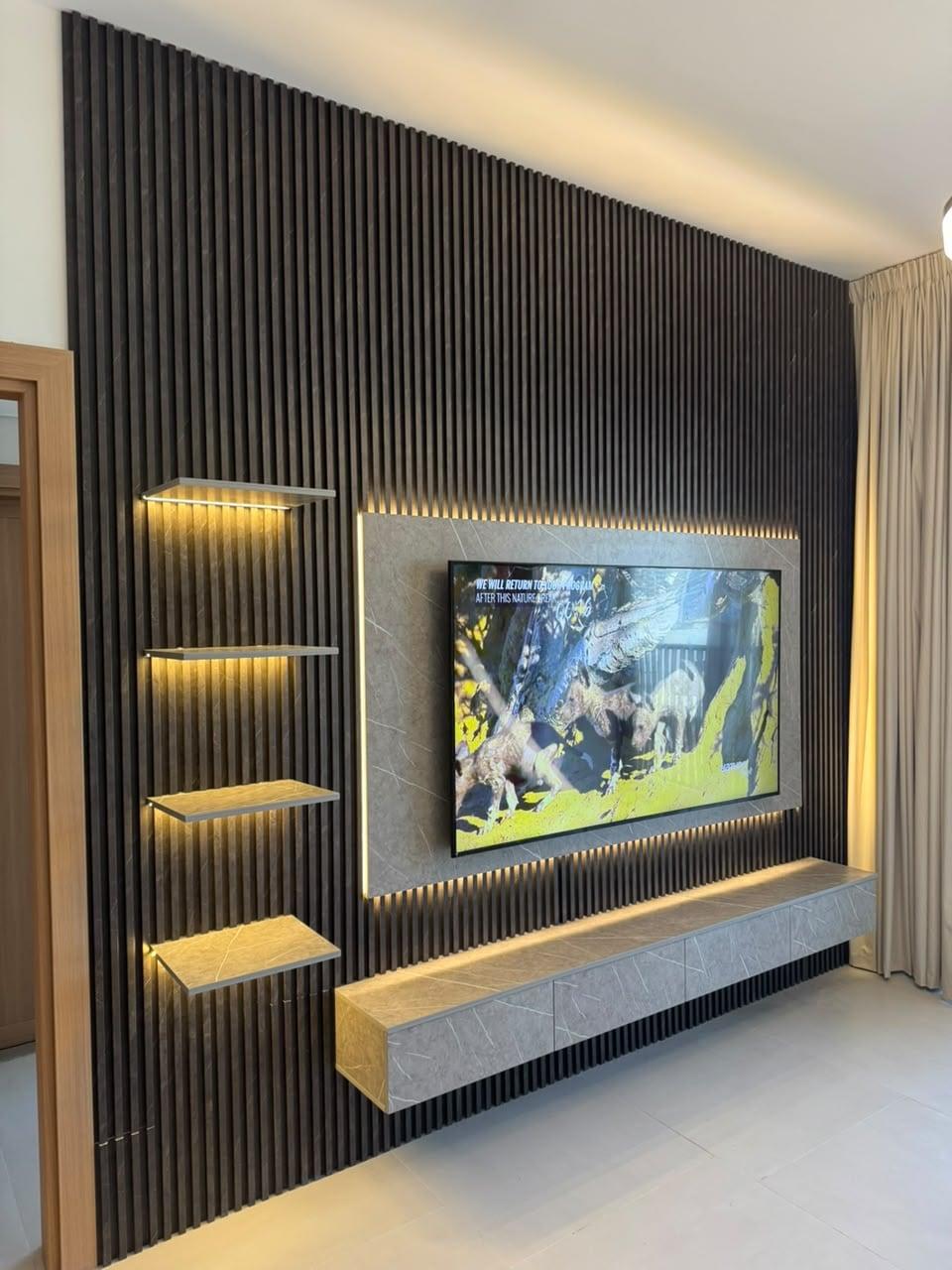
Wood Slat Feature Walls
Media Walls · Living Room
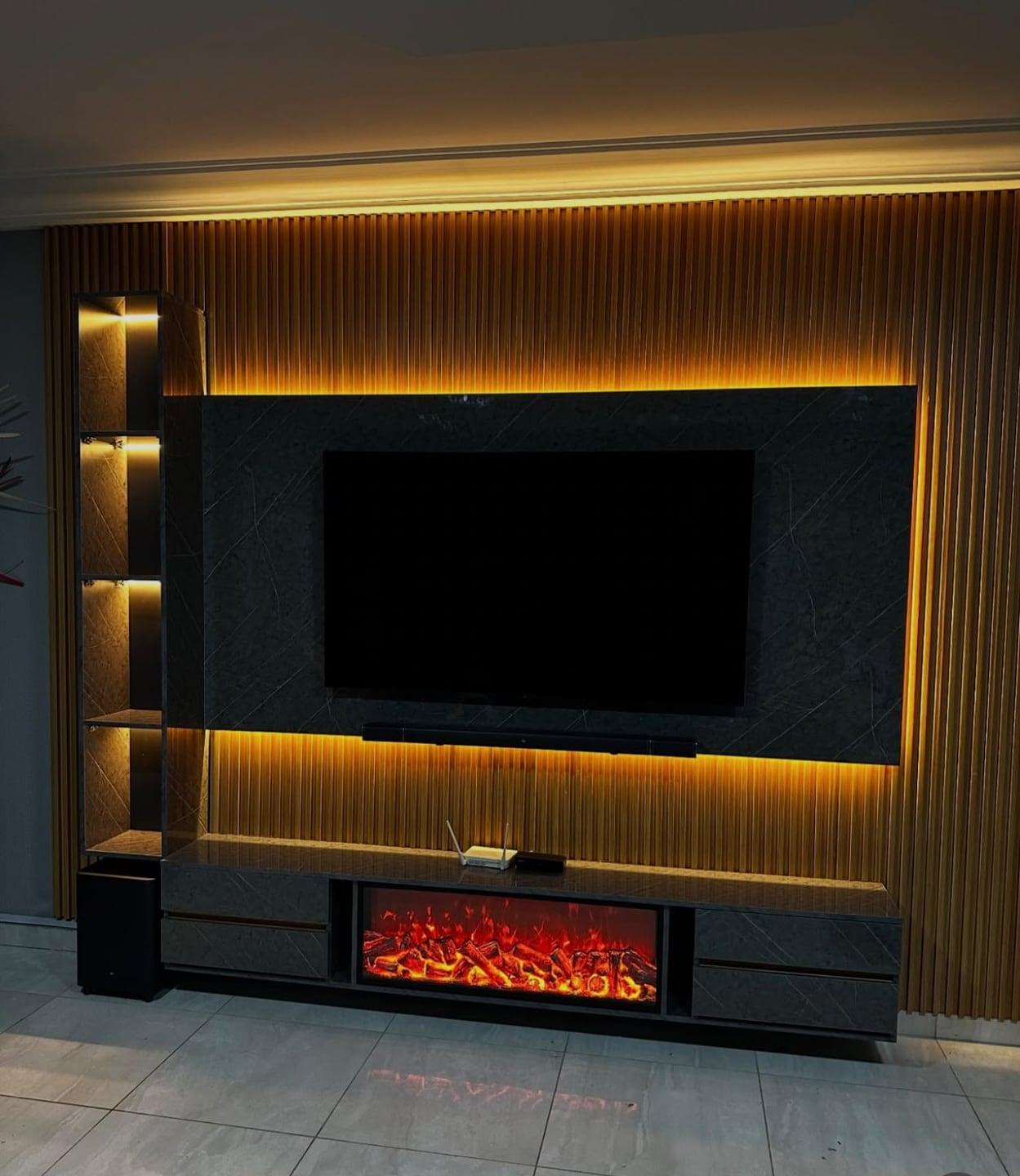
Media Walls with Electric Fireplace

Plan the details first
- GuideBlackout or sheer curtains: which does each room need?
- GuideBlackout curtains letting light in? Where it leaks and how to stop it
- GuideCurtain prices in the UAE: what one window really costs
- GuideWave, pinch pleat or eyelet curtains: picking the right heading
- GuideMotorised curtains in the UAE: motors, power, remotes and smart control
- GuideSheer and blackout curtains together: planning a double track
- GuideRoller blinds or curtains: which is better for each room?
- GuideHow to measure for curtains: width, length, track height and stack-back
- GuideThermal curtains in the UAE: what keeps the heat out, and what does not
- GuideHow to clean curtains and blinds: sheers, blackout, Roman and roller blinds
- GuideCurtains and blinds for sliding and balcony doors
- GuideCurtain pockets in gypsum ceilings: sizing, motors and fixing
- GuideMajlis curtains: layers, fabrics, tiebacks and pelmets
- GuideChoosing a curtain maker or curtain shop in Sharjah: a buyer's checklist
- GuideRoman blinds in the UAE: folds, fabric, fitting and safety
- GuideZebra, vertical and wooden blinds: which suits which window?
- GuideChoosing curtain colours: sofa, walls and UAE sunlight
- GuideCurtain repair, re-hanging and fixing in the UAE: fix it or replace it?
- GuideCurtain rod, track or rail: which one suits your home?
- GuideDo soundproof curtains work? What curtains can and cannot do about noise
- GuideOffice curtains and blinds in the UAE: how to choose for glare, privacy and upkeep
- GuideCurtain fabrics for UAE homes: linen, velvet, polyester, cotton and blends
- Planning toolMeasuring Your Windows
- Planning toolCare & Maintenance
- GuidePlanning a whole-home budget
- GuideChoosing materials by specification
- GuideWarranty & aftercare
Free on-site visit
We bring the samples
Choose fabric and finishes in your own light, next to your own walls, then we laser-measure and send a drawing and an itemised quote.