Curtains · 12 min read · 29 April 2026
Curtains and blinds for sliding and balcony doors
How to dress a sliding or balcony door so it still opens easily: where curtains stack, blinds per panel, handle clearance, length, privacy, wind, sand and cords.

By Ali Haider Basra, Founder, Al Tareeq Decor · Contact our workshop
Key takeaways
- Plan where the fabric goes when the door is open: the doorway and the handle must stay clear.
- On a sliding door, one curtain drawn to the fixed side keeps the walkway clear with wall on one side only.
- Stop door curtains about 1 to 2.5 cm above the floor, so hems stay out of the sliding track and the sand.
- Blinds work best one per glass panel, rolled above the door head, with a reverse roll if the handle sticks out.
- Choose cordless or motorised operation in family rooms, and keep furniture away from the door.
On this page
- Key takeaways
- A balcony door is not just a tall window
- Know how your door opens first
- Curtains for sliding doors: where the fabric goes when you open them
- How wide and how long curtains should be for a sliding door
- Blinds for sliding doors
- Curtains or blinds for a sliding door?
- Curtains or blinds on a sliding balcony door
- Privacy at night and glare in the afternoon
- Wind, sand and the sliding track
- Cords, children and safety
- Motorised curtains and blinds for wide glazing
- Measuring, price and timing
- Common questions
A balcony door is not just a tall window
A window treatment only has to open and close. A treatment on a balcony door also has to let people through, several times a day, often with a cup of tea in one hand. That changes the priorities. The fabric must end up somewhere that does not block the opening, the handle must stay within reach, and nothing should catch on the floor track every time the door slides.
UAE apartments and villas add their own conditions. Many balconies face a neighbouring tower, so privacy after dark matters as much as shade in the afternoon. Sliding aluminium doors collect fine sand in their bottom track, and a curtain hem that drags across it picks up grey dust within weeks. On windy days an open door turns a lightweight curtain into a sail. Plan for all of this before choosing a fabric or a colour, because the right arrangement depends far more on how the door moves than on how the room looks.
Know how your door opens first
Start by looking at the door itself, not at photos of other people's. Most balcony openings in UAE homes are one of four types, and each one sets different rules for what can hang in front of it.
A sliding door has one panel that moves sideways in front of, or behind, a fixed one. The fabric can gather over the fixed glass without getting in the way, which is the key to dressing it well. A hinged balcony door that opens into the room needs the treatment to clear the whole swing of the door, so curtains have to be pulled well past the frame or fixed to the door itself. A door that opens outwards is simpler, since nothing swings into the room, but its handle still has to be reachable. Folding or bi-fold doors stack their panels at one or both ends when open, and the curtain must stack beyond them, not on top of them.
Note where the handle and lock sit, which panel slides, which way it slides and how deep the frame is. Those four facts decide the arrangement; the fabric comes later.
Curtains for sliding doors: where the fabric goes when you open them
Open curtains do not disappear. Gathered fabric takes up a band of width, called the stack or stack-back, and on a balcony door that band must not sit across the doorway. The home-decorating site Hunker describes stack-back as the extra length of rod beyond the door frame that lets the panel be drawn fully aside without interfering with the door, and notes that wider doors need more of it.
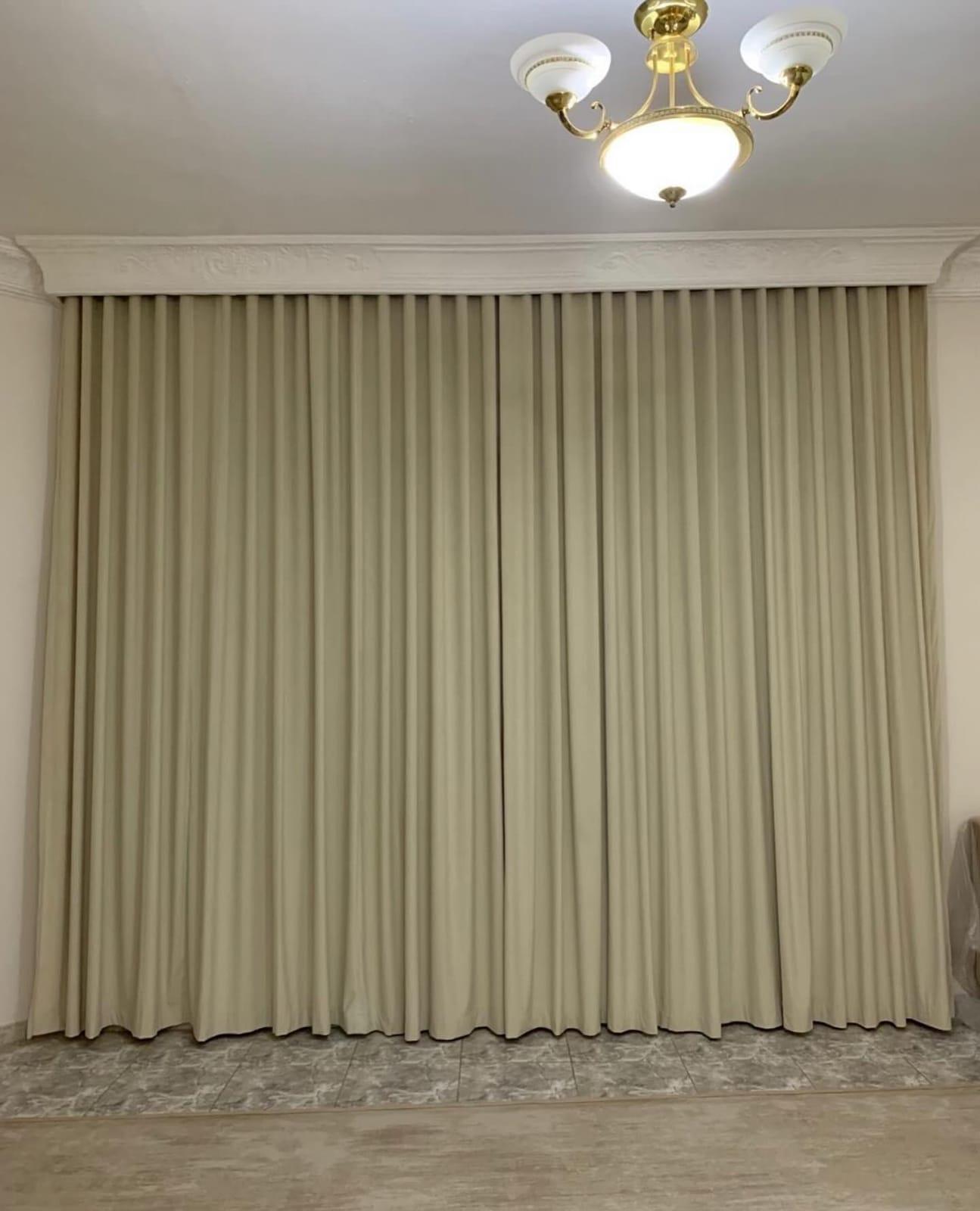
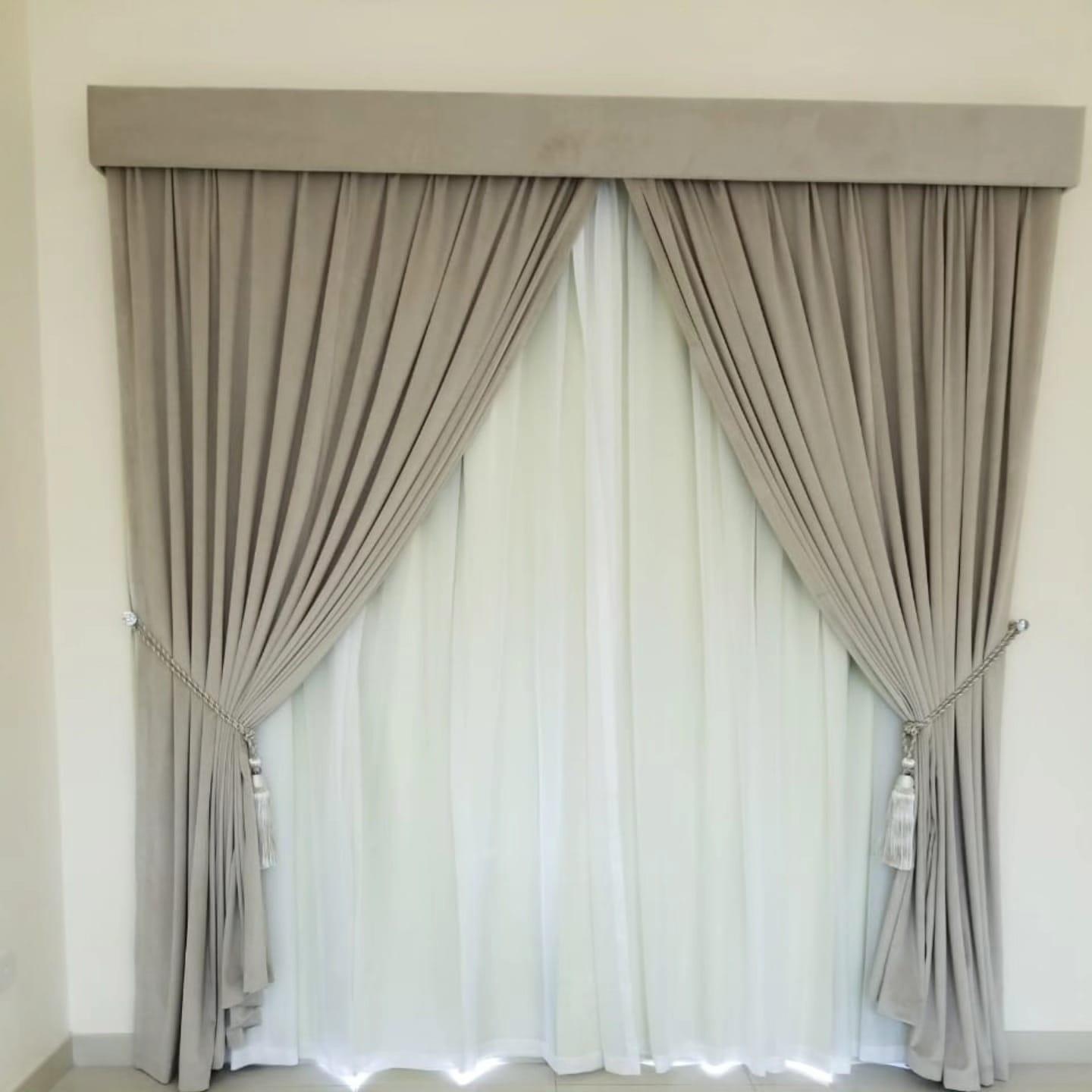
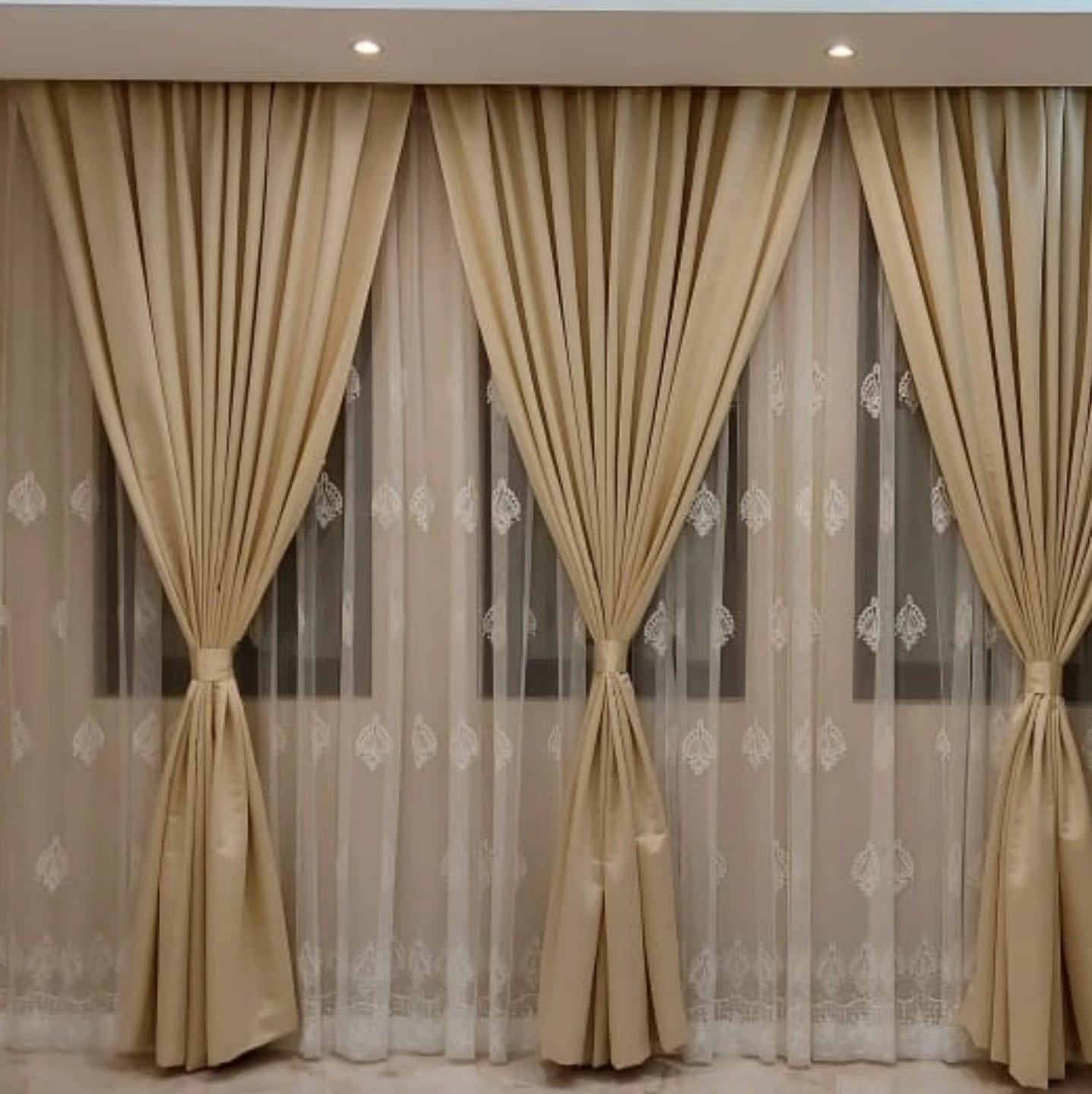
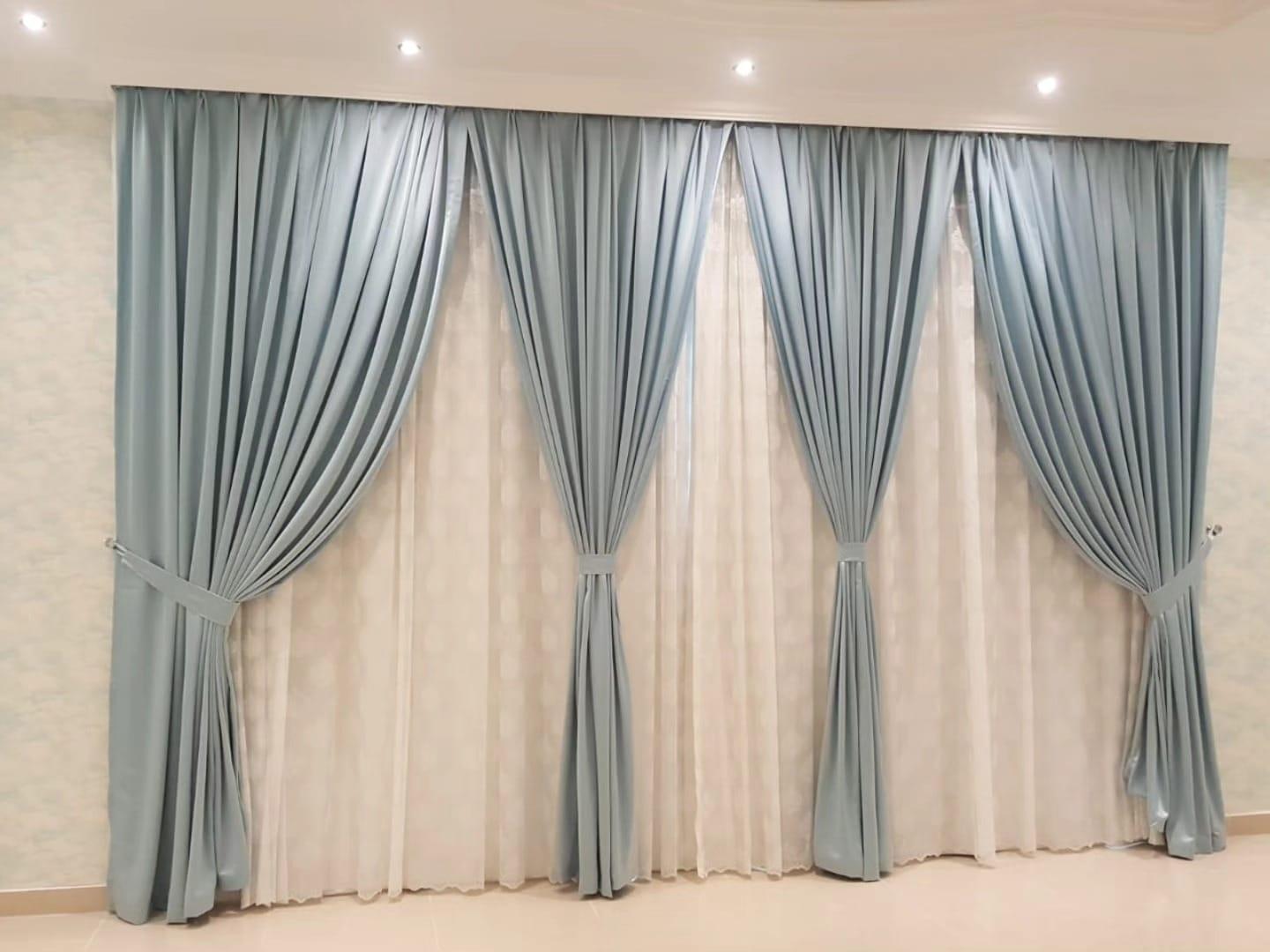
There are two good ways to arrange it on a sliding door. A centre-split pair opens from the middle and sends half the fabric to each side; it looks symmetrical, but it needs enough wall beyond both edges of the frame, because the half on the sliding side must stack completely clear of the doorway. A single curtain drawn one way, towards the fixed panel, sends all the fabric over glass nobody walks through. It needs wall on one side only, keeps the doorway completely clear, and is often the better choice when one side of the door is close to a corner or a wardrobe.
Before choosing, stand inside with the door open and look at the wall on each side. If one side is short, a one-way curtain is the answer. If both sides have room and you want symmetry, a centre-split pair with an extended track works just as well. The drawing shows both, and a third option with blinds, each in its open position.
- 1. Centre-split curtains: the track runs past both sides so each half stacks on the wall
- 2. One curtain drawn to the fixed side: all the fabric over glass nobody walks through
- 3. A blind on each panel: each rolls up above its own glass
- 4. The handle on the sliding panel must stay reachable with the fabric open
- 5. The walkway: no fabric, track or cord should sit across it
How wide and how long curtains should be for a sliding door
Width comes from two things: the track and the fullness. The track should run past the frame by enough to hold the stacked fabric clear of the doorway, which on a wide door is more than the 10 or 15 cm that a window might need. The fabric is then made wider than the track so it hangs in folds when closed; Hunker suggests a flat width of one and a half to two times the measured width, and wave or pinch-pleat headings use their own ratios. Fuller curtains look richer and block light better, but they also stack wider, so a generous fullness needs a longer track.
Length matters more on a door than on a window. A curtain that pools on the floor looks soft in a bedroom, but at a balcony door it drags across the sliding track, catches the door's bottom edge and carries in sand. Hunker advises that panels on a traverse rod run most smoothly when they stop half an inch to an inch above the floor, about 1 to 2.5 cm, and that is the clearance we usually draw at a balcony door. If a tiled threshold or a raised track sits under the curtain, the hem is set from the highest point, not the lowest.
Measuring ceiling-to-floor lengths, ceiling pockets and how a track is fixed is covered in curtain measurement and installation. At a balcony door, we also note the track profile and the threshold at the free visit.
Blinds for sliding doors
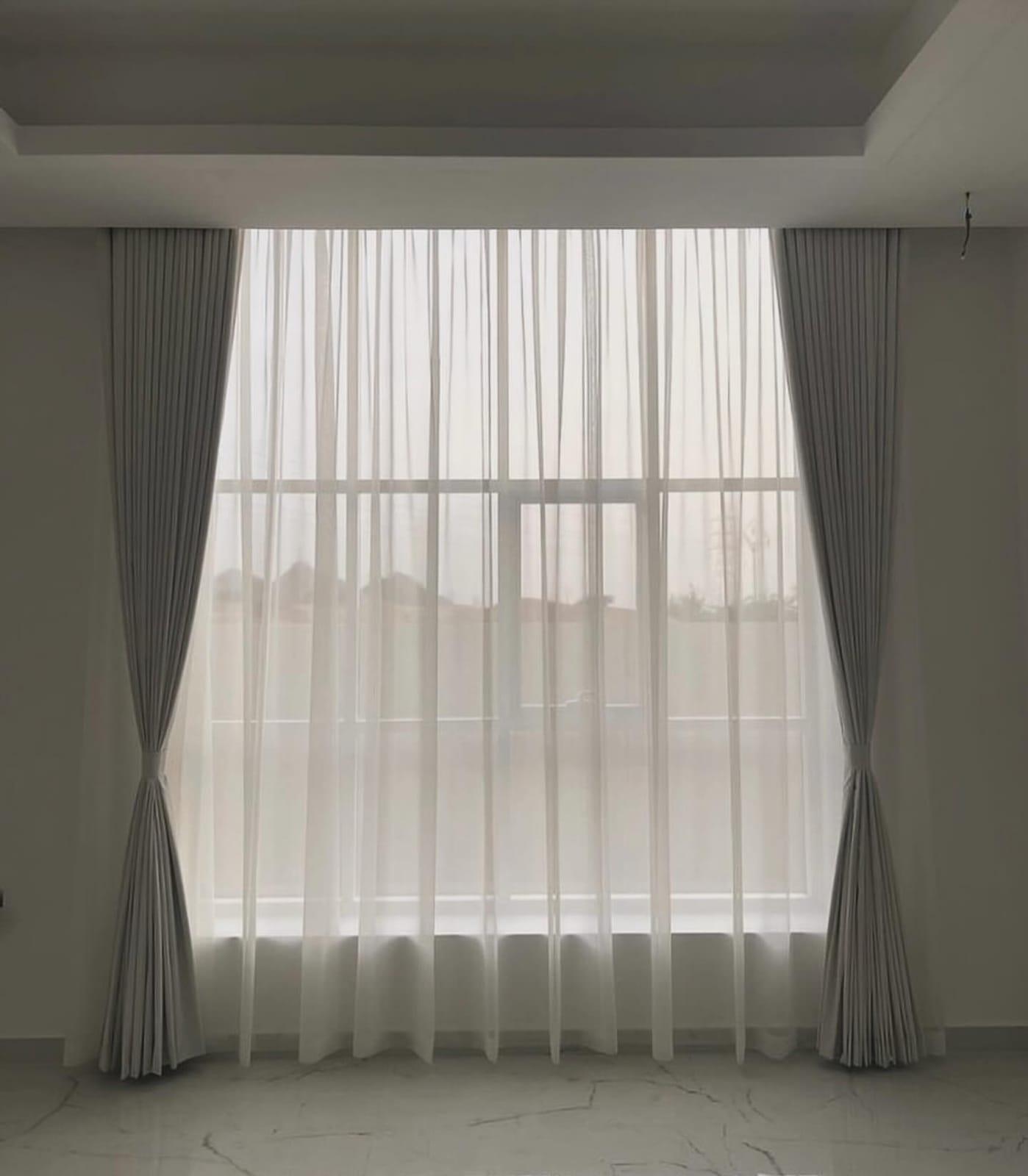
A blind suits a balcony door where wall space is short, where furniture stands close on either side, or where you want the glass clear of fabric when the blind is up. The usual arrangement is one roller or Roman blind per glass panel, rather than one wide blind across the whole door. Each panel then has its own blind: the one over the fixed glass can stay down for shade while the one over the sliding panel goes up every time someone steps out.
Two details decide whether it works. First, the rolled-up blind or the folded stack of a Roman blind has to sit above the door head, not in front of the top of the glass, or it blocks headroom and catches the frame. Lutron's measuring guide lists 127 mm of height and depth for the mounting space of its smaller roller systems, which shows how much room a headbox takes. Second, the handle. A blind hung close to the glass will snag on a handle that stands proud of the frame; Lutron notes that a reverse roll, where the fabric drops from the room side of the tube, can be needed to keep the fabric clear of handles and other hardware.
Vertical, zebra and wooden blinds are also used on sliding doors, especially in offices and rentals. How they compare with roller and Roman blinds deserves a guide of its own; for the main choice between fabric and blind, our roller blinds or curtains guide sets out the trade-offs room by room.
Curtains or blinds for a sliding door?
Neither is right for every door, but the decision is quicker than it looks. Choose curtains when there is wall on at least one side for the fabric to stack, when the room is a living room or bedroom that benefits from softness, and when you want a sheer for daytime and a heavier layer at night. Choose blinds when walls are short, when a sofa or bed sits right beside the door, or when the door is opened constantly and you prefer the glass completely clear.
Many homes combine the two: a roller blind on each panel for daytime glare, and a curtain that closes across the whole wall in the evening. Our table compares them on the points that matter at a door.
Curtains or blinds on a sliding balcony door
Wall space needed
- Curtains
- Room to stack on one or both sides
- Blinds (one per panel)
- Almost none; they rise above the glass
Walking through
- Curtains
- Clear if the stack is beside the doorway
- Blinds (one per panel)
- Clear once the blind over the sliding panel is up
Handle
- Curtains
- Fabric sits off the glass, usually clear
- Blinds (one per panel)
- May need a reverse roll or a deeper bracket
Privacy at night
- Curtains
- Strong with a lined or blackout layer
- Blinds (one per panel)
- Strong with a blackout fabric; light shows at the edges
Daytime light
- Curtains
- A sheer keeps the view softened
- Blinds (one per panel)
- A screen or light-filtering fabric cuts glare
Wind and sand
- Curtains
- Can billow and pick up dust at the hem
- Blinds (one per panel)
- Stays flatter; the bottom bar may swing in a breeze
Look
- Curtains
- Soft, full height, frames the door
- Blinds (one per panel)
- Neat, minimal, leaves the wall free
General behaviour; fabric, track and mounting position change the details on your door.
Privacy at night and glare in the afternoon
A balcony door is usually the biggest piece of glass in the room, and it faces the street, the next building or the sea. In daylight, a sheer is enough to keep a room private, because the outside is brighter than the inside. After dark the balance flips and a lit room is on display through the same sheer. The practical answer is two layers on a double track: a sheer that stays closed most of the day and a lined or blackout layer drawn in the evening. Our guide to two layers on one double track explains how the two layers are fitted.
West-facing balconies take the hardest sun of the day between mid-afternoon and sunset, and on a sliding door the glass often runs to the floor, so furniture and flooring near the door fade fastest. A lined curtain or a solar-screen blind cuts the glare without darkening the room completely. Where a bedroom opens onto a balcony and you want darkness for sleep, remember that light leaks round the sides and top of any treatment; light gaps around blackout curtains shows how to close them.
Wind, sand and the sliding track
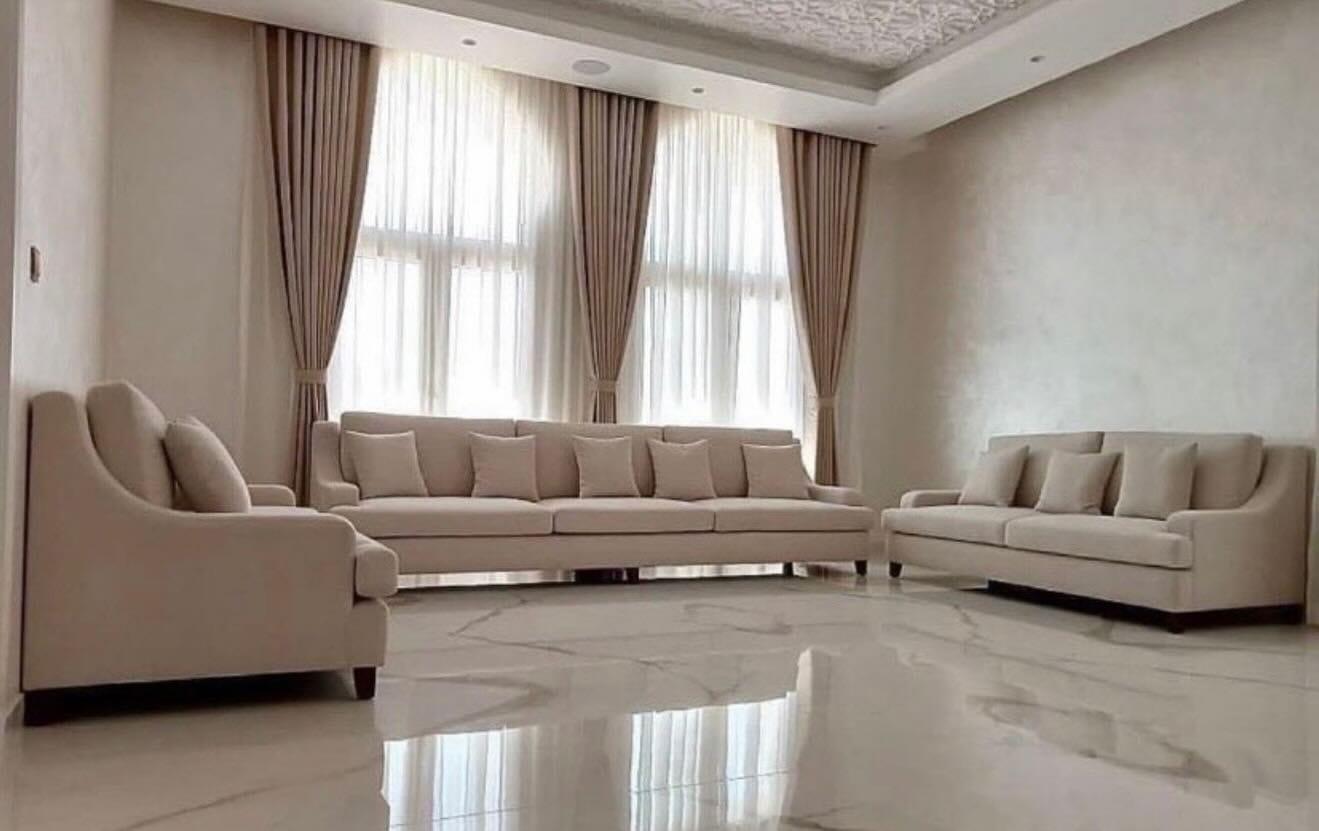
An open balcony door brings wind, and wind lifts light fabric. A sheer that billows into the room on a breezy evening looks romantic once and annoying after that, especially if it catches on the door or knocks over a lamp. When the door is going to stand open for a while, draw the curtain fully into its stack, or tie it to a holdback screwed into the wall beside the frame. A heavier or lined fabric moves less than an unlined voile.
Sand and dust are the other balcony problem. Fine grit settles in the door's bottom track and on anything that touches it. Keep the hem clear of the floor as described above, vacuum the track regularly, and expect the lowest 20 cm of a balcony curtain to need cleaning more often than the rest. Our curtain and blind care guide covers how to clean sheers, blackout curtains and blinds without damaging them.
Cords, children and safety
Balcony doors are often in family rooms, so cords deserve attention. The US Consumer Product Safety Commission urges households to keep all window cords well out of the reach of children, to remove dangling cords, and to move cribs, beds, furniture and toys away from windows and window cords. Since December 2018 the voluntary US safety standard has required stock window coverings to be cordless or free of accessible cords.
At a balcony door the safest arrangement is one with no loose cord at all. Curtains on a track can be drawn by hand or with a wand; roller and Roman blinds can be specified with a cordless or motorised operation instead of a looped chain. Where a chain is chosen, it should be tensioned and fixed to the wall or frame so it cannot form a loop. And whatever the treatment, keep chairs and children's furniture away from the door, so the balcony railing is not within easy climbing reach.
Motorised curtains and blinds for wide glazing
Motors make sense on a balcony door when the glazing is wide, when the track is high inside a ceiling recess, or when the same wall has several doors and windows that should open and close together. We fit Somfy motors and suitable Tuya-enabled systems, controlled by remote, wall switch or phone app, depending on the model chosen for the order.
Plan the power before anything else. A mains motor needs a socket or spur near the track's end, ideally hidden in the ceiling pocket, and that is easiest to arrange before the ceiling or wall is finished. Ask how the curtain or blind is opened if the power is off, because a door you cannot uncover by hand is a nuisance during a cut. Our guide to motorised curtains explains motors, controls and smart-home links in detail.
Measuring, price and timing
Every balcony door is measured by our team at the free home visit. We laser-measure the opening, the wall on each side, the ceiling height and the threshold, and we note which panel slides, where the handle sits and how deep the frame is. You see fabric and blind samples against your own glass and daylight, and the drawing you approve shows the track or blind positions and where the fabric stacks when open.
Our curtains start at AED 550 per window for the entry specification: fabric, a manual track and installation. A balcony door is priced as one opening, and a very wide or very tall one, a second layer, upgraded fabric or motorisation moves the figure up; the quotation lists each line. Curtains are stitched at our Al Shuwaiheen workshop, Sharjah, then fitted by our team, usually 3 to 5 working days once fabric and sizes are confirmed, with a 48-hour rush available. Our curtains and blinds page describes what we make, and the Sharjah curtains page has local details.
Common questions
Should I get curtains or blinds for a sliding door?
Curtains if there is wall beside the door for the fabric to stack; blinds, one per panel, if the walls are short or furniture stands close. Many homes use both. Curtains or blinds for a sliding door.
How far should curtains extend past a sliding door?
Far enough for the open fabric to stack completely clear of the doorway, which is more on a wide door. A one-way curtain needs wall on one side only. Where curtains stack on a sliding door.
How long should curtains be for a sliding door?
Just clear of the floor, about 1 to 2.5 cm, so the hem stays out of the door track. Measure from the highest point of the threshold. Measuring curtain length.
Do I need blackout curtains on a balcony door?
In a bedroom, often yes, usually behind a sheer on a double track. In a living room, a lined curtain is often enough. Blackout or sheer curtains.
Can sliding door curtains be motorised?
Yes. A motor needs power near the track end, best hidden in the ceiling pocket, and a way to open the curtain during a power cut. Motorised curtains in the UAE.
How do I stop light coming in around balcony door curtains?
Run the track beyond the frame, bring the top close to the ceiling and overlap the curtains where they meet. Light gaps around blackout curtains.

Sources & specifications
Manufacturer information applies to the named products and systems. Sources reviewed on 28 October 2026.
- Hunker: size of drapes for a sliding door (stack-back, fullness, floor clearance)hunker.com(opens in a new tab)
- Lutron app note 598: measuring for shades (mounting space, reverse roll to clear handles)support.lutron.com(opens in a new tab)
- US CPSC: updated window covering safety standard takes effect, go cordlesscpsc.gov(opens in a new tab)
Want this planned for your home?
Consultation and measurement are free. Tell us the rooms, location and what you need; we arrange a sample visit and define the measured quotation.