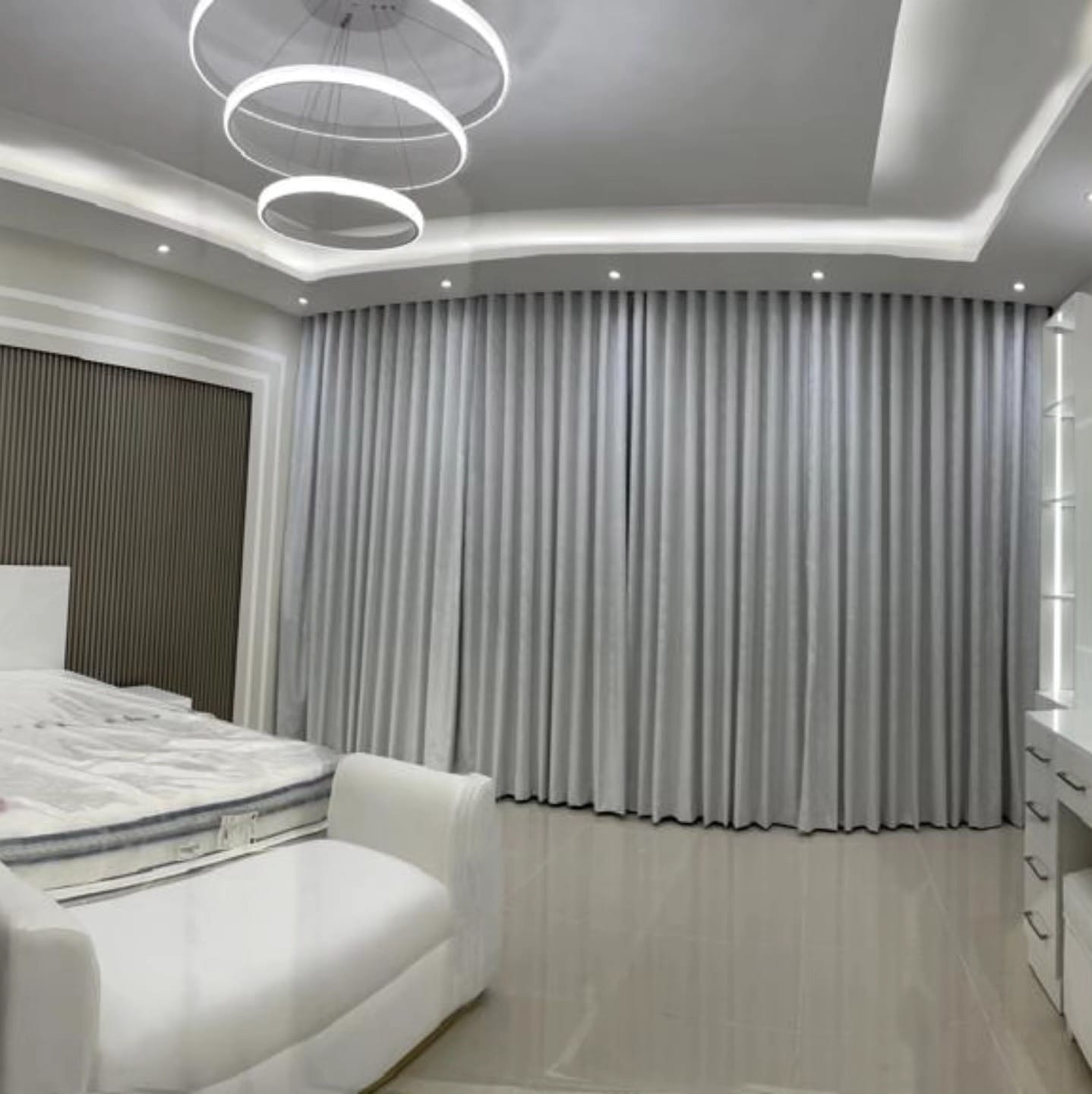
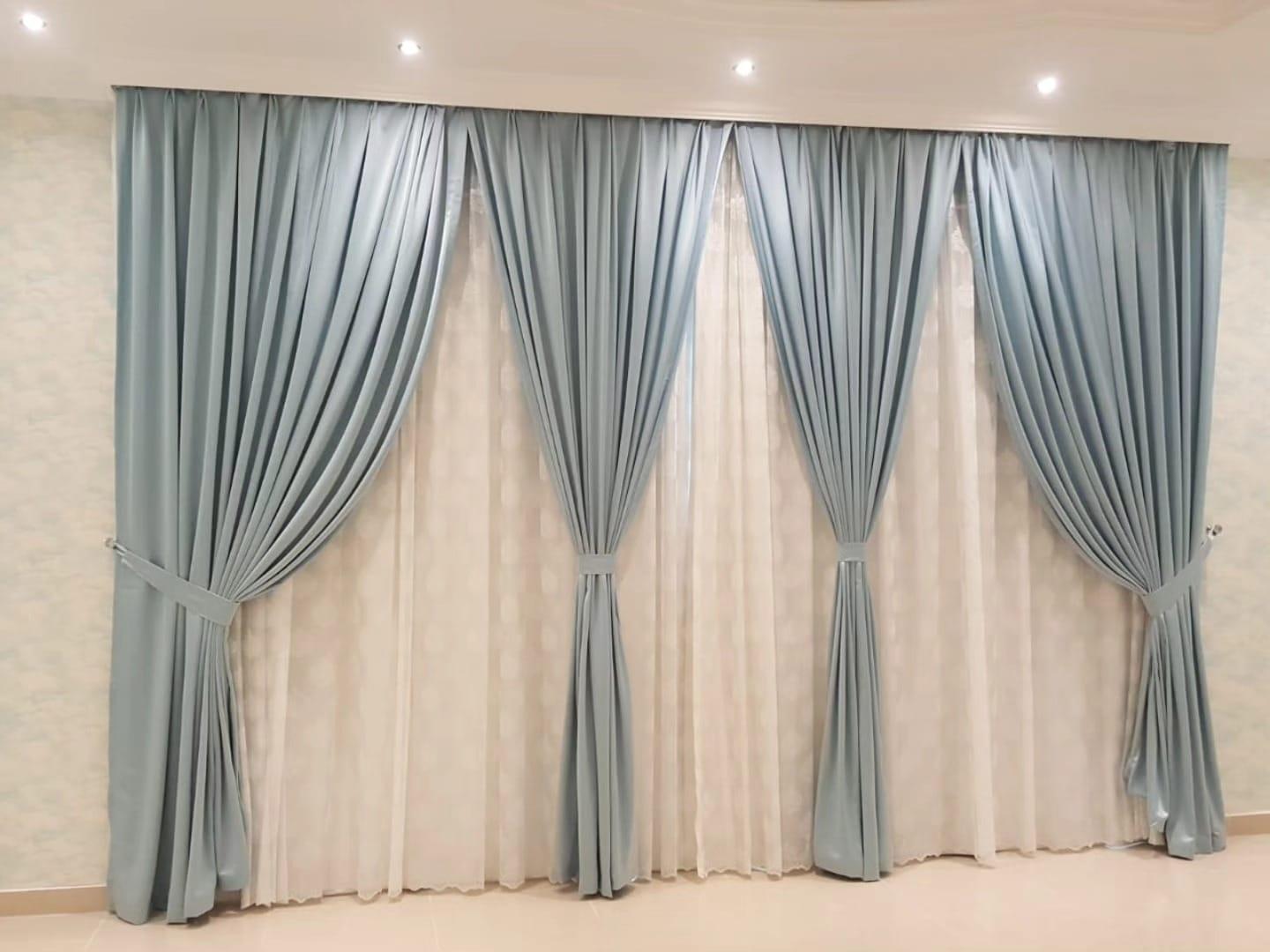
Curtains · 8 min read · 12 November 2026
Do soundproof curtains work? What curtains can and cannot do about noise
Soundproof curtains soften echo and may trim some noise, but they do not seal a window. See what works, what does not, and what to fix first in the UAE.

By Ali Haider Basra, Founder, Al Tareeq Decor · Contact our workshop
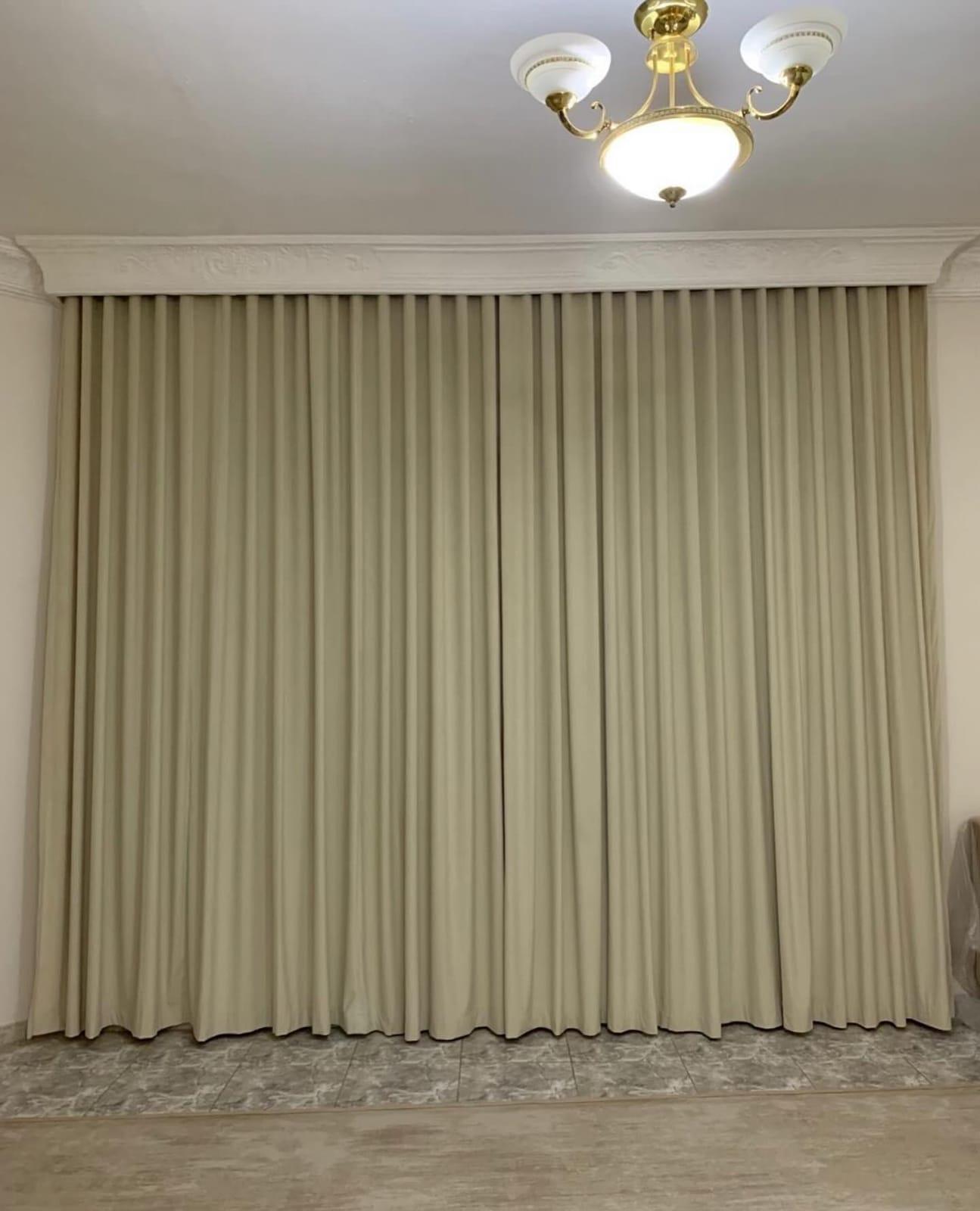
Key takeaways
- 'Soundproof' on a curtain label is a marketing term. Real sound blocking requires mass and an airtight seal; curtains cannot seal a window.
- Curtains primarily absorb reverberant sound and echo inside a room. They do not replace double glazing or eliminate traffic noise.
- A landmark NIST laboratory study proved that perimeter cracks and air leaks dominate acoustic loss; fix window seals before buying curtains.
- No independent scientific test shows standard home drapery providing significant exterior decibel reduction.
- Our workshop crafts curtains for light control, thermal insulation and privacy; we never sell unverified decibel promises.
On this page
- Key takeaways
- Absorbing sound versus blocking sound: two different jobs
- What soundproofing specialists say about acoustic drapery
- What the decibel numbers mean, and why to be careful
- Why a tiny air gap cancels out a heavy curtain: the NIST evidence
- Theoretical ceiling on sound reduction caused by window perimeter air gaps
- Where noise really enters UAE homes
- Noise transmission paths and curtain effectiveness
- The correct sequence: what to fix first
- Step-by-step noise reduction priority checklist
- What makes curtains better for sound: linings, interlinings and density
- How to hang curtains for maximum acoustic performance
- Which rooms benefit most from heavy lined drapery
- Room-by-room acoustic curtain benefits
- Rented apartments: reversible sound dampening steps
- Four questions to ask any seller claiming curtains are 'soundproof'
- What Al Tareeq Decor offers: honest craftsmanship without false claims
- Common questions
Absorbing sound versus blocking sound: two different jobs
Curtains can make a room sound substantially softer and calmer, but they cannot make a noisy window silent. Much of the online confusion around 'soundproof curtains' comes from mixing up two distinct acoustic principles: sound absorption and sound blocking.
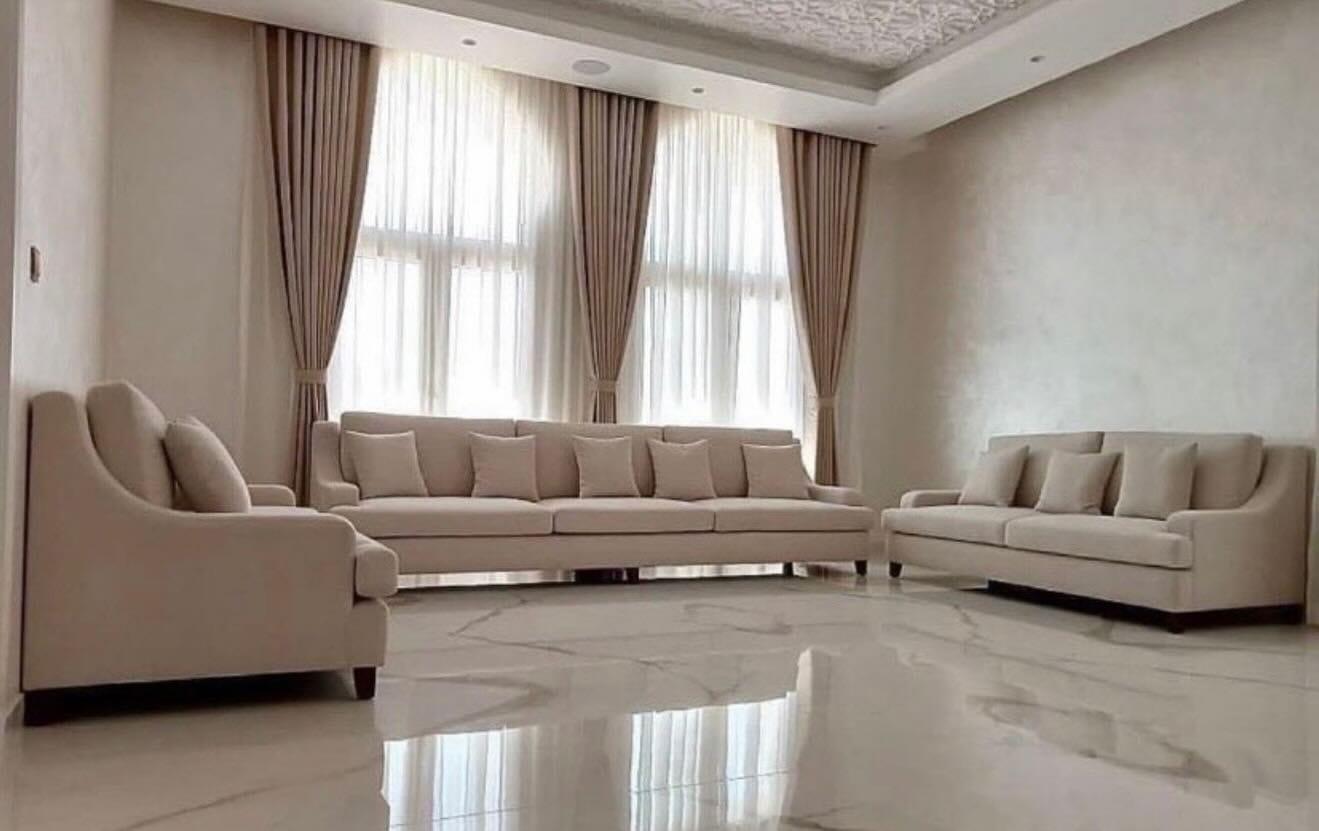
Sound absorption happens entirely inside the room. Hard, reflective surfaces—such as ceramic tile, polished marble, concrete plaster and large sheets of glass—cause sound waves to bounce back and forth as echo and reverberation. Thick, porous materials (lined drapery, deep-pile rugs, upholstered sofas) soak up sound reflections, making conversations, television audio and telephone calls noticeably clearer.
Sound blocking, by contrast, stops external noise from penetrating into the room from outside—such as highway traffic, sirens, construction machinery or neighbouring buildings. True sound isolation requires two physical properties: substantial airtight mass (dense concrete, thick laminated acoustic glass) and continuous hermetic seals. Because sound travels through microscopic air gaps as freely as air itself, a loose fabric panel hanging in front of a window is structurally incapable of functioning as an acoustic barrier.
- 1. Glass: street noise arrives at the window glazing, which transmits acoustic vibrations
- 2. Gap beside curtain: sound takes the easiest flanking path around loose fabric edges
- 3. Sealed frame: with airtight weatherstripping and full curtain coverage, leakage is constrained
- 4. Echo between hard walls: sound waves reverberate continuously between bare tile and glass
- 5. Curtain absorbing echo: heavy drapery dampens interior reflections, reducing flutter echo
What soundproofing specialists say about acoustic drapery
Acoustic consultants and technical audio engineers consistently emphasize that residential curtains should be accurately described as sound-deadening rather than soundproof.
Specialist testing demonstrates that while multi-layer fabric panels soften high-frequency flutter and eliminate harsh room flutter, they perform poorly against low-frequency bass, vehicle engines and structural vibration.
What the decibel numbers mean, and why to be careful
Claims online regarding curtain noise reduction range wildly from 1 to 5 decibels (dB) on conservative specialist sites up to exaggerated claims of 15 to 20 dB on commercial retail sites. Crucially, almost none of these claims cite verified standardized test methodologies.
First, laboratory ratings are not room ratings. Formal sound isolation ratings, such as Sound Transmission Class (STC under ASTM E90 / E413) or Weighted Sound Reduction Index (Rw under ISO 10140), require testing an assembly sealed airtight inside a concrete test chamber. A curtain hung loosely over an opening with perimeter perimeter gaps does not replicate laboratory STC performance.
Second, understand the decibel scale: a 10 dB reduction is perceived by human hearing as roughly cutting loudness in half, while a 3 dB change is the smallest difference perceptible to an untrained ear. A modest 1 to 3 dB reduction from heavy drapery may take the edge off quiet background noise, but it will never silence a noisy urban street.
Third, material density is paramount: research from the National University of Singapore (Kumar, Ng & Lee, 2020) demonstrated that heavy impermeable polymer sheets (such as dense PVC-coated backings) achieved markedly higher transmission loss than traditional woven textiles. Lightweight decorative drapery simply lacks the required superficial mass.
Why a tiny air gap cancels out a heavy curtain: the NIST evidence
The definitive scientific evidence on window acoustic transmission comes from a landmark 1975 investigation by the US National Bureau of Standards (now NIST, Building Science Series 77, Sabine et al.). Researchers tested glazed window assemblies with controlled cracks cut around the perimeter sash.
The NBS findings established three crucial acoustic rules: first, when sound has multiple parallel paths, the weakest transmission path dominates overall performance. Second, for windows with perimeter air leakage, the total crack area dictates sound penetration—each doubling of crack area degrades transmission loss by approximately 3 dB. Third, acoustic leakage through narrow air cracks is virtually independent of sound frequency.
The table below illustrates the mathematical limits of sound isolation when air cracks are present around a standard 1.5 m × 1.2 m window sash, demonstrating why sealing gaps must always precede fabric installation.
Theoretical ceiling on sound reduction caused by window perimeter air gaps
Hairline hairline fissure (0.1 mm crack)
- Share of Total Window Area
- 0.1% open area
- Maximum Possible Sound Isolation
- Capped at approximately 30 dB
Thin perimeter gap (1 mm unsealed sash)
- Share of Total Window Area
- about 0.3% open area
- Maximum Possible Sound Isolation
- Capped at approximately 25 dB
Worn rubber or brush seal (3 mm gap)
- Share of Total Window Area
- about 0.9% open area
- Maximum Possible Sound Isolation
- Capped at approximately 20 dB
Based on NIST BSS 77 transmission loss formula assuming unbaffled perimeter air infiltration.
Where noise really enters UAE homes
Before investing in window treatments, diagnose your room during peak exterior noise hours. Trace sound transmission at the window frame, balcony sliding track, entrance doors and air conditioning ducts.
Noise transmission paths and curtain effectiveness
Traffic noise & vehicle horns
- Primary Physical Transmission Path
- Window glass, frame joints and deteriorated seals
- Can Curtains Help?
- Minor dampening if window is sealed; low engine rumble penetrates
Neighbour voices & television
- Primary Physical Transmission Path
- Hollow-core doors, shared partition walls, ceiling voids
- Can Curtains Help?
- Minimal; primary transmission is through structural partitions
Urban construction works
- Primary Physical Transmission Path
- Facade glass and concrete structural vibration
- Can Curtains Help?
- Slight high-frequency muffling; ground vibration bypasses glass entirely
Room echo & reverberation
- Primary Physical Transmission Path
- Bare floor tiles, stone feature walls, concrete slab
- Can Curtains Help?
- Highly effective; deep fabric folds absorb reverberant energy
Sliding balcony patio doors
- Primary Physical Transmission Path
- Bottom roller track gap, interlocking meeting stiles
- Can Curtains Help?
- Only after worn brush seals and frame latches are renewed
AC duct & intake grilles
- Primary Physical Transmission Path
- Direct open duct pathways through false ceiling
- Can Curtains Help?
- No; open air ducts require acoustic baffles or attenuators
The correct sequence: what to fix first
Acoustic remediation must follow a disciplined order of work. Addressing cosmetic drapery before sealing structural gaps wastes time and money.
Step-by-step noise reduction priority checklist
1. Frame seals
- Inspection Target
- Cracked, perished or flattened rubber gaskets
- Recommended Remediation Action
- Replace with high-density EPDM rubber weatherstripping
2. Perimeter caulking
- Inspection Target
- Shrinkage cracks between aluminium frame & masonry
- Recommended Remediation Action
- Apply acoustic or non-hardening elastomeric sealant
3. Door perimeter
- Inspection Target
- Hollow-core bedroom doors, gaps under thresholds
- Recommended Remediation Action
- Fit heavy perimeter drop seals; replace hollow door with solid-core
4. Glazing upgrade
- Inspection Target
- Single-pane glass or thin 6 mm float glass
- Recommended Remediation Action
- Upgrade to laminated acoustic glass or secondary interior glazing
5. Heavy drapery
- Inspection Target
- Completed perimeter seals and tight window latches
- Recommended Remediation Action
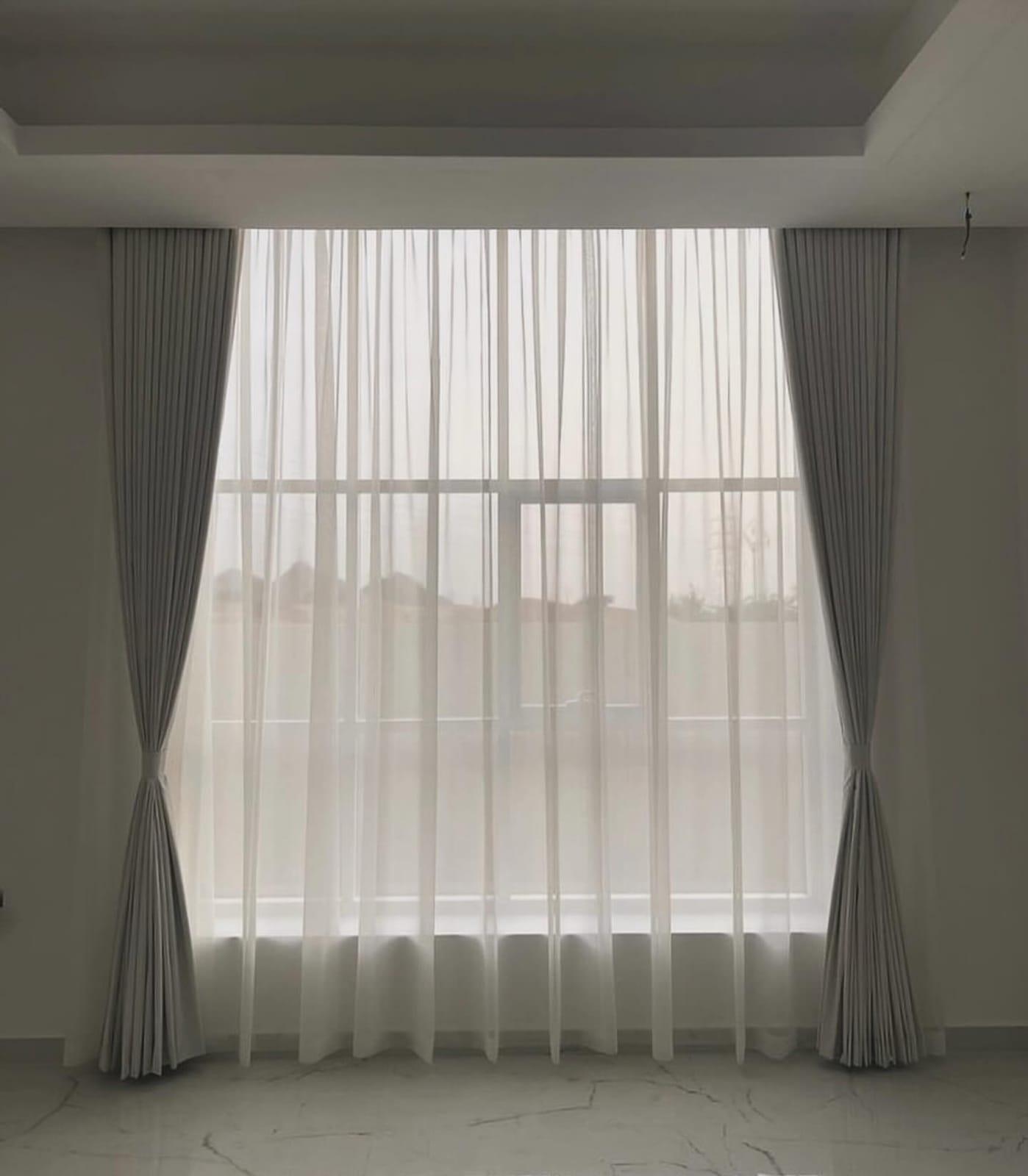
- Install floor-to-ceiling lined drapery extending past jambs
A torch test (shining light around closed window frames at night) quickly reveals air gaps.
What makes curtains better for sound: linings, interlinings and density
If you wish to maximize the acoustic dampening benefits of your curtains, specify construction details that maximize fabric superficial mass, airflow resistance and fold surface area.
Specify multi-pass coated linings: as detailed in our thermal curtains guide, 3-pass blackout linings incorporate dense acrylic foam layers that add substantial mass and close fabric pores. For maximum dampening, specify a heavy bumped cotton or wool interlining sewn between the face fabric and the lining layer.
Maximize fullness: specify a wave heading or triple pinch pleat with at least 2.5× to 3.0× fabric fullness. Deeper folds create larger acoustic absorption wells, presenting more fibrous surface area to incoming sound reflections.
- Face fabric: choose tightly woven polyester, heavy cotton velour or dense upholstery-weight velvets
- Lining: multi-pass thermal blackout lining adds airtight superficial density
- Interlining: thick flannel or synthetic needle-punch interlining traps dead air and adds weight
- Fullness: 2.5× to 3.0× fullness provides deeper pleat cavities that dampen mid-range room echo
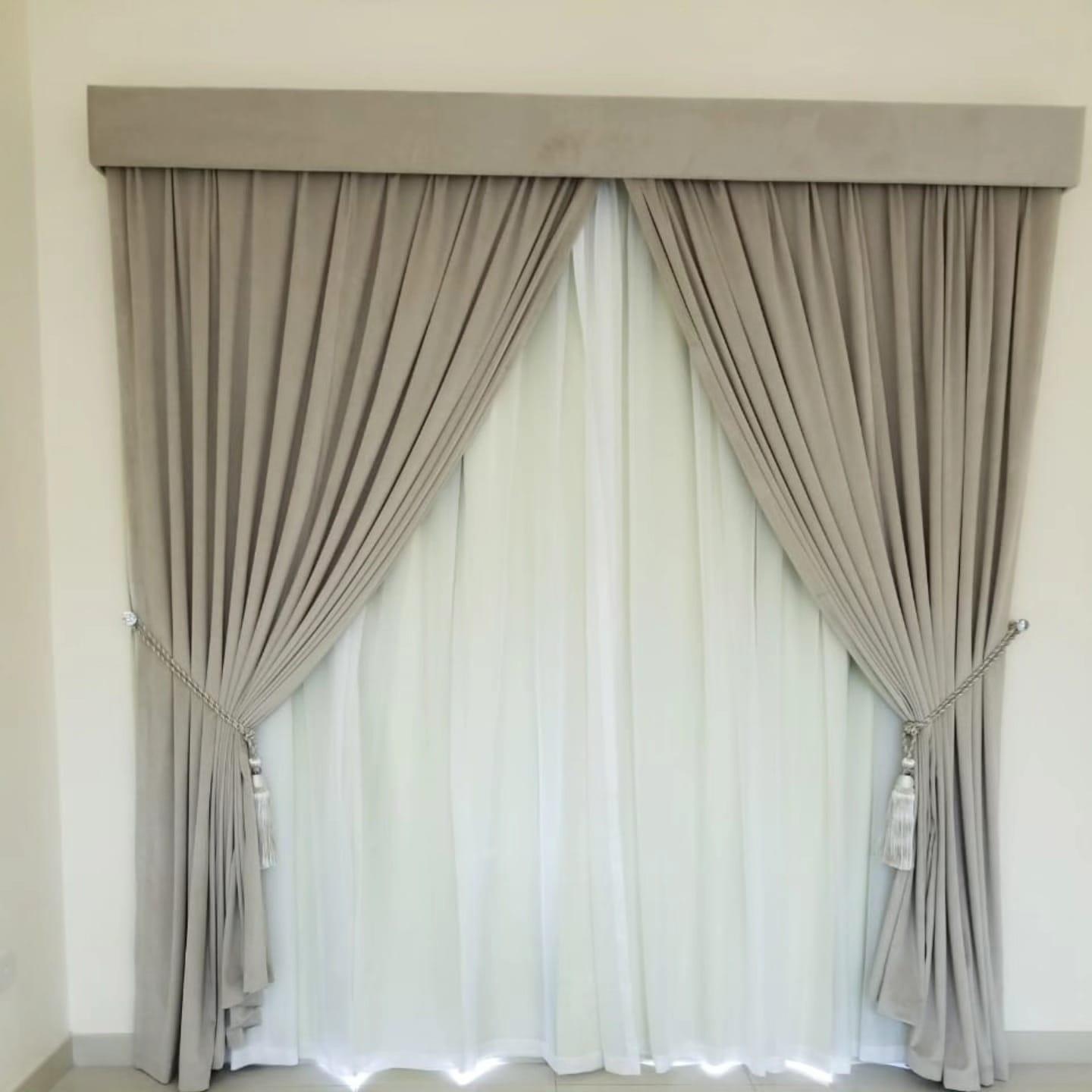
- Double tracks: pairing a sheer with an interlined blackout curtain provides two distinct fabric boundaries
How to hang curtains for maximum acoustic performance
Installation geometry directly influences acoustic absorption. Loose, narrow curtains allow sound to flank freely around the edges.
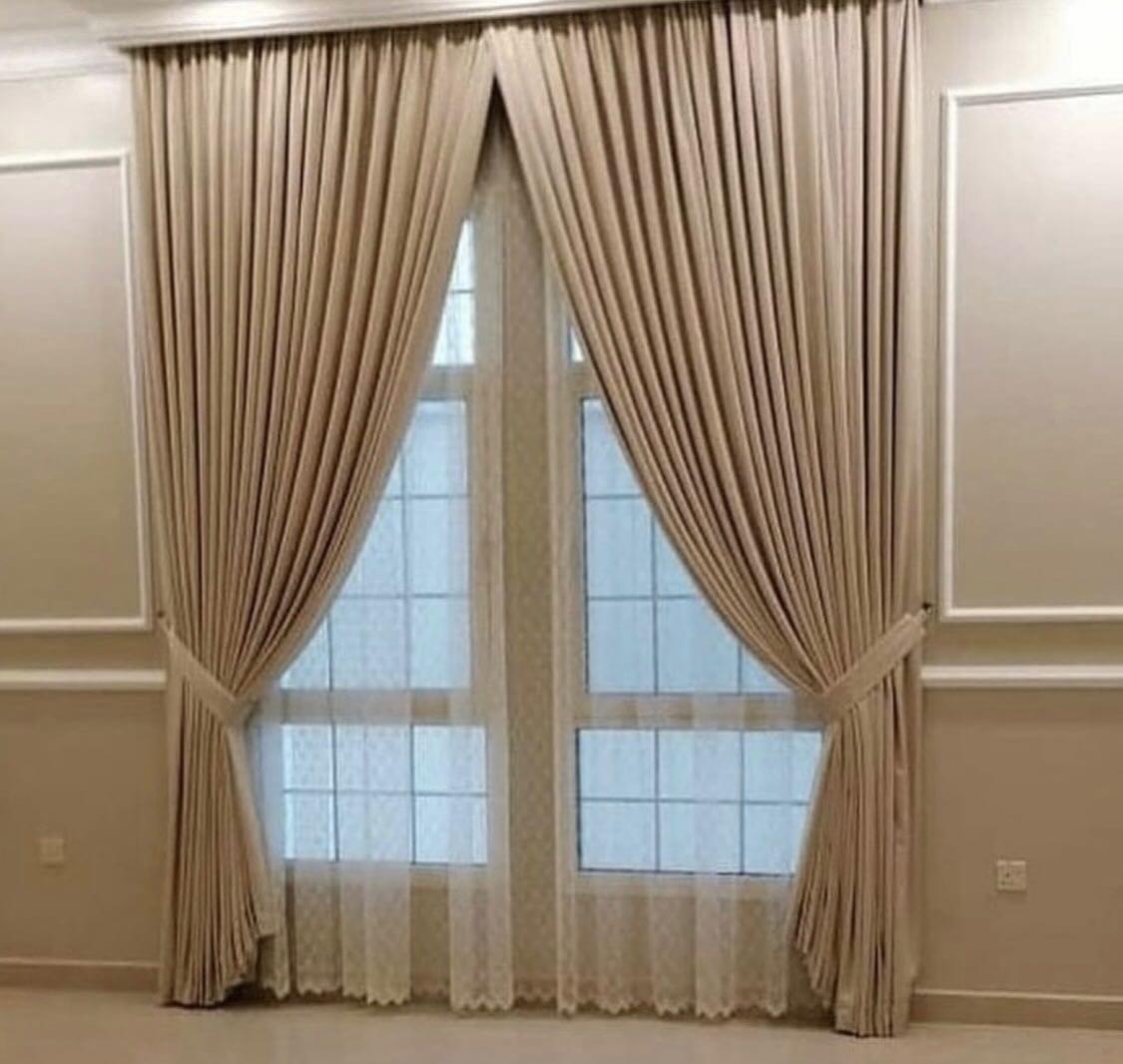
Mount wide: extend the track at least 25 to 40 cm past the window frame on both sides so the fabric overlaps solid wall. Mount high: fix the track directly to the slab or inside a gypsum pocket (see curtain rod vs track and curtain measurement), eliminating the open air strip above. Hang full length: ensure the curtain hem skims within 5 to 10 mm of the finished floor to minimize under-curtain airflow.
After installation, inspect for perimeter light leakage: as outlined in our blackout light gaps guide, any point where daylight spills into the room represents an unobstructed path for acoustic energy.
Which rooms benefit most from heavy lined drapery
Certain rooms derive immediate acoustic benefits from heavy drapery, particularly spaces with significant reverberation.
Room-by-room acoustic curtain benefits
Master bedroom
- Acoustic Impact of Heavy Drapery
- Absorbs ambient flutter echo; muffles high-frequency exterior noise
- Recommended Initial Step
- Verify balcony sliding door seals; install ceiling-to-floor blackout
Majlis / living room
- Acoustic Impact of Heavy Drapery
- Eliminates hollow reverberation across large marble and tiled floors
- Recommended Initial Step
- Combine full-length lined velvet drapes with large woven wool area rugs
Home office & study
- Acoustic Impact of Heavy Drapery
- Dramatically improves microphone voice clarity on video calls
- Recommended Initial Step
- Cover bare glazing walls; position soft furnishings behind desk
Balcony door wall
- Acoustic Impact of Heavy Drapery
- Dampens wind whistle once track draft excluders are installed
- Recommended Initial Step
- Renew bottom brush seals; install double-track wave drapery
Rented apartment
- Acoustic Impact of Heavy Drapery
- Removable acoustic enhancement without landlord structural disputes
- Recommended Initial Step
- Fit adhesive door sweeps and floor-length drapery on existing fixtures
Rented apartments: reversible sound dampening steps
Tenants in Dubai and Sharjah apartments cannot replace building windows or alter facade glazing. However, several effective, fully reversible acoustic improvements can be completed without breaching tenancy terms.
Install removable self-adhesive silicone weatherstripping along window frames and balcony door meeting rails. Fit weighted draft excluders or adhesive sweeps to the bottom of hollow bedroom entrance doors. Layer thick area rugs over hard tile flooring, and install ceiling-to-floor lined curtains on existing track anchors. When vacating, silicone strips peel away without leaving permanent residue.
Four questions to ask any seller claiming curtains are 'soundproof'
Before paying premium prices for curtains marketed with acoustic claims, demand written verification of the testing pedigree:
- 1. What standardized test method was used (ASTM E90, ISO 10140, ASTM C423), and what is the accredited laboratory report number?
- 2. Does the stated rating apply to the whole fabricated assembly or solely to an unhung flat swatch of backing material?
- 3. Was the fabric tested over an actual glazed window opening, or sealed airtight within a concrete test aperture?
- 4. What is the certified Noise Reduction Coefficient (NRC) for room absorption versus the Sound Transmission Class (STC) for sound blocking?
What Al Tareeq Decor offers: honest craftsmanship without false claims
At Al Tareeq Decor, our curtains are handcrafted in our Sharjah workshop using premium fabrics, multi-pass blackout linings, heavy interlinings and precision aluminium tracks. Measuring, fabric sampling and design consultations are completely free across Dubai, Sharjah and the northern emirates.
Custom curtains start from AED 550 per window for our entry specification, with pricing transparently determined by fabric grade, lining layers, window dimensions and hardware selection (see custom curtain prices). We never market our curtains as 'soundproof' and we never quote speculative decibel reductions. If you have a noise problem, our team will inspect your room honestly and advise whether curtains will help, or whether window seals and door gaskets should be resolved first.
Common questions
Do soundproof curtains actually block noise?
Heavy, lined curtains absorb echo inside the room and slightly muffle high-frequency sounds if the window is sealed, but they cannot block street noise like sealed glass. See how linings and layers work.
How many decibels do soundproof curtains reduce?
Realistic estimates suggest 1 to 3 dB of dampening under ideal sealed conditions. Claims of 10 to 20 dB from fabric alone are unverified retail marketing. See how layers work together.
Will curtains block traffic noise at night?
They soften high-pitched tire hiss, but low engine rumble penetrates easily through glass and frames. Sealing window frame gaskets is far more effective. See our balcony door curtains guide.
Are blackout curtains soundproof?
No. Blackout coatings block light and add modest weight, but blackout is not an acoustic rating. See blackout or sheer curtains.
Do thick curtains reduce room echo?
Yes. Dense drapery with generous fullness is exceptionally effective at absorbing echo in rooms with tile, marble or glass. See majlis curtains.
Can I reduce noise in a rented apartment?
Yes. Fit removable silicone door sweeps, renew sliding door seals and hang floor-to-ceiling lined drapery on approved fixtures. See our curtain rod vs track guide.

Sources & specifications
Manufacturer information applies to the named products and systems. Sources reviewed on 13 November 2026.
- NBS / NIST Building Science Series 77: Acoustical and thermal performance of exterior walls, doors, and windows (Sabine et al., 1975)nvlpubs.nist.gov(opens in a new tab)
- Home Studio Basics: Do Curtains Help With Echo? Acoustic absorption analysishomestudiobasics.com(opens in a new tab)
- Second Skin Audio: The truth about soundproof curtains and acoustic testingsecondskinaudio.com(opens in a new tab)
- National University of Singapore: Experimental investigations of acoustic curtains (Kumar, Ng & Lee, arXiv:2008.06690)arxiv.org(opens in a new tab)
Want this planned for your home?
Consultation and measurement are free. Tell us the rooms, location and what you need; we arrange a sample visit and define the measured quotation.