Dressing Units · 13 min read · Updated 29 October 2026
Dressing table styles in the UAE: modern, classic and luxury designs for bedrooms
Modern, classic or luxury? Dressing table styles for UAE bedrooms: lines, fronts, handles, mirror shape, finish and light, which style suits which room, and how to match your wardrobe. From AED 1,800.

By Ali Haider Basra, Founder, Al Tareeq Decor · Contact our workshop
Key takeaways
- Modern means flat or ribbed fronts with no handles and a round mirror; classic means framed fronts, bar handles and a rectangular mirror; luxury adds an arch, stone, brass or a lit glass cabinet.
- The mirror shape and the handles change the look most and cost least, so decide them first.
- Give the table one hero feature and match the wardrobe fronts beside it in finish and metal.
- Pick the style from the bed wall and the wardrobe, not from one photo; the form and the materials have their own guides.
- Our dressing units start from AED 1,800, are built in our Sharjah workshop in about 10 days and carry a 24-month written workmanship warranty.
On this page
- Key takeaways
- Dressing table styles: the short answer
- Modern, classic and luxury dressing tables at a glance
- Modern, classic and luxury dressing table styles compared
- Modern dressing tables: clean lines, ribbed fronts and a round mirror
- Classic dressing tables: framed fronts, bar handles and soft colours
- Luxury dressing tables: arches, stone, brass and light
- Handles and fronts: what each choice says
- Mirror shape: round, arched, rectangular or organic
- Finish and colour: warm veneer, matt lacquer or two tones
- Light as part of the style
- Which style suits which bedroom
- Which dressing table style suits which UAE bedroom
- Matching the table to your wardrobe fronts
- What we do about it, and what it costs
- Common questions
Dressing table styles: the short answer
Most dressing tables in UAE bedrooms fall into three styles. Modern means clean lines, flat or ribbed fronts, no handles and a round or organic mirror. Classic means framed panel fronts, bar or ring handles in a brass tone, soft off-white colours and a rectangular mirror. Luxury means one or two statement features, such as an arched mirror, a stone top, brass trim or a lit glass cabinet, carried by good materials.
Choose by the bedroom, not by a picture alone. Match the style to the bed wall and the wardrobe fronts beside it, keep one hero feature per table, and let the mirror and the handles carry the style, since they cost little and change the look the most. This guide is about how the table looks. The form (niche, console or table) is in our vanity niche, console or table guide, and how the materials behave is in our dressing table materials guide.
Our made-to-measure dressing units start from AED 1,800 and are built in our Sharjah workshop, so any of the three styles can be drawn to your wall after a free measuring visit.
Modern, classic and luxury dressing tables at a glance
The table sets the three styles side by side on the five things you can see from across the room. Read across a row and you have the style; read down a column and you can see what each feature costs you in cleaning, care and planning.
Modern, classic and luxury dressing table styles compared
Lines and fronts
- Modern
- Flat or ribbed fronts, slim top
- Classic
- Framed panel fronts, a visible edge
- Luxury
- Ribbed or framed fronts with a trim line
Handles
- Modern
- None, or a finger groove
- Classic
- Bar or ring handles in a brass tone
- Luxury
- Slim brass bars or a hidden push catch
Mirror
- Modern
- Round, oval or organic shape
- Classic
- Rectangular, with a frame
- Luxury
- Arched, tall, often beside lit shelves
Finish and colour
- Modern
- Matt lacquer, pale veneer, one tone
- Classic
- Soft off-white, cream, light grey
- Luxury
- Veneer with stone, two or three materials
Light
- Modern
- Halo glow behind the glass
- Classic
- A wall light on each side
- Luxury
- Lit glass cabinet and lit shelves
Suits
- Modern
- Small flats, modern headboard walls
- Classic
- Villa bedrooms with panelled walls
- Luxury
- A master suite with a feature wall
A style guide, not a rule: most of our tables borrow one feature from a neighbouring style.
- 1. Mirror shape sets the style first: round for modern, a framed rectangle for classic, an arch for luxury
- 2. Fronts and handles: ribbed or flat with no handles, framed panels with bar handles, or ribbed with brass trim
- 3. Base: hung off the floor for modern and luxury, on legs for classic, with a drawer tower beside the luxury table
- 4. Light: a halo glow, a wall light on each side, or a lit glass cabinet over the tower
Modern dressing tables: clean lines, ribbed fronts and a round mirror
A modern dressing table is defined by what it leaves out. The front is a flat panel or a run of vertical ribs, the handles are gone, and the top is slim. The eye reads one calm block, which is why the style suits small flats and bedrooms with a plain or upholstered bed wall.
Ribs are the safest way to add interest without clutter. We cut them on a CNC router from moisture-resistant MDF and finish them in lacquer or veneer, and the same profile is what sits on many of our TV walls, as the fluted and slatted TV wall guide shows. A ribbed front also hides fingerprints better than a flat gloss one, which matters on a table you touch every morning.
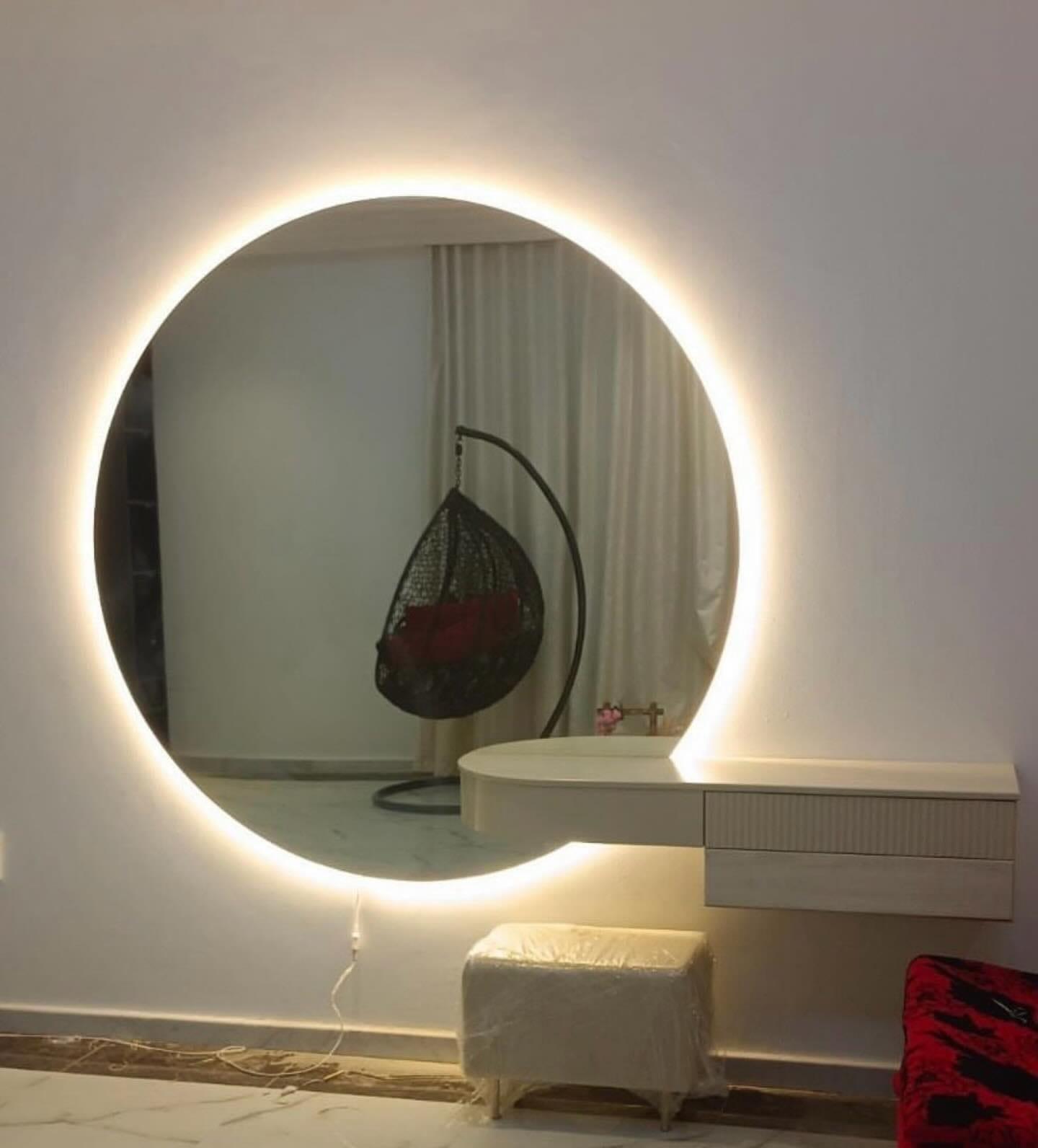
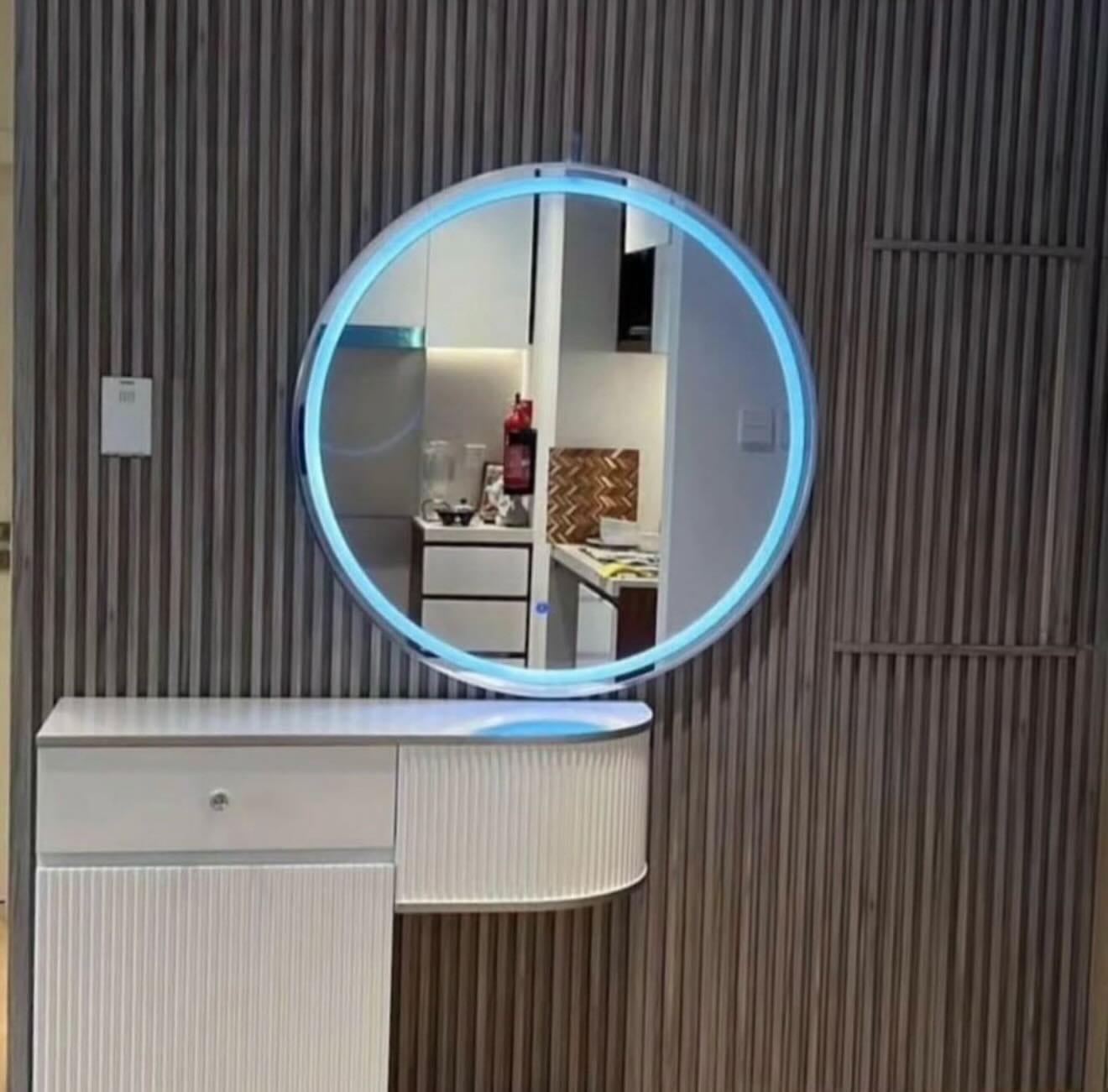
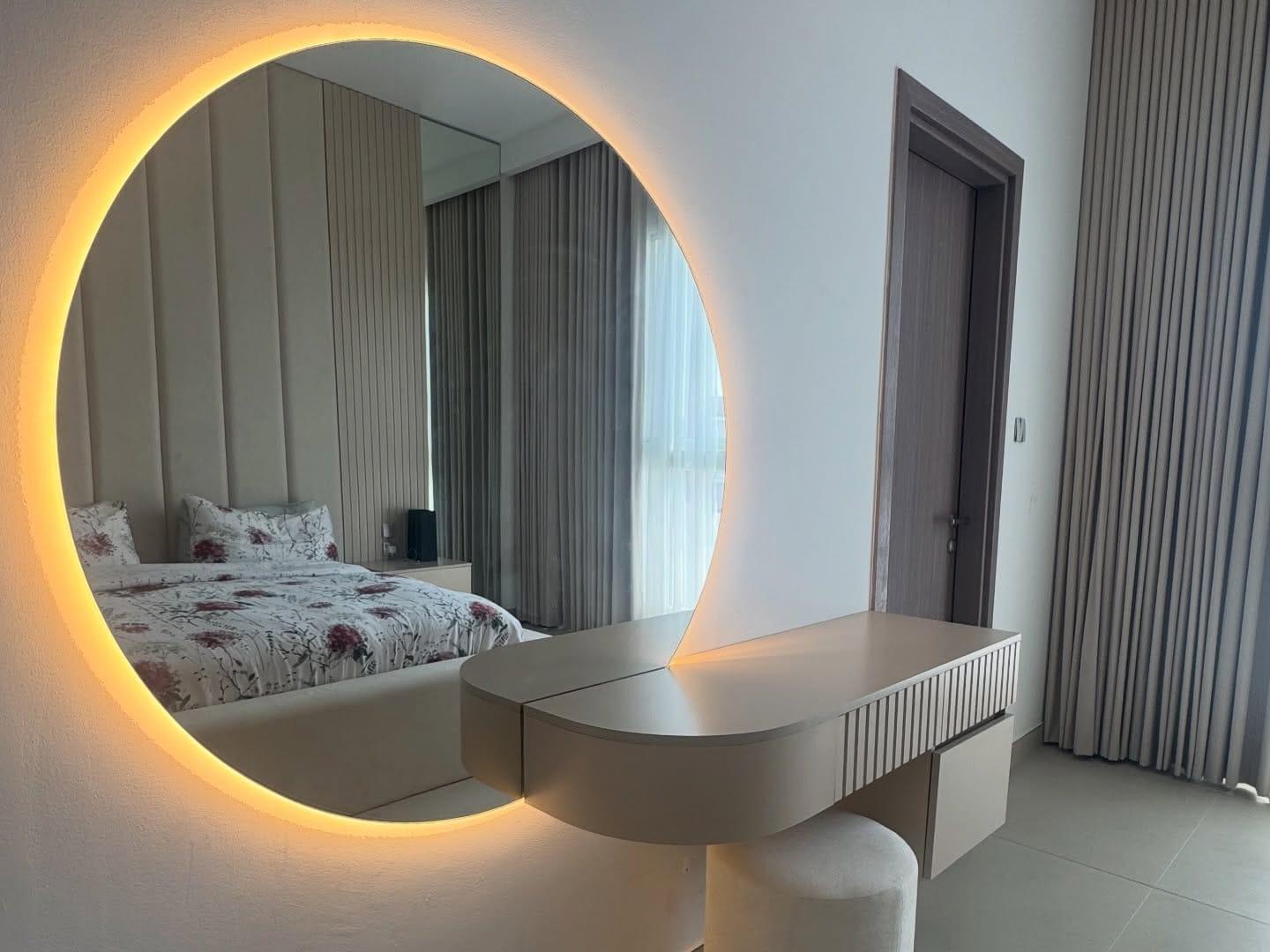
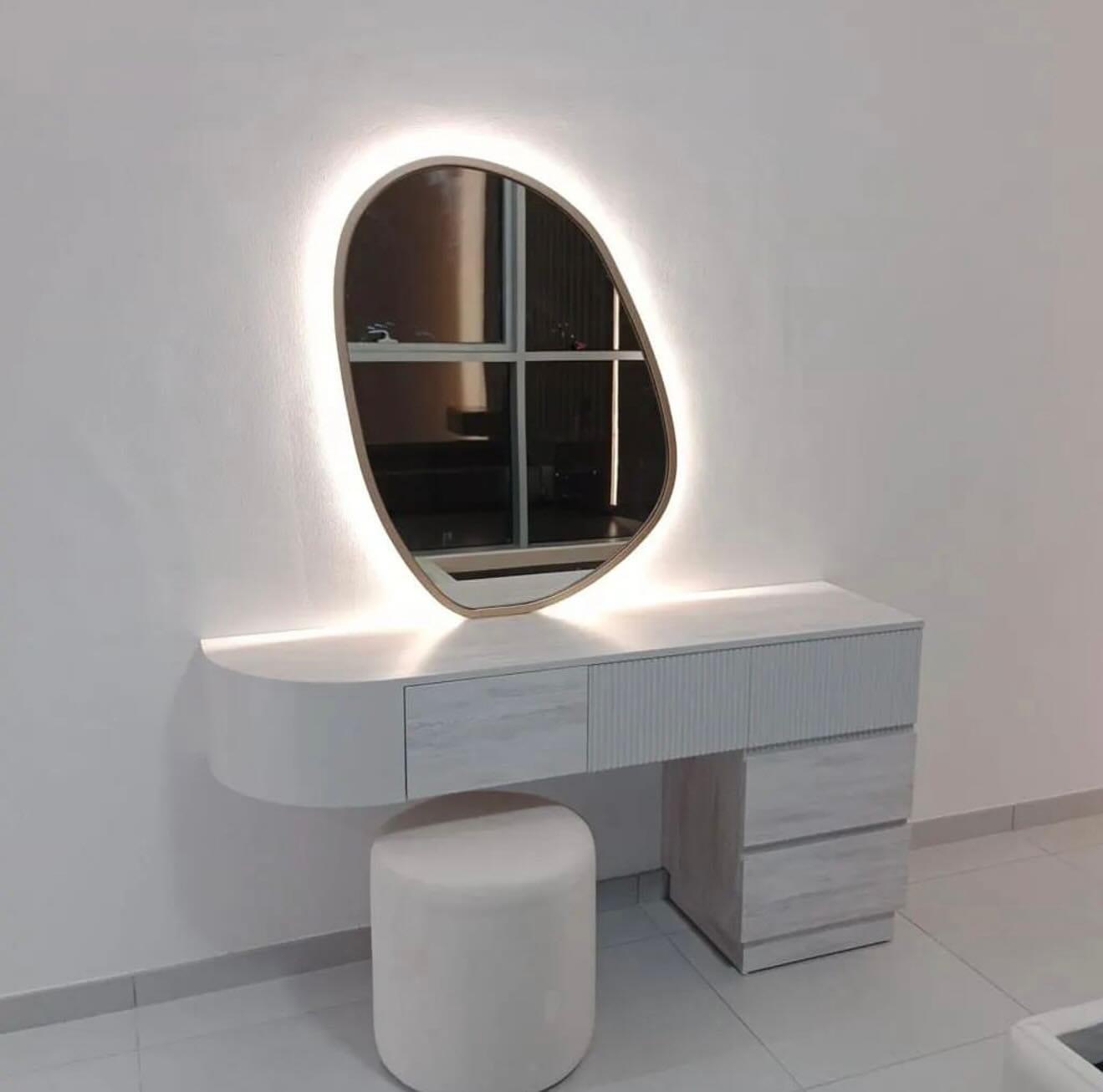
The mirror does most of the work. A round or organic mirror with a halo of light behind it says modern from the door, even when the table is a plain white box. The photo below shows the idea: a wall-hung console with a rounded end and a ribbed drawer front under a large round mirror. The style also depends on what you leave visible. Because there are no handles, drawers open with a groove or a push catch, so check with whoever will use them that they are happy with that before the front is made.
Classic dressing tables: framed fronts, bar handles and soft colours
A classic dressing table keeps its joints and edges in view. The drawer fronts have a framed panel or a visible edge, the handles are bar or ring pulls in a brass tone, and the colours are soft: off-white, cream or light grey. The mirror is usually a rectangle with a frame, and the table often stands on legs.
This style suits a bedroom with panelled walls, framed doors or a headboard with a tufted or panelled face, because the table repeats the language of the room. Our upholstered headboard guide covers the bed side of that pairing. Classic also forgives a bedroom that is not perfectly tidy: framed fronts and handles read as furniture rather than as a surface, so a few things left on top do not spoil it.
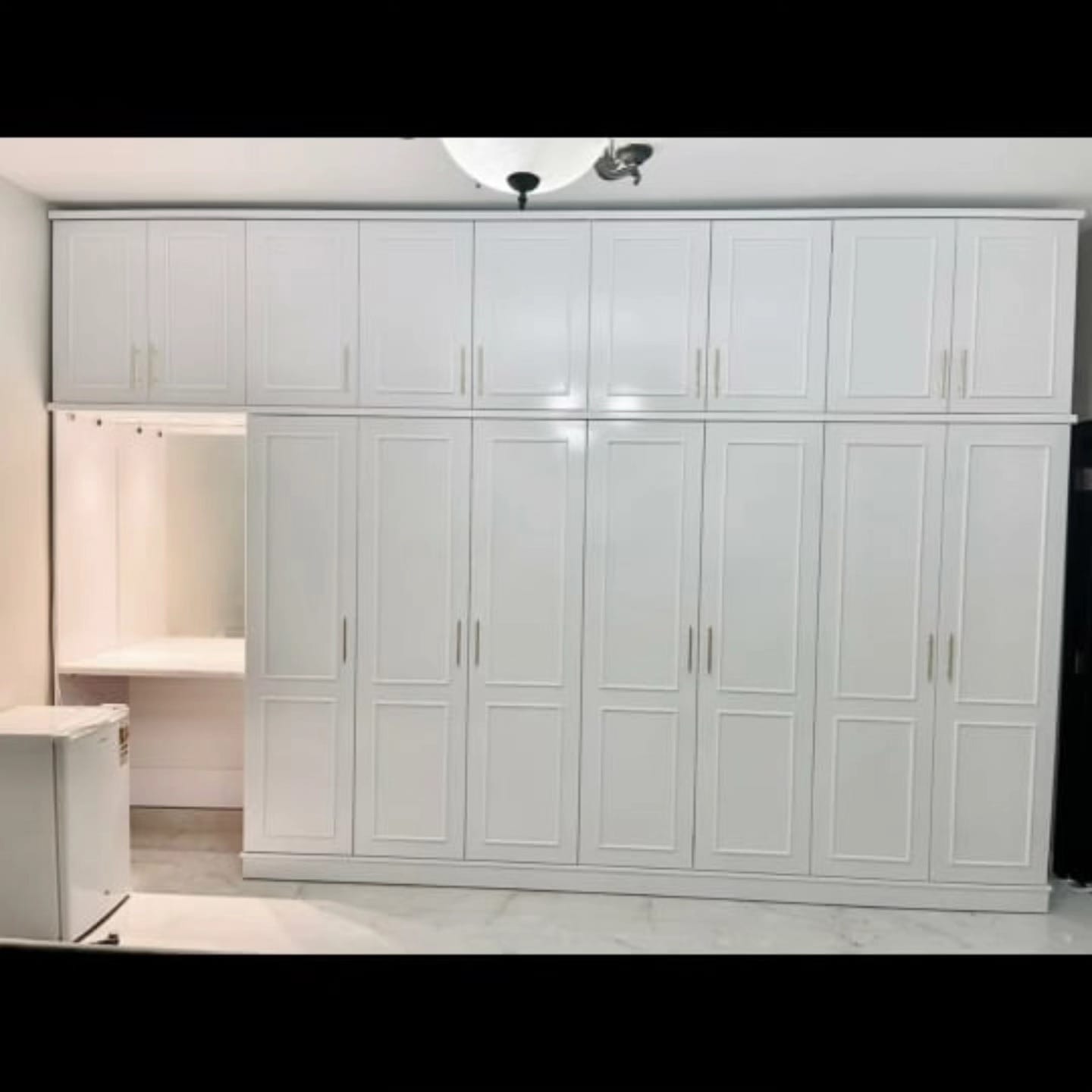
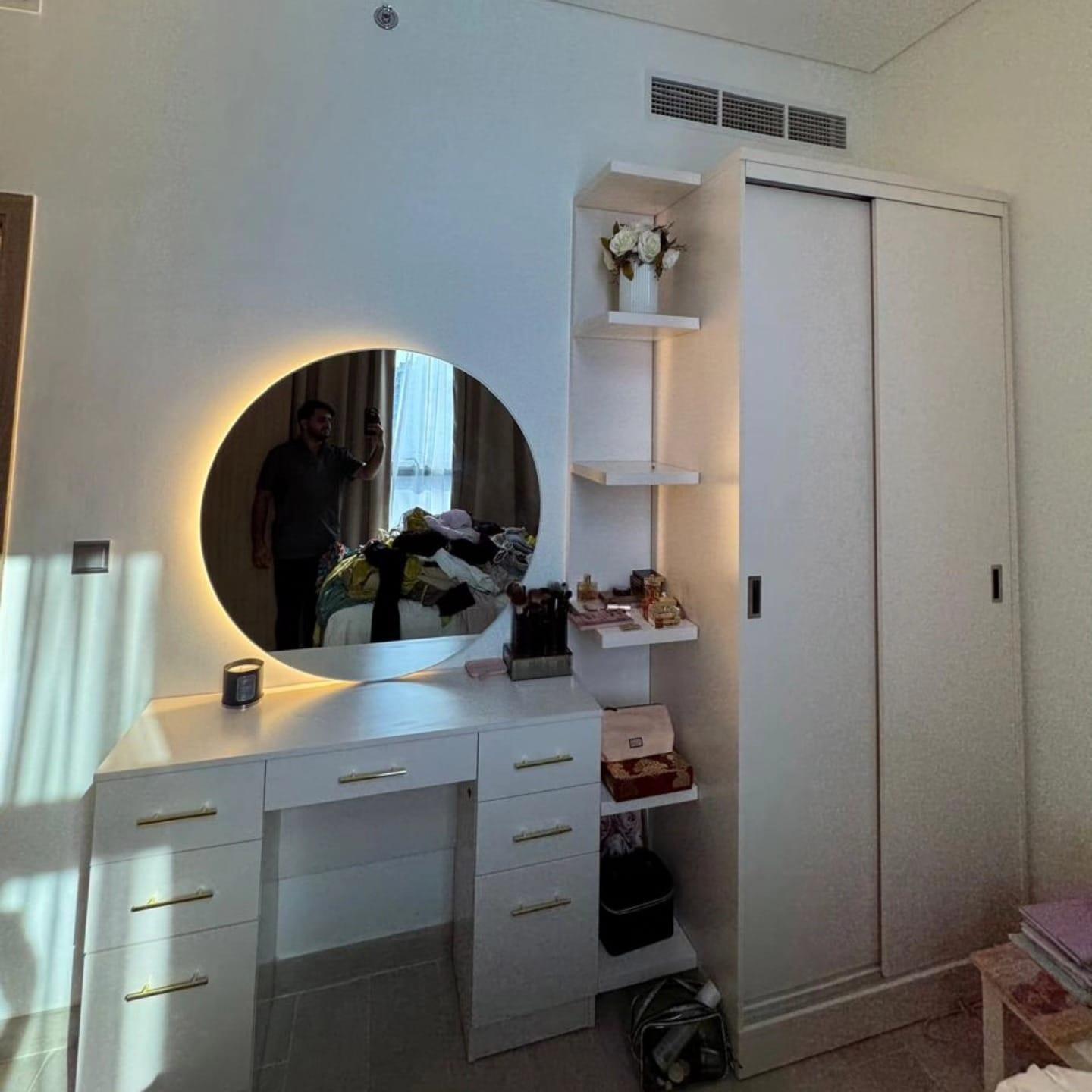
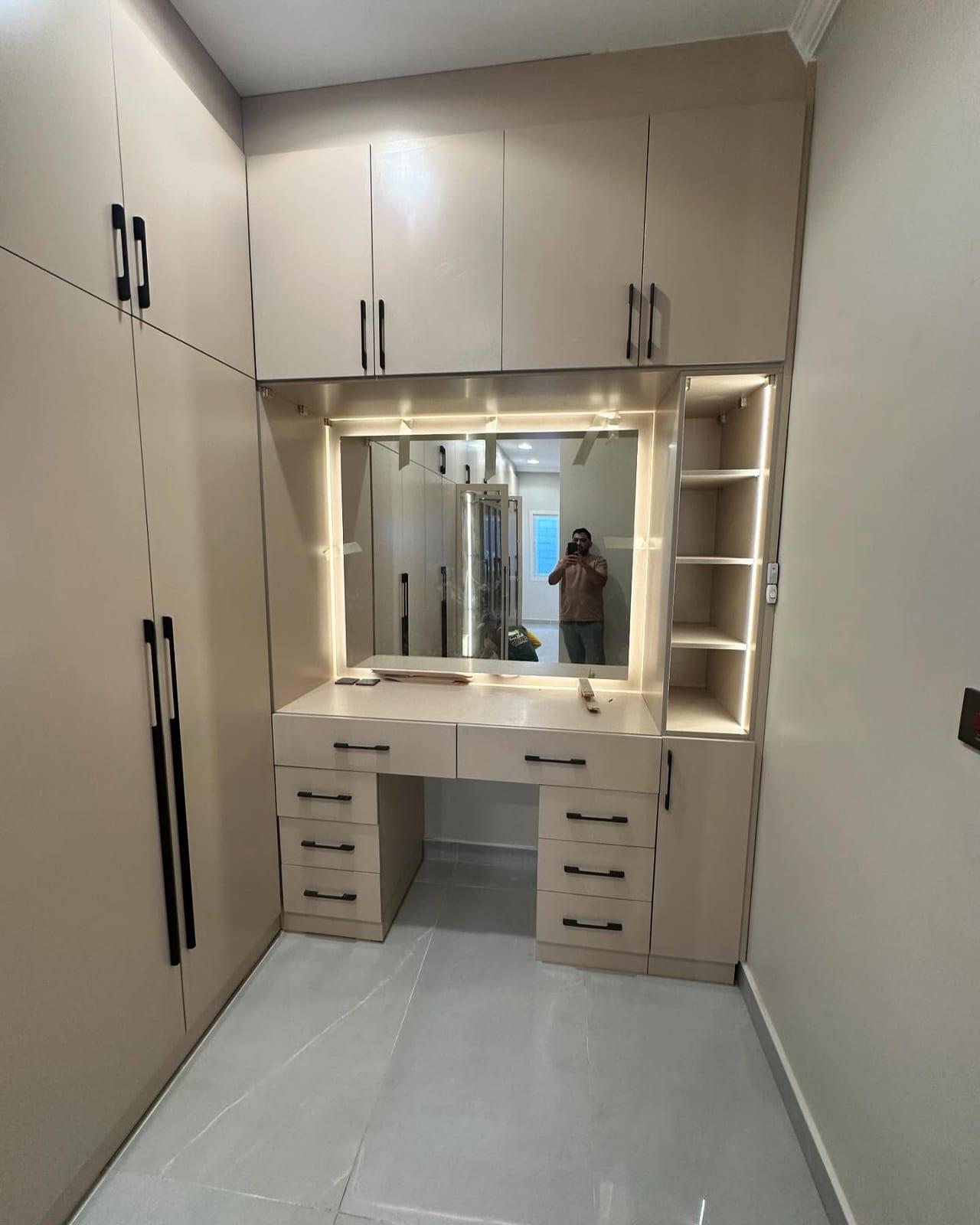
The cost is in the detail. Framed panels mean more cuts and a finish that must be sprayed evenly in the corners, and bar handles must line up across every drawer. The photo below shows a classic-leaning table: white fronts with brass-tone bar handles, a round backlit mirror and open shelves, set beside a sliding-door wardrobe. The mirror is modern, the handles are classic, which is how most of our tables end up.
Luxury dressing tables: arches, stone, brass and light
Luxury is not a third shape. It is a classic or modern table with one or two features lifted to a higher level and done with care. The usual ones are an arched mirror, a stone top, ribbed fronts with a thin brass trim, a tall drawer tower and a lit glass cabinet for perfume or bags.
The rule that keeps it elegant is restraint. Choose a hero (the arch, or the lit cabinet, or the stone) and let everything else stay quiet. Two or three materials are enough: for example a veneer front, a stone top and a brass line. Anything more starts to look like a showroom. The materials themselves, and how a quartz, sintered stone, glass or veneer top behaves under hot tools and perfume, are in our materials guide.
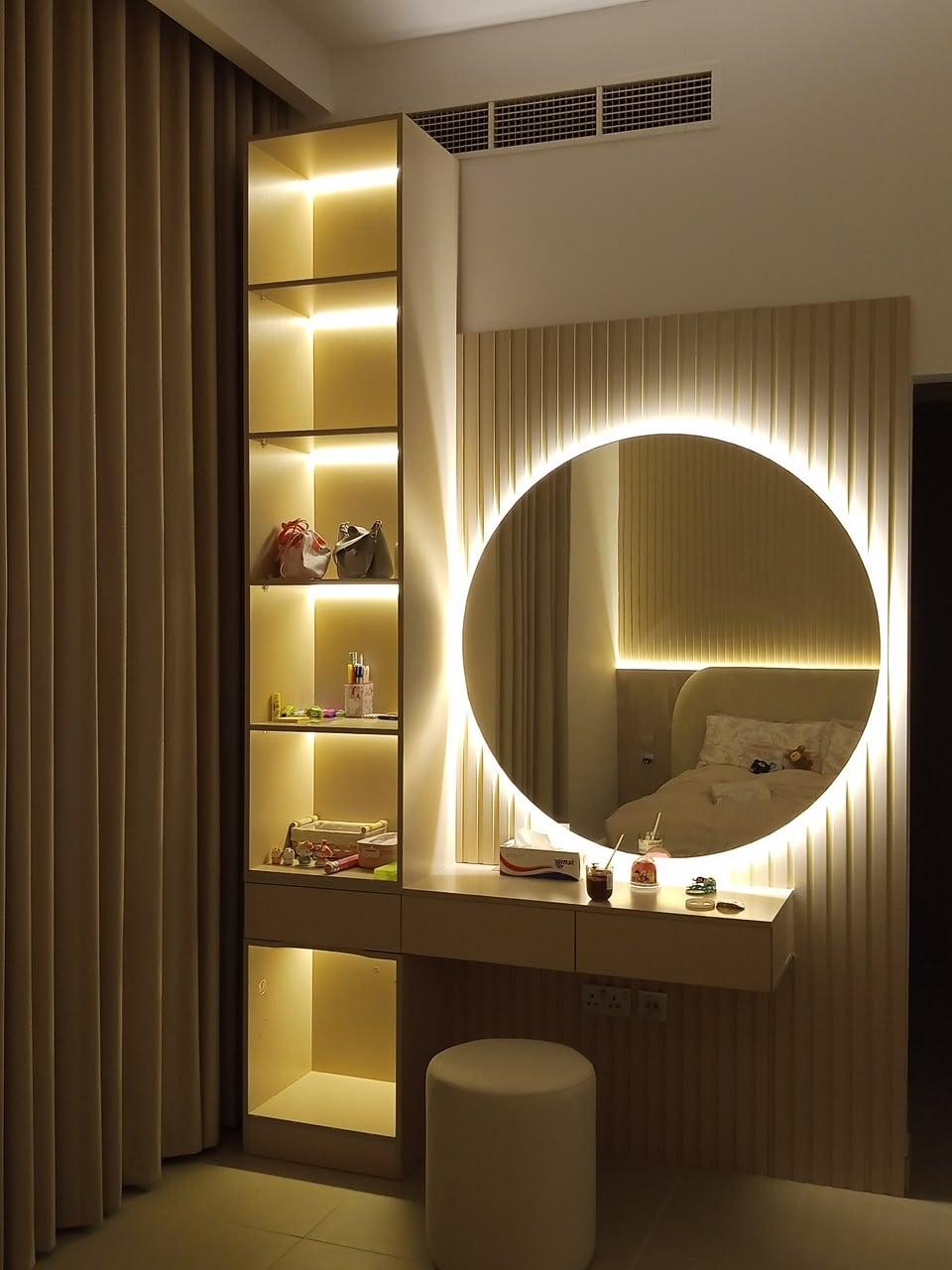
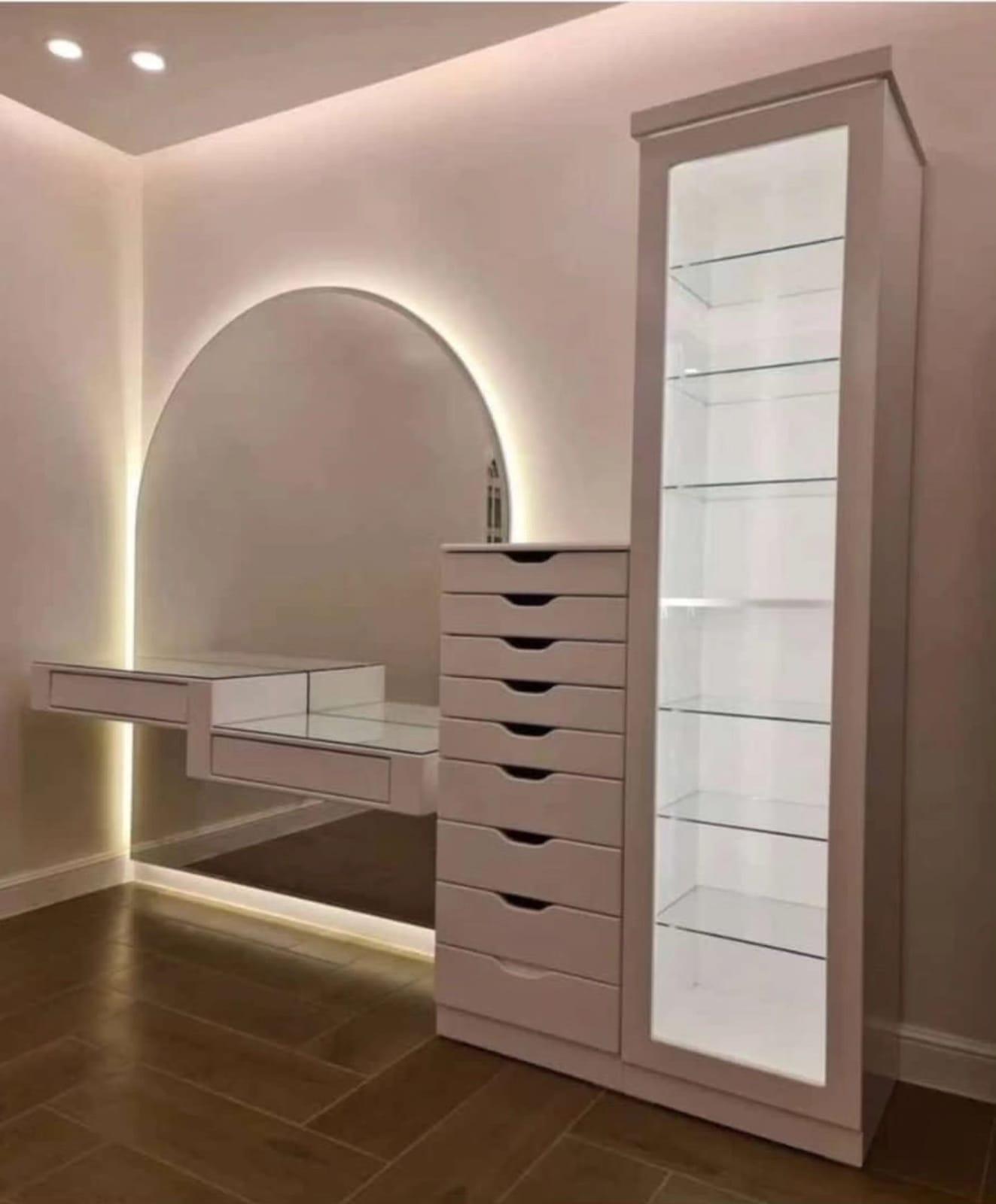
The photo below is the style at its fullest: a wall-hung white top with a lit underside, under an arched backlit mirror, beside a tower of narrow drawers and a lit glass display cabinet. A tall wall of this kind needs a measured drawing first, because the tower, the arch and the lighting all have to line up with the ceiling height, which is why we visit before we draw.
Handles and fronts: what each choice says
The front is what you touch every day, so it carries both the look and the wear. A flat front is the calmest. A ribbed front adds shadow lines and hides marks. A framed panel front reads classic. The finish decides how it ages: matt lacquer shows a scratch less than a gloss one, and veneer brings grain but needs a sealed finish, as the materials guide explains. For wardrobe doors the same comparison is made in wardrobe door finishes compared.
Handles are the cheapest way to move a table between styles. A bar in a brass tone moves it toward classic or luxury, a plain black or steel bar toward modern, and no handle at all makes it the most modern of the three. If you are planning no handles on the wardrobe next to it, keep the table the same, or the pair will look as if it came from two different rooms. Our handleless wardrobe guide compares the opening methods in more depth and applies equally to drawers.
One practical point on the handleless route: a groove or push catch asks a little more of the person opening the drawer, and the hardware must be specified before the front is made. We confirm it on the drawing so nothing is guessed on site.
Mirror shape: round, arched, rectangular or organic
The mirror is the largest single shape on the wall, so it decides the style first. A round mirror reads modern and soft. An organic, pebble-like shape reads contemporary and a little playful. A framed rectangle reads classic. An arch reads luxury, particularly when the arch continues as the frame of an alcove or a tall cabinet.
Size and shape should also suit the face and the room. A mirror that is too small for the top looks timid, while one that fills the wall above it makes a small bay feel larger. The detailed rules for width, height above the top and the stool are in our dressing table design tips, and the lighting that goes with each shape is in the dressing mirror lighting guide.
Ask for the mirror to be a separate line on the quotation. Then a change from round to arched or from plain to backlit is a visible cost, not a surprise, and you can decide which of the two you would rather pay for.
Finish and colour: warm veneer, matt lacquer or two tones
Three finishes cover most of our tables: matt lacquer in one colour, veneer in a warm timber such as oak or walnut, and a two-tone pairing of a lacquered body with a stone or timber top. Matt lacquer in a pale, warm colour suits modern and classic alike. Veneer adds warmth and suits luxury. Two tones suit a bedroom where the wardrobe is one colour and the table is allowed a second.
Choose the colour from the bedroom, not from the catalogue. Hold the sample board against the floor, the bed wall and the curtain, in the light the room has in the morning, since that is when the table is used. Dark timber and dark veneer look rich on a feature wall but can feel heavy in a small room, while soft off-white keeps a small bay open. Our curtain colour guide explains how to judge colour in UAE daylight.
Fingerprints, perfume rings and daily wiping decide how a finish ages, so ask your fitter which finish they would pick for a table used every morning, and compare it against the room in the sample board.
Light as part of the style
Light is where the three styles differ most at night. Modern uses a halo glow behind a round mirror or a slim strip under the top. Classic uses a pair of wall lights, one on each side of the mirror. Luxury uses the light as decoration too, with lit shelves and a lit glass cabinet beside the table.
Style is only half of it. Whatever the look, the face needs even light from the front and sides to be seen properly, and a halo behind the glass is a mood, not task light. The guide to dressing mirror lighting explains the difference and how to get both on one table. Our wardrobe lighting ideas cover the same layers when the table sits inside a wardrobe run.
Decide the lighting while the table is still on paper. Cables run to a driver, a socket and a switch, and all three need a place that is hidden but reachable.
Which style suits which bedroom
Start with the room you have, then pick the style that works with it. The table sets out the short version, and the paragraphs after it explain why.
Which dressing table style suits which UAE bedroom
Small flat or studio bedroom
- Best style
- Modern
- Why
- Slim top, no handles and a round mirror keep the bay light
Rented flat
- Best style
- Modern, freestanding or a table on legs
- Why
- Easy to take with you; see the guide on form for the wall limits
Villa master bedroom with panelled walls
- Best style
- Classic or luxury
- Why
- Framed fronts repeat the panelling; an arch can lead a feature wall
Master suite with a built-in wardrobe wall
- Best style
- Match the wardrobe fronts
- Why
- A table that copies the wardrobe finish reads as one wall
Teen or guest room
- Best style
- Modern, one colour
- Why
- Plain fronts are easy to wipe and easy to change with a new mirror
Our fitters measure first, so any of these can be drawn to your wall.
Matching the table to your wardrobe fronts
A dressing table and a wardrobe in the same bedroom are seen together, so they should look like a pair. There are three simple ways to do it. Use the same finish and handle on both and the room looks calm. Use the same finish with a different top, such as a stone top on the table, and the table becomes a quiet feature. Use a second colour only on the table, and the table becomes the accent.
The rules that go wrong most often are mixed metals (brass handles on the table and black on the wardrobe), mixed styles (a framed classic table beside a handleless wardrobe) and a mirror far larger than anything else in the room. Fix one of those and the room tidies at once. If the table sits inside the wardrobe run, our dressing-table-inside-wardrobe guide covers the bay, and the fitted vs built-in vs freestanding wardrobe guide helps choose the run it joins.
Children's rooms follow the same rule, with a softer palette. See our kids wardrobe guide for how a growing child's room changes.
What we do about it, and what it costs
We build every dressing unit in our Sharjah workshop to the wall it will stand against. Our dressing units service starts from AED 1,800, and the style changes the price through the things you can see: the mirror, the front, the top, the tower and the light. Each is a separate line on the quotation, so you can drop one without redrawing the rest. The costs by layout are in our dressing unit cost guide, and the pricing guide puts our services side by side.
The first step is a free measuring visit. We measure the wall, check the sockets, bring samples of the finishes and the tops, and look at the style of the bed and wardrobe, so the table is drawn for the room, not for a catalogue photo. Production takes up to about 10 days after you approve the drawing, and every unit carries our 24-month written workmanship warranty. Separately, the wood-based boards carry a 5-year limited warranty, subject to terms; hinges, tracks, runners, rollers and other moving hardware are not covered, and the final terms are in the written warranty. We also fit across the UAE, and our pages for Sharjah wardrobes and dressing units and Dubai wardrobes and dressing units give the local details.
To see the styles in this guide as products, browse our custom dressing tables, our vanities with backlit LED mirrors and our integrated dressing tables in wardrobes.
- Pick the style from the bed wall and the wardrobe fronts, not from a single picture.
- Give the table one hero feature: the mirror, the stone top or the lit cabinet.
- Keep handles and metals the same on the table and the wardrobe.
- Plan the light and the socket on the drawing, before the workshop starts.
- Ask for the mirror as its own line on the quotation.
Common questions
What is the difference between a modern and a classic dressing table?
A modern table has flat or ribbed fronts, no handles and a round or organic mirror. A classic one has framed panel fronts, bar or ring handles, soft off-white colours and a rectangular mirror. Most of our tables mix the two. Dressing table design tips.
Which dressing table style suits a small bedroom?
Modern, in one pale colour. A slim top, no handles and a round mirror keep the bay light and easy to clean. Decide the form (niche, console or table) after the style. Niche, console or table.
What makes a dressing table look luxury rather than just expensive?
One hero feature done well, such as an arched mirror, a stone top or a lit glass cabinet, with two or three materials at most. More than that starts to look like a showroom. Dressing table materials.
Should the dressing table match my wardrobe?
It should look like a pair. Use the same finish and the same handle metal, and let the table take a second colour or a stone top if you want an accent. Avoid a framed table beside a handleless wardrobe. Handleless or handles.
Which mirror shape is best for a dressing table?
Round for a modern look, a framed rectangle for classic, an arch for luxury, and an organic shape for a playful contemporary one. Pick the shape for the style and the width for the table. Dressing mirror lighting.
Does the style change the price of a custom dressing table?
Yes, through the mirror, the fronts, the top, the tower and the light. Our units start from AED 1,800, and each feature is a separate line on the quotation so you can drop one. Dressing unit costs.
Can I see the styles before I order?
Yes. We bring finish samples to a free measuring visit and draw the table to your wall before anything is cut. You can also browse our range. Custom dressing tables.

Sources & specifications
Manufacturer information applies to the named products and systems. Sources reviewed on 29 October 2026.
Want this planned for your home?
Consultation and measurement are free. Tell us the rooms, location and what you need; we arrange a sample visit and define the measured quotation.