Wardrobes · 14 min read · 18 August 2026
Storing handbags in a wardrobe: shelves, dividers, lighting and glass
How to store handbags in a wardrobe: upright or lying, how high and deep each shelf should be (3 to 5 cm above the tallest bag), stuffing and dust bags, dividers for clutches, lit display against closed shelves, glass doors, and keeping bags from sun and heat.

By Ali Haider Basra, Founder, Al Tareeq Decor · Contact our workshop
Key takeaways
- Store structured bags upright on a shelf and soft ones flat in one layer; two of the sources we opened say not to hang bags by the handles, because it stretches the straps.
- No source we opened gives a standard shelf size. The one sourced rule is to leave 3 to 5 cm above the tallest bag, measured stuffed; work out height and depth from your own bags.
- Stuff bags with acid-free tissue paper and keep each in a breathable cotton dust bag; plastic traps heat and moisture.
- Light is cumulative on leather, so light a few bags at eye level and keep the rest in closed shelves; the sources say keep light low and avoid direct sun and heat. That is general bag-care advice, not a UAE claim.
- Ask for each shelf's height and depth, the divider type, the light position and the door type in the quotation.
On this page
- Key takeaways
- Handbags in a wardrobe: the short answer
- How each kind of bag is usually stored
- Upright or lying: what each does to a bag
- Shelf height and depth: measure the bag, then add the margin
- Working out a shelf gap from the bag (illustrative sizes)
- Keeping the shape: stuffing and dust bags
- Dividers for clutches and pull-out shelves
- Lit display or closed shelves: what light does to leather
- The drawing: one shelf column, four decisions
- Glass doors for display
- Sunlight and heat: keep bags away from both
- What to ask for on the quotation
- Handbag questions for a wardrobe quotation
- What we do about handbag storage
- Common questions
Handbags in a wardrobe: the short answer
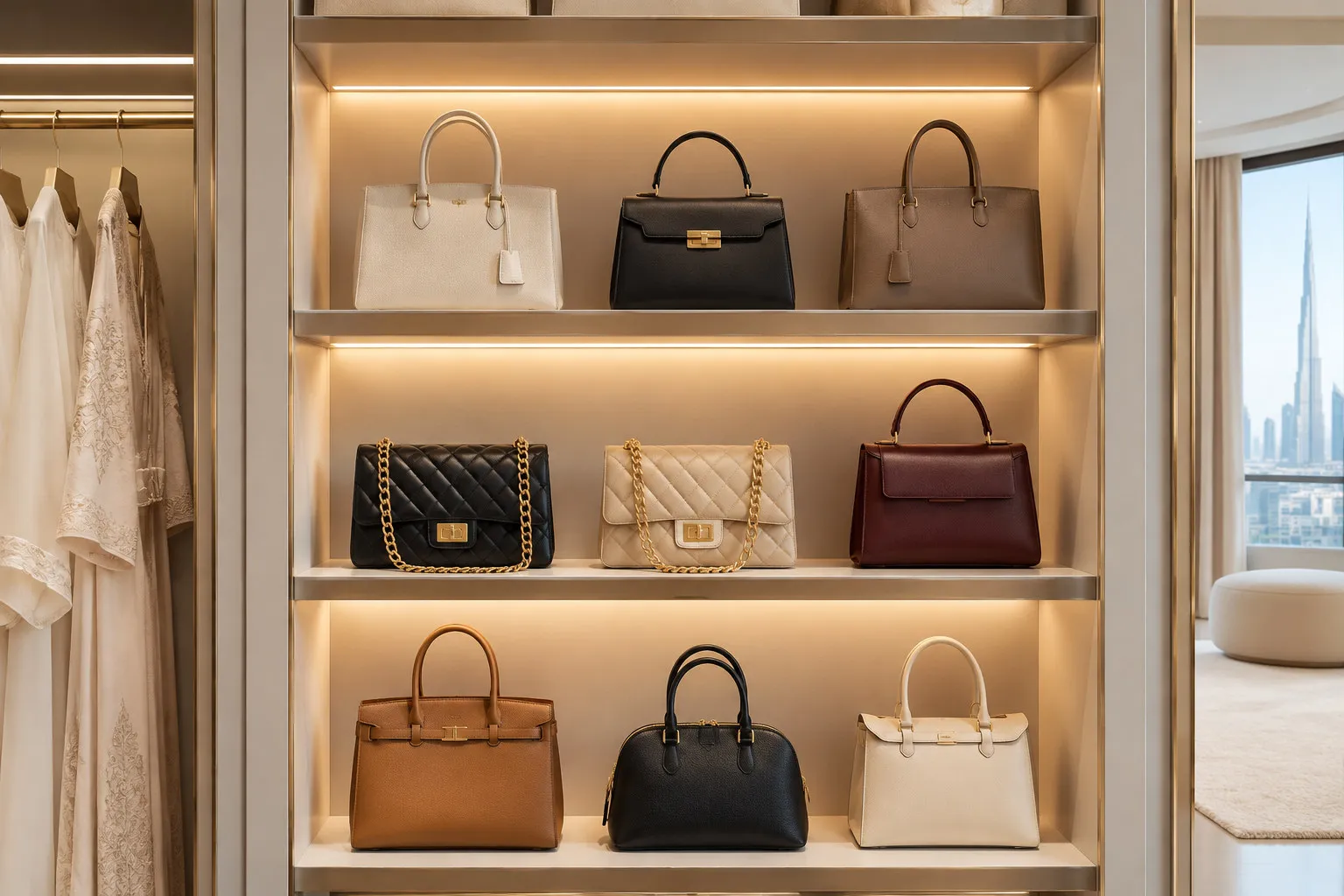
Most handbags do best standing upright on a shelf, with something soft inside to hold their shape, a breathable cover over them, and room around them. Two of the sources we opened say so in almost the same words: store bags upright on a shelf and do not hang them by their handles, which stretches the straps. A few bags, soft ones that slump when they stand, can lie flat. Beyond that, a wardrobe can do three things that a loose shelf cannot: set each shelf to the bags it holds, keep light and dust off them behind a door, and show the best ones behind glass.
None of the pages we read gives a standard height or depth for a handbag shelf, so this guide does not invent one. It gives the rule that does exist, three to five centimetres above the tallest bag, and shows how to work out your own numbers from your own bags. If you are deciding between showing bags and covering them, our open or closed wardrobe guide covers the general trade; this page is about bags only.
How each kind of bag is usually stored
Structured tote or satchel
- Usual place
- Upright on a shelf
- Why
- It stands by itself and keeps its shape; the handles are not loaded
Soft slouchy bag
- Usual place
- Lying flat, one layer, or upright with a firm stuffing
- Why
- It slumps when it stands and creases where it folds
Clutch or envelope bag
- Usual place
- On its edge between dividers
- Why
- It is thin, so a stack hides all but the top one (our reading)
Bag with a fragile chain or hardware
- Usual place
- In its dust bag, on a shelf of its own
- Why
- Loose metal marks other bags when they touch
Bags you wear every week
- Usual place
- Eye-level shelf, open front
- Why
- Easy to reach, so they do not get left on the bed
Bags worn a few times a year
- Usual place
- High shelf behind a closed door
- Why
- Less light, less dust, and out of the way
Placement follows the storage advice in the sources named under the article; the divider rows are our own reading of the geometry, not a rule from any of them.
Upright or lying: what each does to a bag
Upright is the default because it loads nothing. A bag standing on its base keeps its straps slack and its body supported by whatever stuffing it has. Emier, an Australian bag retailer, says bags are best kept upright or laid flat when possible and not hung by the handles for long periods; Fashionphile says the same about the straps. Neither says which of the two suits which bag, so the sorting below is our reading.
A bag with a rigid base and walls, such as a boxy tote, wants to stand. A bag with a soft body, a pouch or a bucket, slumps when it stands, and the crease where it folds can set; lying flat on one layer avoids that. Stacking bags on top of each other presses the lower one, and Emier's advice that bags need breathing room to avoid pressure marks points the same way, so keep a lying shelf to one bag deep unless the bags are light and firm.
Hanging is the exception. A wardrobe rail is for garments, and a bag hung from it by its handles carries its own weight on the straps. The place for a bag in a hanging section is a shelf above or below the rail; our wardrobe hanging heights guide shows where those shelves sit relative to the rail.
Shelf height and depth: measure the bag, then add the margin
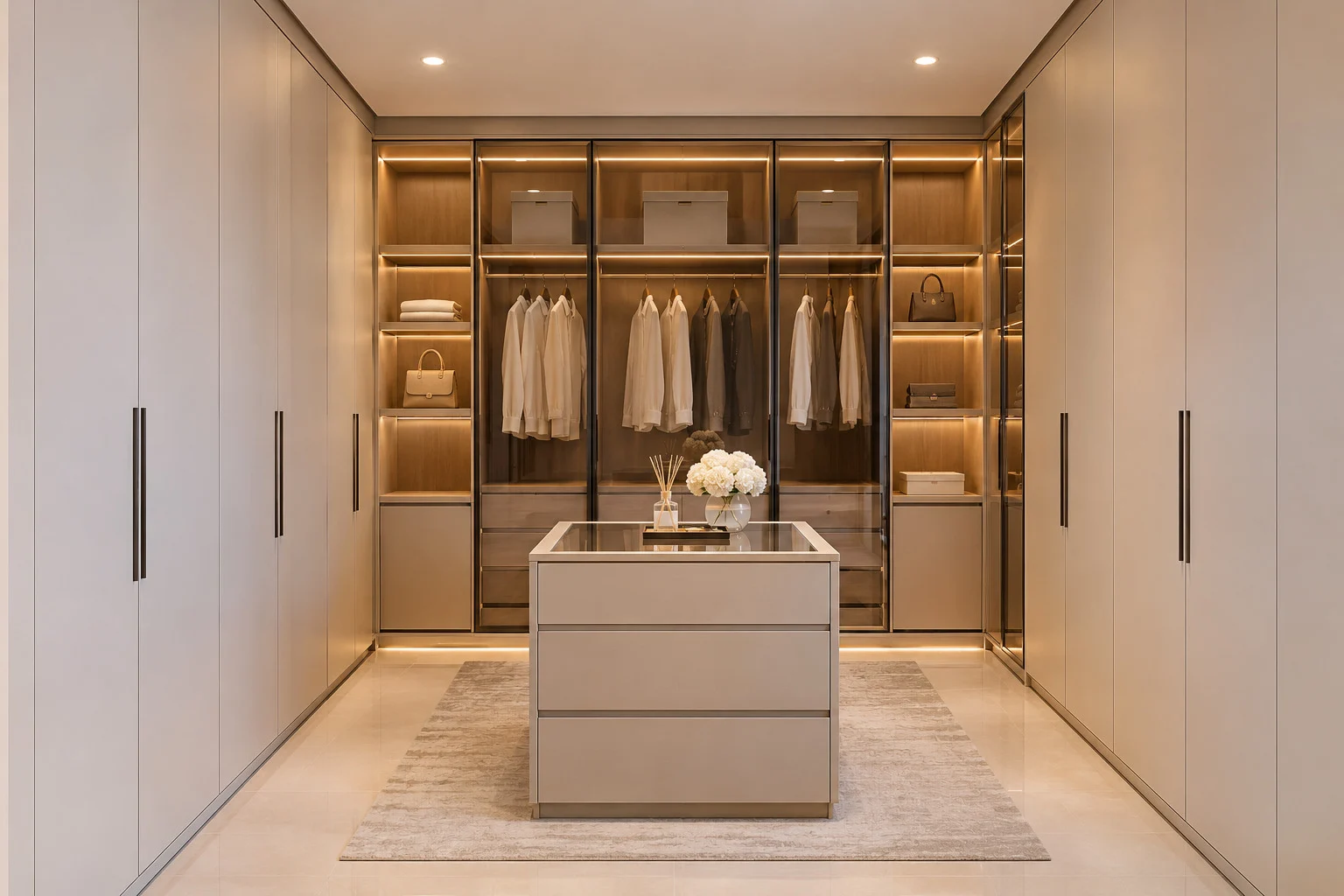
Take the bags you use most and measure each one stuffed, not empty. A Lazada guide to choosing a bag shelf for a wardrobe tells you to measure the maximum width, depth and height of the main bags when they are fully packed or stuffed with tissue, because an empty bag sags and gives a false reading. For the height of the shelf it says to leave at least three to five centimetres above the tallest bag on each tier. The tallest bag is the one that sets the gap, so a shelf of mixed bags is as high as its tallest, and a short shelf for clutches is a separate shelf.
Depth works the other way: the shelf must be deep enough for the bag, and not much deeper. Lazada warns that a long bag on a shallow shelf may overhang the edge and bend or rub against the door, and that a shelf that is too deep can stop the door closing fully. In a wardrobe the second problem is the one to watch, because shelves sit behind a door; how deep the box can be and still leave the room usable is in our wardrobe depth guide.
The table does the arithmetic on four example bags. The sizes are invented to show the sums, not typical sizes of any brand, and the three to five centimetres is the one sourced number in it.
Working out a shelf gap from the bag (illustrative sizes)
Structured tote, standing
- Stuffed height
- 30 cm
- Shelf gap with 3 to 5 cm added
- 33 to 35 cm
- Depth the shelf needs
- At least the bag's front-to-back size
Medium satchel, standing
- Stuffed height
- 24 cm
- Shelf gap with 3 to 5 cm added
- 27 to 29 cm
- Depth the shelf needs
- At least the bag's front-to-back size
Clutch, on its edge
- Stuffed height
- 18 cm
- Shelf gap with 3 to 5 cm added
- 21 to 23 cm
- Depth the shelf needs
- At least the clutch's width
Soft bag, lying flat
- Stuffed height
- 12 cm thick
- Shelf gap with 3 to 5 cm added
- 15 to 17 cm
- Depth the shelf needs
- At least the bag's longest side
The bag sizes are examples chosen for the arithmetic; the margin of 3 to 5 cm is from the Lazada guide. Measure your own bags stuffed. The sums assume nothing sits in front of the bag and the door's thickness is not counted.
Keeping the shape: stuffing and dust bags
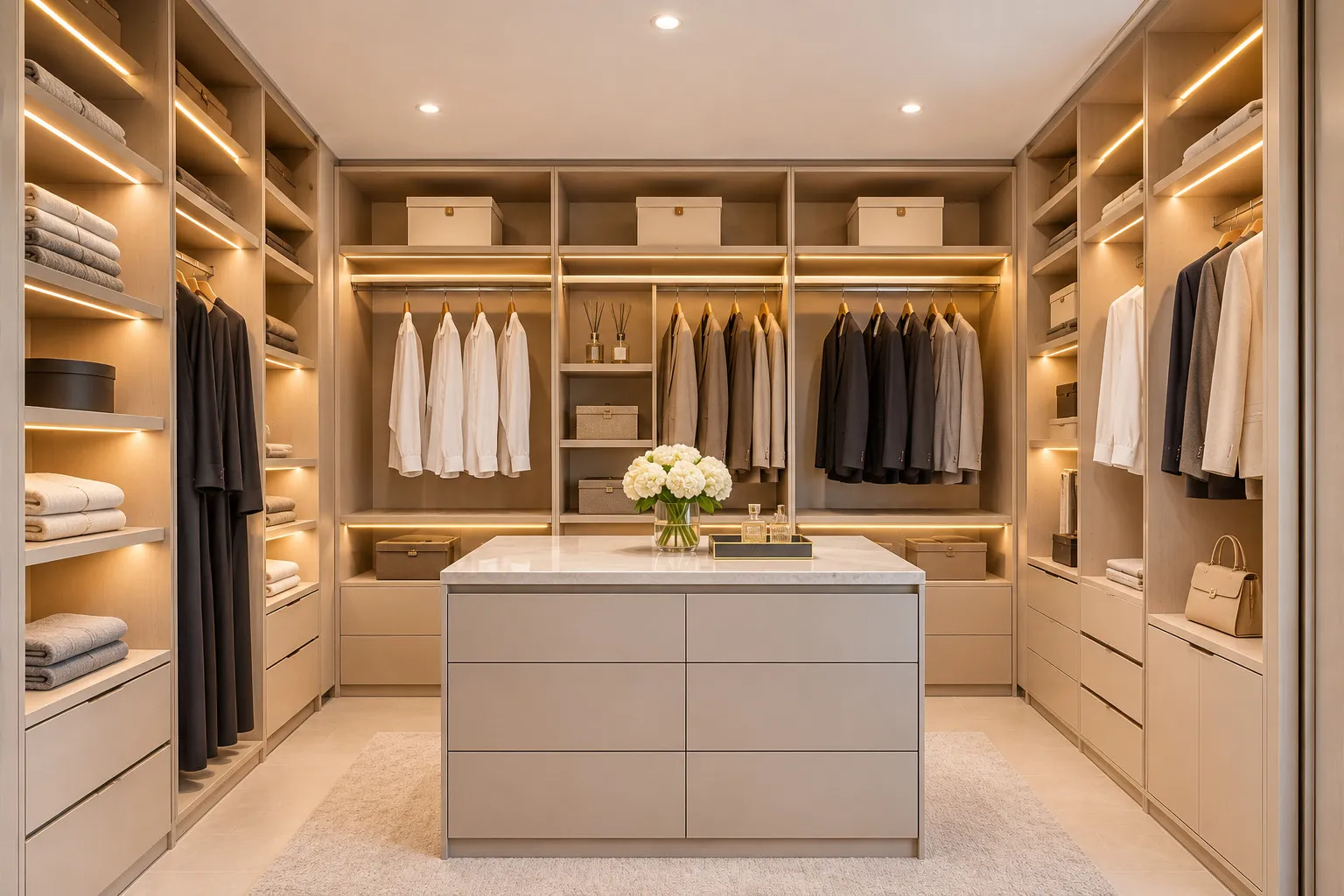
A bag that stands for months with an empty body slowly folds along its soft lines. Both Emier and Fashionphile recommend filling the bag with acid-free tissue paper, and Fashionphile adds pillow-style inserts; Emier says this keeps soft and structured bags in shape and prevents creases. Stuff to the shape the bag has when it is in use, not so tight that the walls bulge.
Then cover it. Fashionphile says to put each bag in its original cotton dust bag, and warns that plastic containers trap heat and moisture. Emier calls the dust bag a first line of defence against scratches and dust. For a bag that came without one, a plain breathable cloth cover does the same job; we do not claim any particular fabric is better.
Moisture is the other half. Fashionphile's page says heat and moisture create conditions for mould and for leather to warp, which is why a wardrobe that smells damp is not a place for leather; our guide to why a wardrobe smells musty explains what to look at first, and moisture-resistant wardrobe boards covers the board choice for a damp wall.
Dividers for clutches and pull-out shelves
A clutch is thin. Laid in a stack, only the top one can be seen and the bottom one is pressed by the rest. Stood on its edge between two vertical dividers, each one is visible and removable without disturbing the others. That is our reading of the geometry and none of our sources says it, but it is the same idea as a file rack. The divider has to be as tall as the clutch it holds, or the clutch leans, and as deep as the shelf, so measure the clutches first and ask for the dividers to be drawn at that size.
Dividers can be fixed or moved. A fixed divider is part of the cabinet, set at the planning stage; a movable one is more forgiving if the bags change. What we build is custom compartments and shelves, and we have not published which divider materials or fittings we use, so ask for them in the quotation. For the inside of drawers, as opposed to shelves, the wardrobe drawers and organisers guide covers the inserts.
A pull-out shelf suits the deep, high or hard-to-reach tier: it brings the back of the shelf to the front, so bags at the back are not forgotten. It also needs side clearance and a way to open the door past it, and the loads and widths of pull-out accessories, each from one maker's page, are in our pull-out racks guide. Shoes have their own shelf logic, covered in the shoe wardrobe design guide.
Lit display or closed shelves: what light does to leather
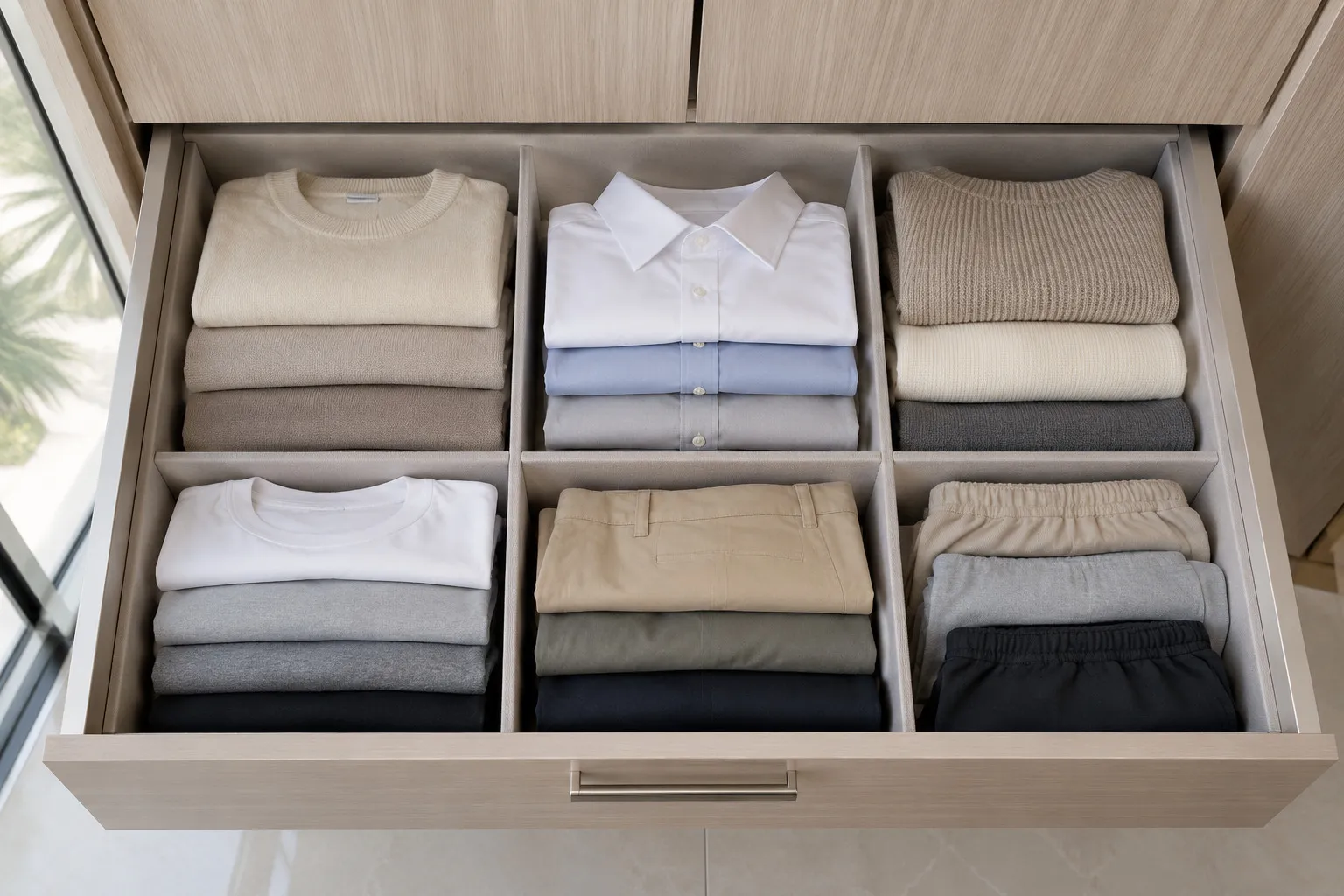
A lit shelf makes a bag look good and costs it something. The Museum of Western Australia's conservation manual says that as all light has the potential to damage leather, light levels should be kept to a minimum, particularly for dyed leather, and that bright spotlights and direct sunlight should be avoided. Its numerical limits are for museum objects, so we do not turn them into a rule for a wardrobe; the general point is that light is cumulative, and a bag lit all day gets more of it than a bag in a closed cupboard.
Heat is the second question. PacLights, a lighting supplier, says halogen and incandescent bulbs give off significant heat and UV, and that LED lights give off minimal heat and virtually no UV. That is one supplier's statement and not a test of any product, and the same page still advises monitoring the temperature inside a display cabinet and making sure it is ventilated. Keep the light off the leather itself: a strip under the shelf above, aimed at the shelf and not pressed against a bag, is a better plan than a bulb inside the bag's space.
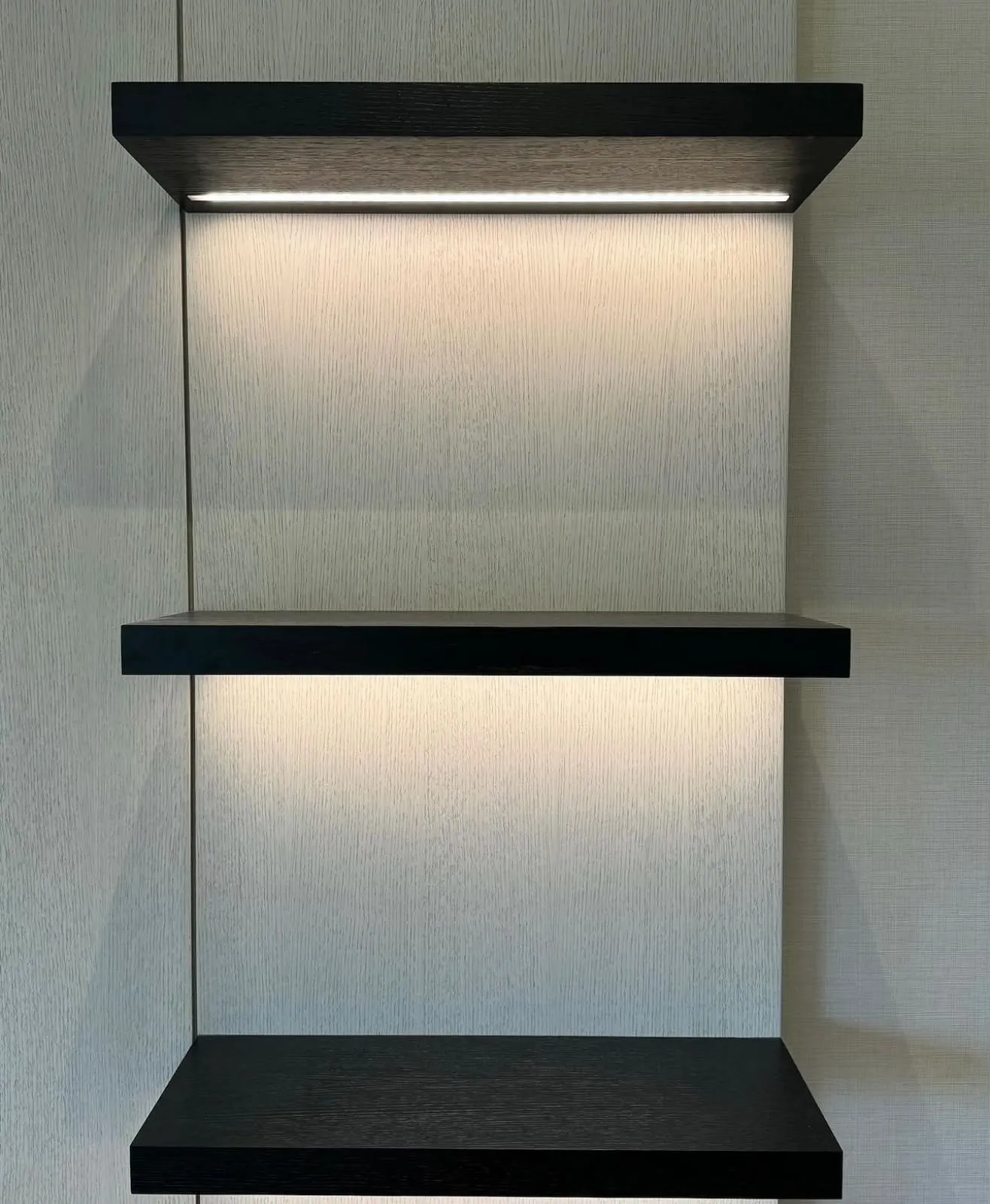
The practical compromise is to light a few bags, not all of them: a display shelf at eye level for the two or three bags you want to see, switched on when you want them seen, and closed shelves behind doors for the rest. Our own team installs the interior lighting with the wardrobe, and how a strip or a profile light looks and works is in our wardrobe lighting ideas and LED strip or profile guides.
The drawing: one shelf column, four decisions
The drawing below builds one column of a bag wall in the order a designer decides it: the upright shelf, the lying shelf, the divider bay and the lit display shelf at eye level. Only two numbers on it are sourced: the margin above the tallest bag (Lazada) and the advice to keep light low on leather (Museum of Western Australia). The bags and the bays are drawn to show the sequence, so they are illustrative.
- 1. The upright shelf: structured bags standing on their base, with 3 to 5 cm above the tallest (Lazada)
- 2. The lying shelf: one layer, for soft bags that slump when they stand (our reading)
- 3. The divider bay: clutches on their edge between vertical dividers, each one visible (our reading)
- 4. The lit display shelf: a few bags at eye level, light kept low and off the leather (Museum of Western Australia)
Glass doors for display
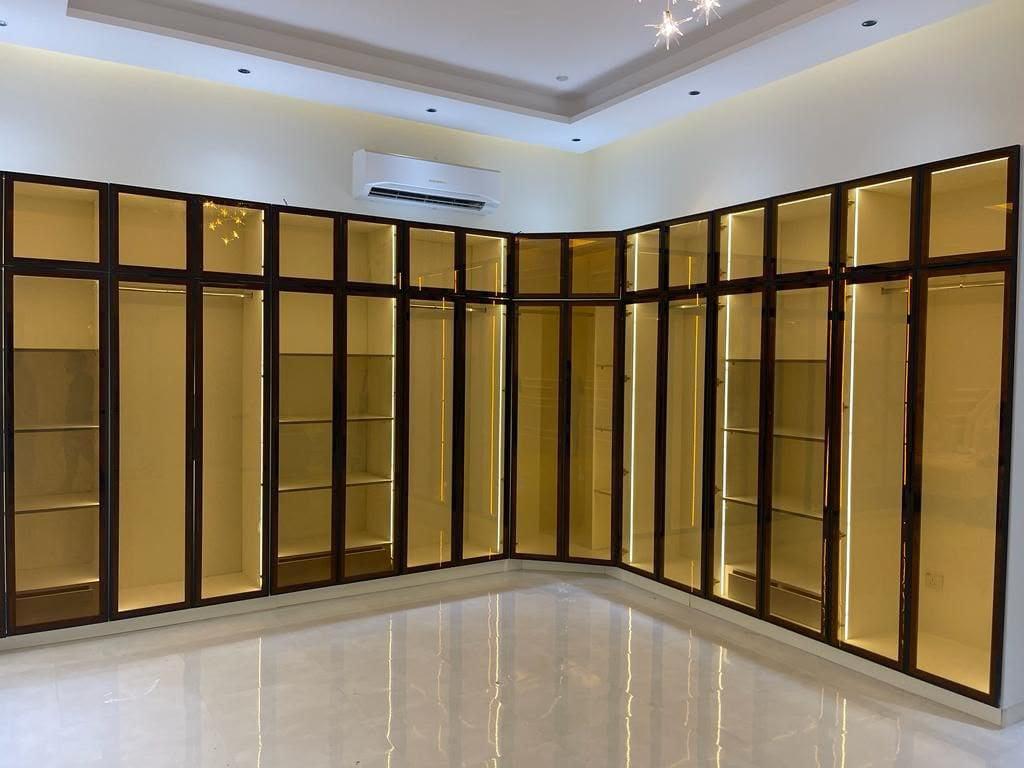
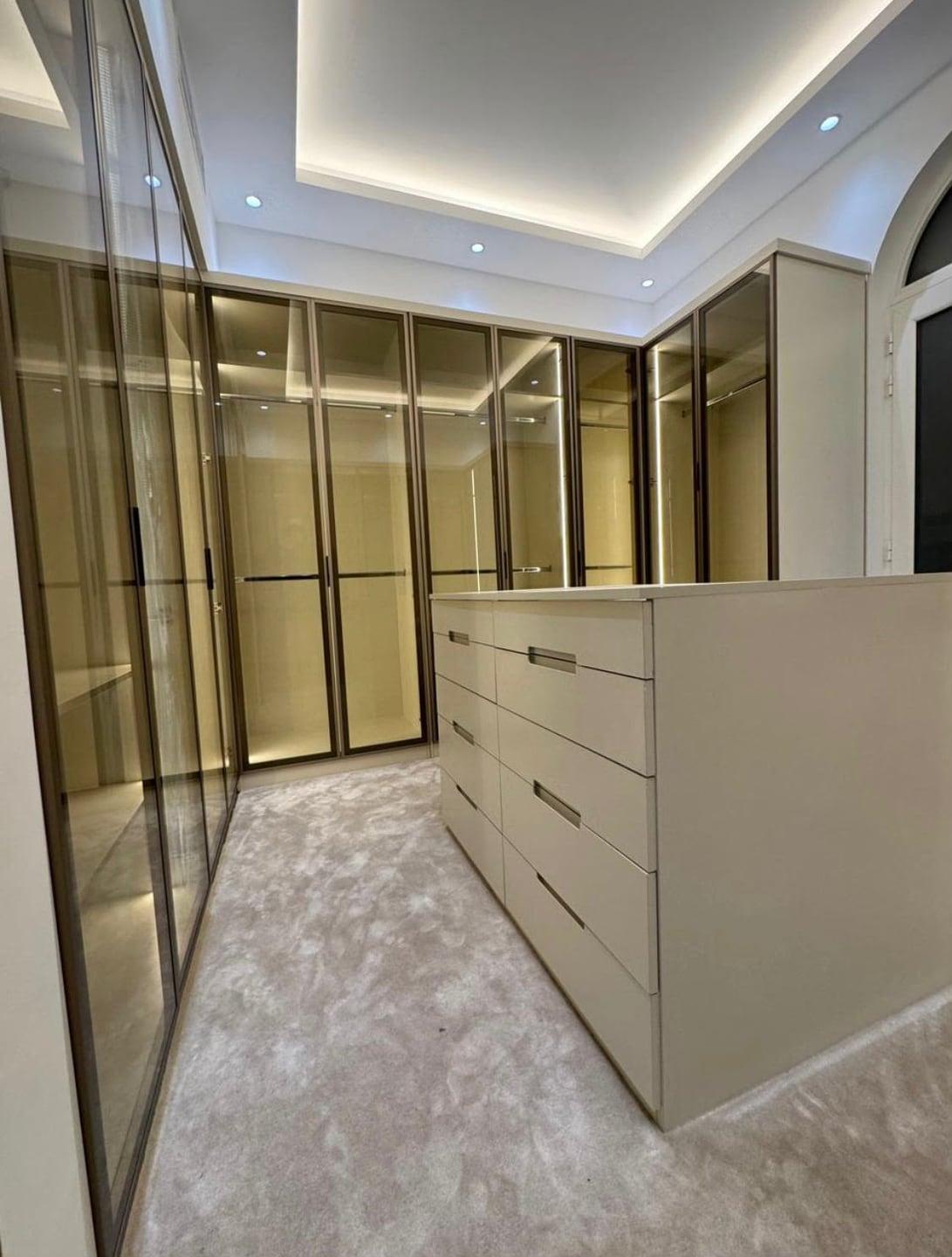
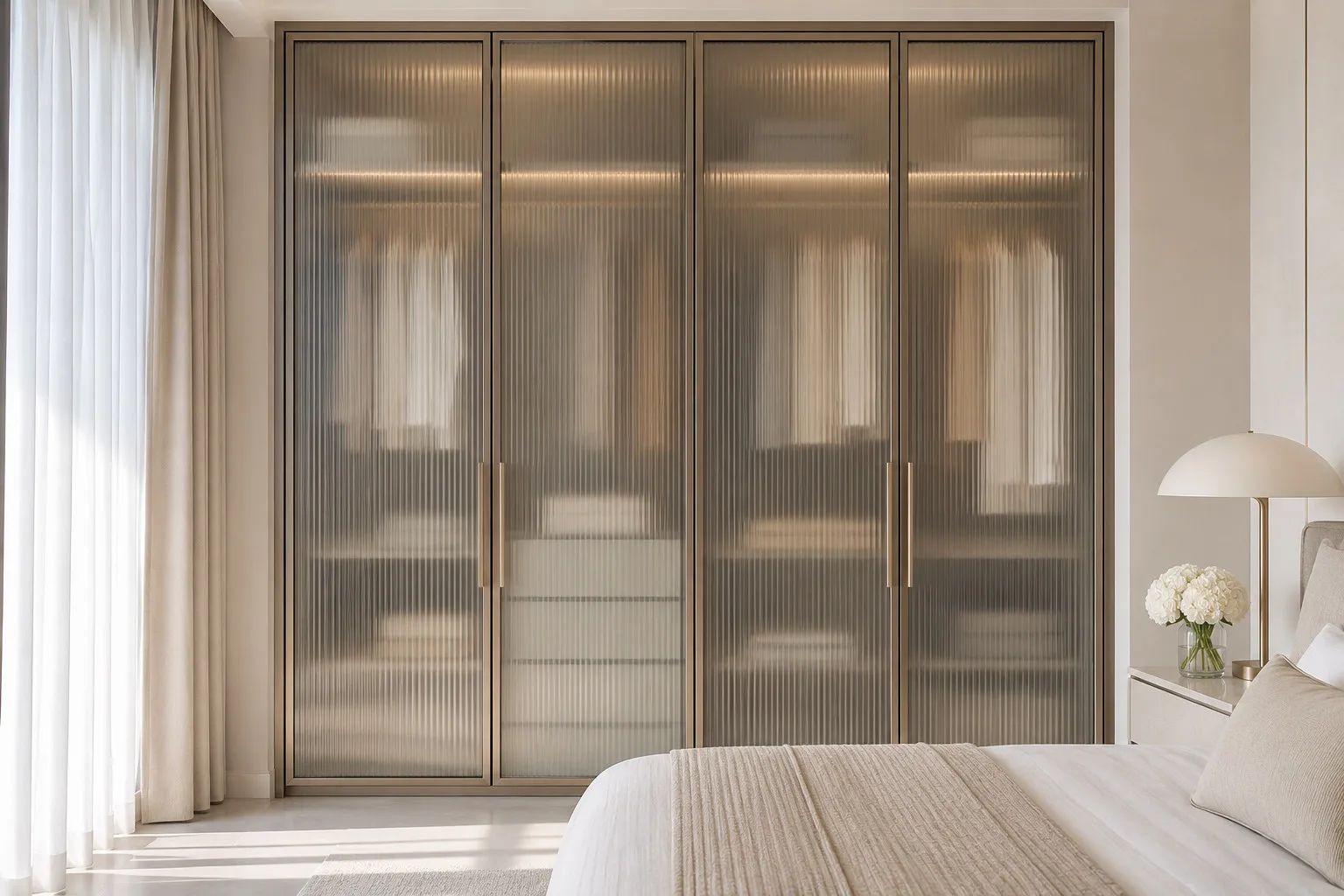
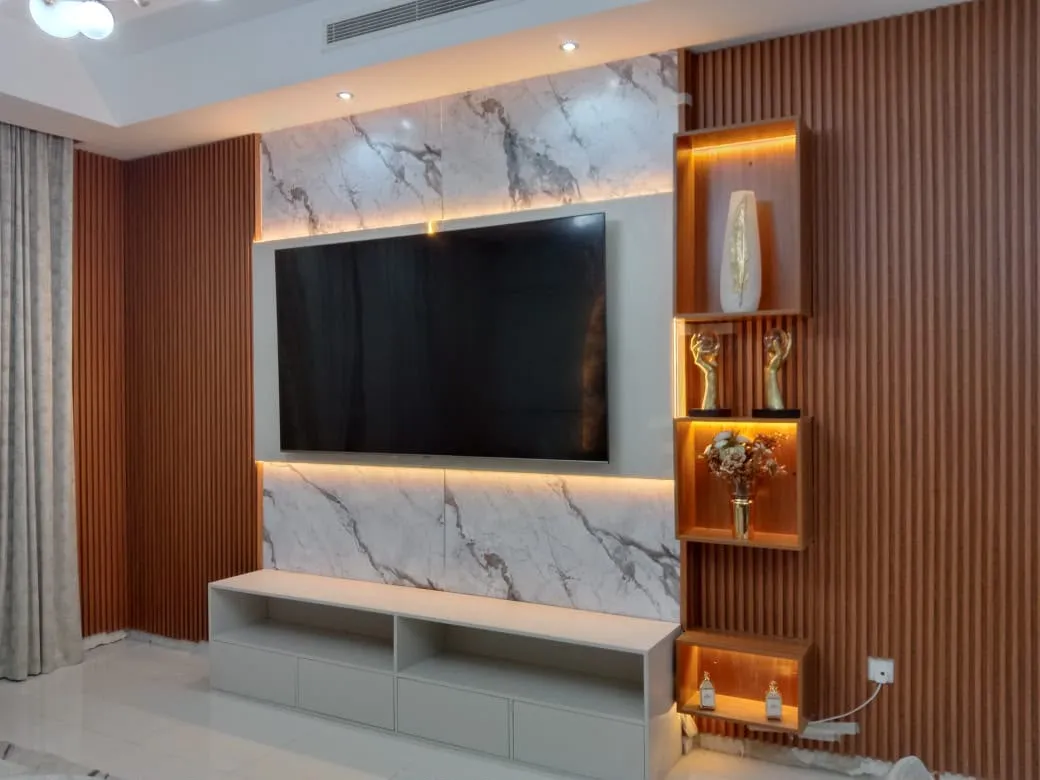
Glass lets you see the bags without opening the door, and it keeps dust off them. It also lets light in and shows the inside to anyone in the room, which suits a shelf of six good bags and not a shelf of everyday ones. What each type of glass shows or hides, and how tidy the inside has to be behind it, is covered in our glass wardrobe doors and privacy guide; we make glass-fronted designs in tinted glass, and the lit glass-front wardrobes page shows finished examples.
For bags, the useful question is how much light reaches the leather. Clear glass shows a display best; tinted glass softens the view, and how much light either passes depends on the glass, while a solid door keeps the most light out. We have not published light-transmission figures for our glass, so ask for them in the quotation if bag care is part of the reason you want glass. A mirror wardrobe door is the alternative when you want the doors to show the room and not the bags.
Sunlight and heat: keep bags away from both
The advice that every source we opened agrees on is simple: keep bags out of direct sun and away from heat. Emier says direct sunlight can fade and damage leather and recommends a shaded, cool area with stable temperature and low humidity; Fashionphile says UV strips moisture from leather and that heat and moisture create conditions for mould and warping. That is general bag-care advice, not a statement about the UAE or about any one product, and it is the reason a bag wall belongs on an inside wall away from a window, not beside one.
Inside the home that means a few plain habits: do not store bags on a shelf the sun reaches, do not put a bag display in front of a window, and do not light closed shelves around the clock. If the wardrobe is in a walk-in or a dressing room, the reach-in versus walk-in wardrobe guide and the dressing room design guide help place the bag wall where the light is least.
What to ask for on the quotation
Bags are measured by the bag, so the quotation should list the bags it was drawn around. Ask for each shelf's height and depth in centimetres on the drawing, with the bag that set it. The general list for any wardrobe quotation is in our wardrobe quotation checklist, and the pricing guide shows how a quotation is built from a measured wall.
Handbag questions for a wardrobe quotation
Height and depth of each bag shelf
- Why it matters
- The tallest stuffed bag sets the gap
- A clear answer looks like
- A figure in cm on the drawing for each shelf
Which bags the shelves were drawn for
- Why it matters
- A shelf for totes is wrong for clutches
- A clear answer looks like
- A list of bag types or sizes written on the drawing
Dividers: fixed or movable, height and material
- Why it matters
- A clutch leans if the divider is short
- A clear answer looks like
- Fixed or movable stated, with height, or 'not specified' in writing
Light: where, how many, switched how
- Why it matters
- Light is cumulative on leather
- A clear answer looks like
- Position on the drawing and a switch per zone
Glass or solid door for each section
- Why it matters
- Glass shows bags and passes light
- A clear answer looks like
- Door type named per section
Distance from any window
- Why it matters
- Direct sun fades leather
- A clear answer looks like
- The wall chosen and why
Our entry price of AED 550 per sqm is for MDF laminate with hinged doors, installed; shelves, dividers, lighting and glass change it and the figure is set after measurement. Ask for each in the quotation.
What we do about handbag storage
We build custom compartments and shelves to the bags you give us, our own team installs the interior lighting, and glass-fronted designs are part of what we make. At the free measuring visit we bring samples, measure the wall with a laser and ask which bags the wardrobe must hold; then we send a drawing and an itemised price, and nothing is made until you approve them. Shelf heights and depths are on that drawing, so you can check them against the arithmetic on this page before anything is cut.
Our entry price is from AED 550 per sqm of wardrobe front, installed, for MDF laminate with hinged doors; glass, lighting and special compartments raise it and the figure for your wall is set after measurement. After you confirm, our Sharjah workshop builds the wardrobe and our own team installs it up to about 10 days later, depending on size and design, with a 24-month written workmanship warranty (supplied products follow their own terms). Separately, the wood-based boards carry a 5-year limited warranty, subject to terms; hinges, tracks, runners and other moving hardware are not covered, and the written warranty has the final terms. We have not published divider materials, lighting brand or glass specification, so ask for them in the quotation and we will write them down.
Start with the free wardrobe measuring visit guide to see what to prepare, then book through the consultation form. Our custom wardrobes service page lists what we make, and the built-in wardrobes page shows finished runs. If you are weighing a bag wall inside a bigger plan, the master bedroom wardrobe design guide and custom or ready-made wardrobe are the two to read next.
Installation covers the whole UAE. The Sharjah page gives the workshop address and the Dubai page covers visits there; the warranty and aftercare guide explains what the 24 months cover, and the warranty guide for wardrobes lists what to ask in writing. For a suitcase and seasonal section above the bags, see luggage and seasonal storage in a wardrobe.
For shoes, jewellery and the rest of the inside, every interior guide, grouped on one planning page, has a guide for each.
Common questions
Should handbags stand up or lie down in a wardrobe?
Structured bags stand upright on a shelf; soft bags that slump can lie flat in one layer. Emier says upright or flat, and Fashionphile says upright rather than hung by the handles. See our wardrobe drawers and organisers guide.
How high should a handbag shelf be?
Measure the tallest bag stuffed and add 3 to 5 cm, the margin a Lazada wardrobe shelf guide gives. We know of no standard height, so we quote none. See our wardrobe measuring visit guide.
How deep should a handbag shelf be?
Deep enough for the bag, and not much deeper: a shelf that is too shallow lets long bags overhang, and one that is too deep can stop the door closing. No published figure for bags exists in our sources. See our wardrobe depth guide.
How do I keep a handbag's shape in a wardrobe?
Fill it with acid-free tissue paper or a pillow insert and keep it in a cotton dust bag, not plastic. Stuff to the shape it has in use, not tight. See our luggage and seasonal storage guide.
Do lights inside a wardrobe damage leather?
Light is cumulative on leather: a conservation manual says keep light levels to a minimum, especially on dyed leather. LEDs are described by one supplier as low in heat and UV, but keep them off the leather and switched off when not needed. See our wardrobe lighting ideas.
Is a glass-fronted wardrobe good for displaying bags?
It shows bags and keeps dust off, but it also lets light in and shows the inside, so use it for a few bags and keep the rest behind solid doors. We make glass-fronted designs. See our glass wardrobe doors and privacy guide.
What should I put on a quotation for bag storage?
Each shelf's height and depth, which bags it was drawn for, the divider type, where the lights go and the door type. Our entry price is AED 550 per sqm for MDF laminate with hinged doors, installed; glass and lighting raise it. See our wardrobe quotation checklist.

Sources & specifications
Manufacturer information applies to the named products and systems. Sources reviewed on 4 November 2026.
- Emier, How to store handbags (23 November 2023): upright or laid flat, not hung by the handles; acid-free tissue stuffing; dust bag; direct sunlight can fade and damage leather; shaded, cool, stable areaemier.com.au(opens in a new tab)
- Fashionphile, How to safely store your luxury handbags during hot summer months: upright on shelves, acid-free tissue or pillow inserts, original cotton dust bag, plastic traps heat and moisture, UV strips moisture from leatherfashionphile.com(opens in a new tab)
- Lazada, choosing a bag organiser shelf for a wardrobe (16 August 2026): measure bags stuffed, 3 to 5 cm above the tallest bag, overhang on a shallow shelf, a deep shelf can stop the door closinghome.lazada.sg(opens in a new tab)
- Museum of Western Australia, Preventive Conservation manual: keep light levels to a minimum, particularly for dyed leather; avoid bright spotlights and direct sunlightmanual.museum.wa.gov.au(opens in a new tab)
- PacLights, display cabinet lighting: halogen and incandescent give significant heat and UV, LED minimal heat and virtually no UV (supplier's statement), monitor cabinet temperature and ventilatepaclights.com(opens in a new tab)
Want this planned for your home?
Consultation and measurement are free. Tell us the rooms, location and what you need; we arrange a sample visit and define the measured quotation.