Wardrobes · 16 min read · 23 July 2026
Shoe wardrobe design: pairs per shelf, depth, tilted shelves and ventilation
A shoe wardrobe is a zone of shelves beside or inside a bedroom wardrobe. A pair takes 20 to 25 cm of shelf, flat shelves are 30 cm deep, and bays run from 15 cm for sneakers to 40 to 50 cm for knee-high boots, by two retailers' planning guides. Tilted shelves save depth, vented fronts help air, and the site decides how much.

By Ali Haider Basra, Founder, Al Tareeq Decor · Contact our workshop
Key takeaways
- A pair takes about 20 to 25 cm of shelf width, so an 80 cm bay holds 3 to 4 pairs on one shelf; plan a 10 to 20% buffer (Lazada Singapore, a retailer guide, not a UAE standard).
- Flat shelves 30 cm deep suit most shoes (Houzz). Heights differ: about 15 cm for sneakers, 18 to 25 cm for heels and ankle boots, 40 to 50 cm for knee-high boots.
- A tilted shelf fits a shoe in less than 30 cm of depth but needs more height and usually holds one row. It suits flats and low sneakers, not heels or boots.
- Closed doors keep air in. Retailer guides recommend louvres, slots, a raised base or open slats; in the UAE how much air a shoe zone needs depends on the site, and we make no odour claim.
- Put the zone in the wardrobe base, a side tower or a unit of its own, and bring your tallest boots to the measuring visit.
On this page
- Key takeaways
- What a shoe wardrobe is, and how it differs from the hall cabinet
- How many pairs on a shelf
- Pairs on one shelf by bay width (illustrative arithmetic)
- Sneakers, heels and long boots need different bays
- Bay size by type of shoe, from two retailer guides
- Tilted shelves: what they save and what they cost
- Pull-out racks and drawers for shoes
- Closed doors or ventilated doors
- Closed, vented and open shoe bays compared
- Where to put the shoe zone: base, side tower or a unit of its own
- Where the shoe zone can go
- Doors for a shoe zone
- Keeping a shoe zone clean and working
- What we do about it
- Common questions
What a shoe wardrobe is, and how it differs from the hall cabinet
A shoe wardrobe is a zone of shelves for shoes, built beside the hanging space or into the base of a bedroom wardrobe, or a tall unit of its own. Four numbers set it: how wide a pair is (20 to 25 cm of shelf), how deep the shelf must be (30 cm for a flat shelf, less if it tilts), how high each bay must be (15 cm for sneakers, 18 to 25 cm for heels and ankle boots, 40 to 50 cm for knee-high boots) and how much air the doors let through. They come from two retailers' planning guides, not from a UAE standard, and each figure below names where it comes from.
This is not the cabinet at the front door. That job, with its pair count, its bench and its narrow-hall arithmetic, is in our shoe storage and entrance cabinet guide. Here the shoes belong to the bedroom side of the house: worn shoes you do not want at the door, heels and boots that need their own height, and the pairs you reach for while you dress. The rest of the wardrobe is covered in our wardrobe layout guide, and the measurements around the shoe zone in the wardrobe dimensions guide. For the whole bedroom wardrobe, master bedroom wardrobe design: a planning order sets out the order from the wall to the inside.
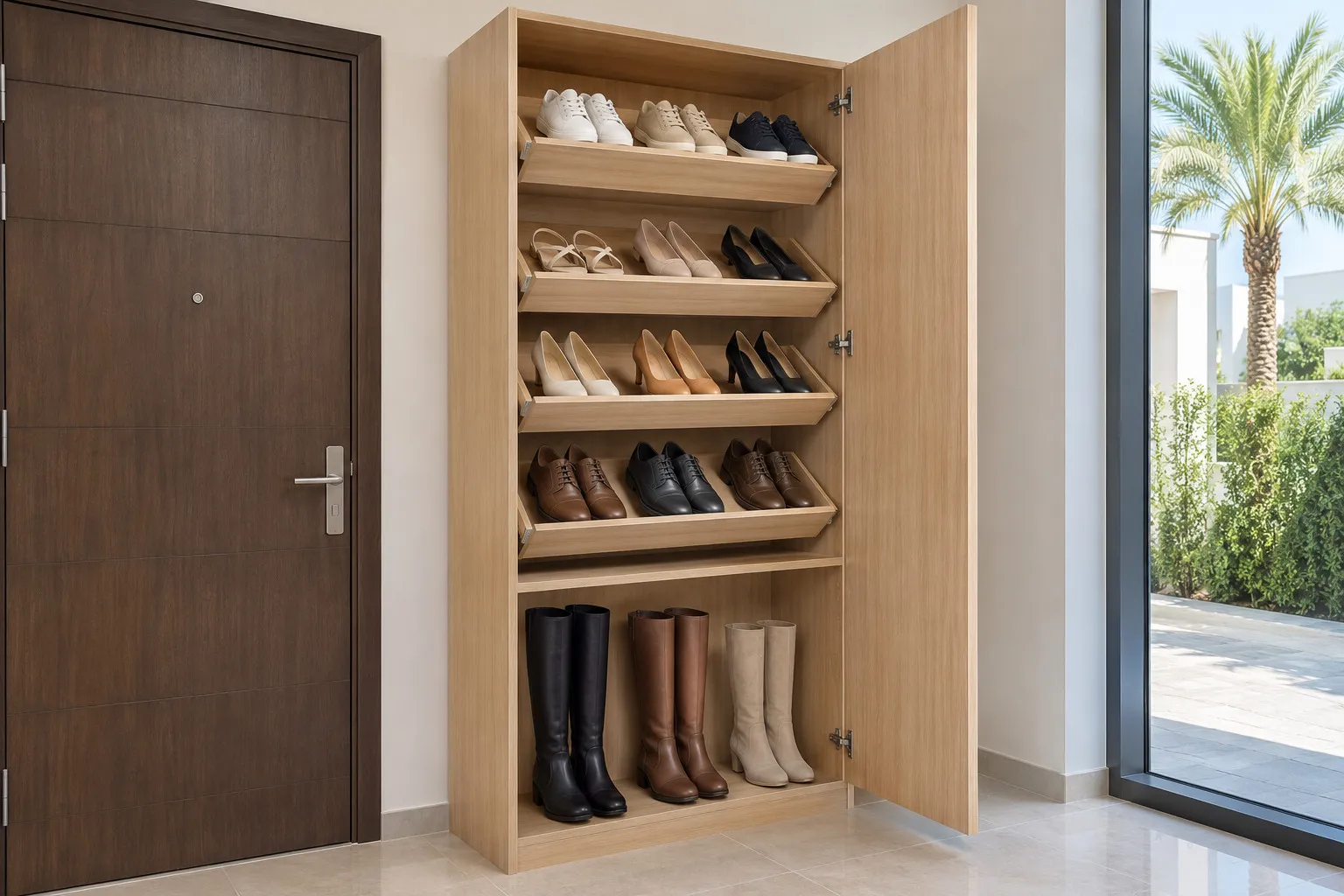
- 1. Flat shelf for sneakers: 30 cm deep and 15 cm of height
- 2. Tilted shelf: a 30 cm shoe can fit in less than 30 cm of depth, but the bay needs more height (about 25 cm and 33 degrees are our illustration)
- 3. Heels and ankle boots: 18 to 25 cm of height
- 4. Long boots: 40 to 50 cm for knee-high pairs, so a bay of their own
- 5. One wardrobe, four different heights: that is why the shoe zone is drawn, not bought off a shelf
How many pairs on a shelf
Divide the width of the bay by the width of a pair. Lazada's Singapore guide says an adult pair needs about 20 to 25 cm of shelf width, up to 28 cm for wide sneakers or men's formal shoes, and 15 to 18 cm for children's shoes or slim flats, and it advises a 10 to 20% buffer. The same guide warns against trusting a claim such as 'holds 20 pairs', because a rack built for slim flats will not hold the same number of chunky sneakers.
The table turns that into pairs per shelf for the bay widths a wardrobe usually has. It is our arithmetic, one row of pairs side by side, before the buffer. Shoes are heavy for their size, so ask what board span and thickness your drawing uses for a wide bay; the width rules for the whole wardrobe are in our wardrobe dimensions guide.
Pairs on one shelf by bay width (illustrative arithmetic)
40 cm
- At 25 cm a pair
- 1
- At 20 cm a pair
- 2
- Children's pairs, 15 to 18 cm
- 2
60 cm
- At 25 cm a pair
- 2
- At 20 cm a pair
- 3
- Children's pairs, 15 to 18 cm
- 3 to 4
80 cm
- At 25 cm a pair
- 3
- At 20 cm a pair
- 4
- Children's pairs, 15 to 18 cm
- 4 to 5
100 cm
- At 25 cm a pair
- 4
- At 20 cm a pair
- 5
- Children's pairs, 15 to 18 cm
- 5 to 6
Whole pairs only, side by side on one shelf, from the 20 to 25 cm and 15 to 18 cm widths in the Lazada Singapore guide. Subtract the 10 to 20% buffer it advises when you count your own pairs.
Sneakers, heels and long boots need different bays
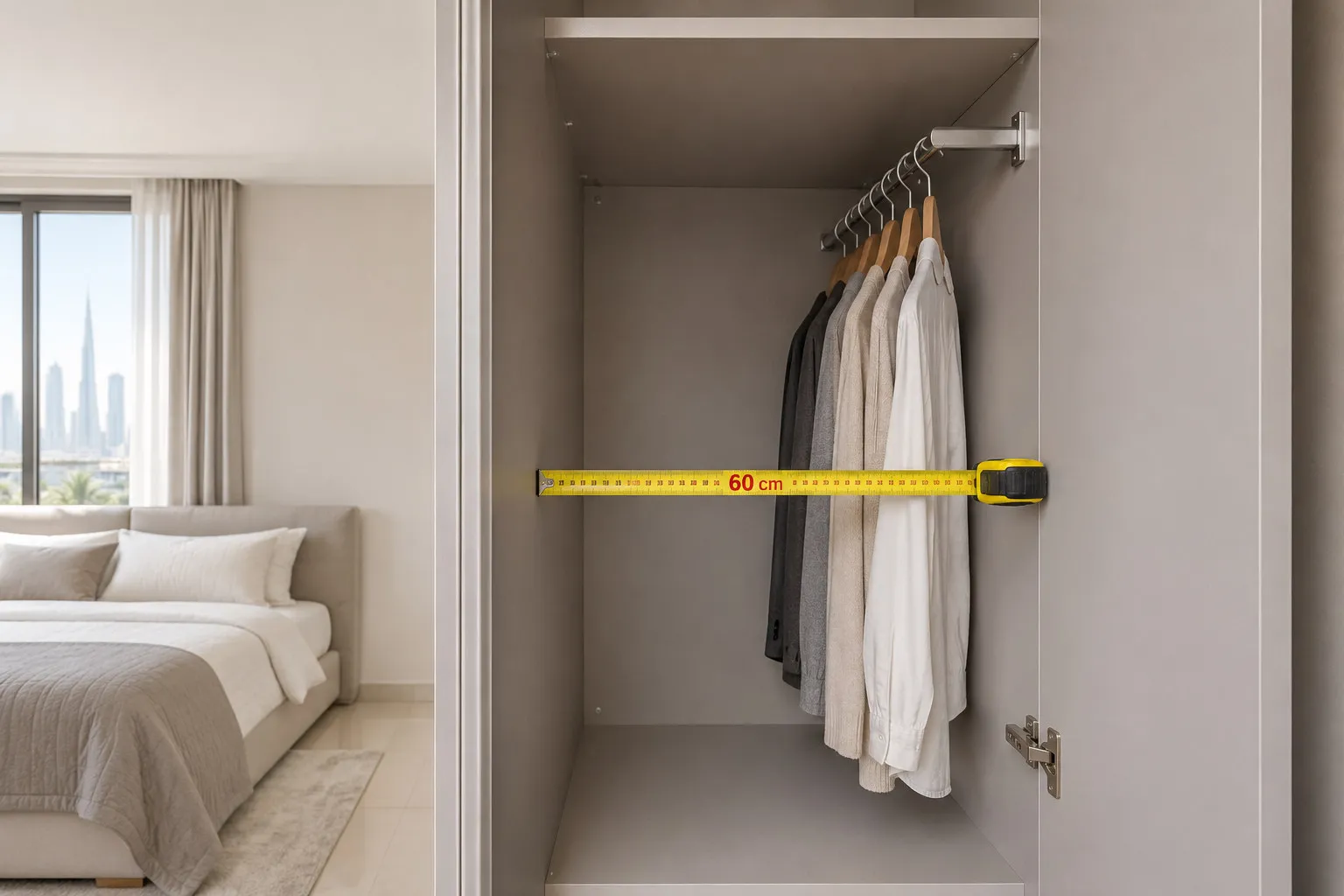
Start with depth. Houzz says most shoes measure no more than 30 cm in length, so shelves 30 cm deep suit most pairs; Lazada's Philippines guide says a flat shoe rack must be at least 30 cm deep and that a wardrobe's hanging section is typically 50 to 60 cm deep inside. A bedroom wardrobe is therefore usually deep enough for flat shoe shelves. If yours is shallow, our wardrobe depth guide shows what each depth allows.
Then height. The two Lazada guides agree on the pattern: sandals and slippers need just 10 to 12 cm, standard shoes 12 to 15 cm, sneakers about 15 cm, heels and ankle boots 18 to 25 cm, and boots up to 40 cm, or 40 to 50 cm for knee-high pairs. Houzz gives 12 to 18 cm as the clear space for fixed shelves, and suggests making shelves adjustable so the same unit takes slippers or boots. Do both: fix the sneaker shelves at one height, and keep the heel bay adjustable.
The long-boot bay is the one that most often goes wrong. A boot bay of 40 to 50 cm is more than twice the height of a sneaker shelf, so one boot bay costs as much height as three sneaker shelves. We would normally draw it at the bottom of the zone, where the weight sits low. Whether your boots stand, lean or hang from clips changes the answer, so bring the tallest pair to the measuring visit.
Bay size by type of shoe, from two retailer guides
Flats, sandals, slippers
- Clear height
- 10 to 12 cm
- Depth
- 30 cm flat; less if tilted
- Source and note
- Lazada Singapore
Standard shoes
- Clear height
- 12 to 15 cm
- Depth
- 30 cm flat
- Source and note
- Lazada Philippines; Houzz gives 12 to 18 cm for fixed shelves
Sneakers and low-tops
- Clear height
- About 15 cm
- Depth
- 30 cm flat
- Source and note
- Lazada Singapore
High-tops, ankle boots, mid-heels
- Clear height
- 18 to 25 cm
- Depth
- 30 cm flat
- Source and note
- Lazada Singapore; Philippines guide says the same for heels and boots
Knee-high boots
- Clear height
- 40 to 50 cm
- Depth
- 30 cm or more
- Source and note
- Lazada Singapore; Philippines guide: tall boots up to 40 cm
Retailer planning figures, not a standard for the UAE. The guides differ a little, so measure your tallest pair and add a hand's width.
Tilted shelves: what they save and what they cost
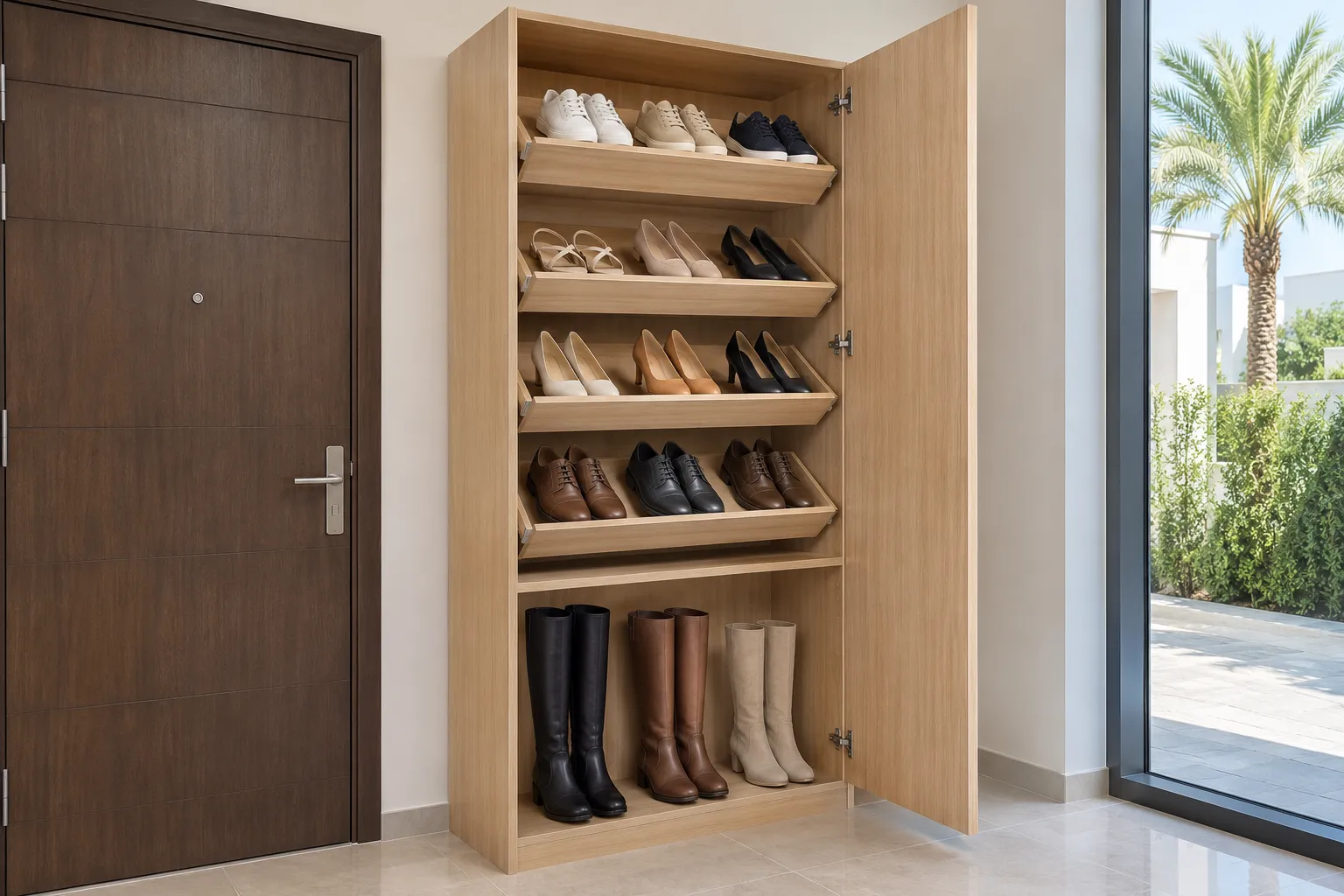
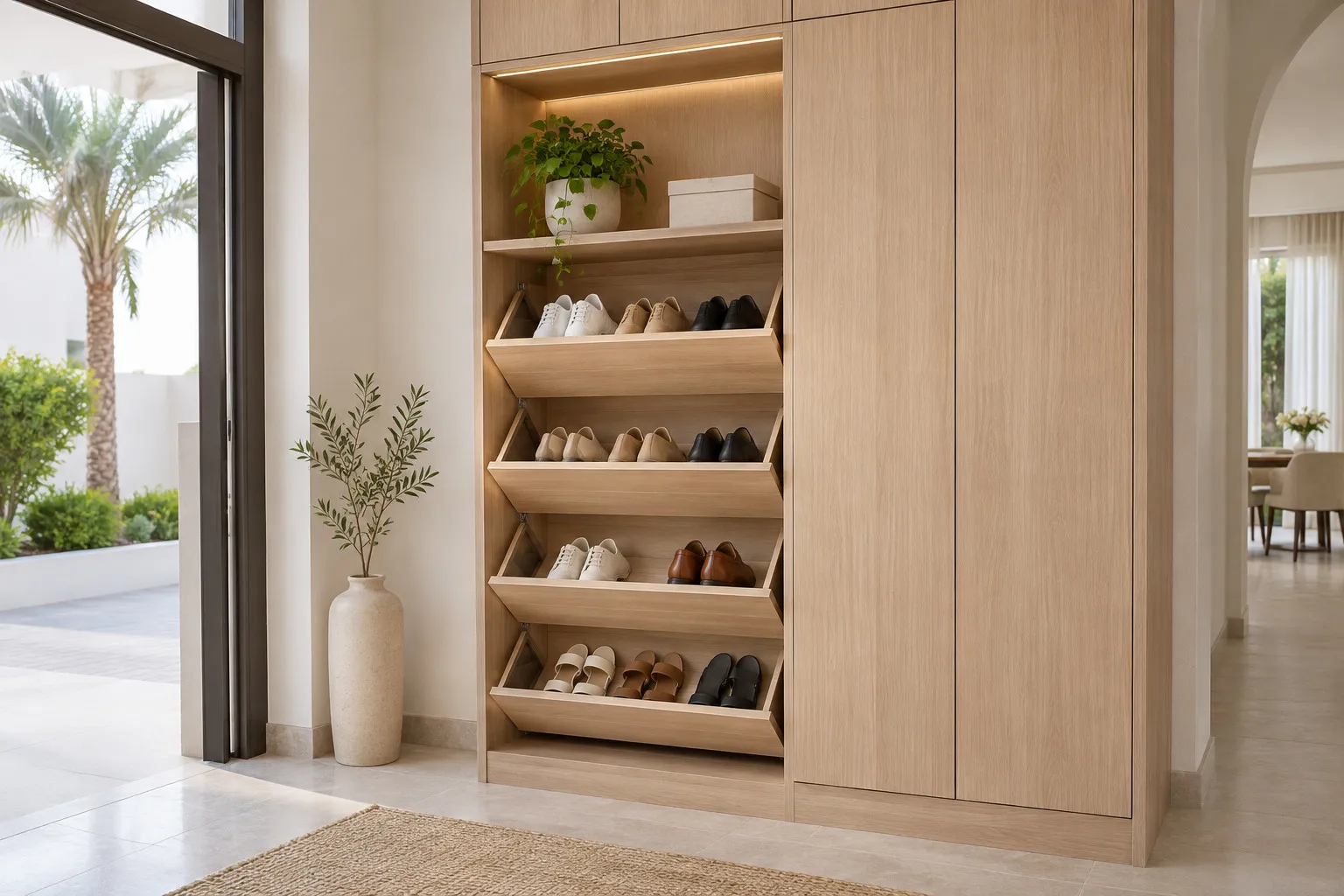
A tilted shelf lets a shoe lean instead of lying flat, so it takes less depth. Houzz says angled shelves let you fit shoes in a depth shallower than 30 cm, and Lazada's Singapore guide puts slim tilt-out units at an external depth of just 15 to 24 cm. Neither gave an angle in degrees, and we found no opened source that does, so the angle belongs on your drawing.
The geometry is simple, and this is our arithmetic, not a sourced figure. Lean a 30 cm shoe at 30 degrees and it spans about 26 cm of depth along its length; at 45 degrees, about 21 cm. The price is height: the same lean lifts the heel by about 15 cm at 30 degrees, so a tilted bay is taller than a flat one, and a tilted shelf usually holds one row of pairs, not two. In the drawing we show a 33 degree shelf, 25 cm deep, in a bay about 32 cm high; those are illustrations, and shoe thickness would add to them.
Tilting suits flats, loafers and low sneakers best. Lazada's guide says high heels are difficult to store in tilt-out compartments, and a boot does not tilt at all. Use tilted shelves where the wardrobe is shallow or where you want to see the toes at a glance; use flat shelves where depth is plentiful. If you are working out how deep the whole wardrobe should be, our small bedroom wardrobe ideas and studio apartment wardrobe guide show what to give up in a tight room. In a corner run the corner itself decides where bays can go; corner and L-shaped wardrobe design covers the corner solutions and clearances.
Pull-out racks and drawers for shoes
A pull-out rack or a shoe drawer brings the shoes to you instead of leaving you to bend and reach into a dark bay. It suits the lowest part of the zone, where a fixed shelf is hard to see, and it suits a deep bay where the back row would be forgotten. A drawer shortens the usable depth, because the runner and the front take part of the box, a point we make about all drawers in our wardrobe drawers and organisers guide.
Limits are worth knowing before you choose. A shoe drawer is shallow by design, so it works for flats and sneakers, not for heels or boots, and it shows only a few pairs at a time. A pull-out rack with open slats lets air move round the shoes, which matters in the next section. We have not published a pull-out or tilt-out fitting range, so ask in the quotation which fitting would be used, what it is rated for and how it is replaced if it wears. Ask also whether the runners are covered, because the 5-year limited warranty is on the wood-based boards and does not include runners or other moving hardware; see the wardrobe warranty guide.
Closed doors or ventilated doors
Shoes bring moisture and dirt into a box, and a closed box keeps both. Mega Furniture's Singapore guide says ventilation built into the design is the correct answer and lists louvred doors, rear slots or a raised base; it says ventilated doors make the biggest difference and that a charcoal sachet only slows the problem. Lazada's Singapore guide prefers louvred doors, slatted shelves or back ventilation holes, and its Philippines guide prefers open wire, slatted or mesh shelves so air can circulate round the shoe. All three are retailer advice, written for humid Singapore and the Philippines, and none was tested in a UAE home.
What we can say from our own side is narrower. How much air a shoe zone needs, and how to give it, depends on the site. Ventilation options include an air gap, concealed openings and grilles, and the right one depends on the wall, the room and where the wardrobe stands; we assess that on the visit. A vent or a gap does not fix a leak or damp that is already in the wall, and we do not claim that any vent removes odour. If a smell already exists, start with why a wardrobe smells musty, and for the board itself read moisture-resistant wardrobe boards. For a wardrobe against a bathroom or outside wall, see what to check on a bathroom or outside wall first.
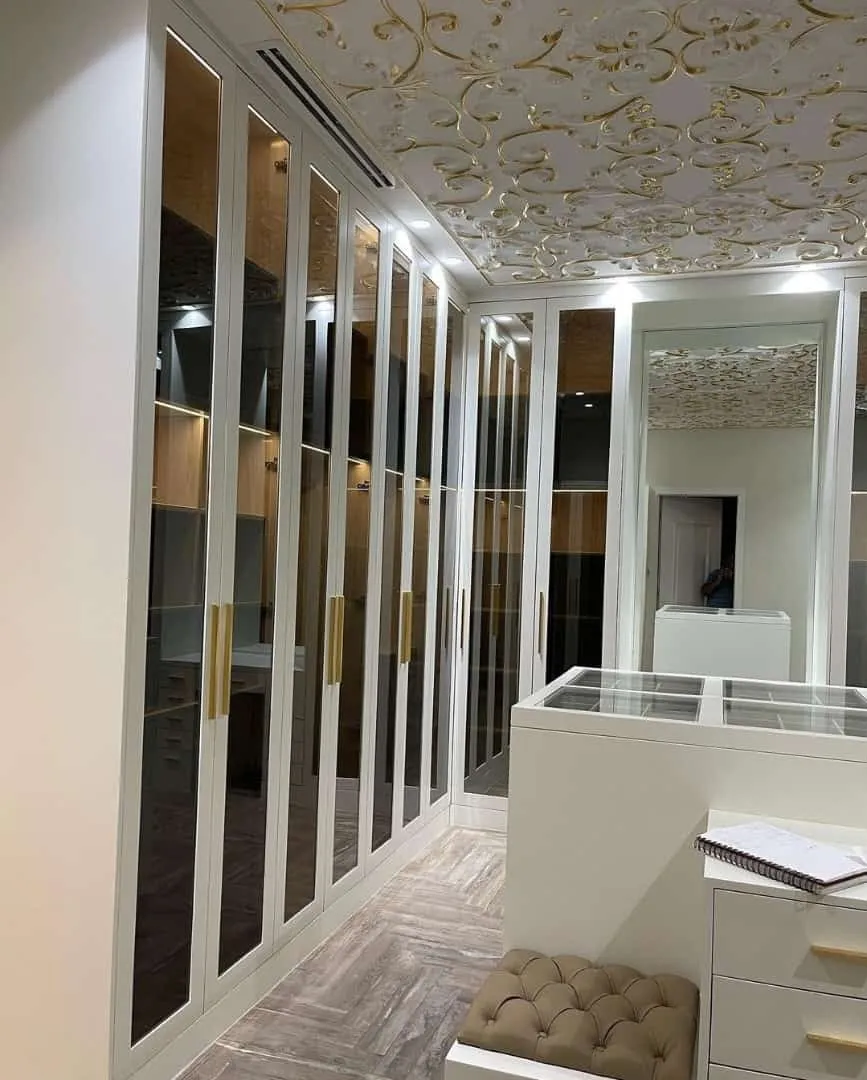
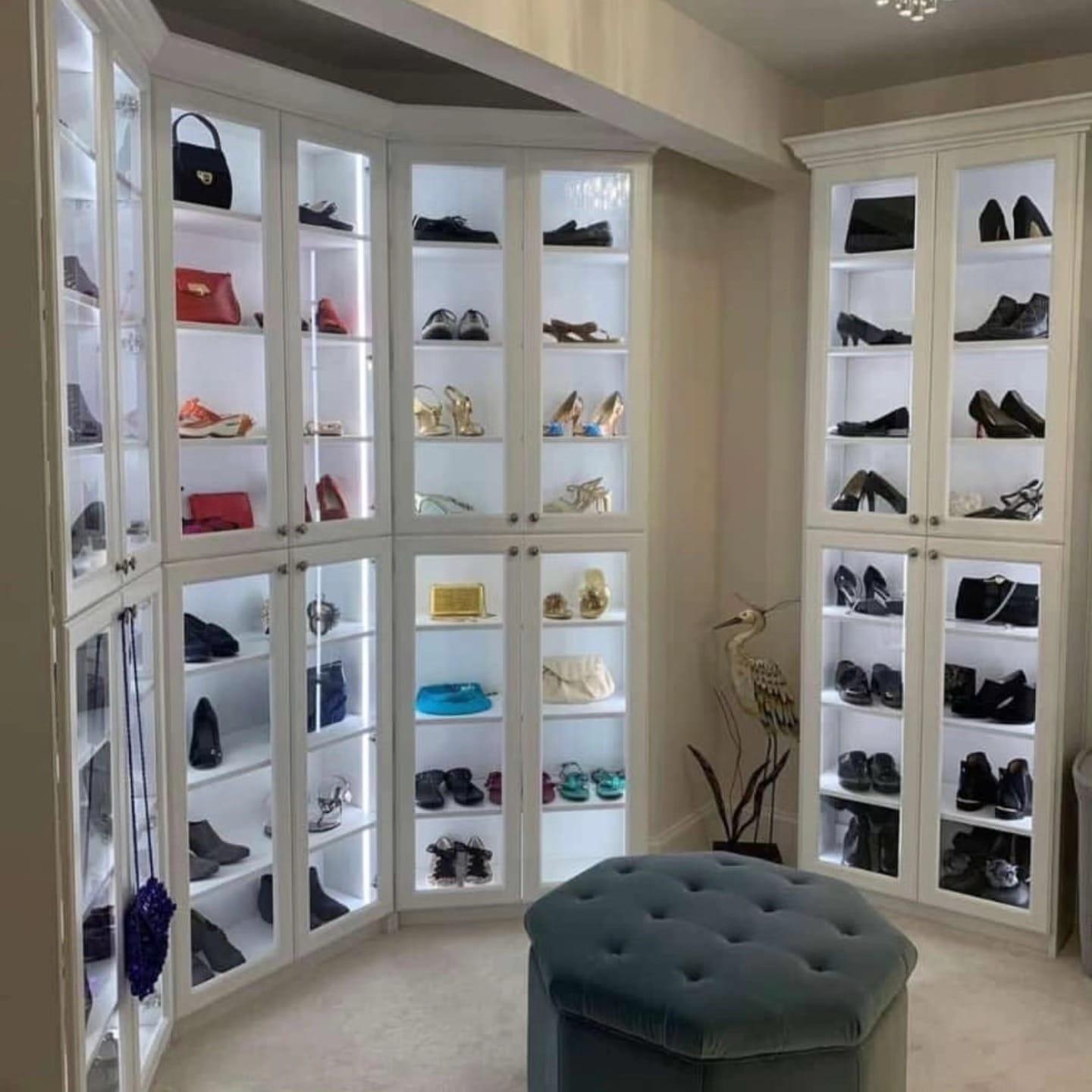
In practice the choice is between three looks. Solid doors keep the shoes out of sight and need the zone to be aired by hand. Doors with slots or louvres give a steady trickle of air but show a pattern on the front. An open or glass-fronted bay shows the shoes and lets the most air in, but it asks for tidiness and collects dust. For sandy or dusty shoes, keep them in the lowest bay and wipe them before they go in; the wider choice between open sections and doors is weighed in open wardrobe or closed doors.
Closed, vented and open shoe bays compared
Solid door
- Air
- Only when opened
- Looks
- Plain, hides everything
- Where it suits
- Bedroom wardrobe where the doors are opened daily
Louvre or slotted panel
- Air
- Passive air through the front
- Looks
- Visible pattern
- Where it suits
- A bay for worn shoes; ask about dust
Back or plinth gap, grille
- Air
- Air from behind or below; site-dependent
- Looks
- Hidden
- Where it suits
- Where the wall allows it; assessed at the visit
Open shelf or slatted rack
- Air
- Most
- Looks
- Shows every pair
- Where it suits
- Today's pairs and a short run of shelves
Glass front
- Air
- Little unless vented
- Looks
- Display, lit if wanted
- Where it suits
- Pairs you like to show, in a dry room
Based on the Mega Furniture and Lazada guides (Singapore, Philippines); none was tested in the UAE. We assess ventilation per site and make no odour claim.
Where to put the shoe zone: base, side tower or a unit of its own
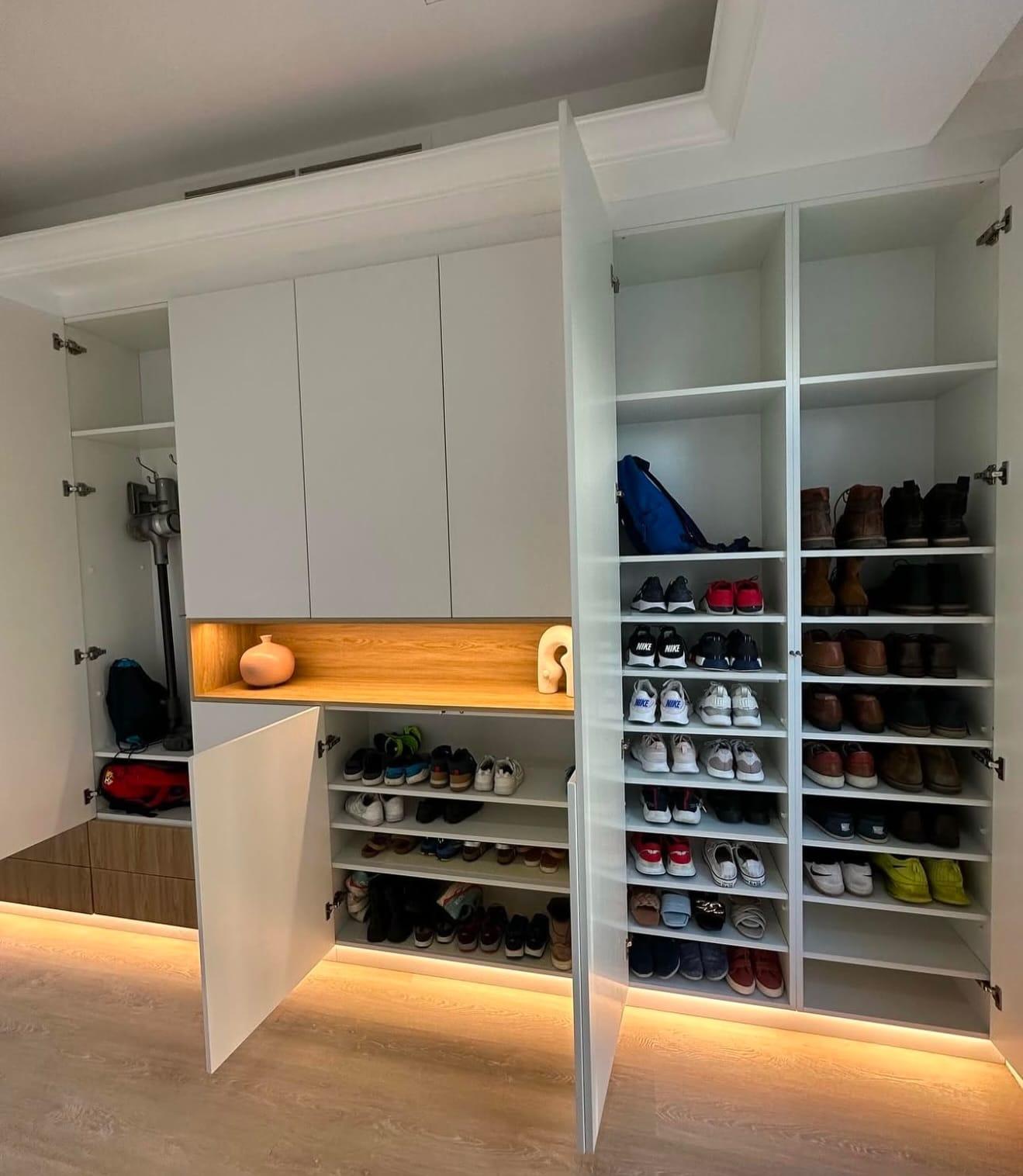
There are three places, and each trades convenience against space. In the base of the wardrobe the shoes sit under the hanging rail, which uses space that would otherwise be empty under short garments; it keeps everything in one run of joinery. How much room there is depends on the rail heights in our wardrobe hanging heights guide. A side tower is a tall bay at one end of the wardrobe with the shoe bays stacked from floor to eye level, which gives each shoe type its own height and is the layout in the drawing. Long garments hung above the shoes set the rail height, and storing abayas, kanduras and long garments in a wardrobe shows how to measure it.
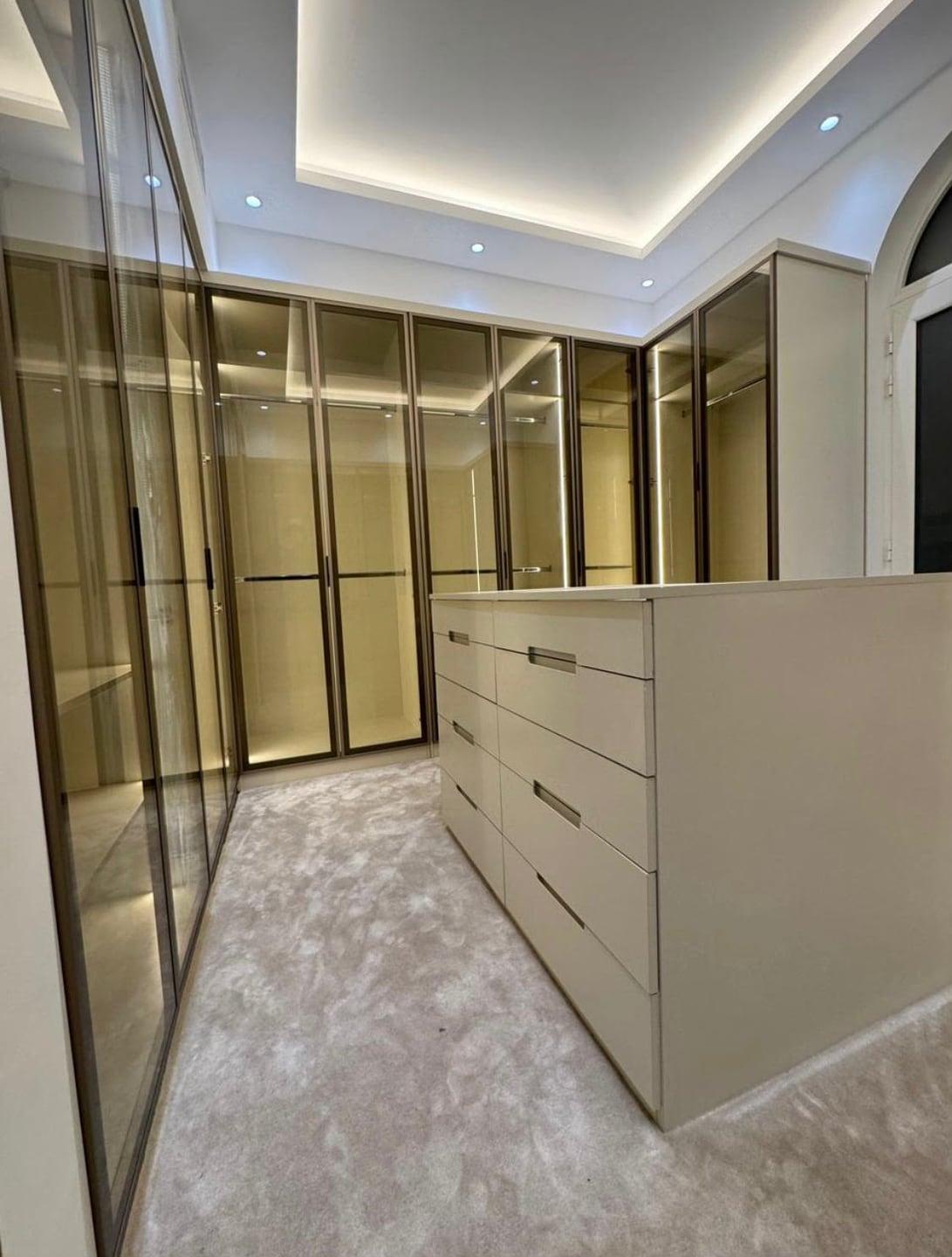
A separate tall unit stands apart from the wardrobe, perhaps in the dressing area or by the bedroom door, and suits a big collection, a shared room or a rented flat where you may want to move it later; see our shared couple wardrobe and rented apartment wardrobe guides. In a walk-in, the shoes can take a whole wall of shelves, as in the walk-in against reach-in comparison and the dressing room guide. If the shoes are mostly for visitors or the school run, they belong at the door, which is the entrance guide's job. If the same plan needs room for suitcases and boxed seasonal items, loft boxes and top cabinets for luggage and seasonal storage covers the height sum.
Where the shoe zone can go
Base of the wardrobe
- Good for
- A few daily pairs; one run of joinery
- Watch out for
- Height under the rail; low shelves are hard to see
Side tower in the wardrobe
- Good for
- Mixed pairs with bays for each type
- Watch out for
- Takes a full-height bay; boot bay uses a lot of height
Separate tall unit
- Good for
- Large collections, shared rooms, rentals
- Watch out for
- Needs floor space and a wall to fix to
Walk-in wall
- Good for
- Showing heels and bags
- Watch out for
- Dust, light and tidiness
At the entrance
- Good for
- Visitors' and street shoes
- Watch out for
- Covered in the entrance guide
Our assessment from the sources above and the layouts in our wardrobe guides; the visit decides what your room allows.
Doors for a shoe zone
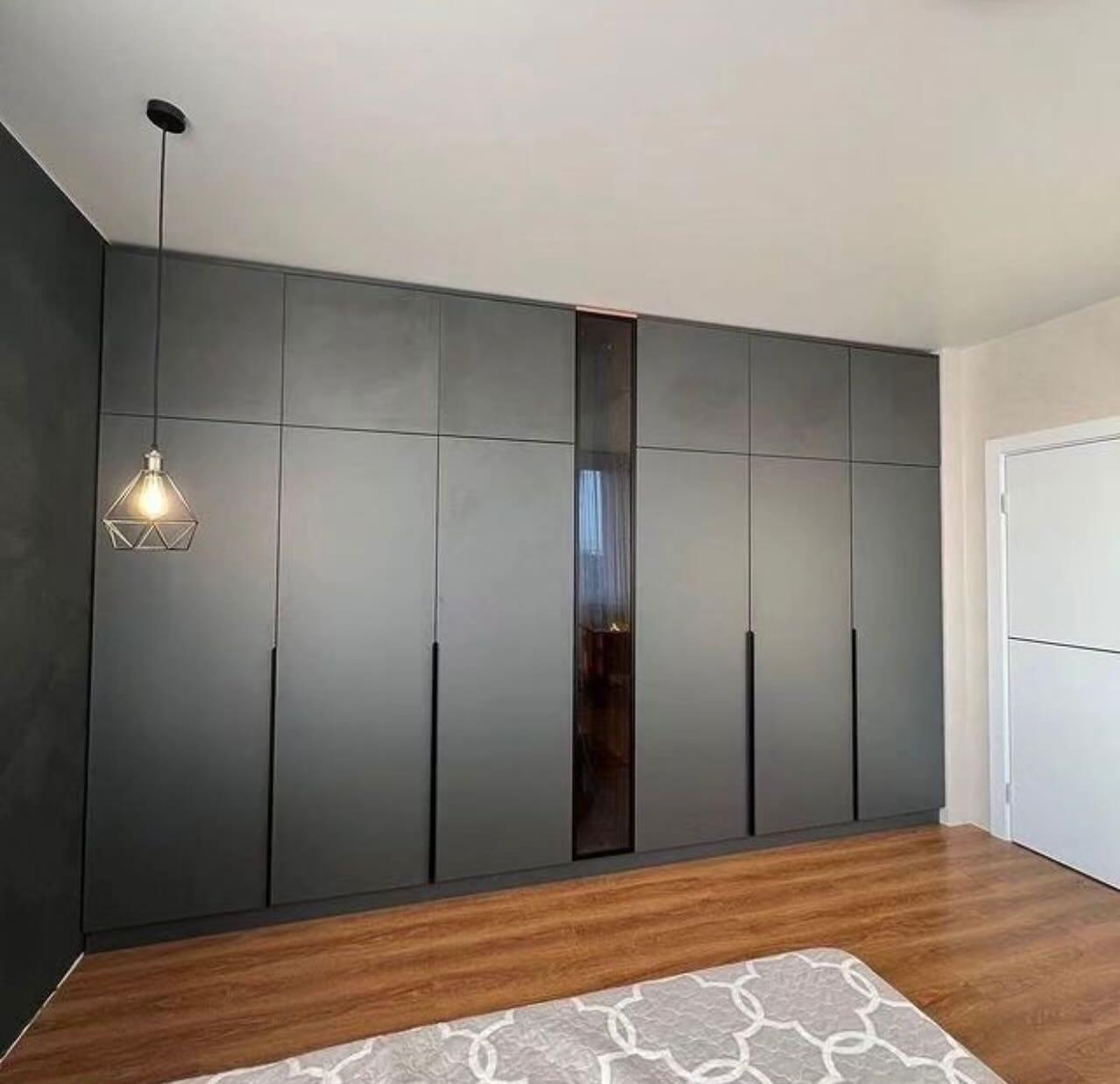
A shoe zone is opened more often than the clothes behind it, with a shoe in one hand. Hinged doors give full access to a bay, but each leaf needs floor in front; check the swing in our wardrobe door clearance guide and the hinge count in the wardrobe hinges guide. Sliding fronts never swing but open only part of the width at a time, a poor trade for a bay used every day; the choice is laid out in hinged against sliding doors and sliding door systems. On a run that goes up to the ceiling, floor-to-ceiling wardrobes in the UAE says to ask for each door's weight and hinge count.
Handleless fronts avoid something to catch on a bag strap, and a matt finish hides marks better than gloss, which is the question in handleless wardrobes against handles and wardrobe door finishes compared. A mirror on the door of the shoe tower is useful for checking the whole outfit; see mirror wardrobe doors. A light inside makes dark low bays usable: wardrobe lighting ideas and LED strip against profile compare the ways to do it, and our interior lighting ideas place it in the wider room. Handle types, heights and finishes are covered in our wardrobe handles guide.
Keeping a shoe zone clean and working
Maintenance is a short routine. Let shoes dry before they go in, because damp shoes are the source of most trouble; leave them on an open shelf or by the door for a while. Wipe sand and dust off soles before they reach the bay, and wipe each shelf with a barely damp cloth now and then. Keep leather pairs and sandy pairs on separate shelves, and put boots on shapers or clips so shafts do not fold; Lazada, Mega Furniture and Houzz say nothing on this, so it is common sense, not a sourced rule. When an older wardrobe keeps failing, renovate or replace an old wardrobe is a decision guide by symptom.
Every few months open the bays, take the shoes out and check the back and the base for marks or damp, which are early signs worth reporting. A wardrobe on an outside wall deserves more care, as our guide to wallpaper in humid climates explains for walls. Check that doors still close and that a drawer or a pull-out rack runs freely; the off-track sliding door guide and the door replacement guide cover what to do when hardware wears, and why a wardrobe door sticks, rubs or sags covers the hinged-door fixes. Do not overload a shelf: a board loaded with boots sags long before it breaks, and a tall unit should be fixed to the wall, as our kids' wardrobe guide explains.
What we do about it
At the free measuring visit we bring samples to the room and measure the wall, and you can bring your shoes, or at least the tallest pair of boots and the widest pair of sneakers, so the bays are drawn to what you own. Interior shoe storage is one of the things we make to order, with shelves, drawers and compartments drawn to your pairs; custom or ready-made wardrobe: where each wins compares that with a standard unit. We send a drawing and an itemised price, and nothing is made until you approve them. Ventilation, the number of bays, the doors and any light inside are written on the drawing so you can compare them with this page.
Our entry price is from AED 550 per sqm of wardrobe front, installed, for MDF laminate with hinged doors; other options raise it, and the figure for your wall is set after measurement. After you confirm the details, a 60% advance is paid and production starts once it is received, with the remaining stage agreed with you. Our Sharjah workshop builds the wardrobe and our own team installs it, in up to about 10 days depending on size and design. The workmanship carries a 24-month written warranty (supplied products follow their own terms), and the wood-based boards carry a 5-year limited warranty, subject to terms; hinges, tracks, runners, rollers and other moving hardware are not covered.
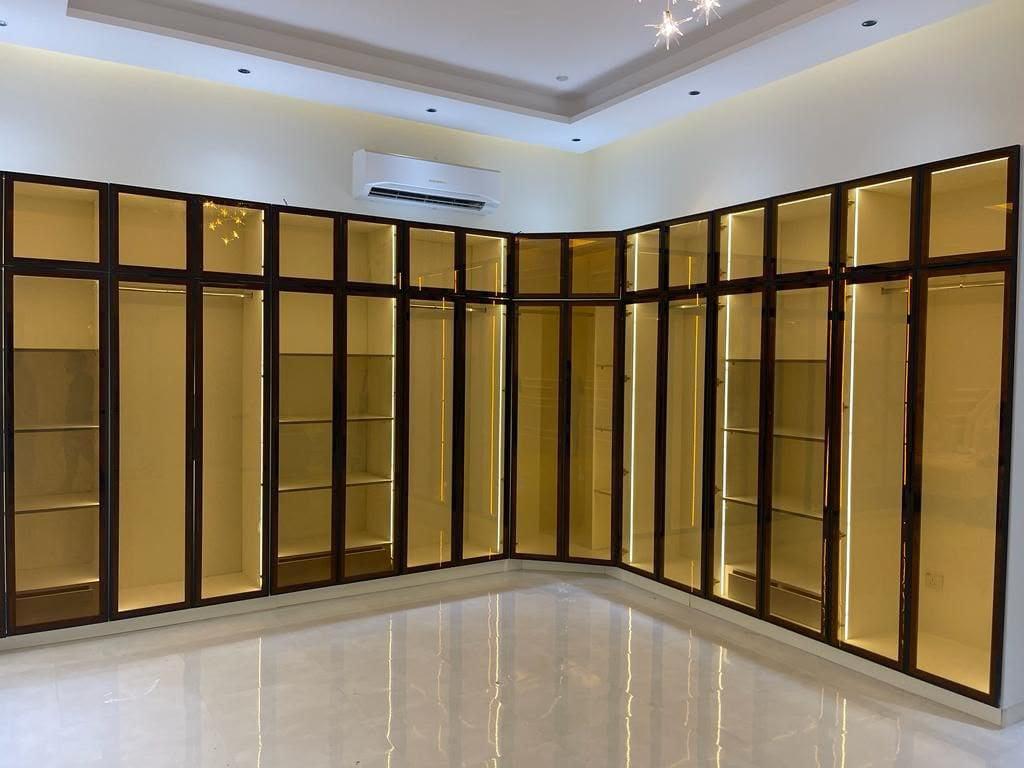
To start, read the free wardrobe measuring visit guide and book through the consultation form. Our custom wardrobes service page lists what we make, the custom wardrobe cabinets and organisers page shows finished interiors, and shoe storage and entrance cabinets covers the hall. For finished runs see the built-in wardrobes page and the lit glass-front wardrobes page.
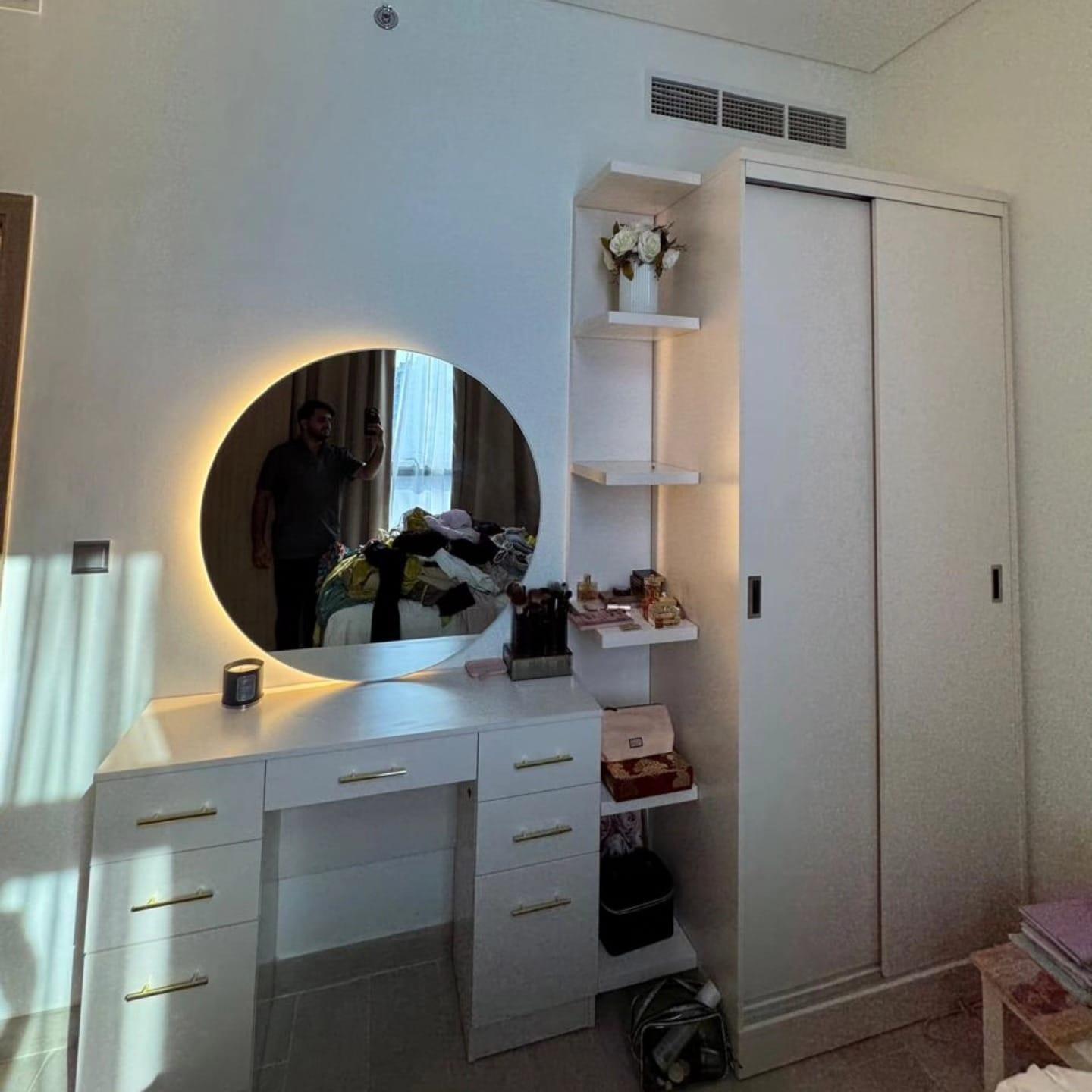
To see how a measured wall becomes a number, read the wardrobe price guide, the wardrobe materials and hardware guide and the wardrobe quotation checklist, which covers the questions to ask on any quote. The pricing guide explains the itemised method, and our fit-out budget guide shows the same idea on larger jobs. Installation covers the whole UAE: the Sharjah page gives the workshop location and the Dubai custom wardrobes page covers visits there. If the room is occupied during fitting, see occupied home installation, and for a small flat read small apartment interior ideas. The warranty and aftercare guide explains the cover, and a dressing table inside the wardrobe can share the same run.
For the rest of the wardrobe around the shoe section, our guides to every wardrobe decision are grouped on one page.
Common questions
How many pairs of shoes fit on one wardrobe shelf?
Divide the bay width by about 20 to 25 cm a pair: an 80 cm bay holds 3 to 4 pairs on one shelf, a 100 cm bay 4 to 5. Lazada's Singapore guide advises a 10 to 20% buffer. See our wardrobe dimensions guide.
How deep should shoe shelves in a wardrobe be?
About 30 cm for flat shelves, since most shoes are no longer than 30 cm (Houzz). Angled shelves let shoes fit in less. A wardrobe's hanging section is typically 50 to 60 cm inside, so it is usually deep enough. See our wardrobe depth guide.
How high should a shelf be for sneakers, heels and boots?
About 15 cm for sneakers, 18 to 25 cm for heels and ankle boots, and 40 to 50 cm for knee-high boots, by Lazada's Singapore guide. Make heel shelves adjustable and bring your tallest pair to the visit. See our wardrobe hanging heights guide.
Are tilted shoe shelves worth it?
Yes where the wardrobe is shallow, for flats and low sneakers. Houzz says angled shelves fit shoes in under 30 cm of depth, but the bay needs more height, usually holds one row and does not suit heels or boots. See our small bedroom wardrobe ideas.
Should a shoe wardrobe have ventilated doors?
Retailer guides advise louvres, slots, a raised base or open slats. How much air a zone needs depends on the site: options include an air gap, concealed openings and grilles, and none of them cures existing damp or is claimed to remove odour. See why a wardrobe smells musty.
Where should I put shoes in a bedroom wardrobe?
In the base under the rail for a few daily pairs, in a side tower for a mixed collection, or in a separate tall unit for a large one. Shoes for visitors belong at the door. See our shoe storage and entrance cabinet guide.
How much does a shoe wardrobe cost?
There is no separate price. Our entry price is AED 550 per sqm of wardrobe front, installed, for MDF laminate with hinged doors; bays, doors, lighting and finish change the figure, which is itemised after measuring. See our wardrobe quotation checklist.

Sources & specifications
Manufacturer information applies to the named products and systems. Sources reviewed on 4 November 2026.
- Houzz Singapore, Eva Byrne, 'The key dimensions to know when designing storage' (27 June 2018): shelves 30 cm deep, 12 to 18 cm clear between fixed shelves, angled shelves fit shoes in a depth shallower than 30 cm, adjustable shelves from slippers to bootshouzz.com.sg(opens in a new tab)
- Lazada Singapore, shoe cabinet size and capacity guide (retailer guide, no date shown): 20 to 25 cm of shelf width a pair, 10 to 20% buffer, 15 cm sneakers, 18 to 25 cm ankle boots and mid-heels, 40 to 50 cm knee-high boots, tilt-out units 15 to 24 cm deep, louvred doors or back ventilationhome.lazada.sg(opens in a new tab)
- Lazada Philippines, wardrobe shoe rack guide (retailer guide, no date shown): racks 30 to 35 cm deep, wardrobe hanging sections 50 to 60 cm deep inside, heights 10 to 12, 12 to 15 and 18 to 25 cm, tall boots up to 40 cm, open wire, slatted or mesh shelves for airhome.lazada.com.ph(opens in a new tab)
- Mega Furniture Singapore, 'The Shoe and Storage Cabinet Mistakes Worth Avoiding Before You Buy' (retailer guide, no date shown): louvred doors, rear slots or a raised base; ventilated doors make the biggest difference; written for Singapore's humiditymegafurniture.sg(opens in a new tab)
Want this planned for your home?
Consultation and measurement are free. Tell us the rooms, location and what you need; we arrange a sample visit and define the measured quotation.