Wardrobes · 18 min read · 16 July 2026
Sliding wardrobe door off its track: why it happens, what to check and when to call us
A sliding wardrobe door usually comes off its track because of a worn roller, a bent or dirty track, too much load or a door out of line. Look first, never force it, and use two people for glass or mirror. We assess and repair tracks, rollers and alignment across the UAE.

By Ali Haider Basra, Founder, Al Tareeq Decor · Contact our workshop
Key takeaways
- A sliding door usually leaves its track for one of four reasons: a worn or broken roller, a bent or dirty track, too much load, or a door out of line.
- Look before you lift. Check the roller, the track, the load and the alignment in that order, and stop at the first thing that looks broken.
- Never force a door back, and never lift a heavy glass or mirror door alone: two people, a soft surface, and wait if you have no one.
- We assess and carry out sliding door repair and adjustment: track, alignment, roller and hardware, a whole new track included. The result depends on the damage and on part availability.
- We publish no repair price or timeline. Ask for a quotation in writing; the 5-year limited warranty covers the boards only, not tracks, rollers or moving hardware.
On this page
- Key takeaways
- A sliding wardrobe door has come off its track: the short answer
- Why sliding wardrobe doors come off their track
- Common causes of a sliding door leaving its track
- Safe first checks before you touch the door
- How to put a light door back, step by step
- What not to do
- When to stop and call a professional
- Do it yourself, or ask for help
- Repair, replace a roller, or replace the track?
- Fix, replace or rebuild: how to think about it
- Heavy glass and mirror doors: the extra care
- Keeping a sliding door on its track
- What we do about a sliding door off its track
- Before the visit: how to prepare
- Common questions
A sliding wardrobe door has come off its track: the short answer
Stop using the door, take the weight off it, and look before you pull. A sliding door usually leaves its track for one of four reasons: a worn or broken roller, a bent or dirty track, too much load on the door, or a door that is out of line. Window Hardware Direct, a US hardware seller, says it often happens "if the rollers are busted or the track is bent" and also names too much weight and tracks that are "not lined up right". A knock or a hard slam is the usual last push, not the root cause.
If the door is light, the track looks straight and the roller turns freely, a careful refit is often all it needs. If the door is a heavy glass or mirror panel, the track is bent, a roller is broken or the door keeps jumping, stop and ask for help. A second person is not optional for a heavy panel: iFixit's repair guide says to "have a friend hold up" the door while the rollers are lined up. This page sets out the checks in order, what not to do, and what we do when a door cannot simply be put back. Our sliding door systems guide explains how the parts work first, if you want that background.
- 1. Roller: worn, loose or broken rollers are the first thing to look at
- 2. Track: a bent, dented or gritty track makes a roller climb out or stop
- 3. Load: too much weight on the door or its rail is a named cause
- 4. Alignment: a door out of line with the frame can ride up out of the track
- 5. Stop: heavy glass or mirror needs two people, and force makes damage worse
- 6. Still off or damaged: ask for an assessment before more parts are bent
Why sliding wardrobe doors come off their track
Most causes sit in the hardware, not the door. Window Hardware Direct lists worn or damaged rollers, too much weight, misaligned tracks and wrong installation. We would add two from what we see in practice: grit that builds up in the bottom track, and a door that has slowly dropped as its rollers wore. None of these is a sudden fault. They are usually the end of a slow drag that you can feel in the door weeks before it jumps; which kind of track your doors run on is covered in sliding wardrobe track types.
A few signs warn you early: a rumble or scrape as the door moves, a door that sticks near one end, a gap at the side that is wider at the top than at the bottom, and a door that rubs the floor track. Treat each as a reason to look, not to push harder. A rough door is telling you which part is failing. For a hinged door that does the same, our guide to a wardrobe door that is sticking, rubbing or sagging has the fixes.
The doors themselves matter too. A glass or mirror leaf is much heavier than a laminate one, and mirror doors are covered in mirror wardrobe doors. A wide panel carries more load on each roller than a narrow one, which is why the wardrobe door finishes compared guide is worth reading before you replace a door with a heavier finish. For the same reason, doors that were hung for a lighter panel are the ones that start to drag after a mirror is added.
Common causes of a sliding door leaving its track
Worn, loose or broken roller
- What you may notice
- Rumbling, a door that sits low or drags on one side
- Who it usually needs
- A new roller, fitted level
Bent or dented track
- What you may notice
- A door that stops or jumps at the same spot every time
- Who it usually needs
- Straightening or a new track
Grit or debris in the track
- What you may notice
- A rough, gritty feel; the door stops short
- Who it usually needs
- Cleaning, which you can do yourself
Too much load on the door
- What you may notice
- A door that sags and rubs; new heavy glass or a full rail
- Who it usually needs
- A review of the door weight and the hardware
Door out of line with the frame
- What you may notice
- An uneven gap down the edge; a door that rides up
- Who it usually needs
- Adjustment of the rollers or the door position
A knock or hard slam
- What you may notice
- A door that came off once, then runs normally
- Who it usually needs
- A careful refit, then a check of the parts
Our own summary of the causes named by the maker and repair guides we opened, plus what we see in practice. It is a guide, not a diagnosis; the door has to be seen.
Safe first checks before you touch the door
Start with the room, not the door. Move anything on the floor away, clear the space around you, and make sure there is a free area to lay a door down. If the door is a heavy glass or mirror leaf, wait until a second adult can help, because a door that slips from one pair of hands is the usual way a panel breaks. Wardrobe door clearance shows how much room an open door needs, and the same room is what you need to lay one down.
Then look without lifting. Check the following, in this order, and stop at the first thing that looks broken:
1. The roller. Look at the wheel, or at the bracket it sits in: is it cracked, loose, flat, worn on one side or missing? On many wardrobes the rollers are at the top or the bottom of the door, so check both. iFixit's guide notes that the roller should be refitted the right way round, because a reversed roller may not run correctly.
2. The track. Run a finger or a torch along the groove. Look for a dent, a kink, a loose screw, or grit and dust packed in. Window Hardware Direct says a clean track matters and that a bent spot can be tapped back into shape; if the track is metal and has a sharp kink, do not bend it by hand, because a weak track bends further.
3. The load. Has something been added to the door, such as a mirror, a hook or a heavy glass panel? Has the rail behind it been overloaded? Take the extra weight off first.
4. The alignment. Look at the door edges and gaps. A gap that is wider at one end than the other tells you the door is hanging out of line, and the fix is to adjust the rollers, not to push the door. Hettich's Technical Assistant page for its TopLine L system offers videos titled "Overlay adjustment" and "Height adjustment", which shows that adjustment is a normal part of these systems; the steps depend on the system, so use the maker's guide for yours if you know it.
If all four look fine, the door may only have been knocked, and a careful refit may be enough. If any looks bent, cracked or broken, stop.
How to put a light door back, step by step
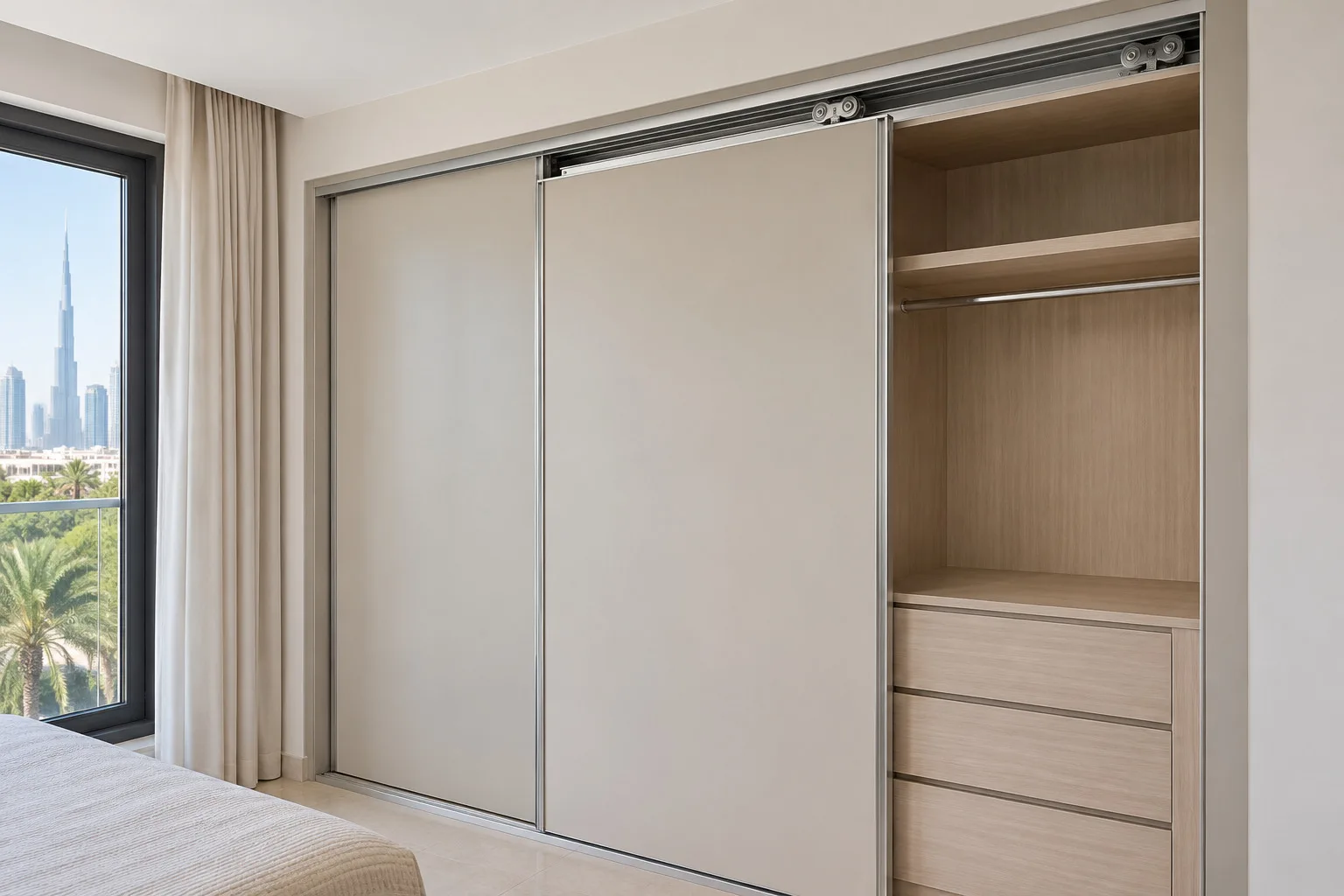
This applies to a lightweight door with a straight track and a sound roller, and only if a second person can steady it. Window Hardware Direct describes the usual method: tilt the door slightly, lift it into the top track, then lower it onto the bottom track, and slide it to test. The tilt is small; the guide gives 15 to 30 degrees. iFixit describes a different design where the door is held by two screws at the top, with a helper holding the door while the rollers are aligned with their slots. The point is that systems differ, so read what is actually in your wardrobe before you copy a step.
Before you refit, clean the track so the roller meets a clear groove. A clean track is a better start than any adjustment. Window Hardware Direct also suggests a silicone-based lubricant on the track and wiping off the excess; use only what is suitable for your hardware, and keep it off the door face. Then slide the door gently from end to end and listen. A smooth, quiet run means the fault was a knock. A catch at the same point means the track or the roller still has a problem.
Some doors have a small stop or anti-jump part in the top track, and some have a bottom guide. We cannot tell which yours has from here, so do not force a door past something that resists; look for the part that holds it. Once the door is back, open and close it a few times with a hand near the edge, not with your full weight, and watch whether the gap stays even.
What not to do
Most damage on a door that has come off is made by the second attempt. Avoid these:
Do not force the door back on. Pushing a roller into a bent track or past a stop bends the track further or cracks the roller, and turns a ten-minute fix into a part replacement. If it will not go back with a gentle lift, something is in the way.
Do not lift a heavy glass or mirror door on your own. The weight is awkward, the edges are sharp and a dropped panel is the end of it. iFixit's guide asks for a helper even for a standard closet door; for glass, plan for two people with space to rest the door on a soft surface, edge down and upright. If you do not have a second person, leave it where it is.
Do not keep sliding the door while it drags. A rough door cuts into the track and wears the roller.
Do not hammer a kinked track straight. Window Hardware Direct mentions tapping a bent spot back with a block of wood, and that is only for a small, soft bend; a sharp crease or a metal that has cracked needs a new track section.
Do not oil everything. A dry, clean track is better than a track loaded with grease that catches dust, and heavy lubricant can stain a door or the floor.
Do not add more weight. If a door was dragging, hanging a mirror or a bag on it now is the quickest way to bring the fault back. And do not stand under or beside a loose leaf while someone else is working on it.
When to stop and call a professional
Call someone when a door is a heavy glass or mirror leaf, when the track is bent or the roller is broken, when the door comes off again after a refit, when the frame or the carcass looks damaged, or when you cannot see what is holding the door. These are the cases where trying again usually costs more than asking once.
Damp is another reason. If the bottom of the carcass is swollen or the wardrobe smells musty, the fault may be a moisture problem rather than a roller one, and why wardrobes smell musty and moisture-resistant wardrobe boards explain how to tell. A swollen panel or a bent frame shifts the door's line, and no roller fixes that.
If an old wardrobe has many faults, the question becomes whether to keep going. Renovate or replace a wardrobe sets out how to decide, and wardrobe door replacement shows what can change without touching the carcass. For a wardrobe that runs the full height of the wall, see how to plan a floor-to-ceiling wardrobe.
Do it yourself, or ask for help
Light laminate door, straight track, sound roller
- Reasonable to try
- A careful refit with a helper
- Ask for help
- If it comes off again
Heavy glass or mirror door
- Reasonable to try
- Nothing involving a lift
- Ask for help
- Always, with two people to lift
Track bent, dented or loose
- Reasonable to try
- Clean it, check the screws
- Ask for help
- Straightening or a new track
Roller cracked, flat or missing
- Reasonable to try
- Nothing, do not run the door
- Ask for help
- Roller replacement
Door sags or rubs after a heavy addition
- Reasonable to try
- Remove the extra weight
- Ask for help
- A check of door weight and hardware
Damp, swelling or a bent frame
- Reasonable to try
- Nothing
- Ask for help
- An assessment of the carcass
Our own guidance, based on common sense and the repair guides we opened. Your door has to be seen to be sure.
Repair, replace a roller, or replace the track?
The right fix depends on which part has failed and what spare parts exist. A loose or worn roller is a small repair if a matching roller can be found. A bent track can sometimes be straightened and sometimes needs a new section or a whole new track. A door that has dropped because its hardware has worn may only need adjustment. A door that has been hit or cracked may need replacing, and wardrobe door replacement covers that.
Parts are the practical limit. Sliding systems differ in how the rollers, tracks and stops fit together, so a part from one system does not always suit another. That is why we assess first: we need to see which parts are on the wardrobe and whether they are still available before we say what is possible. Sliding door systems explains the usual parts, and hinged versus sliding wardrobe doors helps if the fault makes you wonder whether sliding was the right choice. If the wardrobe is a hinged one with a different fault, wardrobe hinges guide is the page to read.
Hettich's own shop page for its TopLine L system says the doors are mounted with profiles that fix without tools, and its Technical Assistant page offers separate installation manuals and adjustment videos. We read both pages and do not know which system is in your wardrobe, and we do not claim to fit any one brand; this only shows that a maker's guide for your own system is the right first place to look if you have it.
Fix, replace or rebuild: how to think about it
One roller
- Usual route
- Replace the roller and adjust the height
- What decides it
- Whether a matching roller is available
Several rollers, door sagging
- Usual route
- Replace the set and re-align
- What decides it
- Condition of the door and the track
A dented track
- Usual route
- Straighten, or replace a section
- What decides it
- How sharp the damage is
A damaged track throughout
- Usual route
- Replace the whole track
- What decides it
- Whether the frame is sound and parts can be found
A cracked door
- Usual route
- Replace the door
- What decides it
- Door type and size
A swollen or damp carcass
- Usual route
- Assess the carcass first
- What decides it
- Whether the board is sound
Our own summary. We confirm the route after seeing the wardrobe.
Heavy glass and mirror doors: the extra care
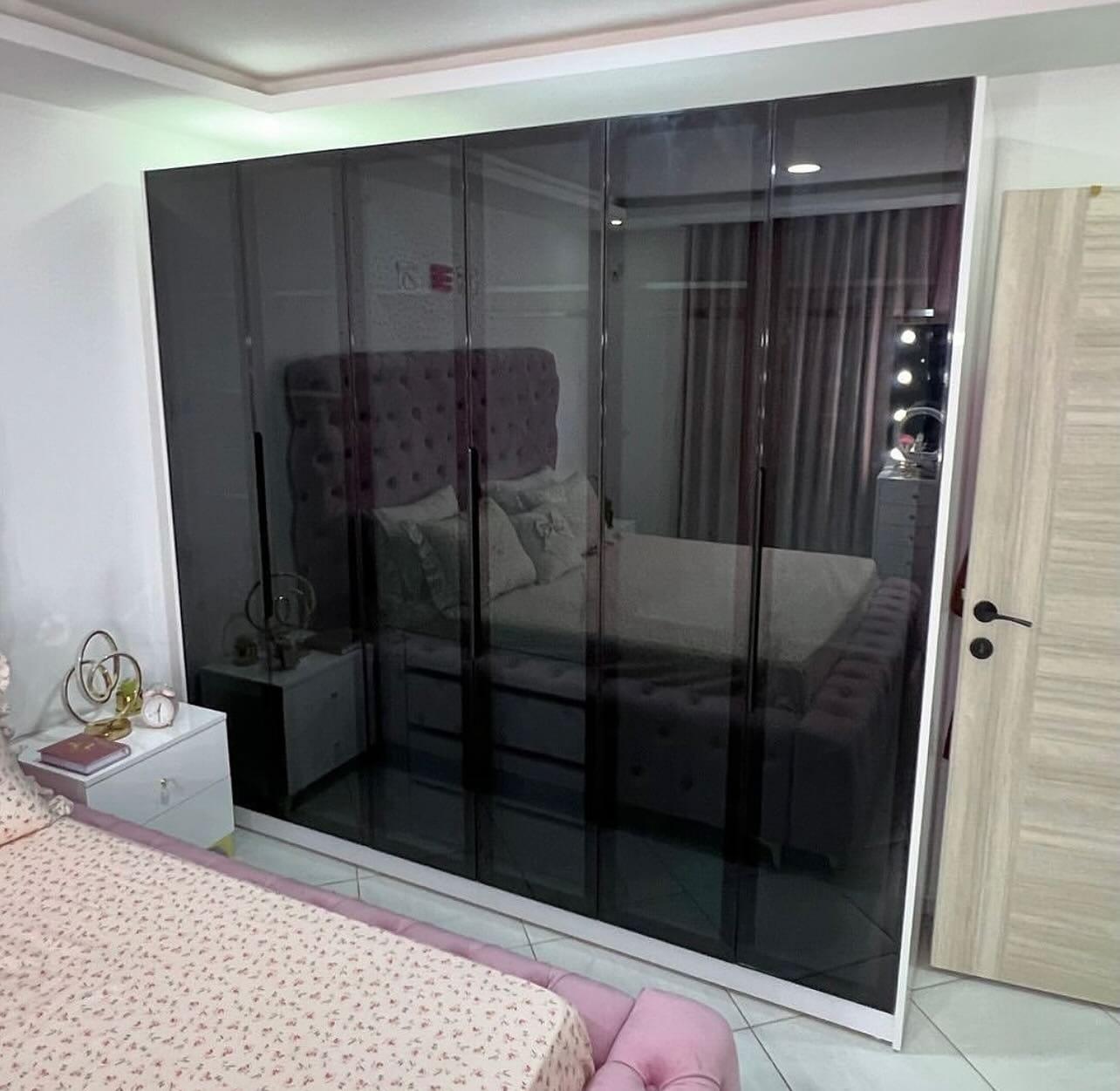
Glass and mirror leaves are the doors most likely to hurt someone and the most expensive to break. Take the weight with two people, one at each side, and rest the door on its lower edge on a soft surface such as a folded blanket, never flat on a hard floor and never leaning at a sharp angle. Keep your fingers off the top edge, wear gloves if there is a sharp edge and keep children and pets out of the room.
A mirror leaf is heavier than a laminate door of the same size, so a door that was fine before a mirror was fitted may now be too heavy for its rollers. The mirror wardrobe doors guide explains the weight side, and handleless wardrobes versus handles matters here too, because a door with no handle is lifted from its edge. If you are replacing a door, plan the new weight first; the wardrobe quotation checklist lists what to ask for.
If a glass door has a chip, crack or loose edge, do not slide it and do not try to refit it. A cracked leaf can break along the crack when it is moved, and the safe step is to leave it and ask for help. If you want light inside, LED strip versus profile for wardrobe lighting explains the difference before you ask for a quotation.
Keeping a sliding door on its track
Prevention is mostly habit. Keep the bottom track clean: a quick pass with a vacuum nozzle or a brush every few weeks removes the grit that stops a roller. Do not hang bags, belts or a mirror on a sliding door unless the hardware was meant for it. Slide the door by its handle or edge, with a steady push, rather than slamming it shut. Do not overfill the rail behind a door, because weight on the rail is weight on the door line, and wardrobe drawers and organisers shows how to move heavy items to drawers instead. If you are choosing new pulls or grips for the doors, the wardrobe handles guide covers types, height and finishes.
Think about the depth and the room too. A door that opens into a tight space gets knocked more. Wardrobe depth explains why a track needs room, and wardrobe dimensions gives the sizes. If a door has been hit by a trolley, a vacuum or a child, check it before it fails. Kids wardrobe design is worth reading if the doors are used by children, and the wardrobe layout guide helps you keep heavy items low, and for how shoes are stored in a wardrobe, see shoe wardrobe design.
A last point on damp: a wardrobe on an outside wall can swell at the bottom and push a door out of line, and what to check first with a wardrobe against a bathroom or outside wall is covered in its own guide. If you see swelling, a stain or a smell, look at moisture-resistant wardrobe boards before you replace a roller. For fitted, modular and freestanding options from a tenant's side, see wardrobes in a rented apartment in the UAE. Long garments are planned separately, as our guide to storing abayas and kanduras in a wardrobe shows. For the space above the doors, see luggage and seasonal storage in a wardrobe.
What we do about a sliding door off its track
We assess it and carry out sliding door repair and adjustment: track problems, alignment, roller replacement, and hardware replacement or adjustment. Replacing a whole track is part of that. The result depends on the damage and on whether parts are available, so we look at the wardrobe before we say what is possible, and we tell you plainly if a door or a whole run is better replaced. A rough picture helps: send a photo of the door, the track and the roller by WhatsApp, and say whether the door is glass, mirror or laminate.
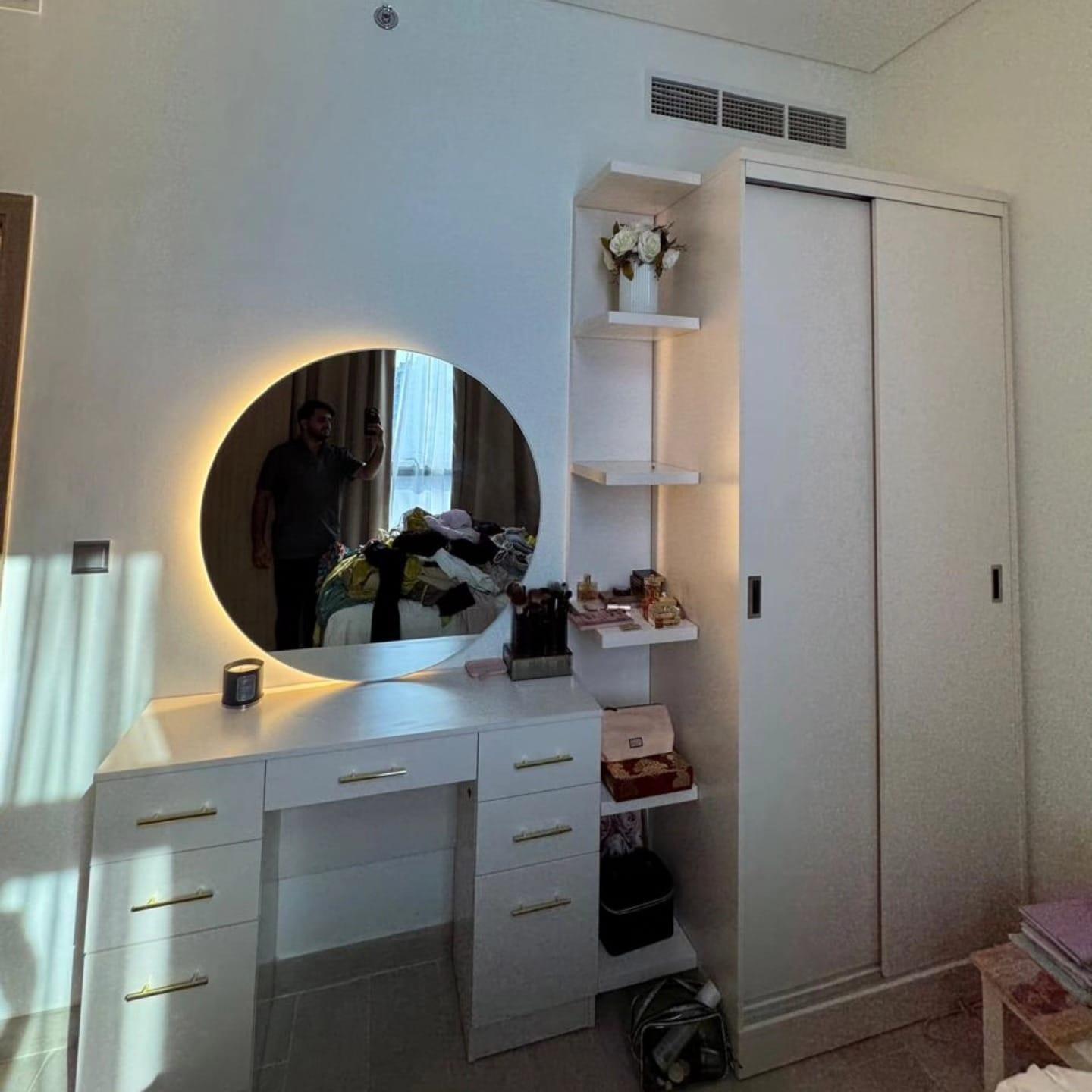
We do not publish a repair price or a timeline, because both depend on the damage, the parts and where the wardrobe is, and we do not publish a minimum charge. Ask for a quotation, and ask for it in writing. We work across the UAE from our Sharjah workshop in Al Shuwaiheen; see our Sharjah wardrobes page. A repair is not the same as a new wardrobe: the published entry specification for a new wardrobe is from AED 550 per sqm, installed, for MDF laminate with hinged doors, and other options change it. Our sliding door wardrobes page shows finished sliding runs, and our custom wardrobes service covers new ones.
On warranty, be precise (the full picture is in wardrobe warranty in the UAE). Our 5-year limited warranty covers the wood-based boards only, subject to terms; hinges, tracks, runners, rollers and other moving hardware are excluded, as are labour and misuse. A roller or track fault is therefore not a board warranty matter. Ask what applies to a repair in the quotation. If the whole wardrobe is the issue, a new one starts with the free measuring visit: see the wardrobe measuring visit guide, compare quotations with the wardrobe quotation checklist, and look at wardrobe materials and cost and the wardrobe price guide for what a new one costs. To get started, book a free measuring visit or contact us with your photos. Couples dividing one run can use our shared couple wardrobe guide to settle the split on paper first. In a one-room home the wardrobe has more jobs to do, as our guide to a studio apartment wardrobe explains. The rail height behind the doors is covered in our guide to wardrobe hanging heights.
If you are thinking about new doors or a new wardrobe, our complete wardrobe planning guide covers each decision.
Before the visit: how to prepare
Clear the front of the wardrobe and take anything off the rail that you can. Tell us what happened: when it first dragged, whether it came off once or many times, and whether anything was added. If the wardrobe is in a lived-in room, occupied home installation preparation shows how to ready it. Check interior lighting ideas if a lit wardrobe has wiring near the track, and tell us so, because we need to know before we lift anything.
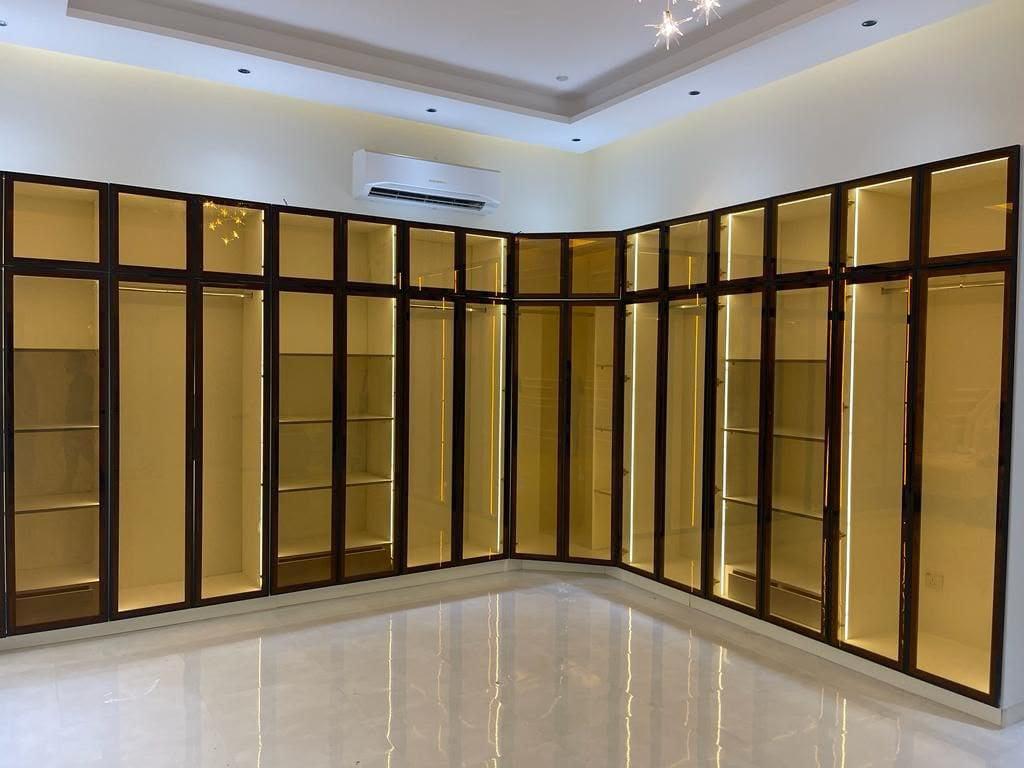
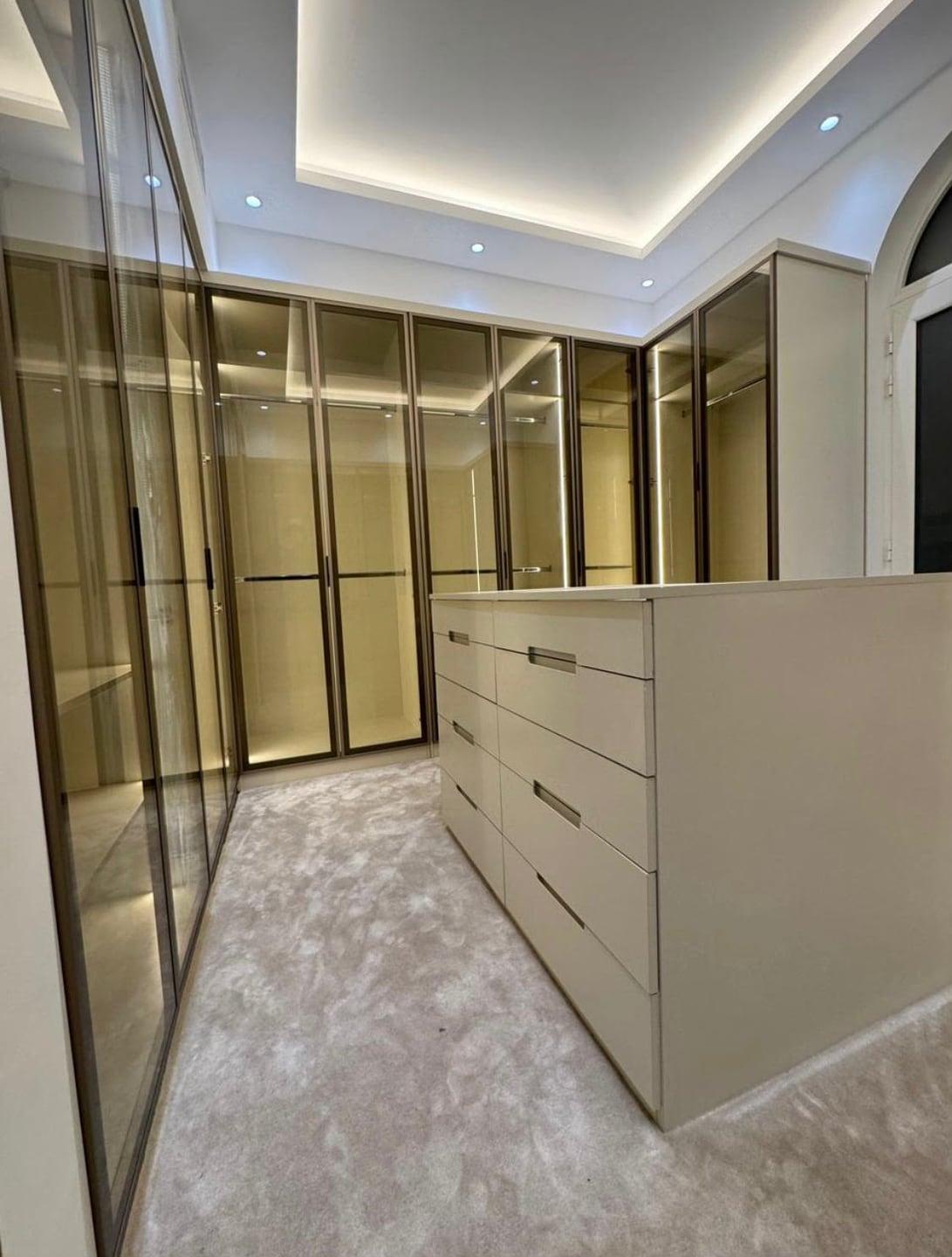
If the repair raises a wider question, such as whether a corner run or a smaller room should have sliding doors at all, corner and L-shaped wardrobe design, small bedroom wardrobe ideas and dressing room design explain the alternatives. Our built-in wardrobes and lit glass-front wardrobes pages show them, and our pricing guide gives a first idea of cost. If you are still deciding between a wall of doors and a room you step into, our reach-in versus walk-in wardrobe guide compares what each costs in floor space. For a larger room planned wall by wall, see master bedroom wardrobe design. If you are weighing a made-to-measure wardrobe against a shop-bought one, custom or ready-made wardrobe compares where each wins.
Common questions
Why does my sliding wardrobe door keep coming off its track?
The usual causes are a worn or broken roller, a bent or dirty track, too much weight on the door, or a door that is out of line. A door that keeps coming off needs the part checked, not another push. See our sliding door systems guide.
Can I put a sliding wardrobe door back on the track myself?
A light door on a straight track with a sound roller often can be refitted with a helper. A heavy glass or mirror door, a bent track or a broken roller needs a professional. See our wardrobe door replacement guide.
Is it safe to lift a heavy mirror wardrobe door on my own?
No. A mirror or glass leaf is heavy, awkward and sharp-edged, so use two people and rest it on a soft surface, or wait for help. Never force it. See our mirror wardrobe doors guide.
Do you repair sliding wardrobe door tracks and rollers in the UAE?
Yes. We assess the door and carry out track repair, alignment, roller replacement and hardware adjustment or replacement, including a whole new track. The result depends on the damage and on part availability. See our sliding door wardrobes page.
How much does it cost to repair a sliding wardrobe door?
We do not publish a repair price, because it depends on the damage, the parts and the location. Ask for a quotation in writing after we see the door. See our wardrobe price guide.
Is a sliding door repair covered by the wardrobe warranty?
Our 5-year limited warranty covers the wood-based boards only, and excludes tracks, rollers and moving hardware. Ask what applies to a repair in the quotation. See our wardrobe quotation checklist.
When should I replace the wardrobe instead of repairing the door?
When the carcass is swollen or damp, the frame is bent or several parts have failed, a repair may not last. We tell you plainly when replacing is better. See our renovate or replace a wardrobe guide.

Sources & specifications
Manufacturer information applies to the named products and systems. Sources reviewed on 3 November 2026.
- Hettich, TopLine L sliding door system, shop page (doors mount with profiles that fix without tools; Silent System cushions closing and opening)shop.hettich.com(opens in a new tab)
- Hettich Technical Assistant, TopLine L (installation manuals; adjustment videos "Overlay adjustment" and "Height adjustment")hta.hettich.com(opens in a new tab)
- Window Hardware Direct, How to fix a sliding closet door off track (worn rollers, bent track, too much weight, misaligned tracks; tilt the door; clean the track)windowhardwaredirect.com(opens in a new tab)
- iFixit, Repairing a Sliding Closet Door (two screws at the top; a helper holds the door; roller fitted the right way round)proxy.ifixit.com(opens in a new tab)
Want this planned for your home?
Consultation and measurement are free. Tell us the rooms, location and what you need; we arrange a sample visit and define the measured quotation.