Wardrobes · 21 min read · 2 July 2026
Musty smell in a wardrobe: causes, what to do and when the wall is the problem
A musty smell in a wardrobe usually means damp air is stuck: condensation on a cold outside or bathroom wall, tightly packed clothes or no air behind the furniture, sometimes a leak. Open the doors, loosen the rail, lower the room's humidity and check the wall; a board does not cure a leak.

By Ali Haider Basra, Founder, Al Tareeq Decor · Contact our workshop
Key takeaways
- A musty wardrobe usually means damp air that cannot leave: moisture condenses on a cold outside or bathroom wall, clothes are packed tightly, or there is no air behind the furniture.
- The safe first steps: open the doors, take clothes out and refill less tightly, leave a gap behind a free-standing wardrobe, lower the humidity of the room, dry laundry fully and look at the wall.
- Not a fix: a fragrance, painting over mould, a new board or a vent. The EPA, GOV.UK and the City of London all put the cause, usually moisture or a leak, ahead of the smell.
- A wet wall, a water mark, flaking paint or a smell that keeps returning means ask the landlord or building management in writing and keep photos; check your tenancy contract.
- We build wardrobes; we do not diagnose damp, treat mould, clean wardrobes or repair walls. Tell us which wall the wardrobe stands against at the free measuring visit.
On this page
- Key takeaways
- Why does my wardrobe smell musty? The short answer
- What a musty smell in a wardrobe means, and what the sources say
- What the public sources say, and where they stop
- Cold external walls, bathroom walls and condensation
- Packed clothes, shut doors and no space behind the wardrobe
- When it is a leak or a wet wall, not condensation
- Wardrobe smell decision table: pattern, likely cause, first step, who acts
- Wardrobe smell: pattern, likely cause, safe first step and who acts
- How to get rid of a musty smell in a wardrobe: what is safe to do
- What does not fix a damp wardrobe smell
- When to call your landlord or building management
- What a new or renovated wardrobe can and cannot do
- What we do about it
- Common questions
Why does my wardrobe smell musty? The short answer
A musty smell in a wardrobe almost always means damp air is sitting in it and not leaving. The usual reasons are condensation on a cold surface such as an outside wall or a wall shared with a bathroom, clothes packed so tightly that no air moves between them, a wardrobe pushed hard against a wall, and, less often, water coming through from a leak. The first steps cost nothing: open the doors, take some clothes out, leave space between the clothes and the wall, lower the humidity in the room (our guide to wardrobes and humidity in UAE homes lists the habits that help) and look closely at the wall behind.
Those causes and steps come from public guidance we opened ourselves: the US Environmental Protection Agency on controlling moisture, the UK government's guidance on damp and mould, the City of London's advice to residents and the World Health Organization. None of them is about the UAE, none says a new board cures damp, and we say below where each one applies and where it stops.
This page owns the smell, its causes and what you can do at home. What a board grade means is covered in our wardrobe materials guide and in the wardrobe quotation checklist, so we do not repeat it here.
The drawing below puts the cause and the steps on one sheet: a plan of a wardrobe on a cold outside wall, warm moist air reaching the narrow gap behind it, and then the safe steps arriving one at a time, with the point we most want you to keep at the end.
- 1. Warm, moist air meets a cold wall: moisture condenses on the coldest surface it touches, which here is the outside wall behind the wardrobe
- 2. Packed clothes and shut doors stop air moving, so the moist air stays, and the musty smell is what comes out when the doors open
- 3. Leave a gap behind the wardrobe if it is free-standing, so room air can pass along the wall
- 4. Open the doors and loosen the rail so air passes between the clothes and carries heat to the cold surfaces
- 5. Lower the humidity of the room: the EPA names dehumidifiers and air conditioners in hot, humid climates, and extractor fans in bathrooms and kitchens
- 6. Find the source: if the wall is wet or a pipe leaks, no airing will cure it, and the person who owns the wall has to act
- 7. A board does not cure a leak: the cause is stopped first, and only then is anything built against that wall
What a musty smell in a wardrobe means, and what the sources say
The smell is a signal, not the problem itself. England's guidance for landlords lists mould odour, together with visible mould, water damage and condensation, as enough evidence of dampness to act on. It adds that a smell with no visible mould can mean mould sitting behind a surface, and it names furniture as one such place. So treat the smell as a reason to look, and do not try to cover it.
The World Health Organization's guidelines say mould grows indoors when enough moisture is available, and that the most important way to avoid ill effects is to prevent, or at least minimise, persistent dampness on interior surfaces. That is why this page keeps returning to moisture and not to the smell. We make no health claims of our own; the WHO review names respiratory symptoms, allergies and asthma, and the EPA advises anyone with health concerns to speak to a health professional before cleaning up mould.
The table lists what each source says, in our words, and the limit on it. All four are about homes in the UK or the US.
We found no official UAE humidity or temperature dataset to quote, so this page gives no climate figures. What is particular to UAE homes is set out in our wardrobe materials and hardware guide: a wardrobe backing onto a bathroom or shower, steam from an en-suite reaching the dressing area, and drip from air-conditioning units or their drain lines.
What the public sources say, and where they stop
US EPA, controlling moisture in the home (updated Feb 2026)
- What it says (our words)
- Cooler air holds less moisture, so water condenses on cold surfaces; open doors to closets, which may be colder than the room, to increase circulation; use extractor fans, dehumidifiers and air conditioners; fix leaks
- Where it stops
- US government advice; it is general and does not give a UAE humidity target
GOV.UK, damp and mould guidance (updated 1 Apr 2026)
- What it says (our words)
- Condensation is the most common form of damp and collects behind wardrobes; a mould smell can mean mould behind furniture; removing surface mould alone does not stop it returning; leave a gap between furniture and external walls
- Where it stops
- Applies to England and is written for landlords; no UAE tenancy rule follows from it
City of London Corporation, preventing damp and mould (updated 3 Nov 2025)
- What it says (our words)
- Mould can appear behind furniture where air is restricted and in tightly packed wardrobes; leave 75 to 100 mm between wardrobes and outside walls; do not overfill
- Where it stops
- A UK council's advice to its own residents; the gap is its figure for its homes
WHO, dampness and mould guidelines (2009)
- What it says (our words)
- Mould grows where there is enough moisture; preventing persistent dampness is the most important protection
- Where it stops
- A public-health review, not a wardrobe guide
Sources opened on 3 November 2026; the exact pages are listed at the foot of this article. We do not recommend a cleaning product beyond what these pages themselves state.
Cold external walls, bathroom walls and condensation
The EPA explains the mechanism plainly. The amount of moisture air can hold depends on its temperature, and as air cools it can hold less, which is why drops form on the inside of a cold window. Water leaves the air and lands on the coldest surface it can reach. Long showers, steam from cooking, plants and clothes drying indoors all put more moisture into the air that is looking for that surface.
The City of London puts a figure on the supply: an average household produces about 14 litres of water vapour a day, held in warm air, and it has to leave the home or it condenses. That is the City's figure for UK households, not a UAE measurement, but the principle is the same, and England's guidance names "low points on walls behind sofas or wardrobes" as a typical place for condensation damp to settle.
In a UK winter the cold surface is an outside wall. In a UAE flat it can be the cool inner face of an outside wall in an air-conditioned room. Our guide to wallpaper in humid climates explains, with a Dubai climate table, how hot, damp outside air can reach that cool face. We treat it as the same principle, a surface cooler than the air touching it, and not as a measurement of your wall.
A wardrobe on the other side of a bathroom wall has a second source: the shower's steam and spray reach that wall from behind. The EPA recommends extractor fans in bathrooms and kitchens that send moisture outside, while England's guidance lists a broken, blocked or switched-off extractor as a cause of damp. A dressing room placed between the bedroom and the bathroom is the classic case, and our dressing room design guide covers how it is planned. For this position the guide on what to check first when a wardrobe stands against a bathroom or outside wall is the place to start.
The short video below is a plain, UK explanation of the same thing for the wardrobe case: a cold external wall, high indoor humidity and little air movement behind furniture. It is from a UK channel, so its advice on keeping the room warm and on trickle vents is about UK winters; take the mechanism from it, not the heating advice. Our page on wardrobe warranty in the UAE separates the board warranty from the workmanship warranty and explains the usual exclusions.
Packed clothes, shut doors and no space behind the wardrobe
Air that cannot move cannot dry anything. The City of London says mould can appear behind furniture where the airflow is restricted and in tightly packed wardrobes, and its advice for residents is to avoid putting too many things in cupboards and wardrobes, because that stops air circulating. The EPA adds a point most people miss: closets can be colder than the rooms they open into, so opening their doors helps, because moving air carries heat to the cold surfaces; leaving a section open or behind doors is a related choice, weighed in open wardrobe or closed doors.
For a free-standing wardrobe, the advice is a gap. The City of London gives 75 to 100 mm between a wardrobe and an outside wall, and England's guidance and the EPA say the same in words: leave a gap, and move furniture out of wall corners. Those are UK and US advisers' figures for their own homes, so treat them as a starting point and look at what your wall does. Which kind of wardrobe you have decides what is possible, and our fitted, built-in and free-standing wardrobe guide sets the three apart.
A built-in wardrobe has no gap to leave. What you control is what goes in it and how often the doors open. Leave some space on the rail so clothes do not press together, keep the floor of the wardrobe clear, and leave the doors open for a while on a dry day. Our wardrobe layout guide explains how a rail, shelves and drawers divide the space so that nothing has to be packed. To set each rail from your own longest garment, see wardrobe hanging heights.
A small bedroom is where this goes wrong most often, because the wardrobe is the only storage. If that is your room, our small bedroom wardrobe ideas show how to gain room without packing a rail, and the wardrobe dimensions guide gives the depths and widths that leave space for clothes to hang freely. For a large bedroom shared by two people, see master bedroom wardrobe design. When two people use one wall, our guide to a shared wardrobe for a couple explains how to split hanging length fairly.
When it is a leak or a wet wall, not condensation
Condensation is the most common cause, not the only one. The City of London lists four kinds of damp. Condensation is moisture from inside the home settling on cold surfaces. Penetrating damp is water that gets in from outside through defects in walls, roofs, windows or floors. Rising damp is ground moisture moving up through walls and floors, and the City says it is usually found in older properties and is often misdiagnosed. Traumatic damp comes from leaking waste or heating pipes, overflowing baths or sinks, burst pipes and defective water storage.
England's guidance adds that there can be more than one cause at once: a leak or penetrating damp can make condensation worse. That is why airing a wardrobe sometimes helps for a week and then the smell returns. The EPA's list of ways to control moisture starts with fixing leaks and seepage, before any gadget.
Here is what to look for on and around the wall behind the wardrobe: a patch that is cold or damp to the touch, a water mark or a stain with a tide line, paint that flakes or lifts, wallpaper that bubbles, or black spots on the wall. Our guide to wallpaper problems and fixes lists the same signs on papered walls, including dark spots that arrive together with a musty smell, and says moisture comes first.
For UAE homes our materials guide also names drip from air-conditioning units and their drain lines. Anything that drips behind a wall or above the wardrobe belongs in this section, not in the condensation one. We cannot tell which one you have from a smell or a photograph, and this page is not a damp diagnosis; the next section helps you sort the pattern before you speak to the person who can inspect the wall. Whether your room can afford a walk-in wardrobe instead of a reach-in run is worth settling before the layout is fixed.
Wardrobe smell decision table: pattern, likely cause, first step, who acts
Use the table to match what you notice with a likely cause, a safe first step and the person who would normally act. It is general advice built from the sources above and from our own published guidance; it is not a diagnosis, and the only way to know what is behind a wall is to have the wall inspected. Taking the wardrobe to the ceiling brings its own checks, listed in floor-to-ceiling wardrobes in the UAE.
Wardrobe smell: pattern, likely cause, safe first step and who acts
Musty only after the doors have stayed shut for days; the wardrobe is full
- Likely cause
- Air not moving in a packed wardrobe
- Safe first step
- Open the doors, take clothes out for a while, then refill it less tightly
- Who acts
- You
Smell strongest in a wardrobe against an outside wall; the wall feels colder than the others
- Likely cause
- Condensation on a cold surface (the EPA and GOV.UK mechanism)
- Safe first step
- Leave a gap if it is free-standing; open the doors; lower the room's humidity; keep a record
- Who acts
- You; building management if the cooling or extract system is faulty
Smell after showers, and the wall is shared with a bathroom
- Likely cause
- Steam or splashes from next door, or an extractor fan not working
- Safe first step
- Run the extractor fan, keep the bathroom door shut while showering, look at the fan
- Who acts
- You; building management if the fan or duct is not working
Damp patch, water mark, flaking paint or bubbling paper on the wall, or the smell keeps coming back
- Likely cause
- A leak, or water coming through the wall (a pipe, an AC drain, penetrating damp)
- Safe first step
- Stop storing things against that wall, photograph it, and report it in writing
- Who acts
- Landlord or building management
Clothes smell musty but the wardrobe and wall feel dry
- Likely cause
- Clothes put away damp, or laundry dried indoors without enough air
- Safe first step
- Dry laundry fully before storing it; rewash what smells; give the rail more space
- Who acts
- You
Visible mould on the wall or board, or more than a small patch
- Likely cause
- Persistent dampness
- Safe first step
- Do not scrub a large area yourself; report it and ask who will inspect
- Who acts
- Landlord or building management; a professional for large areas
General advice, not a diagnosis. The first four rows follow the EPA, GOV.UK and City of London pages above; the laundry row follows the EPA's list of indoor moisture sources. Check your tenancy contract for who is responsible.
How to get rid of a musty smell in a wardrobe: what is safe to do
Start with what costs nothing. Open the doors and leave them open for some hours, and take some clothes out so air can reach the back and the sides. The EPA specifically recommends opening closet doors to increase circulation, because circulation carries heat to cold surfaces.
Then look at the wall. Touch the back and sides, and look for a stain, a patch of colour or a bubble. Photograph anything you find, with the date, so that you can show the building manager or the landlord. Our wardrobe measuring visit guide asks you to do the same before we measure, for the same reason.
Lower the humidity of the room. The EPA names dehumidifiers and air conditioners, especially in hot, humid climates, and warns that the appliances themselves must not become a source of growth, so empty and clean them as their makers instruct. It also notes that in hot regions an air conditioner that cools the air too quickly may not run long enough to remove moisture, so a short blast of cold air is not a plan. Use the bathroom extractor fan when showering and the kitchen fan when cooking, and close the doors of those rooms.
Dry laundry completely before it goes in the wardrobe. The EPA lists drying clothes indoors among the moisture sources, and the City of London says clothes affected by mould can be pre-treated with a stain remover and washed at a higher temperature, or cleaned professionally. For care of the wardrobe itself, our care and maintenance tool lists what to wipe and how often.
If there is a small patch of mould on a hard, wipeable surface, England's guidance says most tenants could reasonably deal with condensation and very small amounts of mould using an appropriate mould and mildew cleaner, and that such products are preferred to bleach for health and safety. The EPA says a patch under about 10 square feet, roughly a square metre, can in most cases be handled by you, and the City of London advises against treating large areas on porous surfaces yourself, because incorrect treatment can spread spores. Follow the product's own instructions; we do not recommend a brand.
Porous things are the exception. The EPA warns that mould can be hard or impossible to remove completely from absorbent materials, and that such items sometimes have to go in the bin. Cardboard boxes, loose carpet and soft furnishings are the usual cases. Tenants have their own questions, covered in our guide to a wardrobe for a rented apartment, including what to ask the landlord in writing.
What does not fix a damp wardrobe smell
A fragrance does not remove moisture. Bags, balls and sprays are sold for wardrobes, and none of the pages we opened treats them as a cure. A scent can hide the signal while the cause carries on.
Removing or painting over the mould is not enough either. England's guidance says simply removing surface mould will not stop damp and mould reappearing, and tenant management of condensation and small patches must not replace dealing with the underlying cause. The EPA's list starts with fixing leaks.
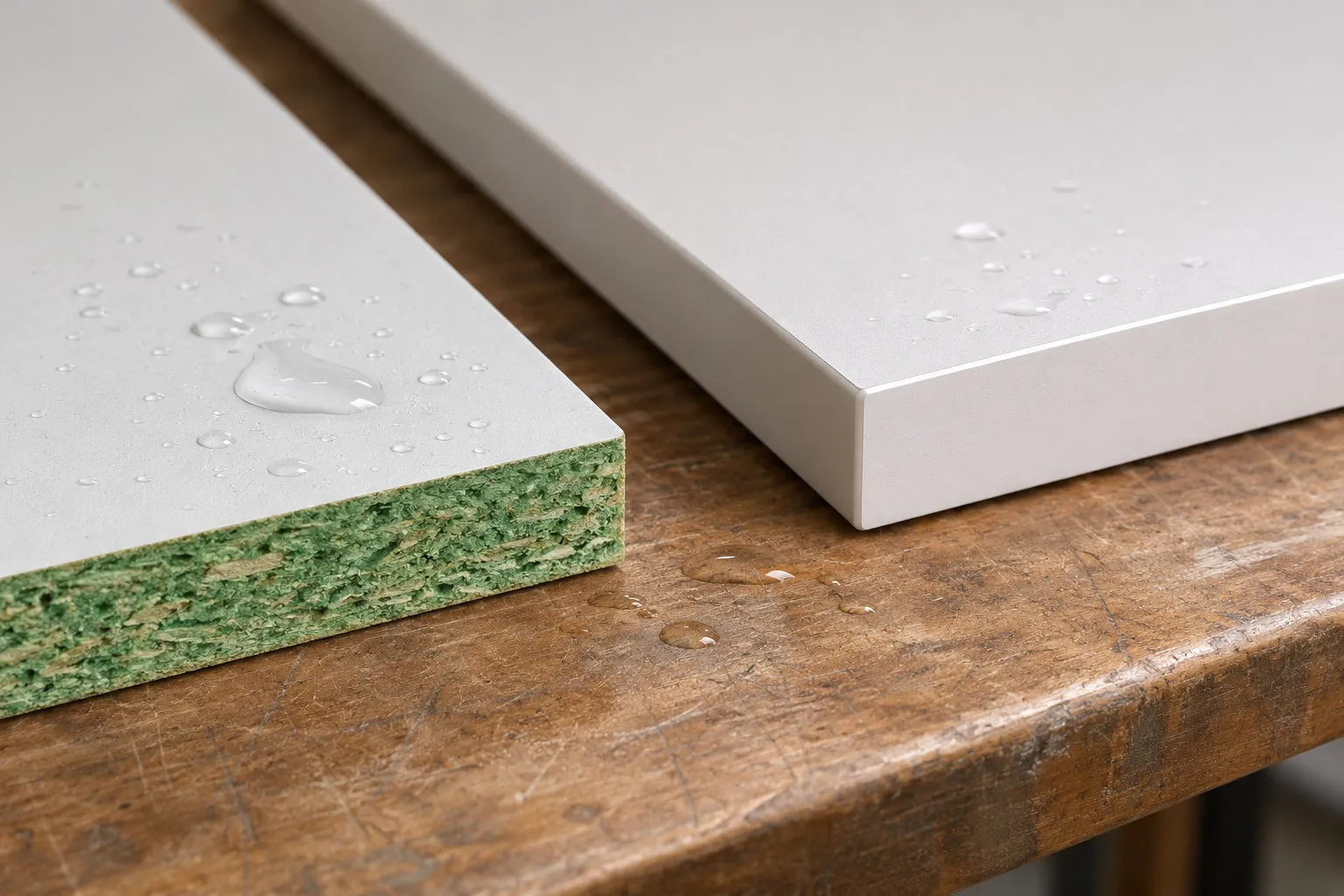
A new board does not cure it. Our custom closets guide says the carcass on a wall beside a bathroom, or anywhere else exposed to moisture, uses a moisture-resistant grade, and that ordinary MDF is built for dry interiors and copes badly with water, so a leaking pipe or a wet floor has to be put right before anything is built. A board copes with more humid air; it cannot stop water that is coming through a wall. For what the grades mean, see our guide to moisture-resistant wardrobe boards.
A vent, a grille or a gap in the furniture is not a cure for a wet wall. Air movement helps condensation, and does nothing for water that keeps coming in. We do not describe or promise any vent, back gap or louvre in our own wardrobes; if a supplier says one cures damp, ask for it in writing.
Gadgets we cannot rate. The small moisture-absorber bags and boxes sold for wardrobes did not appear in any official source we opened, so we do not say whether they work. The EPA's advice concerns dehumidifiers and air conditioners for the room.
Blaming the household does not help either. England's guidance says it is totally unreasonable to blame damp and mould on lifestyle choices, because cooking, bathing and drying laundry always put moisture into the air. Small adjustments help, but they sit beside, and do not replace, dealing with the building. Warm or neutral light, strip or profile: our wardrobe LED lighting comparison goes through the choices.
When to call your landlord or building management
Call when the cause may be the building and not the household: a wet or stained wall, water marks, paint flaking or lifting, a smell that returns after airing, a musty smell with a leak or a faulty extractor or AC drain nearby, or visible mould beyond a small patch. England's guidance says tenants cannot be expected to reduce moisture if the home does not allow them to. Those are UK rules, but the practical point travels.
What to do, in order: check your tenancy contract and ask in writing; report a leak or persistent damp to your landlord or building management in writing and keep photos. Include where the wardrobe stands, which wall it is against, when you first noticed the smell, what you have already done, and photographs. Keep copies of what you send and the replies.
We cannot tell you who is responsible. That depends on your contract and your building, and we give no legal advice. We also do not diagnose damp, treat mould, clean wardrobes or repair walls; those are not services we offer. If the matter is a health concern, speak to a health professional, as the EPA advises.
Once the source is dealt with, that is the time to think about the wardrobe. Our warranty and aftercare guide explains how we stand behind our own work, and the wardrobe quotation checklist shows what to put in writing if a new wardrobe is going against a wall that has had a problem. Doors that stick or leave the rail are covered in fixing a sliding wardrobe door off its track, including what not to do, and a hinged door that rubs or sags has its own guide on fixing a sticking wardrobe door.
What a new or renovated wardrobe can and cannot do
A new wardrobe cannot cure a damp wall. Someone has to trace and stop the cause first, and that is the person who owns or manages the wall. After that, a wardrobe can be planned so that it does not make the problem worse, and we publish two things about that. Where a wall sits beside a bathroom or is otherwise exposed, the carcass is a moisture-resistant grade; and ordinary MDF is a dry-interior material that tolerates water badly; the same caution applies to grooved MDF doors, covered in fluted wardrobe doors.
What a new wardrobe can do is give you the layout you need so nothing has to be packed: rails, shelves and drawers drawn to what you really store. Rebuilding the inside of an existing wardrobe is something we do, and so is replacing doors, tracks, hinges or drawers; our wardrobe door replacement guide covers what can be changed. A new set of doors does not change the wall behind them. The finishes themselves are compared in wardrobe door finishes compared. If you are weighing an old wardrobe, renovate or replace an old wardrobe is a decision guide by symptom.
The type of door changes how you use the wardrobe, not what the wall does. Sliding doors never swing out, which can help in a tight room, and our hinged or sliding doors guide compares the two. How many hinges a door needs, and what soft-close adds, is covered in the wardrobe hinges guide.
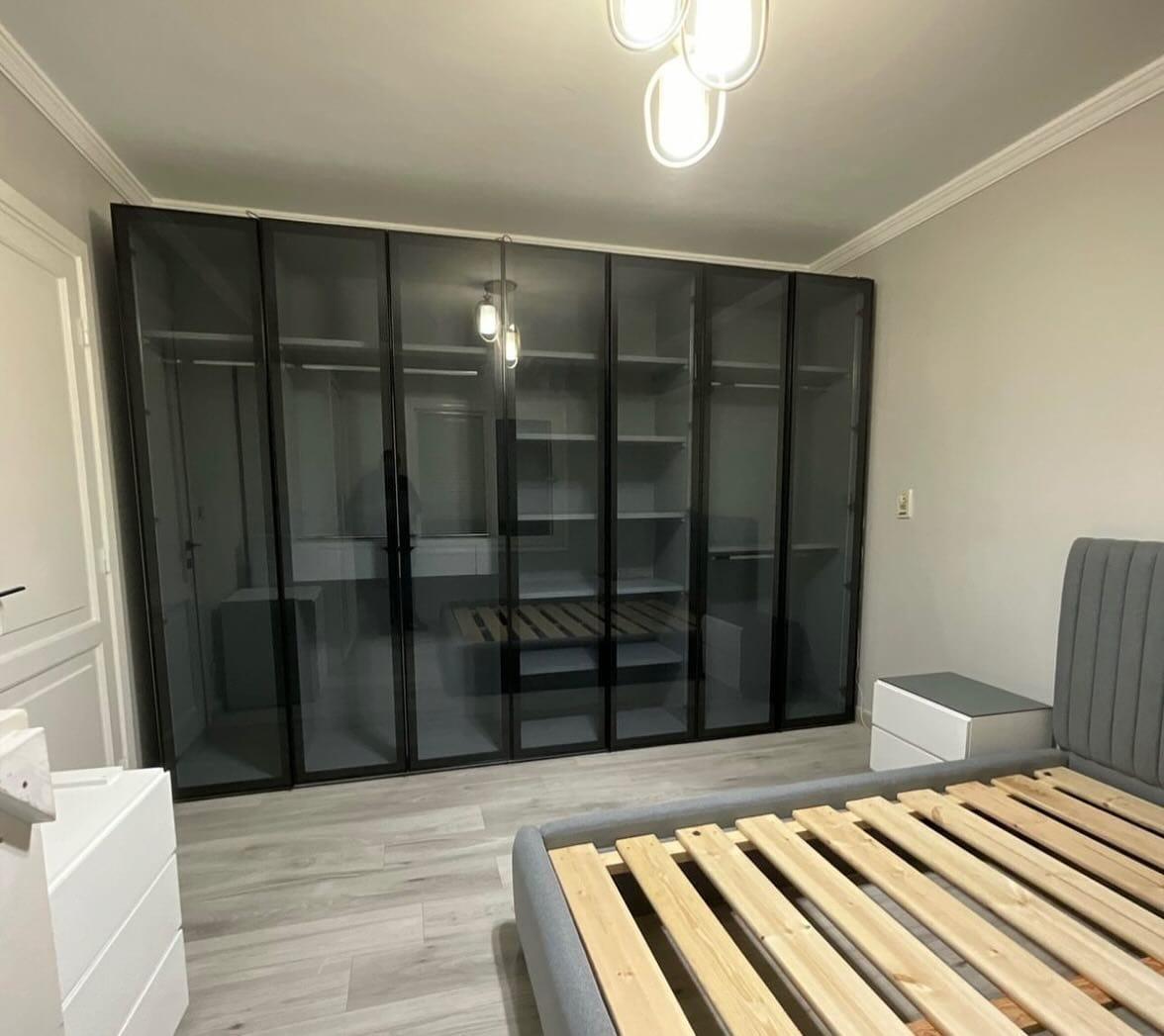
The track and rollers of a sliding wardrobe are a separate subject, set out in our sliding door systems guide. A tinted or lit glass front shows what is inside, which our lit glass-front wardrobes page shows. Neither makes a wall drier.
A corner or L-shaped wardrobe stands against two walls, so tell us whether either is an outside wall; our guide to corner and L-shaped wardrobe design shows how those runs are planned. For mirrored fronts, mirror wardrobe doors says what to keep dry at the edges.
Two rooms where the wardrobe has to do more than hold clothes are covered in our guides to kids wardrobe design and to a wardrobe with a TV unit.
Our made-to-measure wardrobes service lists every option side by side, and custom or ready-made wardrobe: where each wins compares it with an off-the-shelf unit.
Other rooms have the same board question. Our guides to kitchen joinery and cabinets and to media wall panels in MDF, WPC and PVC show how we treat humid spots, and a hall cabinet is covered in the shoe wardrobe design guide, which looks at pairs per shelf, depth and ventilation.
The handleless wardrobe guide, the wardrobe handles guide and wardrobe lighting ideas cover the finishes and the lit interiors that people choose once the basics are right. Check that the doors have room to open too: our guide on how much room a wardrobe door needs covers the swing against beds, desks and corners.
What we do about it
We make and fit wardrobes. We do not diagnose damp, treat mould, clean wardrobes or repair walls, and we will not tell you a board or a vent cures a damp wall. What we can do is plan the wardrobe around what you tell us. At the free measuring visit we bring laminate, veneer and glass samples, measure with a laser and draw each door and compartment, with an itemised price. Nothing is made before you approve the drawing and the price.
What we ask you is simple: tell us which wall the wardrobe stands against, whether it is an outside wall, a wall shared with a bathroom, or one with an AC drain or pipe near it, and photograph any stain before we visit, as our measuring visit guide describes. If stored items are part of the smell, see luggage and seasonal storage, abaya and kandura storage, wardrobe drawers and organisers or, for one room, a studio apartment wardrobe. Where a wall needs a moisture-resistant grade, it appears as its own line in the quotation, and the question of what the wall itself needs stays with whoever manages it.
After you confirm, our Sharjah workshop builds the wardrobe and our own team installs it, up to about 10 days from order confirmation, depending on size and design. The workmanship carries a 24-month written warranty. Separately, the wood-based boards carry a 5-year limited warranty, subject to terms; hinges, tracks, runners, rollers and other moving hardware are not covered, and the final terms are in the written warranty. Our entry specification starts at AED 550 per sqm of wardrobe front, installed, for MDF laminate with hinged doors; moisture-resistant panels, glass and sliding systems are separate lines. The custom closet and wardrobe prices guide shows how a wall becomes a number.
Browse the finished work on our custom wardrobes page, then see built-in wardrobes for fitted runs.
For a dressing room or a walk-in plan, see walk-in closets and dressing rooms.
When you are ready, book a visit through the consultation form. If you want to build the budget first, the pricing guide walks through it.
Installation covers the whole UAE. The Sharjah custom wardrobes page covers visits and installation there, and our dressing table inside the wardrobe guide is the next read if you are also planning the inside. For the depth figures behind this, see our wardrobe depth guide.
If you are planning a replacement, our complete guide to planning a wardrobe in the UAE puts the damp checks in their place among the other decisions.
Common questions
Why does my wardrobe smell musty?
Usually damp air that cannot leave: moisture condensing on a cold outside or bathroom wall, clothes packed tightly, or no air behind the furniture. Less often it is a leak. Open the doors, take clothes out and look at the wall. See our wardrobe layout guide.
How do I get rid of a musty smell in a wardrobe?
Open the doors, take clothes out, let air in, dry laundry fully before storing it, lower the room's humidity and check the wall for stains. A scent does not remove the cause. See the care and maintenance tool.
Can I put a dehumidifier or moisture absorber in my wardrobe?
The EPA names dehumidifiers and air conditioners for the room, and warns the appliances themselves must not become a source of growth. We found no official source on small wardrobe absorber bags, so we do not rate them. See wallpaper in humid climates.
Why is there mould behind my wardrobe on an outside wall?
Furniture against a cold external wall lets condensation form with no air circulating, and mould can follow. A free-standing wardrobe can be moved off the wall, but a built-in one cannot. See fitted, built-in and free-standing wardrobes.
Can a moisture-resistant board cure damp in a wardrobe?
No. A moisture-resistant grade copes with higher air humidity; it does not fix a leak or a wet wall, so the source has to be stopped first. Ask which grade is in the quotation. See our wardrobe materials guide.
Who should I tell about damp behind a wardrobe in a rented flat?
Check your tenancy contract and ask in writing; report a leak or persistent damp to your landlord or building management in writing and keep photos. We give no legal advice. See our wardrobe measuring visit guide.
Can Al Tareeq remove mould or fix damp in my wardrobe?
No: we do not diagnose damp, treat mould, clean wardrobes or repair walls. We build and fit wardrobes, so tell us which wall yours will stand against at the free visit. See our custom wardrobes service.

Sources & specifications
Manufacturer information applies to the named products and systems. Sources reviewed on 3 November 2026.
- US EPA, What are the main ways to control moisture in your home? (page last updated 18 February 2026): cooler air holds less moisture; open closet doors to increase circulation; fix leaks; extractor fans, dehumidifiers and air conditionersepa.gov(opens in a new tab)
- US EPA, Mold Cleanup in Your Home: about 10 square feet as the limit for doing it yourself; consult a health professional with health concerns; porous materials may have to be thrown awayepa.gov(opens in a new tab)
- GOV.UK, Understanding and addressing the health risks of damp and mould in the home (updated 1 April 2026, applies to England): condensation behind wardrobes; mould smell behind furniture; surface removal alone does not stop it returninggov.uk(opens in a new tab)
- City of London Corporation, Preventing damp and mould (updated 3 November 2025): mould behind furniture and in tightly packed wardrobes; 75 to 100 mm gap; types of dampcityoflondon.gov.uk(opens in a new tab)
- WHO, WHO guidelines for indoor air quality: dampness and mould (2009): prevent or minimise persistent dampnesswho.int(opens in a new tab)
- Problem Homes UK on YouTube: Why Is There Mould Behind My Wardrobe? (1 October 2026)youtube.com(opens in a new tab)
Want this planned for your home?
Consultation and measurement are free. Tell us the rooms, location and what you need; we arrange a sample visit and define the measured quotation.