Wardrobes · 12 min read · 27 July 2026
Open wardrobe or closed doors: what to choose for UAE homes
Closed doors suit everyday clothes, luggage and long garments; open shelving suits a small edited zone. Without doors, dust settles on what is stored, so open bays need more cleaning. How to mix open and closed, what drives the cost and what to ask in the quotation.

By Ali Haider Basra, Founder, Al Tareeq Decor · Contact our workshop
Key takeaways
- Use doors on the bays that hold everyday clothes, luggage, bedding and long garments; keep open shelving for a small, edited zone you want to see.
- Without doors, dust settles on what is stored and needs more frequent cleaning, according to three published sources; none measured UAE dust, and we give no figure.
- Mixed designs work best: an open niche or end bay beside solid or glass doors, with the open bays decided before the drawing, with wardrobe glass doors and privacy explaining what a glass bay shows.
- Open is not automatically cheaper: open bays still need finished boards, shelves and often lighting, and what you save is mainly doors and hardware.
- Ask for each bay marked open, solid or glass, the finish and depth of the open bays, and an itemised price for each.
On this page
- Key takeaways
- Open or closed wardrobe: the short answer
- Open, closed or mixed, in one table
- Dust in a UAE home: what we can and cannot say
- What looks good open: styled zones
- What needs doors
- Open shelf or door? Item by item
- Mixed designs: an open niche beside doors, and glass doors
- Cleaning effort: what each choice asks of you
- Privacy and light: who sees the wardrobe, and what the sun does
- Cost drivers: open is not automatically cheaper
- What moves the cost of an open or closed bay
- What to ask for in the quotation
- Quotation questions for an open or mixed wardrobe
- What we do about it
- Common questions
Open or closed wardrobe: the short answer
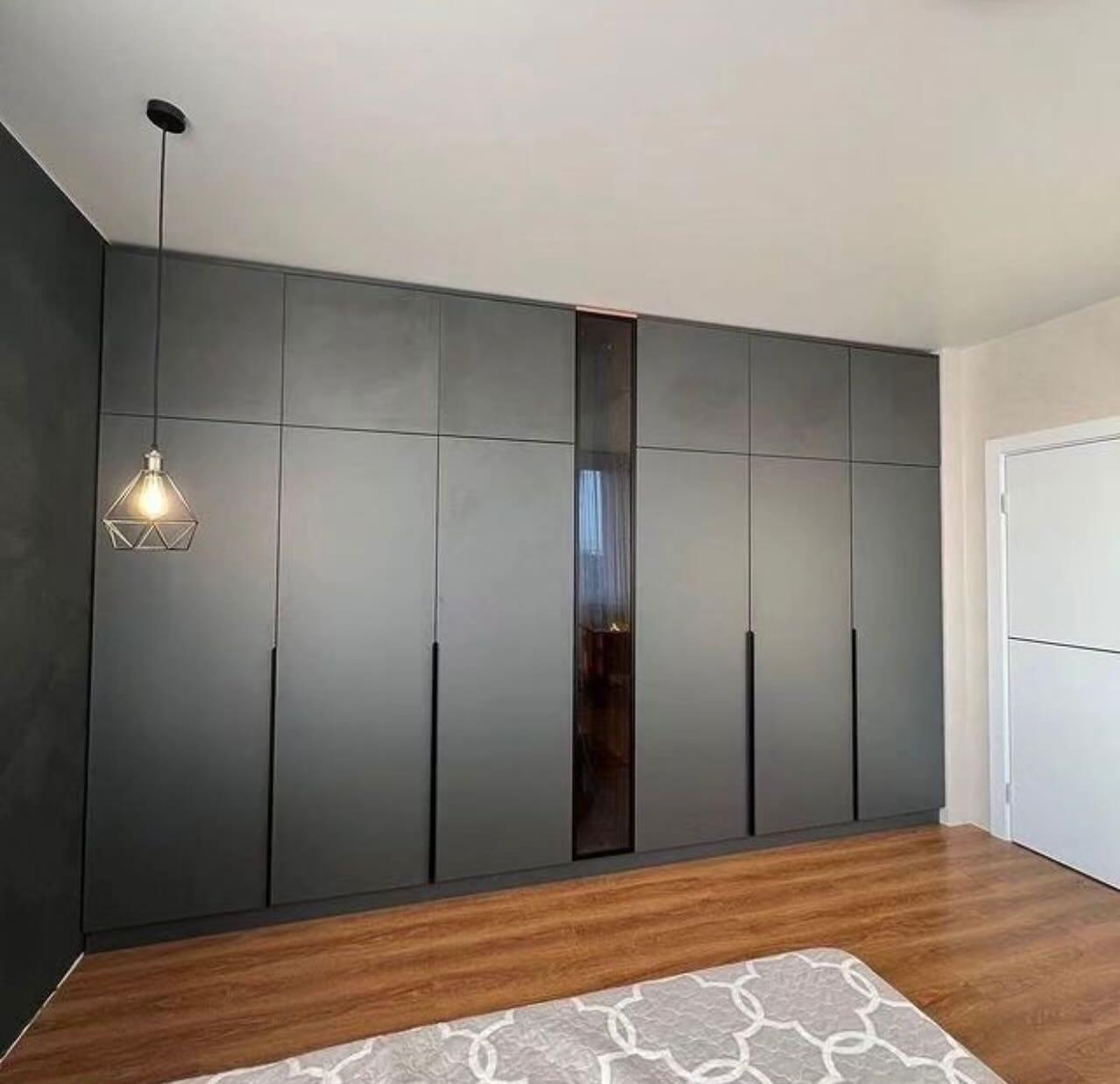
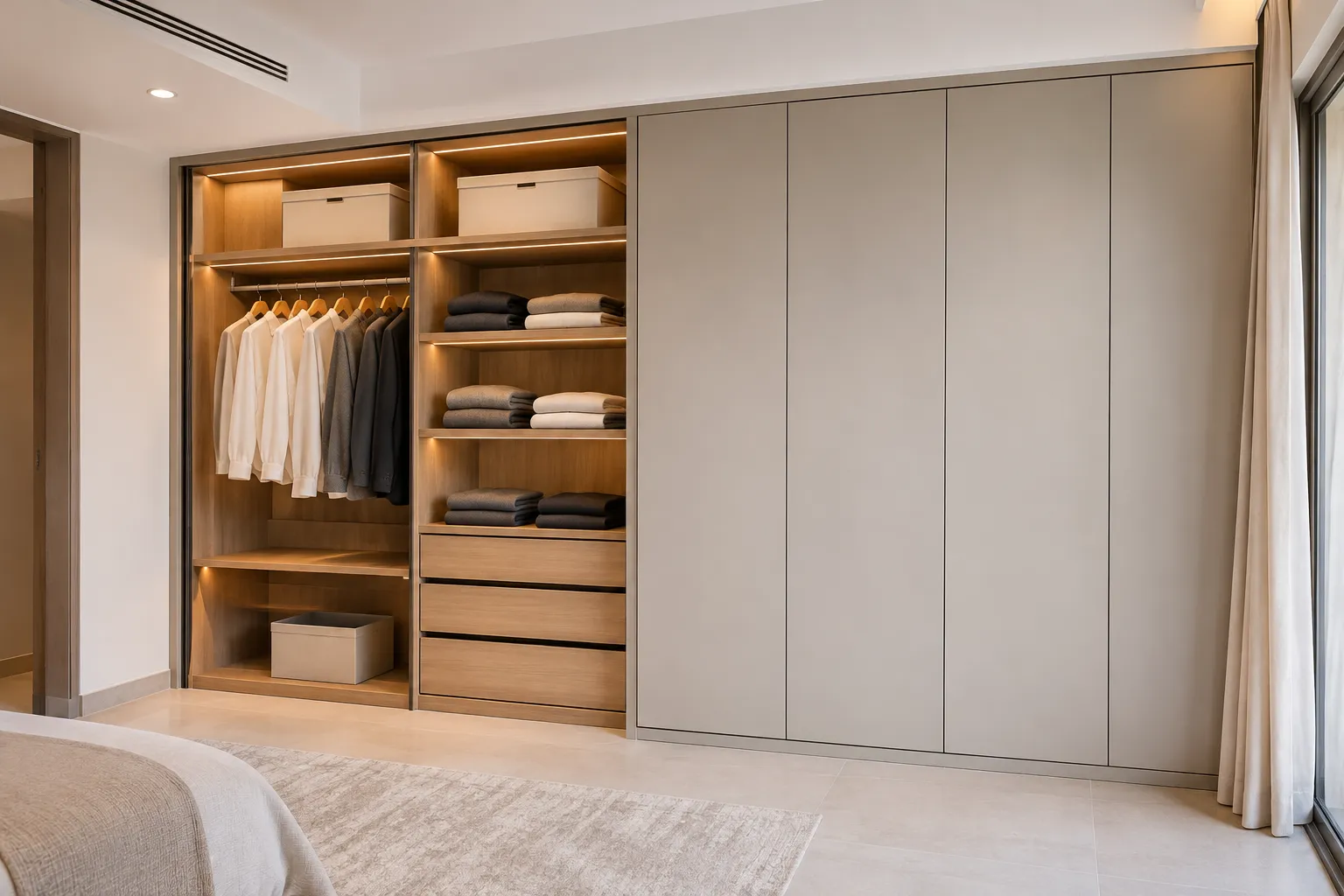
Closed doors are the safer default for a wardrobe that holds everyday clothes, and open shelving earns its place only in a small part of the wall, where the contents look good and are used daily. A fully open wardrobe asks for more dusting, more tidying and more tolerance for being looked at. A fully closed one hides everything but pays for every door, hinge or track. Most homes that live happily with both end up with a mix, and our custom wardrobes can include open sections in a custom layout.
This page helps you decide which parts of your wall should be open and which should have doors. It is planning advice, not a dust measurement: we found no UAE dataset on dust inside wardrobes, so we do not quote one. If you are also comparing finishes for the doors you do choose, the wardrobe door finishes guide covers laminate, veneer, lacquer and glass.
Open, closed or mixed, in one table
Fully open
- What it gives you
- Fastest to reach, nothing to open or clear, a light look
- What it asks of you
- Regular dusting, daily tidying, contents always on show
- Suits
- A tidy minimalist or a small capsule wardrobe
Fully closed
- What it gives you
- Everything hidden, dust kept off, a calm wall
- What it asks of you
- Door swing or track depth, and a door on every bay
- Suits
- Family clothes, luggage, bedding, long garments
Mixed
- What it gives you
- Calm where it matters, display where it looks good
- What it asks of you
- Deciding which bays are open before the drawing is made
- Suits
- Most bedrooms and dressing areas
Our reading of three published views (FCI London, House Digest, DesignCafe, named under the article). Which mix suits you depends on the room and the people using it.
Dust in a UAE home: what we can and cannot say
Three published sources, a London wardrobe maker, a US home-design site and an Indian interior company, make the same basic point: without doors, dust settles on what is stored, and the wardrobe needs more frequent cleaning. FCI London adds that an enclosed wardrobe also protects delicate fabrics from humidity and changes in light (how humidity behaves inside a UAE wardrobe is in our wardrobe humidity guide). None of them measured dust in the UAE, and neither have we, so treat what follows as reasoning, not data.
Reasoning first. In a home where fine dust comes in on shoes, through opened windows and with the air handled by air-conditioning units, open surfaces get a film of it, and the flat top of a shelf shows it first. A shelf with a few objects on it can be wiped in a minute; a shelf packed with folded knitwear cannot be wiped without lifting everything. That is the practical dust difference between a styled open zone and an open wardrobe holding the family's clothes. How much dust your home gets depends on the building, the floor level, the windows and how often they open, which only you can judge.
Doors also change how airflow behaves inside the box. A closed wardrobe that smells stale needs a different fix from an open one, and the cause is covered in our musty wardrobe guide. If you are thinking about sliding doors on the closed part, remember that a floor-running track collects grit, which our sliding door systems guide explains. The drawing below shows the same four-bay wall three ways, open, closed and mixed, one after another. It is an illustrative sketch with no measurements and no dust data; the grey dots only show where dust lands on exposed shelves.
- 1. Open: quick to reach, and every shelf, with the dust on it, is on show
- 2. Closed: everything hidden and kept off, but four doors to clear and to pay for
- 3. Mixed: solid doors and a glass door where the wall must look calm, one styled open bay where it looks good
What looks good open: styled zones
Open storage works when what sits on it was meant to be seen. Think of it as a display, not storage: a few pairs of shoes you wear often, a bag or two, a stack of folded knitwear in one colour family, a basket of accessories, a mirror and a lit shelf where you finish dressing. House Digest advises matching hangers and grouping by colour or category, and FCI London suggests baskets, bins and small drawers so smaller items do not turn into a visual mess. A shoe wardrobe design is a good example, because a lit shelf of shoes is one thing people often like to see.
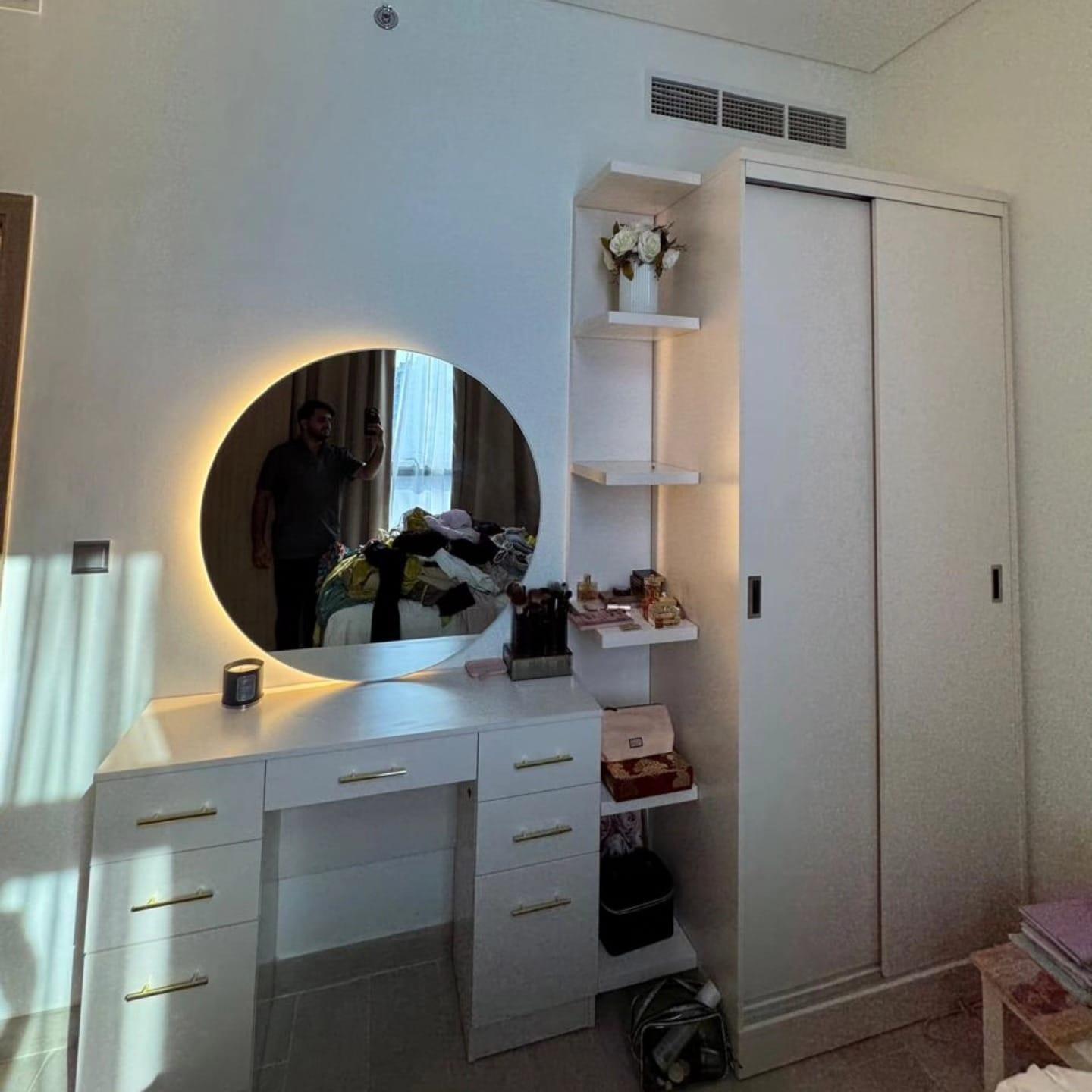
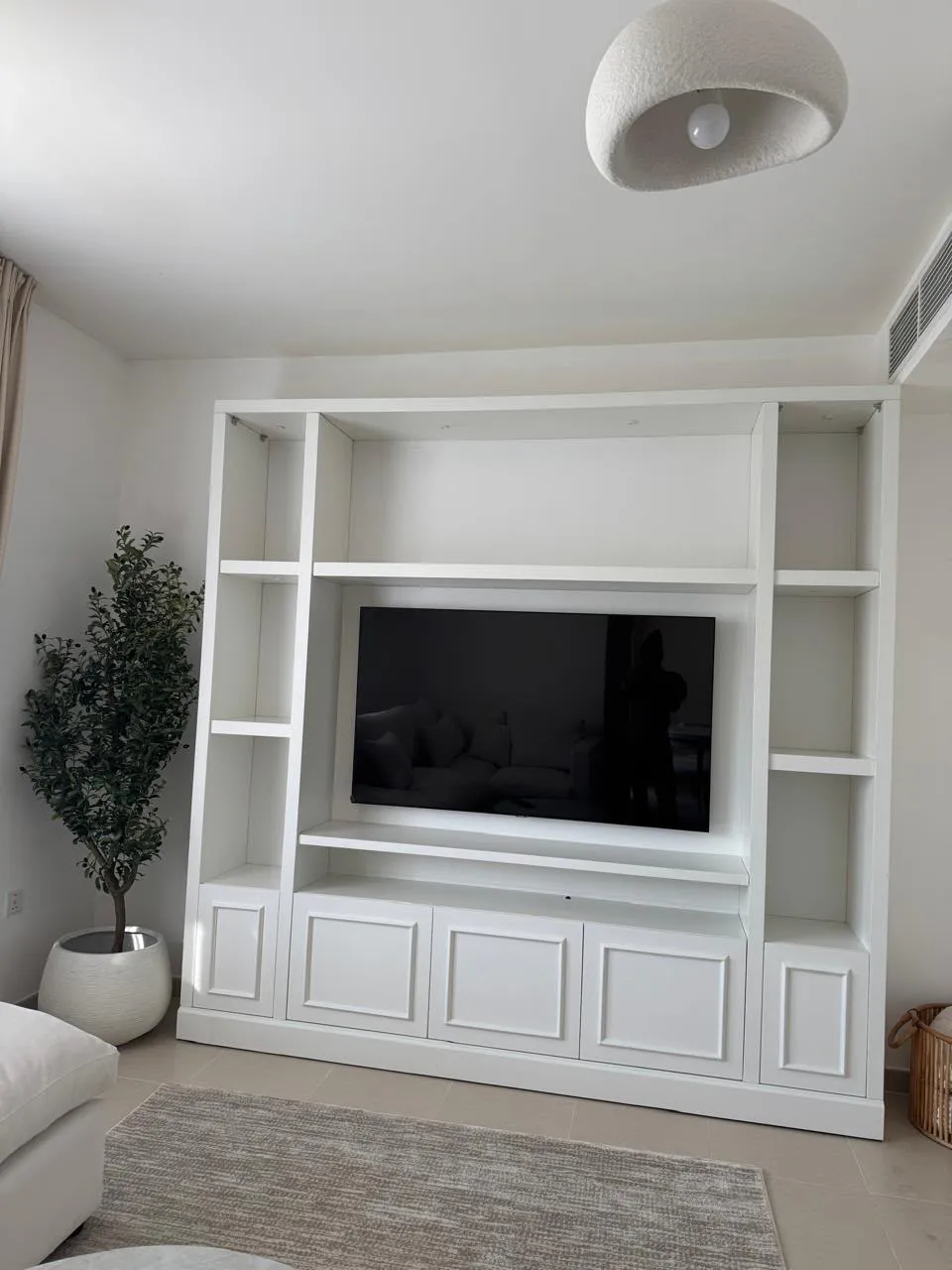
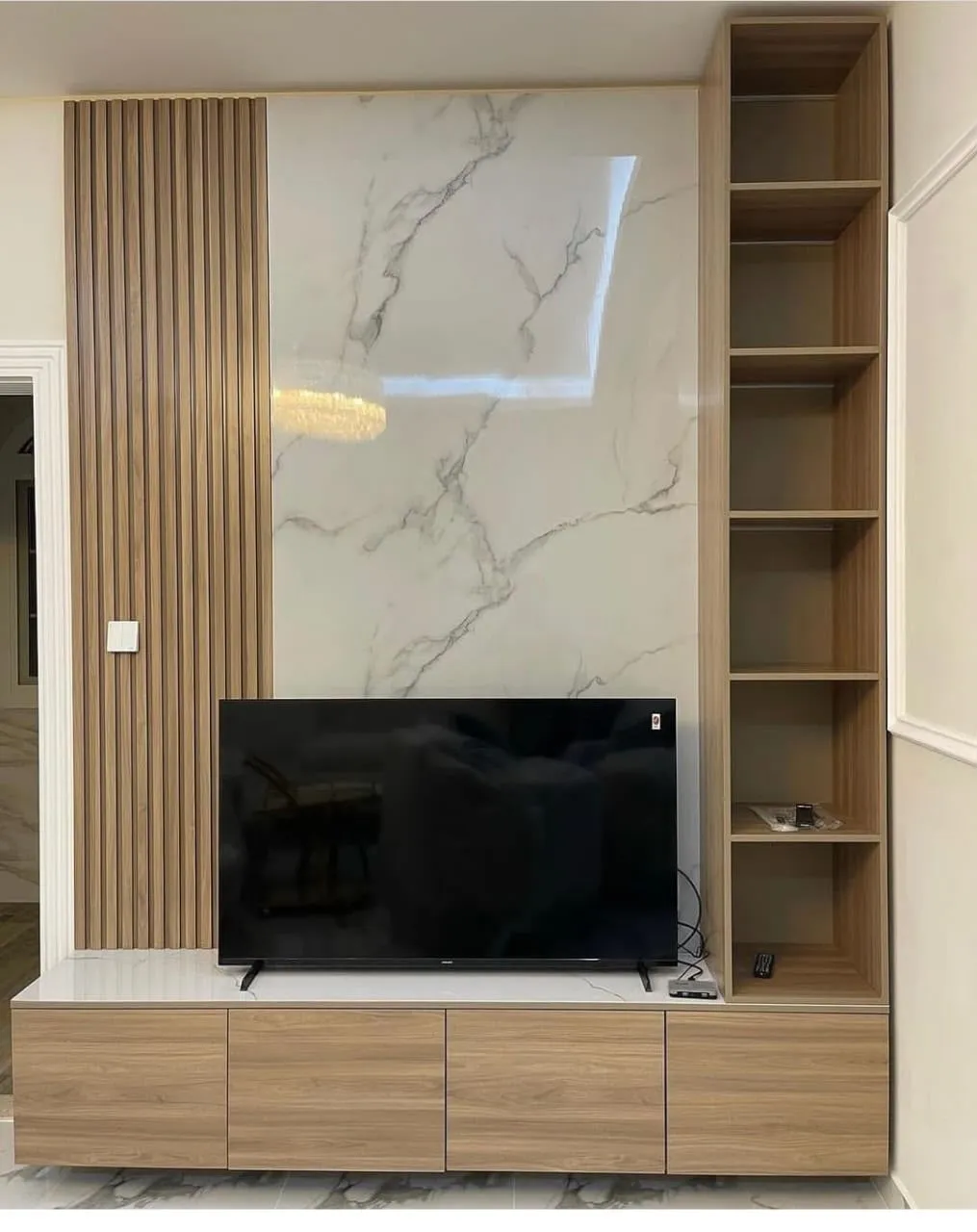
Keep each zone small and edit it. One open bay beside four closed ones reads as a feature; four open bays beside nothing read as a clothes rack. Open zones also like light: our wardrobe LED strip or profile guide compares the two ways of lighting a shelf, and our own team installs internal lighting in the wardrobes we build. The same idea works on a TV wall, where open niches carry objects and cupboards below carry the clutter, as shown in our media walls with display shelving page.
What needs doors
Some things should never be left in view. Underwear and everyday clutter, spare bedding, luggage, boxes and anything you would rather a visitor not see belong behind a door; DesignCafe makes the same point, noting that spare bags, boxes and seasonal clothes can only be hidden behind doors. Long garments need a door for another reason: an abaya or kandura hangs full height and looks untidy when its hem is on show, a point we cover in our abaya and kandura storage guide. Luggage and seasonal items go in a closed top section, as in our luggage and seasonal storage guide.
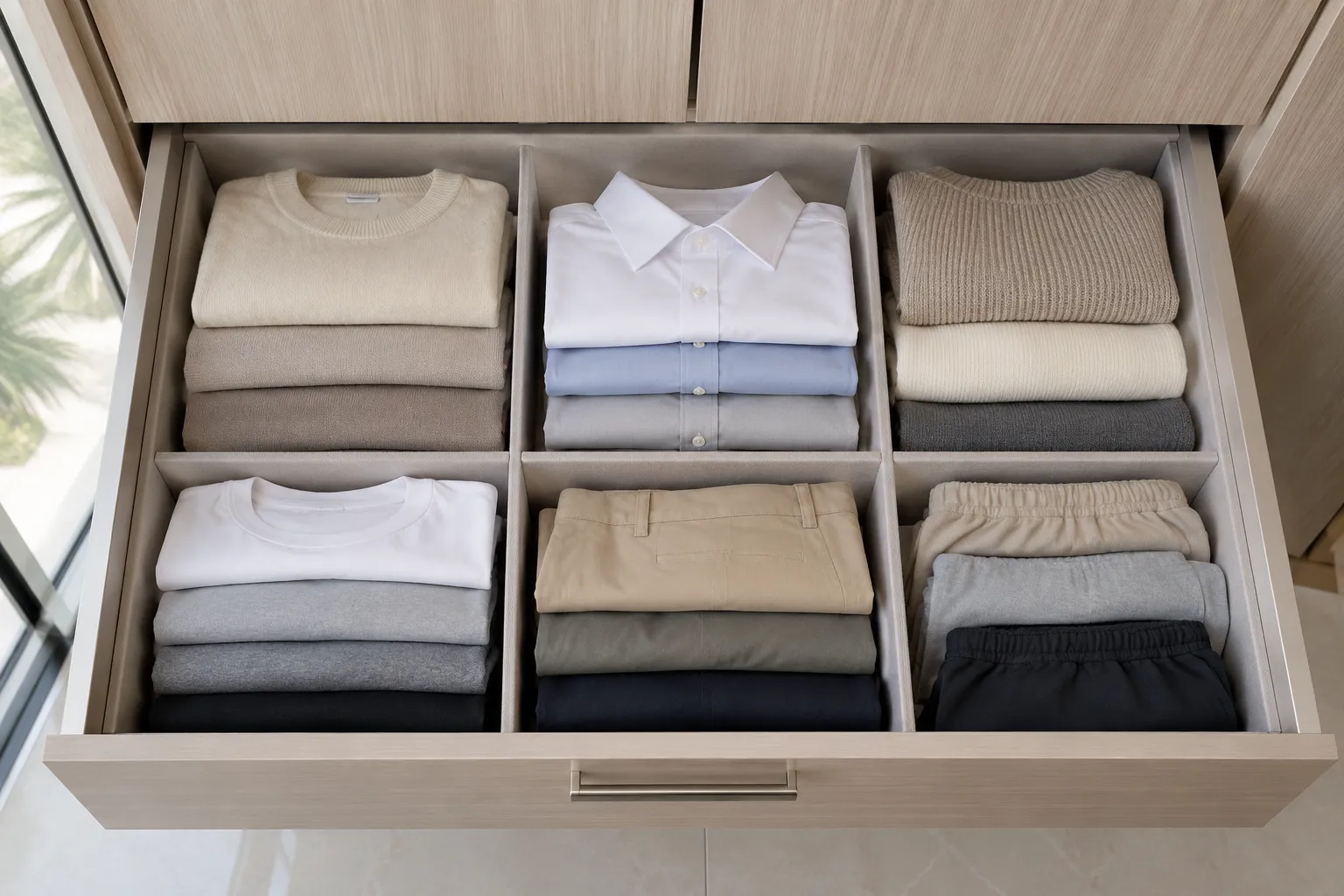
Children's wardrobes are a special case, because toys, uniforms and half-worn clothes turn an open shelf into a heap within days; our kids wardrobe design guide shows how to give them one low open section and doors for the rest. Drawers are another answer to the open-or-closed question: they are closed storage without a door, and our wardrobe drawers and organisers guide covers what goes in them. The cabinets and organisers page shows the fittings we make.
Open shelf or door? Item by item
Shoes worn this month
- Open
- Yes
- Behind a door
- Fine either way
- Why
- Quick to reach and looks tidy if edited
Bags you use often
- Open
- Yes
- Behind a door
- Fine either way
- Why
- Looks like a display and is grabbed daily
Folded knitwear, one colour family
- Open
- Yes, a small stack
- Behind a door
- Better for a full stack
- Why
- A stack cannot be dusted without lifting it
Everyday clothes on a rail
- Open
- Only in a small bay
- Behind a door
- Usually
- Why
- Untidy rails show from across the room
Abayas, kanduras, long dresses
- Open
- Rarely
- Behind a door
- Yes
- Why
- Full height and a visible hem look untidy
Luggage, boxes, spare bedding
- Open
- No
- Behind a door
- Yes
- Why
- Nothing to display and they collect dust
Children's clothes and toys
- Open
- One low section
- Behind a door
- Yes for the rest
- Why
- Open shelves fill up quickly
A planning guide drawn from the sources named under the article and from our own view of what looks tidy. Your household decides.
Mixed designs: an open niche beside doors, and glass doors
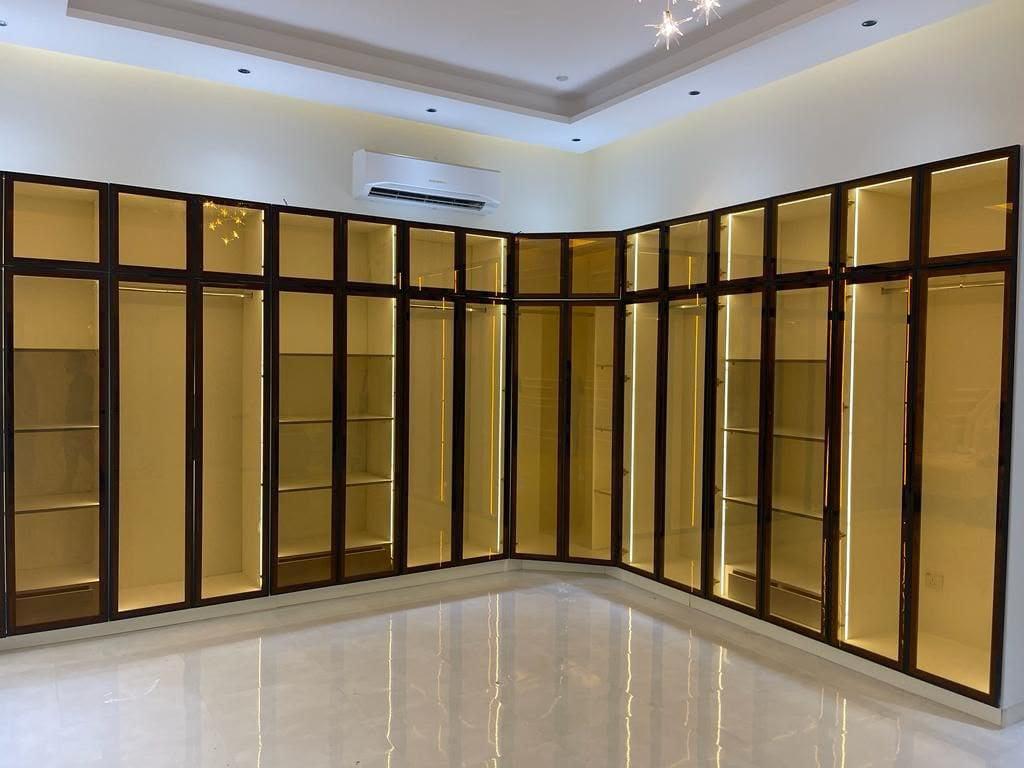
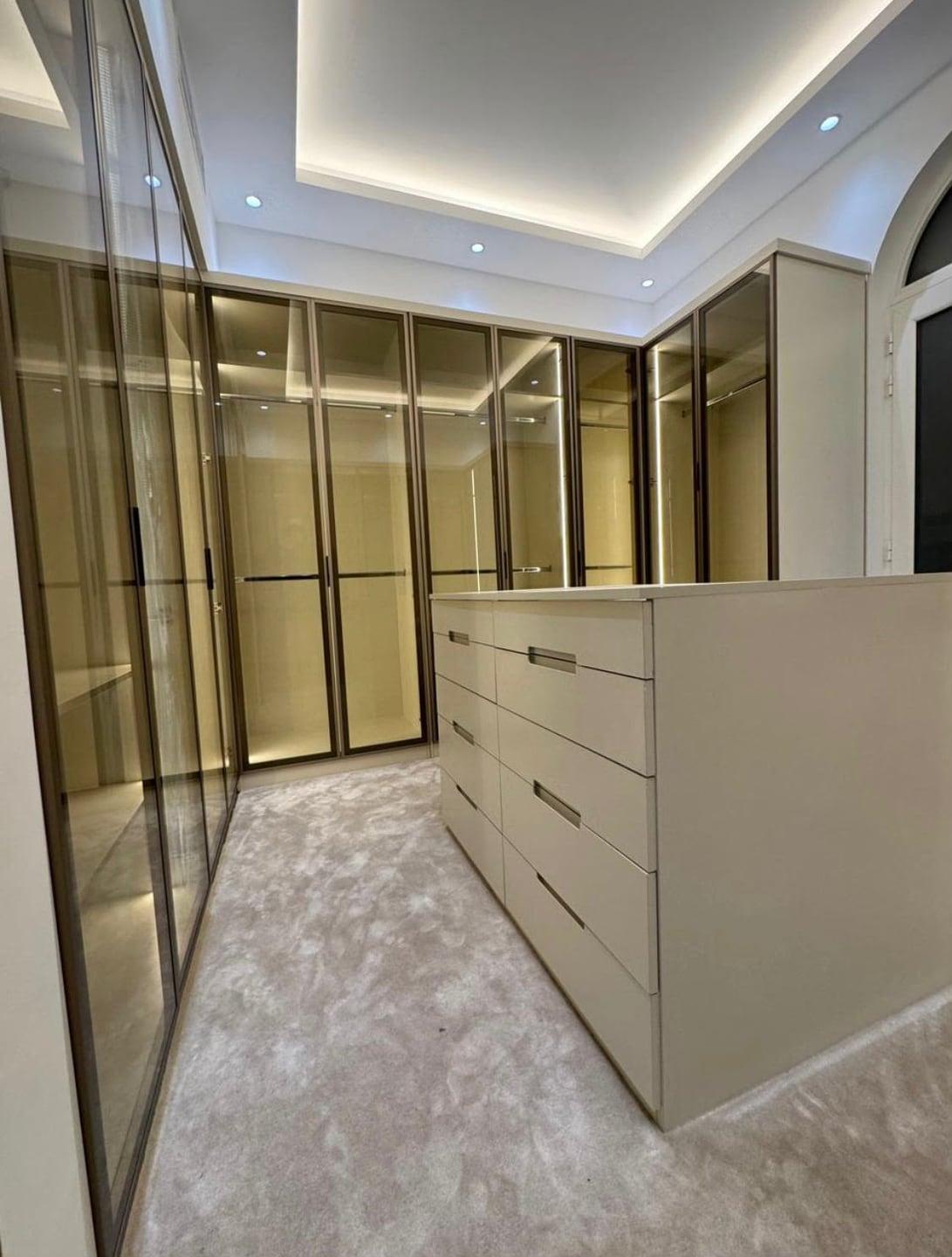
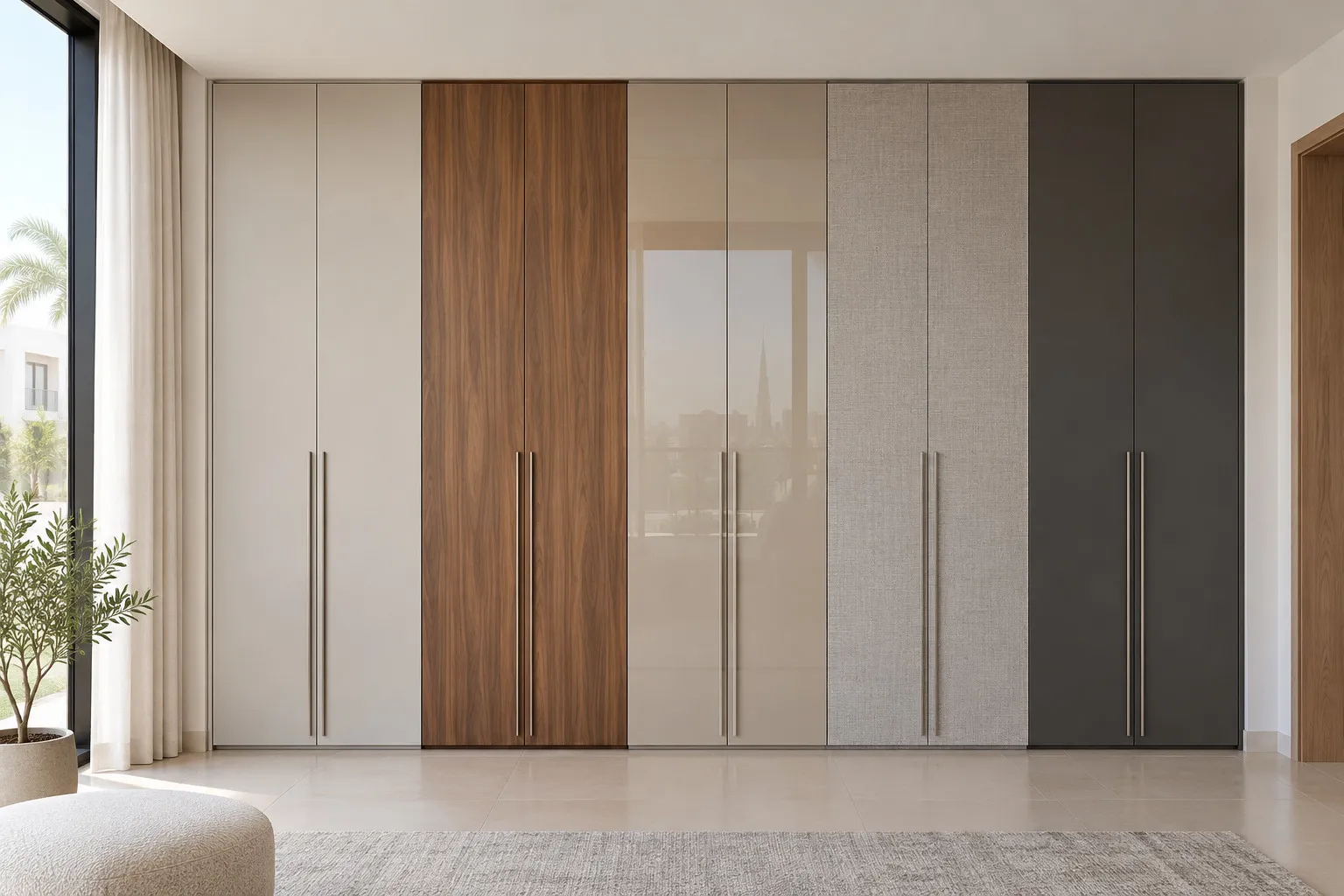
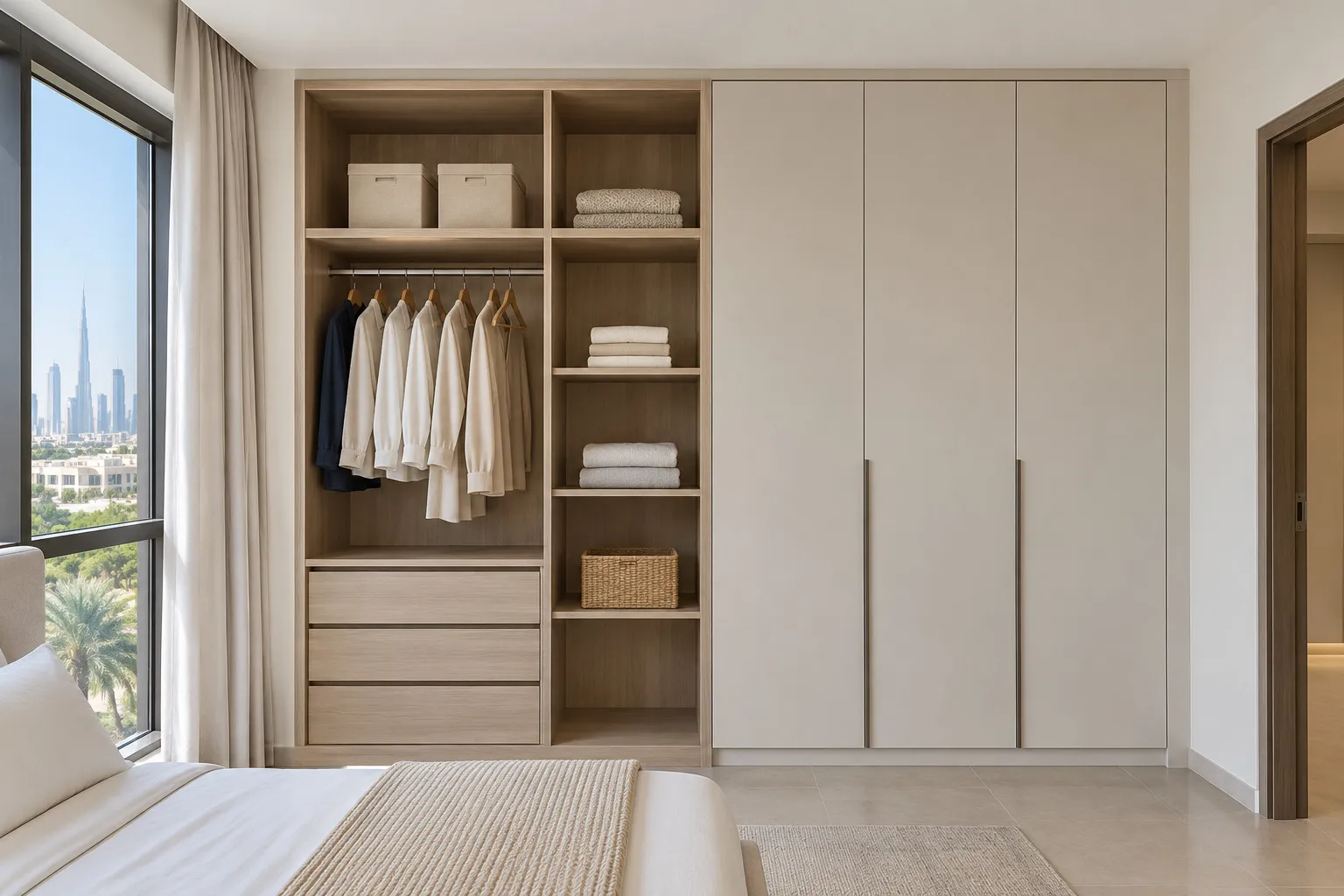
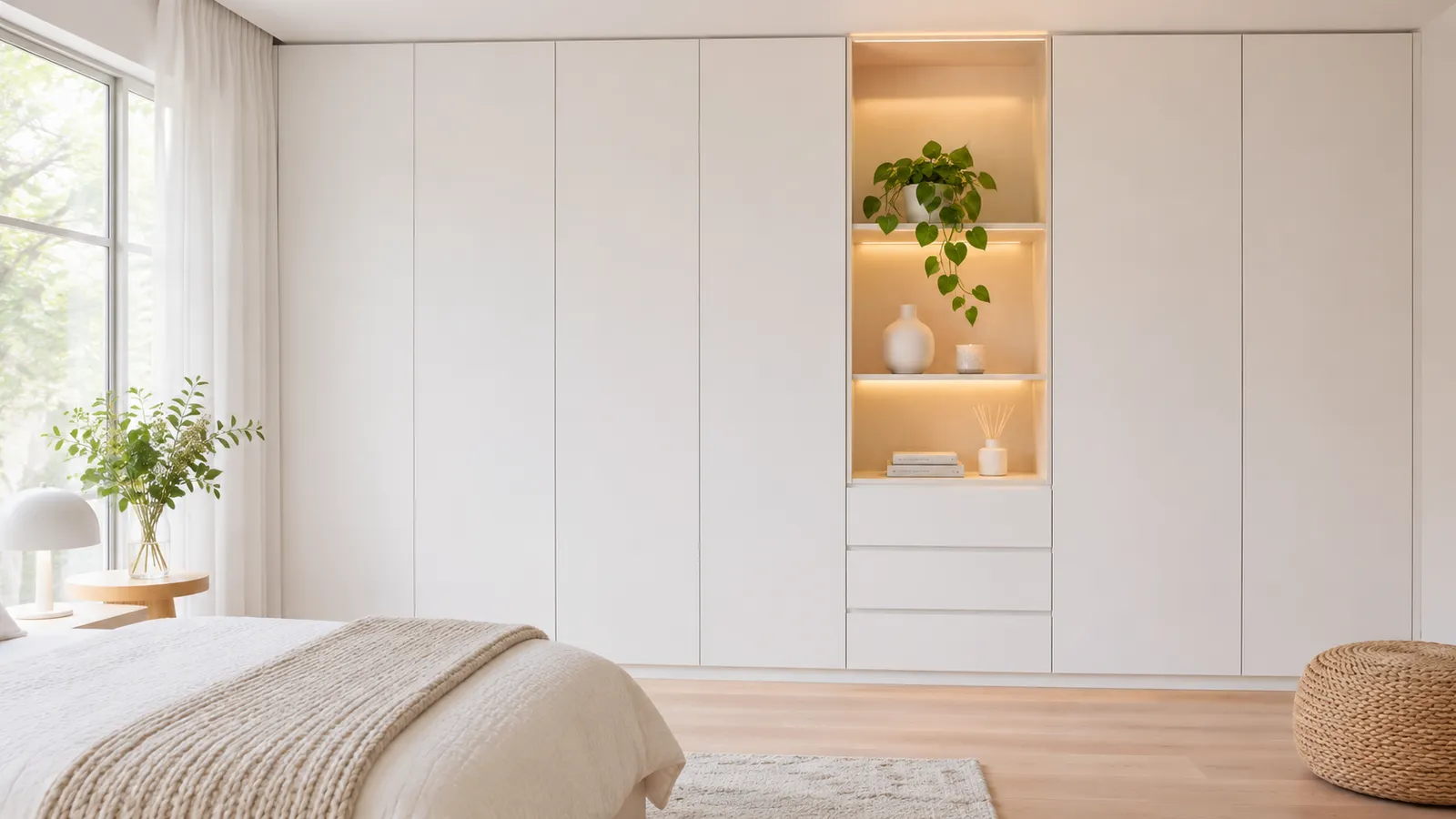
The mixed wardrobe is the answer most people end up with, and it can take several shapes. A single open niche beside the closed doors, in the middle of a run or at the end of it, gives the wall a rest from flat fronts and a place for a mirror or a few objects. An open end bay, often a column of shelves, turns the end of a wardrobe into a piece of furniture. A glass door sits halfway between the two: you see what is inside, but dust does not reach it. Our glass fronts are tinted tempered glass, grey or bronze, in slim aluminium frames, and a lit glass-front run is shown on our lit glass-front wardrobes page.
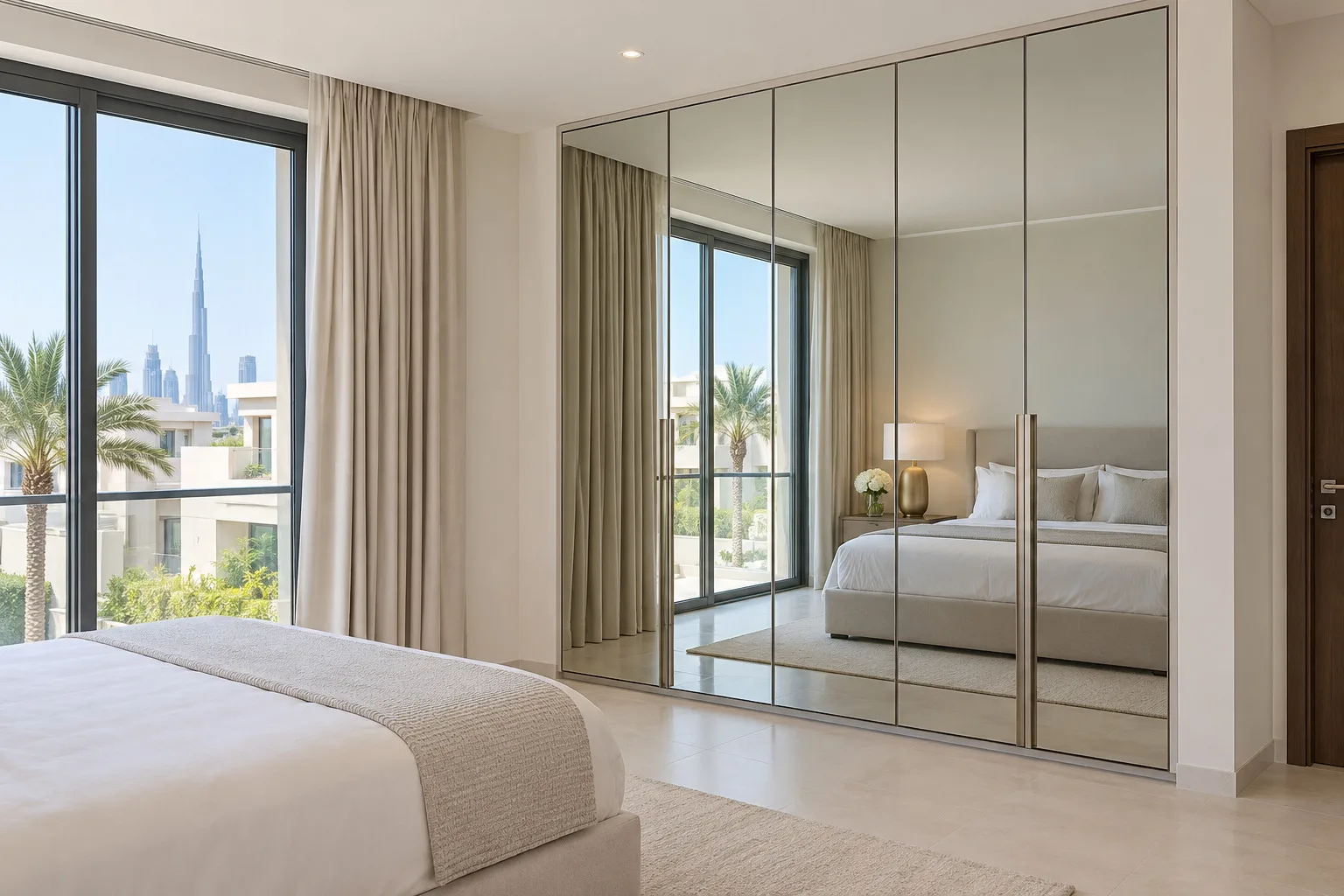
FCI London describes hybrid designs as a way to get the benefits of both, with interior sections left open for display, and DesignCafe suggests an open section for daily wear with a closed unit for bulk storage. We agree with the shape of that advice, not with any ratio: the right mix depends on how tidy the household is. Mirror doors bring the wall back to calm and add light; the mirror wardrobe doors guide covers weight, fixing and care. A corner or L-shaped wardrobe is a good place for an open bay, because the corner makes a natural change of face.
Two practical points for the drawing. First, decide the open bays before the drawing, because a bay planned as open has finished sides, back and shelves that a door bay does not need to show. Second, check the doors you keep: a run of hinged doors needs floor to open, which our wardrobe door clearance guide explains.
If you want a clean front with no hardware on view, handleless wardrobes against handles explains the options.
Cleaning effort: what each choice asks of you
FCI London advises dusting and vacuuming the wardrobe regularly, and DesignCafe says open wardrobes need more frequent dusting and daily tidying to look good. In plain terms, open shelves mean wiping the shelf tops and edges on a routine and lifting objects to do it; closed doors mean wiping the doors and the handles and a less frequent look inside. Neither is free. The difference is that open dust is visible, and so it gets done, while closed dust is out of sight.
A few habits keep an open zone easy. Keep it to what you can lift in one hand, so wiping it takes a minute. Do not overfill, because a packed shelf traps dust and cannot be wiped. Group items so each has a place, which makes putting back quick. House Digest also suggests garment bags where doors are missing; that works for a rarely worn item, but it defeats the point of a display. For the doors you do fit, our care and maintenance guide lists general cleaning for joinery.
Privacy and light: who sees the wardrobe, and what the sun does
Privacy is the most personal part of the decision. House Digest puts it bluntly: an open closet offers no privacy. In a bedroom that only you use, that may not matter; in a studio, in a room visitors pass, or in a shared room where one person is tidier than the other, it matters a lot. A studio apartment wardrobe starts from exactly that question.
Light is the other half. Direct sun fades fabric, and an open shelf facing a window gets the full beam, so place open zones on the wall away from the window and keep clothes behind doors on the sunny side. Light inside an open niche changes the room at night; our wardrobe lighting ideas guide shows the choices.
For a larger main bedroom, our master bedroom wardrobe design page shows where open zones sit best; a shared wardrobe can give each person a different mix.
Cost drivers: open is not automatically cheaper
Published views agree on the direction. DesignCafe notes that an open wardrobe skips shutter material, hinges and handles, and FCI London says fewer fixtures lower the cost while doors, frames and mechanisms raise it. We give no figure for the difference because we have not published one, and the saving is smaller than people expect: an open bay still needs finished boards, sides and a back, shelves, edging, any lighting and any drawers. What changes is the doors and their hardware. Our built-in wardrobes page shows finished runs.
For a sense of how a quotation is built, read the wardrobe price guide.
If you are weighing a ready-made open unit against a made-to-measure run, custom or ready-made wardrobe compares them.
What moves the cost of an open or closed bay
Door leaves or sliding panels
- Open bay
- None
- Closed bay
- Yes, and the finish chosen
Hinges, tracks, handles
- Open bay
- None
- Closed bay
- Yes
Finished sides, back and shelves
- Open bay
- Yes, and they show
- Closed bay
- Yes, but hidden
Glass or mirror
- Open bay
- None
- Closed bay
- Raises it if chosen
Lighting
- Open bay
- Often wanted
- Closed bay
- Optional
Drawers and organisers
- Open bay
- Same either way
- Closed bay
- Same either way
Our entry price of AED 550 per sqm is for MDF laminate with hinged doors, installed; other options raise it. We have not published a price for open sections, so ask for it in the quotation.
What to ask for in the quotation
Open and mixed layouts leave more to the drawing, so ask for the open bays to be shown and named. Our wardrobe quotation checklist covers the general lines; the questions below are the ones that matter for this choice. Shelf depth for the open bays follows the same arithmetic as wardrobe depth.
Quotation questions for an open or mixed wardrobe
Which bays are open and which have doors
- Why it matters
- The price, the dust and the look follow from it
- A clear answer looks like
- Each bay marked open, solid door or glass on the drawing
Finish of the sides, back and shelves in open bays
- Why it matters
- They show, so they must match the rest
- A clear answer looks like
- The finish and board named for each part
Shelf depth and spacing in open bays
- Why it matters
- A deep shelf hides what is at the back
- A clear answer looks like
- Depth and gaps in cm on the drawing
Lighting in the open bays
- Why it matters
- A lit niche changes the room at night
- A clear answer looks like
- Position, type and who installs it, in writing
Glass type and frame, if used
- Why it matters
- It decides weight, tint and cleaning
- A clear answer looks like
- The glass tint and frame described, with the door's size
Cost of each door bay against each open bay
- Why it matters
- You can then move a bay without guessing
- A clear answer looks like
- An itemised price, line by line
Ask for the answers in the written quotation. Nothing is made until you approve the drawing and the itemised price.
What we do about it
At the free measuring visit we bring samples to the room and measure the wall with a laser, and we ask you which things you want on show and which you want hidden. Then we send a drawing and an itemised price, and nothing is made until you approve them. Our wardrobe measuring visit guide lists what to prepare.
We make a wide range of door options and customised storage, and open sections can be included in a custom layout, so the open bays appear on the same drawing as the doors.
Our entry price is from AED 550 per sqm of wardrobe front, installed, for MDF laminate with hinged doors; other options raise it, and the figure for your wall is set after measurement. After you confirm, our Sharjah workshop builds the wardrobe and our own team installs it, up to about 10 days later depending on size and design, with a 24-month written workmanship warranty (supplied products follow their own terms). Separately, the wood-based boards carry a 5-year limited warranty, subject to terms; hinges, tracks, runners, rollers and other moving hardware are not covered, and the final terms are in the written warranty.
Our wardrobe warranty guide explains what to ask.
To see what we make, read about our custom wardrobes service, then book through the consultation form.
The pricing guide shows how a measured wall becomes a number. Installation covers the whole UAE; the Sharjah page gives the workshop address.
In a rented flat, our rented apartment wardrobe guide lists what can be taken apart. A wall that is damp or outside needs the checks in a wardrobe against a bathroom or outside wall.
Whichever you choose, the wardrobe guide grouped by planning step covers sizes, interior and finish.
Common questions
Is an open wardrobe a good idea in the UAE?
It can be, in a small, edited zone. Without doors, dust settles on what is stored and needs more frequent cleaning, so keep open shelves for things you use and display, and put everyday clothes behind doors. No UAE dust data exists, so this is planning advice. See our wardrobe door finishes guide.
Do open wardrobes get dusty?
Yes, more than closed ones: published sources agree that dust settles on exposed clothes and shelves and needs more frequent cleaning. A shelf with a few objects is quick to wipe; one packed with folded clothes is not. Ask us about wardrobe lighting and glass fronts.
Can I have part of my wardrobe open and the rest with doors?
Yes. Open sections can be included in a custom layout, so a niche or end bay can sit beside solid or glass doors on one drawing. Decide which bays are open before the drawing. See our custom wardrobes service.
Does a glass door keep dust out like a solid door?
A closed glass door keeps dust off what is behind it while letting you see it. Ours are grey or bronze tinted tempered glass in slim aluminium frames. Ask for the glass and frame in the quotation. See our mirror wardrobe doors guide.
Is an open wardrobe cheaper than one with doors?
Usually fewer parts, because it skips doors, hinges and handles, but open bays still need finished boards, shelves and often lighting. We have not published a price for open sections, so ask for each bay itemised. See our wardrobe price guide.
What should I never leave open?
Underwear, luggage, boxes, spare bedding and long garments such as abayas and kanduras are better behind doors; so is anything you would not want a visitor to see. See our abaya and kandura storage guide.
What should I put on a quotation for an open or mixed wardrobe?
Mark each bay open, solid door or glass, name the finish of the open bays and their shelf depth, and ask for each bay itemised. Our entry price is AED 550 per sqm for MDF laminate with hinged doors, installed; other options raise it. See our wardrobe quotation checklist.

Sources & specifications
Manufacturer information applies to the named products and systems. Sources reviewed on 4 November 2026.
- FCI London, Should walk-in wardrobes have doors? (published 29 August 2025, updated 29 September 2026): enclosed wardrobes keep dust, humidity and light changes off fabrics; dust and vacuum regularly; fewer fixtures lower the cost; hybrid designs leave interior sections open for displayfcilondon.co.uk(opens in a new tab)
- House Digest, Downsides of open closet designs (Jahaira Arthur, 3 December 2024): dust may settle without doors, an open closet gets messy quickly without upkeep, no privacy, garment bags can make up for missing doorshousedigest.com(opens in a new tab)
- DesignCafe, Open wardrobe design vs closed wardrobes (Sreya Dasgupta, 3 April 2026): items collect dust faster and need more frequent cleaning without shutters, open skips shutters, hinges and handles, spare bags and boxes can be hidden only behind doors, mixed open and closed sectionsdesigncafe.com(opens in a new tab)
Want this planned for your home?
Consultation and measurement are free. Tell us the rooms, location and what you need; we arrange a sample visit and define the measured quotation.