
1 / 4
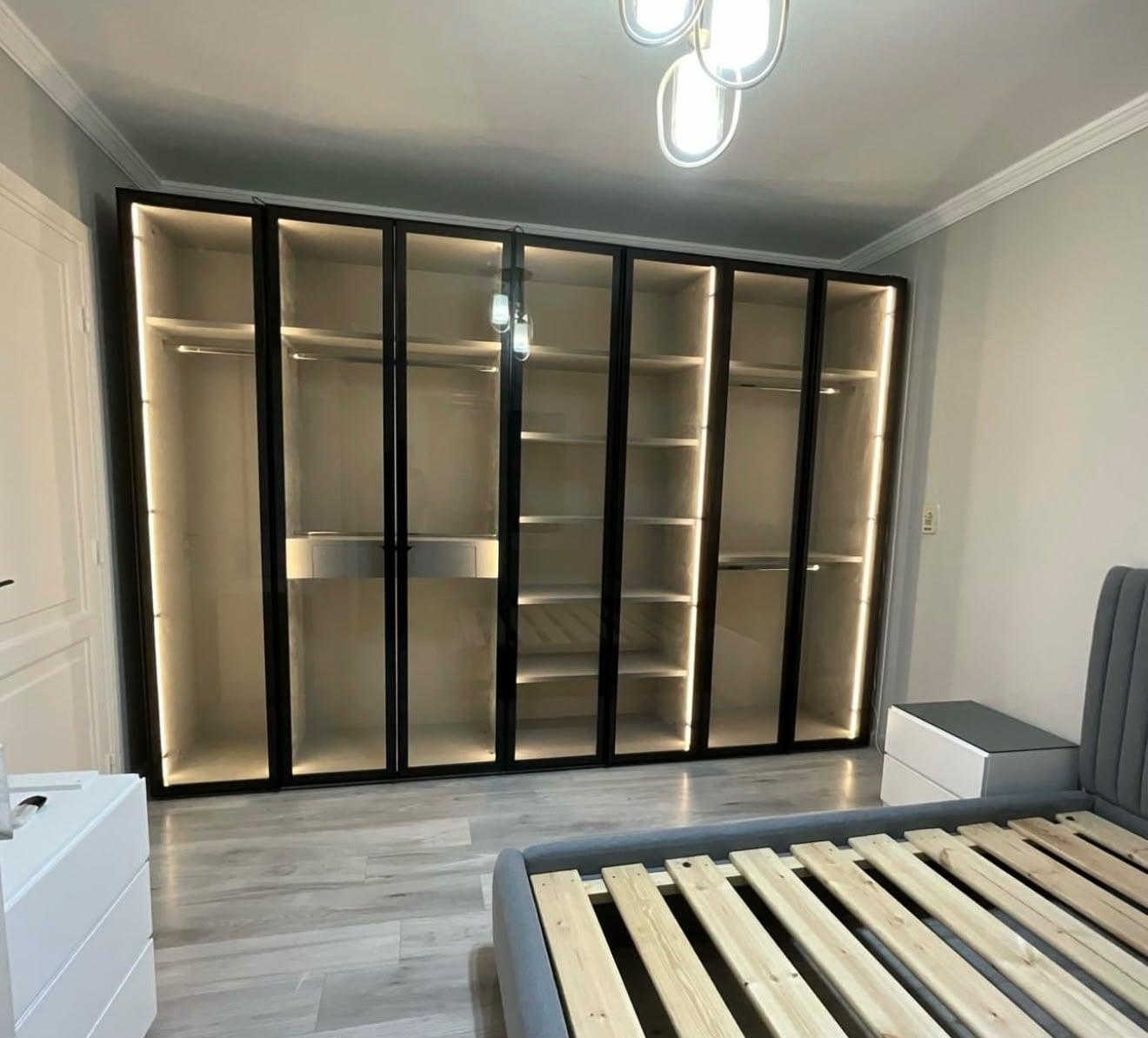
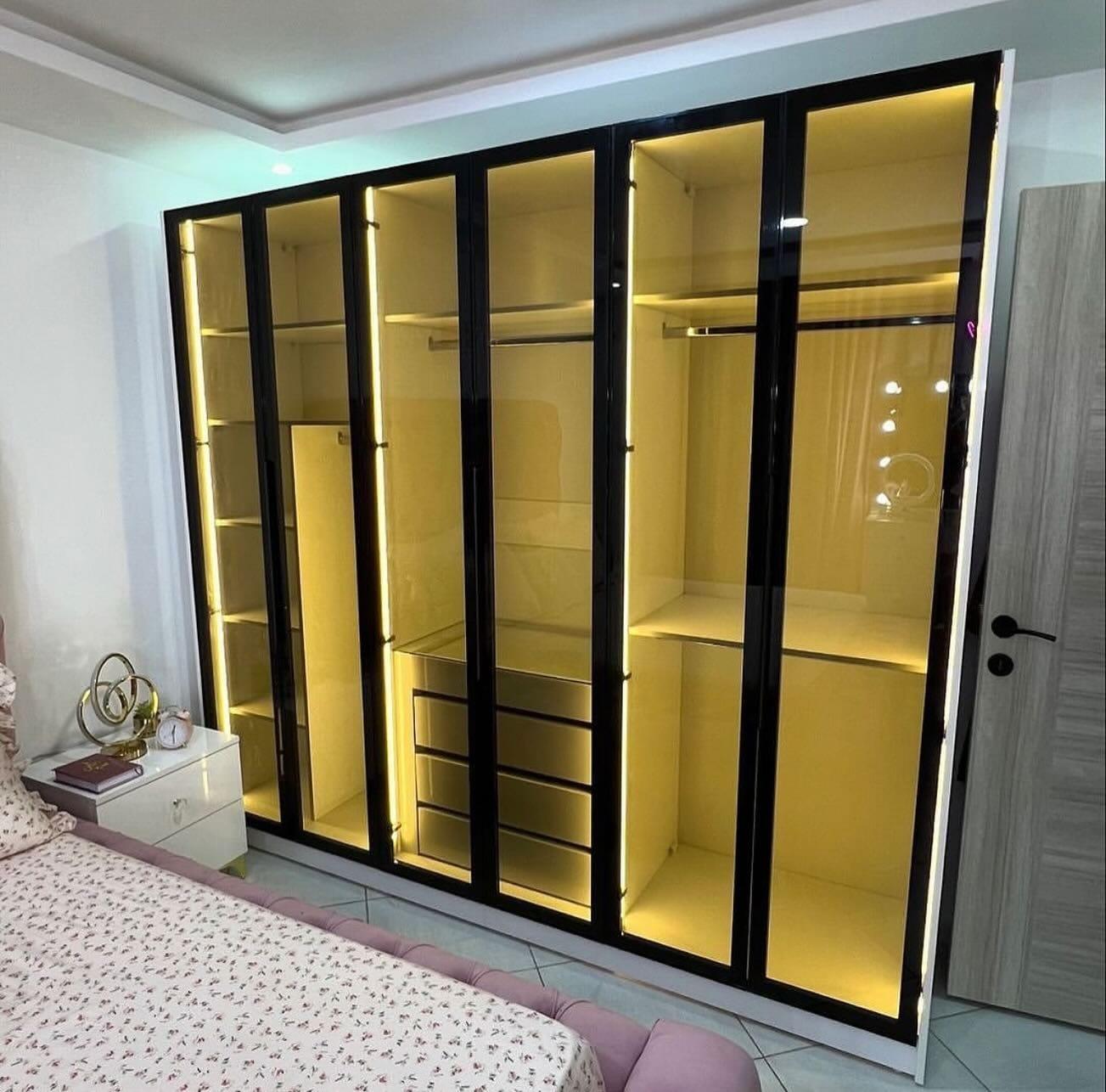
Black-framed glass doors lit from inside, showing double hanging rails, a tall shelf column and a pull-out tray in one bay.
Custom Wardrobes & Closets
Wardrobe Interiors: Drawers, Shoe & Bag Cabinets, Organisers
Dressing Room · Laminate & MDF · Made to Measure
Priced
Itemised quotation
After site visit and drawings
Manufactured after drawing approval and once the 60% advance is received, then installed by our own team, taking up to about 10 days from order confirmation, depending on size and design.
About wardrobe interiors: drawers, shoe & bag cabinets, organisers
What sits behind the doors decides how well a wardrobe works. These interiors combine drawer banks, adjustable shelves, double hanging, pull-out trays and lit cabinets for shoes and handbags, laid out around the things their owners actually keep.
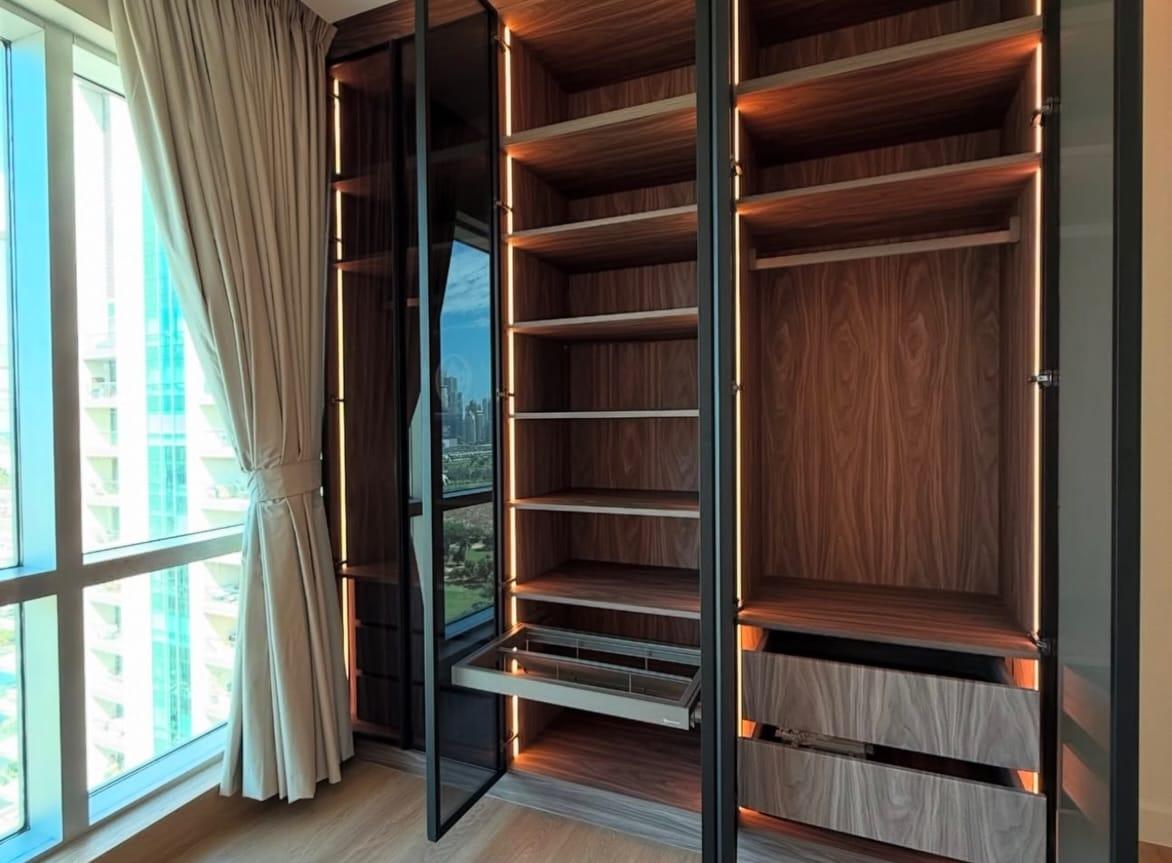
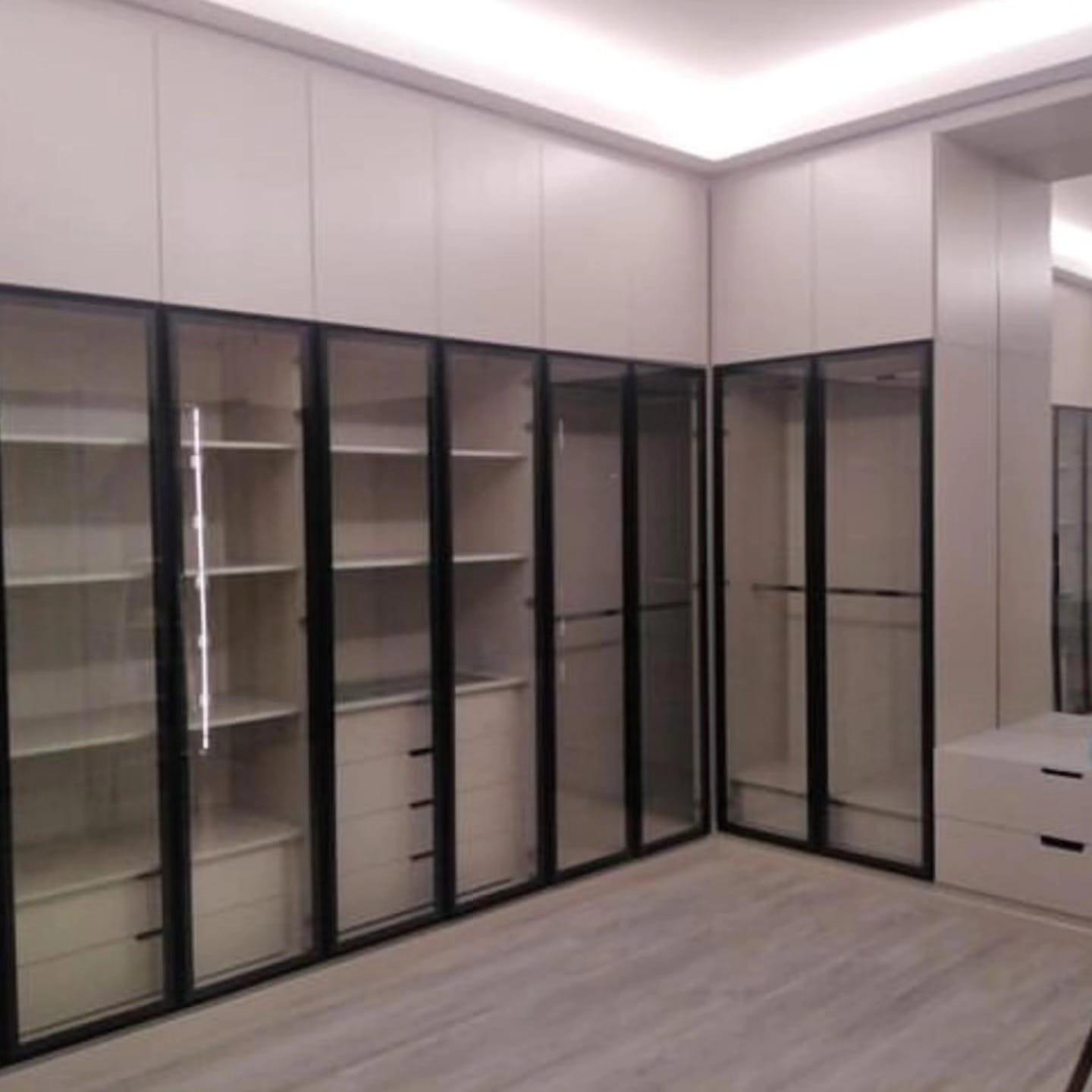
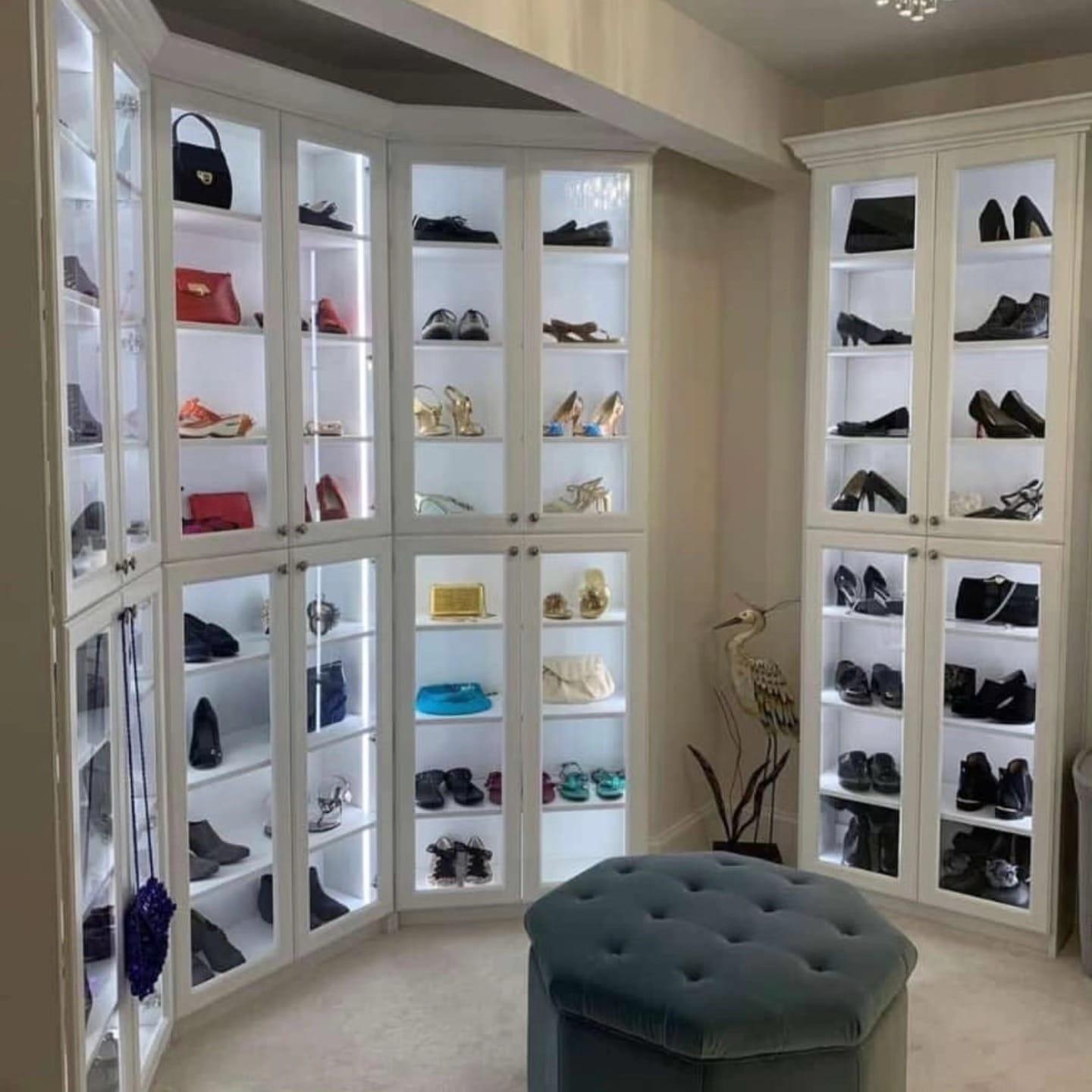
The photographs show interiors you can see through glass doors, which is a useful way to judge layouts: tall shelf columns beside double rails, shallow drawers under hanging space, a pull-out tray at waist height, and shoe and bag shelving lit like a shop display. Every section is drawn to measured dimensions, so shelves sit at the heights your things need rather than at fixed intervals.
Settle these first
Worth thinking about before we meet.
Count first
A rough tally of shoes, bags, folded and hanging clothes tells the designer how many drawers, shelves and rails to draw.
Drawers at waist height
Put the drawers you open daily between hip and chest height, and the deeper, less-used ones lower down.
Show or hide
Bags and shoes you are proud of can go behind lit glass; everyday items are calmer behind solid doors.
Room to grow
Leave one column of adjustable shelves for whatever you buy next.
In more depth
Planning from an inventory
The best interior starts with a list, not a catalogue. Count roughly how many long garments, shirts and jackets, folded items, pairs of shoes and handbags each person has, and note what lives in the wardrobe only part of the year. That list turns into columns on the drawing: so much width of long hanging, so many drawers, so many shelves at shoe height.
Think about who reaches what. Shelves above head height suit suitcases and spare bedding; the band between hip and shoulder is prime space for daily clothes; low drawers suit heavier, less-used items. In a child's wardrobe, set the rail at a height the child can reach now.
Hanging space
Long hanging is for abayas, kanduras, dresses and coats, and it needs a clear fall from the rail down to the floor. Shorter items such as shirts, blouses and folded trousers fit on a pair of stacked rails in a single column, which is where most wardrobes gain the most usable space. Our guide to abaya and kandura storage shows how to set that rail height, and wardrobe drawers and organisers covers runners and trays. For setting the rails, see wardrobe hanging heights.
Pull-out trouser racks keep trousers flat and visible on slim bars, and tie organisers hold ties and belts in a shallow drawer or on a pull-out. In the glass-fronted interiors pictured, rails are lit from the side so the colours are easy to tell apart.
Drawers and what goes in them
Drawers hold folded clothes more neatly than open shelves, which tend to topple once a stack is disturbed. A bank of drawers under the hanging section, as in the walnut interior, keeps underwear, sportswear and knitwear out of sight but within reach, and soft-close runners shut them quietly.
Shallow drawers lined in velvet, with dividers, hold jewellery and watches; deeper ones take bulky knits or bed linen. If a drawer sits behind a glass door, choose a front finish that looks good on show, because it becomes part of the view.
Shoes and handbags
Shoes are easier to choose when every pair is visible, so shoe sections are drawn with shelves spaced to the heights of the shoes: low for flats and sandals, taller for heels and boots. A run of lit shelves behind glass, like the angled wall of cabinets pictured, keeps them dust-free and on display.
Handbags keep their shape best standing upright on a shelf rather than piled in a drawer, with enough height between shelves to lift each one out. Lighting each shelf, rather than only the top, means the lower levels are as easy to see as the upper ones.
Pull-outs, trays and accessories
A pull-out tray at waist height gives you somewhere to set out the next day's clothes or lay down accessories while you dress; the walnut interior shows one with a metal frame. Pull-outs also make deep corners usable, bringing the back of a shelf forward to you.
Small details matter too, such as somewhere to hang tomorrow's outfit or a place for scarves and belts. Mention them at the drawing stage so their space is planned rather than squeezed in later.
Bedroom wardrobe or dressing room?
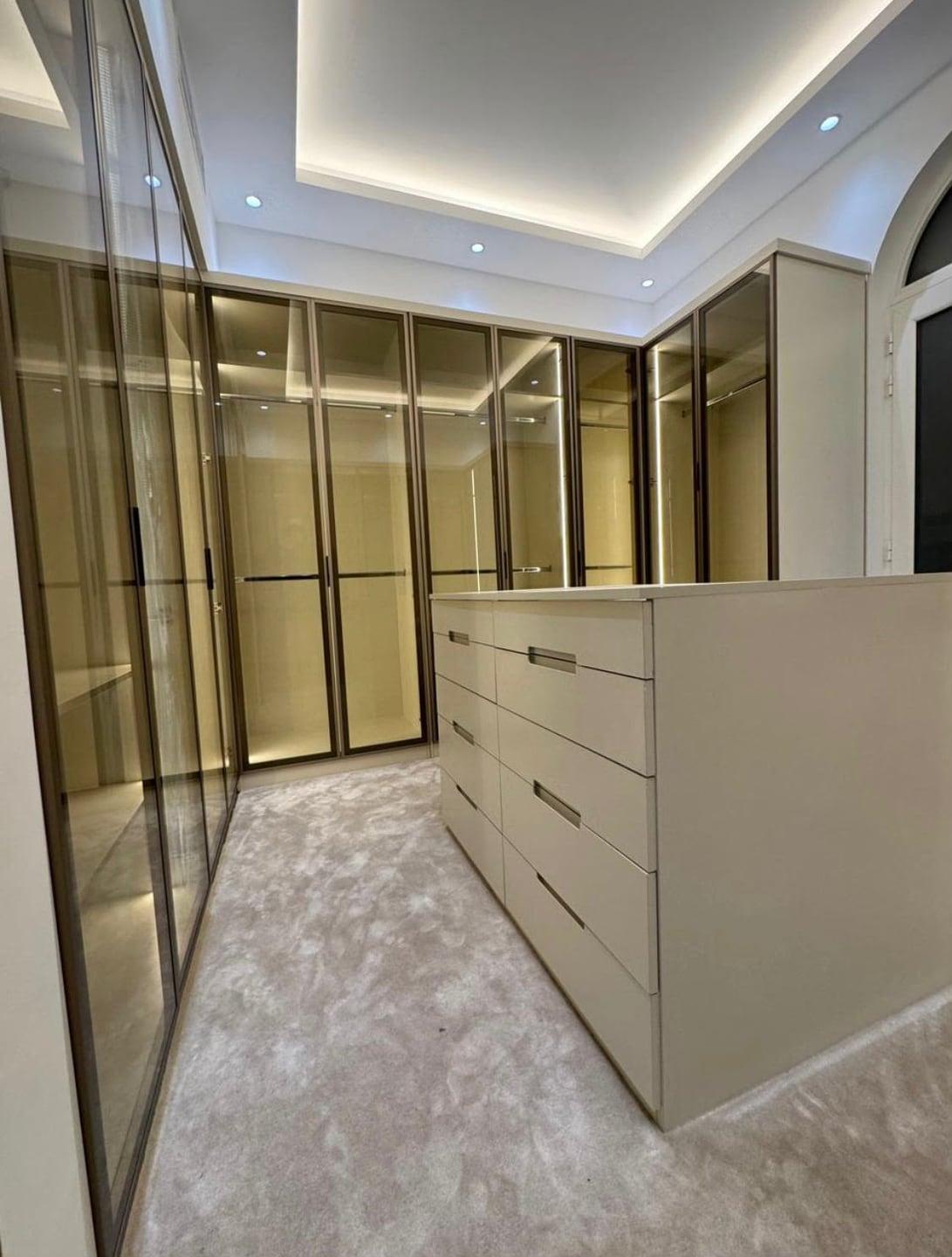
In a bedroom, the interior usually works behind closed doors and has to pack a lot into one wall, so drawers, double hanging and high shelves do most of the work. In a dedicated dressing room, the storage is the room: interiors can be more open, glass-fronted and lit, with a central chest of drawers where the floor allows.
Our walk-in closets and dressing rooms show those room-scale layouts, and the dressing room design guide covers how to plan one.
What the inside is made of
Carcasses and shelves are built from low-emission HDF/MDF, with a moisture-resistant grade where a wardrobe backs onto a bathroom or another damp wall. The inside faces come in plain white and pale colours that keep clothes easy to see, or in wood grains like the walnut interior pictured.
Behind glass doors the interior is on show, so shelf edges, rail fittings and drawer fronts are chosen to look finished from the room. Behind solid doors, a light-coloured interior simply makes everything easier to find.
Lighting the interior
Motion-activated warm LED strips come on as a door opens, running down the sides of each bay or along the underside of rails and shelves, so there is never a dark corner and no switch to find. Behind glass doors the same lighting turns the whole wardrobe into a display in the evening.
The interior lighting is wired in-house, and our team relocates any socket or switch that clashes with the new layout. Plan driver positions you can get at, so a failed component can be swapped without dismantling the shelves.
How an interior is quoted
Interiors are not priced by front area. Two wardrobes of equal width can hide very different fittings, so the quotation is built from the drawing, cabinet by cabinet and fitting by fitting, and you can see what each drawer bank, rack or lit cabinet adds. The wardrobe quotation checklist lists what to ask for when you compare quotes.
The interior comes out of our Sharjah workshop alongside the wardrobe and usually goes in up to about ten days after confirming the order, depending on size and design, installed by our team.
Keeping it organised over time
A good interior makes tidiness easy, and a few routines keep it that way. Swap summer and winter clothes between the high shelves and the everyday sections twice a year, so the prime space always holds what you wear now. Labelled boxes on the top row stop it becoming a jumble.
Leave one drawer and one stretch of rail empty when the wardrobe is new; they absorb the next few purchases without disturbing the rest. Drawer dividers keep small items in their places, and wiping shelves before the season changes keeps dust from settling into folded clothes.
The specification
Custom Wardrobes & Closets
Specified low-emission HDF/MDF, with moisture-resistant grades selected for the application
Anodised aluminium frames with grey or bronze tinted tempered glass
Soft-close hinges; heavy-duty sliding systems available, ask for the load rating in your quotation
Motion-activated warm LED hanging rails and shelf lighting
Pull-out trouser racks, tie organisers, velvet jewellery drawers and shoe racks
Suits
- Master bedrooms
- Walk-in dressing rooms
- Children's rooms
- Guest rooms
- Villa suites
24-month written workmanship warranty; supplied products follow their applicable written terms. 5-year limited warranty on the wood-based boards, subject to terms; hinges, tracks, runners, rollers and other moving hardware are not covered.
At a glance
- Room
- Dressing Room
- Material
- Laminate & MDF
- Type of work
- Made to Measure
- Property type
- Villa
- Availability
- Made to order
How it is made and installed
A free consultation at your home with physical samples, laser measurement, clear drawings and an itemised quotation. Once you approve, it is made in our Sharjah workshop and installed by our own team. Quoted from the drawing by the cabinets and fittings chosen, rather than by the area of wardrobe front.
Manufactured after drawing approval and once the 60% advance is received, then installed by our own team, taking up to about 10 days from order confirmation, depending on size and design.
Common questions
Type a word and the answers narrow as you go.
9 of 9 answers
Can organisers be added to a wardrobe I already have?
Sometimes. It depends on the cabinet's depth, width and construction, which we check at the visit before suggesting what will fit. The free wardrobe measuring visit guide lists what to prepare.
Are drawers better than shelves for folded clothes?
Usually. Drawers keep stacks tidy and hidden, while open shelves suit things you want to see and reach quickly.
How is the inside lit without switches?
Motion sensors turn the LED strips on as a door opens and off again when it closes.
Should shoes go behind closed doors?
Behind glass they stay dust-free and visible. Whatever the door, give each shelf enough height for the shoes it holds.
Can shelf heights be changed later?
Shelves in adjustable columns can be moved; others are fixed where the drawing puts them, so leave one adjustable column for the future.
Is the interior priced by area like the doors?
No. The price follows the drawn interior, with each cabinet and fitting on its own line.
What belongs on the top shelves?
Things you reach for a few times a year: suitcases, spare pillows and the other season's clothes. Keep daily items in the band between hip and shoulder height.
Do interiors behind glass need tidier storage?
A little. Whatever sits behind glass is on show, so boxes and baskets with matching fronts keep those sections calm.
Can the interior be lit inside glass doors only?
Lighting can go in any section. It shows most behind glass, but solid-door sections benefit too, because the light comes on as you open them.

More like wardrobe interiors: drawers, shoe & bag cabinets, organisers
Wardrobes · Dressing Room
Glass Wardrobes with LED Lighting
Wardrobes · Bedroom
Built-In Wardrobe Doors: Handleless, Shaker & Profile Styles
Wardrobes · Bedroom
Integrated Dressing Tables in Wardrobes
Wardrobes · Dressing Room
Walk-In Closets & Dressing Rooms
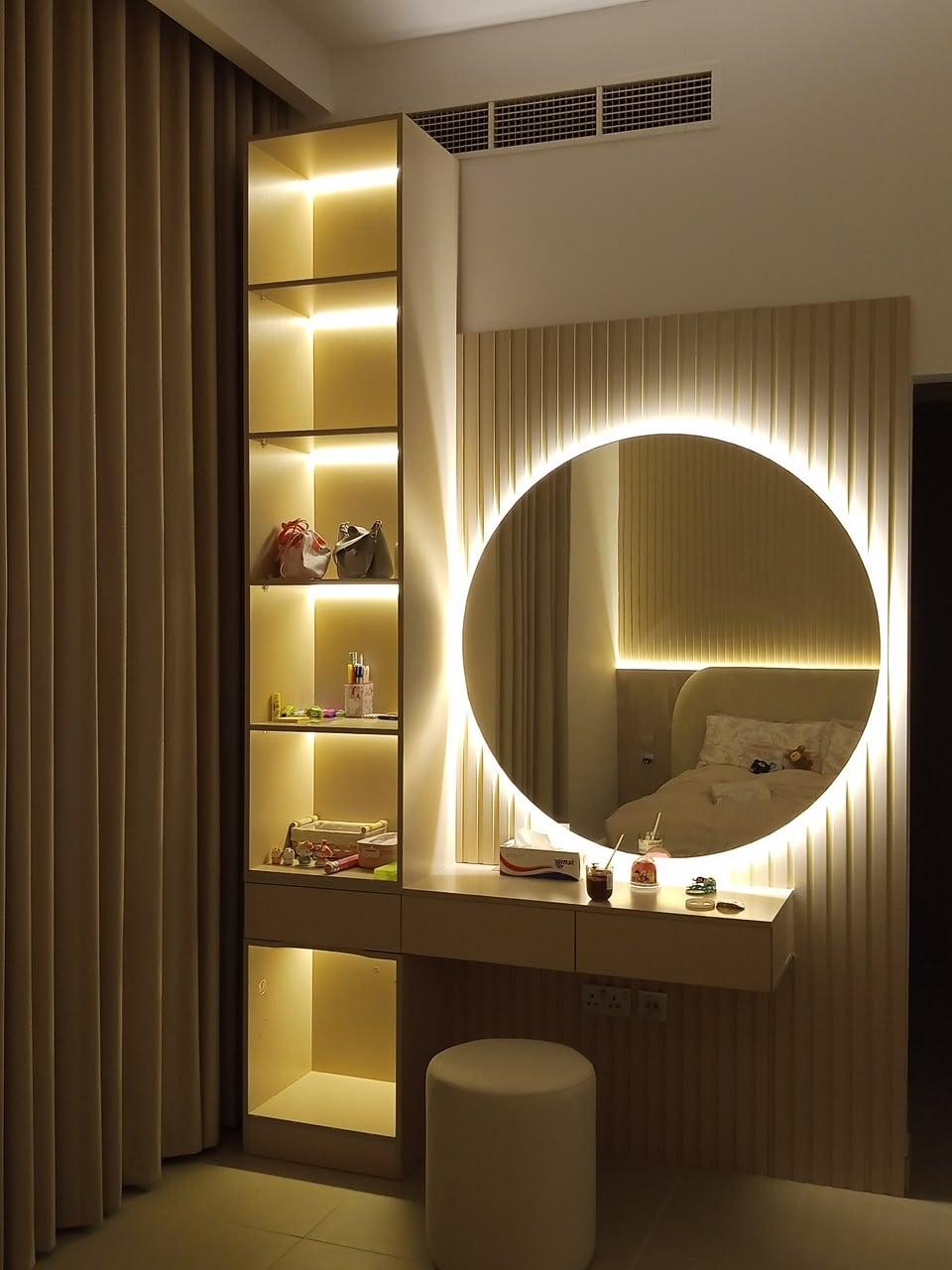
Dressing Units · Dressing Room
Dressing Tables with Backlit Mirrors
Plan the details first
- GuideWardrobe interior layout: design it around what you own
- GuideWardrobe dimensions: depth, height and the space in front
- GuideWardrobe materials and hardware: what lasts and what to specify
- GuideHinged or sliding wardrobe doors: which suits your room?
- GuideCustom wardrobe prices in the UAE: how a quote is worked out
- GuideBedroom wardrobe with a built-in TV unit: layouts, sizes and cables
- GuideWardrobe ideas for small bedrooms in UAE homes
- GuideWardrobe lighting: sensor strips, rail lights and what to wire in
- GuideHandleless wardrobe doors: grooves, gola profiles and push-to-open against handles
- GuideFitted, built-in or freestanding wardrobe: what is the difference?
- GuideKids' wardrobes that grow from toddler to teen
- GuideWardrobe door replacement in the UAE: what you can change and how it works
- GuideWardrobe quotation checklist: how to compare two quotes like for like
- GuideFree wardrobe measuring visit in the UAE: what to prepare and what happens
- GuideSliding wardrobe door systems explained: weight and size limits per door, depth, soft-close and what to ask for
- GuideCorner and L-shaped wardrobes: layouts, corner solutions and clearances for UAE bedrooms
- GuideMirror wardrobe doors: weight, safety, light and care
- GuideMoisture-resistant boards for wardrobes: what P2, P3, MDF.H and "MR" really mean
- GuideMusty smell in a wardrobe: causes, what to do and when the wall is the problem
- GuideWardrobe door finishes compared: laminate, veneer, lacquer, acrylic, glass and mirror
- GuideStoring abayas, kanduras and long garments in a wardrobe
- GuideLuggage, bedding and seasonal storage: loft boxes and top cabinets in UAE wardrobes
- GuideWardrobe drawers and organisers: what to plan inside, and what the runners can carry
- GuideWardrobe for a studio apartment: zoning one room for sleeping, dressing and storage
- GuideWardrobe hanging heights: rail positions for shirts, dresses and long garments
- GuideRenovate or replace an old wardrobe: a decision guide by symptom
- GuideWardrobe door hinges: how many, soft-close and adjustment
- GuideMaster bedroom wardrobe design: a planning order from the wall to the doors to the inside
- GuideReach-in vs walk-in wardrobe: how much floor you really need, room by room
- GuideHow deep should a wardrobe be? 60 cm, 55 cm and sliding doors
- GuideSharing one wardrobe as a couple: how to split it, and where the daily conflicts hide
- GuideWardrobe door clearance: how much space doors need to open
- GuideSliding wardrobe door off its track: why it happens, what to check and when to call us
- GuideWardrobe LED strip or aluminium profile? Where the light goes
- GuideA wardrobe for a rented apartment: fitted, modular or freestanding?
- GuideFloor-to-ceiling wardrobes in the UAE: the ceiling gap, top boxes and door height
- GuideWardrobe warranty in the UAE: what it covers and how to read one
- GuideWardrobe door sticking, rubbing or sagging: how to fix it
- GuideWardrobe handles: types, height, finishes and what to ask for
- GuideShoe wardrobe design: pairs per shelf, depth, tilted shelves and ventilation
- GuideCustom or ready-made wardrobe? Where each wins in the UAE
- GuideA wardrobe against a bathroom or outside wall: what to check first
- GuideMatt or gloss wardrobe doors: light, fingerprints, cleaning and what to ask
- GuideOpen wardrobe or closed doors: what to choose for UAE homes
- GuideTop-hung or bottom-running sliding wardrobe doors: what each track asks of your floor, ceiling and wardrobe
- GuideFluted wardrobe doors: profile, light, dust and joins
- GuideWardrobe ideas for UAE apartments: a plan for the whole flat, bedroom by bedroom
- GuideSprayed wardrobe doors: layers, colour, edges and touch-ups
- GuideClassic and shaker-style wardrobes: where the look suits and where it fails
- GuideWardrobe colour combinations for bedrooms: light, floor and handles
- GuideDouble hanging or long hanging wardrobe? How to choose and mix them
- GuideA wardrobe for a narrow room or corridor: what still fits, and which doors
- GuideA wardrobe in an alcove or wall niche: measuring, fillers and doors
- GuideU-shaped walk-in wardrobe: room size, walls and layout
- GuideVilla master suite wardrobe: planning the suite from bed to bathroom
- GuideGlass wardrobe doors and privacy: clear, tinted, frosted or reeded?
- GuideA wardrobe for two children sharing a bedroom: the fair split and the growth plan
- GuideA wardrobe for a guest room: what a guest needs and how the family uses the rest
- GuidePull-out racks, baskets and pull-down rails in a wardrobe: widths, loads and door clash
- GuideA wardrobe with a built-in desk: where the bay works, and when it does not
- GuideArabic-style wardrobes: lattice, arch, relief and gold detail, and how to use them
- GuideA nursery wardrobe that grows from baby to toddler: what to plan
- GuideA wardrobe around a beam, column or AC bulkhead: how it is fitted
- GuideWardrobe edge banding: PVC, ABS, melamine, veneer and what to check
- GuideJewellery and watch drawers in a wardrobe: trays, cells, light and a lock
- GuideStoring handbags in a wardrobe: shelves, dividers, lighting and glass
- GuideWardrobe under a sloping ceiling: attic and loft room ideas
- GuideHumidity and wardrobes in UAE homes: causes and habits
- GuideTall wardrobe doors: how tall, how heavy and when to split them
- GuideWardrobe board types: MDF, plywood, particleboard and HDF compared
- GuideWardrobe price per square metre, per metre or per item: what it means
- GuideApproving your wardrobe design: from measurements to an approved drawing
- GuideWardrobe installation day: what to expect, and what to check
- GuideHow to clean and care for wardrobe surfaces: laminate, veneer, glass, mirror and tracks
- GuideAdding drawers, shelves and a new interior to an existing wardrobe: what can be added and what cannot
- GuideThe complete wardrobe guide for UAE homes: plan it in five steps, then go deeper
- Planning toolChoosing Materials
- GuidePlanning a whole-home budget
- GuideChoosing materials by specification
- GuideWarranty & aftercare
Free on-site visit
We bring the samples
Choose fabric and finishes in your own light, next to your own walls, then we laser-measure and send a drawing and an itemised quote.