Wardrobes · 14 min read · 18 July 2026
A wardrobe for a rented apartment: fitted, modular or freestanding?
For a rented flat, ask the landlord in writing, then choose: fitted (built to the wall; whether it comes out depends on the build), modular (units you can unfix and reuse) or freestanding (stands alone and moves with you). We can make removable or relocatable designs.

By Ali Haider Basra, Founder, Al Tareeq Decor · Contact our workshop
Key takeaways
- Ask your landlord or property manager in writing before anything is fixed to a wall, floor or ceiling. Check your tenancy contract; we give no legal advice.
- Fitted, modular and freestanding differ in how much is part of the building. A modular or freestanding wardrobe can move with you; a fitted one depends on how it was built.
- We make wardrobes for rented apartments and studios and can provide removable or relocatable designs. Not every fitted wardrobe is removable; ask how yours is built.
- Photograph the walls and floor before delivery, protect them on the day, and keep the written answer for the move-out list.
- Our entry price is from AED 550 per sqm, installed, for MDF laminate with hinged doors; a removable or modular build is priced in the quotation.
On this page
- Key takeaways
- A wardrobe for a rented flat: the short answer
- Ask in writing first: what to put in the message
- Questions to ask the landlord in writing
- Fitted, modular or freestanding: how they compare for a tenant
- Fitted, modular and freestanding wardrobes for a rented flat
- Fitted in a rented flat: when it still makes sense
- Modular: a run you can add to and take with you
- Freestanding: the least change to the flat
- What is realistic to take apart
- What to ask about each part of a wardrobe you may take
- Protecting walls and floors
- Cost thinking for a tenant, without numbers
- Move-out checklist
- Wardrobe move-out checklist for a tenant
- What a measuring visit should confirm
- What we do about a rented-flat wardrobe
- Common questions
A wardrobe for a rented flat: the short answer
In a rented flat, ask your landlord or property manager in writing before anything is fixed to a wall, floor or ceiling, then choose between three kinds of wardrobe by what you want to take with you when you leave. A fitted wardrobe is built to the wall and ceiling and is the most settled-looking, but whether it can come out depends on how it was built. A modular wardrobe is made of separate units that can be unfixed and reused. A freestanding wardrobe stands on the floor by itself and moves as a piece; for the wardrobes of a whole flat, bedroom by bedroom, see wardrobe ideas for UAE apartments.
We make wardrobes for rented apartments and studios, and we can provide removable or relocatable designs, as freestanding or modular arrangements. Not every fitted wardrobe is removable; it depends on the construction chosen, so ask for that in writing too. We are not lawyers and cannot say what your tenancy allows: check your tenancy contract and ask in writing.
This page is the decision and the move-out list. If your home is a single room, wardrobes for a studio apartment covers the zoning and the bed gap; the older fitted, built-in and freestanding wardrobes guide explains what each term means. Our custom wardrobes service is built from your measured wall.
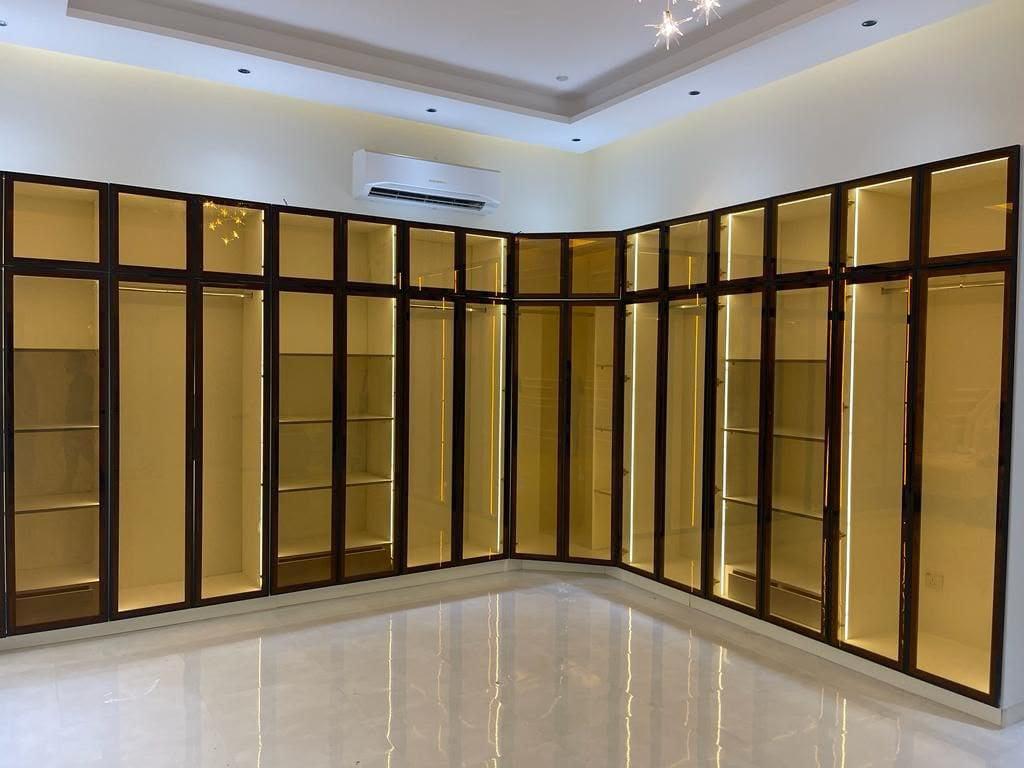
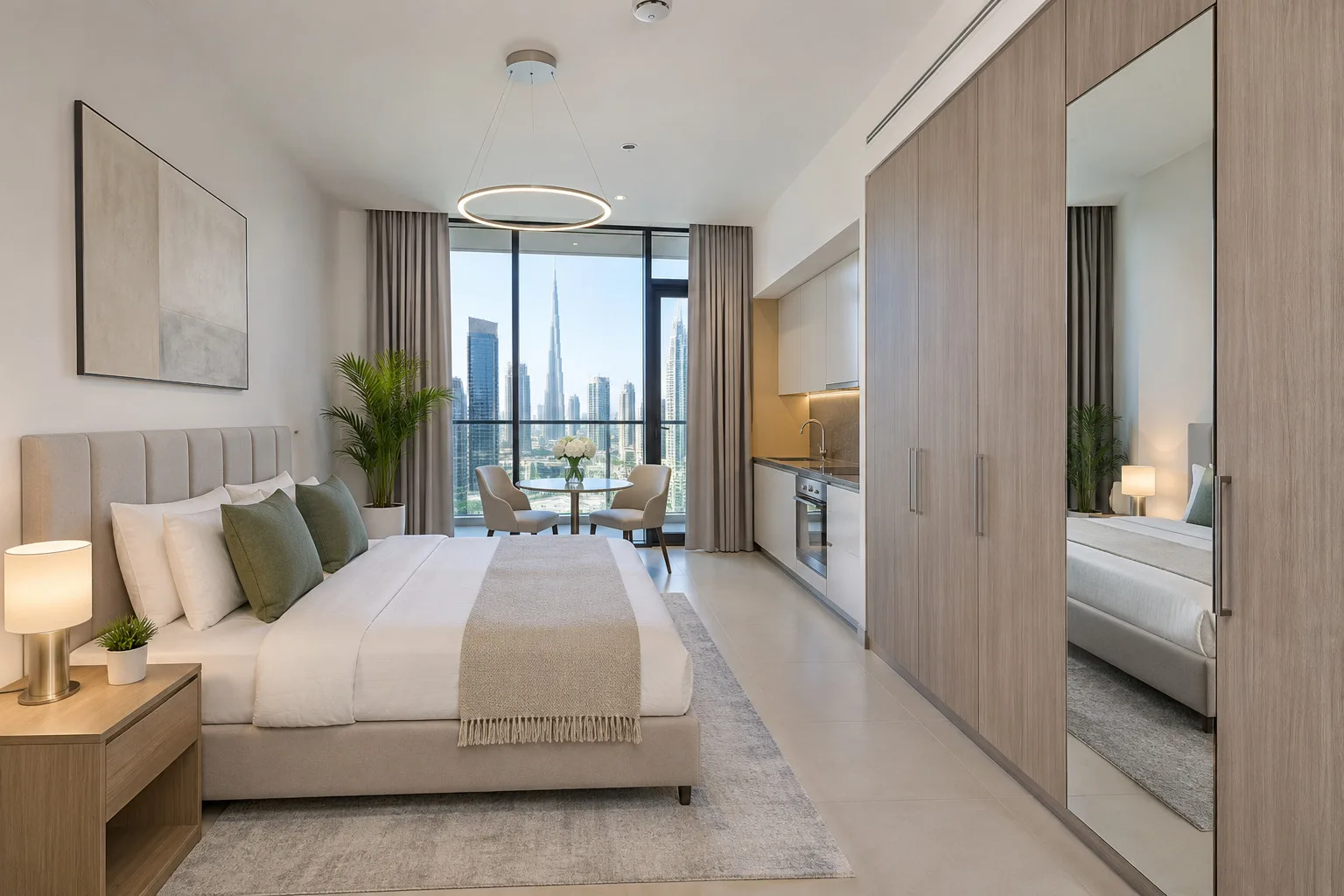
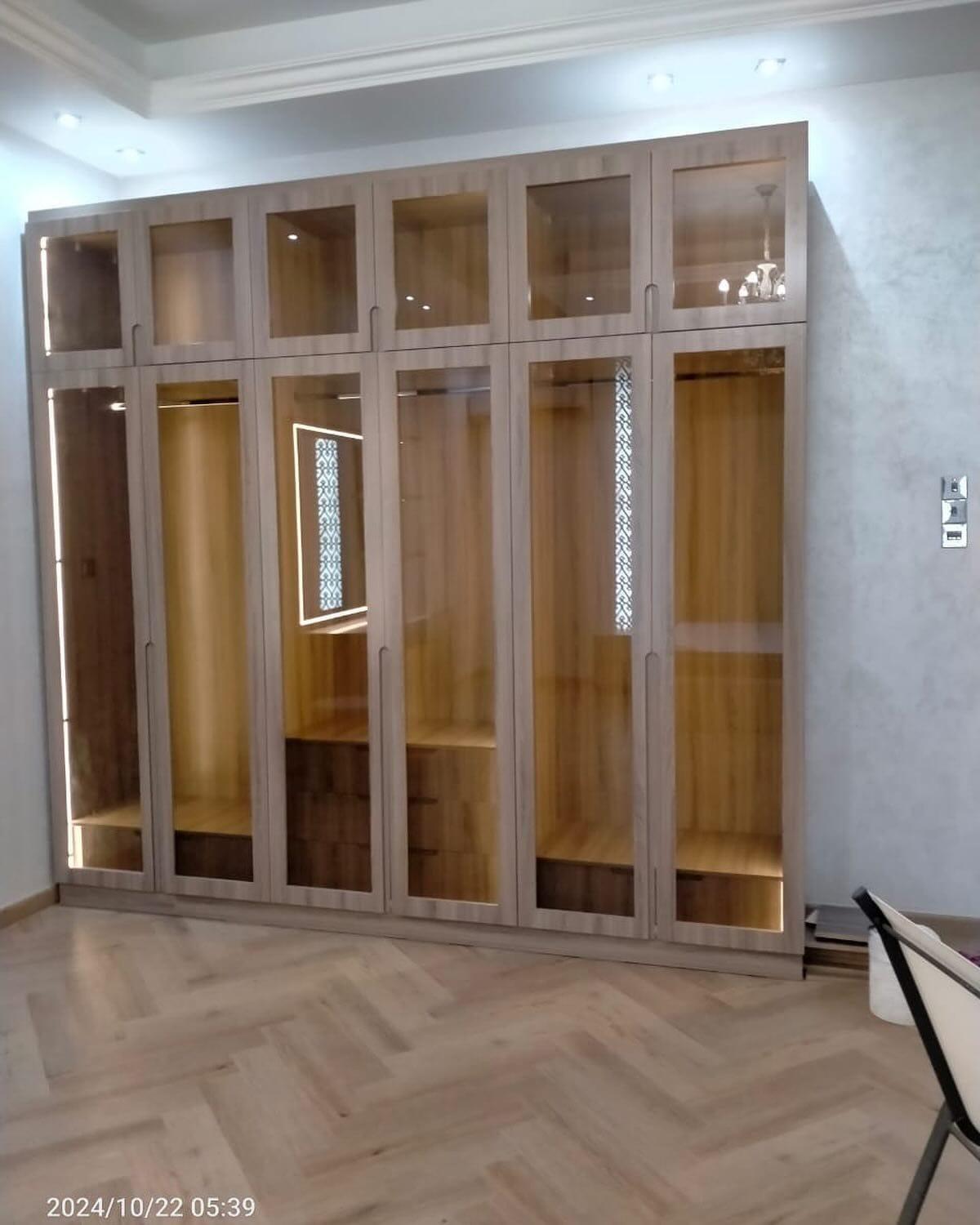
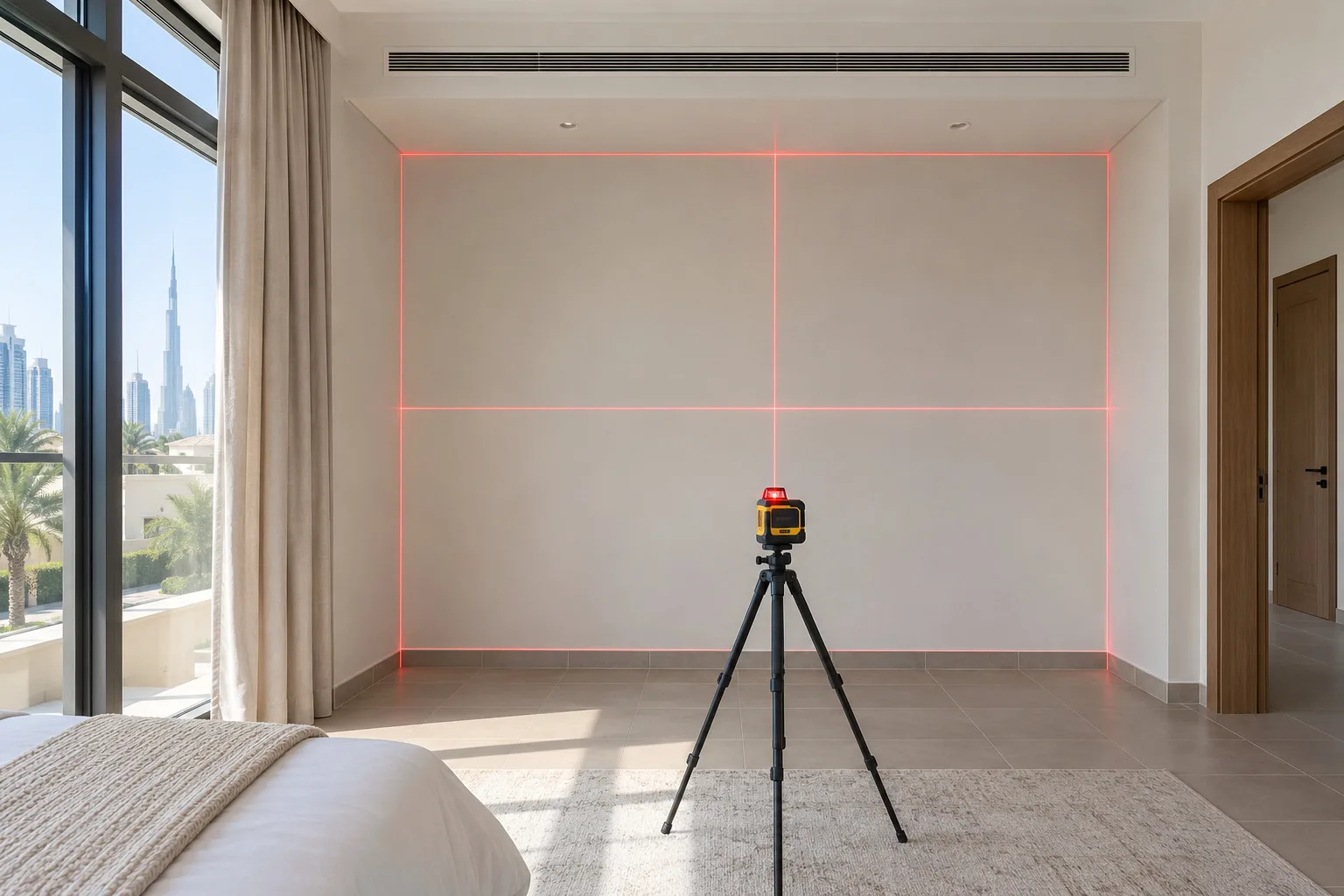
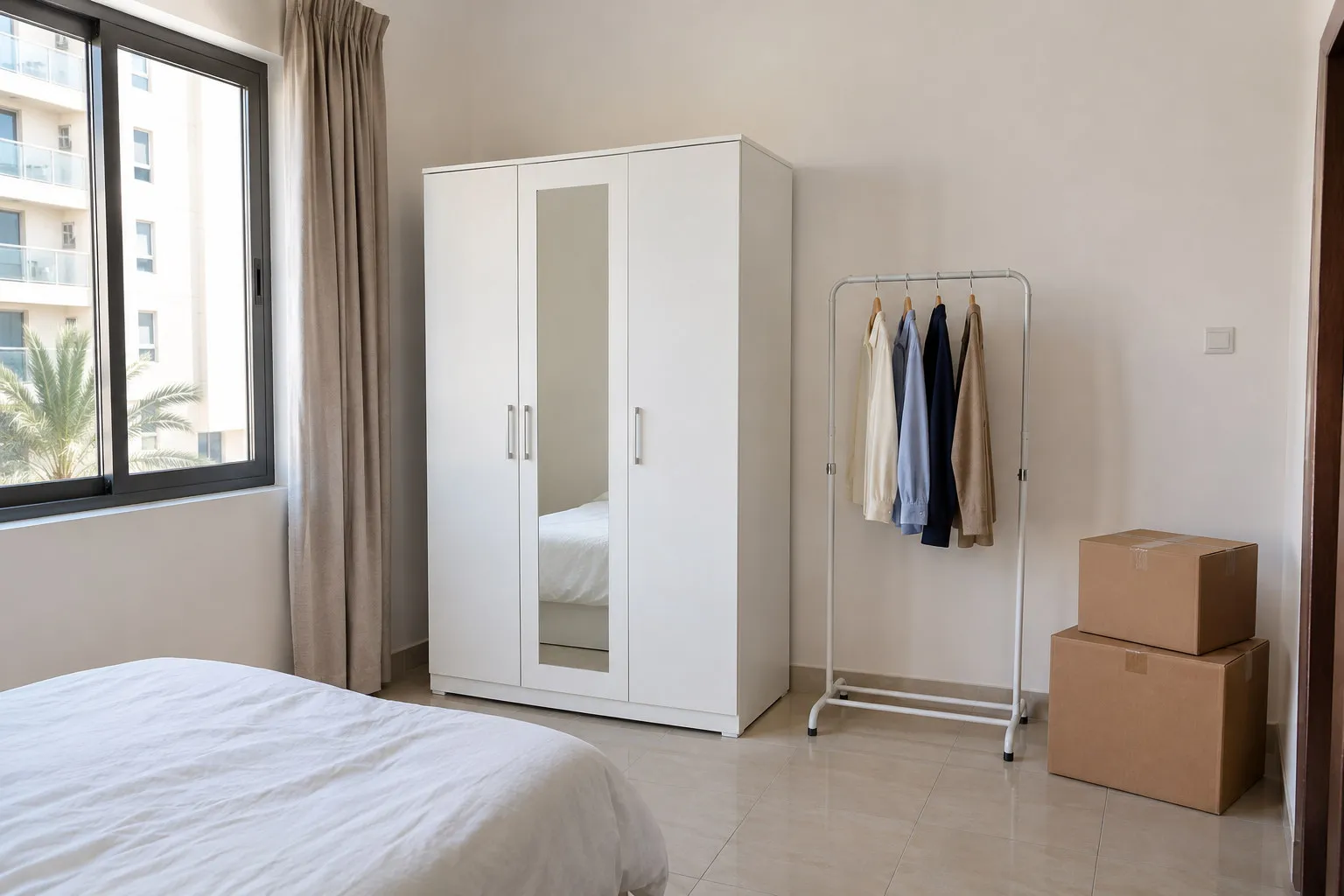
- 1. Fitted: built to the wall and ceiling; whether it comes out depends on how it was built
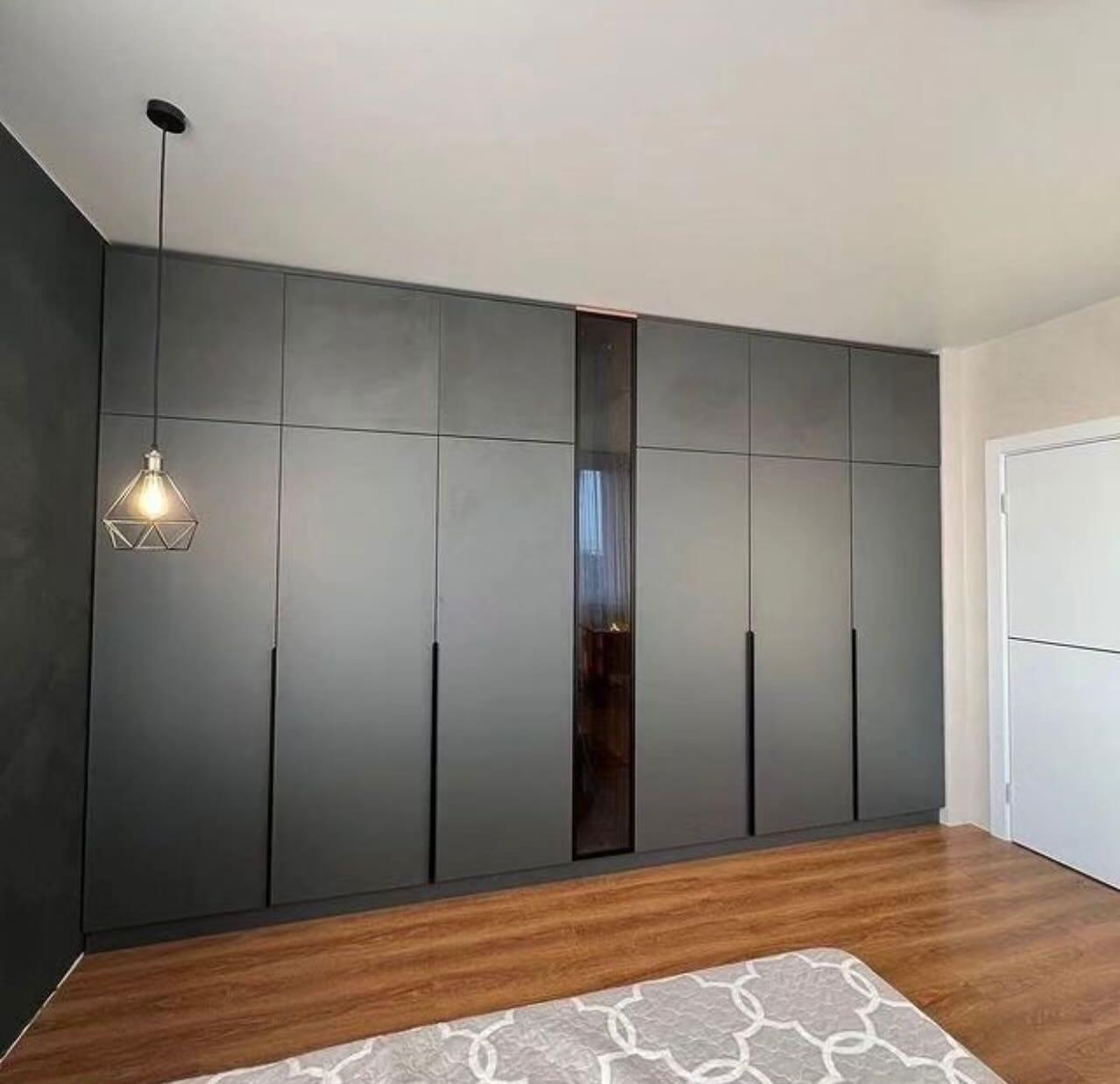
- 2. Modular: separate units placed side by side; units can be unfixed and reused
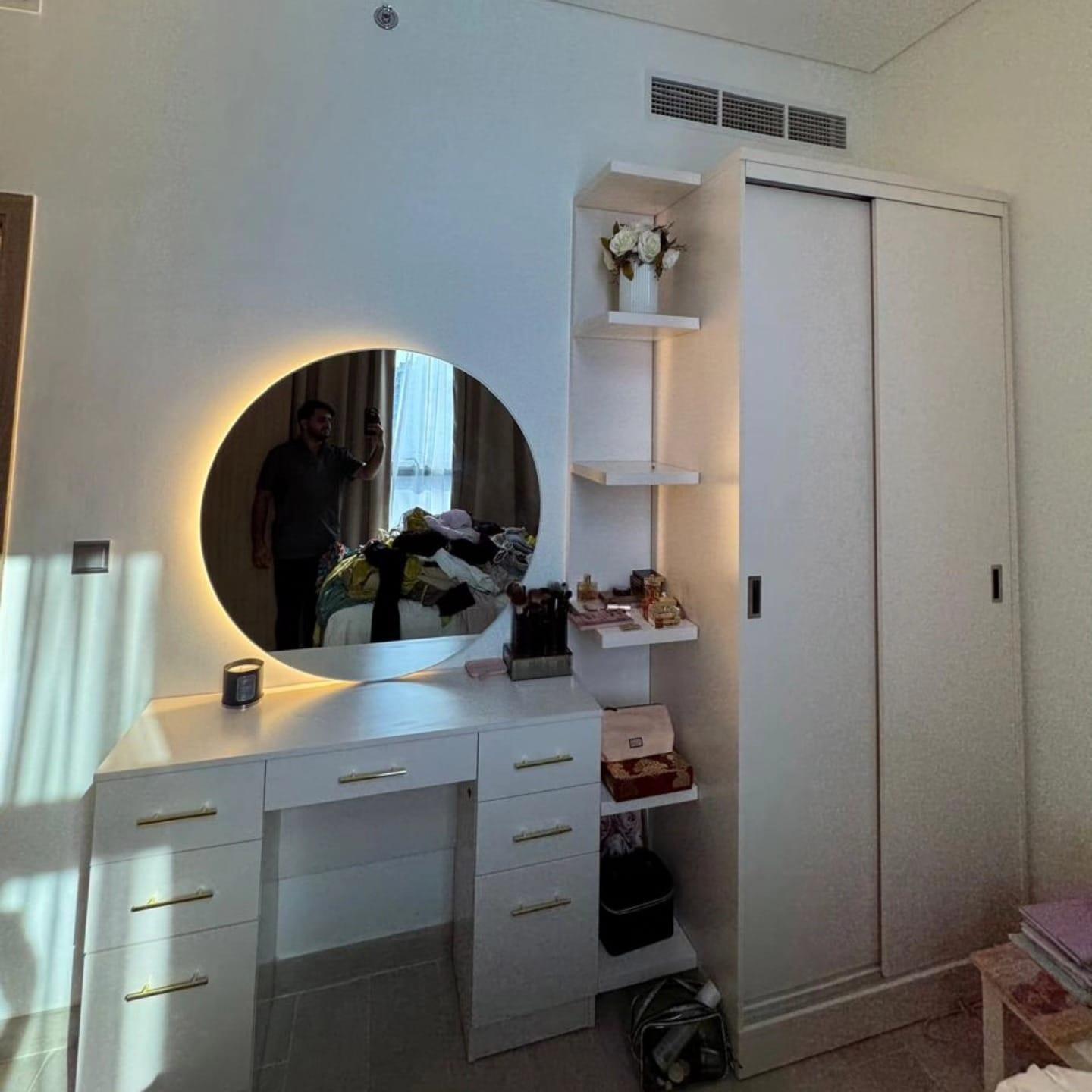
- 3. Freestanding: stands on the floor by itself; the whole piece, or in parts, goes with you
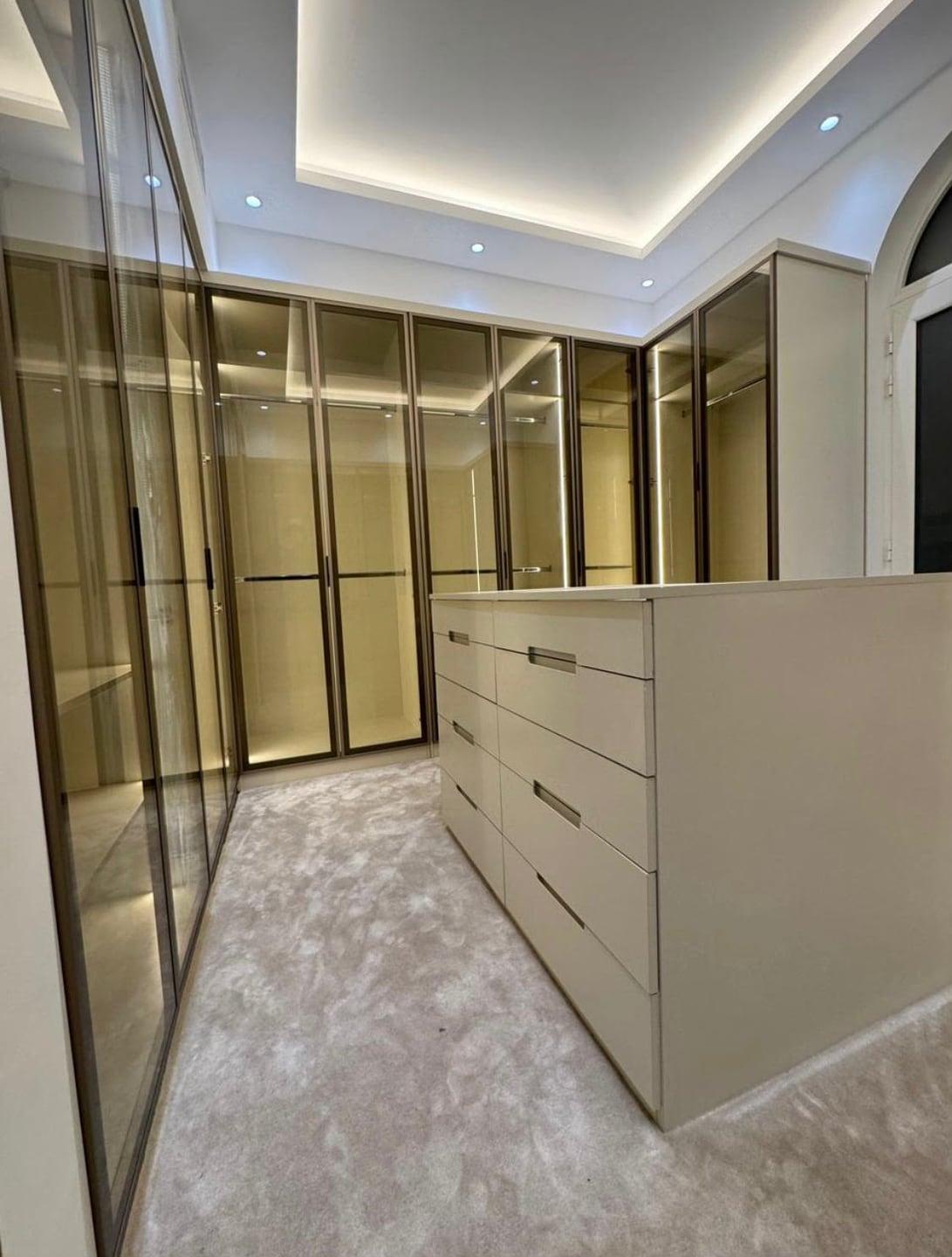
- 4. Ask in writing first, then choose: the answer decides which of the three is open to you
Ask in writing first: what to put in the message
Read your tenancy contract, then write to the landlord or the property manager before any work starts. Three government tenancy pages we opened, from Victoria in Australia and New Zealand, are not UAE rules, but they show the same pattern in a plain way: Tenancy Services New Zealand says "Make the request to the landlord in writing", and Consumer Affairs Victoria says a renter on a long agreement "must get the rental provider's written permission" before fixtures go in. We give no legal advice; we use them only as a reminder that a written answer protects you.
Say exactly what you want to fix and where: the wall, the floor, the ceiling, whether anything is drilled, and whether a wardrobe would stay or leave with you. Attach our drawing once you have it, and keep the reply. Then bring the reply to the measuring visit, where we can match the drawing to what was allowed.
The message does not need to be long. The table sets out the questions; they are ours, not a legal checklist.
Questions to ask the landlord in writing
May a wardrobe be fixed to the walls, floor or ceiling?
- Why it matters
- A yes or no decides whether fitted is open to you at all
If not fixed, may a freestanding or modular wardrobe stand against the wall?
- Why it matters
- Many tenants only need this one
May a tall unit be anchored at the top to stop it tipping?
- Why it matters
- A few small holes are a different request from a built-in run
Must anything be removed or made good when I leave?
- Why it matters
- Fixes the move-out list in advance
Would you rather keep a wardrobe I leave behind?
- Why it matters
- Some landlords prefer to; get the answer written
Do you want to see the drawing first?
- Why it matters
- Shows what is changing before any work
Our own planning questions. Your tenancy contract and your landlord's answer decide what is allowed.
Fitted, modular or freestanding: how they compare for a tenant
The three differ in one thing that matters to a tenant: how much of the wardrobe is part of the building. The more it is fixed to the walls and ceiling, the tidier it looks and the more it leaves behind. The more it stands on its own, the more of it can move with you.
A fitted wardrobe uses the whole wall, can go to the ceiling and has no gaps for dust and luggage, which is why most people want one. A modular one is built from units, so the run can be changed or grown. A freestanding one is the least permanent, but it normally leaves a gap above and to the sides. Online Bedrooms, a UK retailer, tells readers to order a freestanding wardrobe "at least 6cm shorter than your ceiling height", which is a good reminder that a freestanding piece is sized to fit under the ceiling, not into the room. It is one retailer's advice, not a rule. For the wider question of a shop-bought unit against a made-to-measure one, see custom or ready-made wardrobe.
Fitted, modular and freestanding wardrobes for a rented flat
How it is held
- Fitted
- Built to the walls and ceiling
- Modular
- Separate units placed side by side
- Freestanding
- Stands on the floor by itself
At move-out
- Fitted
- Depends on the construction chosen
- Modular
- Units can be unfixed and reused
- Freestanding
- The whole piece, or in parts, goes with you
What stays behind
- Fitted
- Fixings and filled holes
- Modular
- Small fixing marks to tidy
- Freestanding
- A hole if you anchored it
Look
- Fitted
- Wall-to-ceiling, the most settled
- Modular
- A run built from units
- Freestanding
- A piece of furniture with a gap above
Best when
- Fitted
- The landlord agrees, or you stay long
- Modular
- You want a larger run you can take
- Freestanding
- You need the least change to the flat
Ask us
- Fitted
- Can it be taken apart?
- Modular
- How are the units held together?
- Freestanding
- How is it anchored?
Our own comparison. How a given design is built is confirmed in the quotation, not here.
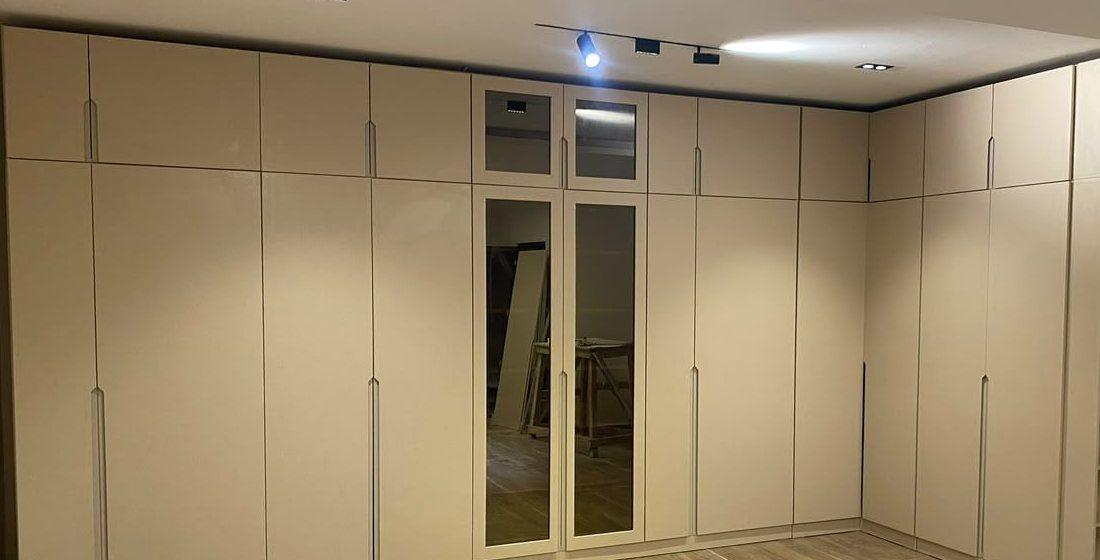
Fitted in a rented flat: when it still makes sense
A fitted wardrobe is worth considering in a rental when the landlord agrees in writing and you expect to stay for years, or when the wardrobe is the thing that makes the flat usable. In that case the question is not whether it is fixed but what happens on the day you leave. Ask us how the run is built: whether it is made in large panels that stay, or in pieces that can be taken apart. We do not publish construction details, so ask for them in the quotation.
If the answer is that it stays, treat the money like a lease cost: choose a simple, long-lasting finish, which the door finishes comparison helps with, and leave the clever extras for a home you own. A fitted run, including a floor-to-ceiling wardrobe, is also the right answer when the flat has an awkward alcove that nothing standing alone will fill; reach-in or walk-in wardrobes explains the usual openings. A mirror leaf on one door is a sensible extra, as mirror wardrobe doors sets out. Handles are another small choice, and the wardrobe handles guide covers types, height and finishes.
If the flat already has a fitted wardrobe you do not like, ask before you change it. Wardrobe door replacement shows what can be changed on the doors alone, and renovate or replace a wardrobe shows when the carcass is worth keeping. Runs that turn a corner are covered in corner and L-shaped wardrobe design. If the trouble is only a door that sticks, rubs or sags, how to fix a wardrobe door that is sticking is the page to start with.
Modular: a run you can add to and take with you
A modular wardrobe is made of separate units that sit side by side, so the run can be longer or shorter, and the units can be unfixed when you leave. It suits a tenant who wants the look of a run but not a fixture. It also suits a home that will change: add a unit when the family grows, or move one to another room. Our wardrobe designs can be provided in this form for rented homes.
The questions to ask are practical ones. How are the units joined to each other and to the wall, if at all? Can the units be lifted out whole, or do they need taking apart? Do the doors belong to a unit or to the run? If they slide, a sliding wardrobe door off its track shows what can go wrong. We do not publish how a removable design is built, so ask for it in the quotation and ask for it on the drawing. The quotation checklist shows what to compare between quotations.
A modular run still has to suit the room. The unit depth decides how much floor you lose, as wardrobe depth explains, and the door type decides how much room you need to open it; wardrobe door clearance and hinged versus sliding doors show the difference. In a small room, small bedroom wardrobe ideas is the place to start.
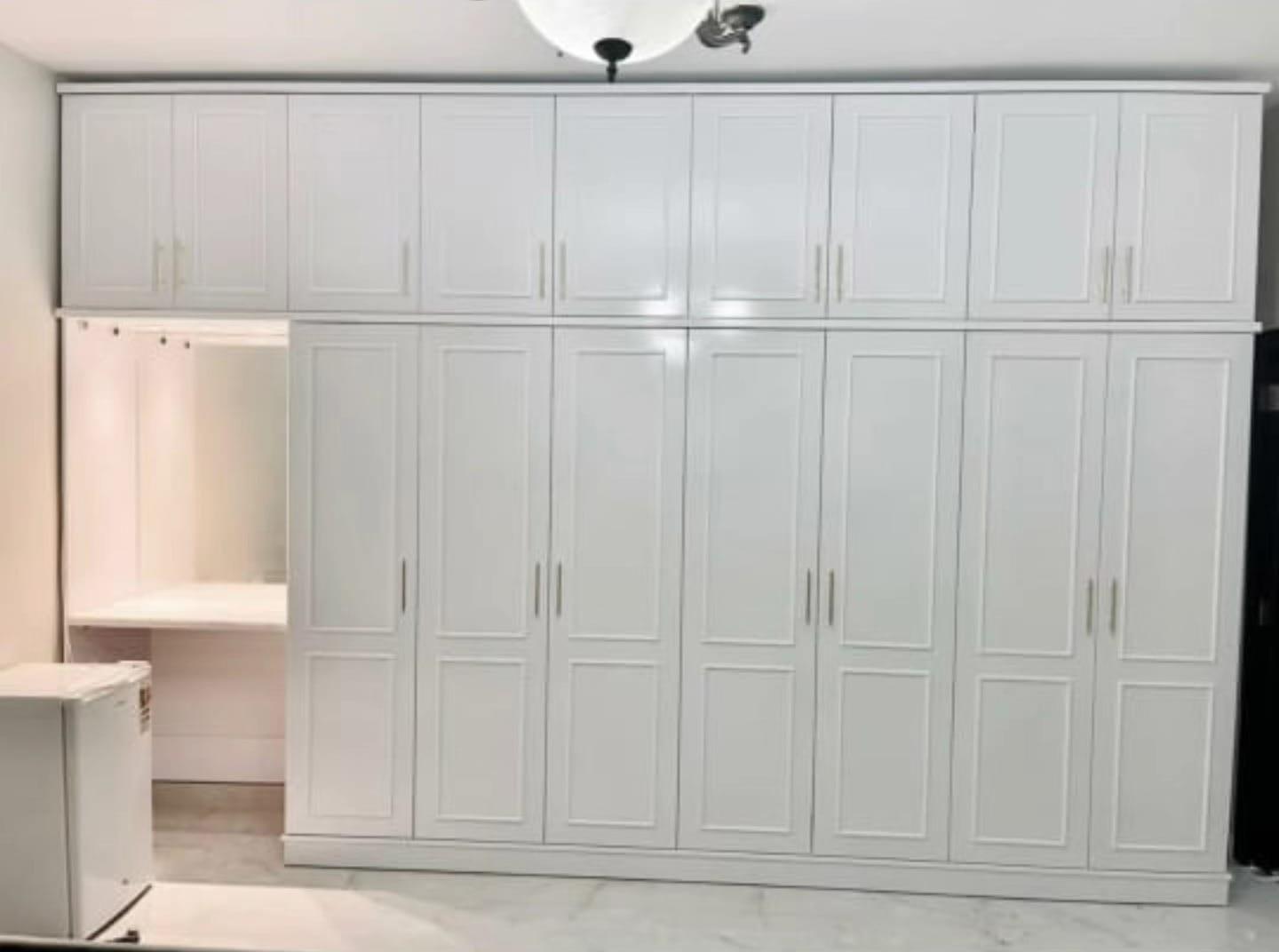
Freestanding: the least change to the flat
A freestanding wardrobe is the simplest answer when the landlord says no to fixing anything. Online Bedrooms says it plainly: "Freestanding furniture is a great option if you want to be able to take it with you when you move house." It goes where you go, and it needs no work on the walls.
One caution is about safety, not rules. A tall piece can tip forward if it is pulled or climbed, and the US Consumer Product Safety Commission says "Chests and dressers can tip over if not attached to the wall". Those are chests and dressers rather than wardrobes, but the point carries over: ask about anchoring the top of a tall wardrobe, and ask your landlord for the small fixing in writing if you need it. Households with children should treat this as a requirement, not an option; kids wardrobe design covers the room for them.
Freestanding does not mean fewer decisions inside. A tall piece needs the same planning for hanging, drawers and shelves as a fitted one: wardrobe hanging heights, the wardrobe layout guide and the wardrobe dimensions guide explain the inside, and wardrobe drawers and organisers shows how to fill it. The gap at the top can carry boxes, as luggage and seasonal storage suggests. If the piece is for shoes, shoe wardrobe design covers pairs per shelf, depth, tilted shelves and ventilation.
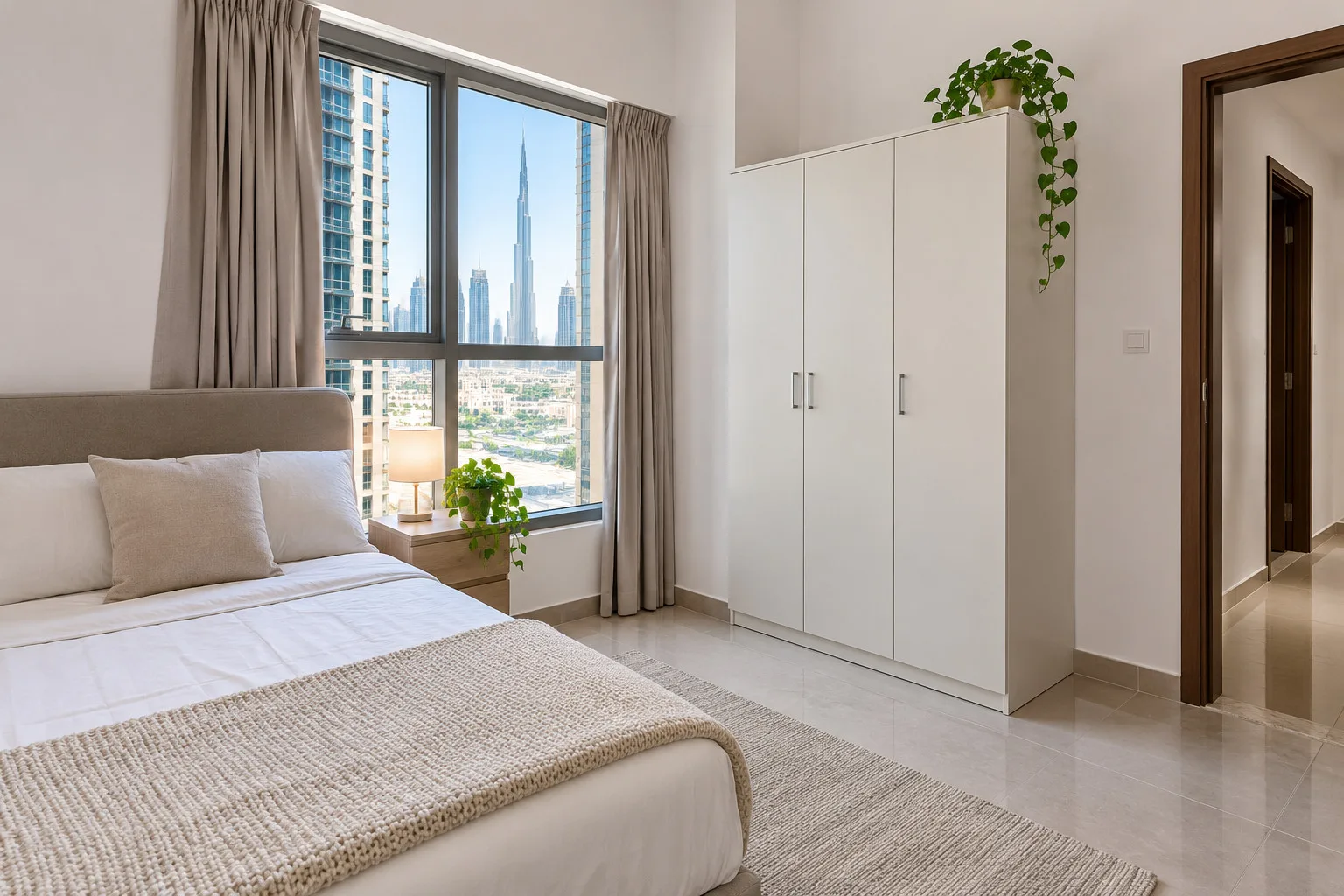
What is realistic to take apart
Taking a wardrobe apart is different from taking it out. A set of separate units can be lifted out and moved; a run built as one piece against the wall is not made to be. The sources are retailers, so they disagree: one UK retailer says of its own fitted range that "you can take them with you very easily when you move", while a Singapore retailer says a custom wardrobe cannot move with you. Both describe their own product. The honest answer is that it depends on how the wardrobe is built.
So the realistic question to ask is not "can a fitted wardrobe be removed?" but "how was this one built, and what would taking it out involve?" Ask whether it can be unfixed without damaging the walls, whether it would need a fitter, and whether the doors come with it. If the answer is unclear in writing, plan on a fitted wardrobe staying. The table pairs common parts with what we would ask; for lighting inside, LED strip or profile explains the two ways it is fitted. For hinged doors, how many hinges a wardrobe door needs sets out the count by weight and height.
What to ask about each part of a wardrobe you may take
Carcass (the box)
- What to ask
- Can it be unfixed and lifted out whole or in pieces?
- If it stays
- Treat it as part of the flat
Doors
- What to ask
- Are they fixed to a unit or to the run?
- If it stays
- Doors alone can be re-made later
Shelves, rails and drawers
- What to ask
- Are they adjustable and removable?
- If it stays
- Easier to take than the carcass
Lighting inside
- What to ask
- Is it fixed or can it come out?
- If it stays
- Ask before you pay for it in a rental
Mirror or glass leaf
- What to ask
- How is it held and who handles it?
- If it stays
- Glass is fragile to move
Top boxes or plinth
- What to ask
- Do they stay with the unit?
- If it stays
- A tidy finish where they were
Our own planning questions; construction details are given in the quotation, not here.
Protecting walls and floors
Start with a record. Photograph the walls, skirting, ceiling and floor where the wardrobe will stand before anything comes in, and keep the dates. It protects you at move-out and shows what was already there. Then ask us to protect the floor and the walls on the day, and keep the route from the door clear; occupied home installation preparation explains how to get the room ready.
For a freestanding or modular unit, protect the floor under it with felt or similar pads, and lift rather than drag when it moves. For one that is anchored, ask first where the fixing goes and who makes the hole good afterwards. Consumer Affairs Victoria says renters who fixed things must "restore the property to the condition it was in immediately before the changes were made, allowing for fair wear"; in the UAE the wording is in your contract, so read it. Wardrobes on an outside wall or next to a wet room are a separate issue, and a wardrobe against a bathroom or outside wall covers what to check first; moisture-resistant wardrobe boards and why a wardrobe smells musty explain what to look at.
Cost thinking for a tenant, without numbers
Think in three costs: what you pay now, what you take with you, and what you lose if you must leave it. A wardrobe you can take is spent once for two homes; a fitted run you leave is spent once for one. That is a reason to favour a movable design if you may move soon, and a fitted one if you will not.
Our published entry specification is from AED 550 per sqm, installed, for MDF laminate with hinged doors. Other finishes, door types, glass, mirror, lighting and a removable or modular build can change the figure, and we do not publish a number for them: ask for a quotation after the measuring visit. Wardrobe materials and cost and the wardrobe price guide show what moves a price, and wardrobe sliding door systems and handleless wardrobes or handles show how the door choice changes the build. Compare quotations on the same basis, as the wardrobe quotation checklist sets out.
Move-out checklist
Start the checklist when you sign the wardrobe order, not on the last week of the lease. The table runs in the order we would do it. It is our own planning list, not a legal one; your contract has the final word.
Wardrobe move-out checklist for a tenant
Before ordering
- Do this
- Get the landlord's written answer; keep it with the contract
- Why
- It decides fitted, modular or freestanding
At the visit
- Do this
- Share the answer and ask what comes out and how
- Why
- The drawing then matches what was allowed
Before delivery
- Do this
- Photograph walls, floor and ceiling where the wardrobe goes
- Why
- A record of what was there
After fitting
- Do this
- Photograph the finished wardrobe and any fixings
- Why
- Shows what you added
Two months before leaving
- Do this
- Re-read the written answer and the contract
- Why
- Remembers what you agreed
Before moving
- Do this
- Empty, unscrew units, keep the screws and the drawing
- Why
- Easy to put back together
On the day
- Do this
- Lift, do not drag; protect the floor and door frames
- Why
- Avoids marks on the way out
After removal
- Do this
- Fill and tidy the fixing marks as agreed; photograph the walls
- Why
- Leaves the flat as you found it
Our own planning list; your tenancy contract and your landlord decide what you must do.
What a measuring visit should confirm
Bring the landlord's written answer to the visit; it is the first thing we read. We measure the wall and, if you want a wardrobe that comes out, the route out of the flat too: the door width, the lift, the corridor and the stairs. A modular unit that cannot get round the corner of the entrance hall is no use to you. The wardrobe measuring visit guide explains what we check on site.
Before you approve a drawing, ask it to show how the wardrobe would be taken apart, or say plainly that it would not be. That answer, in the drawing and in the quotation, is more valuable to a tenant than any finish choice. If you share the wardrobe, shared couple wardrobe explains how to split it, and master bedroom wardrobe design sets out the order of decisions for a larger room. Long garments are planned separately, as our guide to storing abayas and kanduras in a wardrobe shows.
What we do about a rented-flat wardrobe
We make wardrobes for rented apartments and studios, and we can provide removable or relocatable designs, as freestanding or modular arrangements. Not every fitted wardrobe is removable; it depends on the construction chosen. The free measuring visit comes with samples, and we send a drawing and an itemised price that you approve before production.
The published entry specification is from AED 550 per sqm, installed, for MDF laminate with hinged doors; other options raise the figure, and we give no number for them. After measurements and details are agreed, a 60% advance is paid and production starts once it is received; the remaining stage is agreed with you. Our Sharjah workshop in Al Shuwaiheen builds the wardrobe, up to about 10 days depending on size and design, and the workmanship carries a 24-month written workmanship warranty; wood-based boards carry a separate 5-year limited warranty that does not cover hinges, tracks, runners, rollers or other moving hardware, labour, misuse or accidental or deliberate damage. The wardrobe warranty guide explains the two warranties. We serve the UAE, and our Ajman, Abu Dhabi and Sharjah wardrobe pages show where, as do the pages for Al Ain, Umm Al Quwain and Ras Al Khaimah flats. The built-in wardrobes, lit glass-front wardrobes and sliding door wardrobes pages show finished examples.
To talk it through, book a free measuring visit or start from the custom wardrobes page. The pricing guide helps you plan a budget before the visit.
For layouts, doors and finishes that suit a rental, every wardrobe guide sorted by decision is a quick way in.
Common questions
Can I put a wardrobe in a rented apartment in the UAE?
Usually something can stand there, but fixing anything to the walls, floor or ceiling is a question for your landlord, in writing. We cannot give legal advice, so check your tenancy contract first. See our studio apartment wardrobe guide.
Should I ask my landlord before installing a fitted wardrobe?
Yes. Ask your landlord or property manager in writing, say exactly what is fixed and where, and keep the reply. Bring it to the measuring visit. See our wardrobe measuring visit guide.
Can I take a wardrobe with me when I move out of a rental?
A freestanding or modular wardrobe is designed to come with you; a fitted one depends on how it was built, so ask before you order. We can provide removable or relocatable designs. See our fitted, built-in and freestanding wardrobes guide.
Is a freestanding or modular wardrobe better for a tenant?
Freestanding changes the flat least; modular gives a longer run you can still unfix. Choose by what your landlord allows and how soon you may move. See our small bedroom wardrobe ideas.
How do I protect the walls and floor when a wardrobe is installed?
Photograph them first, keep the route clear, ask for floor and wall protection on the day, and use pads under a freestanding unit. See our occupied home installation guide.
What should I check before ordering a wardrobe for a rental?
The landlord's written answer, how the wardrobe is built and taken apart, the route out of the flat, and what the quotation lists. See our wardrobe quotation checklist.
How much does a wardrobe for a rented flat cost?
Our entry price is from AED 550 per sqm, installed, for MDF laminate with hinged doors; a removable or modular build, glass and mirror change it, so ask for a quotation after the free visit. See our wardrobe price guide.

Sources & specifications
Manufacturer information applies to the named products and systems. Sources reviewed on 3 November 2026.
- Consumer Affairs Victoria, Renters installing fixtures and altering the rental property (written permission; restore the property allowing for fair wear)consumer.vic.gov.au(opens in a new tab)
- Tenancy Services New Zealand, Tenants making changes to the property (request in writing; fixtures left at the end of the tenancy)tenancy.govt.nz(opens in a new tab)
- Online Bedrooms, Fitted v Freestanding (freestanding goes with you; order at least 6 cm under ceiling height; a retailer's flat-pack fitted claim)online-bedrooms.co.uk(opens in a new tab)
- US Consumer Product Safety Commission, IKEA offers free wall anchoring repair kit for chests and dressers (tip-over risk when not attached to the wall)cpsc.gov(opens in a new tab)
Want this planned for your home?
Consultation and measurement are free. Tell us the rooms, location and what you need; we arrange a sample visit and define the measured quotation.