Wardrobes · 15 min read · 17 August 2026
Jewellery and watch drawers in a wardrobe: trays, cells, light and a lock
Give jewellery, watches and sunglasses one shallow lined drawer with cells cut to what you own, near waist height and out of sight. Covers the insert, a lock as a design idea, soft-close, a lit drawer or shelf, tarnish and humidity, and an island or a tower.

By Ali Haider Basra, Founder, Al Tareeq Decor · Contact our workshop
Key takeaways
- Give small valuables one shallow, lined drawer of their own, with cells cut to what you own: a cushion per watch, a roll or slots for rings, a cell for sunglasses. Measure your tallest case first.
- Hide a drawer by making it look like the others, or put it behind a door. A lock is a design idea to raise at the drawing; it is not a safe, and we have not published our lock options, so ask what exists.
- Soft-close and a light are options to ask about, not defaults. Our own team installs internal LED lighting; the light is part of a wardrobe, not a separate job.
- Silver tarnishes from sulphur-containing gases; museum guidance suggests 35% to 55% relative humidity for metal. We make no claim that our drawers or velvet prevent tarnish.
- Ask for the drawer's inside height and length, the lining, the lock, the runner and the light as separate lines on the quotation.
On this page
- Key takeaways
- A jewellery and watch drawer in a wardrobe: the short answer
- Jewellery and watch drawer decisions in one table
- Why shallow works: what the tray and the cells do
- Watches, rings, chains and sunglasses: one cell for each
- How shallow, and how deep front to back
- Keeping valuables out of sight
- A lockable drawer: a design idea, not a safe
- Soft-close: worth asking about on this drawer
- A lit drawer or a display shelf
- Humidity and tarnish: what a home can do
- Where to put it: an island, a tower or the wardrobe run
- Cost thinking, without numbers
- Questions to put on the quotation for this drawer
- What we do about it
- Common questions
A jewellery and watch drawer in a wardrobe: the short answer
Give small valuables one shallow drawer of their own, lined and divided to fit what you own, and put it where you can reach it without bending: not at the bottom of the stack, and not behind a door you have to open first. Shallow is the point. Watches, rings and earrings need little height, and a deep drawer only lets them slide and hide under each other. How tall it needs to be depends on your tallest watch box or sunglasses case, so measure those, and ask for the height of the drawer's inside on the drawing.
This page is only about that one drawer and its neighbours: the insert, keeping it out of sight, a lock as a design idea, soft-close, a light, and what the air does to metal. The runners, the load figures and what goes in the other drawers are in our wardrobe drawers and organisers guide, and the worked tray sizes for a dressing table are in the dressing table storage layout guide; we do not repeat either.
Jewellery and watch drawer decisions in one table
Drawer height
- What to do
- Shallow, but tall enough for your tallest case
- What to ask for in writing
- The inside height in cm on the drawing
Inside the drawer
- What to do
- Lined tray with cells cut to what you own
- What to ask for in writing
- Lining material and the cell list
Where it sits
- What to do
- Between waist and chest height, in sight of the mirror
- What to ask for in writing
- Position on the drawing, in cm from the floor
Out of sight
- What to do
- Behind a door, or a plain front that looks like any other
- What to ask for in writing
- How the front matches its neighbours
Lock
- What to do
- A design idea to discuss, not a safe
- What to ask for in writing
- Which lock options exist for this drawer
Soft-close
- What to do
- Optional on a drawer you open many times a day
- What to ask for in writing
- Runner type and whether soft-close is on or off
Light
- What to do
- A strip in the drawer or on a display shelf, if you want one
- What to ask for in writing
- Light position, colour and where the cable runs
Our planning table, not a standard. Nothing here is a published size of ours; the drawing for your wardrobe is made from the measuring visit.
Why shallow works: what the tray and the cells do
A shallow drawer keeps everything in one layer, so you see the whole collection at a glance and a chain cannot sink under a watch. The tray is what turns an empty box into storage. For a sense of the idea, IKEA's KOMPLEMENT insert for jewellery is 25 cm wide, 53 cm deep and 5 cm high, has compartments of different sizes for rings, necklaces, watches and bracelets, and a soft felt surface, according to the IKEA Oman page we opened. That is one product, not a standard, and it shows how little height a good tray takes.
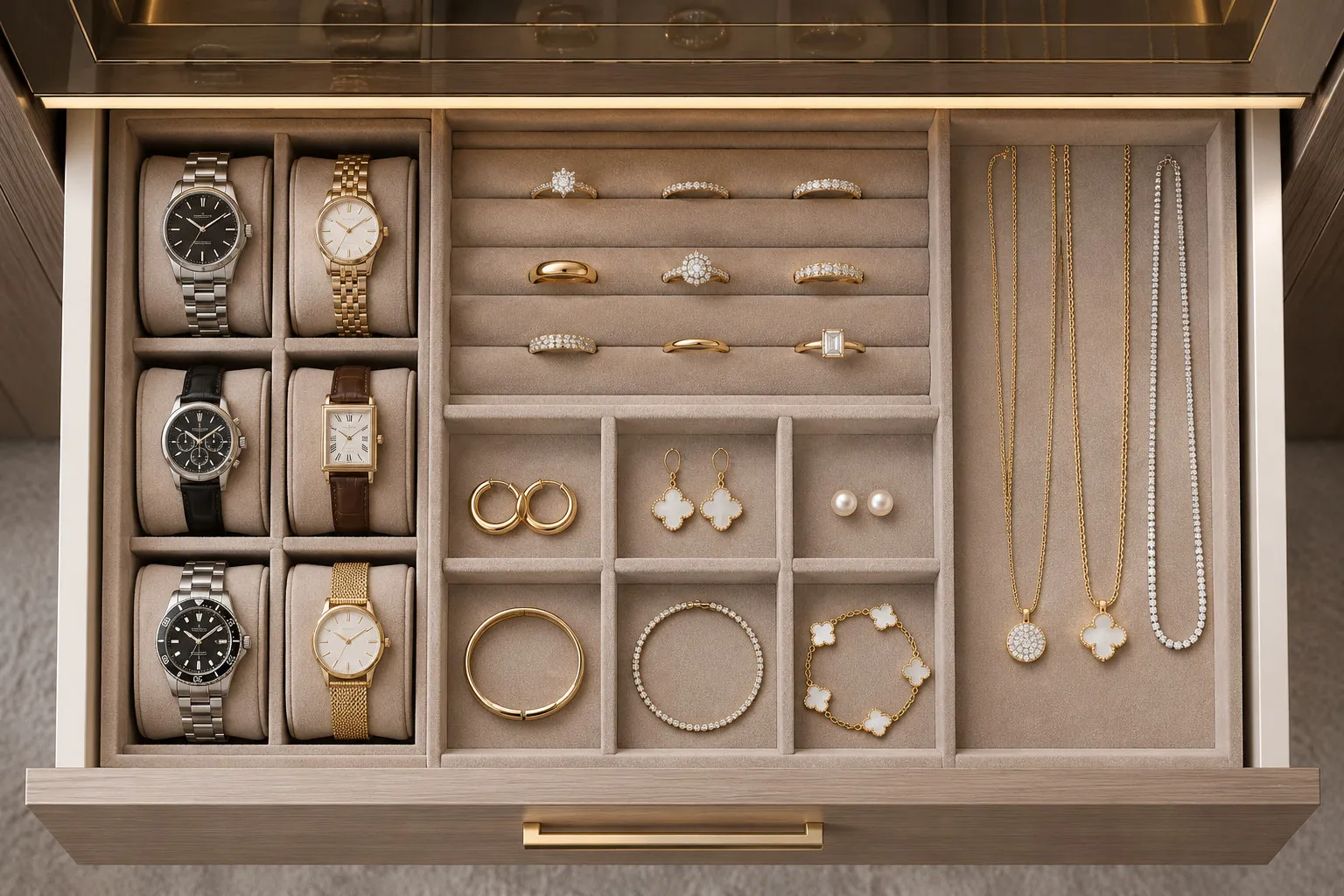
In a made-to-measure wardrobe the cells are cut to your pieces instead of a catalogue tray: a cushion for each watch, a roll or a row of slots for rings, a small grid for earrings, a long cell for chains, a wider one for sunglasses. Our published range includes velvet-lined jewellery drawers, and the dressing unit page shows the same idea at a dressing table. The method is the same in a wardrobe: count first, then size. The drawing below builds one shallow drawer in the order a designer does, and every shape in it is illustrative.
- 1. The tray: a felt-lined layer over the drawer floor so nothing slides or scratches
- 2. Watch cushions: one cell per watch, sized to your biggest case
- 3. Ring roll and grid: rings and earrings each held in their own slot
- 4. Sunglasses cell: a long compartment of its own, lenses up
Watches, rings, chains and sunglasses: one cell for each
Watches go on cushions, not loose, because a bracelet dragged across a glass face scratches it. Make each cell as big as the biggest watch you will own, since a cell that fits today's watch and not next year's is the usual regret. Rings do better in a roll or a row of slots than in a heap, and earrings in a grid that keeps pairs together. Chains and necklaces want a long, shallow cell where they can lie flat or fold once.
Sunglasses are the odd one out: they are taller than a ring and longer than a watch, and a case in the drawer wastes height. If you keep them in cases, give the cases their own deeper drawer under this one; if you keep them out of cases, a cell with a soft floor and a low wall does the job. Our wardrobe pull-out racks guide covers the trouser and basket pull-outs that sit beside this drawer. The wardrobe layout guide explains how a drawer column fits into the whole plan.
Bring a list to the visit: how many watches, how many rings, the tallest box you own, the longest chain. That tally is what sizes the cells, and it is quicker than measuring each piece. If the drawer is also meant for cufflinks, belts or ties, say so; they are different shapes and lengths.
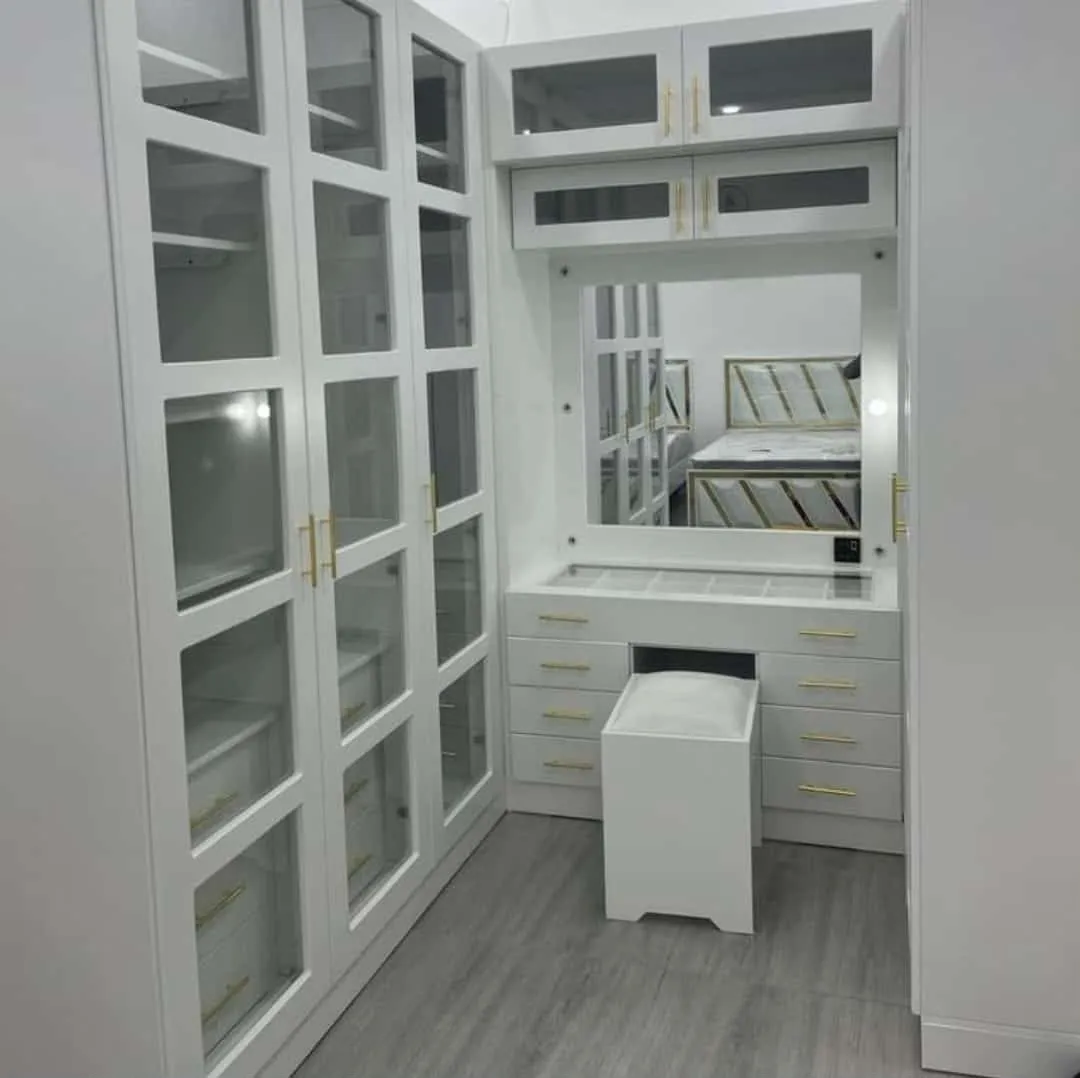
How shallow, and how deep front to back
Two measurements matter: the height inside and the length of the drawer from the front to the back. Height is set by your tallest piece with its lining on top of the drawer floor, so a deep drawer is not safer, only emptier. Length is set by the depth of the wardrobe and the runner, because a drawer cannot be as long as the box it sits in; our wardrobe depth guide shows why, and the drawer length is something to ask for in the quotation.
We do not publish a standard drawer size, because none exists that we could verify and the runner we fit is chosen per job. What we can say from the example above is that a tray can be very low, and that a drawer built around a low tray leaves room for a second shallow drawer above or below it. For a deep wardrobe, a drawer that runs only a part of the way back and leaves a shelf above its rear is another option.
Keeping valuables out of sight
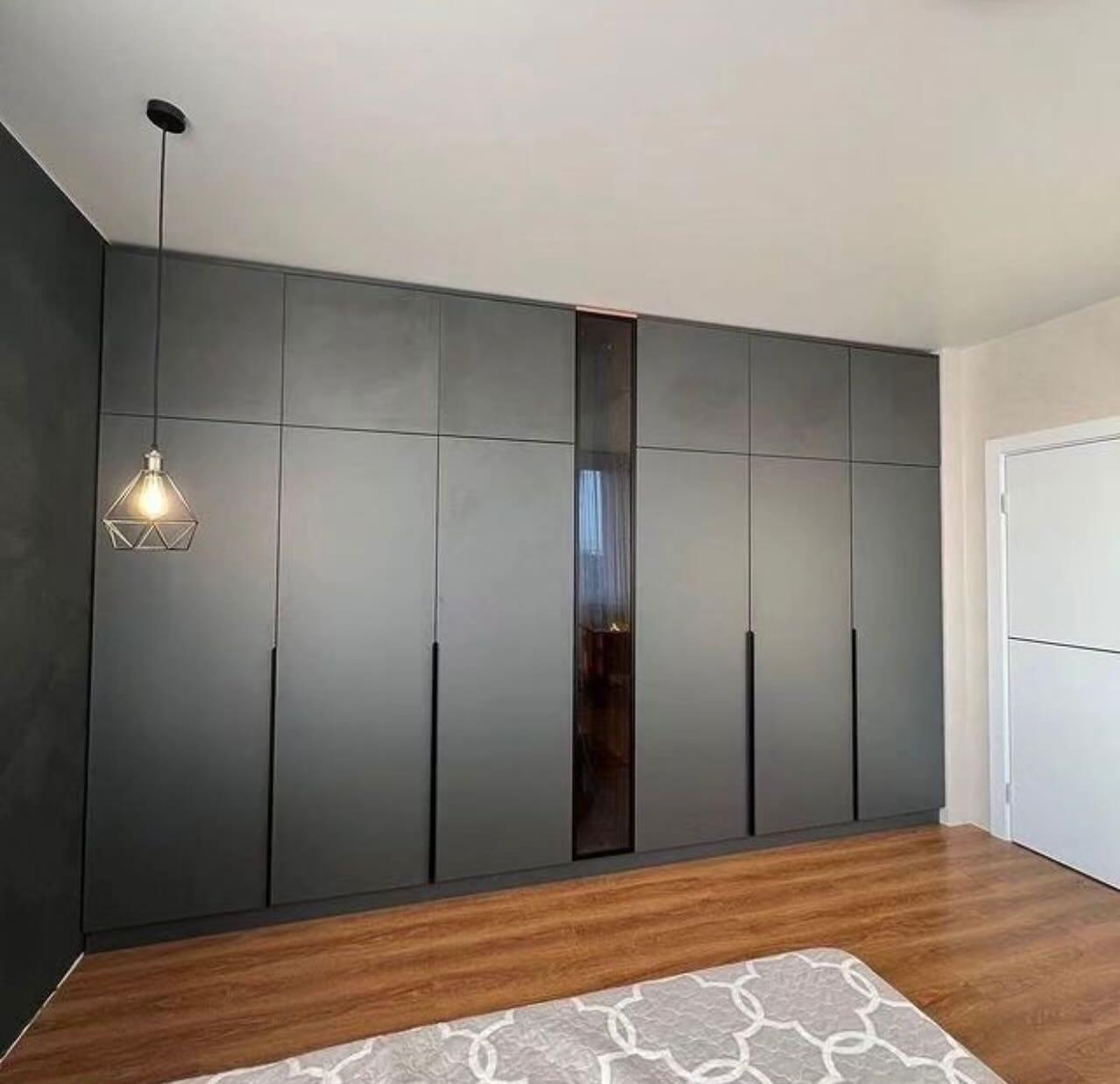
The simplest way to hide a drawer is to make it look like every other drawer. A plain front with the same finish and the same handle as its neighbours, or no handle at all in a handleless wardrobe, says nothing about what is inside, and it is cheaper than a hidden mechanism. Putting the drawer behind a door, so that the door must be opened before the drawer is seen, adds a second layer, and the question of open or closed fronts is weighed in open wardrobe or closed doors.
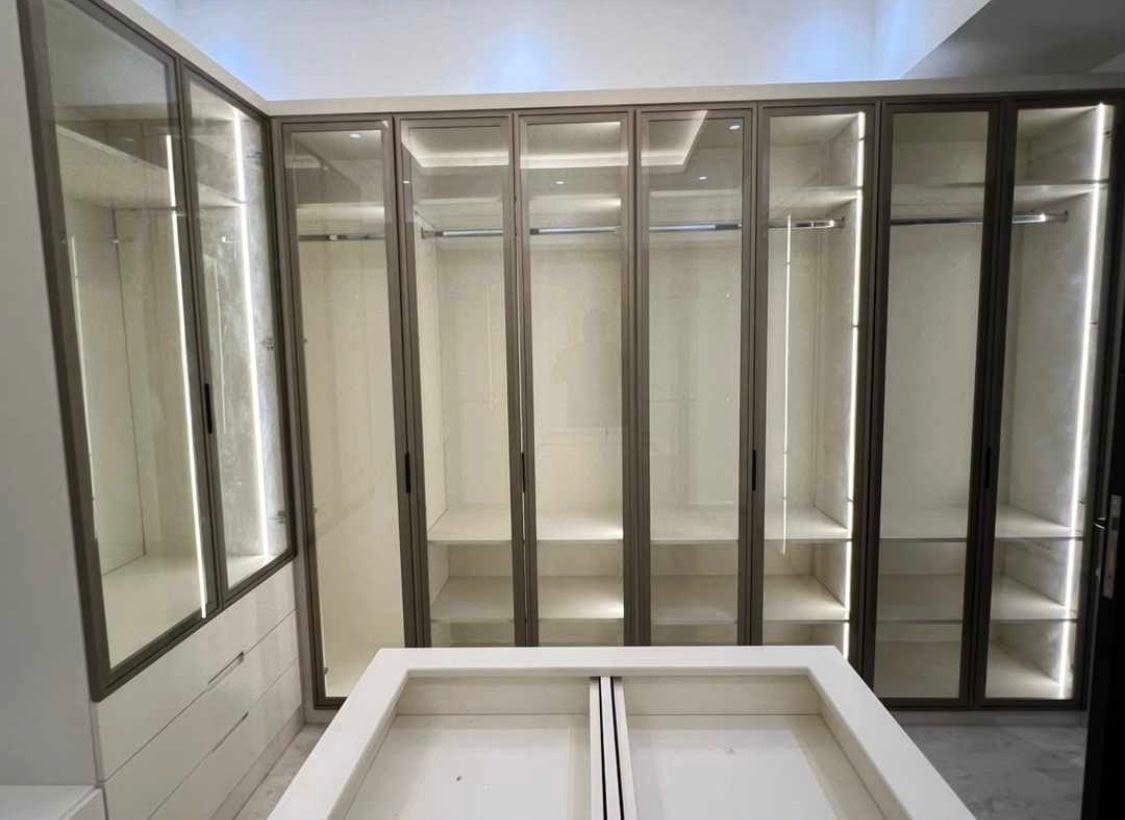
Glass changes the answer. A glass-fronted wardrobe shows what is behind the glass, and the finish of the glass, whether clear, tinted or mirrored, decides how much; see mirror wardrobe doors and the wardrobe door finishes compared page before you decide to put valuables behind it. A display shelf is the opposite choice: it is made to be seen, so keep it for what you want to be seen.
A lockable drawer: a design idea, not a safe
A lock on a wardrobe drawer is a design idea worth raising at the drawing stage, and it is easier to plan before the wardrobe is built than to add after. It keeps a drawer from being opened casually, by a child, a guest or a cleaner, and it does so without changing how the wardrobe looks. It is not a safe: a drawer lock sits in a board cabinet, and the thing it protects against is casual opening, not a determined attempt. Anything you would be badly hurt to lose belongs in a proper safe, which is a separate purchase we do not supply.
We have not published which lock options we fit, so the honest line is to ask what lock options exist for this drawer, and to write the answer into the quotation: the type, where the key or code is, and which drawer the lock belongs to. Ask whether the lock is on the drawer front or the runner, and whether one key can cover more than one drawer. If the wardrobe is shared, say so early, as the shared couple wardrobe guide does for the split of space; one person's locked drawer is another person's missing storage.
Soft-close: worth asking about on this drawer
A drawer of watches is opened often and closed quickly, and a slam is how a bracelet jumps its cell. Soft-close is an option on the runner that slows the last stretch of closing. Blum's MOVENTO range, for example, gives full extension, which its page says gives access to the very back of drawers, and an adaptive soft-close it calls BLUMOTION, which closes wooden drawers softly and effortlessly. That is one maker's range, and we have not said it is what our workshop fits.
So the question for the quotation is plain: is this drawer soft-close, on which runner, and can it be switched off if you prefer a push-to-open front? Soft-close hinges on the doors in front are a separate line; the wardrobe hinges guide covers them, and the drawers and organisers guide covers what a runner's load figure means, so we do not repeat it here.
A lit drawer or a display shelf
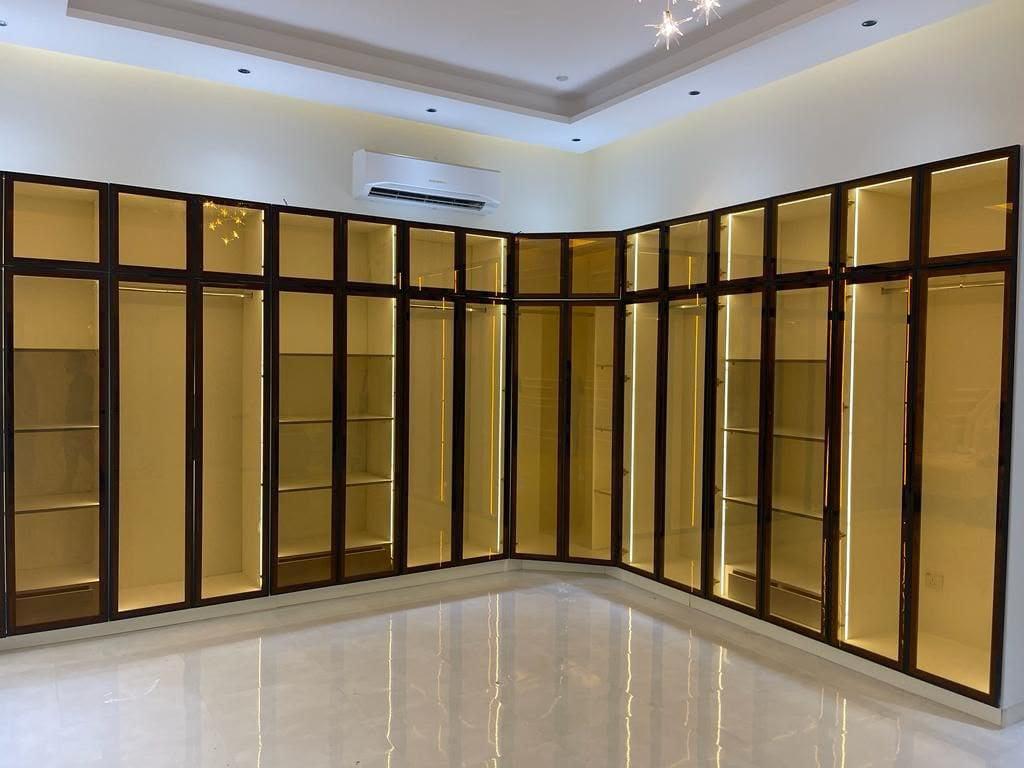
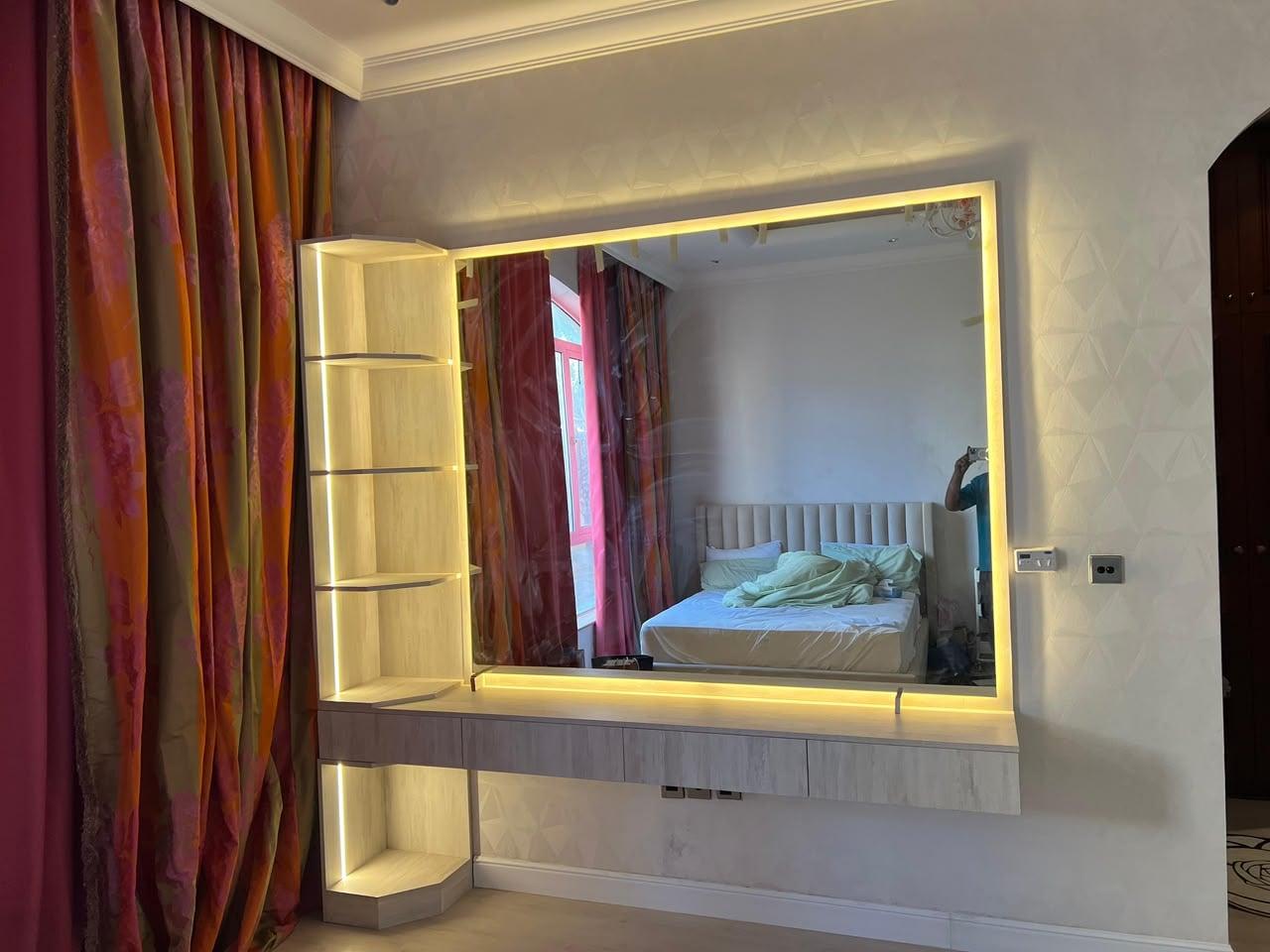
Light helps in two ways: it shows you what is in the drawer without a torch, and it makes a display shelf look finished. Our own team installs internal LED lighting as part of the wardrobe, which can be an integrated strip, a strip on a shelf or in a compartment, or a sensor where it is feasible, in warm or neutral light. Which of those suits a jewellery drawer is worth settling at the drawing: a strip along the front edge of a drawer lights the cells from above when it opens, and a shelf strip lights a small display of watches or bottles.
We keep it simple: one light for the drawer or the shelf, not several, and warm is a common choice for jewellery, though you should judge it on the sample. Our wardrobe lighting ideas page compares the options. Our LED strip or profile guide goes into strips against profiles, and interior lighting ideas covers light across the room. We do not do standalone lighting or socket jobs: the light is part of a wardrobe we are building.
Humidity and tarnish: what a home can do
Silver tarnishes because of sulphur-containing gases in the air, not because it is dirty; the Canadian Conservation Institute says so in its note on storing metals, and recommends relative humidity between 35% and 55% for storing and displaying mixed collections. That is museum guidance for collections and not a home standard, and we cannot tell you your wardrobe's humidity without measuring it, but it is a useful target to keep in mind. Watches and gold are less affected than silver, and anything that sits in a damp wardrobe has a harder time than in a dry one.
The same note advises avoiding wood and wood-pulp products near metal, because they release sulphur compounds and organic acid vapours, and suggests wrapping metal in acid-free unbuffered paper or putting it in acid-free boxes or polyethylene bags. We read that in two ways for a home. First, a lining and an enclosed pouch for silver pieces do more than the drawer board does, so do not rely on the drawer. Second, we make no claim that our drawers or our velvet prevent tarnish; velvet protects against scratches and stops pieces sliding, and that is all we say.
If your wardrobe smells musty or feels damp, fix that first: see why a wardrobe smells musty. Board choice is in moisture-resistant wardrobe boards. A wardrobe on a bathroom or outside wall has its own checks in wardrobe against a bathroom wall. Keep valuables you wear rarely in a closed pouch, not loose in an open tray.
Where to put it: an island, a tower or the wardrobe run
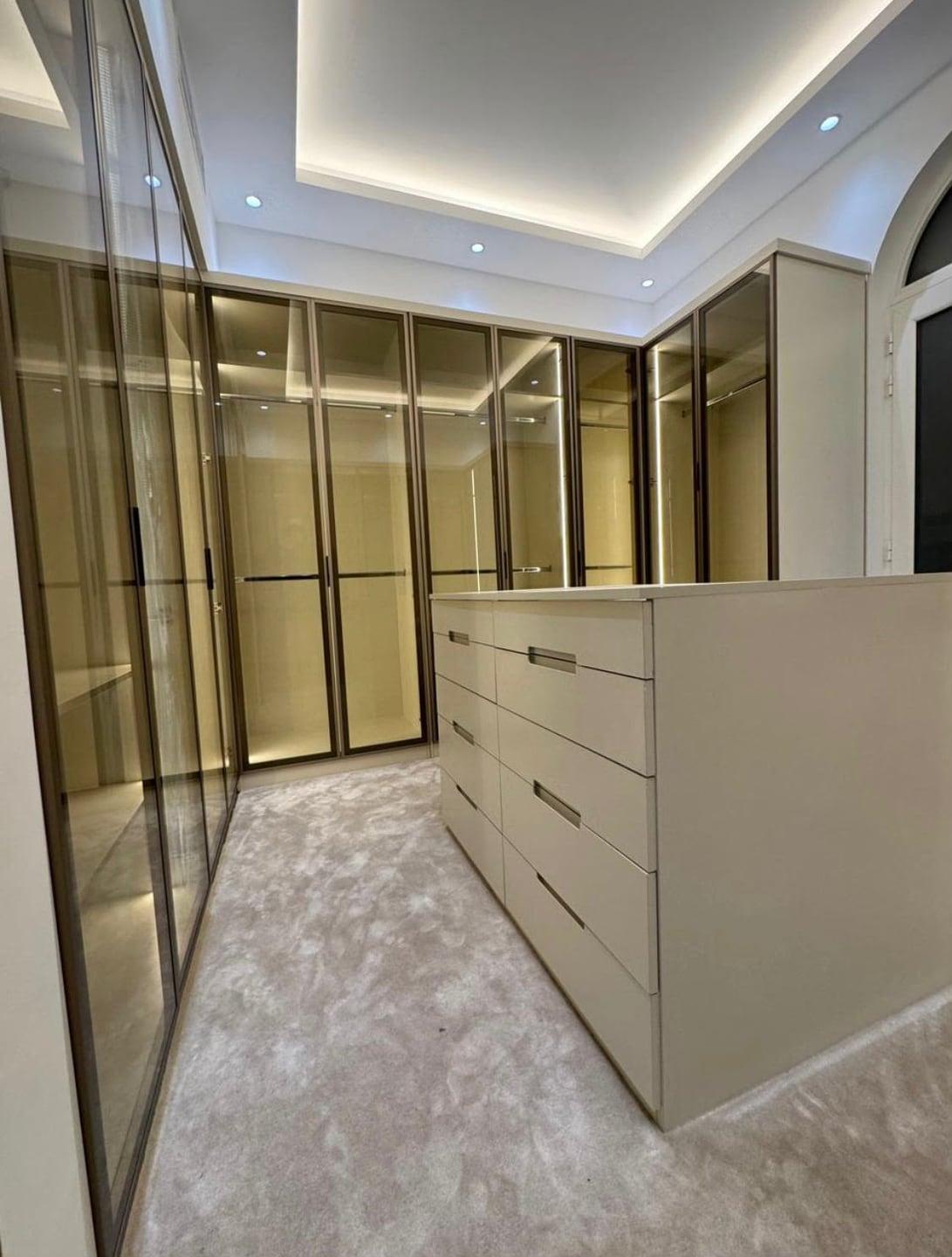
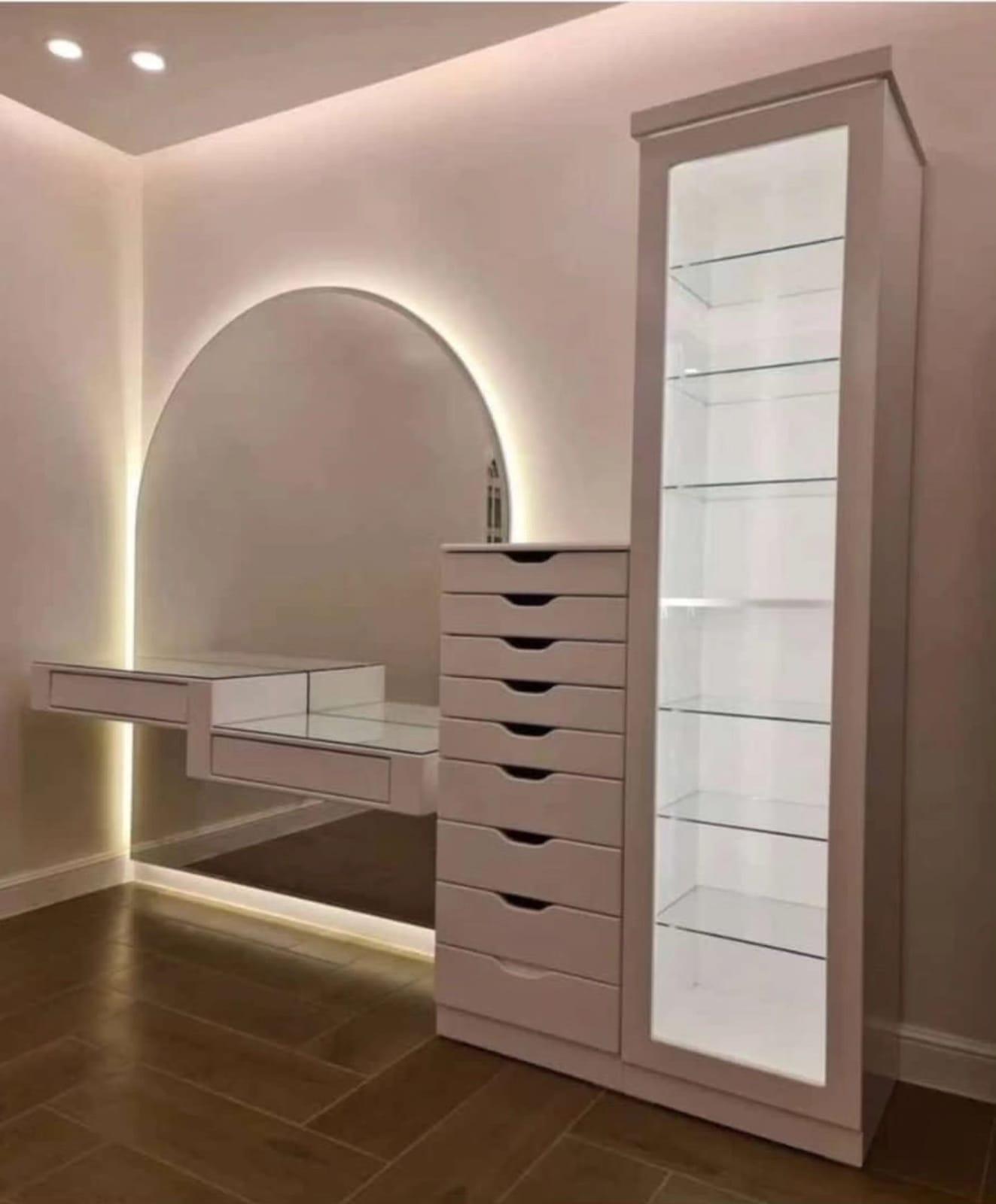
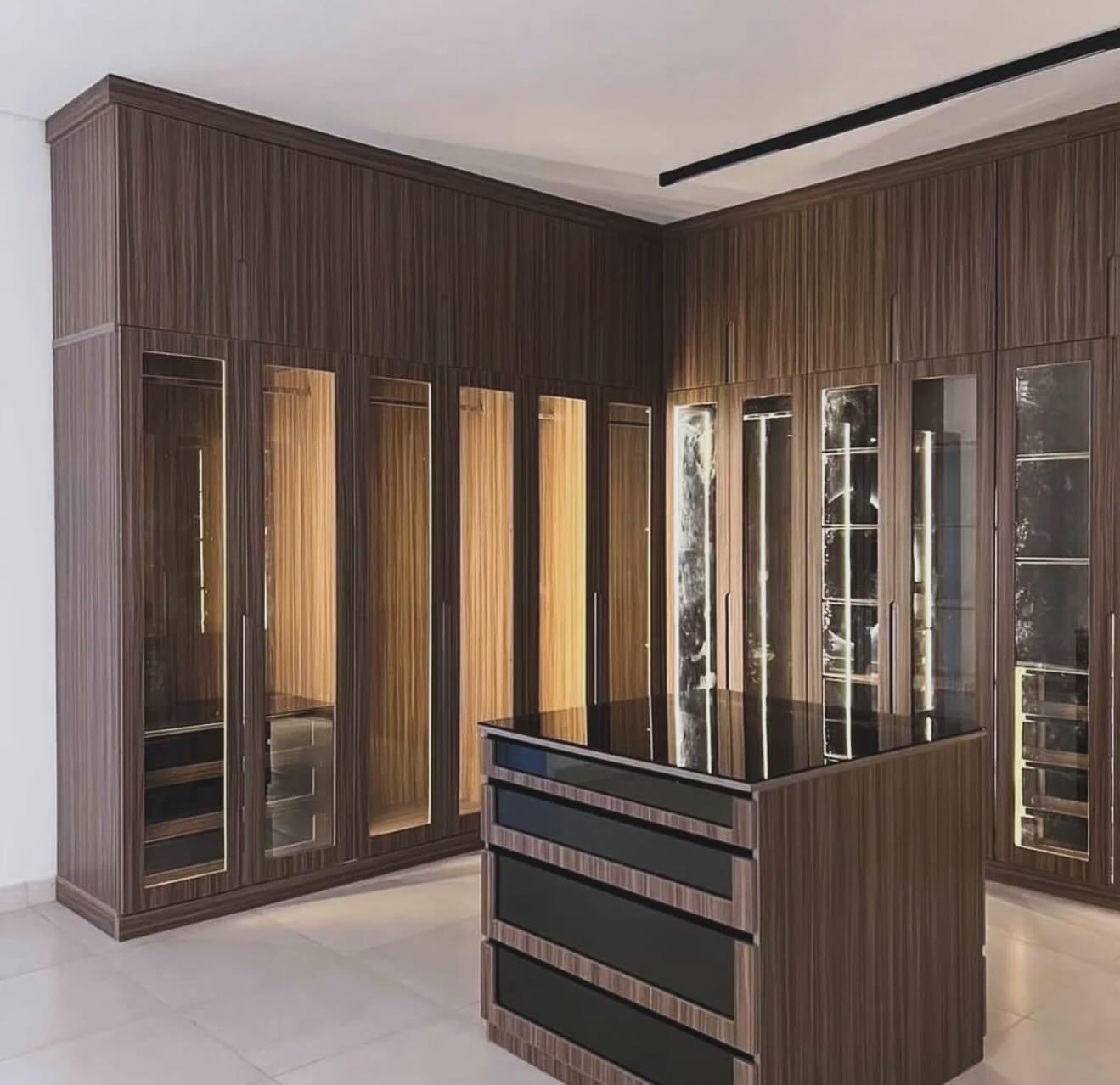
Three places work. In a walk-in, a drawer island puts the shallow drawers at waist height in the middle of the room, under a glass top if you want to see them, and needs clear floor around it; our reach-in versus walk-in wardrobes guide says whether you have the room, and the dressing room design guide works the clearances. A drawer tower is a column of drawers against a wall, with the shallow drawer second or third from the top; it suits a reach-in wardrobe and a narrower room, and the U-shaped walk-in guide shows where a tower can sit in a corner.
The third place is inside the main wardrobe run, in a column that lines up with the hanging bays, at about chest height. It is the most discreet and the least visible, and it suits a master bedroom wardrobe where the drawer sits near the dressing mirror. If you want the drawer beside a vanity, the dressing table inside a wardrobe guide shows how one bay takes both.
Cost thinking, without numbers
Nothing about this drawer has a fixed price on our side, because the price depends on the measured wardrobe, the finish, the number of drawers, the lining, the runner, the lock and the light. What you can do is sort the extras into three groups before you ask: the tray and cells, which most people want; the lock, the soft-close and the light, which are options; and a display shelf or a glass top, which is a design choice. Ask for each as its own line, so you can drop one without redrawing the rest, which is what the wardrobe quotation checklist is for.
The wardrobe itself is priced per sqm of front, and the drawer is an addition to it; how the price is built is in the wardrobe price guide and the wardrobe materials and hardware guide, and the pricing guide shows how a measured wall becomes a quotation. Check what the wardrobe warranty covers too: runners and other moving hardware are not part of the board warranty, which matters for a drawer you open daily.
Questions to put on the quotation for this drawer
Inside height and length of the drawer
- Why it matters
- Sets what fits and how far it opens
- A clear answer looks like
- Two numbers in cm on the drawing
Lining and cell list
- Why it matters
- Defines protection and layout
- A clear answer looks like
- Material named and a cell list from your count
Lock options
- Why it matters
- Not published, so ask
- A clear answer looks like
- A named option, where the key is, which drawers
Runner and soft-close
- Why it matters
- Daily use, noise, load
- A clear answer looks like
- Runner type, soft-close on or off, in writing
Light
- Why it matters
- Where it sits and how it switches
- A clear answer looks like
- Position, warm or neutral, switch type
Position and front
- Why it matters
- Reach and discretion
- A clear answer looks like
- Height from the floor and the front finish
Our entry price of AED 550 per sqm is for MDF laminate with hinged doors, installed; other options raise it and no drawer is included in the published figure. Ask for it in the quotation.
What we do about it
At the free measuring visit we bring samples to the room, measure the wall with a laser and take your list of watches, rings, sunglasses and the longest chain. We then send a drawing and an itemised price, and nothing is made until you approve them. Once the measurements and details are agreed, a 60% advance is paid and production starts when it is received; the remaining stage is agreed with you.
Our entry price is from AED 550 per sqm of wardrobe front, installed, for MDF laminate with hinged doors; other options raise it, and the figure for your wall is set after measurement. Our Sharjah workshop builds the wardrobe and our own team installs it, up to about 10 days depending on size and design, with a 24-month written workmanship warranty (supplied products follow their own terms). Separately, the wood-based boards carry a 5-year limited warranty, subject to terms; hinges, tracks, runners, rollers and other moving hardware are not covered. We have not published our lock options, runner brand or lining material, so ask for them in the quotation.
Start with the free wardrobe measuring visit guide, then book through the consultation form.
Our custom wardrobes service page lists what we make, and the built-in wardrobes page shows finished runs.
Wardrobes with light inside are on the lit glass-front wardrobes page. Installation covers the whole UAE: the Sharjah page gives the workshop address.
Plan the column the drawer sits in with our guide to hanging heights. The Dubai page covers visits there.
For the rest of the interior and the doors in front, our planning guide to the whole wardrobe groups every guide by decision.
Common questions
How deep should a wardrobe jewellery drawer be?
Shallow: tall enough for your tallest case or watch with its lining, and no more. There is no published standard we could verify, so we give no number; for one example, an IKEA jewellery insert is 5 cm high. Ask for the inside height on the drawing. See our wardrobe drawers and organisers guide.
How do I organise watches, rings and sunglasses in one drawer?
Count them first, then cut the cells: a cushion per watch sized to the biggest, a roll or slots for rings, a grid for earrings and a long cell for sunglasses. Bring the list to the visit. See our dressing table storage layout guide.
Can I have a lockable drawer in my wardrobe?
It is a design idea to discuss at the drawing stage. We have not published which lock options we fit, so ask what lock options exist for the drawer and get the answer in writing. A drawer lock is not a safe. See our wardrobe quotation checklist.
Will velvet or felt stop silver tarnishing?
No claim from us: velvet protects against scratches and keeps pieces from sliding. Tarnish is caused by sulphur-containing gases, per the Canadian Conservation Institute, which suggests acid-free paper or polyethylene bags for metal. See our guide to why a wardrobe smells musty.
Is soft-close worth it on a jewellery drawer?
It is worth asking about, since the drawer is opened often and a slam can shift watches. Ask which runner the drawer has, whether soft-close is on, and whether it can be switched off. See our wardrobe hinges guide.
Can you put a light in a wardrobe jewellery drawer or display shelf?
Yes, our own team installs internal LED lighting as part of a wardrobe, in a strip, shelf or compartment, in warm or neutral light. We do not do standalone lighting jobs. See our wardrobe lighting ideas.
Where is the best place for a jewellery drawer: an island or a tower?
An island suits a walk-in with room to walk round it; a tower suits a reach-in or a narrow room; a column in the main run is the most discreet. Pick by the floor you can spare. See our reach-in versus walk-in wardrobes guide.

Sources & specifications
Manufacturer information applies to the named products and systems. Sources reviewed on 4 November 2026.
- Canadian Conservation Institute, CCI Notes 9/2 Storage of Metals (page dated 2025-12-02): relative humidity 35% to 55% for mixed collections; tarnish caused by sulphur-containing gases; avoid wood and wood-pulp products; wrap in acid-free unbuffered paper or use acid-free boxes or polyethylene bagscanada.ca(opens in a new tab)
- IKEA Oman, KOMPLEMENT insert for jewellery: 25 cm wide, 53 cm deep, 5 cm high, felt-lined compartments for rings, necklaces, watches and braceletsikea.com(opens in a new tab)
- Blum, MOVENTO range: full extension to the very back of drawers; adaptive soft-close BLUMOTION; TIP-ON push-to-openblum.com(opens in a new tab)
Want this planned for your home?
Consultation and measurement are free. Tell us the rooms, location and what you need; we arrange a sample visit and define the measured quotation.