Wardrobes · 13 min read · 13 August 2026
Arabic-style wardrobes: lattice, arch, relief and gold detail, and how to use them
An Arabic-style wardrobe borrows lattice, arch, relief and gold-tone detail from traditional design. It suits villas and formal suites, works best with one lead feature, and is quoted after the free measuring visit.

By Ali Haider Basra, Founder, Al Tareeq Decor · Contact our workshop
Key takeaways
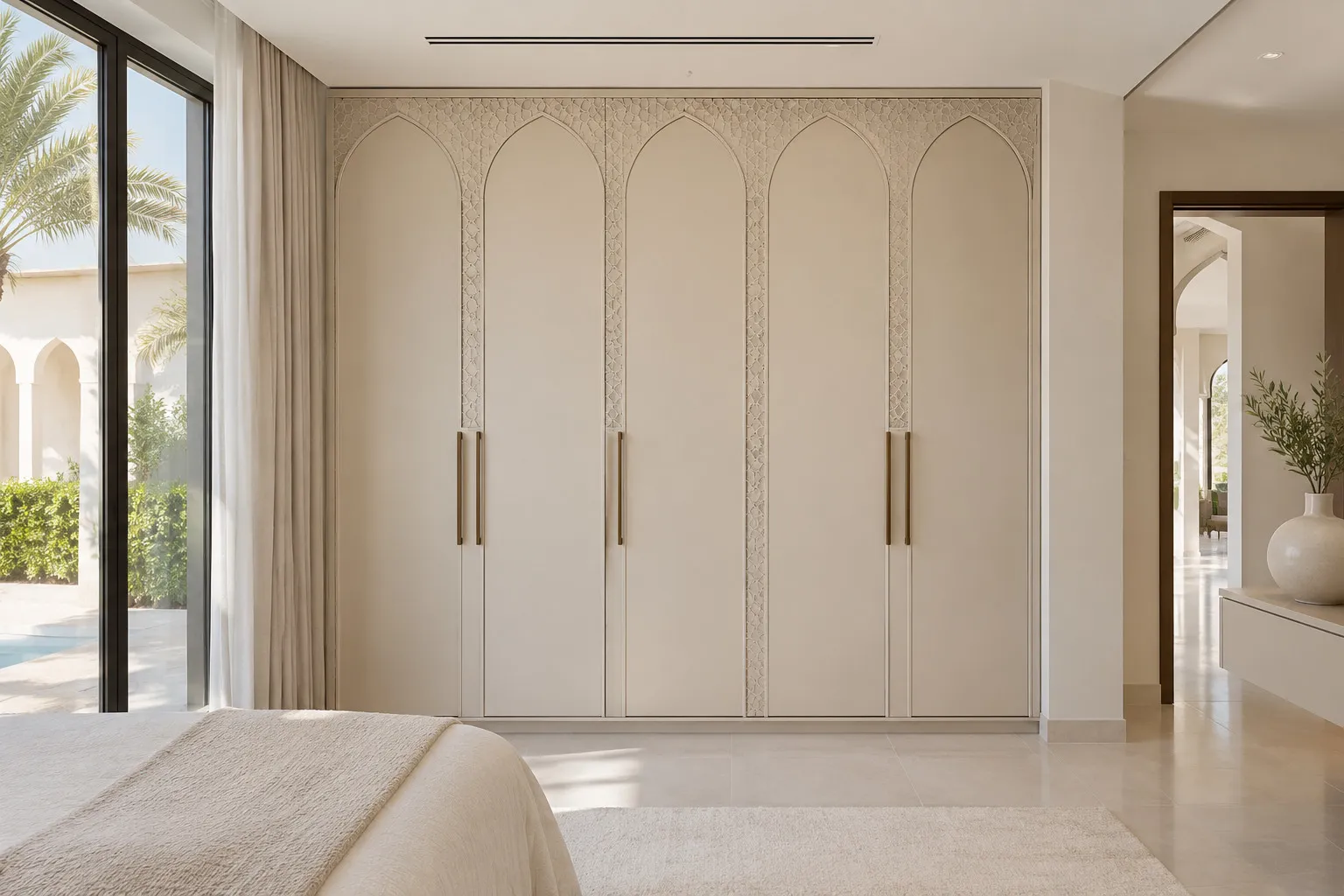
- An Arabic-style wardrobe borrows a few motifs: a mashrabiya-style lattice, an arch, a geometric or floral relief, gold or bronze detail, rich wood and panelled frames.
- It suits villas, formal master suites and rooms next to a majlis; it is usually too much for a small bedroom or a rental.
- Let one feature lead and keep the rest plain. Raking light brings out relief; a raised pattern collects dust.
- We offer traditional and decorative door designs, subject to feasibility on your project; how a relief or lattice is made is confirmed in the quotation.
- Decorated doors cost more than plain ones; our entry price is from AED 550 per sqm for MDF laminate with hinged doors, and decorated doors are quoted after the free measuring visit.
On this page
- Key takeaways
- What an Arabic-style wardrobe is: the short answer
- The design vocabulary: what each motif is and what the sources say
- Arabic-inspired wardrobe motifs: what they are and what to ask
- Where an Arabic-style wardrobe suits
- Restraint: one feature, not everything
- One feature to lead: choosing by room
- Materials and finishes in general terms
- Gold, bronze and rich wood: handles, trim and tone
- Door types: hinged, sliding and glazed
- Lighting that brings out relief
- Cost drivers for decorative doors, without numbers
- Keeping a decorated door clean
- What to ask in the quotation
- Questions for a decorative wardrobe quotation
- What we do about an Arabic-style wardrobe
- Common questions
What an Arabic-style wardrobe is: the short answer
An Arabic-style wardrobe borrows a few decorative ideas from traditional Arabic and Islamic design and puts them on a wardrobe door: a lattice panel, an arch, a geometric or floral relief, gold or bronze detail, rich wood tones, or a panelled frame. The look works best when one of these leads and the rest stay quiet. It suits a villa, a formal master suite or a room next to a majlis, and it is usually too much for a small bedroom.
We offer traditional and decorative door designs, and every design is checked for feasibility on your project. How a particular relief, lattice or arch is made is a workshop detail we do not publish, so ask for it in the quotation. This page is about the vocabulary, where it suits, how much to use, and what to ask. For frame-and-panel doors without ornament, our classic and shaker wardrobe guide is the calmer starting point.
- 1. Lattice: a mashrabiya-style panel, here low on the door
- 2. Arch: the line that frames the top of the door
- 3. Relief: a raised eight-point star that catches light
- 4. Trim: a gold-tone line and a slim handle
- 5. Let one feature lead and keep the rest plain; ask how each is made in the quotation
The design vocabulary: what each motif is and what the sources say
Four ideas come up again and again, and it helps to know what they are before you ask for them. The first is the lattice. Wikipedia's article on the mashrabiya describes it as "a type of projecting oriel window enclosed with carved wood latticework" and says one of its major purposes is privacy. It also records that latticed openings "provided ventilation and light". Notice what that means: a mashrabiya is a window screen. A lattice panel on a wardrobe borrows the look of it, so we call it mashrabiya-style and no more.
The second is the geometric pattern. Wikipedia's article on Islamic geometric patterns calls them "one of the major forms of Islamic ornament", names the 8-pointed star as "a recurring motif" and lists polygons such as pentagons and octagons among the basic shapes. That is why the star in our drawing has eight points. The same article captions a doorway with the words "The arch is surrounded with arabesques", and says arabesques are often combined with geometric patterns. Arabesque is the flowing, floral line; the two ideas often share a surface.
The third and fourth are not from those pages: gold or bronze detail and rich wood tone are materials and colour choices rather than motifs, and we describe them as design options, not as rules of any tradition. We cannot source a claim about what is "authentic" or which period or place a motif belongs to, so this page makes none. Our own site uses khatam and mashrabiya patterns in its design language, which is one reason we can talk about them with some care, but that is a trade habit, not a historical statement.
Arabic-inspired wardrobe motifs: what they are and what to ask
Mashrabiya-style lattice
- What it is
- A pattern of crossing bars borrowed from carved wood screens
- On a wardrobe door
- A lattice panel, often one section of the door or a glazed leaf
- Ask us
- What sits behind the lattice, and how is it cleaned?
Arch
- What it is
- A curved top line
- On a wardrobe door
- An arched top or a drawn arch line within a straight door
- Ask us
- Is a curved top feasible on this run, and how does the door swing?
Geometric relief
- What it is
- A star or polygon pattern raised from the surface
- On a wardrobe door
- A medallion or a repeat pattern across one panel
- Ask us
- How is the relief made, and how is it finished?
Floral or arabesque relief
- What it is
- A flowing plant-like line
- On a wardrobe door
- A softer panel pattern, often with a gold-tone line
- Ask us
- Can the pattern be kept shallow and easy to dust?
Gold or bronze detail
- What it is
- A warm metallic colour
- On a wardrobe door
- Handles, trim lines, frames or inlay-style lines
- Ask us
- Is the detail solid, plated or painted?
Panelled frame
- What it is
- A frame round a recessed panel
- On a wardrobe door
- Framed doors in a rich wood tone or paint
- Ask us
- How is the frame built and finished?
Our own planning comparison, with motif meanings taken only from the pages named in Sources. Which designs we can make for your room is confirmed at the measuring visit and in the quotation.
Where an Arabic-style wardrobe suits
The look needs room and some architecture around it. In a villa suite with generous ceiling height, an arched or panelled door has the space to read as a feature. A formal master suite suits it because the wardrobe is a visible wall, not a hidden one; our master bedroom wardrobe design guide and the villa master wardrobe page set out the order of decisions for a large room. A dressing area off a majlis or a formal sitting room is another natural place, because the surrounding furniture usually has the same richness; see our majlis seating upholstery guide for how that furniture is planned.
It also suits a long wall where a single decorated door acts as a focal point. A tall run is easier to handle when the ceiling is closed neatly, which floor-to-ceiling wardrobes explains. If the room has a gypsum ceiling with a lit edge, the two should agree; gypsum ceiling lighting basics shows how that edge is planned.
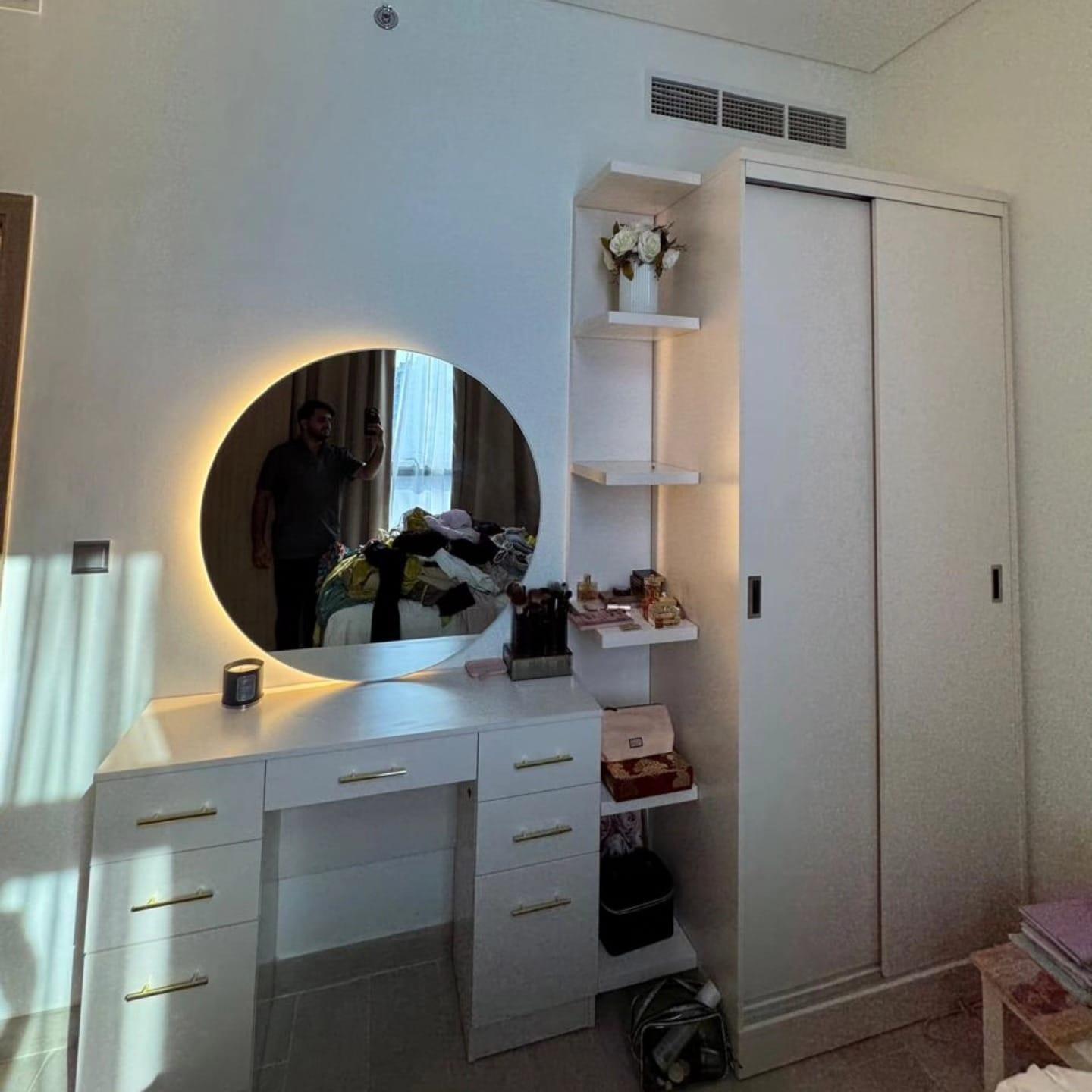
It is the wrong choice for a small room, a rental, or a space where the door swings close to a bed. Ornament adds visual weight, and a deep relief adds thickness. Start instead from small bedroom wardrobe ideas or rented apartment wardrobes; both keep the door plain.
Restraint: one feature, not everything
The commonest mistake is to use every motif at once: a lattice, an arch, a star, a gold border and a carved cornice on the same wall. Each is attractive alone; together they compete, and the wardrobe looks heavy rather than rich. Pick one feature to lead and let the rest support it quietly.
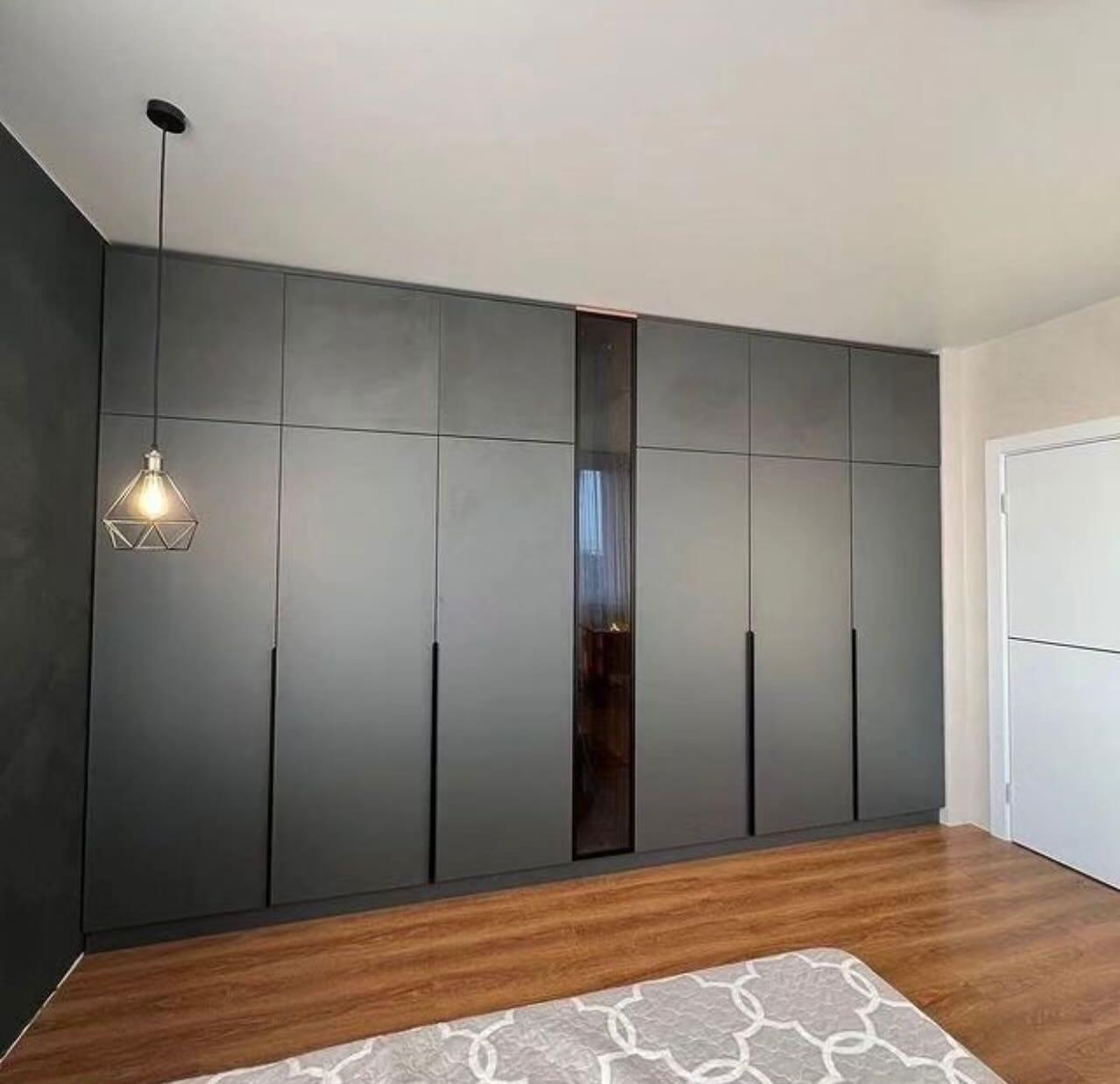
Three combinations are easy to keep balanced. First, a plain wall of doors in a rich wood tone with one lattice leaf at eye level. Second, a run of quiet framed doors with an arched top over the central bay only. Third, flat doors with a single relief panel and a thin gold-tone line. In each case the plain doors give the decorated one its meaning. A wardrobe wall that is decorated everywhere has no focal point left.
Match the rest of the room. If the bed, the curtains and the ceiling are already ornate, make the wardrobe the plainest object in the room; our wardrobe colour combinations guide helps you choose tones that agree with the surroundings. If the room is simple, a single decorative door brings it to life.
One feature to lead: choosing by room
Villa master suite
- Lead feature
- Arched central bay or relief panel
- Keep plain
- Side doors in a rich wood tone
- Avoid
- A decorated door in every bay
Formal sitting room or majlis-adjacent dressing area
- Lead feature
- Lattice leaf at eye level
- Keep plain
- Frames and trim
- Avoid
- Lattice, arch and relief together
Large family bedroom
- Lead feature
- Gold-tone line or handles
- Keep plain
- Door faces
- Avoid
- Deep relief that collects dust
Small bedroom
- Lead feature
- A single slim detail, if any
- Keep plain
- Everything else
- Avoid
- Arches and bulky mouldings
Our own planning suggestions, not rules: the right choice depends on the room, which we check at the measuring visit.
Materials and finishes in general terms
We publish a short list of door surfaces: MDF with laminate, wood veneer, lacquer, and slim aluminium frames holding grey or bronze tinted tempered glass, as well as mirror doors. We also make painted and spray-painted fronts, wood-look finishes, and traditional and decorative designs, all subject to feasibility on your project. Which of them can carry a relief or a lattice, and how, is not published, so ask for it in the quotation.
In general terms, a veneer shows real wood grain and suits the rich tones this look often uses; painted or lacquered MDF takes colour well and suits a relief that should read as one smooth surface; a glass leaf with a tinted pane can sit behind or beside a lattice. Wardrobe door finishes compared sets out veneer, laminate and lacquer side by side, and sprayed wardrobe doors explains what spray finishing involves. For sheen on a relief, matt versus gloss wardrobe doors compares the two.
Wikipedia's article on frame-and-panel construction says flat panels are "commonly made from man-made materials such as MDF or plywood". That is a general woodworking statement, not a description of our method, and it is the only construction claim we make here. A bronze tinted glass leaf is listed on our own wardrobe pages; the wardrobe glass privacy guide explains clear, tinted, frosted and reeded glass.
Gold, bronze and rich wood: handles, trim and tone
Gold-tone and bronze detail is the lightest way to make a wardrobe feel Arabic-inspired. A slim handle, a thin trim line or a bronze-tinted glass leaf adds warmth without adding thickness. Keep the metal detail consistent: one tone across the wall, not three. The wardrobe handles guide covers handle types and heights, so we do not repeat them here.
A rich wood tone, such as a deep walnut-look or a warm brown, gives a decorated door a calm base. Dark finishes show every fingerprint and dust line, so a matt surface is usually kinder than a gloss one. If you want the doors to stay lighter, a cream or sand tone with a gold-tone line reads as formal without the weight of dark wood. Colour sample decisions are best made at the measuring visit, against your floor and wall.
Door types: hinged, sliding and glazed
A decorated door usually works best as a hinged door. A hinged door is a single face you see whole when it is closed, and it lets a relief or an arched top read as one shape; how many hinges a door needs explains why tall, heavy decorated leaves need more support. It also needs swing room, which wardrobe door clearance covers.
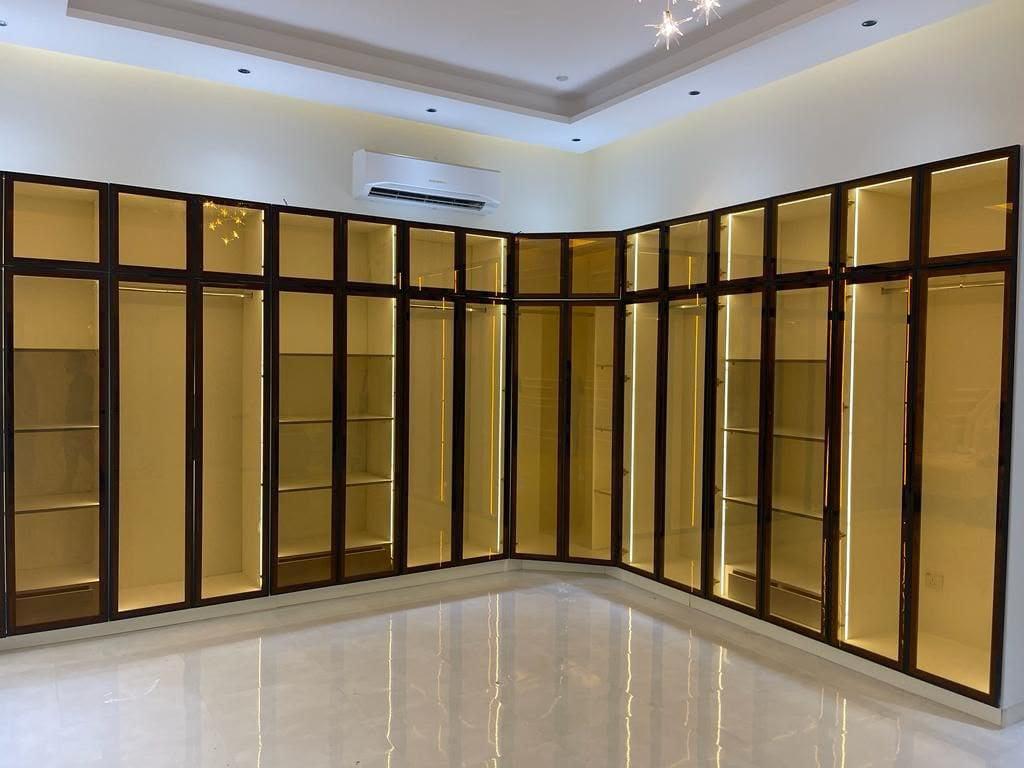
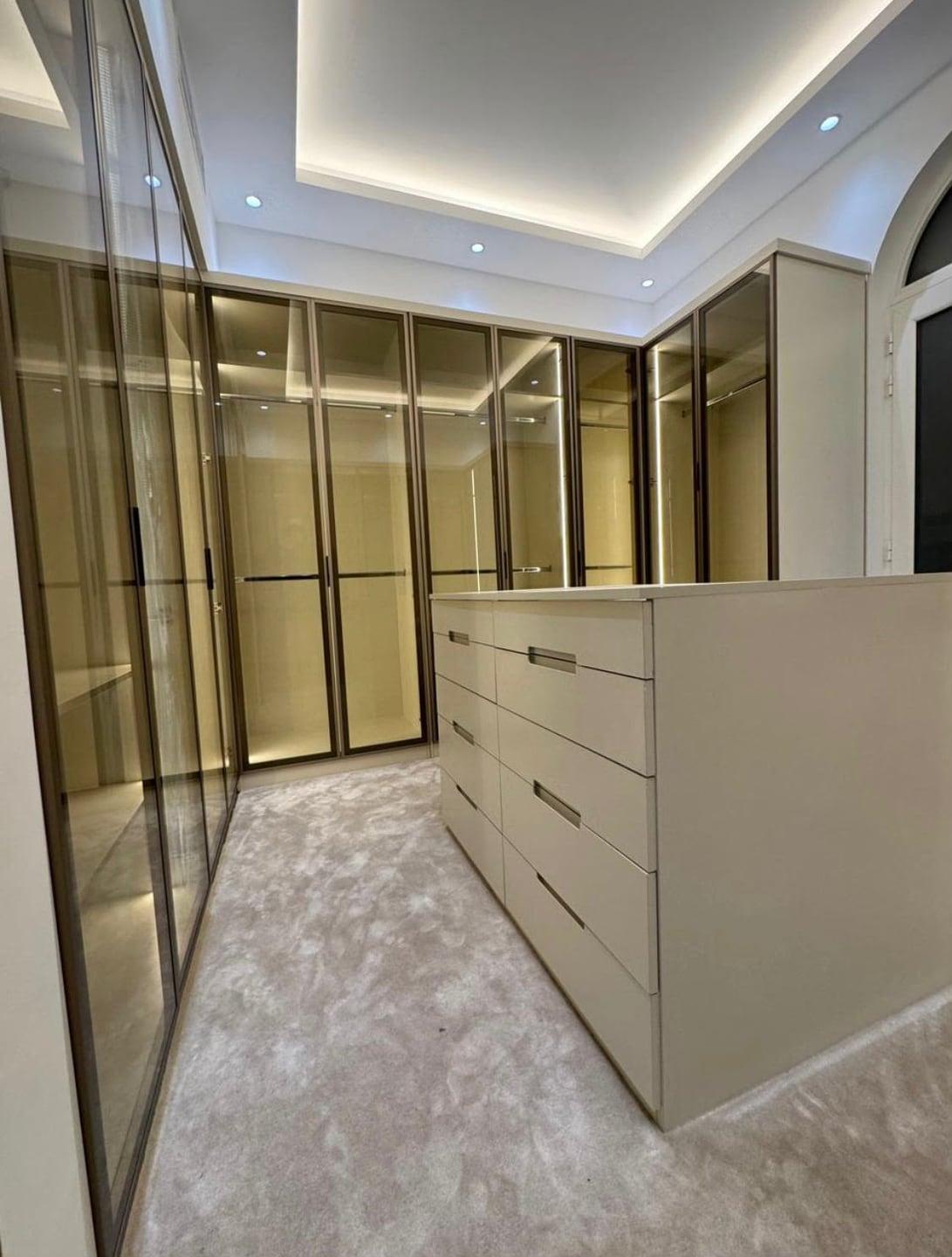
A sliding door saves floor space but hides half the wardrobe at a time and sits on a track, so a relief can scrape or a curved top cannot be used in the same way. If a sliding door is a must, ask whether a lattice or a relief can be applied to the leaf; sliding door systems explains what a leaf is hung on. A glazed leaf is a third option: our lit glass-front wardrobes show glass in aluminium frames, and a lattice-style pattern is one way to give such a leaf more character. We have not published whether a lattice can be built into a glass leaf, so ask.
Lighting that brings out relief
Relief needs light that skims across it. A raised pattern shows its depth through the shadows it casts, and light that falls straight onto the face flattens it. A light placed above the door, or to one side, makes the raised parts catch the light while the recessed parts stay in shadow; light directly in front gives an even, flat look. Warm light suits gold-tone and bronze detail and rich wood; cool light can make them look grey.
Lighting inside the run is a separate choice, and a lattice leaf can let a glow show through, which is why you should decide the two together. Wardrobe lighting ideas and LED strip versus profile cover the options; our team installs internal LED lighting, and we do not offer standalone lighting jobs. For a feature that is lit from above, media wall lighting ideas shows the same light-and-shadow thinking on a different wall.
Cost drivers for decorative doors, without numbers
Decorated doors cost more than plain ones, but we publish no figure for them. What moves the quotation is how many doors carry decoration, how deep and detailed the relief is, the surface (veneer, lacquer and painted fronts take more work than laminate), the metal detail, glass or mirror leaves, the curved top, and the lighting. A single decorated door among plain ones costs less than a full wall of them.
Our published entry specification is from AED 550 per sqm, installed, for MDF laminate with hinged doors. A decorated door is a different specification, so ask for the figure in the quotation after the free measuring visit. Wardrobe materials and cost and wardrobe prices in the UAE explain what moves a price.
Keeping a decorated door clean
Any raised pattern and any lattice collects dust. A soft, dry brush now and then clears it from the grooves, and a soft damp cloth is enough for flat areas; avoid harsh cleaners on gold-tone or painted detail until you have tried a hidden spot. A shallow, rounded relief is easier to keep clean than a deep, sharp one.
Check the door alignment twice a year, because a heavy decorated door drifts more than a light one; wardrobe doors that stick or rub explains what to adjust. If a door is chipped or the finish is worn, wardrobe door replacement shows the options.
What to ask in the quotation
A decorated wardrobe is where a vague quotation causes the most trouble, because the details are the product. Put these questions in writing before you approve the drawing, and compare answers the way our wardrobe quotation checklist suggests.
Questions for a decorative wardrobe quotation
Design
- Ask
- Which of these designs is feasible on my wall, and can I see a drawing with the decorated doors marked?
Making
- Ask
- How is the relief, lattice or arch made and finished? (We do not publish this.)
Surface
- Ask
- What is the door surface: veneer, lacquer, painted or laminate, and what sheen?
Detail
- Ask
- Are the gold-tone or bronze parts solid, plated or painted?
Behind the lattice
- Ask
- What sits behind a lattice leaf, and how is it cleaned?
Doors
- Ask
- Hinged or sliding, how many hinges, and what swing room is needed?
Lighting
- Ask
- Can internal LED lighting be added, and where does it sit?
Price
- Ask
- What is the price per decorated door, and which items are itemised?
Warranty
- Ask
- What does the 24-month workmanship warranty cover, and what is excluded from the board warranty?
A starting list; add anything specific to your room.
What we do about an Arabic-style wardrobe
We make traditional and decorative door designs, and each design is checked for feasibility on your project. We build the wardrobe in our Sharjah workshop in Al Shuwaiheen, and our team installs it across the UAE. The free measuring visit comes with samples; we send a drawing and an itemised price that you approve before production. The wardrobe measuring visit guide explains what we check.
After measurements and details are agreed, a 60% advance is paid and production starts once it is received; the remaining stage is agreed with you. Allow up to about 10 days, depending on size and design. The workmanship carries a 24-month written workmanship warranty; wood-based boards carry a separate 5-year limited warranty that does not cover hinges, tracks, runners, rollers or other moving hardware, labour, misuse or accidental or deliberate damage. The wardrobe warranty guide explains the two.
Our built-in wardrobes and sliding door wardrobes pages show finished work, and the Sharjah, Dubai and Abu Dhabi wardrobe pages show where we work. To talk it through, book a free measuring visit, bring a photo of the look you like, or start from the custom wardrobes page.
For the sizes, doors and interior behind the design, the complete guide to UAE wardrobes links a guide for each step.
Common questions
What is an Arabic-style wardrobe?
It is a wardrobe that borrows decorative ideas such as a lattice panel, an arch, a geometric or floral relief, gold or bronze detail, rich wood and panelled frames. We offer traditional and decorative door designs, subject to feasibility. See our custom wardrobes page.
What is a mashrabiya-style wardrobe door?
A mashrabiya is a projecting window enclosed with carved wood latticework, and a mashrabiya-style door borrows the lattice look for a wardrobe panel. Ask what sits behind the lattice and how it is made. See our lit glass-front wardrobes.
Is an Arabic-style wardrobe suitable for a small bedroom?
Usually not. Ornament adds visual weight and relief adds thickness, so a plain door with one slim detail is calmer. See our small bedroom wardrobe ideas.
How do I stop a decorative wardrobe looking too busy?
Let one feature lead, such as a lattice leaf, an arched bay or a relief panel, and keep the other doors plain. See our classic and shaker wardrobe guide.
What lighting shows off a relief door?
Light that skims across the surface, from above or from one side, so the raised parts catch light and the recesses stay in shadow. Warm light suits gold-tone detail. See our wardrobe lighting ideas.
Do decorative wardrobe doors cost more?
Yes, we expect they do, but we publish no figure; our entry price is from AED 550 per sqm for MDF laminate with hinged doors, and decorated doors are quoted after the free measuring visit. See our wardrobe price guide.
What should I ask in the quotation for a decorative wardrobe?
Ask how the relief or lattice is made and finished, what the door surface is, whether the gold-tone parts are solid, plated or painted, and what the price per decorated door is. See our wardrobe quotation checklist.

Sources & specifications
Manufacturer information applies to the named products and systems. Sources reviewed on 4 November 2026.
- Wikipedia, Mashrabiya (a projecting oriel window enclosed with carved wood latticework; privacy, light and ventilation)en.wikipedia.org(opens in a new tab)
- Wikipedia, Islamic geometric patterns (a major form of Islamic ornament; the 8-pointed star; polygons; arabesques combined with geometry)en.wikipedia.org(opens in a new tab)
- Wikipedia, Frame and panel (a floating panel within a frame; flat panels commonly MDF or plywood)en.wikipedia.org(opens in a new tab)
Want this planned for your home?
Consultation and measurement are free. Tell us the rooms, location and what you need; we arrange a sample visit and define the measured quotation.