Wardrobes · 13 min read · 26 August 2026
How to clean and care for wardrobe surfaces: laminate, veneer, glass, mirror and tracks
How to clean and care for wardrobe laminate, lacquer, veneer, glass, mirror, aluminium frames, handles and sliding tracks, with what each maker page says to avoid, a monthly and yearly routine, and when a mark is damage.

By Ali Haider Basra, Founder, Al Tareeq Decor · Contact our workshop
Key takeaways
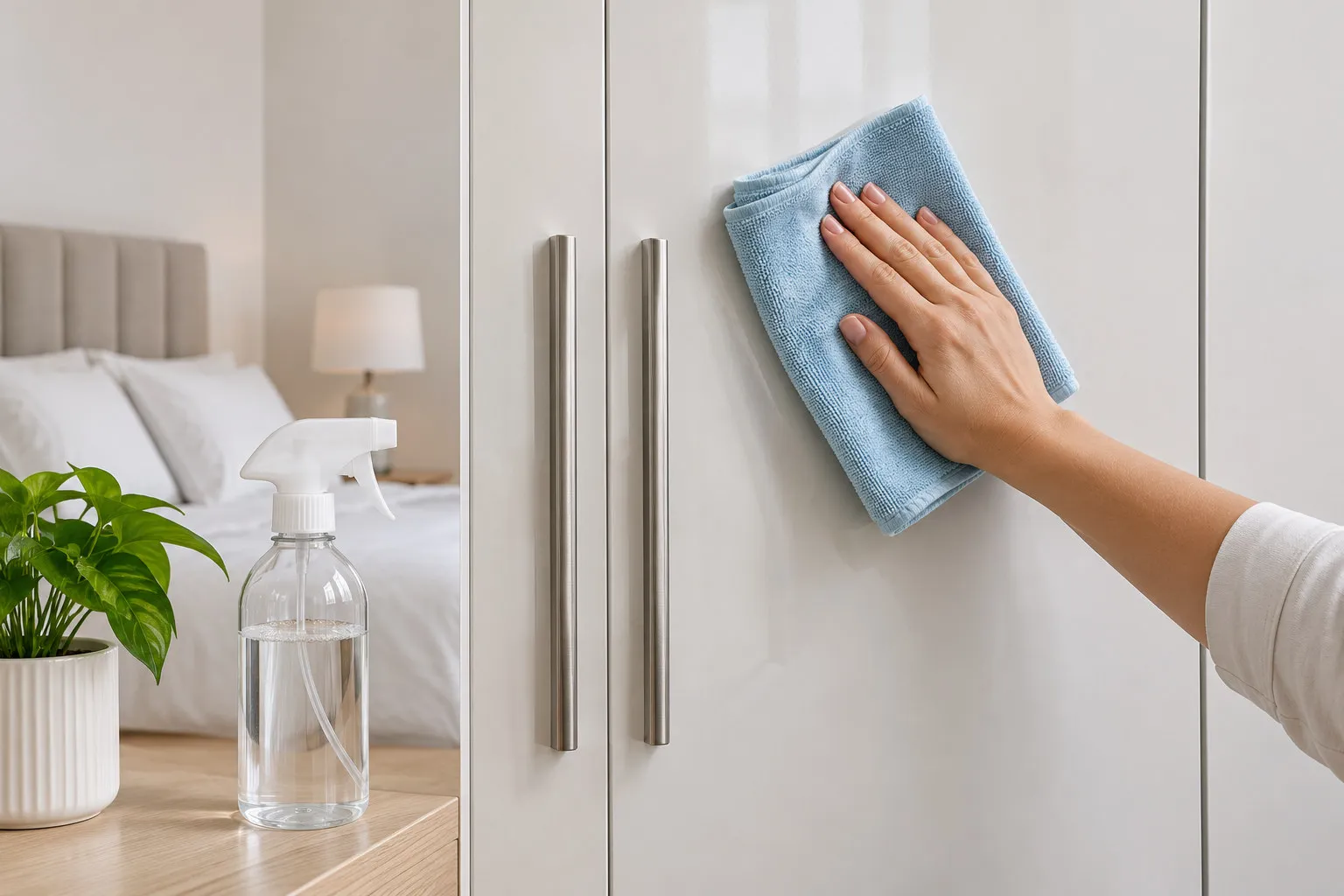
- For almost every surface: dust dry, wipe with a soft, slightly damp cloth, dry at once, and test anything stronger on a hidden spot.
- What differs is what to avoid: scouring powder, steel wool, polish, bleach and steam on laminate and lacquer; a soaking cloth on veneer; dry rubbing on glass; wire on aluminium.
- Vacuum the bottom track and wipe the runners monthly; a stiff door after cleaning is a repair question, not a cleaning one.
- Every maker page is for its own product, and two sheets from one maker can disagree, so ask for the care sheet of your exact finish.
- Misuse and accidental damage are not covered by the board warranty; the 5-year limited board warranty excludes moving hardware.
On this page
- Key takeaways
- The short answer: dry first, damp second, nothing harsh
- Surface by surface, in one table
- Watch the surfaces light up, one method at a time
- Laminate and board faces: soft cloth, warm water, no scouring
- Lacquered and sprayed doors: moisture off at once, no alcohol
- Veneer: damp, not wet, and wipe along the grain
- Glass, tinted glass and mirror: lots of cleaner, a clean cloth, no dry rubbing
- Aluminium frames, handles and hinges
- Tracks and runners: vacuum, wipe, move
- Edges, water and humidity
- Dusting the inside
- A monthly and yearly routine
- A care routine for a wardrobe
- When a mark is damage, and what the warranty says
- What we do about care
- Common questions
The short answer: dry first, damp second, nothing harsh
For almost every wardrobe surface the method is the same: dust it dry, wipe it with a soft cloth that is only slightly damp, dry it at once, and test anything stronger on a hidden spot. What changes from surface to surface is what you must not do. Every maker page we opened for this guide was written for that maker's own product, so none of it is a promise about our doors; where a finish has its own care sheet, that sheet comes first, and we say below how to ask for it.
This page is the care manual: what to use on each part of a wardrobe, how often, and when a mark means damage. Which finish to choose is a different question, answered in our wardrobe door finishes comparison. The fingerprint side of matt and gloss is in matt versus gloss wardrobe doors.
Surface by surface, in one table
Laminate or board face
- Method
- Soft, slightly damp cloth; warm water; dry with a microfibre cloth
- Avoid
- Scouring powder, steel wool, polish, wax, bleach, steam
- Where the advice comes from
- EGGER leaflet, rev. 02, 22 May 2026 (its own surfaces)
Lacquered or sprayed face
- Method
- Soft cloth moistened with warm water; wipe moisture off at once
- Avoid
- Alcohol, ammonia, bleach, scouring pads, steam
- Where the advice comes from
- EGGER PerfectSense sheet (that board only)
Veneer
- Method
- Slightly damp, soft, lint-free cloth, then dry along the grain
- Avoid
- Aerosol cleaners and polishes, a soaking cloth, direct sun
- Where the advice comes from
- Herman Miller veneer care sheet (its own products)
Glass and tinted glass
- Method
- Flood with cleaning solution, wipe with a clean lint-free cloth, dry
- Avoid
- Rubbing dust dry, metal scrapers on tempered glass
- Where the advice comes from
- Pilkington ATS-144 (clear and tinted glass)
Mirror
- Method
- Treat as glass and check the maker's sheet
- Avoid
- Unknown products: we found no mirror care page to quote
- Where the advice comes from
- No source opened; ask for the sheet
Aluminium frames
- Method
- Soft cloth in warm soapy water
- Avoid
- Harsh or corrosive cleaners, steel wire sponge, sharp tools
- Where the advice comes from
- Alumil frame tips (its own frames)
Handles and hinges
- Method
- Mild detergent and warm water, then dry
- Avoid
- Solvents, gritty or abrasive cleaners
- Where the advice comes from
- Stegbar wardrobe care page
Tracks and runners
- Method
- Vacuum the bottom track, wipe it, keep the runners clear
- Avoid
- Forcing a door over grit
- Where the advice comes from
- Stegbar wardrobe care page
Each row is one maker's advice for its own product, not a rule for every finish and not a statement about our doors. When two sheets disagree, the sheet that came with your finish wins.
Watch the surfaces light up, one method at a time
The drawing below is an illustrative wardrobe front. The surfaces light up one by one, each with the method that suits it: dry dust for the whole front, a damp wipe for the doors, a glass cloth for the panel, a vacuum for the track. The colours are only a code for the method; they are not our products' finishes, and nothing on the drawing says how our finishes behave.
- 1. Dry first: dust the whole front and the top edges before anything wet touches them
- 2. Damp second: a soft, slightly damp cloth on a door, dried straight away
- 3. Glass: plenty of cleaner, a clean lint-free cloth, then dry
- 4. Track: vacuum the bottom track and wipe the runners
Laminate and board faces: soft cloth, warm water, no scouring
EGGER, a board and laminate maker, issued a technical leaflet in May 2026 on cleaning its decorative boards, laminates and edging. It says its surfaces "do not require any special care" and are generally easy to clean, that the cloth should be soft and ideally slightly damp, and that the use of maintenance products is generally unnecessary. That covers EGGER's own surfaces only, and we do not say which board or laminate your wardrobe is made of unless your quotation names it.
The same leaflet lists what to leave in the cupboard under the sink: scouring powder and steel wool, polishes, waxes, furniture cleaners, bleach, and strong acids such as limescale removers and oven cleaners. It warns that cloths that are too rough, and sponges with rough sides, may leave gloss marks that cannot be removed, and it does not recommend a steam cleaner. For streaks it suggests rinsing with warm water and drying with a microfibre cloth.
Dark plain colours show wear more than pale ones, according to the same leaflet: "usual traces of use are visually more noticeable" on dark uni colours and dark wood reproductions. So a dark wardrobe is not necessarily a worse one, but you will see every smear, and a daily dry dust helps. The edge banding guide shows why the edge deserves its own paragraph below.
Lacquered and sprayed doors: moisture off at once, no alcohol
A sprayed or lacquered finish is a coat of paint or lacquer, and the care advice is stricter than for laminate. EGGER's sheet for its PerfectSense lacquered boards says to wipe off any moisture immediately, because prolonged exposure may affect the surface; light soiling comes off with a soft cloth moistened with warm water, dried with kitchen roll to avoid streaks. It names alcohol, ammonia, bleach, scouring pads and steam cleaners as products that will damage that board.
Notice that the 2021 PerfectSense sheet lists microfibre cloths among the things not to use, while the 2026 leaflet for the same maker's wider range recommends a microfibre cloth for drying. Two sheets from one maker disagree, which is exactly why the care sheet of your own finish matters more than a general guide. What a sprayed finish is and how it is built is covered in sprayed wardrobe doors; ask in the quotation for the paint maker's care sheet, because we do not publish a brand or a resistance claim for our sprayed doors.
Veneer: damp, not wet, and wipe along the grain
Veneer is a thin slice of real wood, so wet is the enemy. The office-furniture maker Herman Miller tells owners of its own veneer products to dust with a slightly damp, soft, lint-free cloth and to wipe dry in the direction of the grain, to wipe spills up immediately, and not to use aerosol-powered cleaners or polishes. It also warns that sunlight can damage wood and veneer and suggests a relative humidity of 35 to 65 percent for its products.
Take the humidity number as that maker's, for its desks and cabinets, and not as a rule for a wardrobe in Sharjah. What carries over is the habit: dry the cloth out before it touches the door, and never leave a wet cloth or a cup on a veneer top. That same habit helps with damp rooms; see our guide to a wardrobe on a bathroom or outside wall.
Glass, tinted glass and mirror: lots of cleaner, a clean cloth, no dry rubbing
Pilkington, a glass maker, makes a point that surprises people: there is usually a layer of abrasive dust on glass, and rubbing it with too little cleaning solution can scratch the surface. Its bulletin on washing clear and tinted glass says to flood the surface with cleaning solution, rub it with a clean lint-free cloth, then wipe dry, and to stop wiping when the glass is almost dry so it does not streak. The same bulletin says razor blades or metal scrapers should not be used on fully tempered glass, which is the kind our grey and bronze tinted doors use.
So for a glass door: dust it with a dry soft brush or cloth, spray generously, wipe with a clean cloth, dry. Do not scrub a speck with a dry thumbnail. The bulletin also lists solvent and abrasive spot cleaners for building glazing; we do not repeat them, because they are not made for the frame and the seal of a wardrobe door.
A mirror is glass with a coating behind it, and we did not find a maker's page on wardrobe mirrors we could open, so we do not quote one. Treat it like glass, keep liquid away from the edges, and ask for the maker's care sheet. Our mirror wardrobe doors guide explains the choice of mirror itself. Glass wardrobe doors and privacy covers what the tint does.

Aluminium frames, handles and hinges
Alumil, an aluminium systems maker, advises a soft or microfibre cloth in warm, soapy water for its window frames, and says harsh or corrosive cleaners are likely to damage the finish over time. It also warns against a steel wire sponge and sharp objects. A wardrobe door frame is not a window frame, but the sensible reading is the same: soft cloth, soap, no wire.
For handles and hinges, the wardrobe maker Stegbar suggests a mild detergent and warm water and no abrasive substances on hardware. Dry them afterwards, because standing water is what marks metal. If you are still choosing, the wardrobe handles guide compares finishes, and hinges are where a door that has begun to sag is explained.
Tracks and runners: vacuum, wipe, move
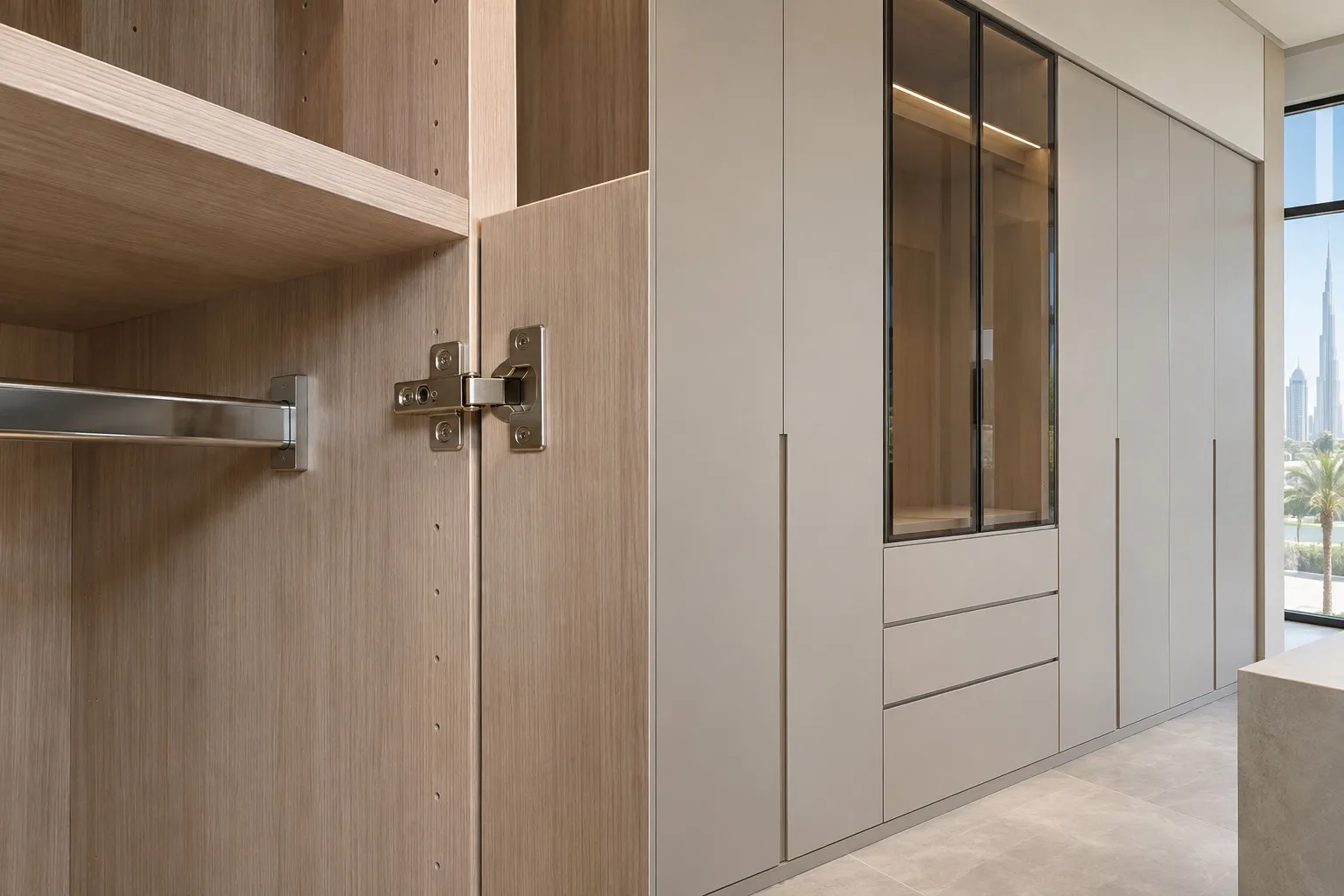
On a sliding wardrobe the part that gets forgotten is the bottom track. Stegbar recommends a regular vacuum or clean of the bottom track to remove dust, dirt and debris so the doors slide freely. Do that first, then wipe the track and the visible runners with a slightly damp cloth, dry them, and slide the doors a few times to see if one drags.
Grit in a track is what grinds a roller. If a door is stiff after cleaning, it is no longer a cleaning problem: stop pushing and read what to do when a sliding wardrobe door comes off its track or the checks in a wardrobe door that sticks, rubs or sags. Top-hung and bottom-running systems collect dirt in different places; the difference is in sliding wardrobe track types. We do not recommend a lubricant, because we have not seen a maker's page for your system; ask for the system's own sheet.
Edges, water and humidity
EGGER's leaflet has a warning many people miss: for edging, cleaning agents must be removed immediately after application, otherwise stress cracks or stress whitening may occur, and substances containing solvents should only be used highly diluted on edges. The edge is also where wet soaks in fastest, so wipe spills on edges first and do not let a damp cloth rest on the lower edge of a door.
Wiping dry matters more than which cloth you choose. A wardrobe that stays damp is also the one that begins to smell; the causes are in why a wardrobe smells musty. The board choice for a damp wall is in moisture-resistant wardrobe boards. We do not publish a humidity figure for UAE homes because we found no official one.
Dusting the inside
Inside the wardrobe, dust is the main job. Take clothes out of one section at a time, dust shelves, the rail and the top of drawer fronts with a dry cloth, then wipe with a barely damp one and leave the door open until dry. Stegbar's page says to wipe interior panels with a damp cloth and warm soapy water and then dry them so that no residue is left. Do not stack folded clothes on a still-damp shelf.
Drawers deserve the same wipe: our drawers and organisers guide shows what to keep where, and the interior LED strips, if you have them, should be dusted with the power off; the LED strip or profile guide shows the two ways of fitting them.

A monthly and yearly routine
No maker gives a schedule for a wardrobe, so this is our suggestion built from the advice above, not a rule from a datasheet. Dusting is quick; the rest is a few minutes a month. Do the yearly job when you change seasons, because that is when the wardrobe is half empty anyway.
A care routine for a wardrobe
Weekly
- What to do
- Dry-dust the fronts, handles and top edges
- Why
- Dust is abrasive when rubbed (Pilkington)
Monthly
- What to do
- Wipe doors with a slightly damp soft cloth, dry at once; vacuum and wipe the sliding track; wipe handles
- Why
- Soft cloth and no soaking is the common line of the sheets
Every few months
- What to do
- Wipe glass with plenty of cleaner and a clean lint-free cloth; wipe the aluminium frame
- Why
- Glass scratches when rubbed dry
Twice a year
- What to do
- Empty one section at a time; dust and wipe the interior; check hinges, runners and doors for rubbing
- Why
- Finds small problems before they grow
Yearly
- What to do
- Look at every edge, the door alignment and the track; photograph anything that has changed
- Why
- A dated photo helps if you need to show a change
Our suggested schedule, not a maker's. Follow the care sheet of your own finish if it says something different.
When a mark is damage, and what the warranty says
Wipe marks, fingerprints and dust come off. Damage does not: a scratch you can feel with a nail, a corner that has lifted, an edge that has swollen, a door that no longer sits flat, a glass that is chipped. EGGER's leaflet says scrubbing with rough cloths can leave gloss marks that may not be removable, and prolonged exposure of water can affect a surface; both are examples of a cleaning habit becoming damage.
Our wood-based boards carry a 5-year limited warranty, subject to terms; hinges, tracks, runners, rollers and other moving hardware are not covered, and neither are misuse or accidental or deliberate damage. Separately, our work carries a 24-month written workmanship warranty (supplied products follow their own terms). Cleaning with an abrasive, soaking an edge or forcing a door is misuse, not a defect, so what is covered is a matter for the written terms; the wardrobe warranty guide lists the questions to ask before you sign.
If something looks wrong, take a dated photo before you try to fix it, and write to us through the consultation form. Do not sand or paint over a mark first; it makes the cause harder to see.
What we do about care
At the free measuring visit we bring samples to your room. We send a drawing and an itemised price that you approve before anything is made. Our entry price is from AED 550 per sqm of wardrobe front for MDF laminate with hinged doors, installed; other options raise it, and the figure for your wall is set after measurement. After you confirm, our Sharjah workshop builds the wardrobe, and our own team installs it up to about 10 days later, depending on size and design.
Ask in the quotation for the care instructions of the exact finish, glass and hardware you choose, in writing, and keep them with the invoice; the wardrobe quotation checklist has the full list. We have not published the brand of our laminate, lacquer, veneer or mirror, or any resistance claim, so please do not rely on this page for them.
Start with the custom wardrobes service page, see finished work on the built-in wardrobes and sliding door wardrobes pages, and look at the lit glass-front wardrobes page if you are choosing glass. The warranty and aftercare guide explains the 24 months, and the Sharjah page gives the workshop address. To see how a quotation is built, read the pricing guide, the wardrobe materials and hardware guide. The prices are in wardrobe prices in the UAE.
For finishes that are easier to look after, start with our wardrobe planning guide for the UAE.
Common questions
What is the safest way to clean wardrobe doors?
A soft, slightly damp cloth with warm water, dried straight away; nothing abrasive. That is the common line of the maker sheets we read, each for its own product. See our wardrobe door finishes comparison.
Can I use vinegar, alcohol or bleach on a wardrobe?
Not without a maker's sheet that allows it. EGGER's lacquered-board sheet bars alcohol, ammonia and bleach, and its leaflet bars bleach and strong acids for its surfaces. See matt versus gloss wardrobe doors.
How do I clean a glass or mirror wardrobe door without scratching it?
Use plenty of cleaner and a clean lint-free cloth, then dry; Pilkington warns that rubbing dust with too little solution can scratch glass. We found no maker page for wardrobe mirrors. See our mirror wardrobe doors guide.
How do I clean a sliding wardrobe track?
Vacuum the bottom track, wipe it and the runners with a slightly damp cloth, dry, and slide the doors. Stegbar recommends a regular vacuum of the bottom track. See sliding wardrobe track types.
How often should I clean a wardrobe?
No maker gives a schedule; ours is weekly dusting, a monthly wipe and track clean, and a twice-yearly interior clean, as a suggestion only. See why a wardrobe smells musty.
Does the warranty cover damage from cleaning?
No: misuse and accidental or deliberate damage are excluded from the 5-year limited board warranty, which covers the wood-based boards only, and moving hardware is excluded. The written terms rule. See our wardrobe warranty guide.
What care sheet should I ask for in the quotation?
The care instructions of the exact finish, glass and hardware, in writing. We have not published finish brands or resistance claims. See our wardrobe quotation checklist.

Sources & specifications
Manufacturer information applies to the named products and systems. Sources reviewed on 4 November 2026.
- EGGER, Technical leaflet: Cleaning and care recommendations for EGGER product surfaces, revision 02, 22 May 2026: soft slightly damp cloth, no abrasive or scouring agents, no polishes, waxes or bleach, steam cleaner not recommended, edging cleaners removed immediatelydownloads.egger.com(opens in a new tab)
- EGGER, PerfectSense lacquered boards cleaning and care instructions (27 August 2021): wipe moisture off immediately, no alcohol, ammonia, bleach, scouring pads or steam cleanersdownloads.egger.com(opens in a new tab)
- Herman Miller, Wood & Veneer Care and Maintenance (August 2020): slightly damp lint-free cloth, dry along the grain, no aerosol cleaners or polisheshermanmiller.com(opens in a new tab)
- Pilkington North America, Technical Bulletin ATS-144, Manual washing of clear and tinted glass (April 2025): abrasive dust can scratch glass, flood with solution, lint-free cloth, no metal scrapers on tempered glasspilkington.com(opens in a new tab)
- Alumil, Useful tips for cleaning aluminium frames (22 March 2021): soft cloth in warm soapy water, avoid harsh cleaners and steel wire spongesalumil.com(opens in a new tab)
- Stegbar, Maintaining and caring for your wardrobe: soft damp cloth, vacuum the bottom track, mild detergent for hardware, no solvents or abrasivesstegbar.com.au(opens in a new tab)
Want this planned for your home?
Consultation and measurement are free. Tell us the rooms, location and what you need; we arrange a sample visit and define the measured quotation.