Media Walls · 23 min read · 22 September 2026
Media wall red flags in the UAE: warning signs when hiring a maker
The warning signs of a poor media wall hire, stage by stage: gallery photos, the first reply, the visit, the drawing, the quotation, payment and warranty, plus the false alarms and what to write back.

By Ali Haider Basra, Founder, Al Tareeq Decor · Contact our workshop
Key takeaways
- A red flag is anything that stops you from checking what you are buying; two or three in one conversation mean stop and ask again in writing.
- Read a gallery with questions: wide photos of whole walls, even joins and gaps, and a named builder matter more than polish.
- The order of steps matters more than the amount: visit, drawing, itemised price, approval, then the advance.
- A warranty described only in years is a flag; ask what it excludes. Ours covers the wood-based boards only.
- Some things look like flags and are not: an advance after approval, a price range before the visit, many questions, production that takes days.
On this page
- Key takeaways
- The short answer: a red flag is a reason to ask again, not a verdict
- What counts as a red flag, and what does not
- Flag 1: the gallery tells you less than it seems to
- Flag 2: a firm price before anyone has asked about your wall
- Flag 3: a visit where nobody measures
- Flag 4: no drawing, or a drawing that arrives after the money
- Flag 5: a quotation that cannot be compared
- Quotation flags and the plain question that tests each
- Flag 6: how and when you are asked to pay
- Flag 7: a warranty described in years, with no list
- Flag 8: references and membership claims that cannot be checked
- Worked example: three chats about the same living-room wall
- Things that look like red flags and are not
- Four false alarms and why they are normal
- What a good maker volunteers without being asked
- What to write back when you see a flag
- A one-page score sheet
- Red flag score sheet: tick, question mark or cross
- What we do about each flag
- Send us the wall on WhatsApp
- Common questions
The short answer: a red flag is a reason to ask again, not a verdict
A red flag in a media wall quote is any behaviour that stops you from checking what you are buying: a price with no drawing behind it, a visit with no measuring in it, a deposit with no receipt, a warranty with no list of what it leaves out. One flag usually has an innocent explanation. Two or three in the same conversation mean you should stop, put your question in writing and see whether the answer gets clearer or only friendlier.
This guide walks through the order in which a hire normally unfolds, from the gallery photos you scroll past to the warranty paper you receive at the end, and names the warning sign that belongs to each stage. It also covers the opposite problem, which is just as common: perfectly reasonable things that look suspicious to a buyer who has not hired a joiner before. Nothing here accuses any company. Each sign is described as a pattern in how a conversation goes, and every one can be tested with a plain message.
- 1. The photos: only close-ups, against wide shots of finished walls in real homes
- 2. The first reply: a firm price before any question, against questions about the wall, TV and room
- 3. The visit: nobody measures, against a laser measure and samples in your hands
- 4. The drawing: a picture with no sizes, against a dimensioned drawing you approve
- 5. The quotation: one total, against lines you can match to the drawing
- 6. The payment: everything now with no receipt, against written stages and a receipt each time
- 7. The warranty: years of cover with no exclusions, against written terms that name what is covered
What counts as a red flag, and what does not
It helps to separate three things that get mixed up. A red flag is a sign that information is being withheld from you, such as a refusal to put a price in writing. A preference is a style you may or may not like, such as a maker who is brisk on the phone. A cost is a real feature of good work, such as a visit before a price. Buyers new to custom joinery often treat costs as flags and miss the flags that matter, because the real flags are quiet: a missing line on a quotation does not announce itself.
A good test is whether the behaviour removes your ability to check or to say no. A maker who asks for a deposit after a drawing is approved is asking for something you can weigh. A maker who asks for money before there is a drawing is asking you to commit while the thing you are committing to does not yet exist. The first leaves your options intact; the second spends them. Keep that test in your head through the rest of the guide and most of the signs below will sort themselves.
Two public sources help frame the stakes without being a substitute for your own judgement. The UAE government portal u.ae says a consumer has the right to correct information about the service they receive, and that suppliers who advertise misleading prices or false data on goods and services face penalties. It also lists the Ministry of Economy line, 800 1222, and notes that the Department of Economic Development in each emirate receives consumer complaints. That is the portal's summary of the consumer protection law, not legal advice, and we are not suggesting any sign below is a breach of it. The point is simpler: asking a maker to be specific is a normal thing for a customer to do.
Flag 1: the gallery tells you less than it seems to
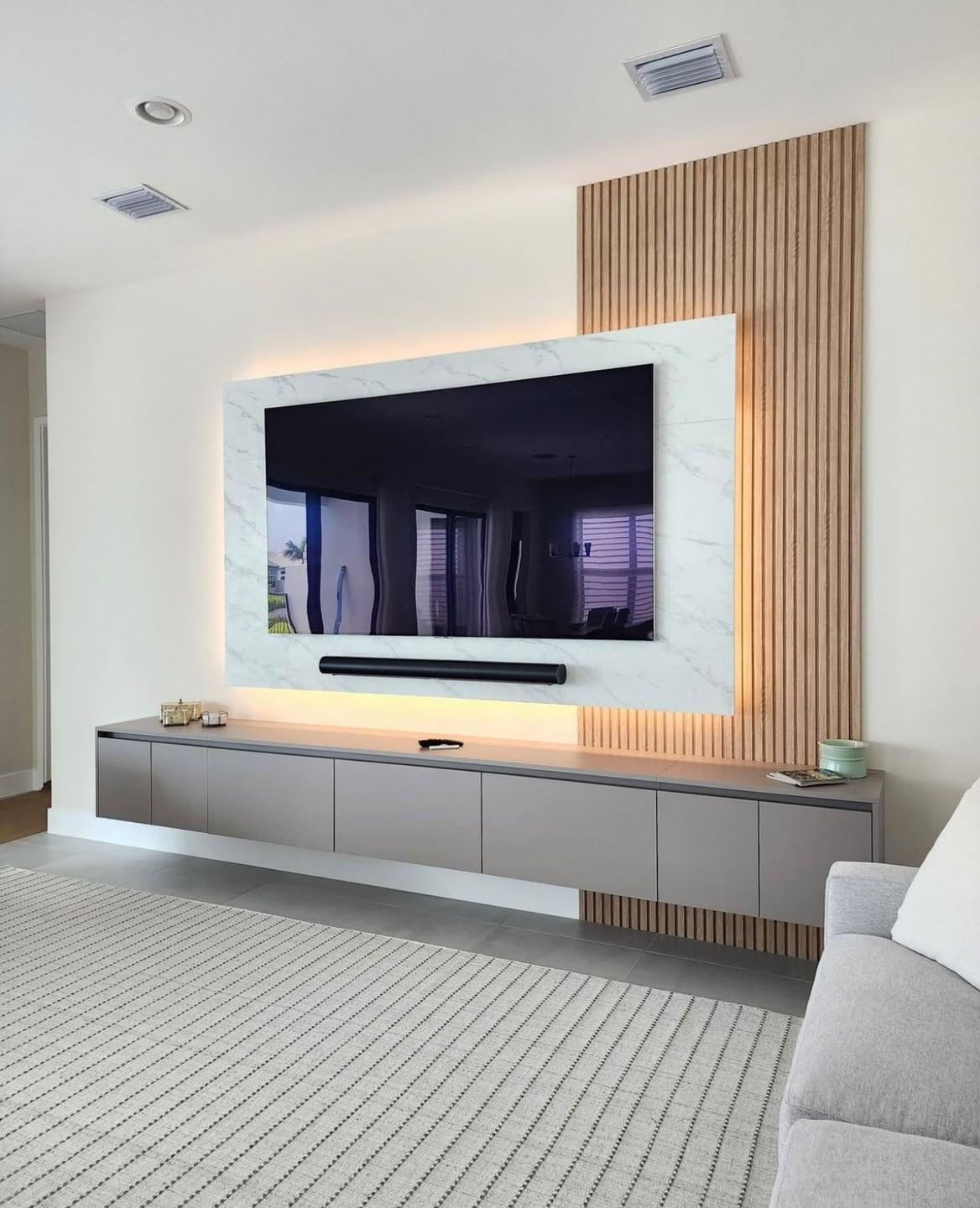
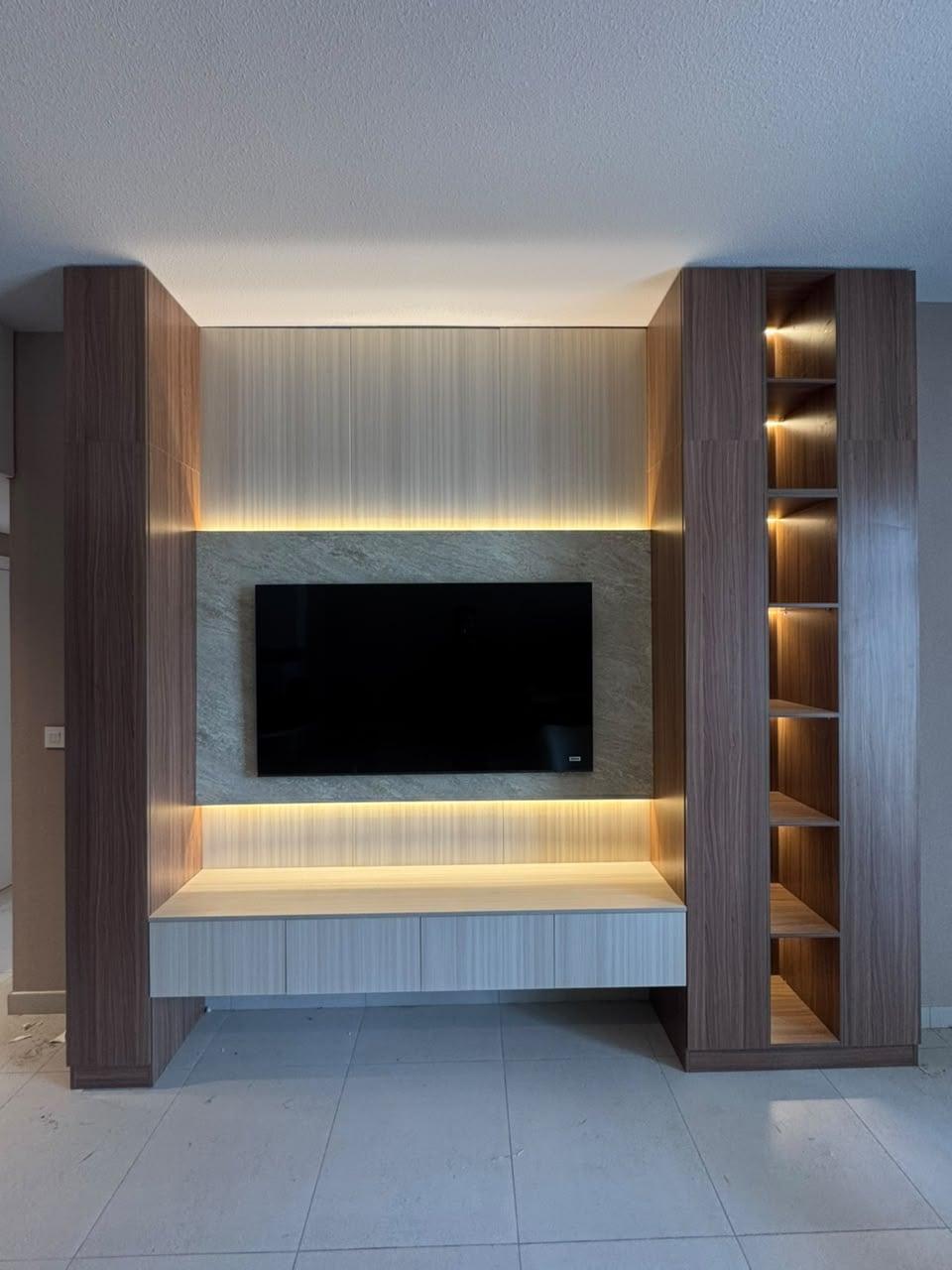
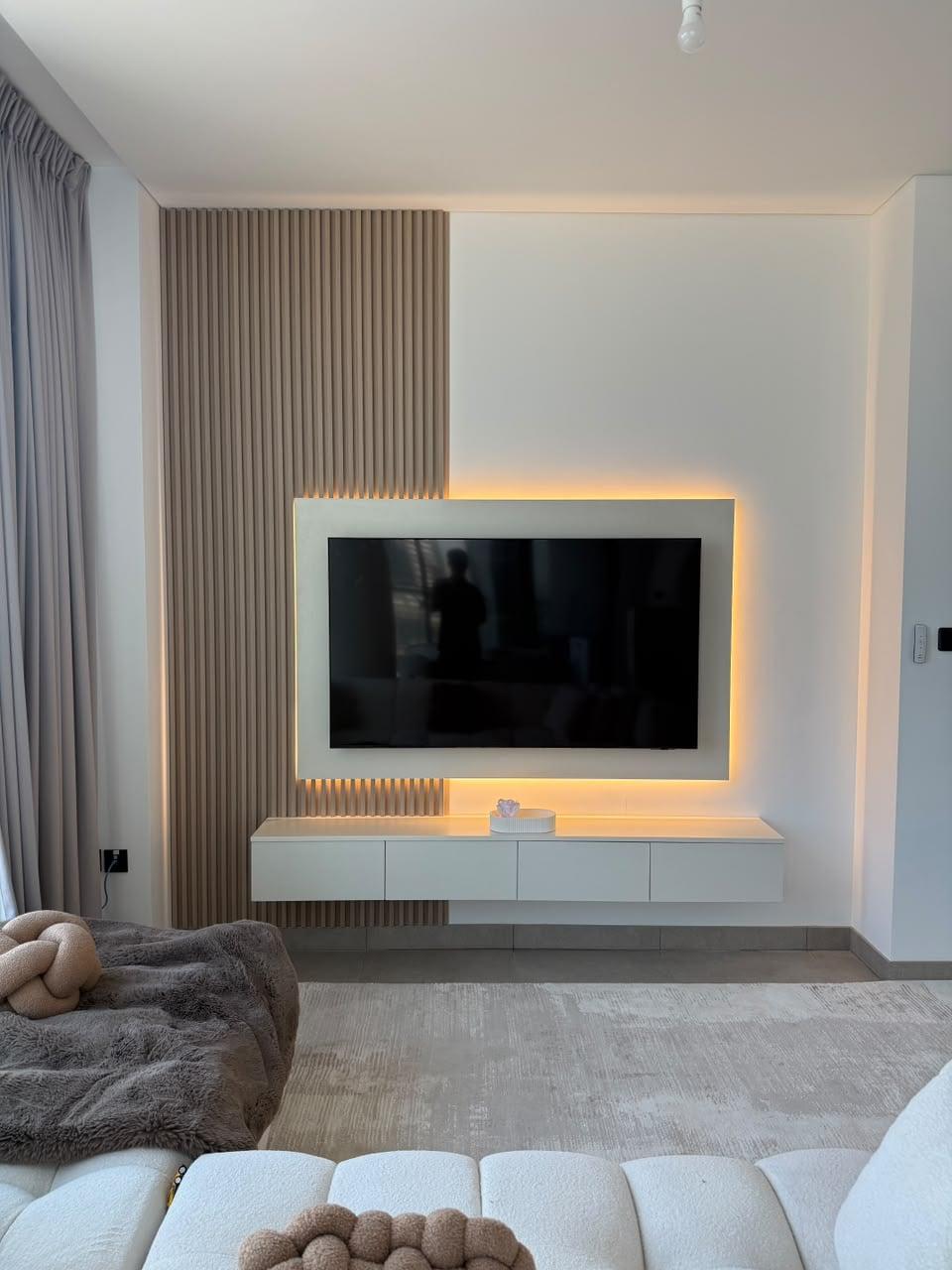
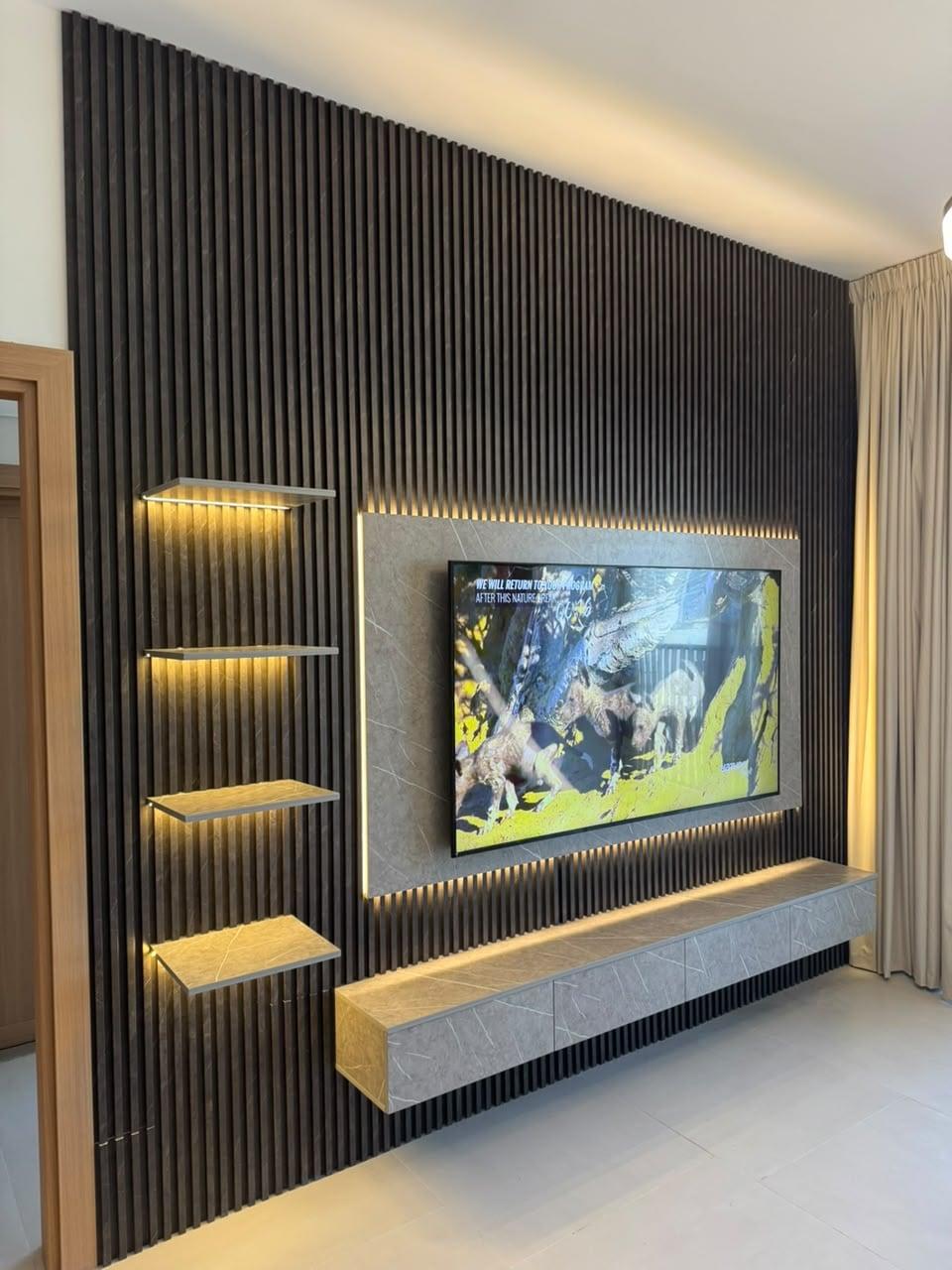
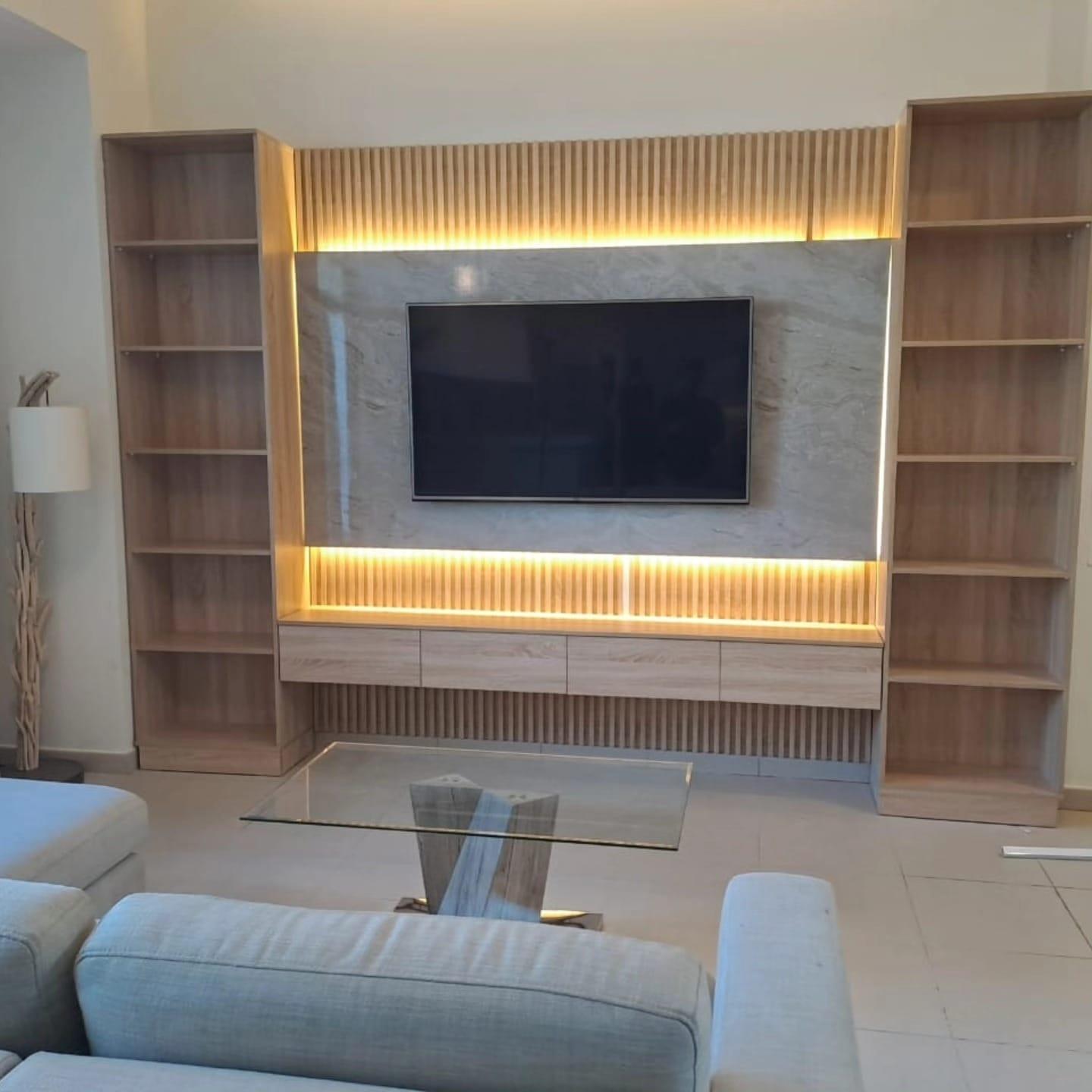
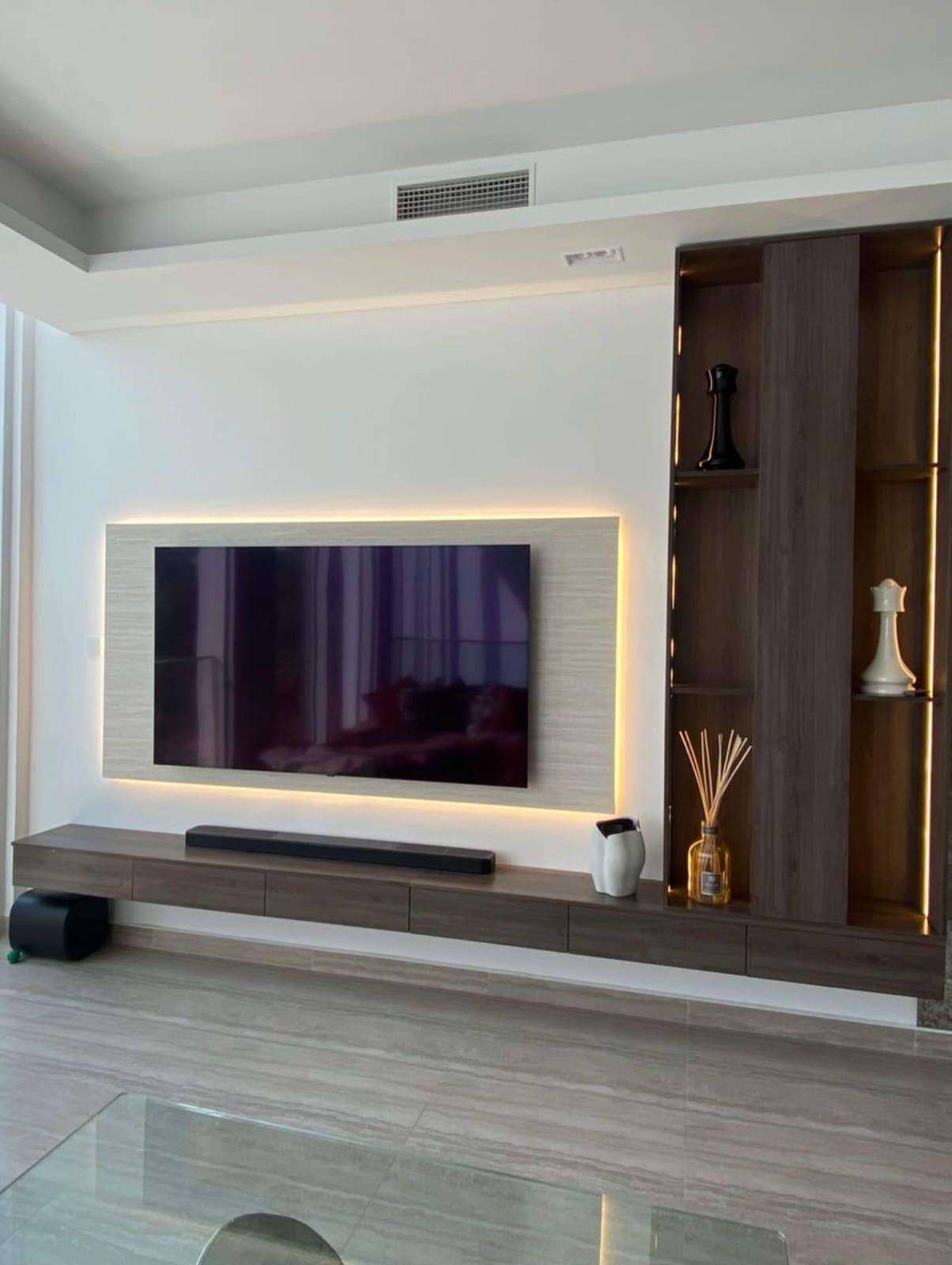
A gallery is where most hires begin, and it is also where the first quiet flags are. The photographs are chosen by the maker, taken on the best day, and usually cropped to the most flattering part of the wall. That is not dishonest, it is how galleries work, but it means you have to read a gallery with questions rather than admire it. The diagram below shows six things a single wall photograph can tell you if you look for them: the joins between panels, the top edge at the ceiling, the gaps around drawers and doors, the quality of the light, the floor edge, and how sockets and cables were planned.
Zoom in rather than out. Joins between two panels should run straight and the tone on each side should match. The gap at the ceiling should be even along its whole length, not tight at one end and open at the other. Gaps between drawer fronts should be equal. LED light should wash the panel smoothly; a row of bright dots on the surface suggests the strip sits too close to the face. None of this needs trade knowledge, only patience with a large photo.
The flags themselves are about what is missing. If every picture is a close-up and you never see a whole wall inside its room, you cannot judge scale or how the piece meets the floor and ceiling. If the same wall appears in different guises with different captions, ask whether they are separate jobs. If a gallery shows only rendered pictures, remember that a render shows intention while a photograph shows delivery. Our own guides to media wall design ideas and fluted and slatted walls use photographs of finished walls for exactly this reason, and a request for a wide photo of the same wall is a fair thing to send to anyone.
- 1. Joins between panels are even, straight and tone-matched
- 2. The top edge at the ceiling is a neat, even gap
- 3. Drawer and door fronts have equal gaps and aligned lines
- 4. The light is a smooth glow without dotted hot spots
- 5. The floor edge has no uneven gap or cut-away skirting
- 6. Sockets and cables look planned, not left hanging
Flag 2: a firm price before anyone has asked about your wall
The first reply to your message is a small test you can run without knowing anything about joinery. Send a photo of the wall and the TV size. A maker who has built many walls will have questions: what is the wall made of, where do the sockets sit, what is above and beside it, how far is the sofa, does the lift take a long panel. Those questions are the first sign that someone is thinking about your wall rather than about closing a sale.
A fixed price offered at once, with no questions, is a flag because nothing about your wall can yet be known. The price may be a generic starting figure, which is fine if it is described as one. Our own published starting point is from AED 3,500 per project for a compact panel with a floating console in standard laminate, and we say plainly that the final figure comes from the quotation because wall size, finish, marble-effect panels, lighting and any electric fireplace all move it. If a number is presented as final before the wall has been seen, ask what it assumes.
Speed is a related trap. A reply within a minute feels attentive, but quick replies are cheap to write and say nothing about the work. What carries information is the first question asked. If you want a benchmark for what a good first message from your side contains, what to send before a consultation lists it, and it also makes the maker's questions easier to compare because everyone starts from the same facts.
Flag 3: a visit where nobody measures
A media wall is built to fit one wall, and walls in real buildings are rarely square, plumb or the size the plan says. A visit exists to find those differences. The signs of a visit that is not doing that job are easy to spot while it is happening: nobody takes out a laser or a tape; nobody asks where the sockets are; nobody looks at the ceiling edge or the floor; the conversation is about colours and a price, and it ends with a promise to "send the details". If that is the whole visit, the number you receive was not made from your wall.
What a proper visit looks like is covered in our measuring visit guide. In short, someone laser-measures the wall, notes the positions of sockets and anything that interrupts the surface, asks about the TV and the sofa, and brings samples so you can hold a finish against your own wall. Our visit is free and includes those samples. A related sign worth watching is a charge for the visit that vanishes into nothing if you do not order. That is not automatically wrong, but you should know it in advance.
Pay attention to what the visitor does not ask about, too. Humidity, airflow around the TV and what happens behind the panel are matters that affect how a wall ages. Our guides on humidity and MDF and TV ventilation explain why they matter. A maker who raises them without being asked is thinking about year five as well as day one.
Flag 4: no drawing, or a drawing that arrives after the money
The drawing is where promises become checkable. It should show the wall as measured, the TV at the height and size you discussed, the console, the panels, the lighting and the routes behind. A picture with no dimensions does not count, and neither does a photo of another job. The flag is not that a drawing takes a day or two to prepare; it is a drawing that is vague about sizes, or one that only appears after you have paid.
Use the drawing to test the decisions that cost the most to reverse. Are the screen height and the viewing distance sensible? Our guides to TV height and TV size and distance give you numbers to hold it against. Is there room to change the TV later? Changing the TV later shows what margin to look for. Where do the cables enter and leave, and can they be reached? Those answers should be visible on the paper, and the ones that are not should be asked about.
If you have not bought the TV yet, say so. Buying the TV before the media wall explains why the order matters, and a maker who draws around a TV you have not chosen should tell you what margin they have left. A drawing you approve is also the document that settles disagreements later, so keep it with your messages.
Flag 5: a quotation that cannot be compared
The quotation is the flag stage where the damage is easiest to hide. A single total labelled "all included" cannot be compared with anything, and it cannot be checked against the wall afterwards. The diagram below shows an invented scenario: three quotes for the same wall, one with a single total, one part itemised, one fully itemised. The line each one names or leaves blank is the whole story. The right-hand quote is not necessarily the cheapest; it is the only one you can hold up against the finished wall.
Citizens Advice, a UK charity, gives two pieces of advice that travel well even though they are not UAE law. First, be wary if a contractor will not put a quote in writing; it is a sign they could be unreliable. Second, be cautious if one price is much lower than the others, because it may mean they lack the skills, or they are not quoting for exactly the same work. The second point is the one that catches buyers: a low total often just means fewer lines are counted. Our media wall quotation checklist goes through the eight lines to ask for, and what a media wall costs explains why walls of the same width can cost very different amounts.
Read the exclusions as carefully as the inclusions. A missing electrical line often means a socket will be moved later, as an extra. A missing lighting line can mean channels, dimmers and the driver are not counted. A missing mounting line can mean the TV is yours to arrange. Each is a cost not yet counted, and it is far easier to learn that before a panel is cut. If you want to understand what the parts are, media wall materials and costs names them, and comparing panel types shows why the board behind the finish matters.
Quotation flags and the plain question that tests each
One total, "all included"
- What it may mean
- Lines were not counted
- Plain question to send
- Which lines make up this total?
No drawing named
- What it may mean
- The price is not tied to your wall
- Plain question to send
- Which drawing is this price for?
No electrical line
- What it may mean
- Socket work may come later as an extra
- Plain question to send
- Is moving or adding a socket included?
No lighting line
- What it may mean
- Channels, dimmers or driver not counted
- Plain question to send
- Where does the driver sit, and is it included?
No mounting line
- What it may mean
- The TV may be left for you to arrange
- Plain question to send
- Who lifts and fixes the TV?
No exclusions stated
- What it may mean
- Gaps will be found on site
- Plain question to send
- What is not covered by this price?
Questions to send in writing, not a price list. Media walls start from AED 3,500 per project for a compact panel and floating console in standard laminate; the quotation sets the real figure.
- 1. One total names 1 of 7 lines
- 2. Part itemised names 3 of 7 lines
- 3. Fully itemised names all 7 lines
Flag 6: how and when you are asked to pay
Payment is where a good process and a poor one differ most sharply, and it is where order matters more than amount. The sequence that protects you is the one in the diagram: a visit, a drawing, an itemised price, your approval, and only then an advance. The sequence that should make you pause scrambles those steps, so that money comes first and the things you need in order to judge the work come later or never.
Citizens Advice says to avoid traders who only accept cash or who want you to pay everything upfront, because it is a sign they might be dishonest or unreliable, and to always get a receipt for a deposit. That is UK advice and we do not borrow its numbers, because every maker's process differs. What travels is the pattern: payment in stages, in a form you can trace, with a receipt each time. In our own process, once measurements and details are agreed a 60% advance is paid and production starts when it is received; the remaining stage is agreed with you. The advance follows the drawing and the itemised price, never precedes them.
The u.ae portal adds one practical detail: a supplier's invoice should carry the trade name and address, the type of goods or service, its price and quantity, and be in Arabic, with other languages optional. A quotation is not an invoice, but it is the same kind of document one step earlier. A maker who cannot name themselves and the goods on paper is asking you to trust what you cannot later point to.
- 1. Protective order: measuring visit, drawing, itemised price, your approval, advance paid, production starts
- 2. Order to pause on: payment asked, start date promised, single total, visit if any, drawing after paying, approval after cutting
- 3. The advance moves from fifth to first, and the visit from first to fourth
Flag 7: a warranty described in years, with no list
A warranty that is described only as a number of years says very little. What matters is what it covers and what it leaves out, and the honest version names both. Ours is a 5-year limited warranty on the wood-based boards only. Hinges, runners, labour and misuse are excluded, and it is never a warranty on the whole wall. A narrow promise like that is easy to test, which is why we state it narrowly.
The flag is a big claim with no paper behind it: "full cover", "lifetime", "everything", offered by message and never written down. Ask for the terms before you pay and read the exclusions first. If the answer is a longer number of years but still no list, assume it covers less than it sounds. The wardrobe equivalent of this reasoning is in our wardrobe warranty guide, and the finished-wall check is in the handover checklist, which tells you what to look at on the day the wall is complete.
Related to the warranty is the question of who comes back. A named team that made and fitted the wall can return to it; an unnamed subcontractor may not be reachable. Ask who will attend if a door rubs or a light fails, and how you reach them. For our walls the same team that makes and fits also mounts the TV, and our workshop is in Sharjah.
Flag 8: references and membership claims that cannot be checked
Makers often mention that they belong to an association or have worked for well-known clients. These claims are worth a minute of your time. Citizens Advice notes that a trader may say they belong to a scheme or trade association, and that you should check the scheme's own website to make sure they really are a member. The same applies to any badge on a website: the question is whether the body named confirms it.
References work the same way. Citizens Advice advises avoiding contractors who will not give references, and notes that it is best to contact the people directly because written references are not always genuine. Translated to a media wall, that means asking for the contact of a customer with a wall similar to yours, and asking that customer one concrete question: did the wall match the drawing, and how did the maker handle anything that went wrong?
A maker without a long list of past clients is not automatically a poor choice; newer workshops do good work. The flag is a refusal to say who made a wall in the gallery, or a vague answer about where it was built. A plain answer can be given in one line. We have 10 years in the trade, and the founder is Ali Haider Basra, which you can ask us to confirm in the first message rather than take on trust.
Worked example: three chats about the same living-room wall
Imagine a 65-inch TV on a living-room wall with a floating console and one lit shelf column. You send the same photo and two lines to three makers and keep a note of what each says. Everything in this example is invented to show how flags add up; it describes no real company.
Maker A replies in two minutes with a single figure, "all included", says work can start tomorrow, and asks for half the money now to "book the slot". There is no drawing, no visit and no question about the wall. That is four flags in one message: a price with no basis, a start date with no drawing behind it, a request for money before approval and a total that cannot be itemised. Maker B replies in an hour, asks what the wall is made of and where the sofa is, offers a visit and says a price will follow the drawing. It has no flags, only a slower start. Maker C sends a catalogue and a discount that expires tonight. One flag: pressure to decide before you can check anything.
On price alone you cannot rank them, and they may not even be quoting for the same wall. On flags the picture is clear, and it needed no technical knowledge. The lesson is to score each conversation by what it lets you check, not by how quickly or warmly it answers.
Things that look like red flags and are not
Fear of being cheated can make normal practice look suspicious, and that is just as costly: you may walk away from the careful maker because they were the one who asked for time. The table lists common false alarms and the reason each is ordinary. If you are not sure whether something is a flag, ask the maker to explain it in writing and see whether the explanation is specific.
The most common false alarm is the advance after approval. In a custom job the materials are cut to your wall, so there is no resale value in a panel made to someone else's measurements; an advance paid once the drawing and price are approved is the normal moment for work to begin. What matters is that it comes after the drawing, comes with a receipt, and is part of a written sequence. A second is a price that is a range until the visit. A third is a lead time that is not instant: up to about 10 days of production, depending on the size and design of the wall, is a sensible expectation, and a maker who promises tomorrow before measuring deserves a second look.
Four false alarms and why they are normal
An advance after you approve
- Why it is usually fine
- Panels are cut to your wall, so work starts on commitment
- What to still check
- It follows the drawing and itemised price, with a receipt
A range, not one price, before the visit
- Why it is usually fine
- The wall has not been measured yet
- What to still check
- The firm price follows the drawing
Many questions about your wall
- Why it is usually fine
- A good fit depends on the answers
- What to still check
- The questions lead to a visit
Production takes days, not hours
- Why it is usually fine
- Boards are cut, finished and checked
- What to still check
- Time is stated in writing, with its conditions
Our own process: free visit, drawing and itemised price approved, then the 60% advance, then production, up to about 10 days depending on size and design.
What a good maker volunteers without being asked
Flags are easier to read next to their opposite. A careful maker usually raises uncomfortable topics themselves. They will tell you which part of the wall they are least sure about until it is opened, for example how a wall behind the TV will take its fixings. They will tell you what the price does not cover. They will tell you what could change the timeline. They will tell you which of your ideas is awkward, such as a very deep niche behind a large TV, or a long run of marble-effect panel with no joint. If a conversation contains none of that candour, the smoothness is the flag.
Candour also shows in how a maker handles an idea of yours that is weak. If you propose pushing a large TV into a closed niche and the answer is an enthusiastic yes, check the idea against how a TV niche needs air. If you propose a long marble-effect run, read marble-effect TV wall options and ask where the joins fall. A maker who explains why something is awkward before building it is protecting both of you.
What to write back when you see a flag
You do not need to confront anyone. The simplest response to a flag is one short written question that asks for the missing thing. Three scripts cover most cases. For a price with no basis: "Thank you. Which drawing and which lines is this price for?" For a request to pay first: "Please send the drawing and the itemised price. I will decide on payment once I have approved them." For a warranty with no paper: "Please send the warranty terms in writing, including what is not covered."
Then watch the second reply. A careful maker answers the question, sometimes with a delay while they prepare the drawing. A maker who ignores it, repeats the pressure or goes cold has told you what you needed to know. Keep the thread, because it is also your record if something is disputed. If you decide to proceed with someone despite a flag, write down what you agreed to in the same thread and ask them to confirm it.
If something has gone wrong and talking has not helped, the u.ae portal points consumers to the Ministry of Economy on 800 1222 and to the Department of Economic Development of the emirate. We mention it so you know where the official channels are, not as advice on any particular dispute. Before things get that far, most problems are headed off by the sequence already described: a visit, a drawing, an itemised price and a receipt.
A one-page score sheet
Use this to score any conversation. Give each answer a tick if it is clear and in writing, a question mark if it is spoken but not written, and a cross if it is refused or dodged. Two crosses, or four question marks, is the point at which to stop and ask again before anything is paid. It is a thinking aid, not a rating of any company.
Red flag score sheet: tick, question mark or cross
Photos
- Ask
- Can I see a wide photo of a finished wall?
- Tick if
- A whole wall in its room, who built it stated
- Cross if
- Only close-ups or renders
First reply
- Ask
- What do you need to know about my wall?
- Tick if
- Questions about wall, TV, room
- Cross if
- A final price with no questions
Visit
- Ask
- Will someone measure my wall?
- Tick if
- Laser measure and samples
- Cross if
- A talk, no measuring
Drawing
- Ask
- Will I approve a drawing first?
- Tick if
- Dimensioned, before payment
- Cross if
- None, or only after payment
Quotation
- Ask
- Is each line named?
- Tick if
- Itemised, tied to the drawing
- Cross if
- One total, all included
Payment
- Ask
- What is paid when, and is there a receipt?
- Tick if
- Written stages, receipt each time
- Cross if
- Everything now or cash only
Warranty
- Ask
- What does it exclude?
- Tick if
- Written, boards named, exclusions listed
- Cross if
- Years of cover, no list
What we do about each flag
We make custom media walls in our Sharjah workshop and install across the UAE, and we have tried to put the careful version of each stage into how we work. The measuring visit is free and includes samples and a laser measure. A drawing and an itemised price are agreed with you before anything is made. Once measurements and details are agreed, a 60% advance is paid and production starts when it is received; the remaining stage is agreed with you. A typical wall is finished in up to about 10 days, depending on its size and design, and our own team makes, fits and mounts the TV.
Walls start from AED 3,500 per project for a compact panel and floating console in standard laminate; wall size, the finish (laminate, veneer or lacquer), marble-effect panels, lighting and any electric fireplace move the final figure, which comes from the quotation. The warranty is a 5-year limited warranty on the wood-based boards only, with hinges, runners, labour and misuse excluded. You can see the options on our media walls page, the custom media walls and TV wall units and floating consoles pages, our guide to media walls in Sharjah, and the pricing guide for a planning figure. If you are still choosing between makers, how to choose a media wall contractor gives the seven positive checks.
Send us the wall on WhatsApp
The easiest way to test us is to send the message you would send anyone. Send a photo of the wall taken straight on from the middle of the room, the TV size you have or plan to buy, and a photo of the room, and ask the plain questions from this guide: will someone measure, will I see a drawing, will the price be itemised, what does the warranty exclude. Orders are confirmed on WhatsApp, so the whole thread stays in one place. What to include is listed in what to send before a consultation.
Common questions
What are the red flags when hiring a media wall contractor?
The main ones are a firm price before anyone has asked about your wall, a visit with no measuring, no drawing or one that arrives after payment, a single "all included" total, payment demanded in full or in cash with no receipt, and a warranty described only in years. Two or three in one conversation mean stop and ask in writing. Our seven positive checks show what to look for instead.
Is it normal to pay an advance for a custom media wall?
Yes, a staged payment after a drawing and itemised price are approved is normal for work cut to your wall; what matters is the order and a receipt. In our process, once details are agreed a 60% advance is paid and production starts when it is received. Our media wall quotation checklist shows how to see it on paper.
Is a very cheap media wall quote a warning sign?
It can be: Citizens Advice, a UK charity, warns that a price far below the others may mean a missing skill or that the quote does not cover the same work. Compare line by line, not by total. What a media wall costs explains what usually differs.
Should the contractor measure my wall before giving a price?
Yes. A final price from a photo is a guess, and the person guessing is rarely the one who pays for the error. Our visit is free and includes samples and a laser measure. What happens at a measuring visit lists what is recorded.
How can I check a media wall maker's photos are real?
Ask for a wide photo of the same wall, check joins, gaps and the ceiling edge, and ask who built it and where. A render is not a photograph of delivery. Media wall design ideas shows finished walls so you can compare.
What should a media wall warranty cover?
Ask for it in writing and read the exclusions first. Ours is a 5-year limited warranty on the wood-based boards only, excluding hinges, runners, labour and misuse. Our wardrobe warranty guide explains the same board-only logic.
Where can I complain about a contractor in the UAE?
The u.ae portal lists the Ministry of Economy on 800 1222 and the Department of Economic Development of each emirate as places that receive consumer complaints. Try to settle it first in writing; our handover checklist shows how to record problems on the day.

Sources & specifications
Manufacturer information applies to the named products and systems. Sources reviewed on 10 November 2026.
- Citizens Advice (Scotland): Before you get building work done (written quotes, low prices, references, cash and upfront payment, receipts)citizensadvice.org.uk(opens in a new tab)
- Citizens Advice (Scotland): Find a trader and check you can trust them (check a claimed scheme or trade association membership)citizensadvice.org.uk(opens in a new tab)
- u.ae: Consumer protection (correct information, misleading prices, invoice contents, Ministry of Economy and emirate departments)u.ae(opens in a new tab)
Want this planned for your home?
Consultation and measurement are free. Tell us the rooms, location and what you need; we arrange a sample visit and define the measured quotation.