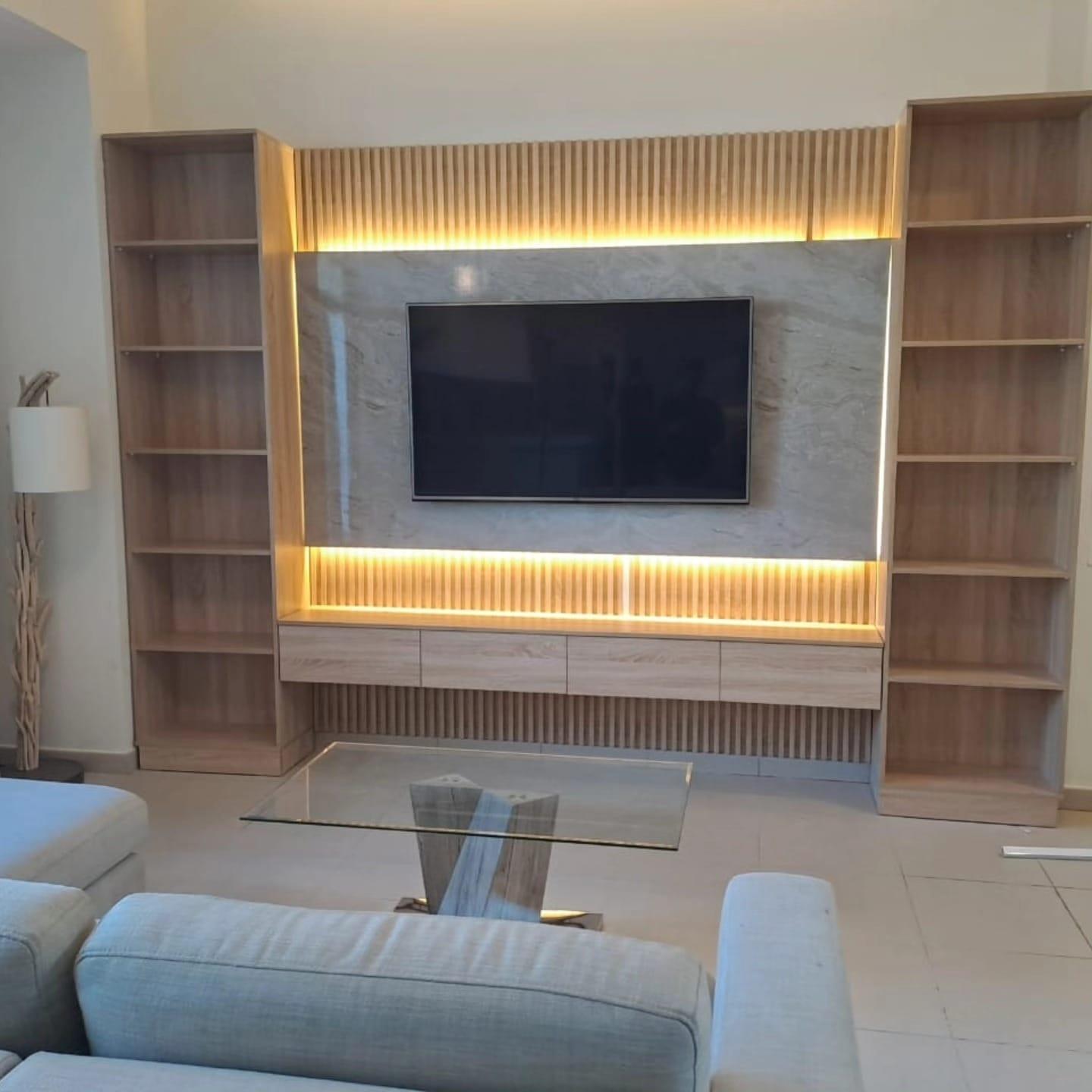
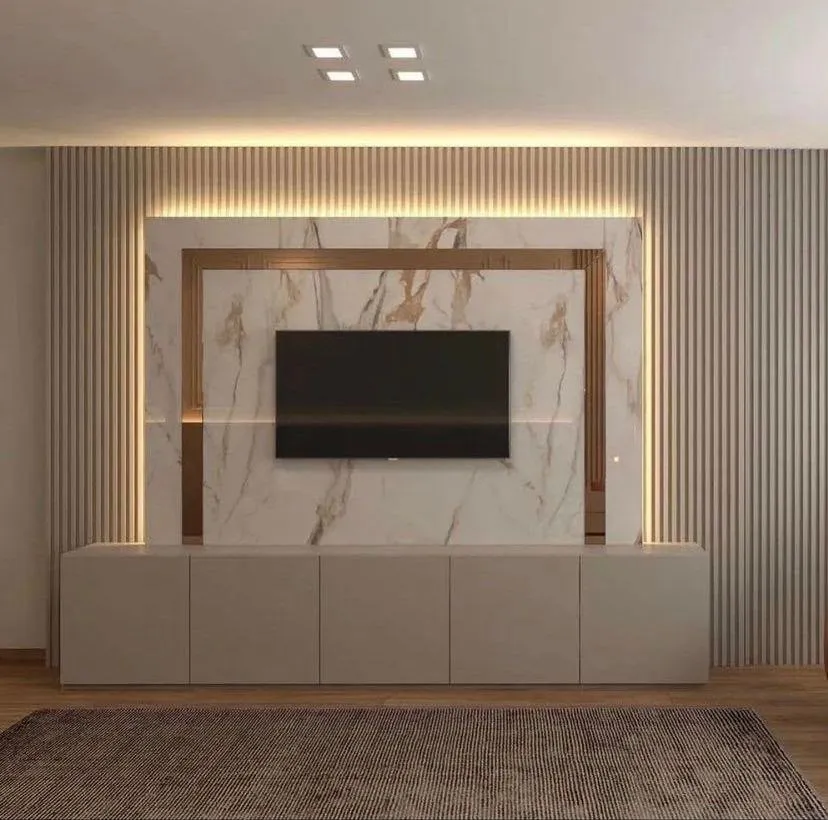
Media Walls · 21 min read · 2 November 2026
How ordering a media wall works: the stages and the 60% advance
How ordering a media wall works in the UAE: the six stages, what the 60% advance triggers, eight lines to complete before you pay, changes, receipts and the five papers to keep.

By Ali Haider Basra, Founder, Al Tareeq Decor · Contact our workshop
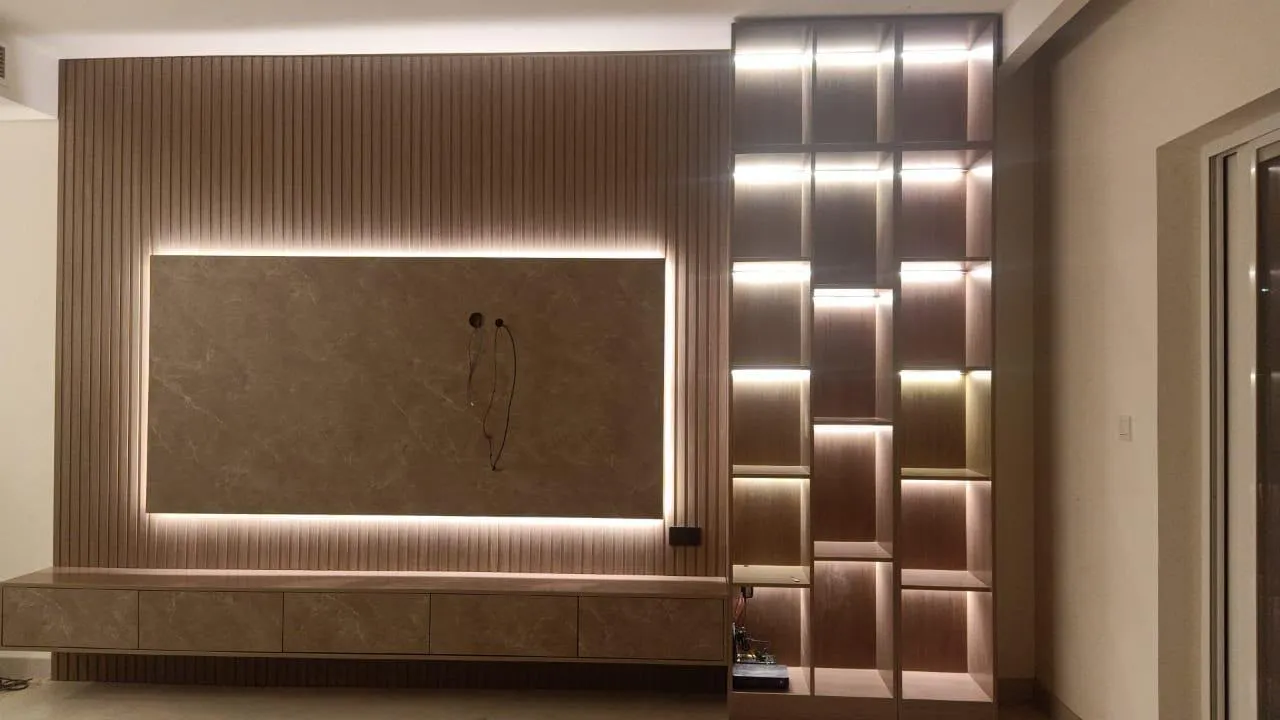
Key takeaways
- Our order runs in a fixed sequence: free measuring visit and quotation, drawing approved, details final with a 60% advance, workshop, fitting, and the remaining stage agreed with you.
- Production starts once the details are final and the 60% advance is received; the remaining stage is agreed with you and written down.
- Fill eight lines in writing before you pay: wall and size, drawing version, finish, sockets and TV model, total, advance receipt, remaining stage and fitting window.
- A change costs a message early and a remade panel late, so check the drawing against your real television and furniture before you approve it.
- Keep five papers: quotation, drawing, receipts, the WhatsApp thread and the warranty terms.
On this page
- Key takeaways
- How ordering a media wall works: the short answer
- The stages in order
- Before you pay anything: the visit and the quotation
- The drawing: why it comes before the money
- What the 60% advance is, and what it triggers
- Eight lines to complete before you pay
- Changing your mind: why timing matters more than rules
- What UK advice says about stage payments, and why we cite it
- What UAE consumer guidance says about invoices and complaints
- Orders with a wrinkle: upper floors, old walls and fireplaces
- Reading a receipt and an invoice
- Questions to ask before you pay, and what a good answer sounds like
- Seven questions before the advance
- Five papers to keep
- A worked example: an order from message to handover
- Mistakes that cause payment trouble
- What we do, and how to start
- Send us your wall on WhatsApp
- Common questions
How ordering a media wall works: the short answer
Ordering a made-to-measure media wall follows one logic: nothing is paid for until you know what you are buying, and nothing is cut until the details are final. In our process the free measuring visit and the drawing come first. Once the measurements and details are agreed, a 60% advance is paid, and production starts once we receive it. The remaining stage is agreed with you and written down. This guide walks through each step, what the advance is for, what you should have in writing before you pay, and what to do if you want to change something after you have ordered.
We keep one boundary in this guide. We describe our own process in the plain terms the business has confirmed, and we do not invent terms the business has not set, such as a refund scale, a cancellation fee or a schedule for the remaining stage. Where something is quotation-specific, we say so and tell you what to ask for. Where outside advice is useful, we cite it, label it, and say whether it is UK advice or UAE guidance.
If you are still comparing makers, read how to choose a media wall contractor first, which covers the wider checks. How to compare media wall quotes for putting two offers side by side. This page begins at the point where you have decided to order and want to understand the money and the order of events.
The stages in order
There are six stages, and a single gate in the middle. First comes the free measuring visit and the quotation. Second, the drawing is approved, which fixes dimensions, finishes and positions. Third, the details are made final and the 60% advance is paid; this is the gate. Fourth is the workshop, where production runs up to about 10 days depending on size and design. Fifth is fitting at your home by our team. The sixth is the remaining stage, whose timing is agreed with you and written on the quotation.
The gate matters because it is the moment the project moves from paper to boards. Before it, a change costs a message and a new drawing. After it, panels exist. The advance exists to cover the start of production, which is why production starts when it is received and not before. We never start cutting on a promise.
The timeline below shows the sequence. For the whole route in one page, see media wall step by step. Read the middle stage first, then the ones either side, because the rest of this guide is about making that gate safe for you: a clear drawing, a written total, a receipt for every payment and an agreed way to handle changes.
Before you pay anything: the visit and the quotation
The first stage costs you nothing. We aim to visit as soon as is practical, often the same day or the next day once you confirm, though we do not promise it, and you choose the time that suits you. You can arrange it by phone or WhatsApp. At the visit we measure the wall, note the sockets, the ceiling, the floor and the position of the sofa, look at what the wall is built from, bring finish samples, and talk through the television and the equipment. What the visit records, and what each measurement decides is covered in its own guide.
From that visit comes the quotation: a written, itemised document that names the scope, the finishes, the lighting and the electrical lines, how the television is fixed, the delivery and fitting, and the warranty. A media wall starts from AED 3,500 per project for a compact panel and floating console in standard laminate; the final figure depends on the wall size, the finish, any marble-effect panels, lighting and an electric fireplace. The quotation is where the final figure appears, and you should be able to read it line by line; the eight lines a quotation should list show what to expect.
Nothing at this stage is a commitment. If the price is above what you planned, the useful next step is to ask what moves it; the price factors guide explains where the money goes. The hidden costs guide lists what to watch for. Asking us to price a smaller or simpler design is a fair request.
The drawing: why it comes before the money
A drawing is the thing you are agreeing to. It shows the width and height of the wall, the position and size of the television, the console, the shelves, the slat or panel layout, the LED lines, the socket and cable points, and the joins. When you approve it, you are approving a picture of the result with numbers on it.
That is why the drawing is approved before the advance is paid. If you pay first and see the drawing second, you are paying for something you have not yet seen. In our order the drawing and the details are agreed first, and then the advance is paid. If something on the drawing is wrong, a line is moved, a shelf is deepened or a finish is swapped, and the drawing is reissued with the date. Look at the version date, and keep the approved version; it is the reference for everything that follows.
Read the drawing against your own checklist: the television size you will really buy, the height of the screen from where you sit, the position of the sockets and the shelf depths. The guide to buying the TV before the wall explains why a confirmed model matters. The TV size and distance guide helps you check the dimension. A drawing approved with the wrong television size is the commonest reason for a change request.
What the 60% advance is, and what it triggers
In our process, once the measurements and the details are agreed, a 60% advance is paid, and production starts once we receive it. The advance is the start of the order. It is what allows us to buy boards, finishes and hardware and to schedule the workshop for your wall. That is the whole of what we state about it: the remaining stage is agreed with you, and we do not publish further terms in a general guide, because the details belong on your own quotation.
So the right questions for any maker, including us, are specific ones. What is the advance for, exactly? What amount does the receipt show, and what is it credited against? When does production start, and from which date does the timeline run? What is the next payment tied to, and when is it due? Write the answers where you can find them, on the quotation or in the written confirmation on WhatsApp.
A note on proportion. Advice from Citizens Advice, a UK consumer charity, suggests keeping any deposit low and getting a receipt, and tying later payments to stages of the work. That is UK guidance, not UAE law, and it describes a different market and different kinds of work; we cite it because the habit of asking which stage triggers which payment is sensible anywhere. Ask us the same question, and expect a clear answer in writing. Comparing two offers includes the payment lines as one of the things to read side by side.
Eight lines to complete before you pay
The simplest protection is an order sheet in your own head. Before you pay the advance, make sure eight lines are filled in, in writing: the wall photos and size confirmed; the drawing version approved with its date; the finish and the sample named; the socket positions, lighting and television model noted; the total price and what it covers; the advance amount, with a receipt; the remaining stage agreed with you; and the fitting window and access agreed.
None of these lines is exotic. The point is that each one closes a gap where a misunderstanding could grow later. A finish named only as white can be three different whites. A television size left open can change the cut-out. An access arrangement left unsaid can delay fitting on the day. A long shelf with no stated support or board deserves a question too, and MDF or plywood explains why. The sheet below shows the eight lines being completed one by one.
These lines live in three places: the quotation, the drawing and the WhatsApp thread. It does not matter which carries which, as long as all three are consistent and you can find them. If something is agreed on a call, ask to have it confirmed in writing, and thank the person for doing so; it protects both sides.
Changing your mind: why timing matters more than rules
People ask whether they can change the order after paying, and the honest answer is that it depends on when. Early, before anything is cut, a change is usually a small adjustment: the drawing is reissued, the cut list is edited, and the order carries on. Later, once panels have been cut or finished, a change may mean making a part again. After fitting, changing a finished wall means opening it up. The effort grows at every stage, and so does the cost of changing your mind.
The curve below shows that shape. It is illustrative, not a price list, and it is not a statement of any terms. We do not set a fixed refund scale or cancellation fee in this guide, because those terms are agreed per quotation and we do not want to invent them for you. What we can tell you is to ask for the terms for changes and cancellation to be written into your quotation before you pay, and to read them as carefully as the price.
A practical way to reduce the need to change anything is to use the sample and the drawing properly. Approving the finish sample shows how to hold the sample against your wall, and checking the drawing against your own television and furniture catches most errors on paper. Changes asked for before production starts, and set out in writing, are the cheapest changes there are.
What UK advice says about stage payments, and why we cite it
Citizens Advice publishes plain-language guidance on getting work done on your home. Its page on what to do before you get work done says that paying in stages is a good idea because problems can be put right before the final payment, that you should agree in advance which points in the work trigger each payment, that a contract should be in writing before work starts and does not need legal language, and that it should cover timings, materials and payments. It also says a quote is a fixed price while an estimate is a rough guess, and that if a deposit cannot be avoided you should keep it low and get a receipt.
A second Citizens Advice page, on cancelling building or decorating work, makes a point that is useful for any made-to-order job: a contract can exist without writing, for example once you agree a quote or pay a deposit, and once work has started you generally negotiate with the business about cancelling, which may charge for labour and costs. A third, on changing your mind about something you have bought, says the standard 14-day cooling-off period does not generally apply to goods that are made to measure or custom-made. All three are UK guidance, not UAE law, and they may be some years old; we use them only as a checklist of sensible questions.
The sensible questions are the same anywhere. Which stage triggers which payment? Is the quote a firm price or an estimate? What happens if I want to change or cancel? Is everything agreed in writing? We would rather you ask these questions of us than not ask them, and a business that is unhappy to answer them is giving you information too. For a wider list of questions to ask any maker, our contractor checklist has them; it is seven checks on one page.
What UAE consumer guidance says about invoices and complaints
The UAE government's consumer protection page on u.ae states what an invoice must show: it must be dated and carry the supplier's trade name, address, type of goods or service, price and quantity, and the page says the invoice must be in Arabic. It also says contract clauses that harm consumers or exempt suppliers from legal obligations are void, and that suppliers must settle disputes promptly. We cannot restate the full law and we are not giving legal advice. What you can do is ask any supplier, including us, for an invoice or receipt that carries those details for every payment.
The same page describes the route for complaints. The Ministry of Economy's Consumer Protection Department handles receiving and resolving consumer complaints, and each emirate's economic development department also receives them. The Ministry of Economy and Tourism's consumer complaints page confirms that it receives complaints and verifies the completeness of the data submitted, and lists 800 1222 as its unified call-centre number for consumer protection. It is reassuring to know the route exists, and it is better to never need it: a clear written order avoids most disputes.
A final practical point: keep every receipt, the approved drawing, the quotation and the thread of messages, so that if a question arises you can show what was agreed. That is the whole purpose of the paper trail below.
Orders with a wrinkle: upper floors, old walls and fireplaces
Some orders have a feature that changes the paperwork as well as the work, and it is worth spotting it before you pay. An apartment on an upper floor with a small lift changes the delivery plan, and the fitting window and the access arrangements should say so, because a heavy face is a delivery question too. An older wall that is out of square or damp changes the drawing, which is why the wall behind the panel is checked at the visit; block versus gypsum explains how the wall type changes the fixing. The humidity guide explains what to look for.
A wall with an electric fireplace adds a dedicated electrical line, vents and clearances to the drawing, and these are listed lines on the quotation; the fireplace guide lists what to expect. A wall with shelves and lighting adds items that are easiest to price and agree once, so that nothing appears later as a surprise: the shelves guide shows what shelves add, and the lighting guide does the same for light. The principle is the same in every case: anything that changes the work should appear on the quotation and the drawing before the advance, not after.
If you are unsure whether your order has a wrinkle of this kind, say so in the first message. It costs nothing to ask, and a note on the quotation is better than a discovery on fitting day. You can also see how our finished consoles look on the product page.
Reading a receipt and an invoice
A receipt is the proof that a payment was made, and an invoice is the record of what the payment is for. They are different pieces of paper, and it is worth knowing what each should show. A useful receipt carries the date, the amount, who paid and who received it, the order or quotation it belongs to, and what the payment covers, for example the advance on a media wall for a stated address. A useful invoice carries the trade name and address of the supplier, the date, the type of goods or service, the price and the quantity, which is the list the u.ae consumer protection page gives.
Check three things when you receive one. First, that the amount matches what you paid and what was agreed. Second, that the description matches the quotation, so that a payment for a media wall is not recorded as a payment for something vaguer. Third, that the document names the order well enough to find it later: your name, the address and the date are usually enough. If a detail is wrong, ask for a corrected copy at once; it is far easier to fix a receipt the day it is issued than a year later.
Keep digital copies as well as paper ones. A photograph of each receipt, saved in the same folder as the drawing and the quotation, costs nothing and survives a lost envelope. The same goes for bank transfer confirmations, if you pay that way: save the screenshot with the date visible. None of this is difficult. It is the habit of a careful customer, and every good supplier is glad to deal with one.
Questions to ask before you pay, and what a good answer sounds like
Most payment trouble comes from a question that was not asked. The table lists seven that are worth asking of any maker, ourselves included, with what a clear answer sounds like and what should make you pause. A clear answer is specific and written; a warning sign is vague, hurried or spoken only.
Two of these deserve a comment. The question about the timeline is not a request for a promise, only for a clear statement of when the clock starts. With us, production starts once the details are final and the advance is received, and it takes up to about 10 days depending on size and design. And the question about changes should get a plain answer even if the answer is that changes depend on the stage; that is honest, and the terms for them belong on the quotation.
Seven questions before the advance
What is the advance for?
- A clear answer sounds like
- It starts the order and production, and the receipt says so
- Pause if you hear
- It is just a deposit; we will see
When does production start?
- A clear answer sounds like
- Once details are final and the advance is received
- Pause if you hear
- Soon; we will start when we can
What is the next payment tied to?
- A clear answer sounds like
- A stated stage, written on the quotation
- Pause if you hear
- We will let you know later
Is the price firm?
- A clear answer sounds like
- Yes for this drawing; a changed drawing is re-quoted
- Pause if you hear
- It depends on how it goes
What if I want a change?
- A clear answer sounds like
- Earlier is easier; the terms are on the quotation
- Pause if you hear
- Do not worry about that
Will I get a receipt?
- A clear answer sounds like
- Yes, for every payment, with amount and date
- Pause if you hear
- A message is enough
What does the warranty cover?
- A clear answer sounds like
- Boards only for 5 years; workmanship 24 months, in writing
- Pause if you hear
- Everything, for years
Our wording of good and poor answers; not a legal test. Ask for every answer in writing.
Five papers to keep
At the end of the order you should be able to put your hand on five documents. The quotation shows the scope, the finishes, the lighting and the total, item by item. The drawing shows the dimensions and positions, approved before the advance. The receipt shows each payment, with the amount and date. The WhatsApp thread confirms each change in writing, with the date. And the warranty terms set out what is covered: a 5-year limited warranty on the wood-based boards, subject to its terms, with hinges, runners, labour and misuse excluded, and a separate 24-month workmanship warranty on fabrication and fitting.
You do not need a filing system, only a habit. One folder on your phone, or one pinned message in the chat, with the five documents in it, is enough. When the wall is handed over, the handover checklist is the moment to check that the documents are complete and that the wall matches the approved drawing.
A worked example: an order from message to handover
Take a three-bedroom apartment in Sharjah. On a Monday evening the owner sends photos of the living-room wall, the television size and a line about the room on WhatsApp. We ask a few questions, such as the floor level, the lift and the TV model, and agree a visit time. On the visit day we measure, note the sockets, bring samples of a marble-effect panel and an oak slat, and talk through the lighting; the choice between those two looks is the subject of stone-look or wood.
Afterwards the owner receives an itemised quotation and a drawing. They notice the drawing shows a 65-inch television but they are buying a 75-inch one, and ask for it to be changed. We reissue the drawing with the new date, and the owner approves it in writing. The details are now final, the owner pays the 60% advance, receives a receipt, and production starts when it is received. Up to about 10 days of workshop time follow, depending on size and design.
When the wall is ready, our team delivers and fits it. The owner inspects the wall against the drawing, with the handover checklist, notes one small item, which is put right, and the remaining stage is settled as agreed on the quotation. The five papers are in one folder. Nothing in this example is unusual; it is just an order in which every step was visible, and whether such a wall suits your home at all is the question in is a media wall worth it. If the apartment were a villa or a rental, the same steps apply, with the access and permission questions in the apartment delivery guide added.
Mistakes that cause payment trouble
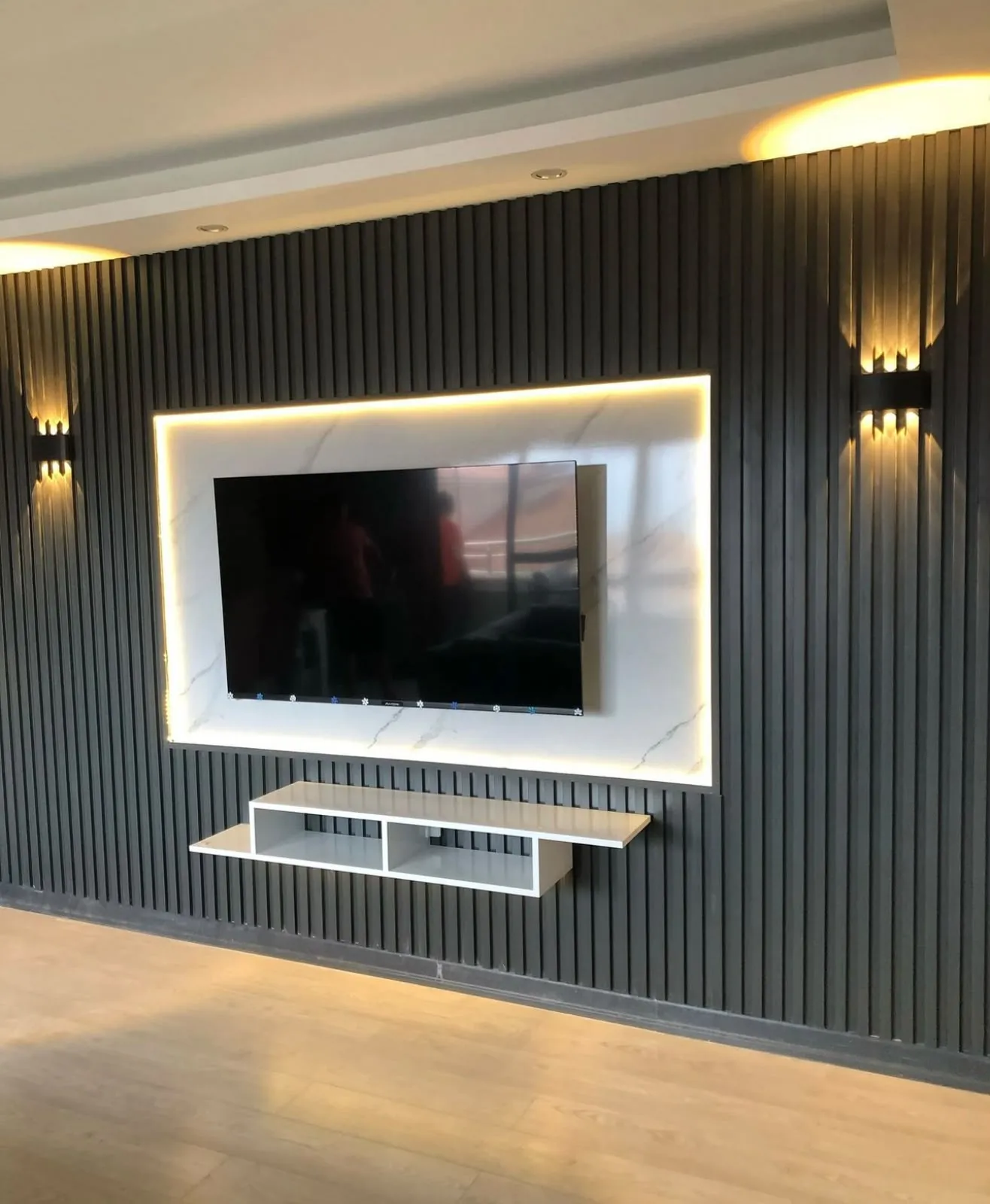
The commonest mistake is paying before the drawing is final. The second is a vague total: one number with no list behind it. The third is an unwritten promise, such as a date or a free extra given on a call and never confirmed. The fourth is leaving the television model undecided, and the fifth is not keeping receipts. Each of these is easy to avoid, and each causes more arguments than any technical issue.
A sixth, subtler mistake is treating the advance as a commitment to the price alone. It is also a commitment to the drawing, so read the drawing as carefully as you read the number. And a seventh is expecting the order to run itself: you have a part, which is to approve, to confirm, to give access and to inspect. The more of those you do promptly, the smoother the timeline.
What we do, and how to start
We work from a free measuring visit, an itemised quotation and a drawing approved before the advance. Once the details are final, a 60% advance is paid and production starts when we receive it; the remaining stage is agreed with you. A media wall starts from AED 3,500 per project, and the final figure comes from your quotation. Production takes up to about 10 days depending on size and design, and our team fits the wall at your home. Our workshop is in Sharjah and we fit across the UAE.
Our warranties are two separate lines. The wood-based boards have a 5-year limited warranty, subject to its terms; it covers boards only and excludes hinges, runners, labour and misuse, and is never a warranty on the whole wall. Fabrication and fitting by our team carry a 24-month written workmanship warranty. You can see the range we build on our media walls service page.
Send us your wall on WhatsApp
To start, message us on WhatsApp with a photo of the wall, the television size and the room, and say what finish you have in mind. If you already have a quotation from another maker, send it too, and we will tell you what we would ask. We will reply with questions and offer a visit time.
For help knowing what to send, what to send us for a consultation lists the photos and numbers that save a visit. The budget media wall guide is useful if you want to set the price first.
Common questions
Do I pay anything before the measuring visit?
No; the measuring visit is free, and the quotation and drawing come before any advance. The measuring visit.
When does production start?
Once the measurements and details are agreed and the 60% advance is received. Typical production then takes up to about 10 days, depending on size and design. The media wall price guide.
What is paid after the advance?
The remaining stage is agreed with you and should be written on the quotation, with its timing. Eight lines a quotation must list.
Can I change the order after I pay?
Early changes, before cutting, are usually small; later ones cost more. Ask for the change terms to be written in your quotation. Approving the finish sample.
What should I get in writing before paying?
The approved drawing with its date, the finish, the total and what it covers, the advance with a receipt, and the remaining stage. Seven checks for choosing a contractor.
What does the warranty cover?
A 5-year limited warranty covers the wood-based boards only; hinges, runners, labour and misuse are excluded, and a separate 24-month workmanship warranty covers fabrication and fitting. Hidden costs in a TV wall.
How do I start an order in Sharjah?
Send a photo of the wall, the TV size and the room on WhatsApp and we book the free visit. Media walls in Sharjah.

Sources & specifications
Manufacturer information applies to the named products and systems. Sources reviewed on 12 November 2026.
- UAE government (u.ae): Consumer protection (invoice contents, void clauses, complaints)u.ae(opens in a new tab)
- Ministry of Economy and Tourism: Consumer complaints (800 1222)moet.gov.ae(opens in a new tab)
- Citizens Advice (UK): Before you get work done on your home (stage payments, written contract, quote versus estimate)citizensadvice.org.uk(opens in a new tab)
- Citizens Advice (UK): Cancelling building or decorating workcitizensadvice.org.uk(opens in a new tab)
- Citizens Advice (UK): Changing your mind about something you've bought (made-to-measure goods)citizensadvice.org.uk(opens in a new tab)
Want this planned for your home?
Consultation and measurement are free. Tell us the rooms, location and what you need; we arrange a sample visit and define the measured quotation.